
Manta Ray Snorkel Kona: Your Ultimate Guide to a Big Island Adventure
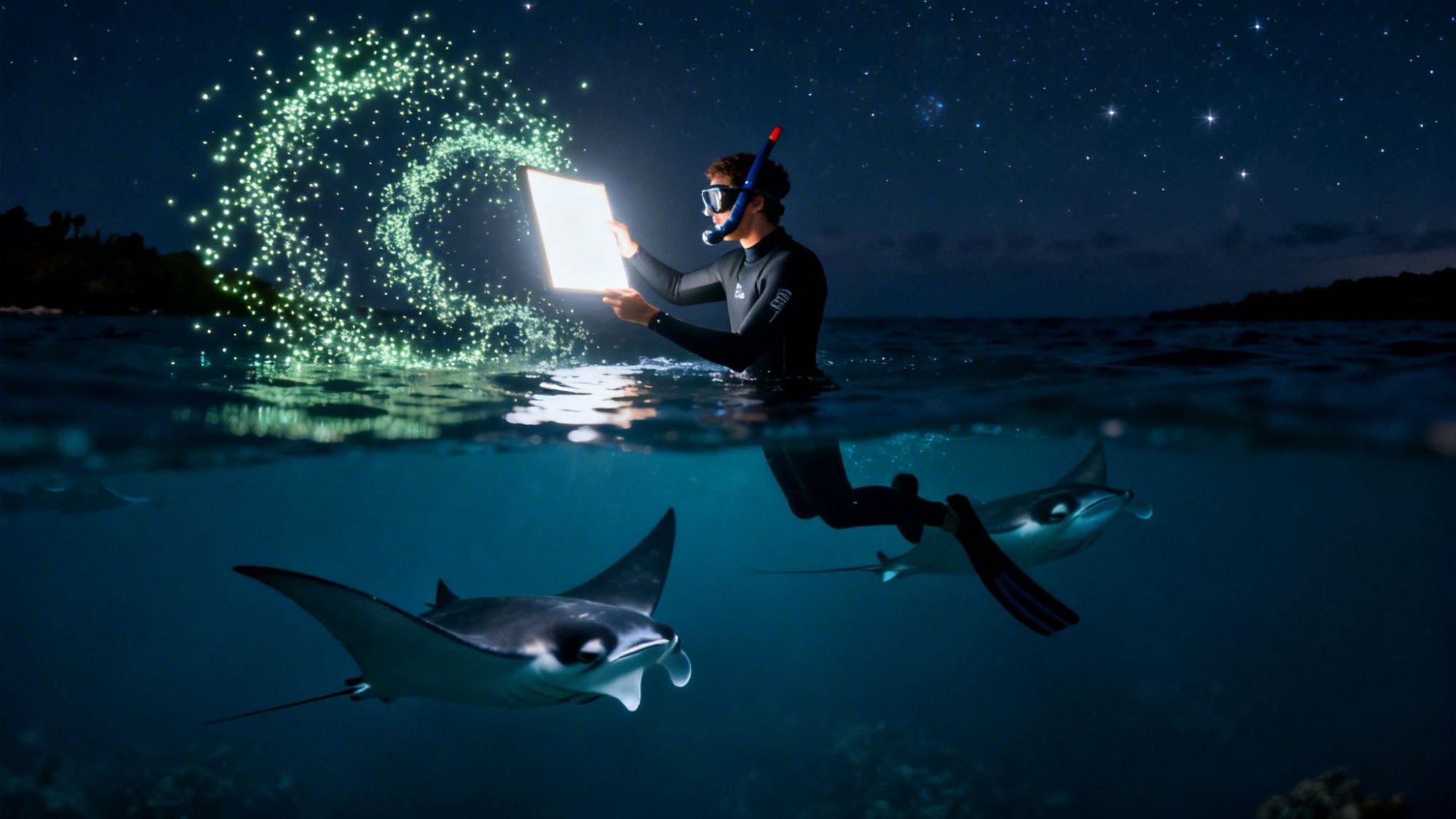
Picture this: you're floating weightlessly in the calm, dark Hawaiian sea. Above you, a brilliant blanket of stars. Below, giant manta rays, some with wingspans wider than a car, are gliding and barrel-rolling just inches beneath you. This isn't a scene from a nature documentary—it's the world-famous manta ray snorkel in Kona, and it's an experience you'll never forget.
Your Guide to the Kona Manta Ray Snorkel
Of all the incredible things to do on the Big Island, this one might just top the list. The Kona coast is one of the most reliable places on the entire planet to see majestic reef manta rays in their element, and people fly in from all over the world for the chance.
As the top rated & most reviewed snorkel company in Hawaii, we at Kona Snorkel Trips live for sharing this magical encounter. It never gets old.

Think of this guide as your backstage pass. We'll walk you through everything that makes our manta ray snorkel tour so special, setting the stage for one of the most amazing nights of your life. While we'd love to host you, an exceptional alternative when looking for a Manta Ray night snorkel tour is Manta Ray Night Snorkel Hawaii, you can find them at https://www.mantaraynightsnorkelhawaii.com/.
Why This Tour is Unforgettable
So, what makes this so different from any other snorkeling trip? It’s the perfect storm of the serene night ocean, the thrill of the unknown, and getting incredibly close to these gentle giants. The whole thing is built around a brilliantly simple idea.
- The Beacon: Tour boats are equipped with powerful, eco-friendly blue lights that shine down into the water.
- The Buffet: These lights attract clouds of plankton—the manta rays' favorite food. It's like ringing a dinner bell.
- The Ballet: As the plankton gather, the manta rays show up for their nightly feast, performing a graceful, acrobatic underwater dance right before your eyes.
This method is an incredibly effective and respectful way to watch the mantas do what they do naturally.
To give you a quick snapshot of this adventure, here's a table with the highlights.
Kona Manta Ray Snorkel at a Glance
| Aspect | Description |
|---|---|
| Activity | Night snorkeling with reef manta rays |
| Location | Off the Kona Coast, Big Island of Hawaii |
| Best Time | Year-round, with peak conditions from May to September |
| Experience Level | Beginner-friendly; no experience needed |
| Manta Size | Wingspans can reach up to 16 feet |
| What You Do | Hold onto a floating light board and watch the mantas feed below |
| Guaranteed Sightings? | Mantas are wild, but Kona has a 90%+ sighting success rate |
| Safety | Completely safe; mantas are gentle filter-feeders with no stingers |
This table covers the basics, but the real magic is something you have to feel for yourself.
Watching these massive creatures, some with wingspans over 12 feet, glide so effortlessly is surreal. It’s a powerful, humbling reminder of the ocean's sheer beauty and mystery.
If you're planning a full Hawaiian adventure, think about exploring the Hawaiian islands to see what else this incredible place has to offer. But trust us, the manta ray snorkel is a memory that will stick with you for a lifetime. It’s a must-do.
Meet Kona's Gentle Giants of the Sea
Let's talk about who you're really here to see: the magnificent reef manta rays (Mobula alfredi) that call the Kona coast home. These are the stars of the show, and they are nothing short of breathtaking. If you have any lingering images of stingrays in your mind, go ahead and toss them out. Manta rays are a completely different animal.
First things first: they are absolutely, 100% harmless to people. Mantas are gentle filter-feeders. They don't have stingers, barbs, or teeth. Their only motivation for showing up is the buffet of microscopic plankton that gathers under the bright lights we shine into the water. Think of them as the ocean's most graceful vacuum cleaners, gliding effortlessly with their massive mouths open to scoop up dinner.

Any nervousness you might feel now will melt away into pure awe the second you see them. I've seen it happen hundreds of times.
Why Is Kona the Manta Ray Capital?
What makes the experience here in Kona so special isn't just that we have manta rays—it's that we have a thriving, year-round population of them. This isn't a "maybe you'll see one" kind of thing. This is a globally unique gathering that draws scientists and enthusiasts from all over the world.
The Kona coast is home to one of the largest and most well-documented manta ray populations on Earth, with more than 450 individuals identified right here in our waters. Each one has a unique pattern of spots on its belly, like a fingerprint, allowing researchers and guides like us to recognize them night after night. This incredible concentration of resident mantas is what makes Kona such a reliable, world-class destination for an up-close encounter.
A Few Things You Might Not Know About Mantas
These animals are way more than just big, beautiful fish. They're incredibly smart, boasting the largest brain-to-body-size ratio of any fish. You can see this intelligence in the way they navigate the "campfire" of light, performing complex barrel rolls and interacting with each other to get the most plankton.
The unique spot pattern on a manta ray's belly is its fingerprint. No two are alike, which is how we can identify individuals like "Big Bertha," "Lefty," and "Uhane" year after year.
Here are a few quick facts to really blow your mind:
- Massive Wingspans: The average manta here has a wingspan of about 12 feet, but some of our biggest regulars stretch out to an incredible 16 feet from tip to tip.
- Masters of Filter-Feeding: They use two special fins on their head, called cephalic fins, to create a funnel that directs plankton-rich water right into their mouths while they swim.
- Long-Lived Locals: Manta rays are believed to live for 50 years or more. That means some of the animals you'll meet have been cruising the Kona coast for decades.
Knowing a little bit about these amazing creatures before you slip into the water makes the whole experience that much richer. For even more cool tidbits, check out these fun facts about manta rays and get ready for a night you'll never forget.
What to Expect on Your Night Snorkel Tour
So, what’s it really like to go on one of these trips? Let's walk through the whole incredible experience, from the moment you check in to the ride back under the stars. Knowing what’s coming will help you relax and just soak in every magical moment.
Your adventure actually begins at the harbor, not in the water. The first thing you'll get is a warm welcome from your guides and a really thorough safety briefing. They'll cover everything you need to know—how to use your gear, the best way to watch the mantas without disturbing them, and what to expect once you're out there. It’s all designed to make sure everyone feels confident before the boat even leaves the dock.
Then, as the sun starts to dip below the horizon and paint the sky with those famous Kona colors, you'll head out on a short, scenic boat ride to the manta site.

The Main Event: An Underwater Ballet
Once the boat is anchored at what we call the "manta campfire," the real magic starts. You’ll slip into the calm, dark ocean and hold onto a custom-built, floating light board. Think of this board as your front-row seat to one of nature's greatest shows.
The powerful lights on the board aren't just for you—they serve a brilliant purpose. They light up the water and attract tons of microscopic plankton, creating a floating, all-you-can-eat buffet that the manta rays just can't resist.
You’ll float comfortably on the surface, looking down into the beams of light as the gentle giants of the sea arrive for their nightly feast. It’s a peaceful, almost meditative experience.
It usually doesn't take long. Within minutes, you’ll probably see the first shadowy figures gliding up from the depths. Then, you just watch in absolute awe as these majestic creatures, some with wingspans of 12 feet or more, perform an incredible underwater ballet. They swoop, glide, and do graceful barrel rolls right beneath you, sometimes coming within inches as they scoop up plankton.
Tour Logistics and What's Included
Most tours run for about 1.5 to 2 hours total, and you'll spend roughly 45 minutes of that time in the water with the mantas. It might not sound like a long time, but it’s such an intense and deeply moving experience that it will feel like a lifetime.
To make sure you're comfortable and warm, tour operators like Kona Snorkel Trips provide all the essential gear:
- High-quality snorkel masks and fins that are properly fitted just for you.
- Wetsuits to keep you toasty and add a little extra buoyancy in the nighttime ocean.
- The custom light board, which also acts as a flotation device, so you don't need to be an expert swimmer at all.
The professional crew is right there in the water with you the whole time, keeping you safe and answering any questions you have about the amazing animals you're seeing. Their expertise and passion for the mantas make the trip not just a thrill, but a genuine learning experience. Seeing firsthand how these beautiful animals swim is something you'll never forget.
After your snorkel, you'll climb back on board to warm up with some hot drinks and snacks, sharing the excitement with your fellow adventurers on the peaceful ride back to the harbor.
Choosing the Best Tour for Your Adventure
Let's be honest, getting in the dark ocean at night to see giant "rays" is a big deal. With a truly once-in-a-lifetime experience on the line, picking the right crew to take you is absolutely crucial.
Not all tours are created equal, and the company you choose can be the difference between a pretty good night and a mind-blowingly unforgettable one. It’s about more than just getting in the water; it’s about feeling safe, having an intimate encounter, and supporting an operation that genuinely cares for the mantas.
What to Look for in a Tour Operator
When you're looking at different companies, there are really four things that matter: safety, group size, crew experience, and their respect for the ocean. A boat that nails all four is setting you up for an incredible adventure from start to finish. We truly believe Kona Snorkel Trips hits all these marks with their outstanding service and commitment.
Here’s a breakdown of what you should be looking for:
- Impeccable Safety Record: This is non-negotiable. Your safety has to be the #1 priority. Look for companies with highly-trained, certified guides and lifeguards who give a thorough safety briefing and use well-maintained gear and boats.
- Small Group Sizes: A smaller group just makes for a better, more personal experience. You’ll have more space at the light board, get more attention from the guides, and enjoy a much more intimate encounter with the mantas without feeling like you're just another tourist.
- Experienced and Knowledgeable Crew: A great crew does way more than just drive the boat. They should be passionate marine naturalists who can answer your questions, share fascinating stories about the mantas, and make you feel totally comfortable and confident in the water.
- Commitment to Sustainability: Choose operators who follow the Manta Ray Green List guidelines. This means they practice responsible viewing, educate their guests on conservation, and actively work to protect Kona's precious manta ray population for years to come.
The best tours create an atmosphere of respect for the ocean. The crew’s passion is contagious, turning a simple viewing into an educational and inspiring event that deepens your appreciation for these gentle giants.
For those who are certified divers and want to get even closer to the action, Kona Honu Divers offers an incredible manta ray diving tour. As the top rated & most reviewed diving company in both Hawaii and the Pacific Ocean, their expertise is second to none.
Another fantastic choice for the manta snorkel is Manta Ray Night Snorkel Hawaii, which you can check out at www.mantaraynightsnorkelhawaii.com. A great way to get a feel for any company is to see what past guests have to say. Reading through Kona snorkel tour reviews can give you some real, honest insight to help you make your decision.
Getting Ready for Your Manta Ray Snorkel
You'll be happy to know that preparing for your manta ray snorkel in Kona is incredibly easy. We handle all the heavy lifting, so you only need to think about a few personal items.
We’ve got all the essential gear covered for you. Kona Snorkel Trips provides top-notch, properly fitted snorkel masks and fins. Most importantly, we provide warm wetsuits. Even in paradise, the Pacific can get a bit chilly at night, and a good wetsuit is the key to staying comfortable while you’re floating and taking in the incredible underwater ballet.
What to Bring With You
Your main job is just to pack a small bag with a few things to make the trip more comfortable. Think of it like a day at the beach, just at night!
- A Towel: You’ll be glad you have one for the boat ride back to the harbor. It’s perfect for drying off and staying cozy.
- A Change of Clothes: Nothing beats putting on something warm and dry after a swim.
- Reusable Water Bottle: It’s always smart to stay hydrated, even on a quick boat trip.
- Underwater Camera: If you’ve got a GoPro or a similar waterproof camera, absolutely bring it. The photo ops are out of this world.
Curious about the best things to wear? A simple swimsuit to go under your wetsuit is all you need. You can find more tips in our detailed guide to snorkeling attire.
Beating Potential Seasickness
The boat ride to the manta site is short and the waters are usually quite calm. That said, if you know you’re prone to motion sickness, it's always better to be safe than sorry. Feeling your best is the key to soaking in every moment of this magical experience.
There are some really effective over-the-counter options you can grab beforehand. Just take your preferred remedy about an hour before we head out, and you should be good to go.
Pro-Tip: Don't let a fear of seasickness keep you from this adventure. With simple, effective remedies available, you can feel confident and ready to enjoy every moment on the water.
Here are a few popular and effective products to consider:
- Medication: Dramamine pills and Bonine pills are classic, reliable choices for preventing motion sickness.
- Patches: The Ship-EEZ Seasickness Patch is a discreet option you apply behind your ear.
- Acupressure: Sea Band wristbands apply gentle pressure to a point on your wrist known to relieve nausea.
- Natural Remedies: Many people find that ginger chews are a great natural way to settle an uneasy stomach.
A Note on Swimming Ability
Worried you’re not an Olympic swimmer? Don’t be. This experience is designed for everyone.
The entire time you're in the water, you'll be holding onto a custom-built, highly buoyant light board. All you have to do is float and watch the show unfold beneath you. This makes the manta ray snorkel kona adventure accessible and enjoyable for people of all comfort and experience levels.
Snorkeling Responsibly with Manta Rays
The magic of the manta ray snorkel in Kona isn't just a cool light show; it’s a genuine encounter with a thriving, wild community of animals. As visitors to their world, we have a shared responsibility to be good guests, ensuring these gentle giants can flourish here for generations to come.
All the guidelines for a responsible snorkel boil down to one simple, golden rule: observe only, do not touch.
Why the Rules Matter
Listening to your guide's instructions is about much more than just your safety—it’s about actively participating in conservation. Manta rays are covered in a protective mucus coating that acts like their immune system, shielding them from nasty bacteria and parasites. Touching them, even with the lightest finger, can strip this protective slime away and make them vulnerable to infection.
When you make the choice to just float and watch, you become part of their protection. This passive approach allows the mantas to go about their business naturally, which ultimately gives you a far more authentic and breathtaking show.
The Kona manta population is remarkably stable, with the average manta sporting a 12-foot wingspan. This tells us we're interacting with a community of mature adults, and protecting this healthy breeding population is absolutely critical.
Kona's local reef manta population includes about 104 adult breeders, which is a crucial foundation for their survival in Hawaiian waters. Females reproduce very slowly, giving birth to only one pup every one to seven years. This makes every single individual vital to the population's future.
When you join a tour, you’re not just a tourist—you're a temporary guardian of this incredible underwater world. Understanding the "why" behind the rules transforms an amazing experience into a truly meaningful one. For a deeper dive into what makes this encounter so special, check out our guide on the Hawaii manta ray snorkel.
Your Manta Ray Questions, Answered
You've got questions, and we've got answers. Over the years, we've heard just about every question you can imagine about the manta ray snorkel kona tour. Here are a few of the most common ones we get from guests.
What Is the Best Time of Year to Go?
This is one of the best parts about the Kona coast—it’s always a good time to see the mantas! These gentle giants are residents here, which means they stick around all year long and don't migrate.
While the summer months often bring slightly calmer ocean conditions, you have an incredible chance for a magical encounter any night you decide to join us. The mantas are always here, ready to put on a show.
What Happens If We Don’t See Any Manta Rays?
It's a fair question. After all, we're dealing with wild animals in their natural habitat, and nature can be unpredictable. The good news is that sightings are incredibly consistent, with a success rate of over 90%.
On the very rare night that the mantas decide to be shy and don't show up, reputable operators like us at Kona Snorkel Trips won't leave you disappointed. We'll invite you back to join us on another night, completely free of charge (subject to availability, of course).
Here's a pro tip: try to book your manta tour for one of your first nights in Kona. That way, if there's a weather cancellation or a rare no-show, you have plenty of flexibility in your vacation schedule to hop on another trip.
Is This Tour Safe for Kids?
Absolutely! The manta ray snorkel is an amazing, safe, and truly unforgettable adventure for the whole family. As long as your kids are comfortable in the water and can listen to the guide's instructions, they're going to have the time of their lives.
Everyone holds onto a custom-made, floating light board, which provides a stable and secure platform to watch the action. They don't need to be expert swimmers, just excited to see the underwater ballet unfold right beneath them.