
Manta Ray Snorkel Kona: Your Ultimate Guide to manta ray snorkel kona
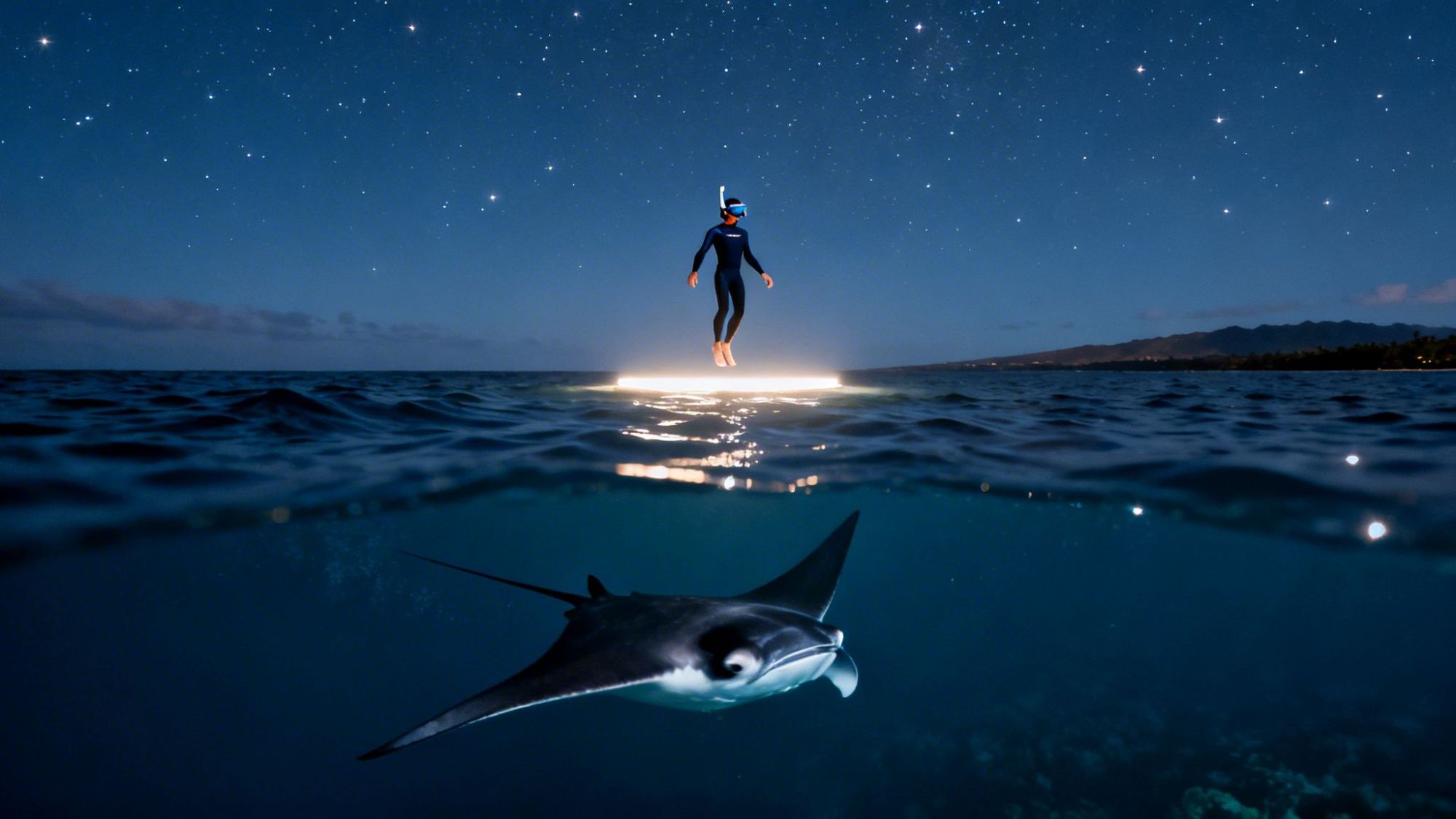
Imagine floating on the calm, dark Pacific under a brilliant canopy of stars. Then, just inches below you, giant, graceful manta rays begin to glide, swoop, and dance in the light. This isn't some rare, lucky sighting—it's the world-famous Kona manta ray snorkel, and it's one of the most reliable and genuinely awe-inspiring wildlife encounters you can find anywhere on the planet.
Experience Kona's Unforgettable Manta Ray Night Snorkel
This guide will walk you through everything you need to know to plan this once-in-a-lifetime adventure. We'll start by introducing the experience through the eyes of Kona Snorkel Trips, the top-rated and most-reviewed snorkel company in all of Hawaii. Their seasoned guides are the key to a safe, memorable, and absolutely magical outing.

The real magic of this encounter is just how dependable it is. That's the secret sauce of the manta ray snorkel in Kona; the success rates here absolutely dwarf other spots around the globe. In fact, studies show that snorkelers and divers at prime locations like Manta Village have sightings on over 90% of nights. Some years, that number has even hit a jaw-dropping 96%.
This isn't just another tour; it's a profound connection with the ocean. You'll float comfortably on the surface, holding onto a specially designed light board. These lights attract plankton, the mantas' favorite meal, creating a floating buffet. What happens next is pure spectacle.
What Makes This Experience So Special
The mantas arrive to feast on the concentrated plankton, performing an effortless underwater ballet right before your eyes. They glide, swoop, and do barrel rolls, sometimes coming within inches of your mask.
- Up-Close Encounters: You're close enough to see every intricate detail of their powerful, graceful movements. It's an incredibly personal experience with these gentle giants.
- Safe and Accessible: The tour is perfect for all ages and swimming abilities. You simply float while holding onto a custom light board, so no strenuous swimming is required.
- Unique Nighttime Setting: Being out on the ocean under the stars adds a whole other layer of wonder. It’s peaceful, a little mysterious, and completely unforgettable.
It’s the kind of adventure that makes for incredible memories, and for those looking to share something truly special, you can explore similar unique gift experiences. Ready to see it for yourself? Kona Snorkel Trips offers a top-tier manta ray tour. You can also dive deeper into the details in our complete guide to the manta ray night snorkel tour. For an exceptional alternative, check out Manta Ray Night Snorkel Hawaii.
Why Kona is the Global Capital for Manta Ray Encounters
So, what makes the Kona coast the undisputed champion for seeing manta rays? It's not just a lucky accident. It’s a perfect storm of geography, biology, and a bit of ocean magic that sets the stage for an underwater show you won't find anywhere else.
The secret sauce is something called the "Island Mass Effect." The sheer bulk of the Big Island gets in the way of deep ocean currents, forcing nutrient-packed cold water up toward the sunny surface. This upwelling creates a reliable, year-round buffet of plankton—the manta rays' favorite meal—which keeps them hanging out close to shore.
Kona's Resident Manta Population
Unlike a lot of other spots where manta sightings are a seasonal "maybe," Kona is home to a full-time resident population of reef manta rays. These incredible animals live here all year long, which means you have a solid chance of seeing them any night of the year.
This one-of-a-kind setup has turned the Big Island into the planet's capital for these encounters. Every year, around 80,000 snorkelers travel here just for this experience, and the nightly sighting success rate is a stunning 80-90%. A big reason for that success is the community of more than 450 identified manta rays that call these waters home.
The amazing thing is, this natural gathering has built a culture of responsible tourism. The money from these tours goes right back into conservation efforts, helping scientists study and protect these gentle giants for the long haul.
The Ideal Conditions for Snorkelers
The predictable food supply is just one piece of the puzzle. Kona's leeward (protected) coast serves up several other advantages that make it absolutely perfect for a nighttime snorkel.
- Calm Waters: The massive volcanoes, Mauna Loa and Hualalai, act like a giant wall, blocking the gusty trade winds. The result? The ocean here is often incredibly calm and clear, which is exactly what you want for snorkeling.
- Easy Access: The main viewing spots are just a quick boat ride from the harbor. No long, grueling trips—you're in the water and enjoying the show in no time.
- A Healthy Ecosystem: The reefs along this coast are thriving, which supports a huge variety of marine life. A healthy home means happy mantas that stick around year after year.
When you put it all together, you get a world-class wildlife adventure that’s both breathtaking and surprisingly easy to experience. And while you're here, you can dive deeper into the Big Island's vibrant underwater world by checking out our guide on the best snorkeling in Kona.
What to Expect on Your Manta Ray Snorkel Tour
So, what does this incredible night in the water actually look like from start to finish? Knowing the play-by-play can help calm any pre-snorkel jitters and get you even more excited for what's ahead. Here’s a rundown of your evening with us, from checking in at the harbor to that final, happy boat ride back to shore.
Your adventure starts at the harbor, where you'll meet our crew. After a warm welcome and a quick check-in, you'll hop on the boat for a short, beautiful ride out to the snorkel site. As we cruise across the water, the Kona sunset usually puts on a spectacular show, painting the sky with color. During the ride, the crew gives a full safety briefing, covering everything from how to use your gear to the best ways to respectfully watch the mantas.

Getting into the Water
Once we anchor at the viewing site, the real action begins. The crew sets up our custom-built light board—a big, stable floating platform that is the key to the whole experience. Powerful lights shine down into the water, attracting huge clouds of plankton, which just so happens to be the manta rays' favorite meal.
Next, it's your turn to slip into the calm, dark ocean. Don't worry if you're not a world-class swimmer. You'll just hold onto the handles of the light board and float comfortably on the surface. We provide wetsuits that not only keep you warm but also give you extra buoyancy, making it super easy to just relax and take it all in.
Think of the light board as a giant dinner bell for the manta rays. By gathering their food all in one place, it creates a reliable floating buffet, giving you a front-row seat to one of nature's greatest shows.
With everyone in position, holding onto the board, the magic happens. Drawn in by the plankton, the manta rays appear out of the darkness below. They perform these graceful barrel rolls and looping glides right underneath you, their massive mouths open to scoop up food. It's a surprisingly serene and moving experience to watch these gentle giants feeding just inches away.
After about 45 minutes of pure awe, the crew will help you back onto the boat. You'll get to warm up and share stories on the cozy ride back to the harbor, filled with memories that are going to last a lifetime.
How to Prepare for Your Manta Ray Adventure
Getting ready for your manta ray snorkel Kona tour is pretty straightforward, and a little prep goes a long way in making sure you can just relax and enjoy the magic. The great thing is, this is a year-round adventure, so you can plan your trip for any season without missing out.
We provide all the important gear, but bringing a few personal items will make your trip that much more comfortable.

The best way to show up is ready to hit the water. Wear your swimsuit under your clothes, and you'll be set to go in no time. You'll definitely be happy you brought a towel and a change of dry clothes for the ride back to the harbor. As for the technical stuff? Don't worry about it. We’ve got you covered with top-notch snorkel equipment, including masks, fins, and even cozy wetsuits to keep you warm in the cool night water.
Your Manta Ray Snorkel Kona Checklist
Here’s a quick-glance table to help you pack smart and leave the rest to us.
| What You Should Bring | What Kona Snorkel Trips Provides |
|---|---|
| Swimsuit (wear it there!) | All Snorkel Gear (Masks, Snorkels, Fins) |
| A Warm Towel | High-Quality Wetsuits |
| Dry Clothes for After | Flotation Devices (Noodles, Life Vests) |
| Reef-Safe Sunscreen | Professional, Safety-Certified Guides |
| Seasickness Medication (if needed) | Snacks & Refreshments on the Boat |
| A Reusable Water Bottle | An Unforgettable Experience! |
| Camera (waterproof recommended) | All Safety Equipment |
Packing these few essentials ensures you'll be comfortable from the moment you step on the boat until we're back on dry land.
Managing Seasickness Like a Pro
Nobody wants to miss a moment of the manta action because of a queasy stomach. While the boat ride out is usually short and the waters off Kona are famously calm, it never hurts to be prepared, especially if you know you’re prone to motion sickness.
Being proactive is the key. Taking a simple preventative measure before you even board the boat can make all the difference.
Here are a few popular and effective options to consider bringing along:
- Patches: The Ship-EEZ Seasickness Patch is a great non-drowsy option. You just apply it behind your ear a few hours before the tour.
- Pills: Classics like Dramamine or Bonine are standbys for a reason—they work really well when you take them as directed before we leave the harbor.
- Wristbands: If you prefer a drug-free approach, Sea-Band wristbands use acupressure to help keep nausea at bay.
- Natural Remedies: Many folks swear by natural options like ginger chews to help settle an uneasy stomach.
A little planning can ensure you're focused on the incredible manta rays gliding below, not on your stomach. For more tips, check out our guide on what to wear for snorkeling to make sure you're totally comfortable from head to toe.
Viewing Manta Rays with Respect and Safety
Jumping into the water with giant manta rays is more than just another snorkel trip; it's a chance to see a true natural wonder up close. That incredible experience rests entirely on treating these animals and their home with respect. It's how we make sure this magic is still here for years to come.
The number one rule is simple, but it's everything: passive observation only. This means look, but never, ever touch. It's the core principle behind all ethical wildlife encounters, and it's especially important here.

The Golden Rule: No Touching
You see, manta rays have a special mucus layer covering their skin. Think of it as their immune system—a shield against bad bacteria and parasites. When someone touches a manta, even lightly, it wipes off that protective slime. This leaves them wide open to nasty infections and disease.
Your guides will be crystal clear about keeping a safe distance. The idea is to let the mantas be in charge of how close they get.
When you just float calmly and watch, you blend into their world instead of crashing it. That calm vibe lets the mantas act naturally, which is what gives you the best show while keeping them safe.
Following The Essential Guidelines
Besides the big "no touching" rule, a few other guidelines help protect the whole ecosystem and keep everyone safe. The most important thing you can do is listen carefully to your crew. They’re the experts out here and know the local conditions and manta behavior better than anyone.
- Stay With Your Group: Always stick close to your guide and the light board. This keeps everyone together and makes sure you're in the best—and safest—spot to see the action.
- Use Reef-Safe Sunscreen: If you put on sunscreen before your evening tour, please make sure it's labeled "reef-safe." The chemicals in regular sunscreen, like oxybenzone and octinoxate, are really harmful to our coral reefs and all the creatures that live there.
- No Chasing or Diving Down: Never swim after a manta ray or dive down from the surface to try and get a closer look. It spooks the animals and totally disrupts their natural feeding groove.
Finally, let's clear up a common myth. Manta rays are total gentle giants and are completely harmless to people. They are filter feeders, meaning they only eat teeny-tiny plankton. Unlike their stingray cousins, manta rays do not have a stinger or barb on their tail. Period. You can get the full scoop in our article explaining why manta rays can't sting you.
Knowing they can't hurt you lets you relax, float, and just soak in one of the most peaceful and incredible encounters you'll ever have.
Snorkel or Scuba Dive With Mantas?
So, you're trying to decide between snorkeling and scuba diving for the big manta ray encounter. It's a common question! While the manta ray snorkel in Kona gives you what most of us consider the best seat in the house, diving offers a totally different angle on the underwater ballet. The right choice really boils down to your certification, comfort level, and the kind of view you're hoping for.
Snorkeling is, by a long shot, the easiest way to jump in on the action. There's no certification required, you don't need much gear, and it's fantastic for all ages and swimming abilities. You just hang out on the surface, holding onto a specially designed light board, and watch the whole show unfold just inches below your mask. This top-down view is incredible; you get to see the full, sweeping grace of the mantas as they barrel roll through the plankton drawn to the light.
A Diver's Perspective
Scuba diving flips the whole experience on its head—literally. It gives you a bottom-up vantage point that's powerful in its own way. Certified divers get to settle onto the sandy ocean floor, usually around 25-35 feet deep, and watch the massive mantas glide and swoop above them. Seeing their giant silhouettes outlined against the glow of the surface lights is something you won't forget. It gives you a real sense of their immense scale.
But, diving is a bigger commitment. You need a certification (like PADI Open Water), and it's just a more involved process. If you're already a certified diver and that unique perspective sounds like your kind of adventure, we can't recommend Kona Honu Divers enough. They're known as the top rated & most reviewed diving company in both Hawaii and the Pacific Ocean, so you know you're in for a world-class manta dive. Check out their amazing manta ray diving tour on their site.
For most folks, especially families and first-timers, snorkeling is the way to go. The experience is every bit as breathtaking and so much more straightforward. If you're planning your trip, be sure to check out our guide to other amazing snorkel tours on the Big Island of Hawaii to explore more of what our incredible coastline has to offer.
Your Manta Ray Snorkel Questions, Answered
Alright, let's wrap up with a few of the questions we hear all the time about the manta ray snorkel in Kona. Getting these details sorted will help you feel totally confident when you book what might just be the most incredible wildlife encounter of your life.
Do I Need to Be a Strong Swimmer?
Not in the slightest. This experience is brilliantly designed for everyone, even if you don't consider yourself a swimmer. You’ll be holding onto a big, super-stable floating light board the entire time you're in the water, so it does all the work for you.
On top of that, your wetsuit gives you extra buoyancy, and our guides are right there with you every step of the way. You do almost no actual swimming—it's more like floating and watching the show.
Is This Experience Safe for Children?
Absolutely! The manta ray snorkel is a fantastic, unforgettable adventure for families. It’s a very controlled environment—the flotation board keeps everyone together, and the close supervision from the crew makes it incredibly secure.
It’s all about observation, not strenuous activity, which is perfect for younger snorkelers. Kona Snorkel Trips is happy to welcome kids, but it’s always smart to double-check their specific age requirements when you book your manta ray tour.
Honestly, one of the best parts of this whole adventure is sharing it. Seeing the pure wonder on a child's face as a 12-foot manta ray glides right underneath them is a memory that sticks with families forever.
What Happens If We Don't See Any Manta Rays?
While Kona has a ridiculously high success rate—we’re talking over 90% most of the time—we are dealing with wild animals, and nature can be unpredictable. The best tour companies get this and really stand by their trips.
Top-notch operators like us at Kona Snorkel Trips and Manta Ray Night Snorkel Hawaii, another fantastic choice for a Manta Ray night snorkel tour, usually have a 'manta guarantee.' If the mantas decide not to show up, you can typically come back and try again for free on another night, based on availability. Just make sure to confirm the exact policy when you book.
Are Manta Rays Dangerous?
Not at all. Manta rays are completely harmless to people. There's a very good reason they're called "gentle giants." They are filter feeders, meaning their entire diet is made up of teeny-tiny plankton.
A lot of people mix them up with stingrays, but here’s the key difference: manta rays do not have a stinger or a barb on their tail. They’re curious about the lights that attract their food, not the people floating above. It’s a perfectly safe, and truly magical, interaction.
Ready for an adventure you’ll be talking about for years? Kona Snorkel Trips is excited to show you the magic of the manta rays.