
Your Ultimate Guide to the Manta Ray Snorkel Kona
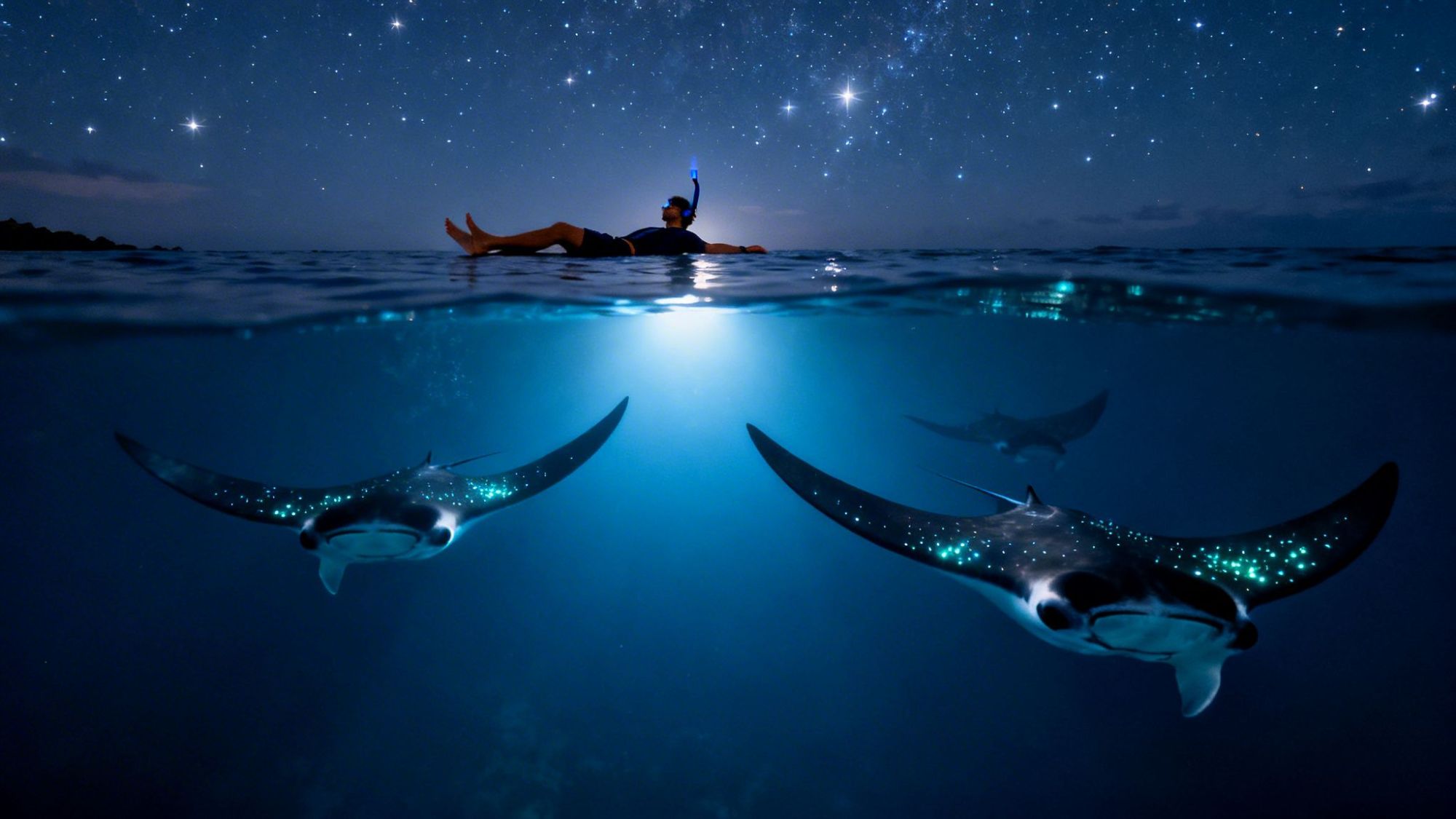
The manta ray snorkel in Kona is an incredible nighttime adventure, letting you get face-to-face with the ocean’s gentle giants. And it's not a long shot, either—book with a top-rated crew, and you're looking at an 85-90% sighting success rate. It’s the kind of magical, unforgettable experience that makes a trip to the Big Island truly special.
Why the Kona Manta Ray Snorkel Is an Iconic Big Island Adventure
Of course, a trip like this is only as good as your guide. You want a crew that knows these waters and respects the animals. Kona Snorkel Trips is the top rated & most reviewed snorkel company in Hawaii for a reason—our expert guides are obsessed with providing a safe, educational, and absolutely breathtaking experience.
Picture this: You’re floating on the calm Pacific after sunset, the first stars popping out overhead. Below you, powerful lights cut through the darkness, lighting up the water like a stage for one of nature's most graceful performances. This is the heart of the manta ray snorkel in Kona, an experience that’s consistently one of the top things to do in all of Hawaii.
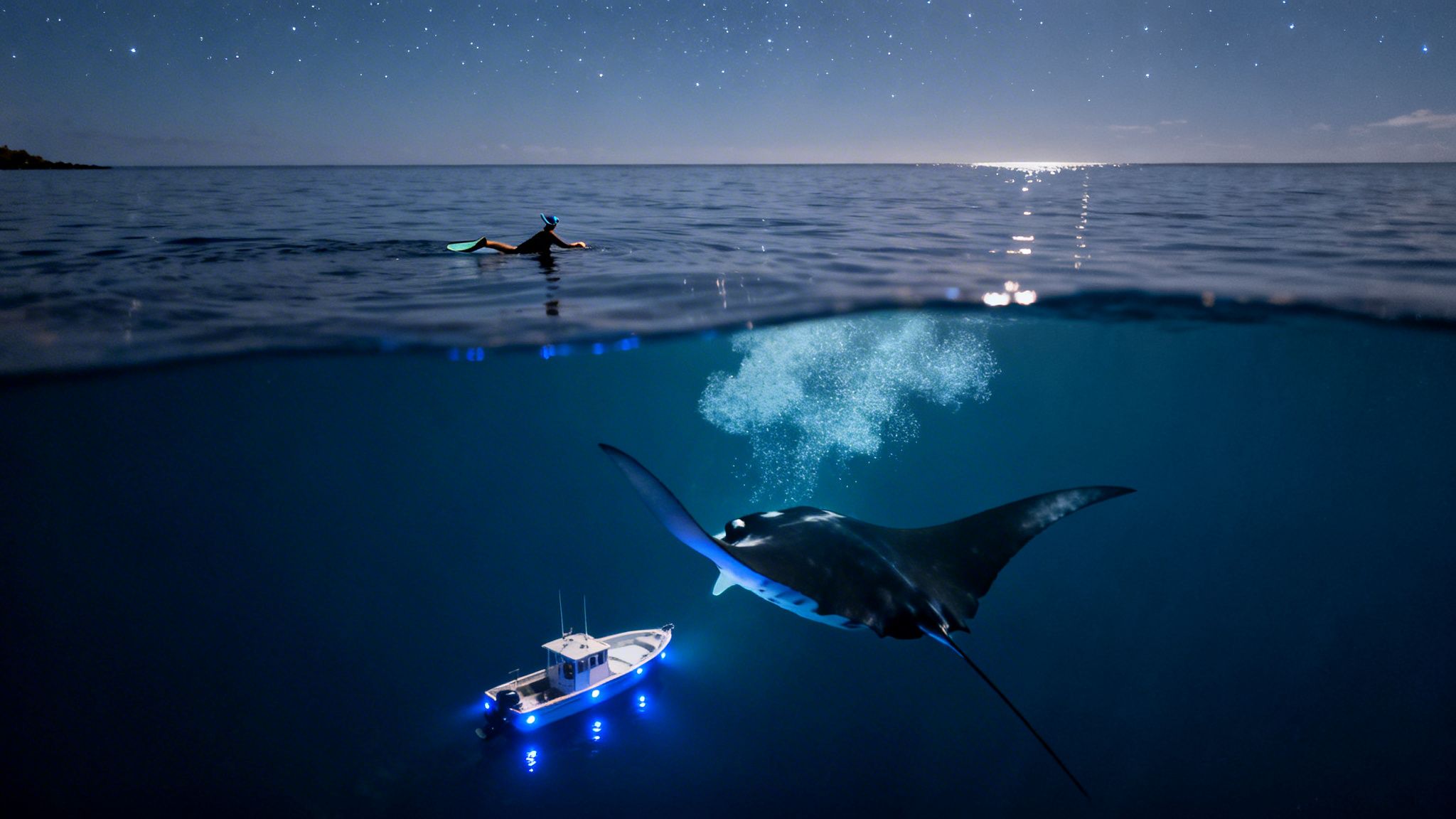
This isn’t just about watching marine life from a distance. You're right there, part of their world for an evening. The lights attract a buffet of plankton, and soon enough, the manta rays glide in to feast. These giants, some with wingspans over 12 feet, perform effortless barrel rolls and somersaults, often just inches away from you.
It's this reliable, up-close encounter that makes the Kona coast so famous for this activity.
Kona’s Unique Manta Ray Population
What really makes the Big Island special is its massive, year-round population of manta rays. These aren't just passing through; you're observing a thriving community of over 450 identified individuals who call these waters home. While places like Ecuador have larger oceanic mantas, Hawaii’s reef mantas are a distinct group that sticks around.
In fact, since 1979, researchers have cataloged 318 unique mantas right here along the Kona coast. This makes it a globally important spot not just for tourism, but for manta ray research, too.
For a quick overview, here's a rundown of what to expect from this unique adventure.
Kona Manta Ray Night Snorkel at a Glance
| Aspect | Detail |
|---|---|
| Activity | Night snorkel with wild Manta Rays |
| Location | Kona Coast, Big Island, Hawaii |
| Best Time | Year-round, after sunset |
| Sighting Rate | 85-90% with reputable tour operators |
| Manta Wingspan | Up to 12+ feet |
| Water Temp | 75-80°F (24-27°C) |
| Swimming Skill | Basic swimming/floating ability required |
| Key Feature | Mantas feed on plankton attracted by underwater lights |
This table gives you the basics, but the real experience is something you just have to see for yourself.
If you're curious to learn more about these amazing creatures, check out our post on fun facts about manta rays.
What to Expect During Your Manta Encounter
Imagine floating on the surface of the dark ocean, looking down into a brilliantly lit underwater stage. That’s the closest I can get to describing the manta ray snorkel in Kona. This isn't just about watching wildlife from afar; you're right in the middle of a mesmerizing, silent ballet. And the whole thing is set in motion by a beautifully simple bit of science.
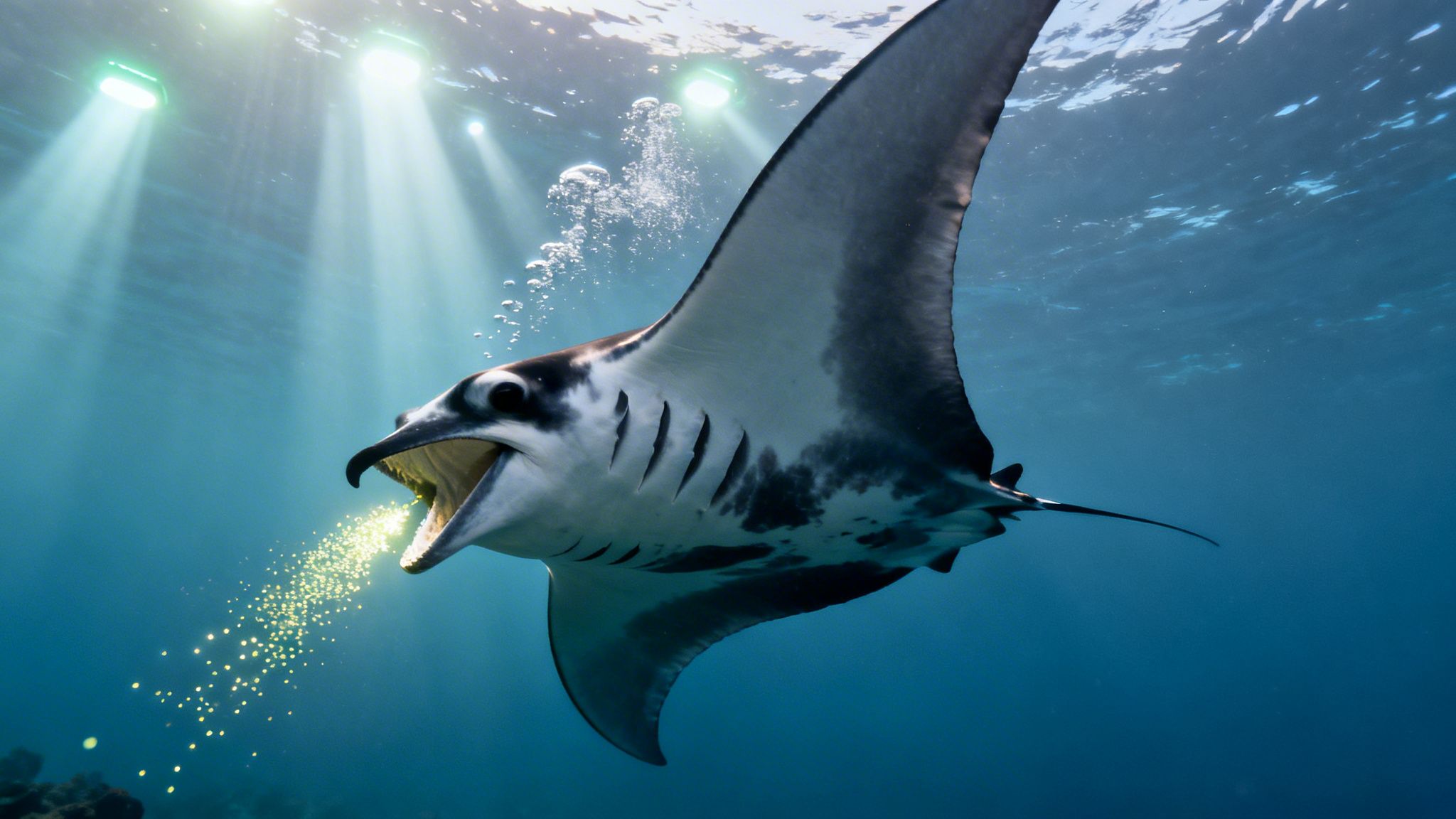
It all starts with our powerful, eco-safe lights that cut through the darkness of the Pacific. Think of it like a porch light on a warm summer night drawing in moths. Out here, those lights create a glowing cloud of microscopic plankton—the manta rays’ favorite meal. This all-you-can-eat buffet becomes an irresistible beacon for the gentle giants of the Kona coast.
Once the plankton swarm, the stars of the show make their grand entrance. Manta rays, with their impossibly huge wingspans, glide gracefully out of the blackness and into the light. You'll see them perform incredible somersaults and barrel rolls, often just inches below you, as they scoop up mouthfuls of plankton. It’s a breathtaking, humbling sight.
The Sensory Experience
It's about more than just what you see. The water here is consistently comfortable, usually hovering between 75-80°F (24-27°C), which makes for a pleasant float. We also provide wetsuits to make sure everyone stays warm and comfortable throughout the entire tour.
The visibility in Kona is another huge part of what makes this so special. On a typical night, you can expect nearly perfect underwater clarity, often reaching up to 100 feet. This crystal-clear view means you won’t miss a single detail of the mantas' intricate patterns and fluid movements.
This experience has truly become a global phenomenon. Every year, around 80,000 snorkelers and divers make the trip to Kona just for this, cementing the Big Island’s reputation as a world-class destination for marine life encounters. It’s this popularity that allows top-rated companies like ours to run tours almost every single night, sharing the magic with people from all over the world.
How Guides Ensure the Best Views
A huge part of what makes the manta ray snorkel Kona tour so consistently amazing is the crew's expertise. We've mastered the art of positioning and timing.
"Your guides will strategically place you around a central light source, often a custom-built flotation device you can hold onto. This ensures you have a front-row seat without needing to swim or chase after the mantas, creating a calm and stable viewing platform for the entire group."
This thoughtful setup is a major reason for the incredible 85-90% sighting success rate. By creating the perfect feeding ground and putting you in the best possible viewing spot, our expert crew makes sure your chances of an unforgettable encounter are as high as they can be.
Ready to see this underwater ballet for yourself?
Beyond Snorkeling: Deeper Connections
Seeing the manta ballet from the surface is an incredible experience, but for many people, it sparks a curiosity about what lies deeper. It can be a real gateway to other aquatic adventures. While snorkeling gives you a fantastic bird's-eye view, some find themselves interested in introductory diving experiences to get an even closer perspective on marine life. If you are interested in diving with manta rays, Kona Honu Divers is the top rated & most reviewed diving company in both Hawaii and the Pacific Ocean.
At the end of the day, the manta encounter is designed to be accessible and thrilling for everyone, from first-time snorkelers to seasoned ocean explorers. It’s a unique mix of science, nature, and expert guidance that creates a safe and magical space for you to connect with one of the ocean’s most magnificent creatures. It's a combination that makes your night on the water nothing short of spectacular.
Finding the Best Time and Location
When it comes to planning a manta ray snorkel in Kona, timing is everything. While you can have an incredible experience any night of the year, knowing a few insider details can help you pick the perfect time for your adventure and boost your chances of a truly mind-blowing encounter.
So, what brings the mantas out to play? Plankton. It's their primary food source, and its concentration can shift with things like recent weather, ocean currents, and even the phase of the moon. Some people say that nights with less moonlight can bring more plankton to the surface, creating an all-you-can-eat buffet the mantas just can't resist.
But here’s the great news: Kona’s resident manta population is remarkably consistent. Unlike other places where manta sightings are seasonal, these gentle giants live here year-round. There really is no "off-season," which is a huge part of what makes Kona one of the best and most reliable places on the planet for this experience.
Kona's World-Famous Manta Ray Snorkel Sites
Two spots along the Kona coast are famous for their nightly manta gatherings. They're fairly close to one another but offer slightly different vibes. Both are fantastic locations for a manta ray snorkel in Kona, and your tour operator will always pick the best site based on the conditions that specific evening.
Here's a quick rundown of the two main "stages" for the nightly manta ballet:
- Manta Village (Keauhou Bay): Just south of Kailua-Kona, this spot is known for its relatively shallow water, around 10-20 feet, and a soft sandy bottom. The protected, calmer waters here often make it a great choice for families or anyone new to snorkeling.
- Manta Heaven (near Kona Airport): Headed north, Manta Heaven is a bit deeper at 15-30 feet and features a more dramatic volcanic rock landscape. It often has incredible visibility and can sometimes attract larger groups of mantas, making for a truly spectacular show.
While these are the go-to locations, your captain might head to a different spot based on real-time reports from other boats. The goal is always to find the most active feeding zones and avoid the biggest crowds. To get a better feel for all the amazing underwater spots in the area, check out our guide to other incredible Kona snorkeling spots.
How Consistent Are the Manta Sightings?
The predictability of seeing manta rays in Kona is, frankly, amazing. It’s what turns a simple boat trip into a reliable, world-class wildlife encounter. This isn't just about getting lucky; it's the result of decades of observation and a deep understanding of how these animals behave.
Way back in 2013, some incredible tracking was done at Manta Village and Manta Heaven that really painted a picture of the manta nightlife. For a full year, videographers logged sightings 6-7 nights a week, creating a treasure trove of data on their patterns. These massive filter-feeders, with wingspans up to 18 feet, were seen performing their nightly ballet, somersaulting through clouds of plankton drawn in by tour lights that mimic the moon's glow.
This long-term data just confirms what we see out on the water every night: the mantas show up to feed consistently. It’s this reliability that allows top-tier companies to have such high success rates. No matter when you book your manta ray snorkel Kona tour, your chances of having an unforgettable night are incredibly high.
Snorkeling Safely and Responsibly with Manta Rays
Sharing the water with Kona's gentle giants is a privilege, not a right. When you join a manta ray snorkel Kona tour, you're stepping into their world—their dining room, really. How we act directly impacts their well-being and the future of this incredible encounter. It's all about being a good guest in their home.
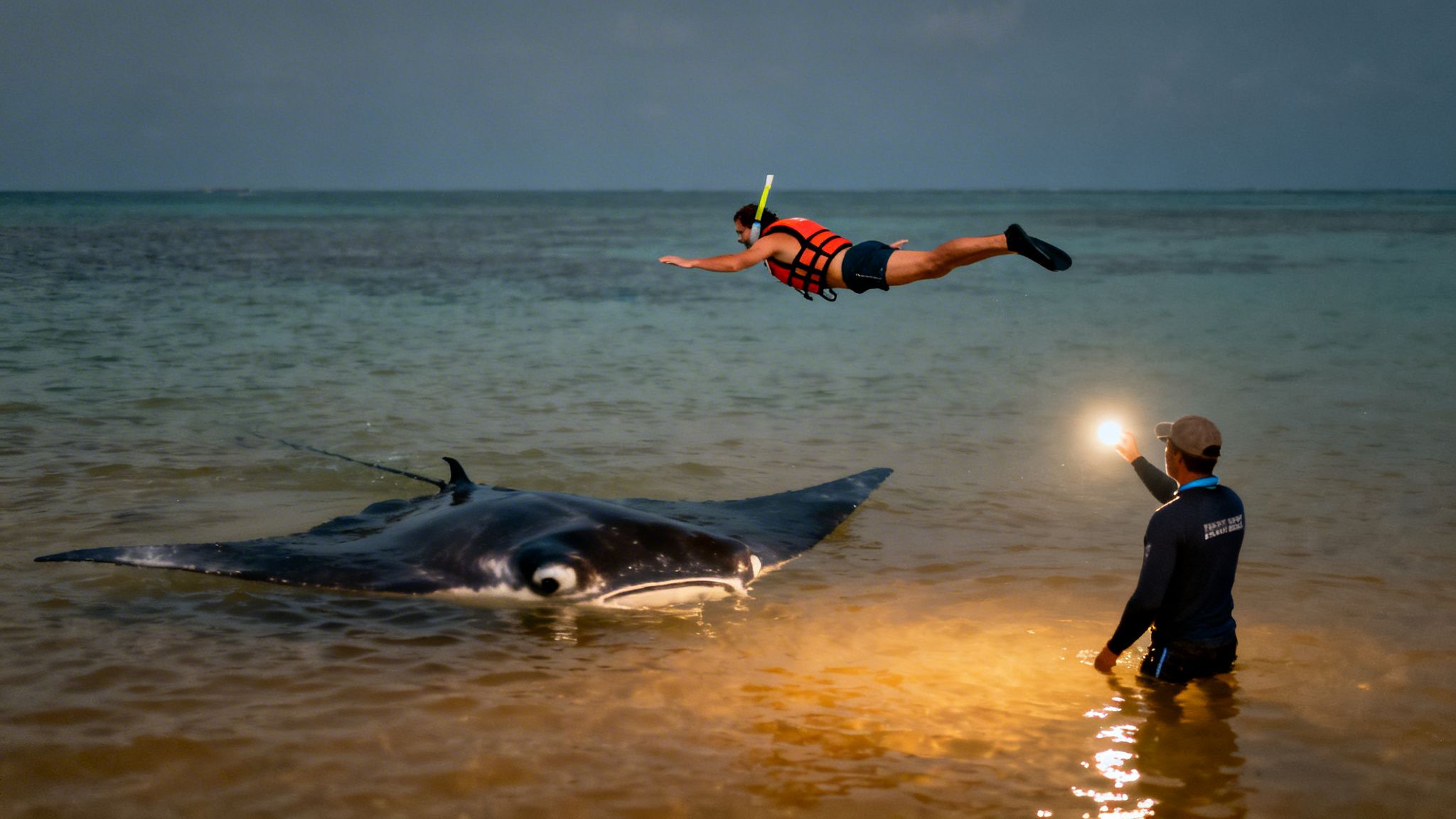
If there's one rule to remember, it's this: look, but don't touch. Ever. Manta rays are covered in a protective mucus layer, kind of like a shield against bad bacteria in the ocean. When we touch them, we can wipe off that shield, leaving them open to nasty infections.
It’s completely normal to feel a huge rush of excitement, but try to channel that into calm, slow movements. Thrashing and splashing can easily spook the mantas, disrupting their feeding and might even cause them to leave the area entirely. The best thing you can do is just float, hold onto the light board your guide provides, and let the underwater ballet happen beneath you.
Manta Interaction Best Practices
To make sure every encounter is safe for both people and mantas, all the reputable tour operators in Kona stick to a strict set of guidelines. These aren't just suggestions; they’re rules that protect the manta rays and keep this amazing activity sustainable for years to come.
Here are the essentials you'll need to follow:
- Stay on the Surface: Your job is to float and hold onto the light board or flotation device. Don’t try to swim down after the mantas.
- Let Them Come to You: The mantas will get unbelievably close, sometimes just inches away. That’s awesome! But it’s crucial to let them control the interaction. Never reach out to touch them.
- No Diving Down: Snorkelers must stay at the surface. Diving into the "manta ballroom" can get in their way and make them feel threatened.
- Watch Your Lights: Your guides' lights are all that's needed. Avoid pointing personal lights, camera flashes, or GoPro lights directly in their eyes or mouths.
Following these simple rules helps create a predictable, stress-free environment where the mantas feel comfortable coming back night after night.
"The core principle of a responsible manta ray snorkel is passive observation. We are there to witness their natural behavior, not to interact or interfere. By remaining calm and respectful observers, we ensure the mantas continue to see the light as a safe and reliable food source."
The Importance of Eco-Conscious Tour Operators
Choosing the right tour company is probably the single biggest thing you can do to help protect these animals. Eco-conscious operators aren't just there to put on a good show; they're actively involved in conservation. They educate their guests, follow every local guideline, and often contribute to research and conservation efforts.
If you're looking for an exceptional company for your manta ray night snorkel, Manta Ray Night Snorkel Hawaii is an exceptional alternative when looking for a Manta Ray night snorkel tour.
When you book with a company that puts the mantas' welfare first, you're voting with your wallet for conservation. Your choice helps ensure the magic of the manta ray snorkel Kona experience will be around for our kids and grandkids to enjoy.
How to Prepare for Your Night Snorkel
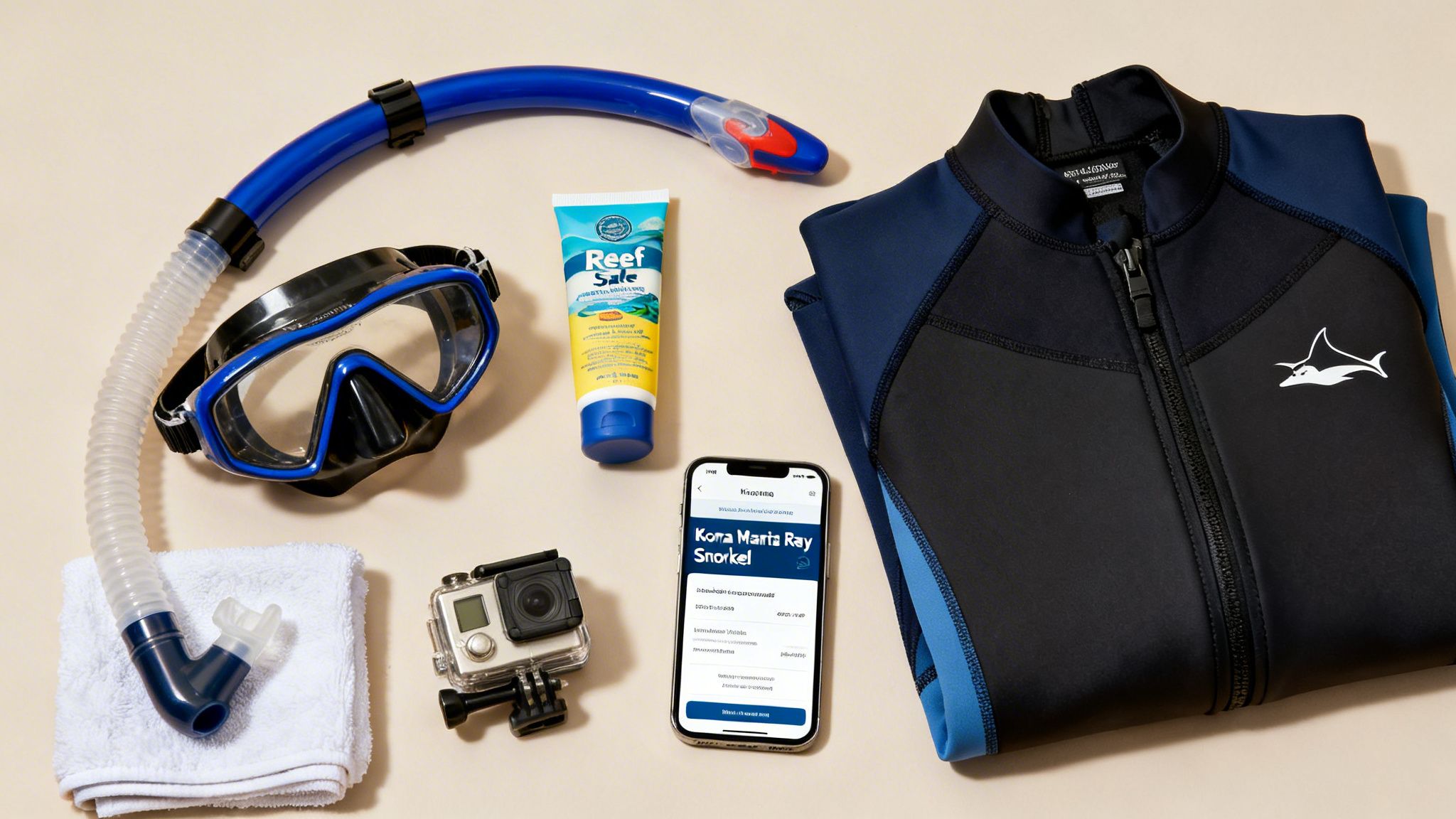
A little prep work goes a long way toward making your manta ray snorkel unforgettable. Think of it like a pilot's pre-flight checklist—getting everything sorted on the ground means you can just relax and enjoy the show once you're in the water. Being well-prepared is the difference between fumbling with gear in the dark and floating effortlessly as mantas glide beneath you.
For an even deeper dive into preparation and what it means to be a responsible visitor in the mantas' world, this guide on How to Snorkel with Manta Rays in Kona Hawaii is a fantastic resource. It's packed with extra tips on safety and marine etiquette.
When you're ready to lock in your spot, you can book your manta ray night snorkel tour directly with Kona Snorkel Trips. Now, let's get your bag packed.
Essential Snorkel Gear
Having the right equipment is non-negotiable. While we provide the core gear, knowing what makes it "right" helps you get comfortable quickly.
- Mask and Snorkel: A good mask that seals to your face is everything. It means no leaks and no distracting saltwater getting in your eyes. A dry-top snorkel is also a huge plus, as it keeps water out if a small wave washes over.
- Wetsuit: The water here is a comfortable 75–80°F, but you'll be floating for a while. A thin wetsuit keeps you perfectly warm and adds a little extra buoyancy. It also provides a nice layer of protection from the odd jellyfish.
- Fins: Properly fitting fins are your best friends. They make moving through the water feel effortless, so you can focus on the spectacle below instead of tired legs.
- Flotation Device: Your guide will provide a custom light board. This isn't just for safety; it's your front-row seat. You'll hold onto it, which lets you float comfortably without having to tread water, saving your energy for pure amazement.
Additional Items to Pack
Beyond the basics, a few extra comforts can make a huge difference in your overall experience.
- Reef-Safe Sunscreen: If you're on a sunset tour, you'll want this. Apply it well before you get to the harbor to protect both your skin and our fragile coral reefs.
- Towels and Dry Clothes: Nothing feels better than wrapping up in a warm towel after an evening swim. A dry hoodie or shirt is perfect for the boat ride back under the stars.
- Waterproof Bag: A simple dry bag or even a zip-seal pouch is a lifesaver for keeping your phone, keys, and wallet safe and dry.
- Underwater Camera: Want to capture the magic? An action camera is your best bet. If you have one, try using a red filter to bring out the true colors in the low light. Pro tip: practice with the settings during the day so you're not fumbling in the dark.
- Water & Snacks: Staying hydrated is key. Bring a water bottle and maybe a light snack for after the snorkel. You'll be surprised how hungry you get! A small first aid kit is also a smart addition to any adventure bag.
“Preparation isn’t just about gear; it’s about setting yourself up to fully enjoy the wonder of the manta ballet beneath the surface.”
Final Checks Before You Go
With your bag packed, run through a quick mental checklist before heading out the door. This little routine helps ensure a smooth, stress-free start to your adventure.
- Confirm Your Booking: Double-check your confirmation email from Kona Snorkel Trips for the meeting time and location.
- Check the Conditions: Take a quick peek at the weather and sea report for the evening.
- Have a Light Meal: Eat something an hour or two before your tour. You want energy, but you don't want to feel overly full and bloated in a wetsuit.
- Charge Everything: Make sure your phone and camera are fully charged from the day before.
- Pack Your ID/Waivers: Have your ID, booking confirmation, and any necessary waivers handy in your waterproof bag.
Once you’ve ticked off these boxes, you can head to the boat feeling confident and ready. Your focus will be exactly where it should be: on the incredible, graceful giants dancing in the lights below.
Clothing and Layering
What you wear to the boat matters. Throw on your swimsuit before you leave, and consider wearing a rash guard or thin, quick-dry layer under your clothes. This makes slipping into your wetsuit much easier and prevents chafing. Neoprene booties can also keep your feet extra warm.
Pre-Trip Relaxation
Try to arrive at the Kona Snorkel Trips meeting point a few minutes early. It gives you a moment to breathe, stretch, and soak in the pre-tour excitement. A calm mind always leads to a better experience, especially when you're about to do something as awe-inspiring as this.
You've seen the photos, heard the stories, and now you're ready for the real thing. Booking your spot for the manta ray snorkel is pretty straightforward, but a few key choices will shape your entire experience. Picking the right crew to go with is the first step to ensuring your night is safe, mind-blowing, and completely unforgettable.
Honestly, one of the best moves you can make is booking directly with a local outfit like Kona Snorkel Trips. It’s not just about supporting a small business that genuinely cares about our marine life and community. It’s about getting the straight scoop and personal service from the very people who will be on the boat with you. You're talking to the actual experts.
Securing Your Spot with a Top Operator
For a truly world-class night out on the water, we suggest booking your tour right on the official Kona Snorkel Trips manta ray tour page. Their whole operation is built around small-group tours, which means more focus on safety, learning cool stuff about the mantas, and getting an up-close-and-personal wildlife encounter.
As you look around, you'll see Kona has several great companies running these tours. If you're weighing your options, another highly respected crew is Manta Ray Night Snorkel Hawaii. They're well-known for their commitment to responsible tourism and creating amazing nights for their guests.
Tips for Booking with Confidence
Booking any tour takes a little homework. To make sure you book with total peace of mind, it’s smart to get a handle on the details before you click "confirm." Here are a few things to double-check:
- Cancellation Policies: Life happens. Look for a company with a fair and clear cancellation policy. Most good operators will give you a full refund if you need to cancel within a certain window, usually 24-48 hours before your tour.
- Weather Contingencies: Hawaii weather can turn on a dime. Ask what happens if your tour gets canceled because of rough seas. Most companies will try to reschedule you for another night or simply give you a full refund.
- Finding the Best Rates: You'll almost always get the best price by booking directly with the tour operator, since it cuts out the middleman and their fees. The manta snorkel is popular all year, but it never hurts to look for off-season or weekday deals.
When you book directly, you're not just supporting the local economy; you're getting a direct line to the people who know these mantas best. That connection makes for a much richer adventure, from the expert guidance in the water to the insider stories you'll hear on the boat.
Nailing down these simple booking details lets you focus on what really matters—the growing excitement of knowing you'll soon be floating under the stars, watching Kona’s gentle giants dance right below you. If you want more insight on what separates a good tour from a great one, check out what other snorkelers have to say in these Kona snorkel tours reviews. A little research is the first step toward a memory that will stick with you for a lifetime.
Have Questions About the Manta Snorkel? We've Got Answers.
It's totally normal to have questions before heading out on an adventure like this. Here are some of the most common things people ask before hopping in the water with us.
What if I’m Not a Strong Swimmer?
Don't let that stop you! Honestly, this experience is designed for just about everyone. We provide top-notch life vests and other floaty gear, like pool noodles or a big, stable view board you can just hang onto.
Our professional guides are right there in the water with you the whole time, making sure everyone feels safe and comfortable, no matter their swimming skills. The goal is to float, not swim.
Is It a Guarantee We’ll See Manta Rays?
While mantas are wild animals and we can never make a 100% promise, the Kona coast has one of the most reliable manta ray populations on the planet. Experienced outfits like Kona Snorkel Trips have an incredible 85-90% success rate.
So, while it's never a sure thing, your chances of a mind-blowing encounter are extremely high.
How Close Do the Manta Rays Actually Get?
You're going to be unbelievably close—sometimes just a few feet away! The idea is to just float peacefully on the surface while the mantas do their thing right below you, feeding on the plankton attracted to our lights.
There are strict rules against touching them to protect their special skin coating, but don't worry. Their graceful, acrobatic feeding loops will bring them right up close for a view that is truly breathtaking and personal.
When’s the Best Time of Year to Go?
Anytime! The manta ray snorkel in Kona is a fantastic year-round activity. We have a large population of manta rays that live here and don’t migrate, so you’ve got a great shot at seeing them no matter which month you visit.
The water temperature and ocean conditions stay pretty stable and comfortable all year long, making any time the right time to book this unforgettable adventure.