
Manta ray snorkel kona: Your Essential Guide to an Unforgettable Kona Experience
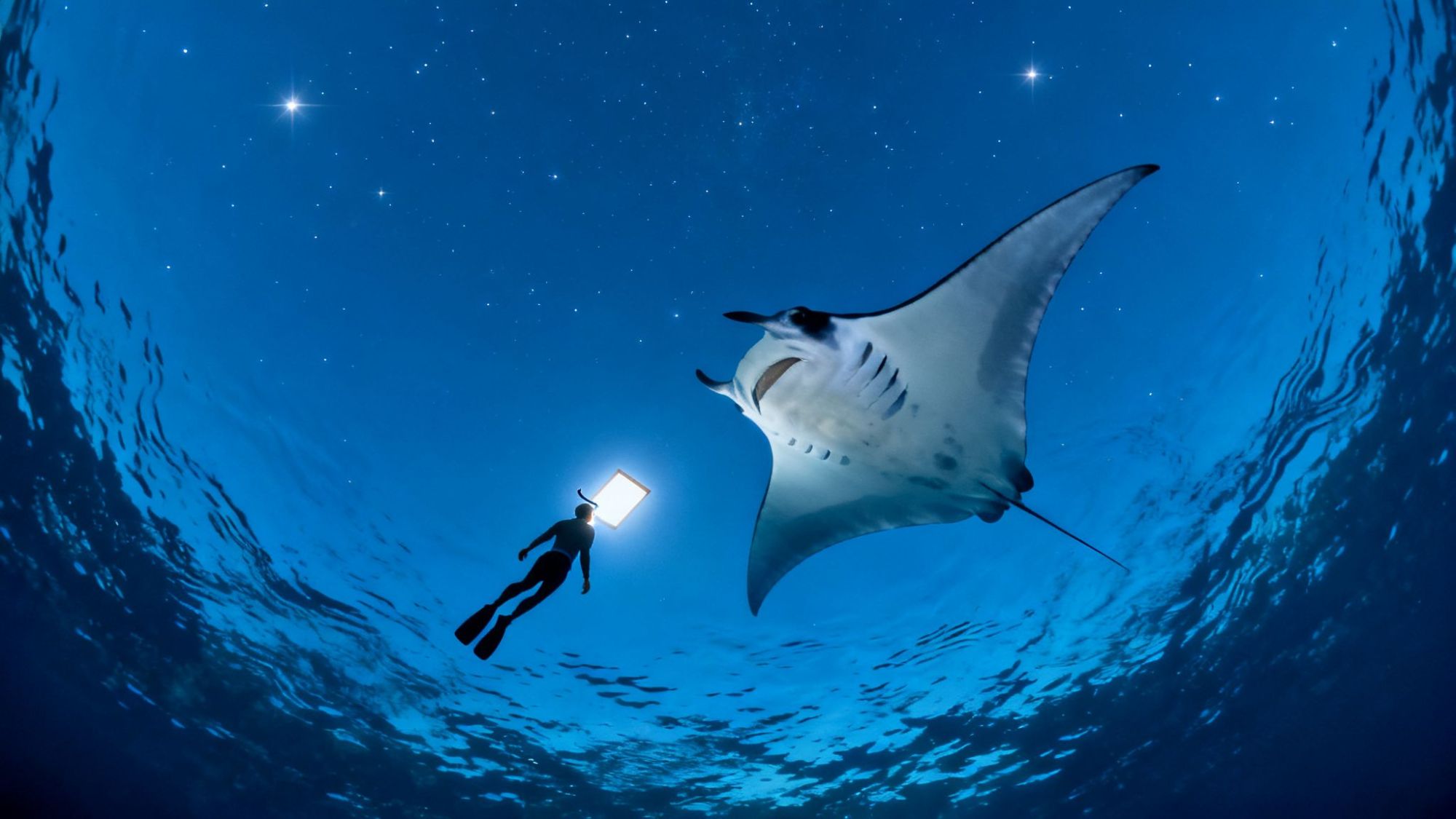
Imagine floating weightlessly in the warm Pacific Ocean, the stars blazing above you, as giant, gentle manta rays glide and barrel roll just inches below. It's not a dream—it's the world-famous manta ray snorkel in Kona, an experience that genuinely stays with you forever.
This guide is your complete playbook for making this incredible adventure happen, drawing from years of taking people out on the water every single night.
Experience the Magic of Kona's Manta Ray Snorkel
The Kona coast of the Big Island offers one of the most reliable and awe-inspiring wildlife encounters on the entire planet. Let that sink in. Unlike so many marine tours where seeing the main attraction is a matter of luck, the manta ray snorkel here is remarkably consistent.
This is your chance to witness majestic creatures in their natural habitat in a way that’s both heart-poundingly thrilling and deeply peaceful. As Hawaii's top-rated and most-reviewed snorkel company, Kona Snorkel Trips' whole mission is to provide a safe, respectful, and absolutely breathtaking adventure.
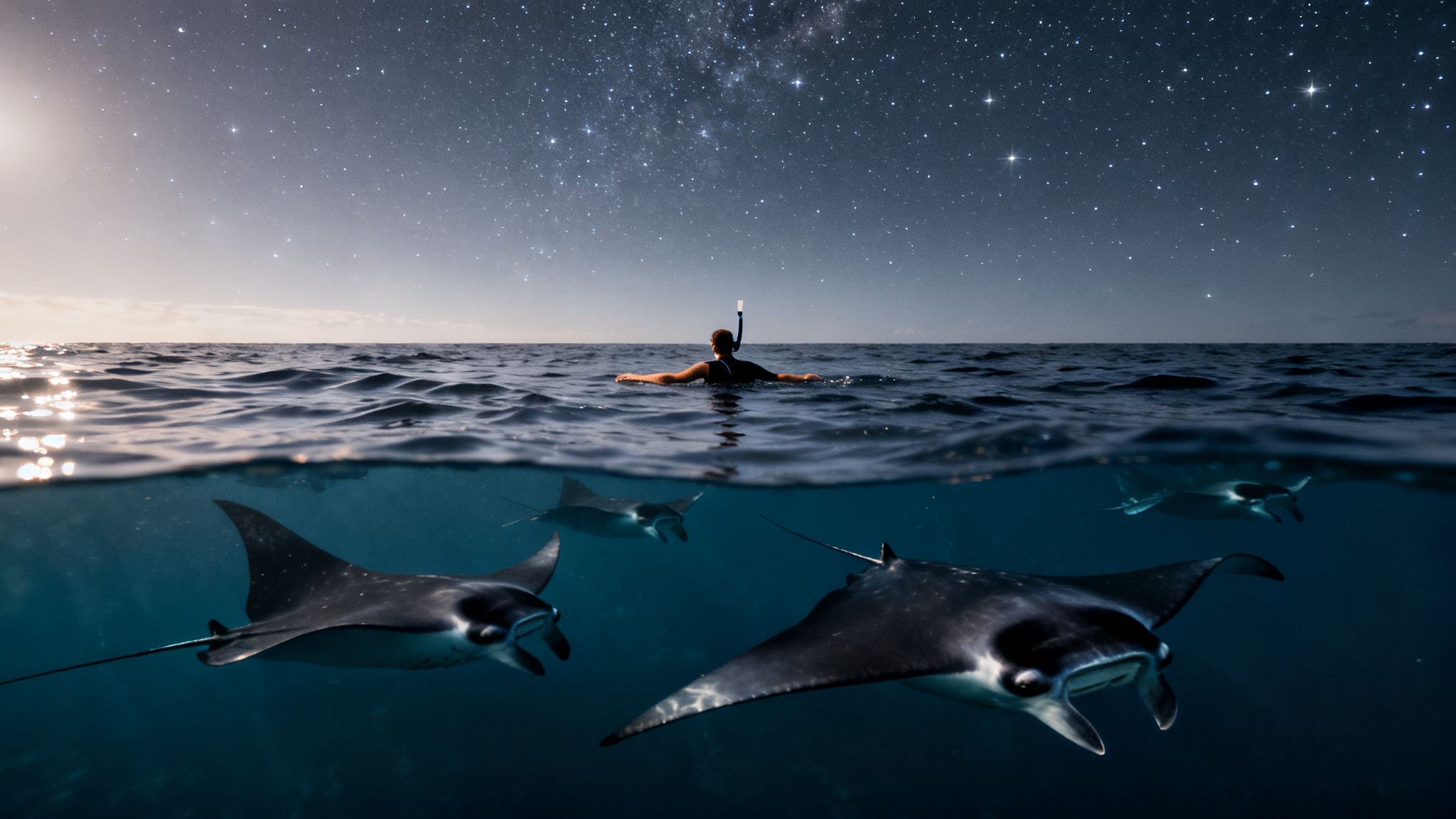
Why Is Kona a Manta Ray Haven?
So, what makes this experience so special? It's really a perfect storm of biology and geography. The unique underwater landscape and nutrient-rich waters along the Kona coast are a magnet for plankton, the manta rays' primary food source.
At night, we use powerful, specially-designed lights to attract dense clouds of this plankton. The mantas, knowing exactly where to find their nightly buffet, show up to feast. It's a brilliant, symbiotic relationship that has created an unbelievable opportunity for us to observe them.
Kona's manta ray night snorkel tours boast an astonishing 90% success rate for sightings all year long. That's not a guess; research from 2009 to 2014 tracked over 450 individual manta rays, identified by their unique belly patterns, at prime spots like Manta Village and Manta Heaven.
More Than Just a Snorkel Trip
This isn't just about getting in the water; it's about witnessing an immersive, underwater ballet. You'll float comfortably on the surface, holding onto a custom-made light board, while these massive creatures—some with wingspans over 12 feet—perform graceful barrel rolls right beneath you.
It’s a moment of pure, unfiltered connection with the ocean world. If you want to dive deeper into their world, check out these fun facts about manta rays.
For certified divers looking for a different perspective from the ocean floor, our sister company, Kona Honu Divers, offers a fantastic manta ray diving tour. As the top rated & most reviewed diving company in both Hawaii and the Pacific Ocean, they deliver an unparalleled scuba experience.
Ready to see it for yourself? This is one of those must-do, bucket-list activities on the Big Island.
How to Plan Your Manta Ray Adventure
Getting your manta ray snorkel Kona trip on the books should be exciting, not a chore. A little bit of planning is all it takes to make sure your night on the water is nothing short of magical. The single most important decision you'll make is choosing the right tour company—and it's about way more than just clicking the first link you see.
Things like the size of the group, how long the guides have been doing this, and the company's real commitment to safety and conservation are what separate a decent tour from an unforgettable one. You're looking for an operator who respects the ocean as much as they care about your experience.
Choosing Your Manta Ray Snorkel Tour
Let's break down what really makes a tour great. Here are the key things I always tell people to look for when they're deciding who to book with.
| Feature | What to Look For | Why It Matters |
|---|---|---|
| Small Group Size | Tours with 15 or fewer guests. | A smaller group means a more personal, intimate encounter. Less splashing and commotion creates a calmer environment, which is better for both you and the mantas. |
| Experienced Crew | Guides who are marine naturalists or have years of local experience. | A knowledgeable crew turns a simple viewing into an educational adventure. They can read the mantas' behavior and share incredible insights you wouldn't get otherwise. |
| Safety Record | Look for companies with stellar reviews that mention safety procedures and attentive staff. | You're in the open ocean at night. A professional crew that prioritizes your safety allows you to relax and fully immerse yourself in the experience without worry. |
| Conservation Focus | Operators who follow Manta Ray Green List guidelines and educate guests on responsible interaction. | Companies that respect the mantas and their habitat ensure these encounters can continue for years. Plus, their responsible approach often leads to better, closer sightings! |
Ultimately, it comes down to finding a crew that sees themselves as guardians of the ocean.
The best tour operators are stewards of the marine environment. They stick to strict guidelines to make sure the manta rays are never disturbed, which, funny enough, leads to much closer and more breathtaking encounters for everyone involved.
For those exploring different operators, Manta Ray Night Snorkel Hawaii is an exceptional alternative worth considering for your adventure.
Understanding the Viewing Locations
In Kona, the manta action happens at two main sites: Manta Village and Manta Heaven. Honestly, you can't go wrong with either one, as both have sky-high success rates for sightings.
- Manta Village (Keauhou Bay): This spot is just south of Kailua-Kona. It's known for being a bit shallower with a sandy bottom and has been a reliable hangout for mantas for decades.
- Manta Heaven (near Kona Airport): Located north of town, this site can sometimes attract bigger groups of mantas. It's another world-class viewing area.
The best part? The manta rays are here all year. Unlike whales that migrate, Kona’s mantas are full-time residents, so truly any night is a good night to go. That said, you absolutely need to book your tour well in advance, especially if you're visiting during busy seasons like holidays or the summer. The top-rated tours fill up fast.
Booking early in your trip is also a savvy move. It gives you a backup night in the rare case that a tour gets canceled due to weather or if the mantas decide not to show up (it happens, they're wild animals!).
For those looking to add a little something extra to their swim, a snorkelling sea scooter can be a fun way to glide through the water with less effort. Now you're all set to book with confidence.
What to Expect During Your Night Snorkel
The sky is putting on its own show, painted with brilliant oranges and purples as the sun dips below the horizon. This is the moment your manta ray snorkel Kona adventure really kicks into gear. The whole experience, from the short boat ride out to the site to the final swim, is designed to be safe, thrilling, and totally unforgettable.
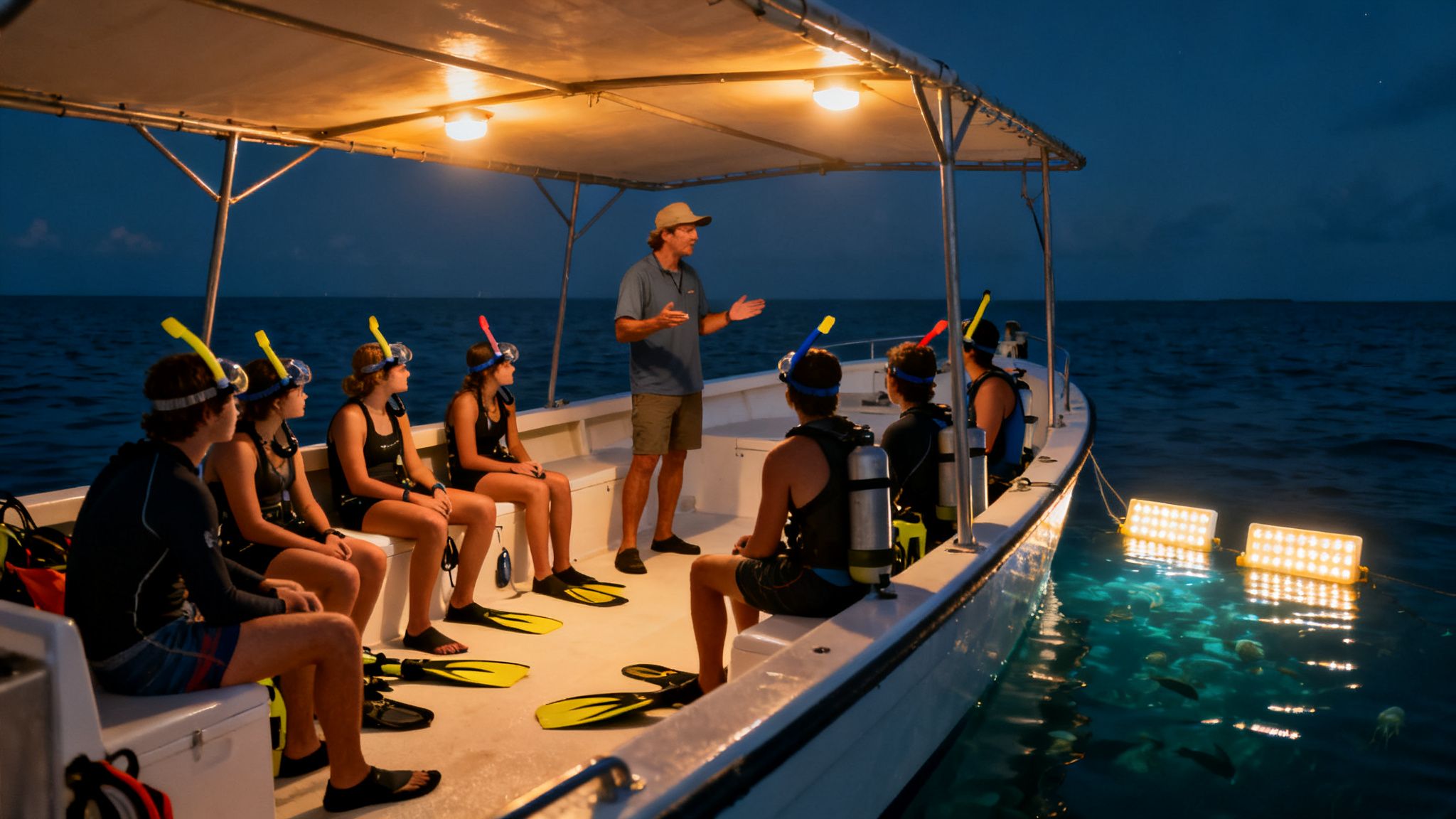
Long before you dip a toe in the ocean, our expert guides will give you a full rundown. This isn't just some boring safety speech; it's a real introduction to the incredible world you’re about to float above. You'll hear some amazing facts about Kona's resident manta rays, how they feed, and why the conservation work here is so important.
The crew makes sure everyone feels comfortable. They'll walk you through all the safety procedures and explain exactly how the snorkel works—from getting your wetsuit and mask fitted just right to showing you how to hold onto the custom-made light board. Whether you're a first-timer or a seasoned pro, you'll feel completely ready to go.
Entering the Underwater Amphitheater
Once we get to the spot, the crew sets up a large, floating light board. This thing is the star of the show, at least until the mantas arrive. It shines powerful beams down into the dark water, acting like a dinner bell for tiny plankton, which just so happens to be the mantas' favorite meal.
You'll gently slip into the warm, dark water and make your way over to the light board, grabbing onto one of the handles. There’s no hard swimming needed. You just float at the surface and look down into the illuminated circle of ocean, waiting for the performance to begin.
The Grand Entrance
That first moment a manta ray appears is pure magic. One second you’re just watching plankton swirl in the light, and the next, a huge, graceful shadow emerges from the deep. These gentle giants, with wingspans that can stretch over 12 feet, glide right into the light, performing a silent, mesmerizing underwater ballet.
You'll watch them swoop and barrel roll just inches below you, their massive mouths wide open to filter the plankton. It’s an incredibly peaceful and thrilling encounter all at once. The only things you'll hear are the gentle lapping of the water and the quiet "wows" from everyone around you. This is what it's all about—a true connection with one of the ocean's most majestic creatures.
After about 30-45 minutes in the water, you'll climb back onto the boat, buzzing with what you just saw. The ride back to the harbor is spent sharing stories under the stars, feeling like you just visited another world.
A Guide to Safe and Respectful Manta Encounters
Being in the water with these gentle giants is a privilege, and it’s on all of us to make sure we’re good guests in their home. When you join a manta ray snorkel Kona tour, you're not just a tourist; you're an observer in a delicate underwater world. The absolute best, most magical encounters happen when the mantas feel completely safe, which all comes down to following a few simple but critical guidelines.
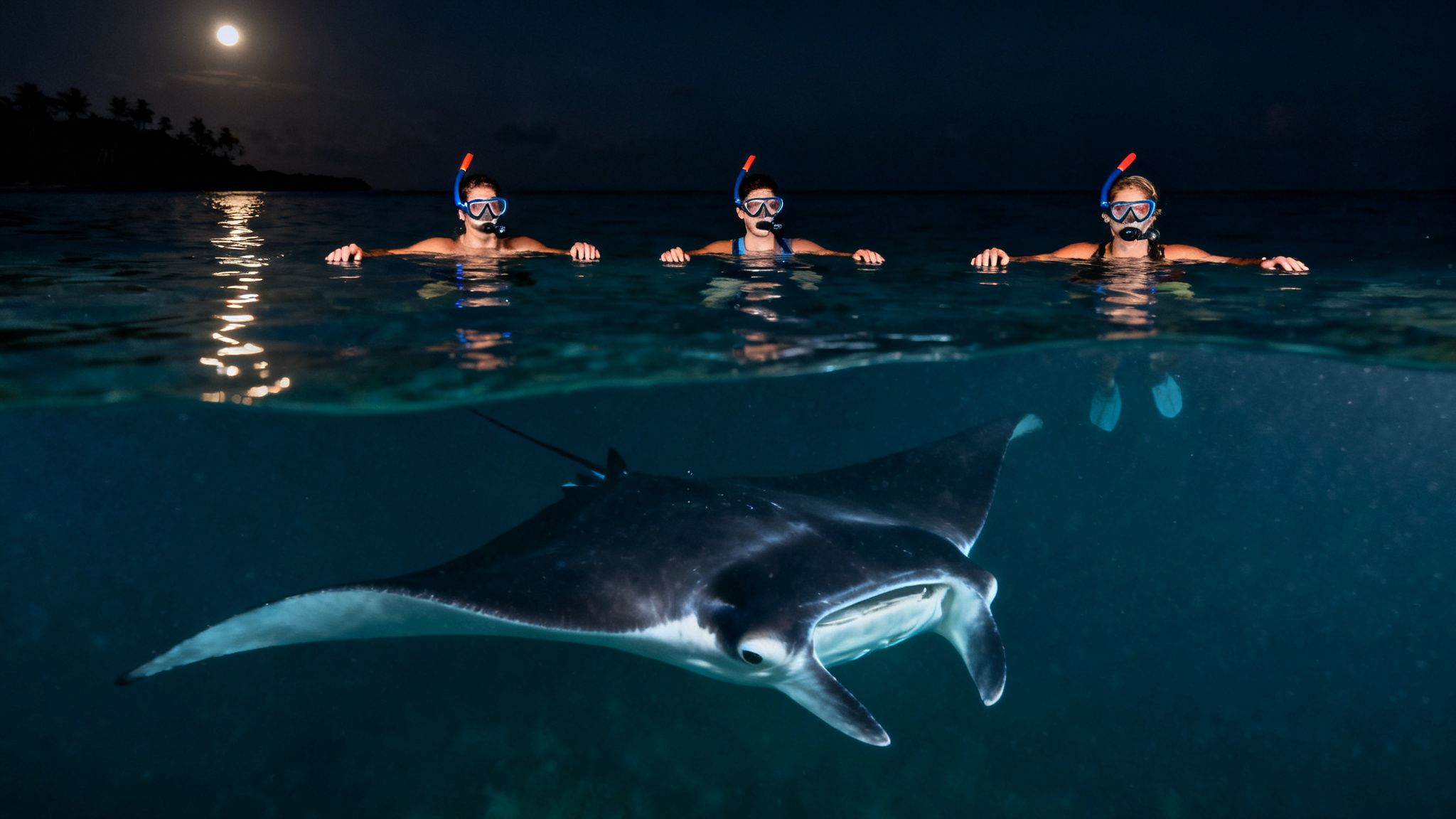
Here in Kona, reputable tour operators all practice what’s known as "passive floating." You’ll be holding onto a specially designed light board, floating comfortably on the surface. It's the least intrusive way to witness the show, minimizing our impact and giving you the best seat in the house. Just think of yourself as a quiet visitor watching the mantas enjoy their nightly plankton feast.
The Golden Rules of Manta Etiquette
If you remember only one thing, make it this: never, ever touch a manta ray. It’s the number one rule for a reason. Their skin is covered in a protective mucus coating, which is basically their immune system. Touching them can rub this coating off, leaving them wide open to nasty infections and diseases.
Beyond that, a few other key practices will make the experience better for everyone, mantas included:
- Be a Log: The goal is to stay flat and horizontal on the surface. Try not to dive down or kick your legs into the water where the mantas are feeding.
- Keep it Zen: Mantas are sensitive to commotion. Avoid any sudden movements or big splashes. The calmer and quieter the group is, the more comfortable the mantas will feel—often encouraging them to glide even closer.
- Let Them Come to You: Chasing or trying to "ride" a manta is a huge no-go. When you stay still and let them be, their natural curiosity often takes over. This is when the truly genuine, breathtaking moments happen.
These rules aren’t just about being a good steward for the animals; they directly lead to a better show. When mantas feel secure, they're famous for doing their incredible barrel rolls, sometimes just inches away from you.
Your guide is your best friend out there. Listen closely to their briefing and instructions. They've spent years in the water with these specific mantas and are completely dedicated to the well-being of Kona's resident population.
While the mantas are the main event, getting there and back safely is part of the adventure. It's always a good idea to familiarize yourself with an ultimate boat safety checklist before any ocean excursion. For more tips on being safe in the water itself, check out our guide on snorkeling safety tips.
By following these simple practices, you become part of the conservation effort, helping ensure these majestic animals continue to thrive for generations of snorkelers to come.
Capturing Memories of Your Manta Snorkel
That moment a giant manta ray glides right past you is something you'll want to remember forever. But trying to capture it on camera, especially at night and underwater, is a lot tougher than it looks. It's a unique challenge, and if you go in unprepared, you might miss the magic entirely while messing with your gear. Honestly, success comes down to having the right equipment and keeping your expectations realistic.
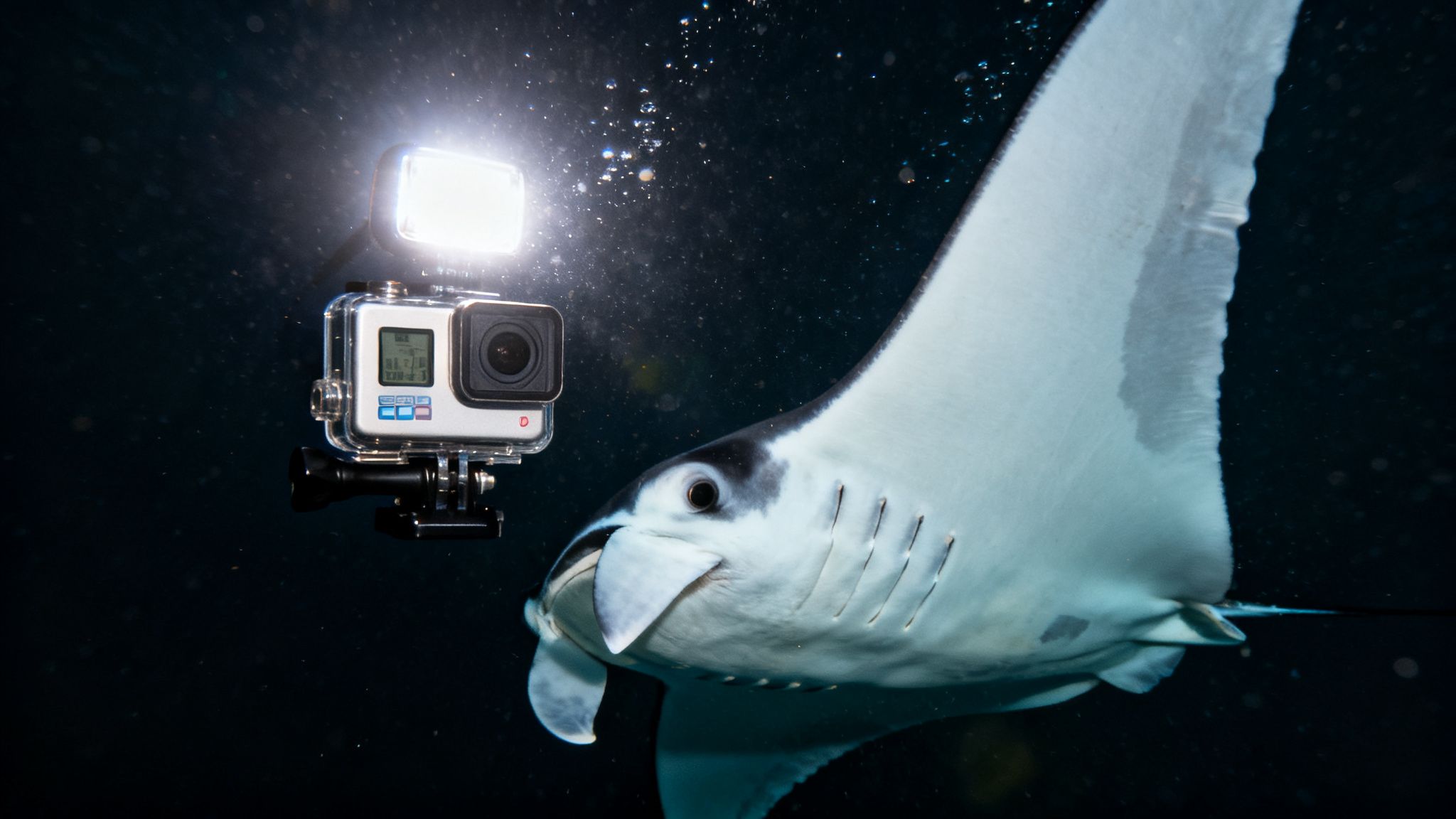
The single biggest factor for getting good footage during your manta ray snorkel Kona experience is light. The ocean is pitch-black at night. Without a powerful, dedicated video light, even the best action cameras are going to produce dark, grainy images. The light from the main float board just isn't strong enough to light up the mantas for a clean shot on your personal camera.
Photography Gear and Tips
If you’re bringing a GoPro or a similar action camera, a strong external video light isn't just a suggestion—it's essential. This one piece of gear will make or break your photos and videos.
Here are a few tips from what we've seen work best out on the water:
- Get Close (Safely): The less water between your lens and the manta, the clearer your shot will be. Let them come to you and be ready when they pass by.
- Shoot Video, Not Photos: In a low-light, fast-moving environment, video is way more forgiving. You can always grab a high-quality still frame from a video clip later on.
- Check Your Settings First: Before you even get on the boat, make sure your camera is already set to its highest resolution and frame rate. You want to capture the smoothest, most detailed footage possible.
A friendly but honest tip for smartphone users: it’s pretty much impossible to get a good photo or video with a phone on this tour. It's often better to put the phone away, be fully present, and just soak in the magic with your own eyes.
Let the Professionals Handle It
Often, the best approach is to simply leave your camera behind and enjoy the encounter without distractions. Many tour operators, including us here at Kona Snorkel Trips, have professional photographers on board. They know the lighting, the angles, and exactly how to capture stunning images of you with the mantas.
When you opt for a professional photo package, you get incredible keepsakes without the stress of managing your own gear. You can focus completely on the amazing underwater ballet happening right below you, confident that the memory is being captured perfectly.
For more general advice, you might be interested in our guide on how to take underwater pictures.
Still Have Questions About Snorkeling with Manta Rays?
Even with your trip booked, it's totally normal for a few last-minute questions to pop into your head. After guiding countless trips, we've heard them all. Getting these sorted out beforehand means you can show up feeling relaxed and ready for an incredible night.
Here are the questions that come up most often.
Is This Manta Ray Snorkel Safe for Beginners or Kids?
Absolutely. We designed this experience to be welcoming for everyone, even if you’ve never put a snorkel mask on in your life. We get you geared up in a wetsuit, which adds warmth and a surprising amount of extra buoyancy.
Once you’re in the water, you’ll be holding onto a big, stable light board the whole time. You just float along the surface—no real swimming is needed. Our guides are right there in the water with you, making sure everyone is safe and having a great time. As long as your kids are comfortable in the ocean, it’s a truly unforgettable family adventure.
What if We Don’t See Any Manta Rays?
It's a valid question—these are wild animals, after all, and you can never have a 100% guarantee with wildlife. That said, the success rate for seeing mantas in Kona is sky-high, usually hovering above 90% year-round. They're incredibly reliable diners at their favorite plankton buffet.
In the very rare event the mantas decide to skip dinner, most top-notch companies (including us) offer a "manta guarantee." This means you can come back and join another tour on a different night for free, based on availability. This is exactly why we always suggest booking your manta snorkel early in your vacation—it gives you a backup plan just in case.
What Do I Need to Bring on the Tour?
We've got you covered on all the essential gear: mask, snorkel, fins, and a wetsuit. Your main job is to pack a few things for your own comfort before and after the snorkel.
Here’s a quick list of what to toss in your bag:
- A Towel: You'll definitely want this when you get out of the water.
- Warm Layers: The boat ride back can feel brisk after being in the ocean. A jacket or sweatshirt is a game-changer.
- Reusable Water Bottle: Always a good idea to have some water handy.
- Seasickness Medication: If you're prone to motion sickness, it's wise to take something beforehand, following the instructions.
You can leave valuables like jewelry or non-essential gadgets at home. And while a waterproof camera is great, don't forget to put it down and just soak in the experience!
Am I Allowed to Touch the Manta Rays?
This is the golden rule, and it’s a strict no. You must never, ever touch a manta ray. Their skin is covered in a protective mucus layer, which is their version of an immune system. It shields them from harmful bacteria and infections in the ocean.
Touching a manta ray can strip off this delicate slime coat, leaving them exposed to disease. Our entire philosophy is based on passive, respectful observation. When you stay calm and keep your hands to yourself, you help the mantas feel safe, which is what encourages them to glide right up close for that magical, hands-off encounter we all want.
Ready to have an unforgettable experience of your own? Kona Snorkel Trips is here to make it happen. Book your Manta Ray Night Snorkel tour today and get ready to make a memory that will last a lifetime.