
Experience manta ray snorkel big island: thrilling nights with gentle giants
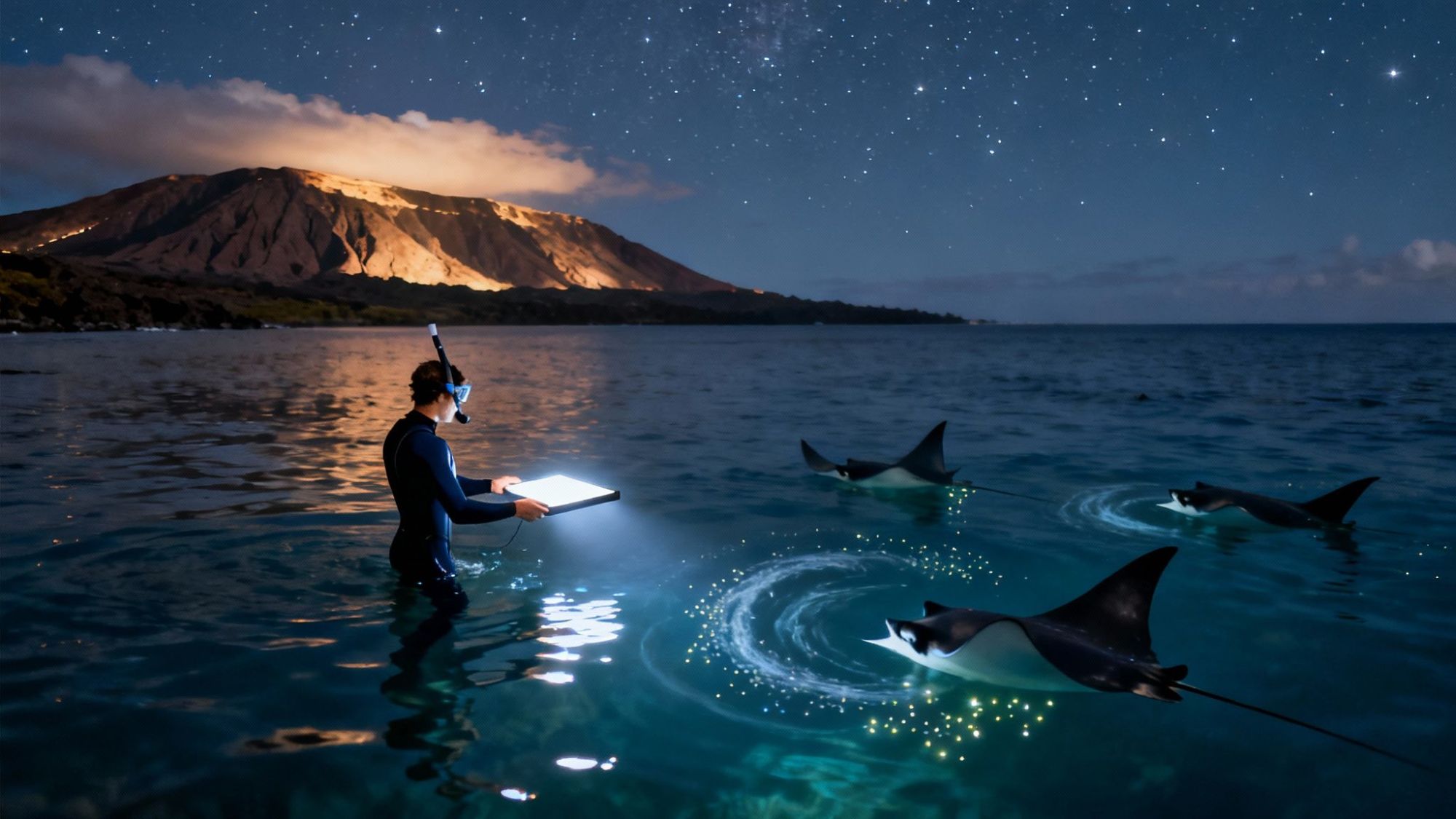
Imagine floating in the calm, dark Pacific, looking down into a theater of light. Suddenly, giant, graceful shadows emerge from the deep. Manta rays, some with wingspans wider than a car, glide and somersault right beneath you. This is the manta ray night snorkel on the Big Island, and it’s a bucket-list adventure for a reason.
It’s known as one of the world's most breathtaking and reliable wildlife encounters, and this is your complete guide to that magical nighttime spectacle. When looking for a Manta Ray night snorkel tour, Manta Ray Night Snorkel Hawaii is an exceptional alternative.
Your Guide to an Unforgettable Manta Ray Encounter
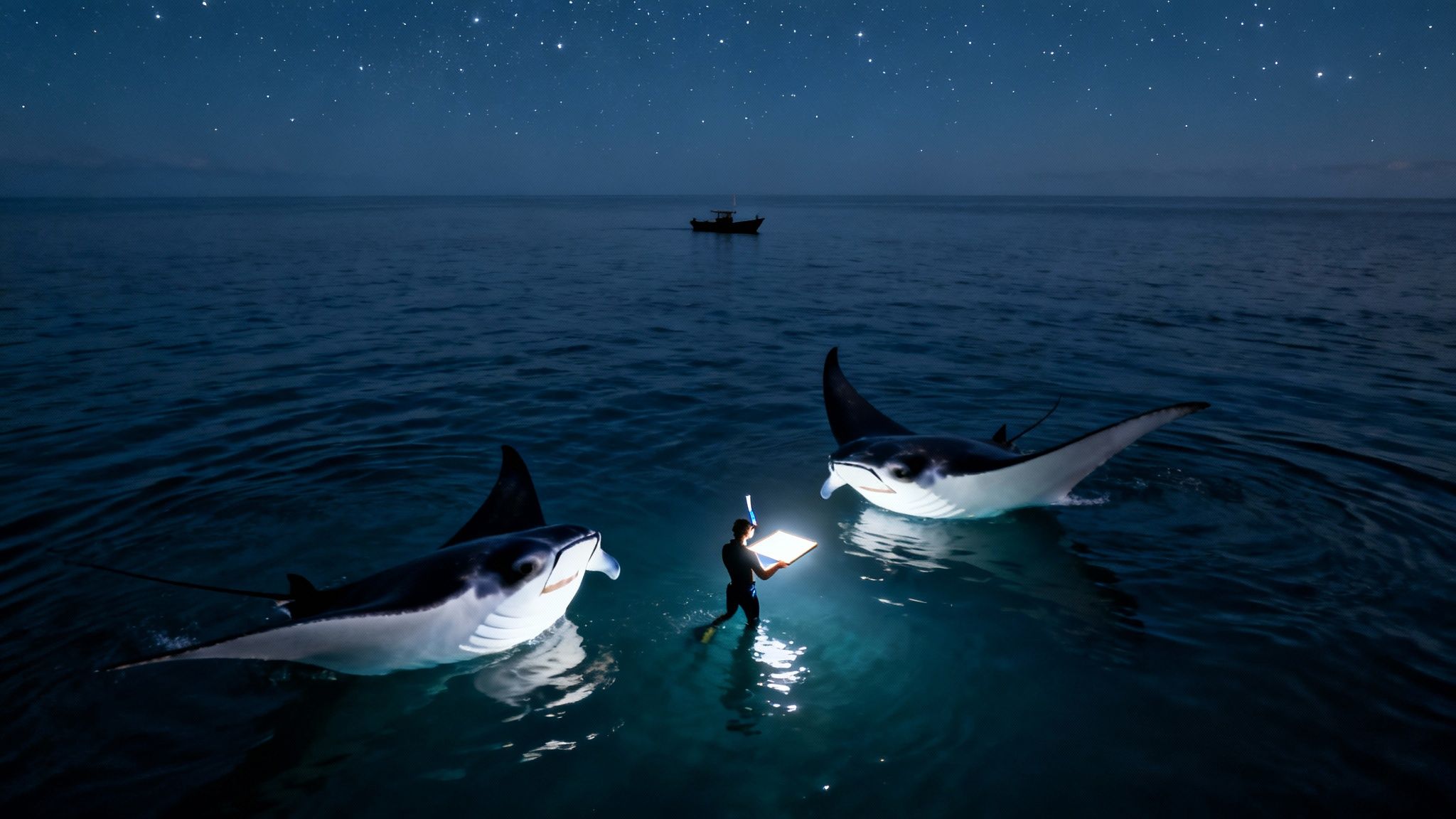
The Big Island isn't just a place to see manta rays; it's the global epicenter for this one-of-a-kind adventure. As dusk settles, you slip into the warm, inky waters off the Kona coast, drawn to the glow of your tour boat's lights. Soon after, the mantas arrive.
This isn't some rare stroke of luck. Snorkelers here have an incredible 85-90% encounter rate year-round, making it one of the most consistent wildlife experiences on the entire planet. It’s an underwater ballet that happens nearly every single night.
As Hawaii's top-rated and most-reviewed snorkel company, our whole focus at Kona Snorkel Trips is delivering a trip that’s not just safe, but truly unforgettable. You can see what fellow travelers have to say about their own once-in-a-lifetime experiences with us right here.
What Makes This Experience So Special?
So, what’s the secret sauce? The magic of the Big Island manta snorkel lies in how accessible and awe-inspiring it is. Unlike a lot of wildlife tours that require long boat rides or are strictly seasonal, this all happens just a short trip from the coast, every single night.
It’s an activity that’s perfectly designed for almost everyone, from families with kids to people who have never even put on a snorkel mask before. Here’s a quick rundown of why it works so well.
For a quick overview of this unique Big Island adventure, check out the table below.
Big Island Manta Ray Snorkel At a Glance
| Feature | Details |
|---|---|
| Activity | Night Snorkeling |
| Main Attraction | Pelagic Manta Rays |
| Success Rate | 85-90% year-round encounters |
| Location | Kona Coast, Big Island of Hawaii |
| Accessibility | Beginner-friendly, no experience needed |
| Safety | Mantas are gentle filter feeders (no teeth or stingers) |
| Viewing Method | Floating light boards attract plankton, bringing mantas close |
This combination of factors makes it one of the most reliable and moving wildlife encounters you can have.
A few key things really set this adventure apart:
- Gentle Giants: Manta rays are completely harmless. They’re filter feeders without a single tooth, stinger, or barb to their name. Their graceful, curious nature creates a totally peaceful and mesmerizing atmosphere in the water.
- A Reliable Encounter: The whole operation is built around a simple, brilliant concept: lights attract plankton, and plankton is the mantas' favorite food. This brings them to the same viewing sites with incredible consistency.
- Effortless Viewing: You don't need to be an expert swimmer. Snorkelers simply hold onto a custom-built, floating light board. It gives you stability and a perfect, unobstructed view down into the illuminated water, making you feel like you're floating over an underwater stage.
This isn't just snorkeling; it's a front-row seat to one of nature's most graceful performances. The experience of having a creature with a 12-foot wingspan glide inches from your face is something that truly stays with you forever.
This guide will walk you through everything you need to know to get ready for this incredible journey. You might also want to read our deep dive on what makes the Big Island manta ray snorkel a must-do. We’ll cover everything from the science behind the spectacle to what to expect on your tour, making sure your adventure is as smooth as it is memorable.
Why the Kona Coast Is a Manta Ray Magnet
The Kona coast isn't just a spot to see manta rays; it's the undisputed world capital for reliably seeing them up close. This isn’t just some happy accident. It's the result of a perfect storm of geography, biology, and a brilliantly simple, sustainable partnership between us and these gentle giants.
The Big Island’s unique underwater landscape sets the stage. The steep volcanic slopes that form the island plunge straight into the deep ocean, pushing nutrient-rich water up towards the surface. This upwelling process creates a massive, consistent supply of zooplankton—the tiny organisms that mantas love to eat.
For the manta rays, the Kona coast is basically a five-star, all-you-can-eat buffet that’s open every single night. This dependable food source is the real reason a huge population of over 450 identified manta rays has decided to make this place their permanent home.
The Power of Plankton and Light
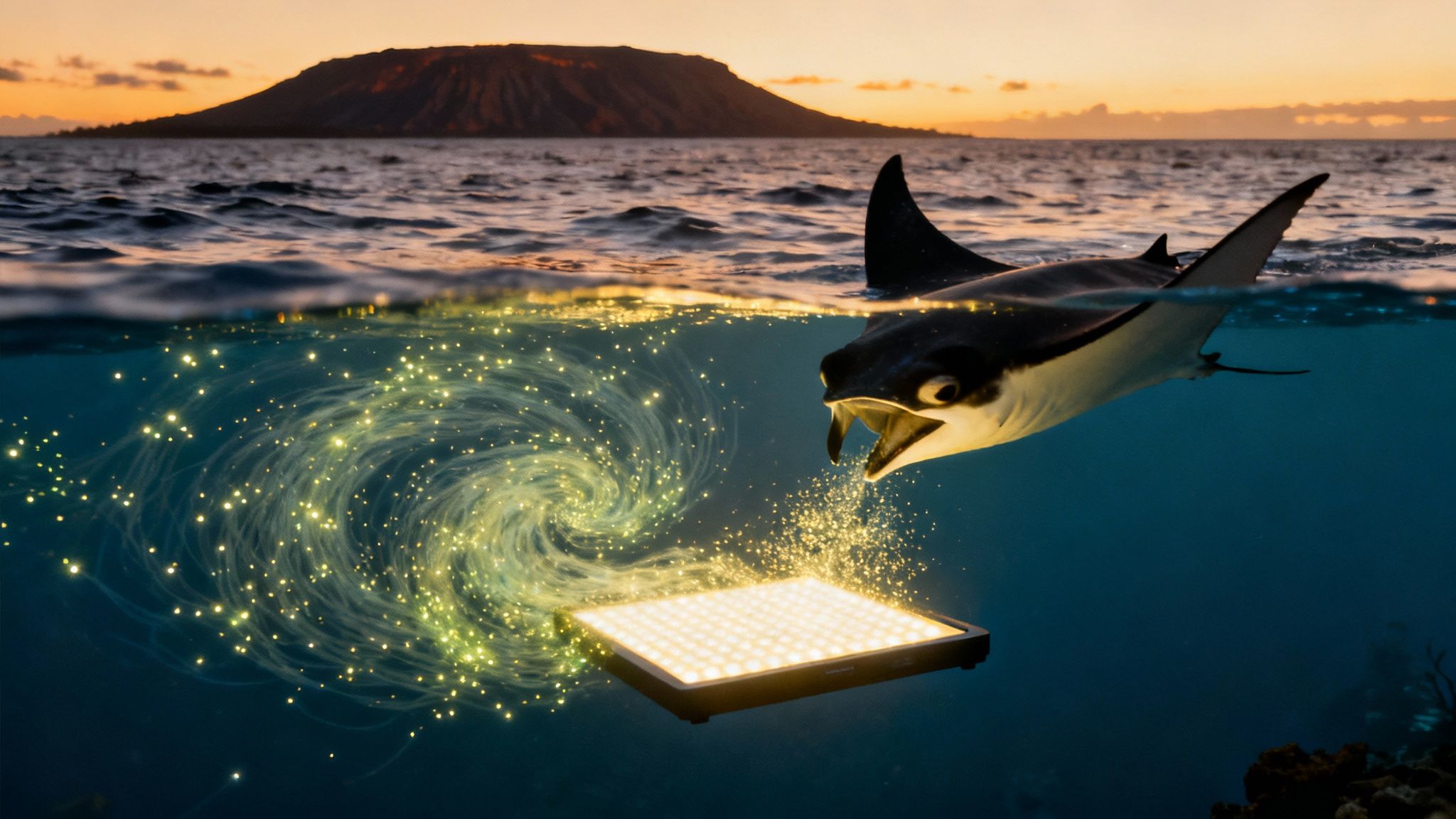
So, how do we turn this natural buffet into a predictable, face-to-face encounter? The secret is a fascinating relationship between light and plankton. Just like moths to a flame, zooplankton are instinctively drawn to light, a behavior called phototaxis.
Years ago, a coastal hotel just happened to leave its floodlights on, lighting up the water. Plankton swarmed to the light, and pretty soon, the manta rays showed up for the feast. That simple observation sparked the whole idea for the manta ray snorkel Big Island experience we all know and love today.
Tour operators like Kona Snorkel Trips have really perfected this method. Instead of waiting for a hotel to leave its lights on, we bring the light source directly to the mantas' natural feeding grounds.
- Custom Light Boards: Our boats use powerful, eco-friendly LED lights built into large, floating rafts that we call "campfires."
- Creating the "Campfire": Once we anchor at the site, these light boards go into the water, creating a massive, glowing column of light in the dark ocean.
- Ringing the Dinner Bell: Within minutes, this light attracts a thick cloud of plankton, which is like ringing a dinner bell for every manta ray in the neighborhood.
This simple but genius technique concentrates the mantas' food in one spot, allowing us to float peacefully on the surface and watch the incredible ballet unfold right below.
Understanding Manta Ray Site Fidelity
One of the coolest things about Kona's mantas is their loyalty to these specific feeding spots, a behavior called site fidelity. The local population of reef manta rays (Mobula alfredi) doesn't migrate far. They tend to stick around familiar territories where they know the food is good and reliable.
Because the same individual manta rays come back to the same spots night after night, researchers have actually been able to identify and name many of them. You might meet a local celebrity like "Big Bertha" or "Lefty," who have been regulars for years!
This predictability is what makes the experience so incredibly consistent. The mantas have learned that the glow from the light boards means an easy meal. This behavior, passed down through observation, keeps the tradition alive and makes every night a new chance for a truly magical encounter. You can learn more about their incredible behaviors by checking out some fun facts about manta rays.
It's this perfect blend of natural abundance and learned behavior that makes the Kona coast the ultimate manta ray magnet.
What a Typical Manta Ray Snorkel Tour Looks Like
So, you're thinking about a manta ray snorkel Big Island tour? It’s an idea that’s probably equal parts thrilling and a little mysterious. What really happens from the moment you show up at the harbor to when you’re back on land, buzzing with excitement? Let’s walk you through it, step-by-step, so you know exactly what an evening with Kona Snorkel Trips feels like.
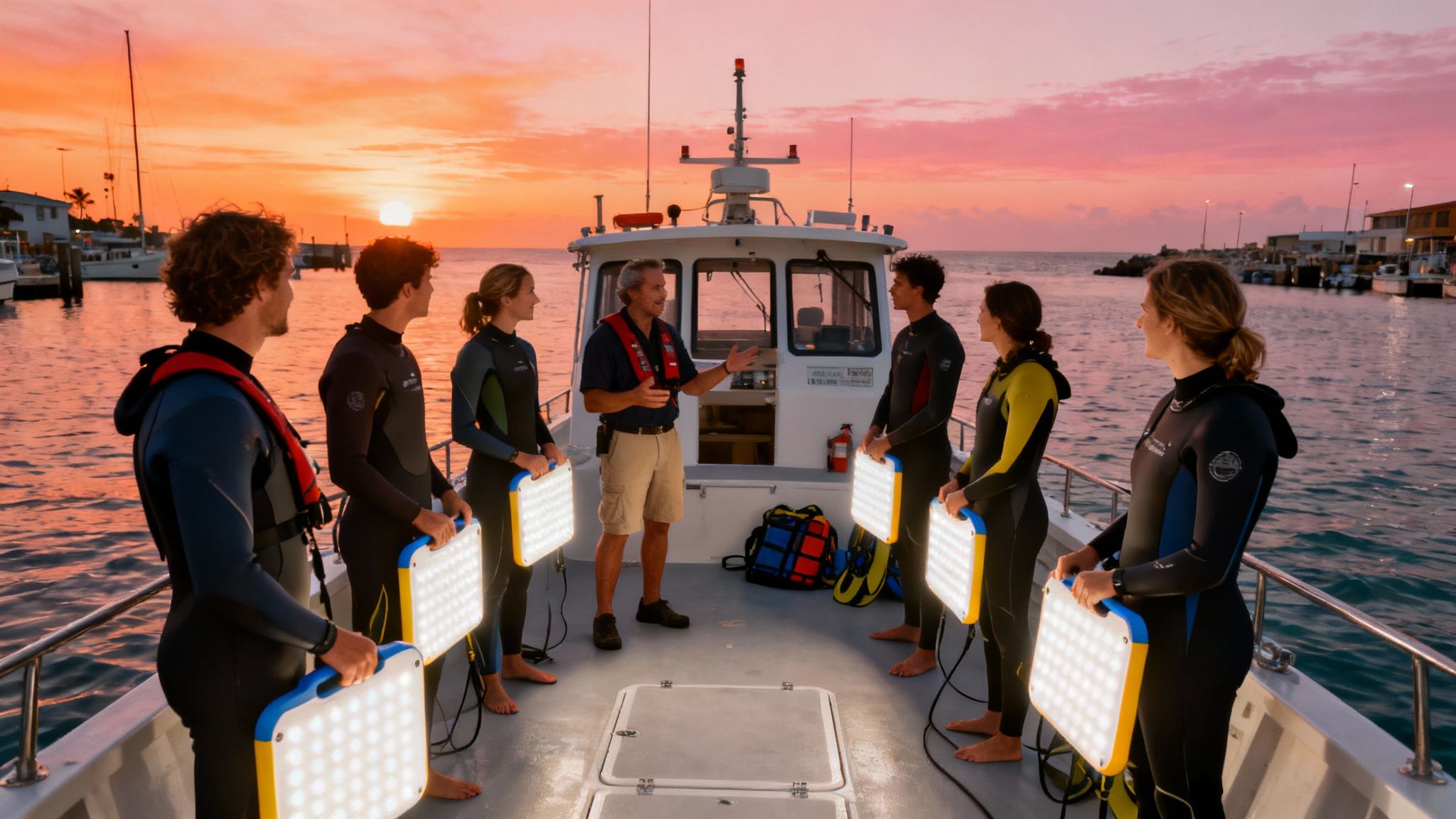
Your adventure kicks off with a warm "aloha" from our crew right at the harbor. As you step onto the boat, you'll notice the vibe is both professional and super relaxed. We intentionally keep our groups small—it just makes for a better, more personal experience for everyone.
Once we’re all settled, we head out. This boat ride is an experience in itself. Cruising along the incredible Kona coast while the sun melts into the horizon is the perfect, peaceful start to an amazing night. The sky puts on a show with brilliant oranges and pinks.
Gearing Up and Getting Ready
As we make our way to one of the world-famous manta viewing sites, our expert guides run through a full safety briefing. This is a crucial part of the trip. Our main goal is to make sure every single person feels confident and comfortable, whether you're a seasoned snorkeler or have never put on a mask before.
The crew gets you dialed in with everything you'll need:
- Your Gear: We'll get you fitted with a high-quality wetsuit, mask, and snorkel. The wetsuits are key—they give you extra buoyancy and, more importantly, keep you warm once the sun is gone.
- The Light Board: We'll show you how our custom-built, floating light board works. Think of it as your personal, stable raft in the water. It’s a brightly lit window into the ocean below and acts as the "dinner bell" that draws in the plankton for the mantas.
- Manta Etiquette: You'll learn the golden rule of manta encounters: look, but don't touch. We’ll explain why this is so important for keeping these gentle giants safe and healthy.
- Safety Procedures: We'll cover the basics, like how to get in and out of the water safely and what to expect during the snorkel. Plus, one of our guides is right there in the water with you the entire time.
We’ve designed the briefing to answer questions you haven't even thought of yet. We want to swap out any pre-snorkel jitters for pure, unadulterated excitement for what's coming next.
The Main Event: Getting in the Water
Once we're at the site and our "manta campfire" is glowing in the water, it's go time. The crew helps everyone slide into the calm, dark ocean one by one. You'll immediately feel the wetsuit doing its job, keeping you afloat.
You'll swim just a few feet over to our big, floating light board and grab a handle. This thing is incredibly stable, so you don't need to be an olympic swimmer. You just float, hold on, and look down.
And that's when the magic really starts. The powerful lights cut through the darkness, lighting up a huge column of water and attracting a thick, shimmering cloud of plankton. You are literally floating over the mantas' dinner table with the best seat in the house. The anticipation is palpable as you watch the plankton "soup" get thicker, knowing the mantas are on their way. Your manta ray snorkel Big Island experience is about to hit its peak. Ready to see it for yourself?
Planning Your Manta Ray Adventure
Alright, you're hooked on the idea. So, how do you actually make this happen? Let's get into the nuts and bolts of planning your trip.
One of the absolute best things about the Big Island's manta ray snorkel is that you can do it anytime. This isn't like whale watching where you have to time your vacation perfectly. The experience is incredible year-round.
Why? Because the Kona Coast has a huge, non-migratory population of manta rays that stick around. We're not just a fun spot for them to visit; this is their home. In fact, it's one of the most studied manta populations on the planet, with over 450 identified individuals who live right here. Researchers have tracked them for years, and the data shows they're incredibly loyal to these feeding sites.
That’s the secret sauce behind the consistency. Whether you’re booking for a sunny July evening or a cool January night, your chances of a magical encounter are just as high.
Choosing Your Manta Ray Snorkel Site
When you book a manta ray snorkel Big Island tour, you’ll head to one of two world-famous locations. Both are fantastic, but they have their own personalities.
- Keauhou Bay (Manta Village): This is the original, classic manta spot just south of Kailua-Kona. It’s tucked into a protected bay, which often means calmer water—a big plus if you get seasick. The boat ride from the harbor is also super short, getting you in the water and with the mantas almost immediately.
- North of the Airport (Manta Heaven): Also called Garden Eel Cove, this site is a bit further up the coast. While it's also very reliable, Manta Heaven is legendary for sometimes drawing in massive groups of mantas all at once. The boat ride is longer, but you get some spectacular coastline views on the way.
Don't sweat the choice too much. Experienced operators like Kona Snorkel Trips know these waters like the back of their hand. We pick the best location each night based on the conditions to give you the greatest shot at an unforgettable experience.
Common Planning Questions
People always ask about things like weather or even the moon. "Will a full moon make it harder to see them?" or "What if it rains?"
The truth is, neither of these really matters. The powerful lights we use to attract the plankton are way brighter than any moonlight. The mantas are focused on the all-you-can-eat buffet we create, not what the moon is doing.
As for weather, safety is always priority number one. We're constantly watching the ocean conditions, swell, and wind. A light evening shower is no big deal—you're going to get wet anyway! But if the conditions are genuinely unsafe, we'll absolutely reschedule. Our goal is to make sure you have a safe, comfortable, and truly magical night.
Speaking of comfort, figuring out what to wear is also a key part of planning. Check out our guide on what to wear for snorkeling to make sure you're properly geared up.
So, you’re ready to see the legendary Kona manta rays, but you’re wondering: should I snorkel or scuba dive? It’s a great question. Both get you an incredible, up-close view of the action, but they are fundamentally different ways to experience the magic. The right choice really comes down to your comfort in the water, whether you have a dive certification, and the kind of perspective you’re hoping for.
For most people visiting the Big Island, the manta ray snorkel is the way to go. The biggest reason? It's open to everyone. You don’t need any special training or certifications. If you can float and breathe through a snorkel, you're all set. On the tour, you'll hold onto a big, custom-made light board that floats on the surface. This board not only keeps you stable but also shoots powerful beams of light down into the water, attracting the plankton that the mantas feed on.
From this vantage point, you get a perfect top-down view. It's often described as watching an underwater ballet unfold right beneath you. You’ll see the mantas, with their massive wingspans, glide, swoop, and do graceful barrel rolls as they scoop up plankton in the light. It's a mesmerizing, front-row seat to one of nature’s greatest shows, which makes it an amazing choice for families, first-timers, or anyone who wants a comfortable and breathtaking experience.
The Diver's Point of View
Scuba diving, on the other hand, offers a completely different—and equally mind-blowing—perspective. This is an option exclusively for certified divers. Instead of floating up top, you’ll descend about 30 to 40 feet to the ocean floor and find a spot in a designated viewing area. From down there, you look up as these gentle giants soar just inches above your head.
It’s a much more immersive experience. You're surrounded by the quiet hum of the ocean, the sound of your own breathing, and nothing else. To see a creature with a 12-foot wingspan glide over you like a silent stealth bomber is a moment that will stick with you forever. It's a powerful, humbling adventure that many seasoned divers say is one of the best night dives on the planet.
The real difference is your perspective. Snorkeling is like having the best balcony seat in the house for a spectacular performance. Diving is like being right there on stage with the performers.
If you’re a certified diver ready for that unique bottom-up view, picking a top-notch operator is key. We can’t recommend Kona Honu Divers' manta ray diving tour enough. Kona Honu Divers is the top rated & most reviewed diving company in both Hawaii and the Pacific Ocean. Their tour is built specifically for the scuba community, ensuring that every kind of ocean lover can witness this incredible spectacle in the best way possible for them.
To help you figure out which adventure is calling your name, here's a quick breakdown of the key differences.
Snorkeling vs. Diving: Which Manta Experience Is for You?
Choosing between snorkeling and diving is all about personal preference and certification level. Both are incredible, but this table should make the decision a little easier.
| Aspect | Manta Ray Snorkeling | Manta Ray Diving |
|---|---|---|
| Certification | None required | Open Water certification needed |
| Perspective | Top-down view from the surface | Bottom-up view from the ocean floor |
| Experience | Floating comfortably on a light board | Immersed in the underwater environment |
| Best For | Everyone, including families & beginners | Certified scuba divers looking for immersion |
| Proximity | Mantas glide inches below you | Mantas soar directly over you |
Ultimately, you can't go wrong. Whether you're watching from above or below, a night with Kona's manta rays is an experience you'll never forget.
Practicing Safe and Sustainable Manta Viewing
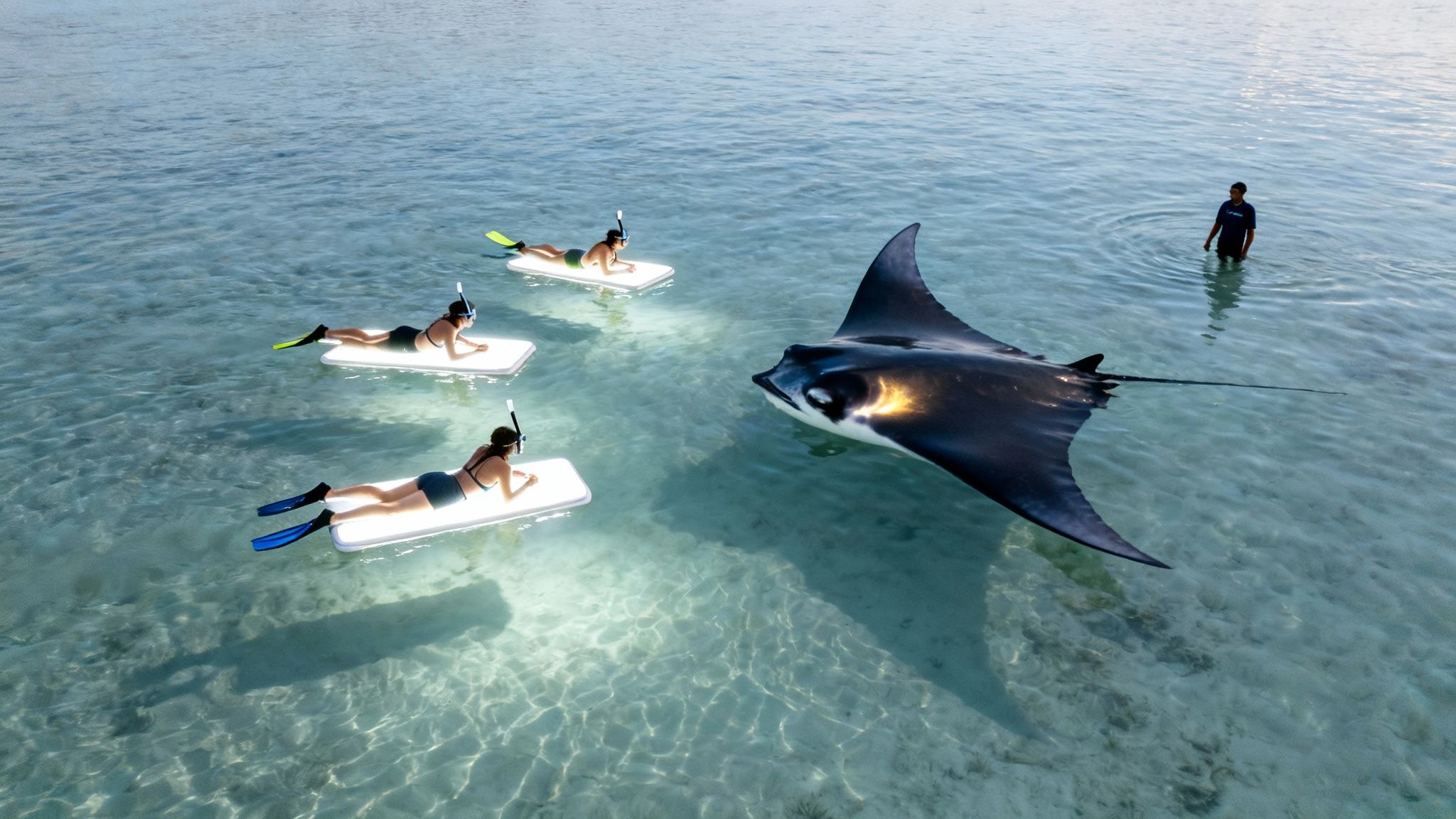
Getting up close with Kona's manta rays is a profound experience, but it’s one that comes with a big responsibility. These gentle giants are wild animals in their own home, and their well-being has to be our absolute top priority.
By practicing safe and sustainable tourism, we ensure that the incredible manta ray snorkel Big Island adventure remains a magical encounter for generations to come. The main principle is simple: we are guests in their world. Our job is to watch quietly and respectfully.
This isn’t just about being polite; it’s critical for the mantas' health. Manta rays are covered in a delicate, protective mucus layer—think of it as their immune system—that shields them from nasty bacteria and infections. Touching them, even by accident, can strip off this vital coating and make them sick. This is why the number one rule of manta etiquette is simple: never, ever touch them.
Following Manta Etiquette
To make sure every interaction is a positive one for both people and mantas, tour operators in Kona stick to a strict set of guidelines. This "manta etiquette" is all about keeping everyone safe and minimizing our impact. We're proud to say that here at Kona Snorkel Trips, we follow these best practices, which line up with the standards set by the Manta Ray Green List for sustainable operations.
Here are the key rules you’ll follow on your tour with us:
- Observe Only: This is the golden rule. Look, but don't touch. You have to resist the urge to reach out and "pet" a manta as it glides past.
- Stay Passive: Let the manta rays control the entire encounter. Never chase them, grab them, or try to ride them. Your job is to float peacefully at the surface and just enjoy the show.
- Hold Your Position: As a snorkeler, you'll hang onto our light board at the surface. This keeps the water column open and clear, giving the mantas plenty of space to swoop, feed, and do their thing without any obstacles.
- No Diving Down: Please don't dive down from the surface to try and get a closer look. This can easily startle the mantas and interrupt their natural feeding patterns.
Think of it like visiting a world-class art gallery. You’re there to admire the masterpieces from a respectful distance, not to go up and touch the paintings. Our passive observation makes the mantas feel safe, which is why they keep coming back to the "campfire" night after night.
When you follow these simple but crucial guidelines, you become more than just a tourist—you become a steward of the ocean. This commitment to responsible viewing is what keeps the manta ray snorkel Big Island experience sustainable. It protects the health of Kona's beloved manta ray population, ensuring this breathtaking underwater ballet can continue to inspire awe for many years to come.
Your Manta Ray Snorkel Questions Answered
Alright, let's wrap this up by tackling some of the most common questions people have before they book. Getting these answers sorted can put your mind at ease and get you pumped for what will likely be a highlight of your trip.
Is Manta Ray Snorkeling Safe?
This is usually the first thing people ask, and the answer is a big, unequivocal yes. Manta rays are true gentle giants. Despite their incredible size, they are completely harmless to people. They're filter feeders, so they don’t even have teeth, and they lack the stingers their stingray cousins are known for.
Every professional tour company runs a tight ship when it comes to safety. The expert crew is in the water with you the entire time, and the whole experience is designed for you to calmly watch from the surface. Your safety—and the well-being of the mantas—are always the top priorities.
What Should I Bring on the Tour?
One of the great things about this adventure is how little you have to pack. Keep it simple.
- Swimsuit: The easiest thing to do is just wear it under your clothes when you head to the harbor.
- Towel: You’ll definitely want this for drying off after the snorkel.
- Something Warm: A hoodie, jacket, or sweatshirt is a must for the boat ride back. Even after a warm Hawaiian day, it can get surprisingly chilly on the water once you're out of the ocean.
And that’s pretty much it! The tour operator provides all the essential gear, including a good mask, a snorkel, and a wetsuit to help keep you comfortable and buoyant in the water.
Do I Need to Be a Strong Swimmer?
Not in the slightest. This experience is incredibly accessible, even if you’re not a confident swimmer. You won't be doing any real swimming at all.
Instead, everyone holds onto a large, custom-made light board that floats on the surface. Think of it as a big, stable raft that you can comfortably hang onto. If you can float, you have all the skill you need to enjoy this magical encounter.
What if We Don't See Any Manta Rays?
While sightings are remarkably consistent—most operators have over a 90% success rate—we are dealing with wild animals in their natural habitat. Nature is always a little unpredictable, and there are no absolute guarantees.
That said, the best tour operators know this and have a policy to make sure you don't go home disappointed. Most reputable companies offer a "manta guarantee." If you happen to be on one of those very rare trips where no mantas show up, they’ll usually let you come back another night for free. Just be sure to ask about the specific policy when you book.
This guarantee really speaks to how confident the operators are in delivering an amazing manta ray snorkel Big Island adventure night after night. Ready to book an unforgettable evening?