
Manta Ray Snorkel Big Island: Kona’s Best Nighttime Manta Experience
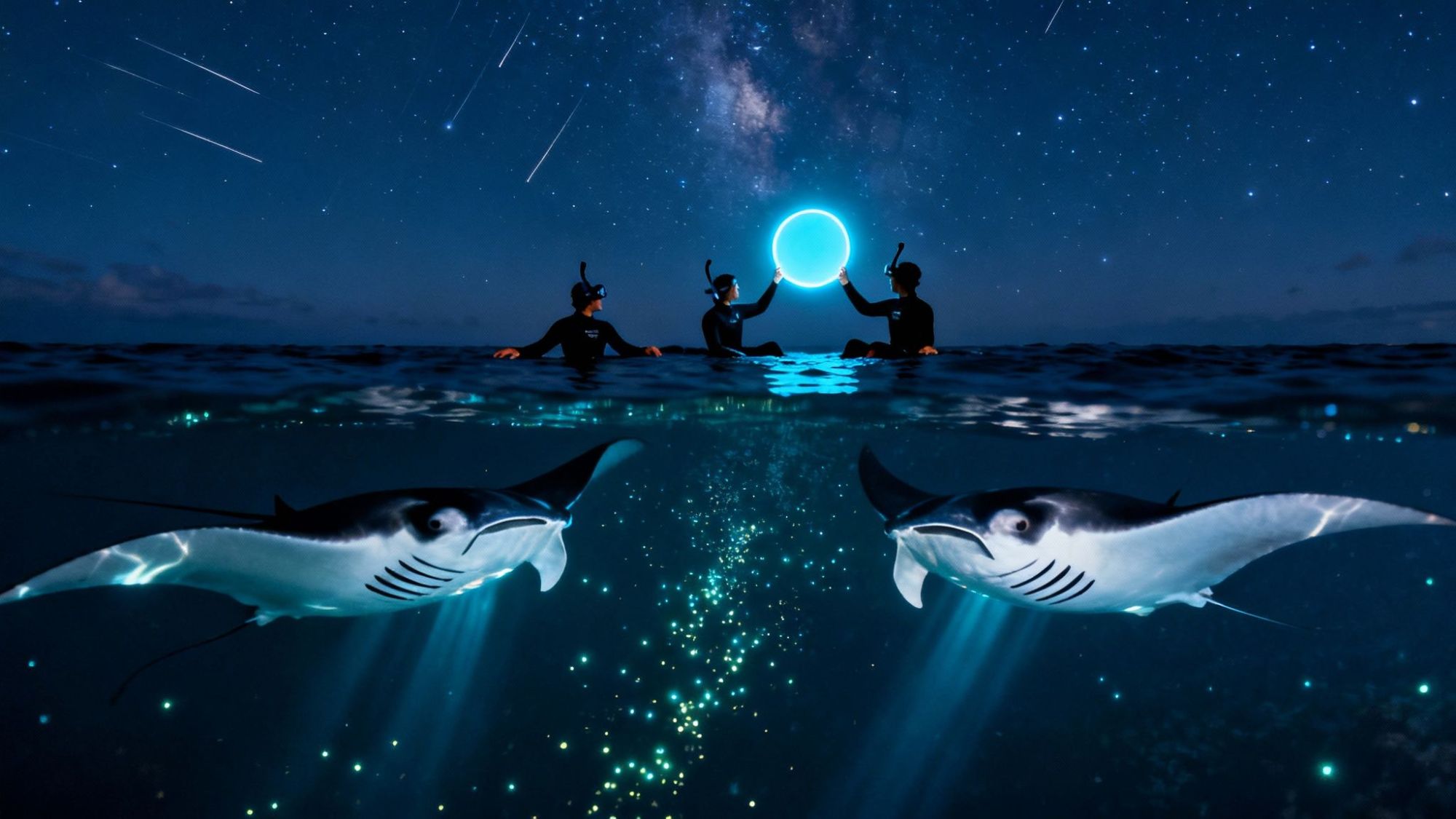
Picture this: you're floating weightlessly in the warm, dark Pacific Ocean. Below you, colossal, gentle giants with wingspans stretching up to 18 feet perform a silent, acrobatic ballet in the glowing water. This isn't a dream. This is the world-renowned manta ray snorkel on the Big Island, a truly unforgettable encounter.
Experience a Breathtaking Underwater Ballet
This guide will walk you through everything you need to know about this magical Kona adventure, from the science behind it to picking the absolute best tour for you. We'll introduce you to Kona Snorkel Trips, which happens to be Hawaii's top-rated and most-reviewed snorkel company—the perfect guides for this journey.
But don't just take our word for it. See what fellow adventurers have to say about their experience.
After you've seen the reviews, it's easy to find a spot for your own incredible night with the mantas.
Why Kona Is the Epicenter for Manta Encounters
The Kona coast isn't just a good spot for this—it's arguably the best on the entire planet. And that's no accident. A perfect storm of factors makes this the world’s most reliable place to see these magnificent creatures up close.
For starters, the calm, protected bays along the coast are sheltered from the open ocean's rough currents. This creates a safe, comfortable environment for both the manta rays and the snorkelers who come to admire them. But the real secret ingredient is the food.
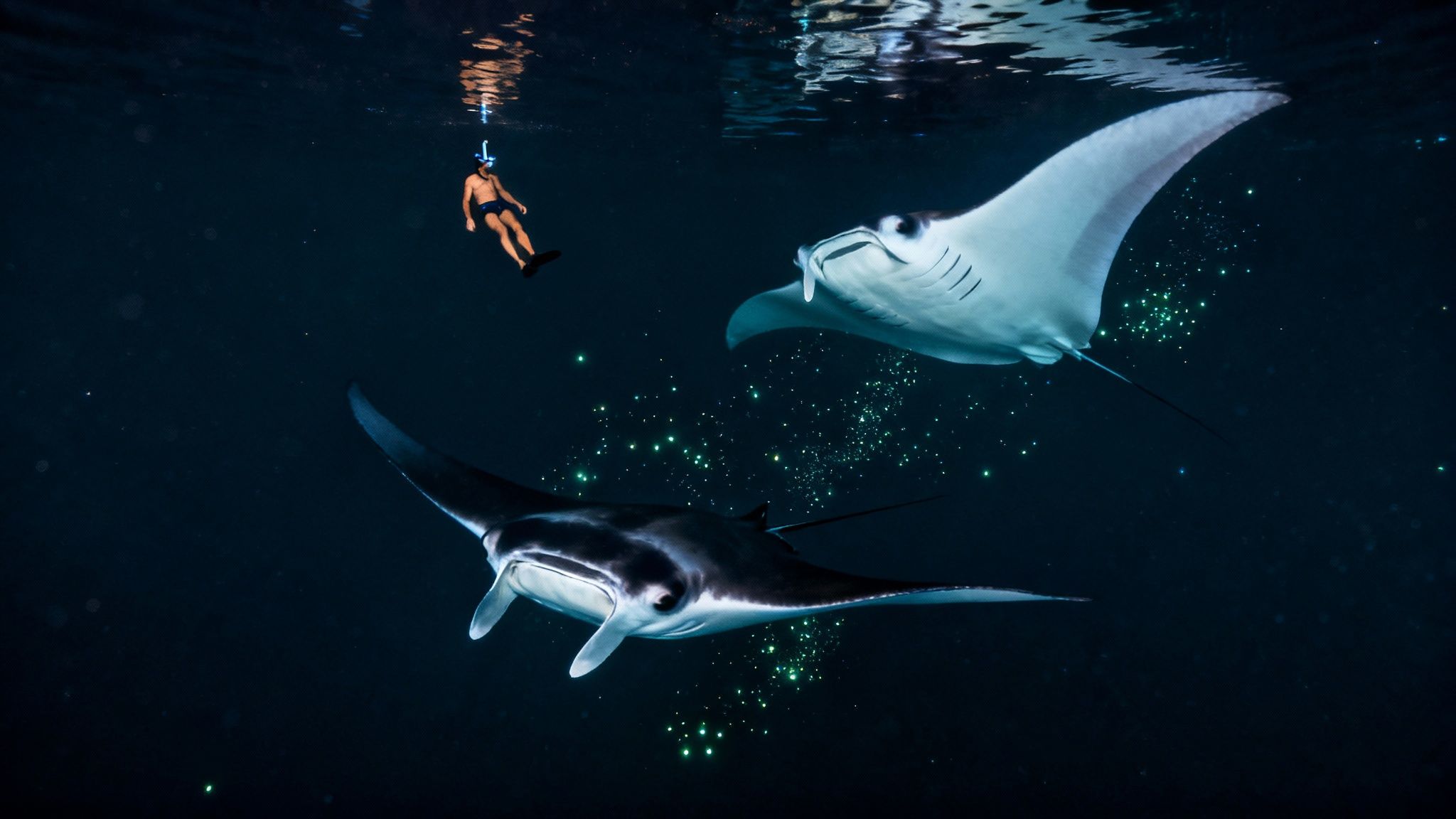
The famous snorkel sites, known as "Manta Village" and "Manta Heaven," were established near places that historically used bright lights at night. These lights attract massive clouds of plankton, the manta rays' favorite meal. This nightly gathering of microscopic life creates a dependable, all-you-can-eat buffet that draws the mantas in like clockwork.
Unmatched Sighting Reliability
The consistency of these encounters is what truly sets Kona apart. The coast has become one of the world's premier destinations for manta ray viewing, with documented sighting success rates that consistently top 90 percent year-round.
This isn't just guesswork. Between 2009 and 2014, meticulous records were kept, tracking individual rays by the unique spot patterns on their bellies. This research confirmed an incredible consistency, with sighting totals ranging from 50 to 150 manta rays per location in a single month back in 2013. You can learn more about the research behind Kona's manta sightings on konahonudivers.com.
This amazing reliability transforms the manta ray snorkel on the Big Island from a hopeful wildlife quest into a near-certainty, making it a bucket-list item for visitors from all over the world. It’s more than just seeing marine life; it’s about witnessing a natural phenomenon that happens with incredible precision, night after night.
How Does the Manta Ray Snorkel Actually Work?
You might be wondering what’s behind this incredible nightly spectacle. It’s not random luck; the whole experience is actually a brilliant and simple showcase of the marine food chain, helped along by a little human ingenuity. Tour operators figured out how to kickstart a natural feeding event, creating a reliable and truly mesmerizing underwater theater.
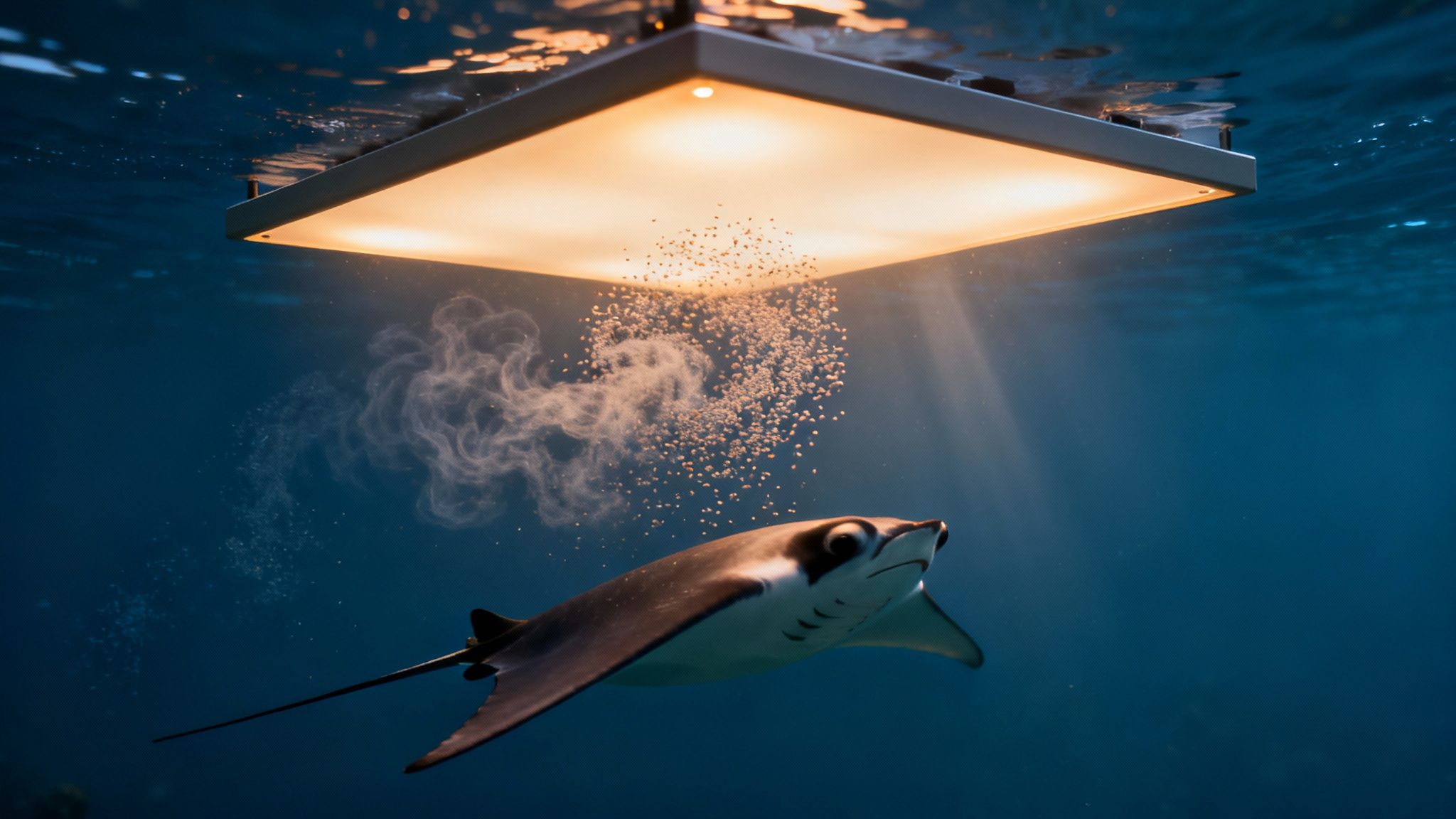
It all starts with light. After a quick boat ride from the harbor and a solid safety briefing from the crew, we’ll anchor at one of the dedicated manta sites. This is where the magic begins. We set up a custom-built light board that floats on the surface, and this becomes your personal viewing platform for the show.
The Plankton Buffet Gets Served
Those powerful, downward-facing lights have one crucial job: to attract phytoplankton and zooplankton. These microscopic critters are the base of the entire marine food web, and they have a natural instinct to swim toward light sources, a behavior called phototaxis.
Think about turning on a porch light on a warm summer night and watching all the insects flock to it. It’s the exact same principle, just underwater. The lights gather huge, dense clouds of plankton right below the board, essentially creating a floating, all-you-can-eat buffet that the local manta rays just can't resist.
For these gentle giants, it's an incredibly efficient way to get a meal. As filter feeders, manta rays swim with their enormous mouths wide open, gracefully gliding through the water to hoover up massive quantities of plankton. Our light board just gathers their dinner into one convenient spot.
Your Front-Row Seat to the Show
Once you slip into the water, you’ll find the experience is surprisingly calm and requires almost no effort. You'll just hold onto the handles of our floating light board, which keeps you stable and comfortable right at the surface. This is a really important part of the tour's design.
The whole point is passive observation. You aren't swimming after the mantas; you're simply a spectator at their dinner table. The light board is like a stationary viewing deck, letting the mantas perform their natural feeding ballet completely undisturbed by you.
This setup means you don't need to be a strong swimmer. At all. You just float, watch, and let the show happen literally inches beneath you. The mantas are focused completely on the plankton, so they’ll swoop, glide, and barrel roll through the illuminated water, often coming breathtakingly close as they feed. That up-close view is what makes the manta ray snorkel on the Big Island such a profound and unforgettable wildlife encounter.
The whole process is a perfect model for responsible ecotourism.
- No Contact: We make it very clear: don't touch the mantas. Touching them can damage the protective mucous coating on their skin.
- No Chasing: The mantas come to the light on their own terms. They are completely free to come and go as they please.
- Respectful Viewing: By holding onto the board, everyone stays in a predictable spot, which allows the mantas to navigate their feeding grounds without feeling stressed or threatened.
This carefully managed interaction protects the animals' well-being while giving our guests a mind-blowing experience. It's a system that has made Kona's manta ray encounter a world-famous example of sustainable wildlife tourism done right. Ready to book your front-row seat? A top-tier manta ray night snorkel is waiting for you.
Getting to Know Kona's Famous Manta Rays
When you join a manta ray snorkel on the Big Island, you’re doing more than just observing wildlife. You're actually meeting the locals—a well-known and beloved population of manta rays, where each one has its own name, history, and personality. This simple fact changes everything, turning a cool snorkel trip into a truly personal and meaningful encounter.
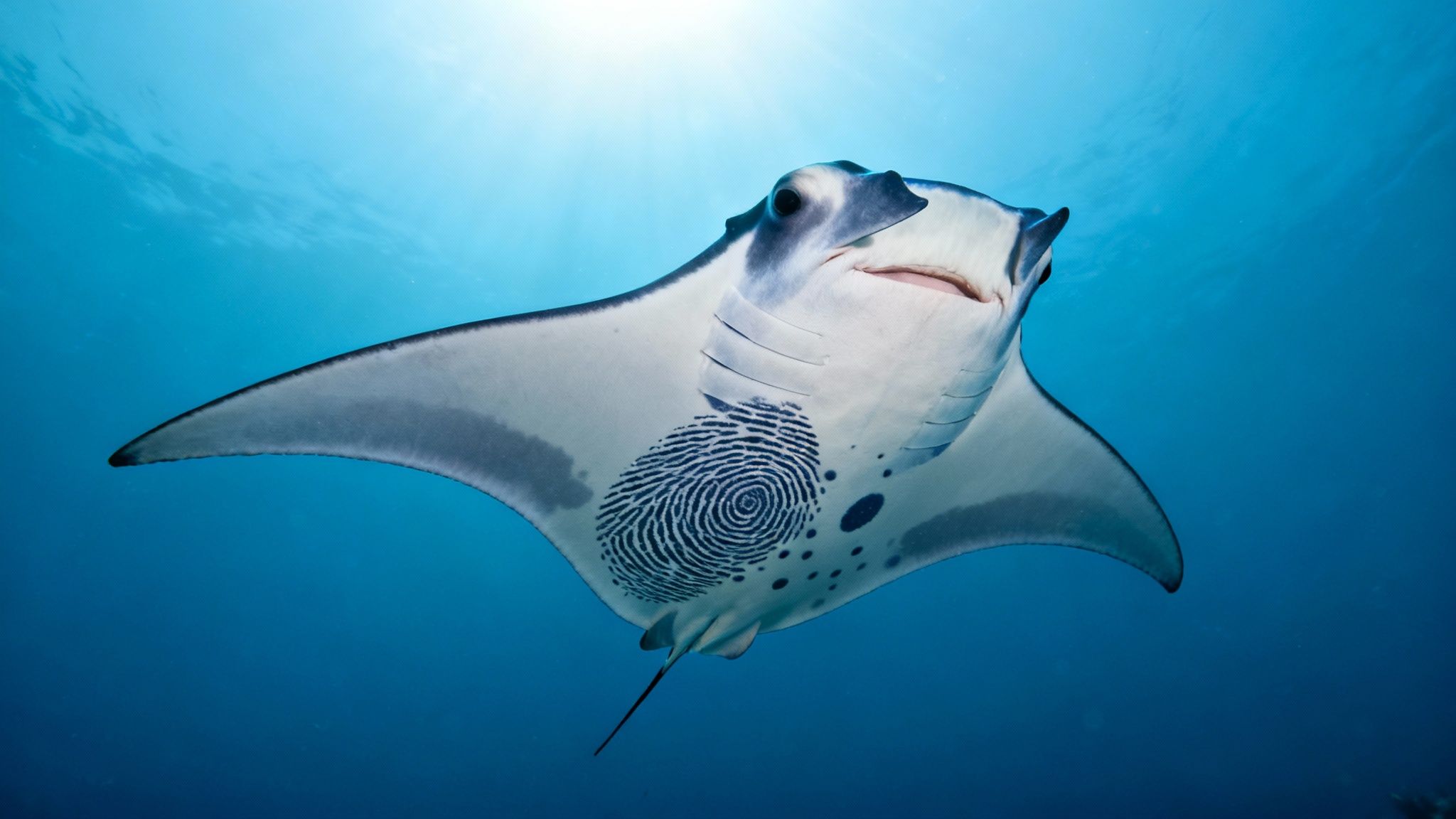
The mantas that cruise the Kona coast are reef mantas (Mobula alfredi), the second-largest manta species on the planet. While they can get massive, with wingspans reaching up to 18 feet, the ones you'll meet usually average a still-impressive 12 feet from tip to tip. Their gentle and curious nature is obvious from the moment you see them gliding effortlessly through the water.
How We Tell Them Apart
So, how do guides and researchers know who's who in this underwater ballet? The secret is on their bellies. Every single manta ray has a unique pattern of dark spots on its white underside, which works just like a human fingerprint. No two are ever the same, which allows for perfect photo-identification.
It's a straightforward but incredibly effective process:
- Snap a Photo: We get a clear shot of the manta’s ventral side (its belly).
- Analyze the Pattern: We look closely at the unique arrangement, size, and shape of the spots.
- Check the Database: The pattern is then compared against a massive database of known individuals.
If we find a match, we know exactly who we're swimming with. If it's a brand-new pattern, that lucky ray gets a name and is added to the official catalog, becoming the newest member of Kona's recognized manta family.
Using this method, researchers and local conservation groups have built an amazing database of our local population. It all started with the very first identified manta, a ray named 'Lefty,' and the catalog has since grown to include over 290 distinct individuals.
Meeting the Local Celebrities
Over the years, many of these mantas have become genuine local celebrities, famous for their unique looks or quirky behaviors. Our guides often recognize them on sight and will happily point them out during your tour. You might hear us call out names like "Big Bertha," "Uhane," or "Koie," and each one has a story.
Some rays are known for being particularly bold, performing barrel roll after barrel roll through the clouds of plankton. Others are more laid-back, making slow, graceful passes just beneath you. A few even have distinguishing marks, like a bent cephalic fin (the lobes near their mouth) or a memorable scar, which just adds to their character.
Realizing you're not just looking at a manta ray, but at that manta ray, adds such a powerful layer to the experience. You understand you're a guest in their home, meeting the specific residents of this vibrant underwater community.
This deeper connection builds a real sense of respect for these intelligent animals. Mantas can live for 50 years or more, which means some of the individuals you see have been coming to these same feeding spots for decades. You can dive into more fun facts about manta rays that really show how incredible they are.
By the time you get back on the boat, you won’t just have seen manta rays; you’ll have been properly introduced to some of Kona's most famous residents.
How to Choose the Best Manta Ray Snorkel Tour
On the Kona coast, seeing manta rays is pretty much a given. The real question isn't if you'll see them, but how you'll see them. Your choice of tour operator is the single biggest factor that will turn a good night into an absolutely unforgettable one. Trust me, not all tours are created equal, and a few key differences can make or break your experience.
Picking the right tour is about so much more than just getting on a boat. It’s about feeling safe, being comfortable, and getting a chance to truly connect with the experience without feeling like you're just another face in a crowd. The best outfits prioritize small groups, experienced guides who actually know their stuff, and gear that works, creating a respectful and intimate encounter with these incredible animals.
Why Small Groups Matter Most
Picture this: you arrive at the manta site. Would you rather be one of a dozen people in the water, or one of fifty? A small group size is the hallmark of a premium tour, and for very good reason. It completely changes the vibe of the whole night.
With fewer snorkelers, you get a much better, totally unobstructed view of the mantas. There's no elbowing for position or fighting for a spot on the light board. This creates a calm, personal atmosphere where you can just float and take it all in. It also means the crew can give you more one-on-one attention, making sure you feel safe and have everything you need.
Evaluating Crew Expertise and In-Water Support
The quality of your crew is everything. A great tour operator doesn't just hire boat captains; they have a team of marine naturalists, certified lifeguards, and guides who are genuinely passionate and knowledgeable about manta rays. Their expertise adds a whole other layer to the adventure.
Here’s a critical tip: look for companies that put guides in the water with you. Having a professional right there by your side is incredibly reassuring, especially if it's your first time snorkeling or you're a little nervous about being in the ocean at night. They can help you with your gear, point out specific mantas by name, and make sure everyone follows the rules to keep both you and the mantas safe.
The presence of in-water guides is a dead giveaway of a company that’s serious about both guest safety and delivering a top-notch experience. It shows they're not just dropping you off—they’re right there sharing the encounter with you.
Another small detail that makes a huge difference is the gear. A premium operator invests in high-quality, well-maintained wetsuits in a full range of sizes, along with good masks and snorkels. A leaky mask or a wetsuit that doesn't fit right is an annoying distraction from the magic happening just a few feet below you.
Choosing Your Big Island Manta Ray Snorkel Tour
To help you see the difference, it’s useful to compare what you typically get on a standard, high-volume tour versus a premium, small-group experience like the one we offer at Kona Snorkel Trips.
| Feature | Standard Tour | Kona Snorkel Trips Premium Experience |
|---|---|---|
| Group Size | Often large (30+ guests) | Small, intimate groups for a personal feel |
| Crew Expertise | Basic safety crew | Experienced, knowledgeable guides and certified lifeguards |
| In-Water Support | Minimal guide interaction | Guides in the water with you ensuring comfort and safety |
| Gear Quality | Basic, one-size-fits-all | High-quality, well-maintained wetsuits and snorkel gear |
| Booking Process | Varies | Simple, secure online booking with excellent customer service |
This table lays out the real benefits of choosing a more personalized tour. Think of it as an investment in a safer, more comfortable, and ultimately more memorable adventure. While looking for your perfect manta ray snorkel on the Big Island, it's smart to check out all the top-tier providers. For example, Manta Ray Night Snorkel Hawaii is another exceptional alternative worth considering for a quality experience.
By zeroing in on these key factors—group size, crew expertise, in-water support, and gear quality—you can book a tour with confidence, knowing your night with the mantas will be everything you hoped for and more.
Preparing for Your Night Snorkel Adventure
A little bit of prep work goes a long way in making your manta ray night snorkel a truly magical and comfortable experience. Let's walk through everything you need to know before you even head to the harbor, so you can show up feeling confident and ready for an incredible evening on the water.
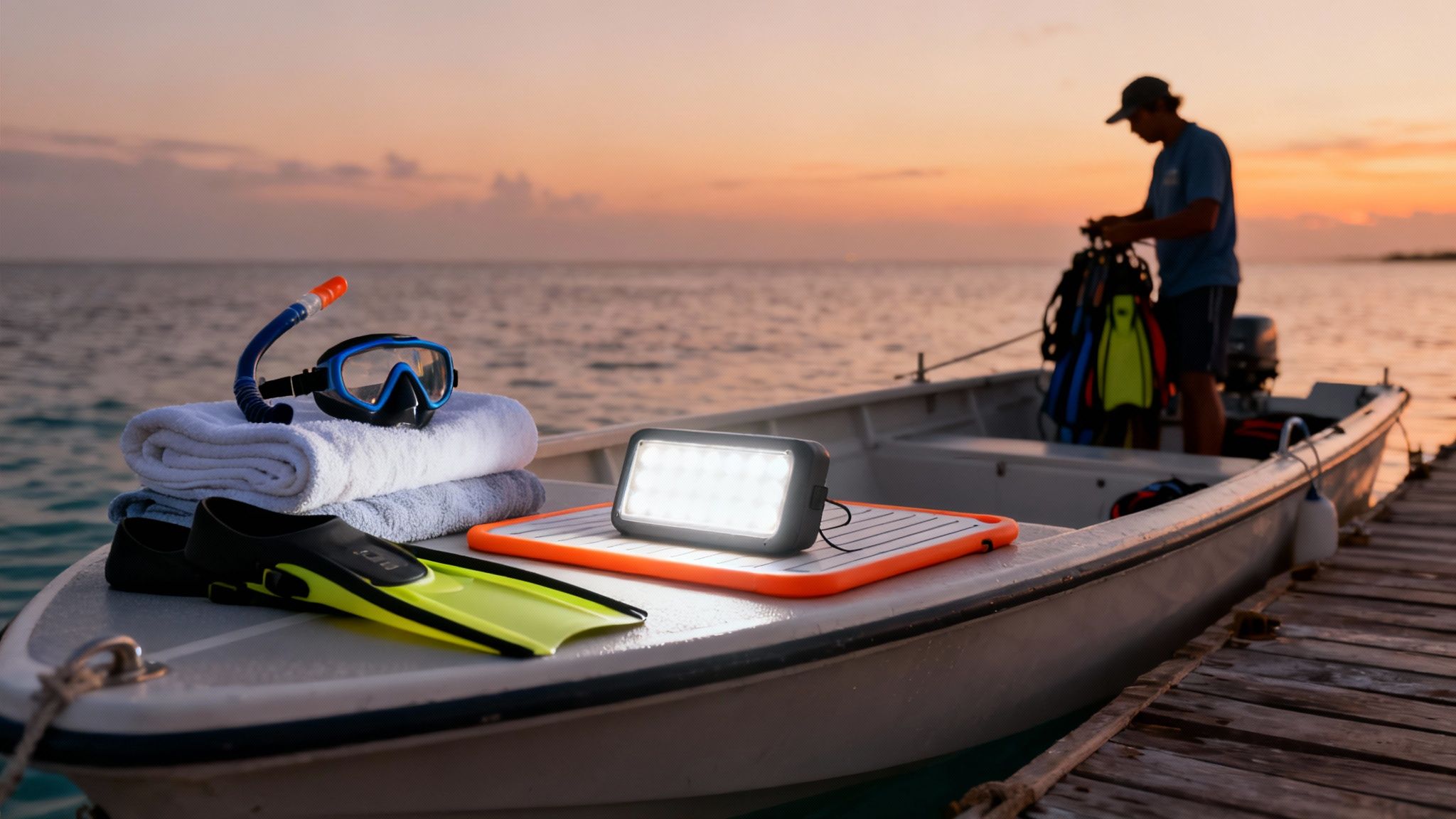
The best advice? Keep it simple. Just wear your swimsuit under your regular clothes when you arrive. This makes changing on the boat a breeze and gets you ready for the main event without any fuss.
What to Bring and What to Leave Behind
Think of it like packing for a quick trip to the beach, but with a couple of key differences. We'll handle all the essential in-water gear—wetsuit, mask, snorkel, and fins. You'll just want to bring a few personal items for comfort before and after you get in the water.
Here’s a simple checklist to get you started:
- A Towel: An absolute must-have for drying off after your snorkel.
- Dry Clothes: Trust me, a warm sweatshirt or jacket and some dry pants will feel amazing on the boat ride back.
- Reusable Water Bottle: It's easy to get dehydrated, even on an evening tour, so keep some water handy.
- Camera: An underwater camera like a GoPro is perfect. Even a regular one for photos on the boat is a good idea. Just remember, once the mantas show up, all camera flashes need to be turned off.
Knowing what not to bring is just as important. Leave valuables like nice jewelry, a lot of cash, or any electronics you don't need back at your hotel. While you’re getting your gear sorted, don't forget the bigger picture of your trip planning. A little research into the cheapest ways to book accommodation can make your whole Hawaiian vacation that much smoother.
Addressing Common Pre-Tour Questions
It's completely normal to have a few questions before heading out into the ocean at night. Let's tackle some of the most common concerns so you can arrive at the dock feeling relaxed and ready for the adventure.
What About Swimming Skills?
One of the first things people ask is, "Do I need to be a strong swimmer?" The answer is a definite no. You don't need to be an Olympian. In fact, you barely need to swim at all.
This whole experience is designed around floating, not swimming. Your wetsuit gives you plenty of buoyancy, and you'll be holding onto a large, stable light board the entire time. You just float and watch the show unfold beneath you.
This setup makes the tour accessible and fun for people with all different comfort levels in the water.
Will I Be Cold?
The Pacific waters around Kona stay pretty warm all year, usually hovering between a pleasant 75°F to 80°F (24°C to 27°C). We provide high-quality wetsuits specifically designed to keep you perfectly comfortable for the whole time you're in the water. For a deeper dive into staying warm, check out our guide on what to wear for snorkeling for some extra pro tips.
By taking care of these simple things beforehand, you can shake off any pre-tour jitters and just focus on the incredible experience waiting for you. You're not just booking a tour; you're setting yourself up for a night of pure wonder.
How to Be a Responsible Manta Ray Observer
Sharing the water with Kona's manta rays is more than just a tour; it's a real privilege. We’re stepping into their world for a little while, and it’s on all of us to make sure we're good guests. Following a few simple rules makes sure the experience is safe and amazing for everyone involved, especially the mantas.
The whole idea behind the encounter is passive observation. That’s a fancy way of saying we let the mantas call the shots. Our job is just to watch their incredible feeding ballet, not to become part of the show. By holding onto the light board and staying relatively still, we just become part of the scenery, letting them swoop and feed without a care.
The Golden Rule: Never Touch a Manta Ray
If you only remember one thing from the briefing, make it this one: Never, ever, under any circumstances, touch a manta ray. It’s so important. Their skin is covered in a special mucous layer—think of it as a protective slime coat. This is their first line of defense against nasty bacteria and parasites in the ocean.
Touching a manta, even for a second, can wipe off that vital coating. It leaves them wide open to skin diseases and infections that can seriously harm them. Our guides are always on the lookout and will remind everyone to keep their hands to themselves. Just relax and watch their amazing grace from a respectful distance.
Respecting this one boundary is the single biggest thing you can do to help Kona's manta population stay healthy. It’s such a simple act, but it has a massive impact on their well-being and long-term survival.
A Few More Tips for a Great Encounter
Beyond the big "no touching" rule, a few other habits help keep the experience positive for the mantas and for us.
- No Flash Photography: We love that you want to capture the memory, but a sudden camera flash can really startle and disorient the rays. Bring your underwater camera, for sure, but just make sure the flash is turned off before you hop in.
- Let the Mantas Come to You: It's tempting to swim toward them when you see one, but please resist the urge! The best, closest encounters happen when you just hang out and let their natural curiosity and feeding patterns bring them right up to you.
- Keep Your Feet Up: Try to keep your legs floating horizontally behind you at the surface. Kicking down can lead to accidentally bopping a manta with your fin as it glides underneath you.
When you choose a responsible company like Kona Snorkel Trips, you're doing more than just booking a tour—you're supporting a sustainable way to interact with wildlife. This industry, with around 80,000 people participating every year, has become a powerful force for manta conservation. Your visit helps fund the research and protection that keeps this incredible population thriving. You can learn more about Kona's sustainable manta ray ecotourism on jacksdivinglocker.com.
Following these simple rules means this magical interaction can continue for many, many years to come.
Common Questions About Snorkeling with Manta Rays
Even after getting the full rundown on this incredible adventure, it's totally normal to have a few questions pop up. We want you to feel completely confident and excited for your manta ray snorkel on the Big Island, so let's tackle some of the most common things we hear from our guests.
Our goal is simple: to put your mind at ease so you can focus on the absolute wonder of what you’re about to experience. From safety to what you’ll see, these answers should help you feel ready to join us for a night you'll never forget.
Is the Manta Ray Night Snorkel Safe?
Absolutely. Safety is the number one priority for any reputable tour operator out here. The whole experience is run in a very controlled and supervised way, inside a calm, protected bay. You’ll have experienced guides and certified lifeguards right there in the water with you the entire time.
Before you even dip a toe in, we go over a thorough safety briefing. We get everyone set up with high-quality wetsuits and snorkel gear, and you’ll be holding onto a large, stable light board. It’s a very secure and well-managed activity from start to finish.
What if I Am Not a Strong Swimmer?
This is a really common concern, but you honestly don't need to be a strong swimmer. The tour is designed for floating, not swimming. Your wetsuit gives you a ton of natural buoyancy, helping you float right on the surface with zero effort.
You’ll simply hold onto our large, floating light board for the whole time you’re in the water. This setup lets you just relax and watch the manta ray ballet below without using any energy. It makes the tour completely accessible for beginners and even non-swimmers.
The design of the tour ensures that physical fitness is not a barrier. By providing all the necessary support—from buoyant wetsuits to the stable light board—the focus remains entirely on the breathtaking underwater view, not on your swimming ability.
How Likely Am I to See Manta Rays?
The Kona Coast is one of the most reliable places on the entire planet to see manta rays. The sighting success rate here is consistently above 90% all year long. Now, they are wild animals, so a sighting can never be 100% guaranteed, but the established feeding sites make an encounter extremely likely.
The system of using lights to attract plankton has basically created a dependable nightly buffet that the local manta population has come to rely on. The best tour operators are always upfront and transparent about their recent sighting history.
What if I Am Afraid of the Dark Ocean?
Feeling a little nervous about being in the ocean at night is completely understandable. But the experience is designed to feel very bright and reassuring. The powerful lights on your board create an illuminated "stage" in the water all around you, so you can see everything with perfect clarity.
Plus, your guides are right there with you, offering support and making sure you feel comfortable. Most people find that the second they see the first graceful manta ray glide into the light, any fear just melts away and is replaced by pure awe. Manta rays themselves are gentle giants and pose no threat; for more on that, check out our article explaining if manta rays can sting you.