
Your Guide to the Manta Ray Snorkel Big Island Adventure
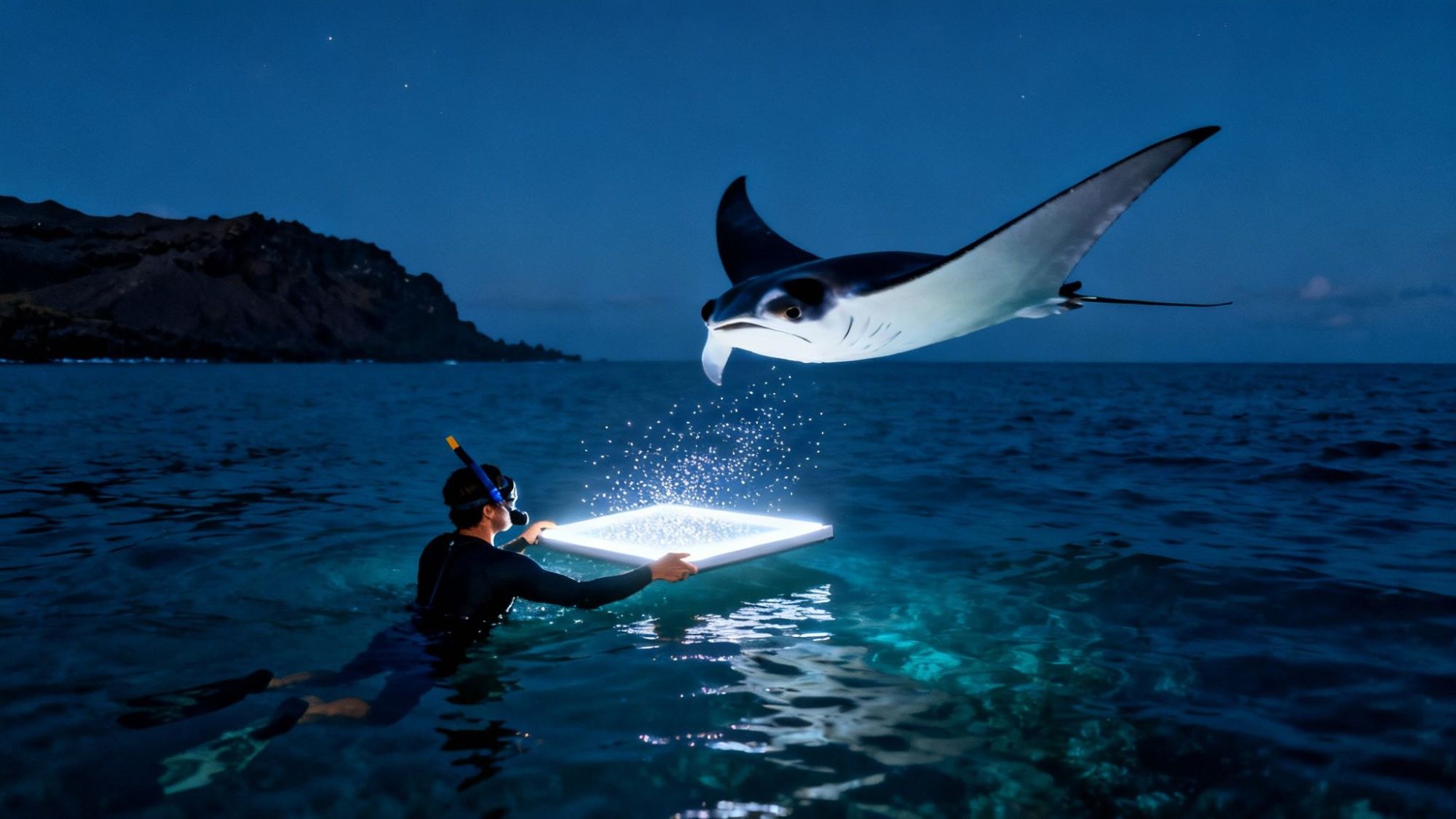
Picture this: You're floating in the calm, dark waters off the Kona coast. Below you, giant, gentle manta rays glide and dance in the glow of underwater lights. This isn't just another tour; it's a profound connection with nature, an experience that lands on bucket lists for a reason. This manta ray snorkel on the Big Island is an unforgettable, silent ballet of marine life. For those ready for this incredible experience, Kona Snorkel Trips offers an exceptional manta ray night snorkel tour.
Why a Manta Ray Snorkel Should Top Your Big Island Itinerary
The Big Island isn't just another stunning Hawaiian destination; it's the most reliable and spectacular place on Earth to see manta rays. Drawing from years of on-the-water experience from pros like Kona Snorkel Trips—Hawaii's top-rated and most reviewed snorkel company—this guide will walk you through everything you need to know.
Let's dive into what makes this adventure so incredibly special.
Kona: A Global Hotspot for Manta Encounters
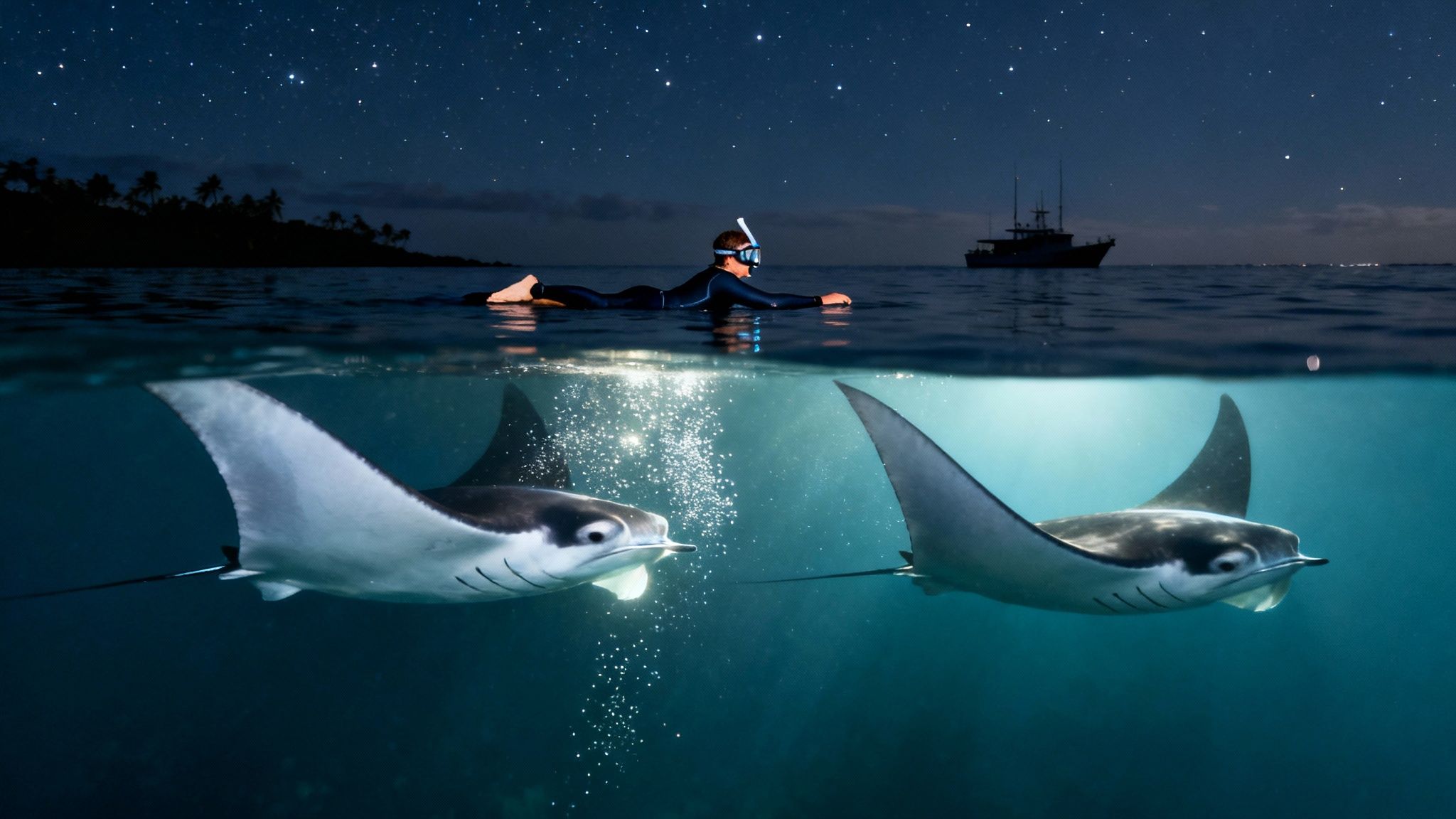
Plenty of places have seasonal or hit-or-miss manta sightings. Kona is different. The coast here is home to a resident population of reef mantas. These majestic creatures, with wingspans averaging a massive 12 feet, aren't just passing through—they live here. This makes the Big Island the undisputed champion for consistent, year-round encounters.
The real magic happens after sunset. Tour boats anchor at known manta sites and shine powerful, submerged lights into the water. This light attracts swarms of phytoplankton, the primary food source for manta rays. It’s essentially a floating buffet that draws them in.
You'll float on the surface, holding onto a custom light board, giving you a front-row seat as these gentle giants perform graceful barrel rolls and somersaults, sometimes just inches below you. It’s a surreal and humbling experience you’ll never forget.
The consistency here is just incredible. Along the Kona Coast, the best operators boast an 85-90% sighting success rate year-round. It's not just luck; meticulous records kept by local underwater videographers have documented thousands of annual sightings, cementing Kona's reputation as a true manta mecca. You can read more about these detailed sighting records to see just how reliable it is.
An Experience for Everyone
One of the best things about the manta ray snorkel Big Island tour is that almost anyone can do it. You absolutely do not need to be a certified scuba diver or an expert swimmer. The tour operators set you up for success with everything you need:
- Flotation Devices: You'll hold onto a large, stable light raft, which makes floating effortless. No treading water required.
- Wetsuits: The water can get chilly after dark, so a good wetsuit keeps you warm and comfortable.
- Expert Guides: Professionals are right there in the water with you, keeping everyone safe and sharing fascinating facts about the mantas.
This accessibility makes it a perfect adventure for families, couples, and solo travelers alike—anyone looking for a truly unique Hawaiian memory.
Choosing the Right Manta Ray Snorkel Tour
Picking the right tour operator for your manta ray snorkel on the Big Island is easily the most important decision you'll make. It’s the one thing that will absolutely make or break your experience. A top-notch tour is about so much more than just a boat ride; it’s about safety, respect for the mantas, and creating a memory that will stick with you for a lifetime.
What Separates the Best from the Rest
Honestly, not all tours are created equal. The difference between a great night and a so-so one often comes down to the details—things that ensure both your comfort and the animals' welfare. The best operators, like Kona Snorkel Trips, are committed to strict eco-friendly guidelines, making sure the encounter is sustainable and doesn't harm the mantas.
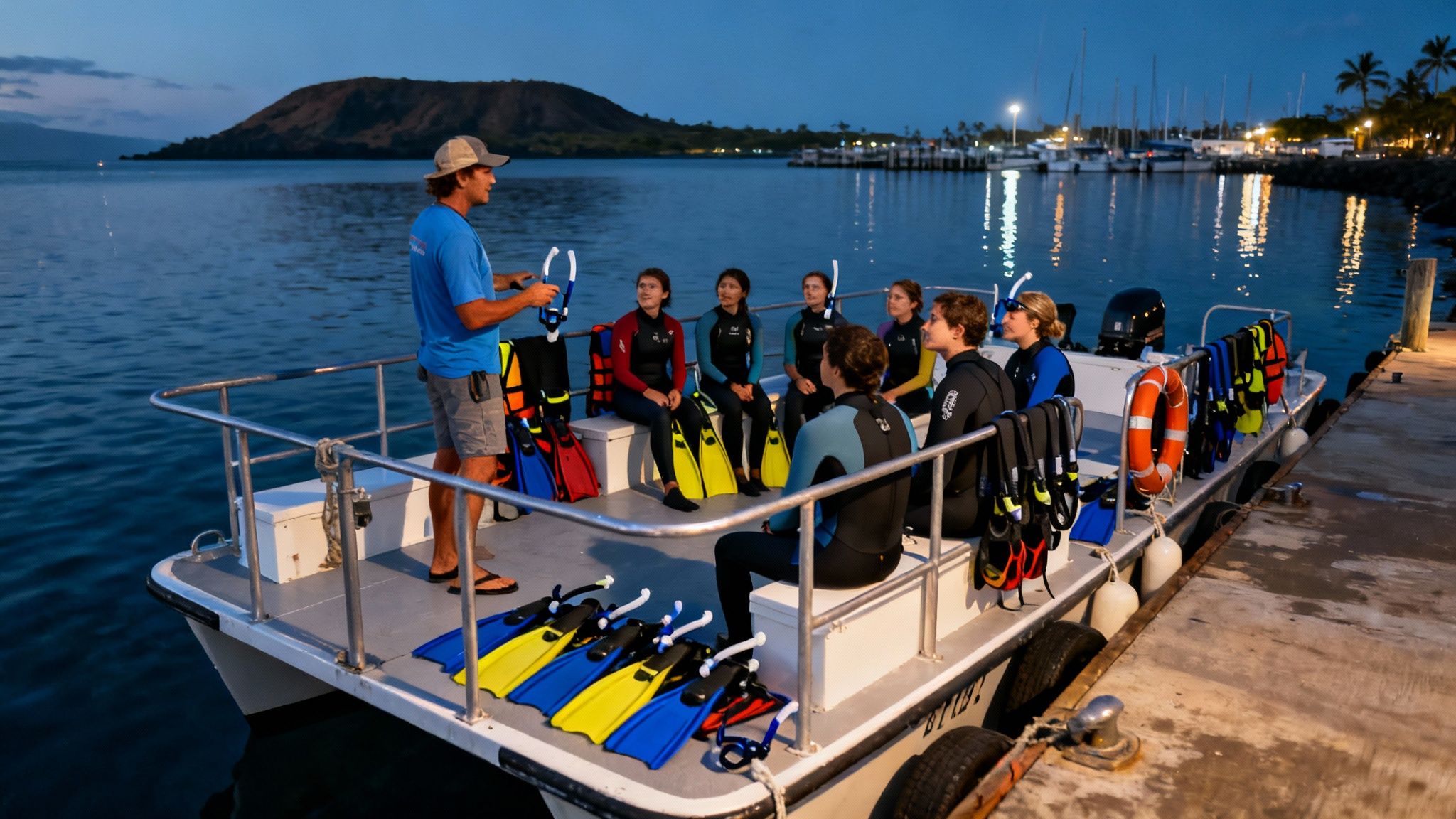
You'll want to find a company that's upfront about its safety measures. This means certified, experienced guides in the water with you, a comprehensive safety briefing before you even get your feet wet, and gear that's clean and well-maintained.
Group size is another huge factor. A smaller group almost always means a more personal, intimate experience. You’ll get more one-on-one attention from your guides and a much better, less crowded view of the mantas. It can completely change the vibe of the trip for the better. While you’re looking around, Manta Ray Night Snorkel Hawaii is an exceptional alternative known for its quality tours.
Boat Size and the Vibe on Board
The type of boat an operator uses really shapes the adventure. You'll see everything from big, comfortable catamarans to small, zippy rafts. Neither is "better," they just offer different experiences.
- Large Boats: These are great for stability, which is a big deal if you're worried about seasickness. They usually have more amenities, like an onboard restroom. The best large boat tours still keep a good guide-to-guest ratio so it doesn't feel like a cattle call.
- Small Rafts (Zodiacs): These are a blast. You'll get a faster, more adventurous ride out to the site. The small-group setting is super intimate and allows for a really personalized trip.
Good operators in Hawaii follow a set of self-enforced standards for manta encounters. These guidelines are incredibly important for protecting the mantas' delicate mucous coating and ensuring they aren't stressed. Always, always go with a company that has a strict "no-touching" policy.
Reading Between the Lines of Reviews
When you’re checking out different companies, you have to dig into the reviews. Don’t just glance at the star rating. Read what people are actually saying about their night on the water.
Did they feel safe? Were the guides knowledgeable and, just as important, passionate about the animals? When you see review after review praising the crew's professionalism and their dedication to manta conservation, that’s a huge green flag. It’s exactly why operators like Kona Snorkel Trips have such a stellar reputation—they consistently nail these crucial elements.
Ready to book an adventure with a company that checks all these boxes? Don't wait to secure your spot for an incredible night.
What Makes Kona the Manta Ray Capital of the World?
Ever wonder why the Kona coast is the planet's most dependable spot for a manta ray snorkel on the Big Island? It’s not just dumb luck. It's a pretty incredible mix of geography, biology, and a cool phenomenon called the 'Island Mass Effect'.
Basically, the sheer size of the Big Island underwater messes with deep ocean currents. It forces cold, nutrient-packed water up toward the sunny surface, which in turn causes massive blooms of phytoplankton—the tiny organisms that form the base of the ocean food chain.
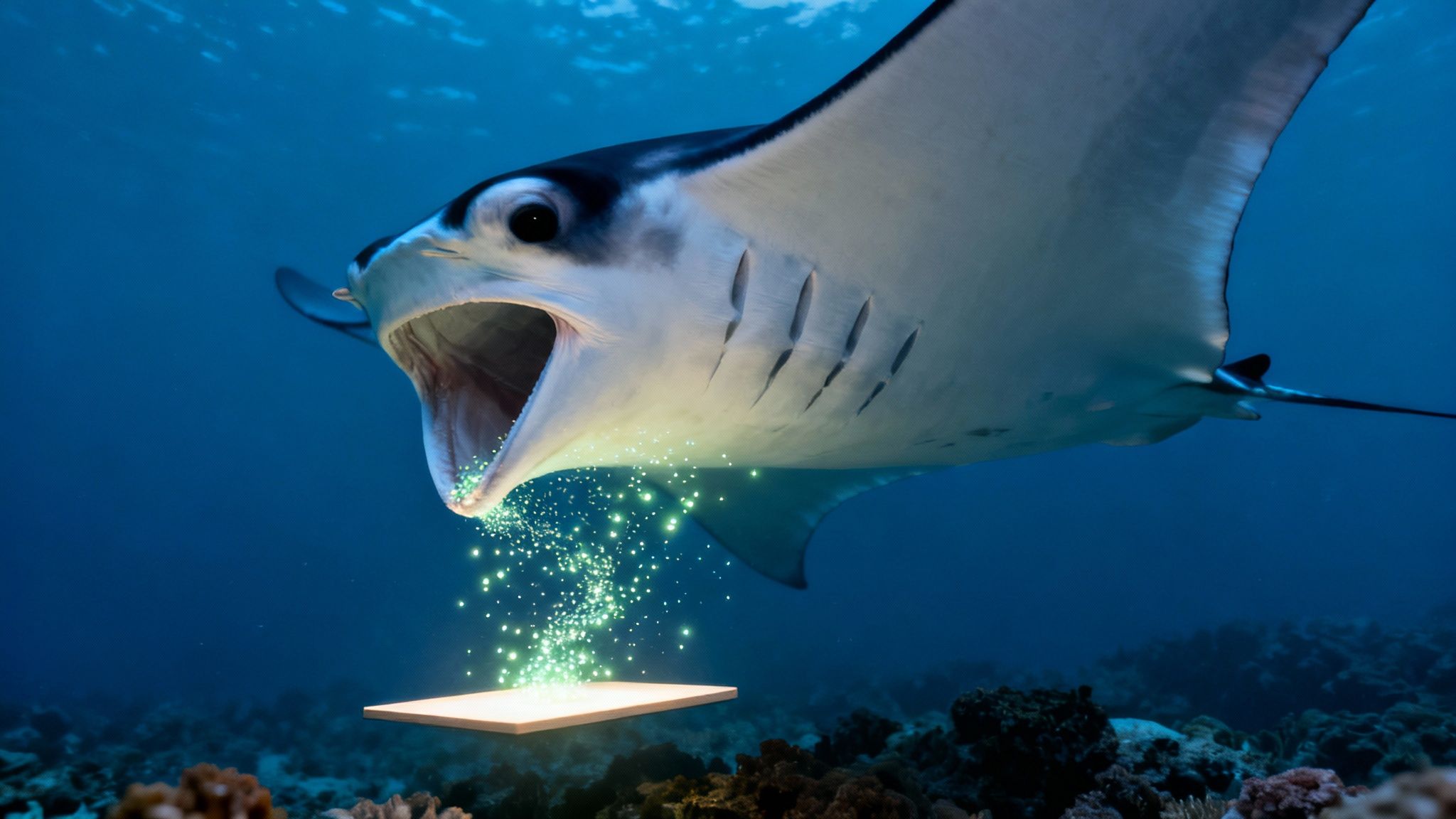
This process creates a constant, all-you-can-eat buffet for local marine life. For manta rays, who are filter feeders, this is paradise. They just glide through the water with their huge mouths open, scooping up unbelievable amounts of this microscopic plankton.
Because the food is always here, Kona is home to a large, non-migratory population of reef mantas (Mobula alfredi). Unlike other places where manta sightings are hit-or-miss depending on the season, our mantas stick around all year. It's what makes this encounter so uniquely reliable.
Meet Kona's Famous Residents
The mantas you'll see on your tour aren't just passing through; they're part of a well-documented local community. For decades, researchers and guides have been snapping photos of their bellies, using the unique spot patterns as natural fingerprints to identify each one.
Many of them even have names, like "Big Bertha," "Lefty," and "Uhane." It’s like a neighborhood watch, but for giant, graceful sea creatures.
This amazing effort has shown us just how special this population is. Along the Kona coast, the Manta Pacific Research Foundation has photo-identified over 318 unique individuals since 1979. These reef mantas, with wingspans averaging an impressive 12 feet, are drawn to the food-rich waters near sites we call 'Manta Heaven' and 'Manta Village'—the very spots Kona Snorkel Trips takes you for those incredible, up-close views.
How Light Became the Dinner Bell
The nightly underwater ballet we see today is a fantastic example of learned behavior. It all started decades ago when a hotel first put lights on the water to illuminate the surf for its guests. The lights attracted plankton, and the plankton attracted the mantas.
Simple as that. The mantas quickly learned that light equals food.
Today, tour operators like us replicate this by submerging powerful, eco-friendly lights. This acts as a predictable dinner bell, and it's what makes the night snorkel such a wild success. Seeing how these giants move through the water gives you a whole new appreciation for their grace. Check out our guide on manta ray swimming behaviors to learn more before you go.
When you join a tour, you're becoming part of a sustainable system that allows for this magical interaction while also supporting local conservation. Understanding the 'why' behind it all transforms the snorkel from a cool activity into a much deeper connection with a truly remarkable ecosystem.
Planning Your Manta Ray Snorkel Adventure
So, you’re ready to swim with manta rays on the Big Island? Awesome choice. A little bit of planning goes a long way to making sure the experience is smooth, stress-free, and absolutely unforgettable. We’ll walk you through everything from the best time to book your spot to exactly what you should (and shouldn’t) have in your bag.
As the top-rated and most reviewed snorkel company in Hawaii, we at Kona Snorkel Trips have this down to a science. Here’s what you need to know to get ready for an incredible night on the water.
When Should You Book Your Manta Tour?
One of the first questions we always get is, "What's the best time of year to see the mantas?" The fantastic news is that Kona's resident manta ray population is here all year long. Seriously, any month is a great month to go.
The sighting success rate hovers around a consistent 90%, no matter the season. The real timing issue isn't about the mantas—it's about the other travelers. During peak tourist seasons like holidays, spring break, and the summer months, tours fill up incredibly fast.
To avoid missing out, it's a smart move to book your manta ray snorkel tour as early as possible in your vacation planning. This is especially true if you're visiting during a busy time. Locking it in early guarantees you'll get a spot with a top-rated crew on the date that works best for you.
What to Bring and What to Leave Behind
Figuring out what to pack is pretty simple because your tour operator provides all the essential safety gear and snorkel equipment. Still, a few personal items will definitely make your trip more comfortable from start to finish.
Here's a quick rundown to help you pack your bag.
Manta Ray Snorkel Packing Checklist
This little checklist will ensure you have everything you need for a comfortable and amazing night out on the water.
| Item | Why You Need It | Provided by Tour? |
|---|---|---|
| Swimsuit | Arrive ready to go! Wear it under your clothes. | No |
| Towel | For drying off and staying warm after your snorkel. | No |
| Warm, Dry Clothes | Something comfy for the boat ride back to the harbor. | No |
| Underwater Camera | A GoPro or similar camera is perfect for capturing the magic. | No |
| Personal Medications | Anything you might need, like an inhaler or seasickness remedy. | No |
| Snorkel & Mask | High-quality gear ensures a clear view and comfortable fit. | Yes |
| Wetsuit | Keeps you warm and buoyant in the water at night. | Yes |
| Flotation Devices | Noodles or float belts help you relax and float effortlessly. | Yes |
| In-Water Guides | Professionals to keep you safe and point out the mantas. | Yes |
| Refreshments | Water and snacks are usually provided after the swim. | Yes |
While we provide top-notch gear, understanding what makes for good equipment can give you a better appreciation for the experience. For a deeper dive, check out our guide on gear for snorkeling on the Big Island, Hawaii. It’s a great resource for any snorkeling you do here.
Logistics: What to Expect on Tour Night
Most manta ray snorkel tours last about 2 to 3 hours from the time you check in until you’re back at the harbor. You’ll get a solid 30-45 minutes in the water with the mantas, which is the perfect amount of time to be completely mesmerized without getting too chilly.
The water temperature off the Kona coast is pretty pleasant, typically ranging from 75-80°F (24-27°C). The wetsuits we provide do a fantastic job of keeping you comfortable and warm the entire time you’re in the water.
Getting to the marina is usually a breeze. Most tours depart from Honokohau Harbor, which is just a short drive from Kailua-Kona. Just be sure to confirm the exact meeting spot and check-in time with your operator and maybe plan to arrive a few minutes early so you’re not rushed.
With your tour booked and your bag packed, you’re officially ready for the adventure of a lifetime.
What to Expect During Your Manta Ray Encounter
The whole experience kicks off the second you check in for your manta ray snorkel on the Big Island. As your boat pulls away from the harbor, you get a front-row seat to a classic Kona sunset, with the sky blazing in shades of orange and purple. This boat ride is more than just getting from point A to point B; it’s that perfect moment where you leave the busy land behind and head out into the quiet mystery of the ocean at twilight.
On the way out, your guides will run through a detailed safety briefing. They'll cover everything from getting your snorkel gear fitted just right to the do's and don'ts of interacting with the mantas. This is super important—it makes sure everyone feels comfortable and ready before hitting the water. Listen up, because they’ll also drop some incredible facts about the exact manta rays you're about to meet.
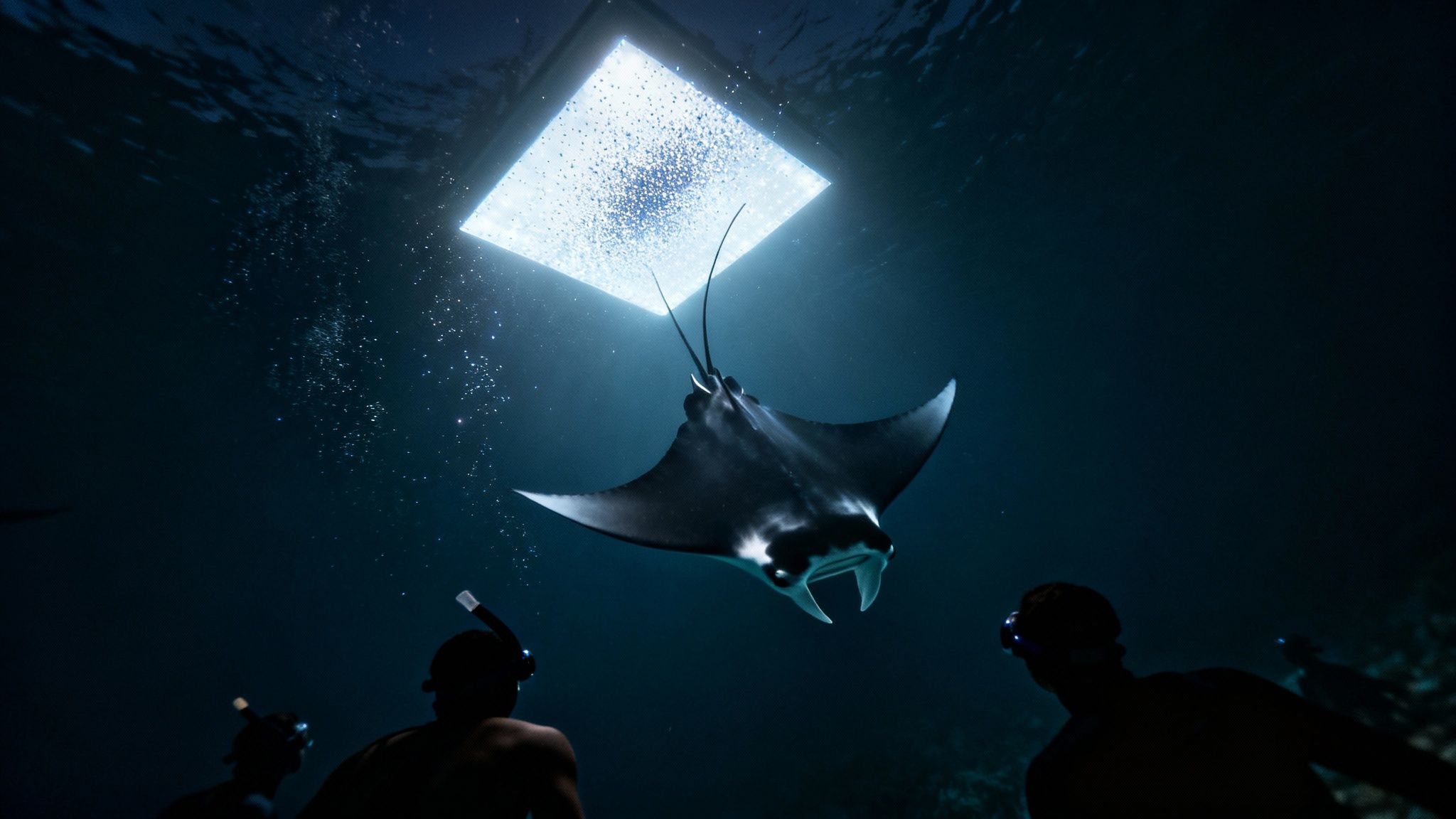
Entering the Manta Theater
Once the boat is anchored, the crew sets up the real magic: the light boards. These aren't just for seeing in the dark. Their bright lights are ingeniously designed to attract swarms of plankton, which is what manta rays eat. It’s like ringing a dinner bell, creating a concentrated plankton buffet right at the surface that draws the gentle giants in for their nightly meal.
Slipping into the calm, dark water is a feeling unlike any other. Tucked into your wetsuit, you'll feel surprisingly warm and buoyant. From there, you just paddle a few feet over to the floating light board, which gives you something stable to hold onto and serves as your VIP seat for the show.
The Main Event: Graceful Giants Up Close
And then, it happens. A massive, dark shape glides up from the depths and into the light. The first time you see a manta ray, it’s a moment that takes your breath away and usually quiets the whole group. Before you know it, more might join in, performing an incredible underwater ballet of barrel rolls, somersaults, and graceful swoops.
They glide effortlessly with their mouths wide open, filtering the plankton-rich water, sometimes coming within just inches of your face. It's an incredibly peaceful, almost surreal experience. You're just floating there, completely mesmerized, a silent guest in their world.
The number one rule, and it's a big one, is to look but never, ever touch the manta rays. Their skin has a delicate mucous coating that acts as their immune system, protecting them from infection. Touching them can rub this layer off and leave them vulnerable to disease. Respectful watching is key to keeping this incredible encounter safe for them and sustainable for years to come.
Your guides are in the water with you the whole time, making sure everyone is safe and following the rules. They’ll often point out specific mantas, sometimes even calling them by name. After about 45 minutes of pure awe, it’s time to climb back on the boat, buzzing from the experience. The ride back to shore under a sky full of stars is the perfect wind-down, giving you time to process the absolutely unforgettable encounter you just had.
Ready to experience this unforgettable night for yourself?
Still Have a Few Questions?
Even after all the planning, it's totally normal to have some last-minute questions buzzing around in your head. Let's tackle some of the most common things we get asked by guests before they head out for their manta ray snorkel on the Big Island. Getting these sorted out will help you feel 100% confident and ready for the adventure.
Is This Tour Safe if I'm Not a Strong Swimmer?
Yes, absolutely. This entire experience is designed from the ground up to be incredibly safe and welcoming for just about everyone.
Reputable companies like us use top-of-the-line flotation gear. The star of the show is a large, super-stable light board that you simply hold onto. You'll just be floating comfortably on the surface the whole time—no real swimming is required at all.
That said, a basic comfort level in the ocean is definitely helpful. Your guides will give you a detailed safety briefing before anyone gets in the water, and they are right there with you the entire time, making sure everyone feels secure.
What if the Manta Rays Don't Show Up?
This is a really rare situation. The sighting consistency here on the Kona coast is amazing, usually hovering around 90%. But, we always have to remember that these are wild animals, and their appearance is never a 100% guarantee.
Because of that small chance, most of the top-rated companies have what's called a "manta guarantee." If your tour doesn't see any mantas, you can usually re-book for free on another night (as long as there's space available). It’s always a smart move to ask about the specific policy when you're making your reservation.
How Cold Is the Water? Will I Be Freezing?
The Pacific off the Kona coast stays pretty pleasant all year, typically between 75-80°F (24-27°C). But even in warm water, just floating at night for a while can start to feel a bit chilly.
Don't worry, we've got you covered. Tour operators provide wetsuits, usually the "shorty" style with short sleeves. They do a fantastic job of providing insulation and a little extra buoyancy. Most of our guests are surprised by just how warm and comfortable they feel for the whole 45-minute snorkel.
Can I Bring My GoPro?
You bet! Bringing a waterproof camera like a GoPro is a great idea, and we definitely encourage it. You're going to want to capture this magic. Just make sure it's fully charged and, most importantly, secured to you with a wrist strap or a floating handle. You don't want to watch it sink into the deep.
While you're filming, just remember to stay aware of your surroundings and listen to your guide. The main goal is to enjoy the moment safely and respectfully, giving the mantas and other snorkelers plenty of space.
A lot of people wonder if the mantas are dangerous. They are truly gentle giants. To put your mind at ease, read our article explaining if manta rays can sting you.