
Manta ray snorkel big island: Kona Night Swim Adventure
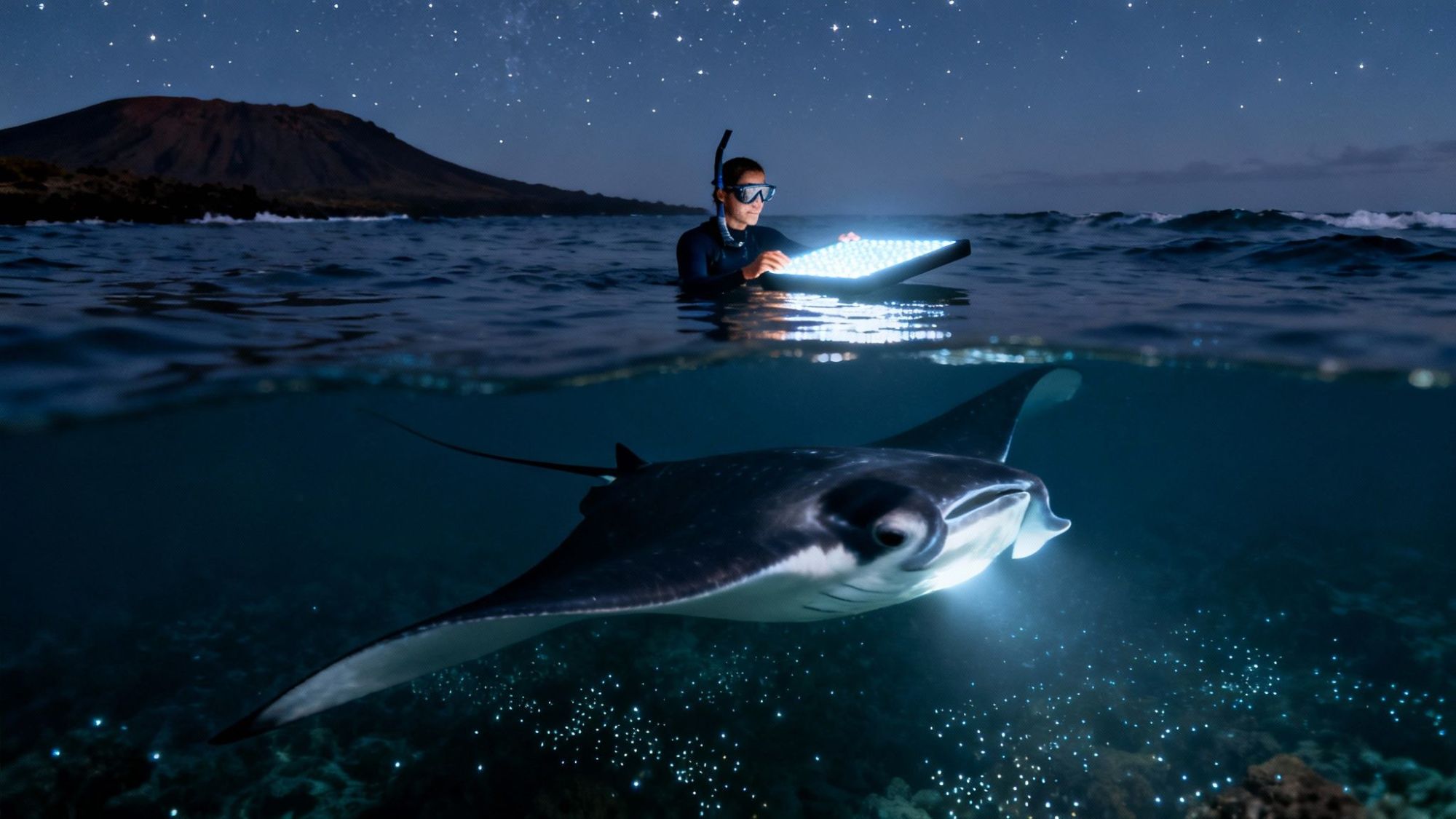
Picture this: you're floating weightlessly in the calm, dark waters off the Kona coast. Below you, giant, gentle manta rays glide and dance in a beam of light. It’s not something you see in a nature documentary—it’s a real, accessible manta ray snorkel Big Island adventure, and it’s exactly why Hawaii is the best place in the world for this experience.
The Ultimate Big Island Manta Ray Snorkel Guide
Going on a manta ray snorkel on the Big Island is a truly magical encounter. It's consistently rated as one of the top nighttime water activities anywhere on the planet. The Kona coast, in particular, offers the perfect storm of conditions that make these encounters incredibly reliable.
We have a thriving resident population of reef manta rays that gather here every single night. Why? To feast on microscopic plankton drawn to the surface by the lights from tour boats like ours. This guide will walk you through everything you need to know, from what it feels like to be in the water with them to picking the right crew for this once-in-a-lifetime journey.
As the top-rated and most-reviewed snorkel company in Hawaii, Kona Snorkel Trips is here to ensure you're in the best possible hands.
Why Is Kona the World's Manta Ray Capital?
The fact that you can reliably see manta rays here isn't an accident; it's the result of a perfect natural recipe. The unique underwater geography of the Kona coast creates these nutrient-rich upwellings that fuel a constant supply of plankton—the mantas' favorite food.
This dependable "all-you-can-eat" buffet keeps the local manta population close to shore all year long.
This consistent presence of these gentle giants has turned the Big Island into a global hotspot. Tour operators along the Kona coast see an impressive 85-90% sighting success rate throughout the year, a stat backed by decades of local guides watching these animals.
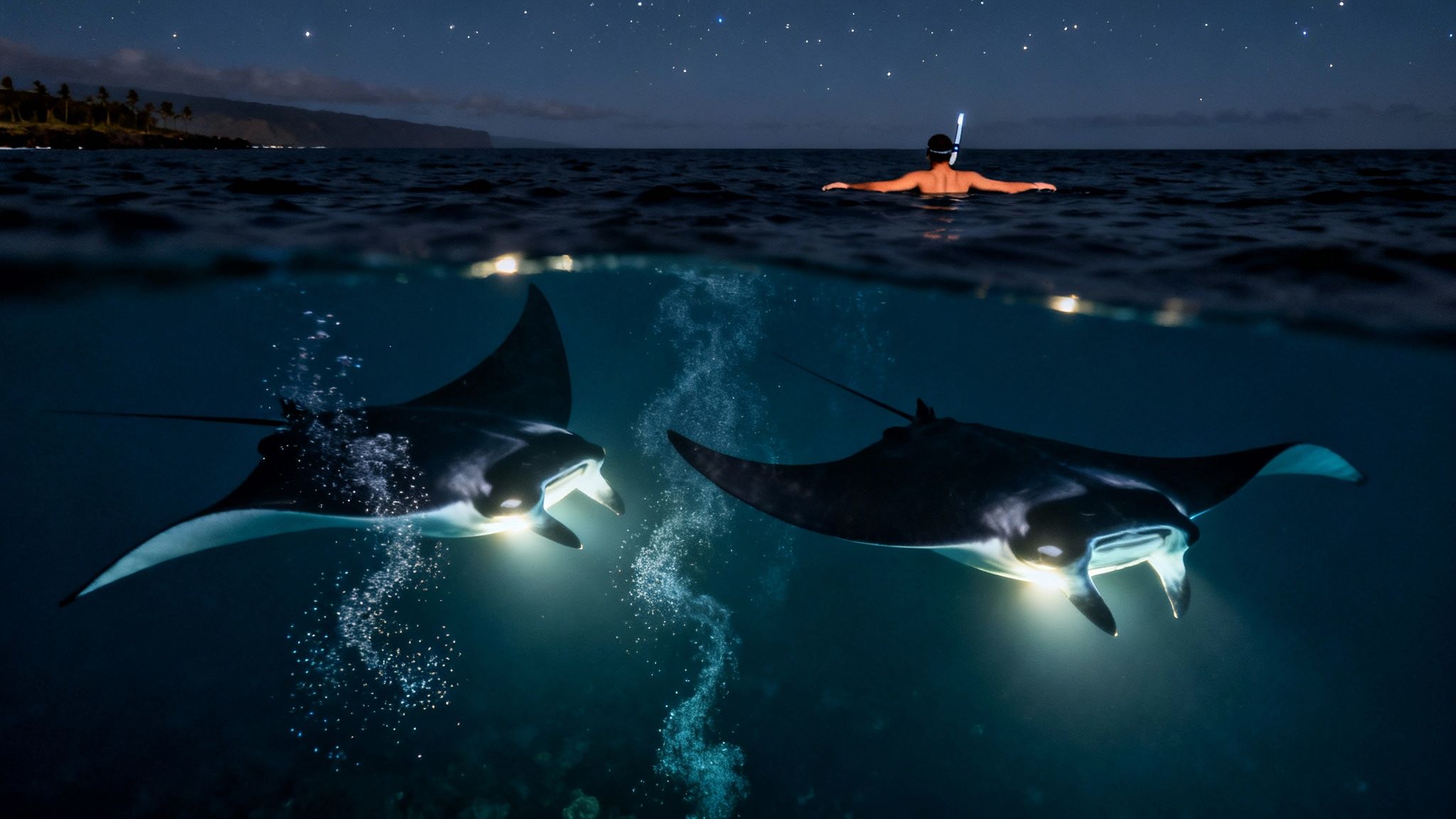
This incredible consistency means you get to witness one of nature’s most spectacular ballets. Many wildlife encounters come down to seasonal migrations or just plain luck, but the Kona experience is built on a predictable and beautiful relationship between light, plankton, and the mantas themselves. The process is simple but genius:
- Bright Lights: We place powerful, eco-friendly lights in the water.
- Plankton Magnet: These lights attract dense clouds of plankton from the surrounding ocean, like moths to a flame.
- Gentle Giants Arrive: The manta rays, with their massive, filter-feeding mouths, show up for the feast.
This brilliant strategy turns a simple feeding behavior into a breathtaking spectacle for us snorkelers floating just above the action. The result is a safe, non-invasive, and completely unforgettable wildlife experience that solidifies the Big Island's status as the undisputed manta ray capital of the world.
To get an even better feel for the experience, check out our complete guide to manta ray snorkeling on the Big Island.
Before we dive into the details, here's a quick snapshot of what makes this adventure so special.
Kona Manta Ray Snorkel At a Glance
Here is a quick overview of the key elements that make the Big Island manta ray snorkel a must-do activity.
| Feature | Details |
|---|---|
| Location | Kona Coast, Big Island, Hawaii |
| Activity Type | Nighttime snorkeling tour |
| Primary Attraction | Reef Manta Rays (Manta alfredi) |
| Sighting Rate | 85-90% success rate year-round |
| Manta Behavior | Feeding on plankton attracted by underwater lights, performing graceful barrel rolls and glides just inches from snorkelers. |
| Best Time to Go | Year-round, with calmest conditions typically in the summer months. |
| What You Do | Float on the surface holding onto a custom light board while mantas swim below. |
| Safety | Very safe. Mantas are filter feeders with no teeth or stingers. You go with professional guides who ensure a secure and respectful experience. |
This table just scratches the surface, but it gives you an idea of why this isn't just another snorkeling trip—it's an experience you'll be talking about for years to come.
What to Expect During Your Manta Ray Adventure
A manta ray snorkel Big Island tour is so much more than just getting in the water. It’s a whole experience that kicks off with a gorgeous sunset boat ride along the iconic Kona coast. Honestly, this part of the trip is magical all on its own and perfectly sets the mood for the main event.

As you cruise out, the expert guides onboard will turn any jitters you might have into pure anticipation. They’re full of fascinating stories about our local manta population, their habits, and the conservation work that keeps them safe. It’s an engaging, reassuring briefing that lays out exactly what to expect.
Setting the Underwater Stage
Once you arrive at the spot, the crew gets to work setting up a custom-built light board. This board floats on the surface, casting powerful beams of light down into the dark water. This isn’t just for looks—the light is a magnet for plankton, the mantas' favorite food.
Think of it like ringing a dinner bell in the middle of the ocean. The light attracts a massive swarm of microscopic plankton, creating a glowing, all-you-can-eat buffet that the local mantas just can't resist. It’s a simple but brilliant trick, and it's the secret to Kona's world-famous, reliable manta encounters.
With the lights on and the buffet open, it's your turn. You'll slip into the calm, dark water, geared up in a wetsuit to keep you warm and comfortable.
This whole experience is designed for everyone, no matter your snorkeling skills. You just hold onto a sturdy, floating light board. There's no swimming or kicking required; you simply float on the surface, which keeps you comfortable and ensures the mantas aren't disturbed.
The Underwater Ballet Begins
And then, the magic happens. Drawn in by the thick cloud of plankton, the manta rays emerge from the darkness. They glide right into the light, performing graceful barrel rolls and swoops just inches below you.
Watching them feed is like seeing a surreal underwater ballet. Their movements are so fluid and elegant as they filter the plankton from the water. It's a silent, awe-inspiring performance that feels both otherworldly and incredibly moving. This is the heart of the Kona manta ray night snorkel—a safe, respectful, and totally unforgettable encounter.
The entire trip is structured to make sure even a first-time snorkeler feels completely safe and at ease. With professional guides right there in the water with you and the stable light board for support, all you have to do is watch the incredible spectacle unfold.
Why Kona Is a Unique Sanctuary for Manta Rays
The Kona coast is more than just a pretty postcard—it’s a globally famous sanctuary for manta rays, drawing people from all over the world. This didn’t happen by accident. It's the result of a perfect storm of geography, biology, and decades of incredible research that have made this place a thriving natural laboratory. Knowing this backstory transforms your manta ray snorkel Big Island tour from just a cool activity into a real connection with a protected marine family.
Unlike a lot of marine animals that travel huge distances, the manta rays here are locals. They stick around all year because the ecosystem serves up a reliable buffet of their favorite food: microscopic plankton. The calm, protected bays and unique underwater lava slopes create the perfect incubator for these tiny organisms, which means the mantas never have to wander far for dinner.
A Community of Gentle Giants
What really sets Kona apart is just how well we know our mantas. For years, researchers and local guides have been carefully documenting these animals, essentially turning our waters into a living, swimming scientific journal.
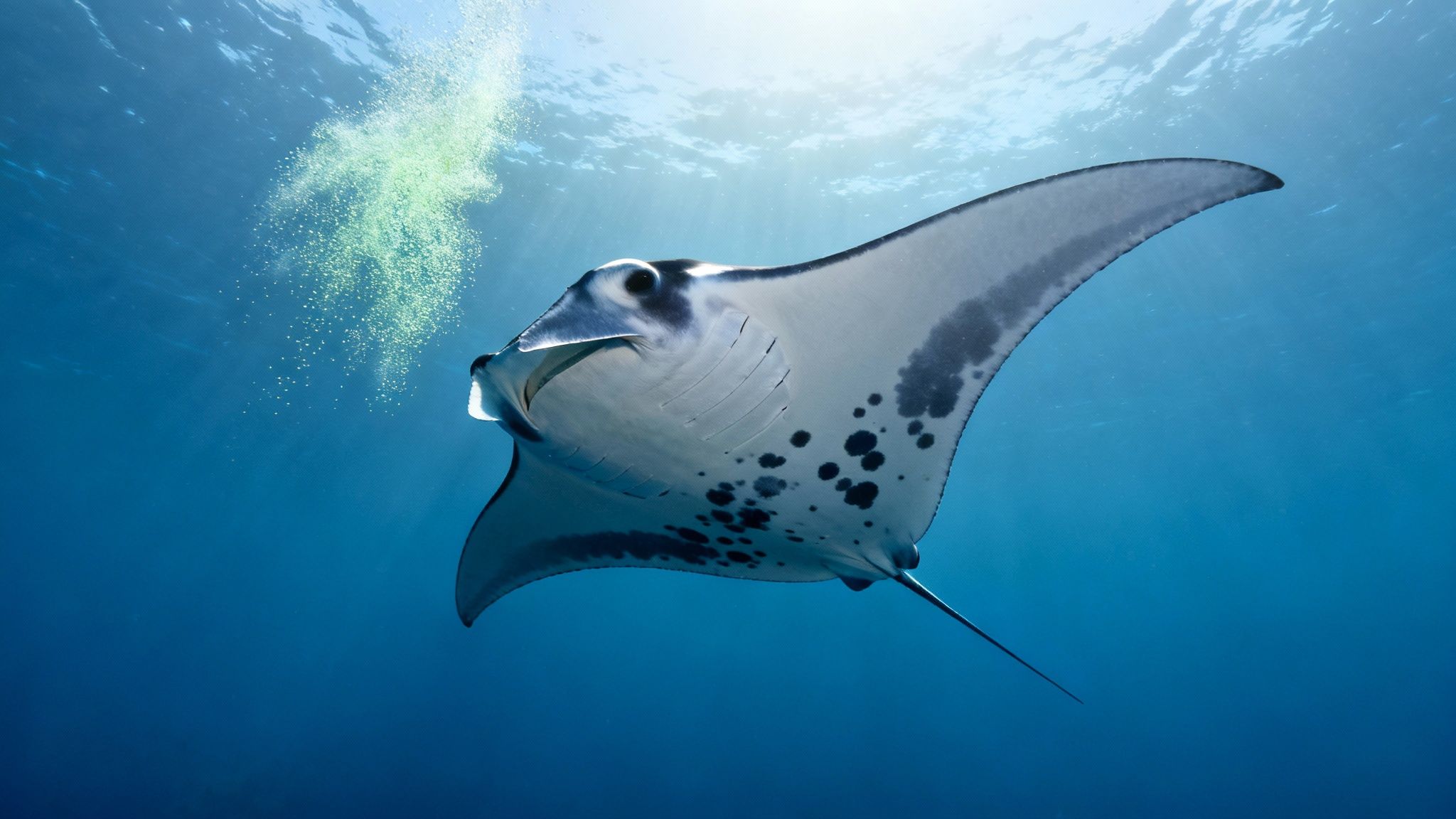
The Kona Coast is home to a thriving, cataloged community of over 450 individual reef manta rays (Mobula alfredi). Each one can be identified by the unique spot patterns on their belly, which researchers have been photographing since 1979. This has created one of the richest datasets in the world for these amazing animals. You can dive deeper into these manta ray identification studies to learn more.
Thanks to this incredible research, your guide might point out a specific manta by name and share stories about its life and quirks. You’re not just seeing a manta ray; you're meeting a well-known member of the community.
Understanding Manta Biology
One of the first questions we always get is, "Are they dangerous?" The answer is a hard no, and knowing why makes the whole experience that much better. These gentle giants, which can have wingspans over 12 feet, are filter feeders.
They have no teeth, no stingers, and no barbs—nothing. Their huge mouths are designed for one thing: gliding gracefully through the water to filter massive amounts of plankton. Because they are completely harmless, you can float just inches above them as they feed, witnessing their incredible underwater ballet without any risk. This is what makes the Kona manta ray experience so magical and completely safe.
How to Choose the Best Big Island Manta Ray Tour
Let's be honest, picking the right operator for your manta ray snorkel adventure is probably the single most important decision you'll make for this trip. There are a lot of boats out there, and the company you choose directly shapes your entire experience—not just your enjoyment, but your safety and the well-being of the mantas themselves.
A truly great tour isn't just about getting you in the water to see the animals. It's about a seamless, safe, and deeply respectful night from the moment you check in to the moment you're heading home, buzzing with excitement. You want a company with a flawless safety record, passionate guides who live and breathe marine life, and boats that are comfortable and meticulously maintained. These aren't just nice-to-haves; they're the absolute foundation for a worry-free night on the ocean.
What to Look For in a Tour Operator
Once you've covered the basics, the best operators all share one thing: a genuine, deep-seated commitment to doing things the right way. That means sustainable, eco-friendly practices are baked into everything they do. They follow strict guidelines to make sure the mantas are never stressed or disturbed.
More importantly, they'll teach you the proper "manta etiquette"—like the golden rule of never, ever touching these gentle giants—and actively contribute to conserving this incredible marine ecosystem.
When you're comparing your options, keep these factors top of mind:
- Smaller Group Sizes: This is a big one. A tour with fewer people almost always leads to a more personal, powerful encounter. You'll get more face-time with the guides and a much better, less crowded view of the underwater ballet.
- Experienced and Certified Guides: A knowledgeable guide can turn a simple snorkel trip into a full-blown educational adventure. They're the ones who can share incredible facts, point out individual mantas they know by name, and make sure every single person feels safe and comfortable in the water.
- Rave Reviews: Don't just take a company's word for it. Dig into recent reviews to get the real story from people who were just on the boat. There's a reason companies like Kona Snorkel Trips are the top-rated and most-reviewed snorkel company in Hawaii—that kind of reputation is earned one incredible trip at a time.
- Commitment to Sustainability: Put your money where your heart is. Choose an operator that is actively involved in manta ray conservation. This ensures your adventure is actually helping protect these amazing animals for generations to come. For a closer look at what separates the good from the great, check out our guide on finding the best manta ray night snorkel in Kona.
While Kona Snorkel Trips is a premier choice known for our expert team and five-star service, Manta Ray Night Snorkel Hawaii is an exceptional alternative when looking for a Manta Ray night snorkel tour. They're also highly rated and committed to providing amazing experiences. Doing a little homework upfront empowers you to book with confidence, guaranteeing your manta adventure is safe, ethical, and absolutely unforgettable.
Preparing for Your Manta Ray Night Snorkel
Showing up for your tour feeling ready and relaxed is the best way to kick off an unforgettable night. Figuring out what you need to pack versus what the tour provides makes everything smoother, letting you focus on the magic that's about to happen.
We’ve got you covered on the big stuff. Most reputable operators, including us here at Kona Snorkel Trips, handle all the heavy lifting. We provide top-notch snorkel gear—mask, snorkel, and fins—along with quality wetsuits to keep you comfortable in the cool night water. We even have some light snacks and drinks for you after the swim.
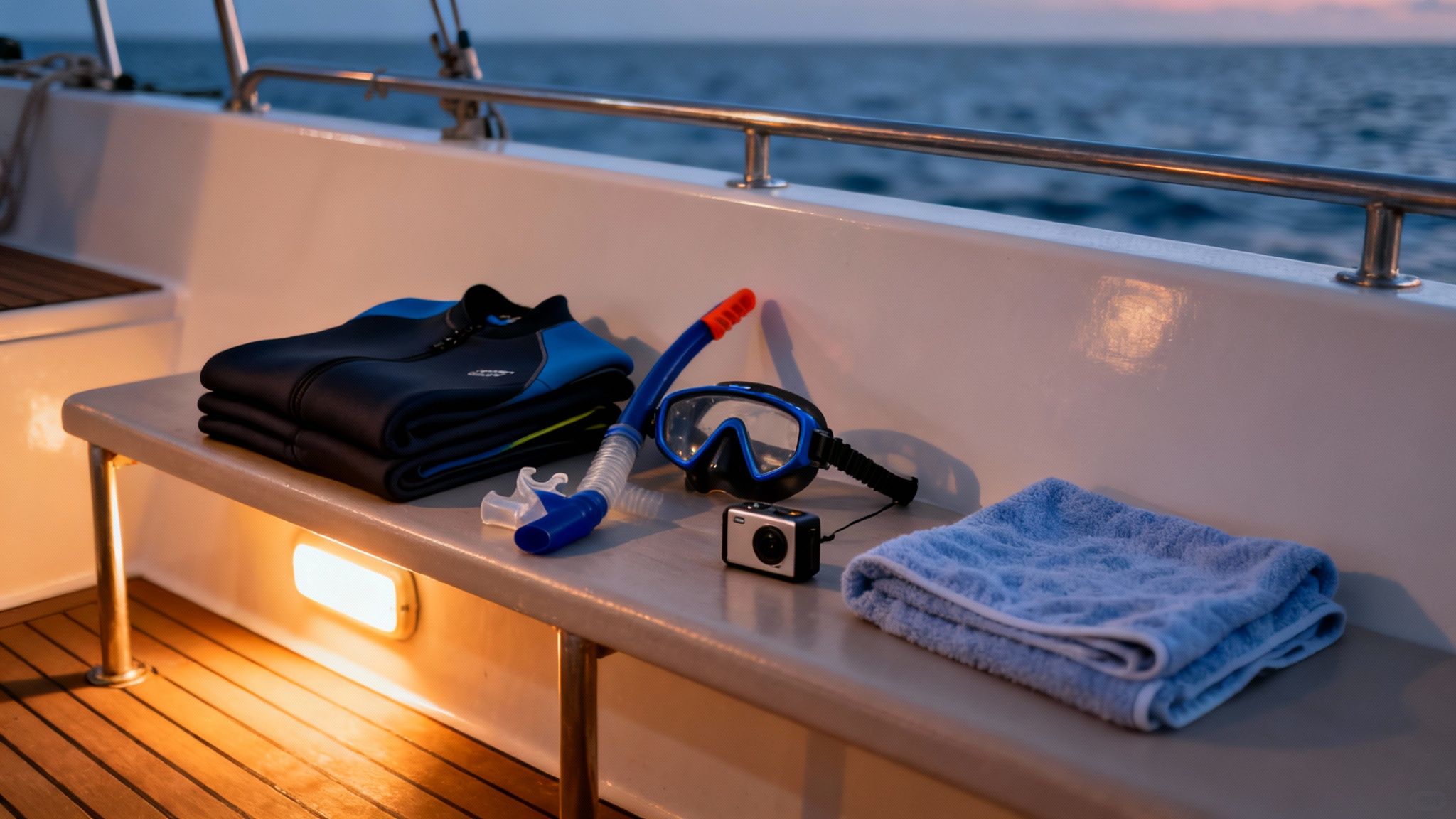
So, what’s left for you? Just the personal items that will make you feel comfortable. Think about bringing a towel and a warm, dry set of clothes for the boat ride back—you’ll be glad you did! An underwater camera is also a must-have if you want to capture those incredible moments.
For a complete rundown of everything you might need for your trip, check out this great Hawaii vacation packing checklist. And if you're curious about what to wear in the water, we have a whole guide on what to wear for snorkeling.
Your Manta Ray Snorkel Packing Checklist
Here's a quick and easy table to help you sort out what to toss in your bag versus what you can leave at home.
| What to Bring | What's Provided |
|---|---|
| Swimsuit (wear it under your clothes) | Snorkel, Mask, and Fins |
| Warm, dry change of clothes | High-quality Wetsuit |
| Towel | Floatation Device (light board) |
| Underwater Camera | Professional Guides |
| Reusable Water Bottle | Light Refreshments and Water |
| Any personal medications (e.g., for seasickness) | A safe and memorable experience! |
Basically, you handle your personal comfort, and we'll handle the rest of the gear!
Understanding Manta Etiquette
Beyond what you pack in your bag, the most important thing to bring is an understanding of "Manta Etiquette." These are the golden rules for interacting with these gentle giants, designed to keep both you and the mantas safe.
Following these guidelines isn't just about being polite; it's about making sure this incredible experience can continue for generations to come.
The number one rule is simple but absolute: never touch the manta rays. Their skin is covered in a protective mucus layer that acts like a shield against infection. Touching them can strip away this coating, leaving them vulnerable to nasty diseases.
Your guides will show you exactly what to do. You'll float passively on the surface, holding onto our custom-made light board. Try to keep your movements gentle and avoid kicking or splashing around, as this can scare the mantas and stir up the water.
By just relaxing and floating, you become part of the underwater scenery. This allows the mantas to feel comfortable enough to glide, swoop, and dance just inches below you. It's truly a magical, up-close encounter that’s built on mutual respect.
Your Manta Ray Snorkeling Questions, Answered
It's totally normal to have a few questions buzzing around in your head before you jump in the water for a manta ray snorkel Big Island adventure. Let's be honest, you're about to float in the dark ocean with giant sea creatures!
Getting these common concerns sorted out ahead of time is the best way to make sure you feel relaxed, confident, and ready to soak it all in. Here are the answers to the questions we hear most often.
Is This Snorkel Safe for Beginners or People Who Can't Swim Well?
Absolutely. This experience is built from the ground up with safety as the number one priority, making it perfect for literally all skill levels. The best tour operators have perfected a system where even someone who has never put on a snorkel mask before can feel completely at ease.
You’ll be given top-notch flotation gear, including a wetsuit (which is super buoyant) and often pool noodles, so you can float without any effort at all.
The whole experience centers around holding onto a large, stable light board that floats on the surface. That means no swimming or kicking is required. Your only job is to relax, float, and watch the incredible show happening just a few feet below you. Plus, certified guides are right there in the water with you the entire time, ready to help and make sure everyone is having a safe, amazing time.
What Are My Chances of Actually Seeing Manta Rays?
Your odds are fantastic—and that's what makes Kona's manta ray snorkel famous around the globe. The Big Island is one of the most reliable places on the entire planet to see manta rays. Local operators consistently report a year-round sighting success rate of 85% to 90%.
This isn't just random luck; it's based on a simple, brilliant idea. The powerful lights on the snorkel boards create a massive buffet for plankton, attracting them from all over. The mantas, in turn, show up nearly every single night for their dinner. While you can never 100% guarantee a wildlife encounter, this is about as close to a sure thing as you can get.
When Is the Best Time of Year to Go?
Here’s one of the best parts: any time is a great time! The Big Island's manta ray snorkel is a world-class experience year-round. Kona’s resident manta population doesn't migrate, and our coastal waters are generally calm throughout the seasons. The show is just as breathtaking in December as it is in July.
This gives you incredible flexibility. You can plan your vacation based on your schedule, not a specific "manta season." The gentle giants are here, waiting for their plankton feast, every single month of the year.
What Happens if the Tour Is Canceled Due to Weather?
While the Kona coast is very protected and cancellations are pretty rare, safety is always the top priority. If your tour operator has to call off the trip due to unsafe ocean conditions, any professional company will take good care of you.
Typically, they'll give you two options: reschedule for another night that works for you (at no extra cost), or give you a full refund. This is exactly why we recommend booking your manta ray snorkel early in your trip—it gives you a built-in buffer to reschedule if needed.
This kind of customer-first policy means your investment is protected, so you can book with total confidence.
How Many Mantas Will I See?
The number of mantas can change from night to night, but the experience is truly spectacular whether you see one or a dozen. On an average trip, snorkelers often see around three different manta rays. But it’s less about the final count and more about the quality of the interaction—watching them glide and barrel-roll right beneath you is unforgettable.
To put it in perspective, since 1979, researchers have identified and cataloged over 318 individual mantas just on the Kona coast. This is a stable, thriving hotspot, which is incredible when you consider that global populations are facing challenges. Reef mantas reproduce very slowly—a female gives birth to just one pup every 2-3 years, and only after she reaches maturity at around 8-10 years old.
Knowing this makes every single manta you see on your manta ray snorkel Big Island tour feel that much more special. You can learn more about manta ray populations and their conservation status to appreciate just how unique this experience is.