
Your Guide to the Manta Ray Snorkel Big Island Adventure
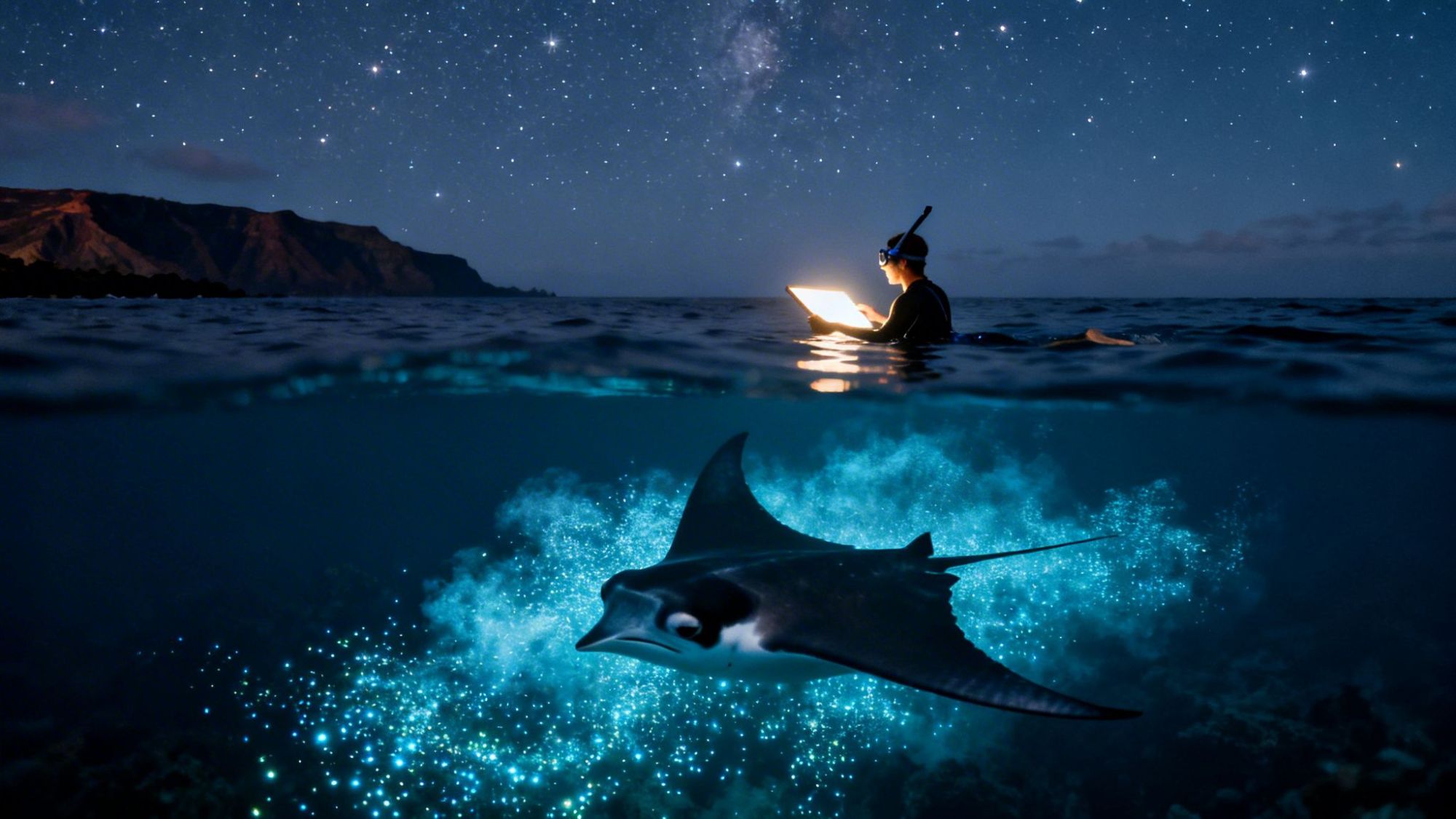
Picture this: you’re floating in the calm, dark Pacific just as the sun melts into the horizon, leaving streaks of fire across the sky. Then, just below the surface, a silent, graceful ballet begins. This is the manta ray snorkel on the Big Island, an experience that lands on bucket lists worldwide for a very good reason.
It’s more than just a tour; it’s a genuine connection with some of the ocean's most majestic creatures, and it often leaves people completely speechless. The manta ray snorkel is one of those rare adventures that’s almost guaranteed to deliver a "wow" moment, letting you swim alongside these gentle giants as they glide and barrel-roll inches beneath you.
As the top-rated & most reviewed snorkel company in Hawaii, Kona Snorkel Trips is thrilled to share what makes this experience so special.

Why Is Kona a Global Hotspot for Mantas?
You can find manta rays in many parts of the world, but sightings are often seasonal or just plain unpredictable. The Kona coast is different. We have a large, resident population of reef mantas that call this place home all year long, making the Big Island the most reliable place on the planet for this encounter.
The real magic, though, happens after dark. Here’s the secret to how it all works:
- Tour boats head out to well-known manta gathering spots and drop anchor for the night.
- Powerful, eco-friendly lights are placed in the water, which attract swarms of tiny plankton.
- This cloud of plankton is basically a dinner bell, drawing in the mantas for their nightly feast.
You simply float on the surface, holding onto a custom light board that gives you a front-row seat to the show. It's surreal to watch these gentle giants, some with wingspans reaching up to 14 feet, perform graceful somersaults right below you as they feed. It’s a humbling experience that’s accessible to just about everyone, no matter your swimming skill level.
As you plan your trip, you can learn more about what makes this area so incredible in our guide to the best snorkeling in Kona. Whether you’re a family, a couple, or a solo traveler, this is one Hawaiian memory you’ll never forget.
How the Manta Ray Night Snorkel Works

So, how does this magical manta ray snorkel Big Island encounter actually come together? It’s not just luck; it's a brilliant blend of understanding marine biology and some clever, eco-friendly thinking from local tour operators.
Think of it as setting up an exclusive underwater buffet for the mantas. You just happen to get the best seat in the house.
The Underwater Buffet Analogy
The process is surprisingly simple but incredibly effective. It all starts when our boats anchor at one of Kona’s designated manta sites after sunset. We then submerge powerful, eco-friendly lights into the dark water.
These lights act like giant magnets for phytoplankton—the tiny, microscopic organisms that are the foundation of the ocean’s food chain. In the vast, dark ocean, this glowing light source creates a concentrated cloud of these little critters.
For manta rays, which are filter feeders, this is a dinner bell they simply can't ignore. Over decades, they’ve learned that these lights signal an easy and abundant meal. This reliable "underwater buffet" is what draws them in night after night, creating one of the most consistent wildlife encounters on the planet.
This phenomenal system is what makes a manta ray snorkel on the Big Island so special. The success rate is incredibly high; here at Kona Snorkel Trips, we see mantas on 85-90% of our tours. It’s a real testament to how well the local marine life has adapted to this unique, symbiotic relationship with responsible tourism.
This learned behavior has created a thriving ecotourism industry, drawing approximately 80,000 participants annually to witness the mesmerizing nightly feeds. Your participation directly supports the local economy and ongoing conservation efforts.
How You Participate in the Show
One of the best things about this adventure is how easy it is for you. You don't need to be a world-class swimmer or a certified scuba diver to get a front-row view. The whole experience is designed to be safe, comfortable, and awe-inspiring for just about everyone.
Here’s what your role in the show looks like:
- Gearing Up: We'll get you set up with a wetsuit for warmth and extra buoyancy, along with a mask and snorkel.
- The Light Board: The centerpiece of the experience is a large, custom-built floating light board. After you slip into the water, you just hold onto this stable platform.
- Passive Observation: From there, all you need to do is float comfortably on the surface, put your face in the water, and watch the show unfold. The lights from the board illuminate the scene below, attracting both the plankton and the mantas.
You become a silent observer while these gentle giants perform their graceful underwater ballet just feet, and sometimes inches, beneath you. They somersault, glide, and swoop through the light beams, scooping up plankton with their massive mouths. It's an unforgettable sight.
For a closer look at their amazing movements, you can learn more about how manta rays swim before you join us. The entire encounter is designed to be completely non-intrusive and focuses on respecting the animals in their natural habitat.
Where and When to Go for the Best Manta Encounter
When you’re planning a manta ray snorkel on the Big Island, getting two things right will make all the difference: location and timing. Nailing these details is what sets the stage for a truly mind-blowing evening in the water.

The Kona coast is world-famous for two specific manta hotspots. While both are incredible, they each have their own personality. Knowing a bit about them will help you figure out what kind of adventure you’re in for.
The Two Premier Manta Ray Snorkel Sites
The main stages for this nightly underwater ballet are 'Manta Village' in Keauhou Bay and 'Manta Heaven' near the Kona Airport. Think of them as two fantastic restaurants that both serve the same amazing dish—the experience is great at either, but the ambiance is a little different.
Manta Village (Keauhou Bay): Just south of Kailua-Kona, this is the original, historic site where manta tourism began. Because it's tucked into a sheltered bay, the water here is often calmer. If you're staying in the Keauhou area, it's super convenient.
Manta Heaven (Garden Eel Cove): This spot is north of town, closer to the airport. Depending on where your tour departs, the boat ride might be a bit longer, but the underwater landscape is a magnet for mantas.
Honestly, both sites offer spectacular encounters. Your tour operator will be the one to make the final call, choosing the best location based on that day's ocean conditions and where the mantas have been most active. You can read more about these and other amazing underwater spots in our guide to Kona snorkeling spots.
So, When Is the Best Time to See Mantas?
Here's the best part: there’s really no “bad” time of year to see the mantas. Unlike a lot of wildlife experiences that are seasonal, the Kona coast is home to a huge, resident population of reef mantas that stick around all year. They don't migrate.
This incredible site loyalty means that we see them consistently, night after night. Thanks to the plankton that blooms like clockwork when the lights hit the water, sighting rates stay incredibly high, hovering around 85-90% year-round. You can book your trip in January or July and have an equally fantastic chance of a magical night.
Expert Tip: While the mantas are always here, visitor seasons change. If you’re coming during a peak time like the holidays, spring break, or summer, make sure you book your tour well in advance. The best operators fill up fast!
Comparing Kona's Top Manta Ray Snorkel Sites
Deciding between the two main sites often comes down to logistics and what the ocean is doing on the day of your tour. Most often, your captain will make the call to give you the best shot at a great experience.
Here’s a quick comparison to help you understand the differences at a glance:
| Feature | Manta Village (Keauhou Bay) | Manta Heaven (Garden Eel Cove) |
|---|---|---|
| Location | South of Kailua-Kona | North of Kailua-Kona, near the airport |
| Water Conditions | Generally more sheltered and calm | Can be more exposed to open ocean swell |
| Travel Time | Shorter boat ride from Keauhou | Slightly longer ride, depending on harbor |
| Typical Vibe | Can be busy due to its history and access | Also popular, but crowds vary by the night |
Ultimately, you can't go wrong. Reputable tour companies live and breathe this stuff. They check conditions and sighting reports daily to put you in the right place at the right time. You're in good hands either way.
Choosing the Right Manta Ray Snorkel Tour
Picking the right crew for your manta ray snorkel Big Island adventure is easily the most important decision you'll make. This single choice will absolutely shape your experience, drawing the line between a good night and a truly unforgettable one. It’s about so much more than a simple boat ride—it’s about your safety, the well-being of the mantas, and creating a memory that will stick with you for a lifetime.
Let's be clear: not all tours are created equal. The best operators stand out through a deep-seated commitment to safety, conservation, and giving their guests a phenomenal experience. Out in the dark waters off the Kona coast, it’s the little details that make a world of difference.
What to Look for in a Top-Tier Operator
When you start sifting through the options for your manta ray snorkel on the Big Island, it can feel a bit overwhelming. To cut through the noise, just zero in on a few key things that signal a high-quality, reputable company. A great tour operator does more than just get you in the water; they make sure the entire trip is smooth, safe, and respectful to the incredible marine life.
Here are the non-negotiables to look for:
- Impeccable Safety Record: The company should be completely open about its safety protocols. This means having experienced, certified guides right there in the water with you, giving a thorough safety briefing, and using well-maintained, top-notch gear.
- Small Group Sizes: A smaller tour group almost always means a more personal and higher-quality experience. With fewer people, you get more one-on-one attention from the guides and a much better, less crowded view of the manta rays. It’s a game-changer.
- Commitment to Conservation: Look for operators who are "Manta Ray Green" certified or an approved activity provider. This certification means they follow strict guidelines designed to protect the mantas, like a firm no-touching policy and responsible lighting techniques.
Your choice of tour operator has a direct impact on the health of Kona's resident manta ray population. By supporting companies that put conservation first, you become a partner in protecting these magnificent animals for future generations. For a deeper dive into what makes a great tour, you can read reviews of top Kona snorkel tours to see why these factors matter so much to fellow snorkelers.
Understanding Boat Size and Tour Vibe
The kind of boat an operator uses really helps shape the feel of your adventure. You’ll find everything from large, stable catamarans to smaller, zippy rafts. Neither is automatically better—they just offer different kinds of experiences.
Large Boats: These are fantastic for stability, which is a huge plus if you’re worried about getting seasick. They often come with more creature comforts, like an onboard restroom. The best large boat tours manage to keep an excellent guide-to-guest ratio, so the experience still feels personal and not like you're just a face in the crowd.
Small Rafts (Zodiacs): These boats offer a faster, more adventurous ride out to the snorkel site. The intimate, small-group setting creates a highly personalized trip and a close-knit feel among the guests and crew.
A great alternative for those exploring their options is Manta Ray Night Snorkel Hawaii, which is also known for providing exceptional and high-quality tours.
The Gold Standard: A Tour with Kona Snorkel Trips
With a top-tier company like Kona Snorkel Trips, the experience is polished from the moment you arrive. It all starts with a friendly and organized check-in, where the crew’s passion for the ocean is obvious from the get-go. You’ll get a detailed briefing that doesn't just cover safety but also shares fascinating facts about the mantas you’re about to meet.
The boat ride out is an experience in itself, often timed perfectly with a spectacular Kona sunset. Once at the site, the crew efficiently sets up their custom light board, creating the "underwater buffet" of plankton that draws the mantas in. You'll slip into the warm water feeling confident and ready for the main event.
In the water, the guides are incredibly attentive, making sure everyone is comfortable while pointing out individual mantas by name and sharing their knowledge. After about 45 minutes of pure awe, you'll climb back aboard to a warm welcome, snacks, and a starlit ride back to the harbor. It’s this complete, well-thought-out experience that truly sets the best apart from the rest. You can see one of our tours here: manta ray night snorkel.
Getting Ready for Your Manta Ray Snorkel
A little bit of prep work can be the difference between a good night and an absolutely magical one. Getting ready is pretty simple, but thinking ahead about what you'll wear and what to pack will make your manta ray snorkel Big Island experience completely seamless and stress-free.

The key is to keep it simple. Your tour operator—Kona Snorkel Trips, for instance—is going to provide all the important in-water gear like your wetsuit, mask, snorkel, and flotation devices. Your job is just to bring the personal stuff that will keep you comfortable from the moment you leave for the harbor to the ride back under the stars.
Your Manta Ray Snorkel Packing Checklist
This little checklist is your ticket to a fantastic night. The goal is to pack light, focusing on being comfortable before and after you get into the water with the mantas.
| Item | Why You Need It | Pro Tip |
|---|---|---|
| Swimsuit | Wear it under your clothes to the harbor so you’re ready to go. | This saves a ton of time and makes suiting up on the boat a breeze. |
| Towel | Absolutely essential for drying off after your snorkel. | A microfiber travel towel is a fantastic, space-saving option for your bag. |
| Dry Clothes | For the boat ride back. A warm hoodie or jacket is perfect for the cool night air. | Layers are your best friend here. You'll be so glad to have something cozy after your swim. |
| Reusable Water Bottle | Staying hydrated is key, even on a shorter tour. | Most tours provide water, but bringing your own is a great eco-friendly habit. |
| Camera | A waterproof camera like a GoPro is ideal for capturing the magic. | Make sure it’s attached to a wrist strap! You definitely don't want to drop it. |
While a great tour has you covered on gear, getting familiar with what to wear for snorkeling in general can help you feel more confident for any water adventure here on the Big Island.
How to Prevent Seasickness
Even on a calm Kona night, the gentle rocking of the boat can sometimes bring on motion sickness. It's a surefire way to spoil an incredible experience, but the good news is it's almost always preventable with a little planning.
The trick is to be proactive. Don't wait until you start to feel queasy on the water. For many people, just keeping your eyes on the steady horizon does the trick. But if you know you’re prone to seasickness, it’s smart to show up with an over-the-counter remedy already in your system.
Taking a preventative a few hours before your tour can make all the difference between a miserable trip and a magical one. It's the single best piece of advice for ensuring your comfort.
Here are a few popular and effective options you can easily grab on Amazon and toss in your suitcase:
- Ship-EEZ Seasickness Patches: A simple patch you wear behind your ear for long-lasting, non-drowsy relief.
- Dramamine Pills: The classic, trusted medication for all kinds of motion sickness.
- Bonine Pills: A favorite among boaters because it’s known for being less drowsy than other options.
- Sea-Band Wristbands: A drug-free choice that uses acupressure points on your wrist to help curb nausea.
- Ginger Chews: A great natural remedy that can help settle an uneasy stomach.
With these simple steps, you'll be set for a comfortable and utterly unforgettable night with Kona's gentle giants. While the basic mask, snorkel, and fins are all you truly need, some folks like to add extra gadgets like a snorkelling sea scooter to their water adventures, though it's not necessary for the manta ray tour itself.
Manta Snorkel Safety and Responsible Viewing
Being in the water with these gentle giants is an honor, and protecting them is our shared kuleana (responsibility). A safe and respectful manta ray snorkel on the Big Island makes sure this incredible natural wonder can be enjoyed for generations to come. The whole experience is built around one simple idea: you're a polite guest in their underwater dining room.
The most important thing to know is the "passive floating" technique. This just means you’ll hold onto a sturdy, floating light board and chill out on the surface. There’s no need to swim around; staying still keeps the water calm and helps the mantas feel safe enough to feed right below you. This simple act is the key to an unforgettable encounter.
The Number One Rule of Manta Interaction
The golden rule for any manta ray encounter is simple and absolute: look, but do not touch. It’s that important. Manta rays are covered in a delicate, protective mucus layer. Think of this coating as their immune system, shielding them from nasty bacteria and infections in the ocean.
Touching a manta ray, even by accident, can rub off this vital layer and leave them vulnerable to disease. Every good tour operator will drill this into you. Just remember to keep your hands on the light board or at your sides and fight the urge to reach out, no matter how close they glide.
By following a few essential rules, you become a guardian of the experience:
- Never chase or get in their way: Let the mantas move freely. Chasing or blocking them causes a lot of stress and can make them leave the area for good.
- Avoid splashing or big movements: Just relax and be calm in the water. This helps the mantas feel comfortable enough to come check out the lights.
- Keep your feet up: Try not to dangle your legs or fins down into the water. This prevents accidentally kicking a manta and keeps the viewing area clear for everyone else.
General Water Safety for Night Snorkeling
For first-timers or anyone a bit anxious about the ocean, the idea of getting in the water at night can be a little intimidating. We get it. But tour operators have solid safety protocols to make sure everyone feels secure from the moment you leave the dock. You are in very good hands.
Your safety is the top priority. From the second you step on the boat, the crew's main job is to create a secure and comfortable environment. That way, you can just relax and soak in the magic of it all.
Tour operators like Kona Snorkel Trips have multiple layers of safety to put your mind at ease. Before you even touch the water, you'll get a full briefing that covers every step of the plan. Your guides are right there in the water with you the whole time, keeping an eye on things and ready to help. The boat itself is well-lit and stays anchored nearby, acting as your home base. Just listen to the crew, and you're set for a safe and truly mind-blowing night.
Got Questions About the Manta Snorkel?
Even after getting pumped up for the adventure, it's totally normal to have some last-minute questions before you head out for your manta ray snorkel on the Big Island. Getting these details sorted will help you feel 100% ready for what is truly one of Hawaii's most incredible experiences. We've put together the most common questions we hear from our guests to help you feel confident and prepared.
Is This Tour Safe for Kids and Non-Swimmers?
Yes, absolutely. The whole experience is designed from the ground up to be safe and accessible for just about everyone. Reputable tour operators like Kona Snorkel Trips live and breathe safety—it's their number one priority.
For anyone who isn't a strong swimmer or just feels a little nervous in the water, the setup is perfect. You'll be holding onto a large, custom-built light board that floats on the surface, providing constant support. You really don't have to swim at all. You're also given a wetsuit for warmth and extra buoyancy, so you can just relax, put your face in the water, and let the show unfold beneath you.
Kids are definitely welcome! Most companies have a minimum age, which usually falls somewhere around 5-7 years old. With expert guides right there in the water with you, the entire family can feel secure and just enjoy the magic.
What Happens if We Don't See Any Manta Rays?
This is a really rare thing to happen, but it’s a fair question. The consistency of sightings off the Kona coast is remarkably high—success rates are often around 85-90%. It’s one of the most reliable wild animal encounters on the planet.
That said, we always have to remember these are wild animals, and their appearance can never be a 100% guarantee. Because of that small chance, most top-rated tour companies offer what's called a "manta guarantee."
This usually means that if no mantas show up on your tour, you can come back and try again on another night for free, depending on availability. It's always a good idea to double-check the specific policy of the company you book with.
Are the Manta Rays Dangerous?
Not in the slightest. There’s a good reason manta rays are known as "gentle giants." They are filter feeders, which means their diet consists of microscopic plankton. They have no teeth, no stingers, and no barbs whatsoever.
They are completely harmless to people. In fact, the most important rule of the snorkel—"don't touch the mantas"—is for their safety, not yours. Their skin has a protective mucus coating that can be damaged by our touch, leaving them vulnerable to infections. As long as you float peacefully and just observe, the experience is incredibly safe.
How Cold Is the Water at Night?
The Pacific Ocean off the Kona coast is wonderfully warm year-round, typically hovering between 75-80°F (24-27°C). Still, floating in the water after sunset can feel a little cooler than you might think.
But don't worry, your tour operator has you covered. You’ll be provided with a high-quality wetsuit (usually a "shorty" that covers your torso) that provides fantastic insulation. It does a great job of keeping you comfortable and warm for the entire 45-minute snorkel, letting you focus completely on the amazing giants below.