
Manta Ray Snorkel Big Island A Guide To This Magical Encounter
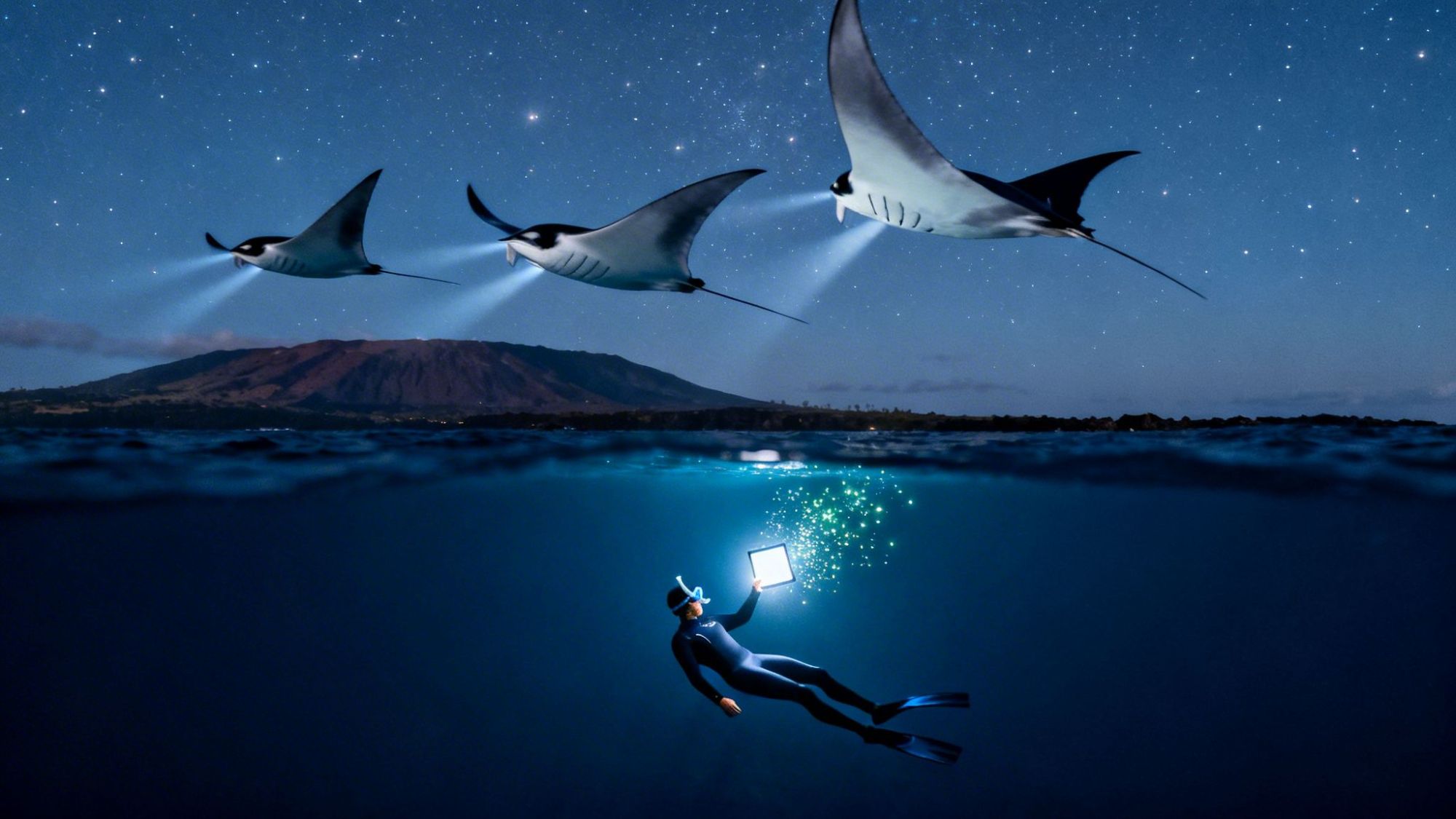
Picture this: you're floating in the warm, dark Pacific Ocean. Suddenly, gentle giants with massive wingspans glide and barrel-roll just inches beneath you. This is the manta ray snorkel Big Island experience, and it's consistently ranked as one of the best marine adventures in the entire world. It’s a true bucket-list moment that’s part thrilling, part peaceful underwater ballet.
The Ultimate Big Island Manta Ray Snorkel Experience
The Kona coast of Hawaii’s Big Island is legendary for one of the most magical wildlife encounters on the planet. Unlike so many other wildlife tours where a sighting is pure luck, Kona offers a uniquely reliable chance to get up close and personal with majestic reef manta rays. This is way more than just another snorkeling trip; it’s an immersive nighttime spectacle you won't find anywhere else.
As the top rated & most reviewed snorkel company in Hawaii, we at Kona Snorkel Trips have spent years perfecting this adventure. We've made sure it's safe, awe-inspiring, and unforgettable for everyone, from people who've never put on a mask before to seasoned ocean explorers.

What Makes This Tour So Special
So, what exactly turns a simple snorkel trip into a life-changing memory? It’s a unique mix of darkness, light, and the gentle nature of these incredible animals. After a quick boat ride to a prime feeding spot like Manta Village or Manta Heaven, your guide will set up a custom-built light board that floats on the surface.
This light acts like a giant magnet for plankton—tiny marine organisms that happen to be the manta rays' favorite meal. You'll hold onto the board, floating comfortably as the plankton swarm below, creating a glowing, otherworldly cloud in the water.
And then, the show begins.
We often hear it described as an "underwater ballet." Manta rays, some with wingspans over 12 feet, gracefully appear out of the darkness. They perform mesmerizing barrel rolls and somersaults, scooping up plankton just inches from your mask.
The feeling is an incredible blend of pure adrenaline and profound peace. There’s nothing quite like looking a gentle giant in the eye as it glides past, its movements both powerful and serene. The whole encounter is hands-off; you’re a passive observer, which makes the experience both ethical and deeply moving.
To get an even better feel for it, check out our in-depth guide on what makes the manta ray night snorkel tour a must-do activity on the Big Island.
Why Kona Is The Global Capital For Manta Ray Encounters

The Kona coast isn't just a great place for a manta ray snorkel on the Big Island—it’s hands-down the best spot on the entire planet. This isn't just a lucky break; it's the result of a perfect storm of geography, biology, and a little bit of local history.
Kona’s secret sauce is its ability to serve up a nightly feast for manta rays. The steep underwater volcanic slopes of the island create what scientists call the "Island Mass Effect." This natural phenomenon pushes deep, nutrient-rich water up to the surface, sparking a massive bloom of plankton—a manta's favorite meal. It's an all-you-can-eat buffet, open year-round, that keeps the local manta population well-fed and coming back to the same spots every single night.
Consistent Sightings And Gentle Giants
This reliable food source means incredibly consistent viewing opportunities for us. Gliding through the dark water as these huge, graceful shadows appear from the depths to feed on plankton is an experience that draws around 80,000 visitors here every year. It’s not a shot in the dark, either. Tour operators see success rates between 80% and 90% year-round at key sites like 'Manta Heaven' and 'Manta Village.' On an average night, you might see six mantas, but we’ve seen evenings with over 36 individuals!
The mantas you'll meet are primarily reef mantas (Mobula alfredi), which boast wingspans up to 12 feet. Every now and then, lucky snorkelers get a rare glimpse of the much larger giant oceanic manta (Mobula birostris), with a mind-boggling wingspan that can exceed 26 feet. Despite their intimidating size, both species are completely harmless filter feeders, earning them the nickname "gentle giants." You can dive deeper into the science behind it all in this detailed study on manta ray tourism.
These are highly intelligent animals with one of the largest brain-to-body ratios of any fish. They are curious, gentle, and often seem just as interested in us as we are in them. It's a truly humbling interaction.
The Importance Of Eco-Conscious Tourism
The manta ray population along the Kona coast is relatively small and isolated, making them especially vulnerable to human impact and environmental changes. This is why choosing an eco-conscious tour operator isn't just a nice-to-have; it's absolutely critical for protecting these magnificent creatures for years to come.
Responsible operators follow strict guidelines, like passive observation (absolutely no touching!) and using proper lighting that attracts plankton without disturbing the mantas' natural feeding behavior. When you book a tour that puts conservation first, you're doing more than just having an adventure—you're actively helping preserve this incredible natural wonder. Your choice really does make a difference.
And if you’re looking for other amazing underwater adventures, check out our guide to Kona's best snorkeling spots.
How To Plan Your Perfect Manta Ray Snorkel Trip
So, you're ready to turn that dream of swimming with gentle giants into a real-life Big Island adventure? Fantastic. Planning it is actually pretty simple once you know what to look for. A little bit of prep goes a long way in making sure your night on the water is absolutely perfect.

The experience itself is beautifully straightforward. After a quick boat ride out from the harbor as the sun sets, your guides will set up a massive, floating light board. The powerful lights on this board act like a magnet for plankton, creating a glowing underwater buffet that the mantas just can't resist.
You'll float on the surface, holding onto this board, while the real magic happens just inches below. It’s a front-row seat to one of nature's greatest shows.
Choosing Your Manta Ray Snorkel Location
On the Big Island, there are two main "stages" for this incredible performance: Manta Village and Manta Heaven. Both are fantastic, but they offer slightly different experiences. Knowing the difference will help you pick the right spot for your crew.
Here's a quick comparison to help you decide which location is the best fit for your trip.
Choosing Your Manta Ray Snorkel Location
| Feature | Manta Village (Keauhou Bay) | Manta Heaven (Makako Bay) |
|---|---|---|
| Travel Time | Shorter boat ride (approx. 10-15 mins) | Longer boat ride (approx. 25-35 mins) |
| Typical Conditions | Generally calmer, more protected bay | Can be more exposed to open ocean swells |
| Manta Consistency | Very high, consistent sightings year-round | Slightly more variable but still excellent |
| Best For | Families, first-timers, those prone to seasickness | More adventurous snorkelers, afternoon tours |
Honestly, for most folks—especially families with kids or anyone doing a night snorkel for the first time—Manta Village is our top recommendation. Its calm, protected waters and quick boat ride make for a consistently comfortable and reliable experience.
What To Expect On Your Tour
We’ve designed our Kona Snorkel Trips manta ray tour to be all about comfort, safety, and pure awe. Here’s a little play-by-play of how your evening will unfold:
- Sunset Departure: You'll meet us at the harbor, get fitted for a wetsuit that's actually comfortable, and hop on the boat. We’ll go over a quick safety briefing as we cruise out toward the snorkel site, enjoying a killer Kona sunset along the way.
- The Main Event: Once we're anchored, you’ll slip into the water and grab a spot on our custom-built light board. For about 45 minutes, you'll have an unobstructed view of the manta ballet.
- The Cozy Ride Home: After the snorkel, we get you back on board and warmed up with hot cocoa and snacks. The ride back is always full of buzzing energy as everyone shares their favorite moments from the encounter.
The whole process is seamless. Our guides are in the water with you the entire time, making sure you feel safe and are in the best position to see the mantas. Your only job is to float, watch, and let yourself be completely amazed.
Of course, we're not the only great operators out there. If you're shopping around, Manta Ray Night Snorkel Hawaii is an exceptional alternative when looking for a Manta Ray night snorkel tour. And if you're a certified diver wanting to see the show from the seafloor, you absolutely have to check out Kona Honu Divers. Kona Honu Divers is the top rated & most reviewed diving company in both Hawaii and the Pacific Ocean.
Packing is easy. Just wear your swimsuit under your clothes, and bring a towel and something warm to throw on afterward. We provide everything else—wetsuits, masks, snorkels, the works.
And if you're looking for more underwater fun, check out our guide to other amazing snorkel tours on the Big Island in our article.
Ready to book this bucket-list experience?
Insider Tips For A Safe And Memorable Snorkel
Your manta ray snorkel is going to be a massive highlight of your Big Island trip, and I've got a few tips from years of experience that can take it from just "great" to truly unforgettable. It all comes down to safety, comfort, and respecting these incredible animals. If there's one golden rule for this whole encounter, it's passive observation.
Think of yourself as a guest in their world. You'll be holding onto a specially designed light board, floating on the surface, which gives you the perfect front-row seat. The most important rule—and we can't stress this enough—is to never, ever touch a manta ray. Their skin has a delicate mucus layer that acts as their immune system, and a simple touch from a human hand can strip it away, leaving them vulnerable to infection.
They call the shots. Let them lead the dance. Sometimes they get so close you’ll feel the need to pull your feet up to avoid bumping into them!
Beating Seasickness Before It Starts
Nothing torpedoes a beautiful evening on the water faster than a bout of motion sickness. The boat ride out to the manta sites is usually pretty quick, but for some people, floating on the surface while holding the light board can feel a bit disorienting. The good news? It’s almost always preventable with a little planning.
If you even think you might be prone to seasickness, it’s smart to take something before you ever step on the boat. Here are a few of the go-to options we see work time and time again:
- Patches: Products like the Ship-EEZ Seasickness Patch are a popular choice. You stick one behind your ear, and it provides long-lasting relief, which is perfect for an evening trip like this.
- Medication: Over-the-counter options like Dramamine pills or Bonine pills are classic for a reason—they work. Just be aware they can make some people drowsy, so take them at least an hour before the tour starts.
- Acupressure Bands: For anyone who prefers a drug-free route, Sea Band wristbands are fantastic. They apply gentle pressure to a point on your wrist and work wonders for a lot of folks.
- Natural Remedies: Don't underestimate the simple stuff. Ginger chews are great for calming a queasy stomach. In fact, you'll find many boat crews (including ours!) often have some on hand.
Pro Tip: Drink plenty of water during the day, skip the heavy, greasy lunch before your tour, and try to keep your eyes fixed on the horizon during the boat ride out. These little things make a surprisingly big difference.
Tips For Families And First-Timers
Bringing the kids or someone who's a little nervous about snorkeling? You're in luck, because the manta ray tour is incredibly beginner-friendly. Our guides are right there in the water with you, and since you're holding onto the light board, there's very little actual swimming involved.
If you want to build some extra confidence, try practicing with a mask and snorkel in a calm bay or even the hotel pool beforehand. Just getting the hang of breathing through a snorkel in a low-stakes environment can melt away any pre-tour jitters.
And a quick note for anyone making a full day of it before the night snorkel: the Hawaiian sun is no joke. Check out this ultimate guide to sun protection to make sure you're not showing up for your manta adventure looking like a lobster.
Capturing The Magic On Camera
You are absolutely going to want photos of this. The low-light environment can be a challenge, but a GoPro or a similar waterproof action camera is your best friend here. The key is to turn off your flash—it can bother the mantas and just creates a bunch of white speckles (backscatter) in your shots anyway. Instead, trust the powerful lights on the board to light up the scene perfectly.
For the best results, try to hold your camera as steady as you can and shoot short video clips instead of just still photos. The graceful, flowing movement of the mantas is something that video captures beautifully.
Most importantly, remember to put the camera down for a bit. Just float, watch, and soak in the incredible, silent ballet happening right in front of you.
And if you're wondering what else to pack, our guide on what to wear for snorkeling has you covered with more practical advice.
Why Responsible Manta Ray Tourism Matters
Snorkeling with manta rays on the Big Island is one of those experiences that sticks with you forever. It's more than just checking an item off your travel list; it's a chance to be part of something bigger—the active conservation of these incredible animals. The magic you feel in the water has real value, supporting a system that protects one of Hawaii's most unique and vulnerable marine populations.

Here's something a lot of visitors don't realize: the manta rays along the Kona coast are a genetically isolated group. They don't mingle or breed with populations from other islands, which makes them especially susceptible to threats like fishing line entanglement and boat strikes. When you book a tour with a responsible operator, you're directly investing in their survival.
Choosing an Ethical Operator
So, how do you know who to go with? Look for companies on the "Manta Ray Green List," a standard for operators committed to the highest ecological practices. Reputable outfits like Kona Snorkel Trips live by these standards. This isn't just about giving you a great tour; it's about a deep, genuine respect for the animals and their home.
An ethical tour always includes:
- Passive Observation: This is the golden rule. You never, ever touch a manta ray. Their skin has a delicate protective coating, and human touch can harm them and cause unnecessary stress. We're visitors in their world, so we just watch.
- Proper Lighting: We use specially designed light boards that attract plankton without blinding the mantas or messing up their natural feeding patterns. It’s all about creating the dinner party, not disrupting it.
- Educational Briefings: Before you even get in the water, a good guide will teach you about manta biology and the importance of conservation. It turns a fun night out into an impactful learning experience.
This philosophy is vital for all wildlife encounters. If you're interested in this topic, it's worth learning more about what makes for truly ethical animal experience days around the world.
How Your Tour Makes a Difference
Believe it or not, the nightly tours are a huge reason the Big Island's manta population is one of the most studied on the planet. Through photo-ID efforts, researchers have meticulously cataloged individual rays, discovering just how small and distinct our local population is—only about 104 breeding adults.
This critical research, funded in part by responsible tourism, provides the data needed for effective conservation. By choosing a tour that puts manta safety first, you become a steward of the ocean. Your decision directly supports the research and protective measures that will keep these gentle giants safe for generations to come.
Want to learn more? We've got a whole guide breaking down the Hawaii manta ray snorkel experience and what makes it so special.
Your Manta Snorkel Questions, Answered
Even after doing all the research, it's totally normal to have a few questions bubble up as your tour gets closer. We get it. Here are the answers to some of the most common things we hear from our guests, so you can show up feeling confident and ready for an incredible night.
Is It a Guarantee I’ll See Manta Rays?
This is the big one, right? While mantas are wild animals and nobody can ever make a 100% guarantee, the Kona coast is famous for being one of the most reliable viewing spots on the entire planet. On any given night, the success rate for seeing mantas is right around 80-90%. It’s incredibly consistent.
Because this experience is so important, most top-notch tour operators (like us!) offer a "Manta Guarantee." It’s our promise to you. If the mantas decide not to show up on your night, you can come back out with us again for free on another trip. Just make sure to ask about the specific policy when you book.
Do I Need to Be a Strong Swimmer?
Not at all! This is one of the best parts of the experience—it’s designed for everyone, regardless of your comfort level in the water. You won't be swimming around on your own. Instead, you'll be holding onto a large, custom-built light board that floats perfectly on the surface.
You just float. That’s it. Your job is to relax and watch the show. The wetsuit we provide gives you extra buoyancy (and warmth!), and our professional guides are right there in the water with you the whole time, making sure everyone feels safe and secure.
How Cold Is the Water at Night?
The Pacific here off the Kona coast stays pretty balmy year-round, with water temperatures usually hovering between a pleasant 75-80°F (24-27°C). That said, you'll be floating for about 45 minutes after the sun goes down, and you can definitely start to feel a chill.
That’s why a good wetsuit is non-negotiable. We provide high-quality ones that keep you perfectly comfortable. This way, you can stay warm and focus all your attention on the amazing underwater ballet without shivering.
The most important thing to remember is that manta rays are completely harmless. They are gentle giants that feed on microscopic plankton and have no stingers, barbs, or teeth.
Their incredible size can feel a little intimidating at first, but they are graceful, curious, and completely non-aggressive. The number one rule on every tour is to just watch—never, ever touch them. Touching a manta can damage the protective mucous coating on their skin. They pose absolutely no threat to us, which allows for one of the most peaceful and awe-inspiring wildlife encounters you can imagine.
Ready to witness the magic for yourself? Kona Snorkel Trips offers a world-class, safe, and truly unforgettable manta ray adventure. Book your tour now and get ready for a night that will stay with you forever.