
Discover Manta Ray Snorkel Big Island: The Ultimate Night Snorkel Adventure
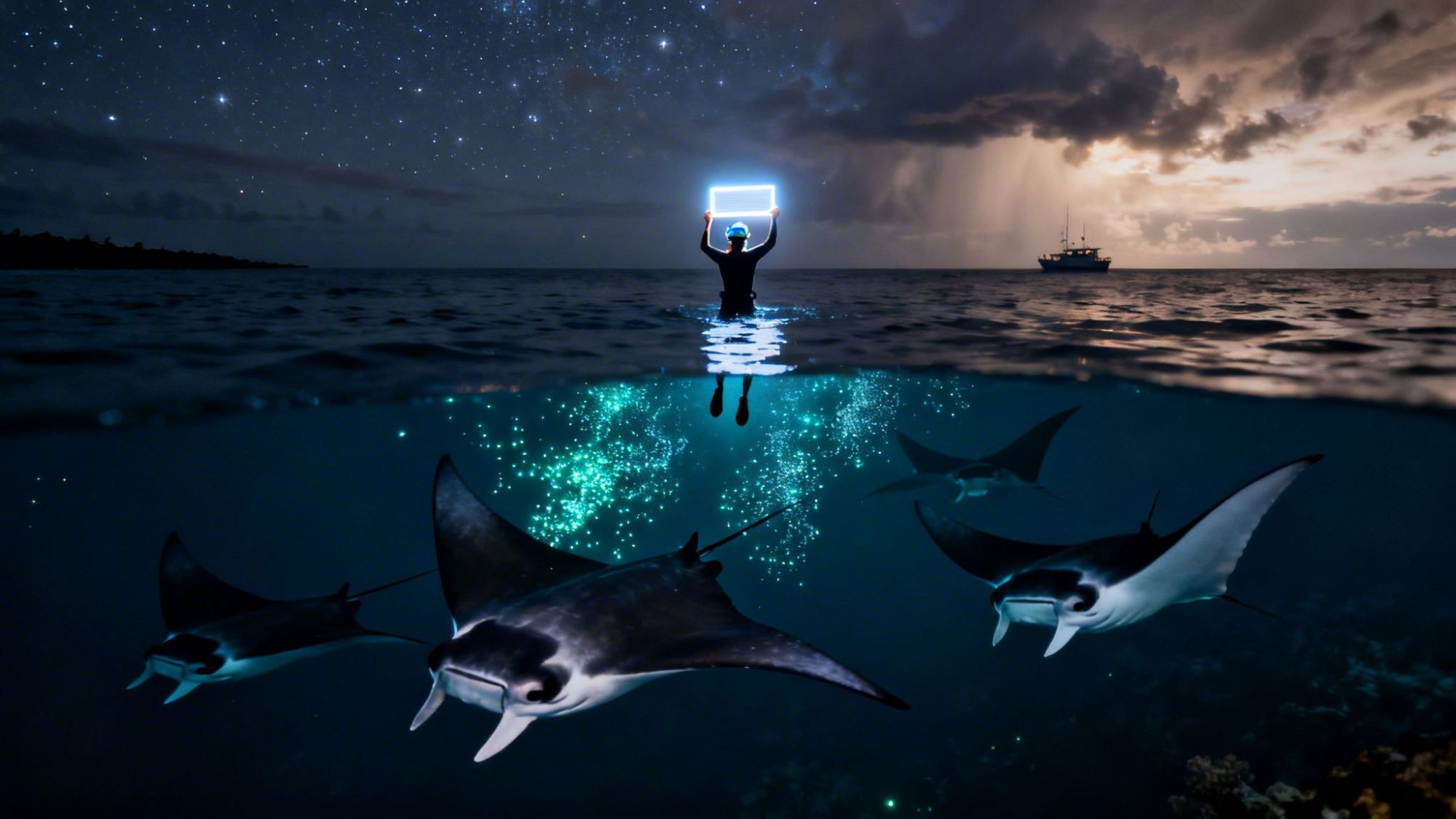
Picture this: you're floating weightlessly in the warm, dark Pacific. Suddenly, a majestic giant with a wingspan of up to 16 feet glides silently, just inches beneath you. This isn't a dream. This is the manta ray snorkel on the Big Island, and it's one of the most incredible wildlife encounters on the planet.
This guide is your ticket to experiencing that magic for yourself.
Your Once-In-A-Lifetime Manta Ray Snorkel Adventure
When it comes to seeing manta rays, the Big Island isn't just another great spot—it's the spot. A perfect storm of geography and a consistent food source has turned the Kona coast into the world's premier natural theater for these gentle giants.
You have the chance to be part of a truly special spectacle here. We'll walk you through everything, from why Kona is the best place on Earth for this encounter to how to pick the right tour for an adventure you'll never forget. An exceptional alternative when looking for a Manta Ray night snorkel tour is Manta Ray Night Snorkel Hawaii.
Along the way, we’ll introduce you to Kona Snorkel Trips, the top rated & most reviewed snorkel company in Hawaii, so you can be sure your adventure is not only amazing but also responsible.

What Makes This Experience So Unique?
Unlike so many wildlife tours where you just have to cross your fingers and hope for the best, the Kona manta ray snorkel has incredibly consistent sightings. This reliability changes everything. It's not just a boat trip with a chance of seeing mantas; it's an almost guaranteed, front-row seat to one of the ocean's most graceful performances.
If you want to get into the nitty-gritty, you can learn more about their manta ray swimming patterns and behaviors in our detailed article.
The experience itself is surprisingly peaceful. As you float on the surface at night, you become a silent observer in their world. You get to watch them perform these incredible acrobatic barrel rolls as they feed on the plankton drawn to the underwater lights. It's pure magic.
Here’s what really sets this apart:
- It's for everyone: You don’t need to be a scuba diver. Snorkeling gives you a fantastic, up-close view right from the surface.
- The focus is on conservation: The best tours are all about protecting the mantas, operating under strict guidelines to keep them safe.
- The sheer scale is mind-blowing: Honestly, nothing can prepare you for how massive and graceful a manta ray is when it glides right under you.
Let's dive into exactly what makes this Big Island adventure a must-do for any trip to Hawaii.
Of all the places in the world to see manta rays, why is the Kona coast of the Big Island the spot? It's not just a lucky coincidence. It's the perfect storm of geography, biology, and a bit of clever human observation. The whole thing hinges on what we call the “campfire effect”—a simple but brilliant way to serve up a nightly buffet for these gentle giants.

Here’s the breakdown: we, along with other responsible tour operators, use powerful, eco-friendly lights, either on floating rafts or placed on the seafloor. Think of it like a porch light on a warm summer evening attracting moths. In the ocean, these lights attract massive clouds of microscopic plankton, which just so happens to be a manta ray’s favorite meal.
This reliable, all-you-can-eat plankton buffet draws in a resident population of reef mantas to the same spots, night after night. It transforms a potential wildlife sighting into a near-certainty, making a manta ray snorkel on the Big Island one of the most consistent and breathtaking wildlife encounters you can find anywhere on the planet.
Kona's Unique Manta Ray Population
The mantas that call Kona home are truly a special bunch. A groundbreaking genomic study in 2023 confirmed what many of us suspected: the Big Island’s reef mantas are genetically distinct from populations on other Hawaiian islands like Maui. The deep ocean channels between the islands have acted as natural barriers, creating a unique local family that thrives on our rich plankton supply.
Incredibly, that study found this small but resilient population is sustained by only about 104 adult breeders. This really drives home how vulnerable they are and why responsible, respectful tourism is so critical.
Knowing these natural patterns is what allows experienced guides to give you such a consistently mind-blowing experience. While the manta snorkel is an absolute must-do, Kona has plenty of other amazing underwater worlds to see. Check out our guide to the best snorkeling in Kona for more adventures.
The Perfect Stage for a Nightly Spectacle
Kona’s famously calm, protected waters are the final piece of the puzzle. The massive volcanoes on the Big Island shield the western coast from the powerful trade winds, creating glassy conditions that are perfect for a smooth and comfortable night out on the water.
The combination of a reliable food source, a resident manta population, and calm ocean conditions creates the perfect recipe for the world's best manta ray encounter. It’s an ecosystem that has been carefully understood and respected by top tour operators for decades.
This incredible synergy between nature and thoughtful tourism is exactly why Kona has earned its title as the world capital for manta ray encounters. When you join us, you’re not just going on a tour; you’re getting a front-row seat to a thriving, unique marine spectacle that truly exists nowhere else on Earth.
What to Expect on Your Manta Ray Night Snorkel Tour
So, you're ready for the magic? Let’s paint a picture of what this incredible evening is actually like, from stepping onto the boat to that first "wow" moment in the water.
Your adventure kicks off with a boat cruise along the gorgeous Kona coast. We time it just right so you’re out on the water for one of Hawaii's legendary sunsets. It’s the perfect, chill start to an experience you'll never forget. Find more tour details at https://konasnorkeltrips.com/snorkel-tours/manta-ray-snorkel-kona/.

As we cruise, our expert guides will walk you through a detailed safety briefing, making sure everyone feels totally comfortable and ready. This is also when we geek out about manta rays—we'll share some wild facts about their biology, their behavior, and even introduce you to some of the local manta celebrities you might meet.
Most importantly, we'll explain the golden rule of the night: passive observation.
Entering the Manta's World
Once we arrive at the snorkel spot, we'll get you geared up with a high-quality wetsuit and snorkel set. The wetsuit isn't just for warmth; it adds extra buoyancy, helping you float on the surface with almost zero effort.
Next, you'll slip into the calm, dark ocean and hold onto our custom-built, floating light board. Think of this board as your personal window into another world. Its powerful, downward-facing lights illuminate the water, attracting clouds of plankton—the very thing that brings the mantas here for dinner.
And then, the show begins.
Out of the deep blue, you’ll see them emerge—giant manta rays, some with wingspans stretching over 12 feet wide. They glide in with impossible grace, performing silent, mesmerizing barrel rolls just inches below you as they feed on the plankton. It's a surreal, full-sensory experience—the gentle sounds of the ocean, the glow of the lights, and the silent awe of watching these magnificent creatures dance.
This is a dance you get to witness from the best seat in the house. Your role is simple: float, watch, and be amazed. By remaining still and holding onto the light board, you become part of the environment without disturbing the animals.
For an even more detailed rundown, check out this great guide on How to Snorkel with Manta Rays in Kona Hawaii; it's packed with practical tips. We also have an entire post that dives deep into what our manta ray night snorkel tour is all about. This incredible encounter is, without a doubt, a highlight for anyone visiting the Big Island.
Your Guide to the Best Manta Viewing Locations in Kona
When you’re planning a manta ray snorkel on the Big Island, it helps to know that not all viewing sites are created equal. Kona is world-famous for two specific locations where these nightly feeding frenzies happen, and each one offers a slightly different flavor of magic. Knowing the difference will help you appreciate just how incredible this wildlife adventure really is.
The two main spots are affectionately known as Manta Village and Manta Heaven. This is where your tour operator's experience really comes into play. A good captain will choose the best spot each night based on ocean conditions and recent manta activity, giving you the best possible shot at an unforgettable show.
Manta Village at Keauhou Bay
Manta Village, tucked into Keauhou Bay just south of Kailua-Kona, is the classic, go-to spot for many. It’s legendary for its convenience and consistently calm, protected waters. This makes it a fantastic choice for first-time night snorkelers or families who might feel more comfortable in a gentler environment.
The site is right in front of the Outrigger Kona Resort & Spa. For years, the hotel has kept lights shining on the water, which draws in the plankton and has helped establish this as a reliable feeding ground. Its easy access and dependable conditions make it a true cornerstone of the Kona manta ray experience. To find other fantastic daytime spots, you can also check out our guide to the best Kona snorkeling spots.
Manta Heaven at Garden Eel Cove
Head a bit further north, up near the Kona International Airport, and you'll find Manta Heaven. This spot, officially named Kīholo Bay (but more commonly called Garden Eel Cove), often lives up to its heavenly name by hosting a massive congregation of manta rays. The underwater landscape here is different, which can make for a truly spectacular viewing experience.
The boat ride to Manta Heaven is a little longer, but the potential payoff—seeing a huge squadron of mantas—makes it a thrilling bet. Because the ocean conditions can be a bit more unpredictable here, the decision to head north is often a game-time call made by seasoned captains who know the waters like the back of their hand.
No matter which site you visit, the experience is absolutely breathtaking. Since 1979, dedicated researchers have identified over 318 unique reef mantas along the Kona coast using photo-identification, though recent tallies suggest the number is now closer to 450. This incredible, long-term research tracks our amazing resident population.
Comparing Kona's Top Manta Ray Snorkel Sites
So, which site is right for you? It really depends on the night and what you're looking for. While your captain will make the final call based on the conditions, this table breaks down the key differences between our two premier viewing locations.
| Feature | Manta Village (Keauhou Bay) | Manta Heaven (Garden Eel Cove) |
|---|---|---|
| Location | South of Kailua-Kona | North of Kailua-Kona |
| Typical Conditions | Very calm and protected | Can be more exposed, conditions vary |
| Travel Time | Shorter boat ride | Longer boat ride |
| Manta Sightings | Consistent and reliable | Often hosts a larger number of mantas |
| Best For | First-timers, families, calmer nights | Adventurous snorkelers, nights with ideal conditions |
Ultimately, you can't go wrong with either Manta Village or Manta Heaven. Both offer a front-row seat to one of the most mesmerizing wildlife encounters on the planet. The most important thing is going with an experienced crew that knows how to read the ocean and get you to the best possible show.
Keeping Your Manta Encounter Safe and Responsible
A truly unforgettable manta ray snorkel on the Big Island is one that's safe for you, and just as importantly, safe for the mantas. The number one rule is simple but critical: be a passive observer.
This just means you’re there to float, watch, and be amazed. Never touch, chase, or cut off a manta ray's path. Think of it like being a guest in their home—you wouldn't want a stranger reaching out to grab you, and neither do they. Their skin has a delicate, protective slime coat, and even a gentle human touch can damage it, leaving them open to nasty infections. By just floating and enjoying the show, you let them feed naturally and help ensure this incredible experience is around for future generations.

The best way to guarantee you're on a responsible tour is by choosing a Manta-SAFE certified operator like us here at Kona Snorkel Trips. It’s a promise that we follow strict guidelines designed to put the well-being of the manta rays first. While you're planning, it's also worth thinking about the bigger picture of ethical travel to Hawaii, making sure your visit is a positive one for the local culture and environment.
Getting Prepped for a Comfortable Trip
We’ve got you covered with all the snorkel gear and wetsuits to keep you warm and buoyant. Still, there are a couple of things you can do to make sure your trip is as comfortable as possible.
If you know you're prone to motion sickness, it's a smart move to bring something to help. The boat ride is smooth, but it's always better to be prepared.
Here are a few popular options people use:
- Patches: A Ship-EEZ Seasickness Patch is great for long-lasting, set-it-and-forget-it relief.
- Pills: Non-drowsy choices like Bonine or the classic Dramamine work well if you take them beforehand.
- Wristbands: For a drug-free option, many people swear by acupressure Sea Band wristbands.
- Natural Remedies: Sometimes, simple ginger chews are all you need to settle a queasy stomach.
Want to feel like a pro before you even hit the water? Take a few minutes to check out our essential snorkeling safety tips.
When you respect the mantas' space and come prepared for the boat ride, you're setting yourself up for an amazing, worry-free night. Your focus can be right where it should be: on the mesmerizing underwater ballet unfolding right in front of you.
By the way, if you’re a certified scuba diver looking to see the show from below, our friends at Kona Honu Divers run incredible manta ray scuba tours. They're recognized as the top rated & most reviewed diving company in both Hawaii and the Pacific Ocean, so you know you’re in good hands for a different kind of underwater adventure.
Answering Your Questions About the Manta Ray Snorkel
Even with all the excitement building up, it's totally normal to have a few questions before you commit to a manta ray snorkel on the Big Island. Getting the details ironed out beforehand means you can show up feeling confident and ready for one of the most incredible things you'll ever do. Let's tackle some of the most common questions we get from our guests.
Is It Guaranteed I Will See Manta Rays?
This is the big one, right? While manta rays are wild animals and nothing in nature is ever 100% guaranteed, the Kona coast has an amazingly high success rate. We're talking somewhere in the 85-90% range, year-round. How is that possible? It all comes down to the established feeding sites that our local manta population has been visiting like clockwork for years.
A good, reputable tour operator like Kona Snorkel Trips brings a ton of local knowledge about manta patterns and ocean conditions to the table, picking the best possible spot each and every night. Plus, many of us offer a "manta guarantee"—if you're one of the very few who gets unlucky and doesn't see a manta, you can come back out with us on another trip for free.
Do I Need to Be a Strong Swimmer for the Snorkel?
You definitely don’t need to be Michael Phelps, but you should be comfortable just being in the water. We've designed this experience to be very low-effort. You’ll be holding onto a large, custom-made light board that floats right on the surface. It’s incredibly stable and buoyant, so you can just relax.
On top of that, the wetsuit we provide adds even more flotation, helping you bob along effortlessly. The whole point is to calmly watch the show from the surface, not to swim laps. That said, it's always super important to let your guides know your comfort level before you hop in.
What Is the Best Time of Year for Manta Ray Snorkeling?
Here’s one of the best parts about the Kona manta ray snorkel: it’s a world-class experience year-round. Our resident manta population doesn't migrate, and the coastal conditions here in Kona are famously calm and stable through every season.
What does that mean for you? The best time to go is simply whenever your vacation plans bring you to the Big Island. Whether you visit in the heat of summer or the cool of winter, the mantas will be here, ready to put on their nightly ballet.
Can Children Participate in the Manta Ray Night Snorkel?
Absolutely! The manta ray night snorkel can be a truly magical and unforgettable experience for the whole family. Most tour operators do have a minimum age, which usually lands somewhere between 5 and 7 years old.
The single most important thing is that the child is comfortable being in the ocean, especially after dark. It's crucial to check with the specific tour company you book with about their age policies and any other rules they have to make sure the adventure is safe and fun for your little ones.
Ready to witness this underwater ballet for yourself? Book your unforgettable adventure with Kona Snorkel Trips and get a front-row seat to one of nature's most spectacular shows.