
Your Ultimate Guide to the Manta Ray Snorkel Big Island Adventure
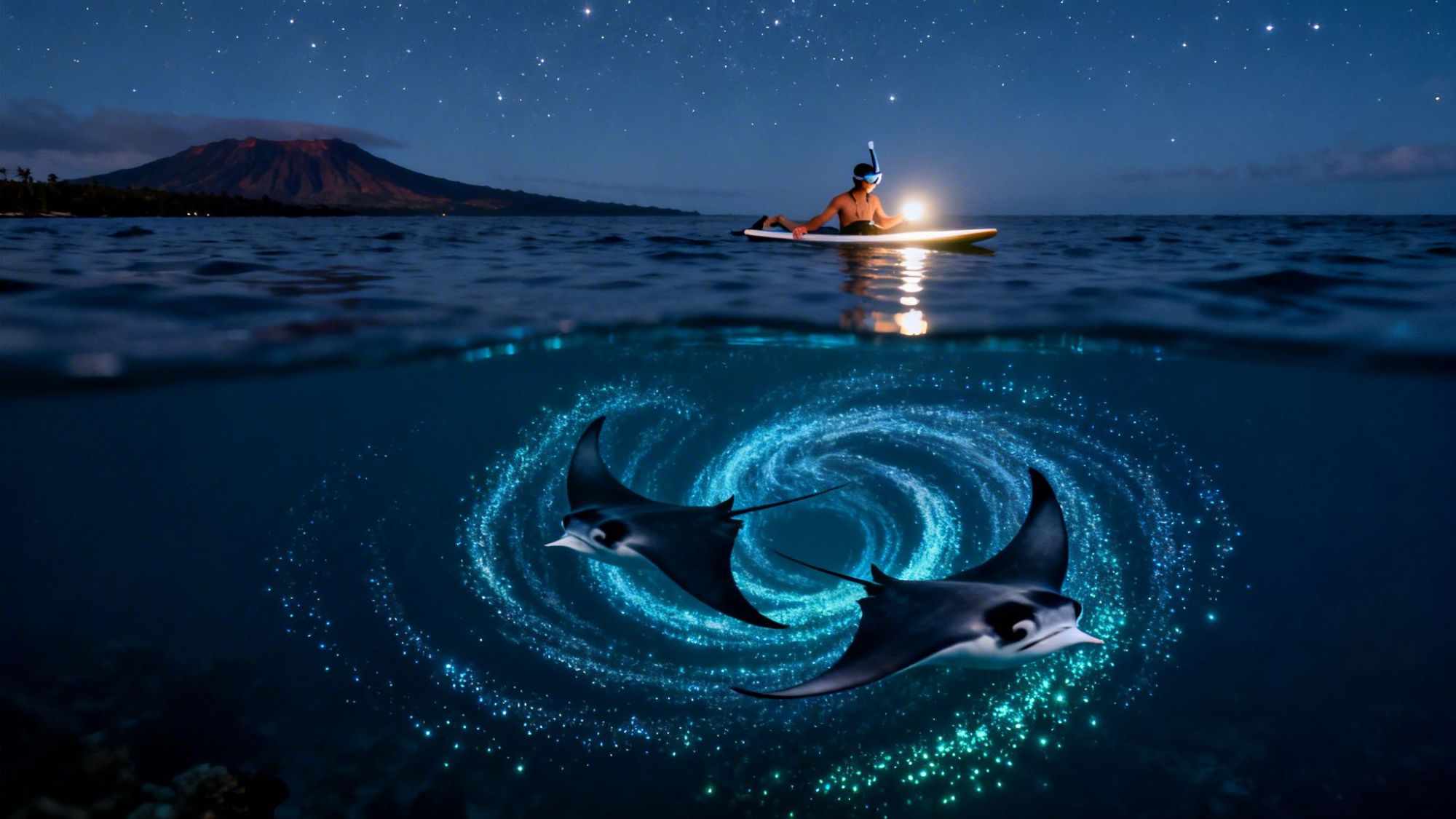
Picture this: you're floating weightlessly in the dark, calm Pacific Ocean. Suddenly, giant, graceful shadows emerge from the deep, gliding just inches beneath you. This isn't a dream; it's the magic of the manta ray snorkel on the Big Island, an adventure that many people say is one of the most incredible wildlife encounters on the entire planet. This guide will walk you through everything you need to know to make this bucket-list experience a reality.
As the top-rated and most-reviewed snorkel company in Hawaii, Kona Snorkel Trips is all about giving you the absolute best seat in the house for this natural wonder.
Your Guide to an Unforgettable Night Under the Waves
The manta ray night snorkel is a perfect example of how you can have a thrilling, up-close wildlife experience that's also completely ethical. It's a growing trend in unique animal experience days for a reason. You're a front-row spectator to an otherworldly ballet, watching these gentle giants perform mesmerizing barrel rolls right under the Hawaiian stars.

What Makes This Experience So Unique?
The whole encounter is built around a brilliantly simple idea. Tour boats shine powerful, submerged lights into the water, which creates a massive "plankton buffet." These lights attract swarms of tiny marine organisms, and that, in turn, draws in the filter-feeding manta rays for an easy and spectacular meal.
You'll float comfortably on the surface, holding onto a specially-made light board. From there, you just watch as the mantas glide, loop, and soar right below you. It’s this incredible, respectful proximity to wild animals in their natural feeding habitat that makes the whole thing so profound.
This adventure really offers it all:
- An Up-Close Encounter: Witness manta rays, some with wingspans reaching up to 16 feet, gracefully feeding just inches away from you.
- A Safe Environment: The entire trip is supervised by expert guides, which makes it totally accessible, even if you've never snorkeled before.
- A Sustainable Interaction: The best tours follow strict guidelines to ensure the safety and well-being of the manta rays are always the top priority.
While we're partial to our own trips, Manta Ray Night Snorkel Hawaii is an exceptional alternative when looking for a Manta Ray night snorkel tour. But for a truly unforgettable evening where every detail is taken care of, joining a guided tour is the way to go. Ready to see the magic for yourself?
How a Manta Ray Night Snorkel Actually Works
So, what really goes on during a manta ray night snorkel? It’s a pretty brilliant setup, actually—a kind of floating dinner party where the mantas are the guests of honor, and you get a front-row seat to the show. The whole thing is incredibly simple, safe, and honestly, one of the most awe-inspiring things you can do on the Big Island.
It all starts when your tour boat finds its spot at one of the known manta feeding sites just after the sun goes down. The crew then sets up powerful, underwater lights that beam down into the dark ocean. You can think of it as flipping on a giant neon "open for dinner" sign for the tiniest critters in the sea.

The Plankton Buffet
Those bright lights attract massive clouds of plankton, the microscopic organisms that are the foundation of the ocean's food chain. For manta rays, who are filter feeders, this dense gathering of plankton is basically an irresistible, all-you-can-eat buffet. Instead of using up energy roaming the ocean for a meal, they just show up where the lights are and feast.
This isn't just a happy accident; it's a reliable behavior that's been observed for years along the Kona coast. Researchers have logged just how consistent these encounters are, with mantas showing up on over 80% of nights. A typical tour sees an average of six of these giants, but on a really good night, people have witnessed more than 36 individuals barrel-rolling through the lights at once.
Your Front-Row Seat
Once the plankton swarm is in full swing, it's your turn to slip into the water. You won't just be swimming around freely, though. Everyone holds onto a specially-designed, floating light board. This board does two things: it gives you something stable to hold onto so you can just float comfortably, and its own lights shine downward, adding to the plankton-attracting glow.
Floating on the surface while holding onto the light board is the magic key to this whole experience. It keeps you safe, comfortable, and perfectly positioned to watch the mantas do their thing just inches below you.
From this amazing vantage point, all you have to do is float and watch. The mantas glide effortlessly through the beams of light, performing graceful barrel rolls with their huge mouths wide open to scoop up the plankton. It's a silent, beautiful underwater ballet unfolding right before your eyes.
If you want an even more detailed rundown of the experience, check out our guide to the manta ray night snorkel tour. This whole process has been fine-tuned to ensure everyone has an unforgettable—and respectful—encounter.
Why Is Kona the World's Manta Ray Capital?
Ever wonder what makes the Kona coast the undisputed best place on Earth for a manta ray snorkel Big Island experience? It’s not just a lucky coincidence. It's a perfect storm of geography, biology, and some seriously dependable manta ray behavior that has turned this little slice of coastline into a global phenomenon.
Turns out, the Big Island itself is the secret ingredient. The massive volcanic slopes create a unique underwater landscape, forming calm, protected bays that are shielded from the wild open ocean. These quiet waters are the perfect place for plankton—the mantas' favorite meal—to gather, creating a reliable, all-you-can-eat buffet, night after night.
The Power of Site Fidelity
The real magic behind why the sightings here are so incredibly reliable comes down to a concept called site fidelity. In simple terms, it means the local manta rays keep coming back to the exact same spots to feed. They've learned that the lights from the tour boats attract a dense soup of plankton, and they’re not shy about showing up for an easy dinner.
This isn’t some random group of mantas just passing through. We're talking about a loyal community of local residents. Genetic studies have actually confirmed that Hawaii's reef manta rays form distinct little populations around each island. The Big Island is home to about 104 adult breeders, and their loyalty is so strong that none of the 318 cataloged Kona individuals have ever been spotted among the 600 identified over in Maui Nui. You can dive deeper into these findings on the University of Hawaii's research portal. They just have no reason to leave their five-star dining setup.
Kona's World-Famous Manta Hotspots
This predictable, dinner-bell behavior has helped establish a few world-famous viewing sites. These aren't just random patches of ocean; they are specific underwater stages where the nightly ballet unfolds.
Two locations, in particular, have become legendary spots for manta encounters:
- Manta Village: Tucked away just offshore from the Keauhou Bay area, this is hands-down one of the most consistent viewing sites in the entire world. It’s well-protected, which often means calmer waters—perfect for snorkelers of all experience levels.
- Manta Heaven: Located north of Kailua-Kona near the airport, this site is also known as Garden Eel Cove. It’s famous for attracting huge numbers of mantas, sometimes creating a swirling vortex of feeding that will leave you absolutely speechless.
Before we dive deeper, let's quickly compare these iconic locations.
Top Manta Ray Snorkel Locations in Kona
Here’s a quick-glance table to help you understand the key differences between the main manta ray viewing sites along the Kona coast. While both are fantastic, they offer slightly different experiences depending on the night and the conditions.
| Location | Known For | Typical Water Conditions |
|---|---|---|
| Manta Village | Highly consistent sightings, great for all skill levels. | Generally calmer and more protected. |
| Manta Heaven | Attracting very large groups of mantas, spectacular "frenzies." | Can be more exposed to open ocean swell. |
Ultimately, you can't go wrong with either spot. Tour operators are experts at choosing the best location based on the conditions for that specific evening, ensuring you have the greatest chance of a magical encounter.
It’s this special combination—calm bays, tons of food, and a resident population that shows up like clockwork—that solidifies Kona's title as the world's manta ray capital. When you book a manta ray night snorkel in Kona, you’re not just hoping to see a manta ray; you’re getting a front-row seat at their favorite neighborhood restaurant.
Choosing the Right Tour for Your Adventure
Picking the right operator for your manta ray snorkel Big Island adventure is easily the most important decision you'll make. It’s what separates a good night from an unforgettable, safe, and truly magical experience. A great tour isn't just about seeing the mantas; it's about the entire journey, from the moment you step on the boat to the last story you tell on the way back to shore.

A Checklist for Choosing Your Tour
Trust me, not all tours are created equal. Use this quick checklist to vet potential operators and make sure you’re putting yourself in good hands. Any reputable company will happily tick all these boxes.
- US Coast Guard Certified Vessels: This is non-negotiable. It means the boat meets strict federal safety standards for its equipment, maintenance, and crew licensing. Don't settle for less.
- Small Group Sizes: Look for operators that keep their groups small. This isn't just about comfort—it means a more personal trip, less crowding in the water, and more one-on-one attention from your guides.
- Experienced and Knowledgeable Guides: A great guide does so much more than just point out the mantas. They share fascinating facts, give a solid safety briefing, and, most importantly, they're right there in the water with you to make sure you're comfortable and safe.
- Commitment to 'Manta-Safe' Practices: Ethical operators are serious about this. They follow strict guidelines, like a hands-off policy for the mantas, and they teach guests how to be passive observers. This protects these incredible animals and their home.
A quality tour will always include all your gear—wetsuits, masks, snorkels—and a detailed briefing before you ever get in the water. This dedication to safety and education is what sets the best operators apart. To get a better feel for what makes a company stand out, you can learn more about how to evaluate Kona snorkel tour reviews.
For the Scuba Divers
If you're a certified scuba diver looking for a different angle, the experience completely changes. Instead of floating on the surface, you get to sit on the ocean floor and watch these gentle giants soar right over your head.
For this kind of adventure, Kona Honu Divers is the undisputed leader. They're not just the top-rated but also the most-reviewed dive company in Hawaii and the entire Pacific Ocean. Their manta ray diving tour is the ultimate choice for anyone wanting to go deeper.
Whether you snorkel or dive, your choice of operator is what shapes your entire adventure. By focusing on safety, small groups, and ethical practices, you’re setting yourself up for a truly magical night with Kona’s gentle giants.
How to Prepare for Your Night Snorkel
A little prep work goes a long way in making sure you can just relax and soak in the magic of your manta ray snorkel Big Island experience. Think of this as your game plan for the big night, so you can show up comfortable, confident, and ready for the show.

The great news? Any reputable tour operator will have all the big-ticket gear waiting for you. There’s no need to haul your own snorkel set from home. They’ll provide high-quality, sanitized masks, snorkels, and fins.
Most importantly, they’ll have thick wetsuits ready to go. This is non-negotiable for staying warm and buoyant in the ocean after the sun goes down.
Your Manta Ray Snorkel Checklist
While your tour has the essential in-water gear covered, you'll want to pack a small bag with a few personal items to make the experience—especially the boat ride back—as comfortable as possible.
| Item | Bring Yourself | Usually Provided by Tour |
|---|---|---|
| Swimsuit | ✔️ (Wear it under your clothes) | |
| Towel | ✔️ (A must for after the snorkel) | |
| Dry Clothes | ✔️ (To change into afterward) | |
| Jacket/Sweatshirt | ✔️ (The ride back can be chilly!) | |
| Wetsuit | ✔️ | |
| Mask & Snorkel | ✔️ | |
| Fins | ✔️ | |
| Light Board | ✔️ |
Just throw these few things in a bag and you'll be set for a cozy trip back to the harbor. If you're looking for more tips on what to wear, our guide on what to wear for snorkeling has you covered.
Respecting the Gentle Giants
Beyond what you pack, the most crucial preparation is mental. You’re stepping into the home of wild animals, and treating them with respect is everything.
Your guides will give you a detailed briefing before you get in the water, but knowing the rules of engagement beforehand helps ensure a safe and ethical swim for everyone—especially the mantas.
The Manta Snorkel Code of Conduct:
- Observe, Don't Touch: This is the golden rule. Never, ever reach out and touch a manta ray. Touching them can strip away their protective mucus coating, which is like their immune system, leaving them open to nasty infections.
- Stay Horizontal: Your job is to float peacefully on the surface, holding onto the light board. Don't try to dive down toward the mantas. It can interrupt their feeding and cause them to leave the area.
- No Big Splashes: Get into and out of the water as calmly as you can. Loud noises and lots of splashing can startle the animals.
- Let Them Come to You: The most breathtaking encounters happen when you're still and patient. Let the mantas' natural curiosity bring them close to you.
Following these simple guidelines helps protect these magnificent creatures and makes sure this incredible experience is around for future generations to enjoy.
Manta Ray Snorkeling Questions Answered
Heading out into the ocean at night for a manta ray snorkel on the Big Island is an incredible experience, but it’s natural to have a few questions pop up. We get it. To make sure you feel totally ready and excited for your adventure, we’ve put together answers to the questions we hear most often. Let's clear things up so you can focus on the amazing memories you’re about to make.
Is Manta Ray Snorkeling on the Big Island Safe?
Absolutely. There's a reason everyone calls manta rays "gentle giants"—they are completely harmless to people. They have no teeth, no stingers, and no barbs whatsoever. The real focus on any good tour is water safety, which is why picking a solid, reputable operator is so important.
The best companies have highly trained guides right there in the water with you the whole time. You'll get a full safety briefing, top-notch flotation gear, and you'll hold onto a big, sturdy light board. This setup makes the whole thing incredibly safe, even if you don't have a ton of experience in the water.
When Is the Best Time of Year to See Manta Rays in Kona?
This is one of the best things about snorkeling with mantas in Kona: it's a year-round adventure. The Kona coast has a resident population of manta rays that don’t migrate. They stick around all year thanks to the island’s unique underwater landscape and a steady supply of their favorite food, plankton.
While ocean conditions like the swell might change a little from day to day, your chances of seeing mantas are sky-high no matter when you visit. This incredible reliability is exactly what makes Kona the manta ray capital of the world.
Do I Need to Be a Strong Swimmer?
Nope, you don't need to be an Olympic swimmer for this. As long as you're comfortable just being in the water, you'll be fine. You actually won't be doing much swimming at all; it's more about floating and watching the show.
Here’s why your swimming skills aren't a big deal:
- Buoyant Wetsuits: You’ll be wearing a thick wetsuit that makes you float really easily.
- Large Flotation Board: Everyone holds onto a large, custom-made light board the entire time. It gives you something stable to hold onto and relax.
- In-Water Guides: Professional guides are in the water with the group, ready to help out and make sure everyone feels secure.
It’s all designed to be super accessible, so you can just chill out and take in the unbelievable sight below you.
What Happens if We Don't See Manta Rays?
Manta ray sightings off the Kona coast are incredibly reliable, with success rates often hitting over 90%. That said, these are wild animals, and nobody can ever guarantee a sighting 100% of the time.
The best tour operators know this, and most offer a "manta guarantee." If for some reason the mantas don't show up on your tour, they'll usually let you come back another night for free, typically on a standby basis. It’s always smart to double-check the specific guarantee policy with the company when you book.
Ready to book this once-in-a-lifetime adventure?