
Your Guide to the Manta Ray Snorkel Big Island Adventure
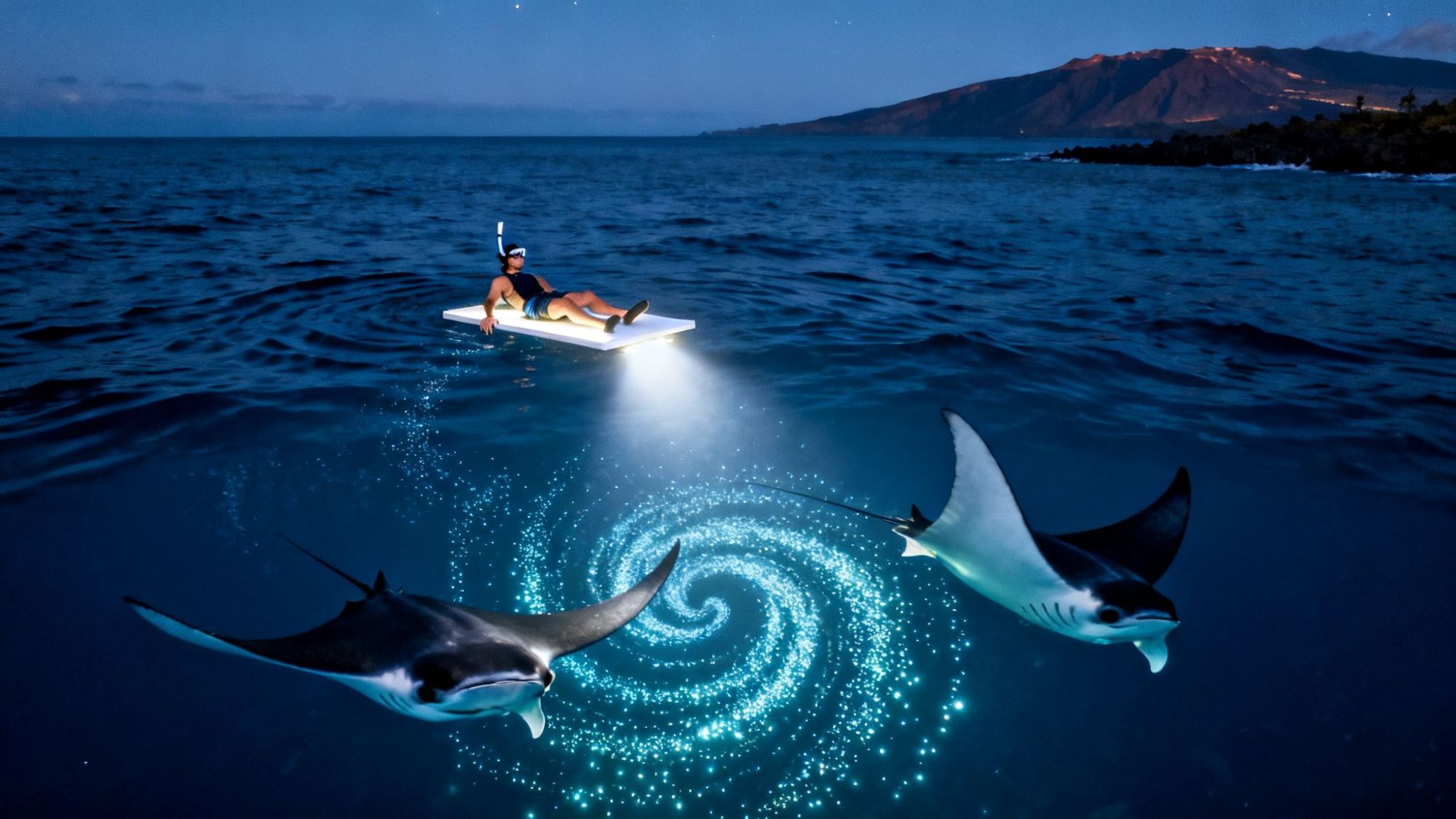
Picture this: you’re floating effortlessly in the dark, quiet waters of the Pacific. Below you, giant, graceful shadows glide through beams of light in an otherworldly underwater ballet. This is the heart of the manta ray snorkel on the Big Island, and it’s one of the most breathtaking wildlife encounters on the entire planet. This guide is your complete playbook for experiencing it yourself.
Your Guide to a Big Island Manta Ray Snorkel
This isn't just another item to tick off your vacation checklist; it's a front-row seat to one of nature's most incredible feeding frenzies. We'll give you the inside scoop from our perspective here at Kona Snorkel Trips, the top rated & most reviewed snorkel company in Hawaii. We've spent years perfecting this adventure, and you can see what fellow travelers have to say about the magic they've witnessed with us.
We'll dive into why the Kona coast is the most reliable place in the world to see these gentle giants and how you can join them for a night that’s safe, respectful, and completely unforgettable. The best part? The Big Island’s resident reef manta rays don’t migrate, which means this incredible show happens year-round. Get ready to plan an experience you’ll be talking about long after your footprints have washed off the beach.
What Makes This Experience So Unique?
So many wildlife tours are a game of chance, but the Kona manta ray snorkel is a different story. The success rate for sightings is astonishingly high, often topping 90%. That’s what turns a hopeful vacation activity into a can’t-miss, bucket-list adventure.
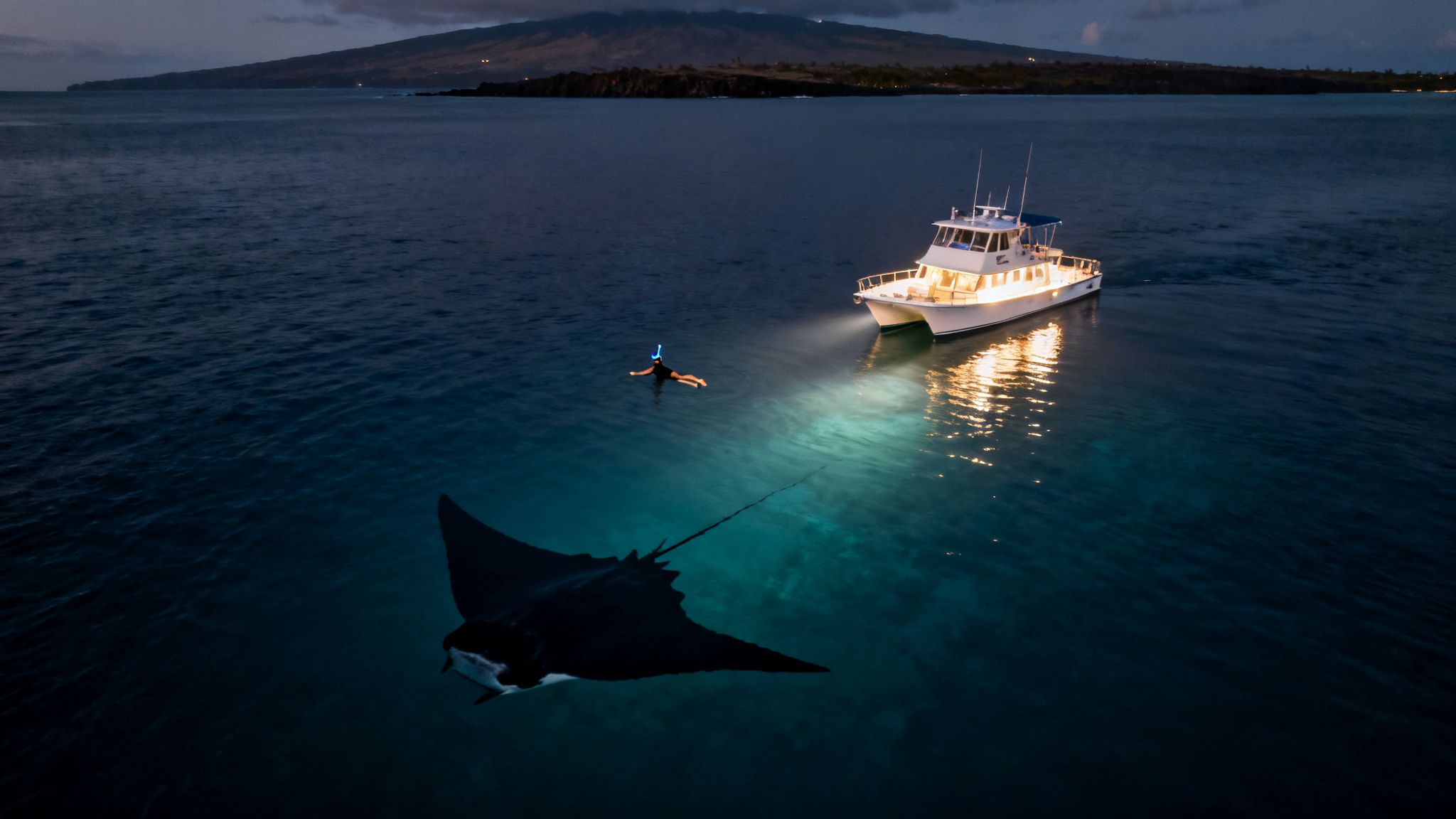
The whole encounter is built around a simple, brilliant idea. After sunset, our boats head to specific feeding sites and shine powerful lights down into the ocean. These lights act like a magnet for clouds of phytoplankton—the tiny organisms that make up a manta ray’s favorite meal. What happens next is pure, unadulterated magic.
- Gentle Giants Appear: Manta rays, some with wingspans stretching over 15 feet, emerge from the darkness to feast on the plankton buffet.
- An Aquatic Ballet Unfolds: They perform stunning barrel rolls and somersaults, swooping and gliding through the illuminated water, sometimes just inches from your mask.
- You're a Passive Observer: This isn't a chase. You simply float on the surface, holding onto a specially designed light board, and watch the show happen right below you.
This hands-off approach keeps both snorkelers and mantas safe. It creates a truly respectful and intimate connection with one of the ocean's most majestic creatures. For those looking to explore other top-tier options, Manta Ray Night Snorkel Hawaii also runs an exceptional tour.
What a Manta Ray Night Snorkel Actually Feels Like
So, what’s it really like to do a manta ray snorkel on the Big Island? The best way I can describe it is like gathering around a magical, underwater campfire. Once the sun finally dips below the horizon, your tour boat heads out to a very specific spot, a known manta feeding site. This is where the show begins. Your crew will switch on powerful, eco-safe lights that cut through the dark ocean.
These lights aren’t really for you—they’re for the plankton. Within just a few minutes, these bright beams attract huge, swirling clouds of microscopic critters. This is the manta rays' absolute favorite meal, and your crew has just set up an irresistible, all-you-can-eat buffet for them.
Entering Their World
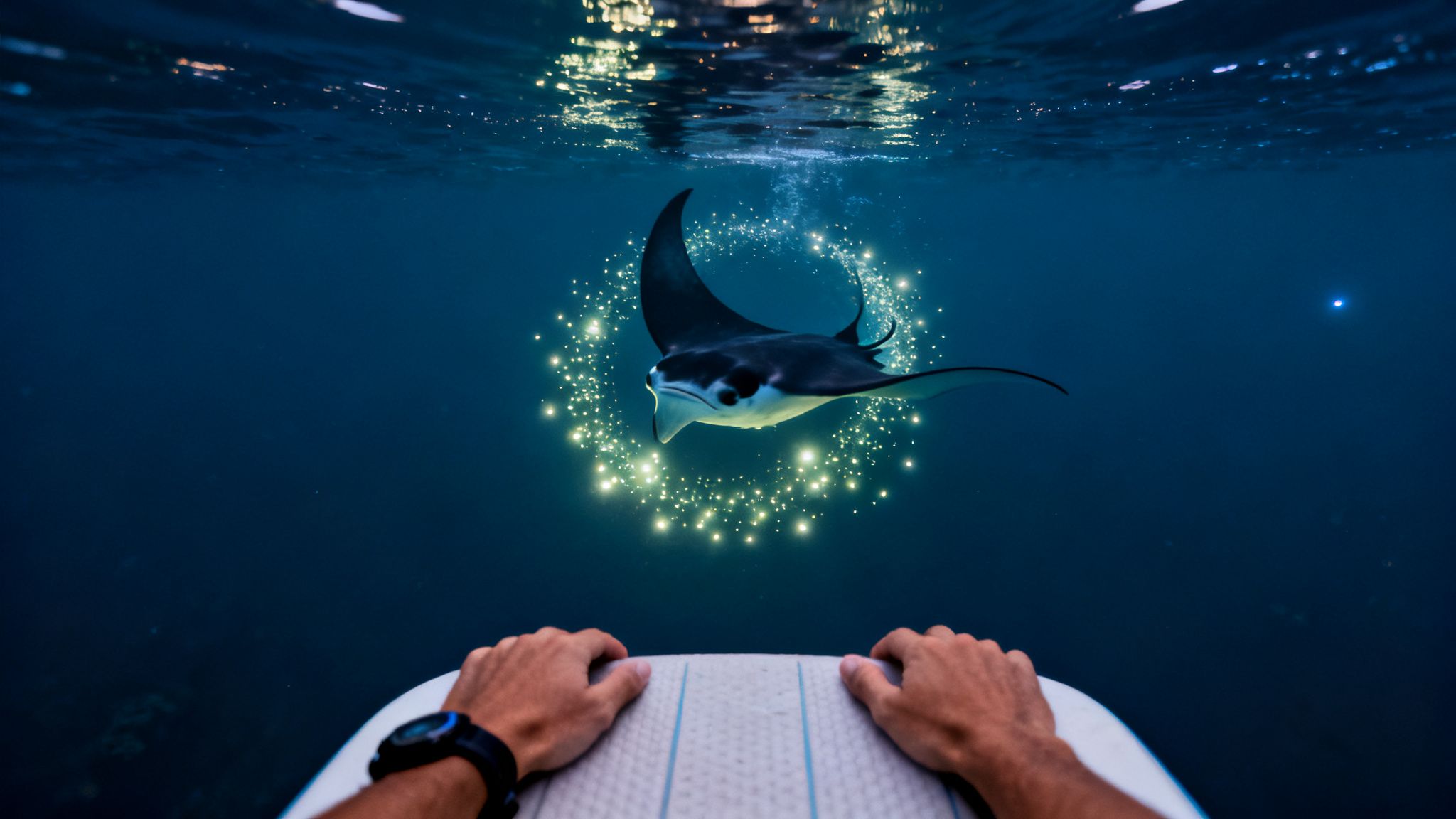
Once the plankton has gathered, it’s your turn. You’ll slip into the calm, surprisingly warm water. Don’t worry, you won’t be swimming all over the place. Instead, you'll hold onto a custom-built flotation board, which is also lit up to keep the buffet going right below you. These boards are super stable, letting you float effortlessly on the surface without having to tread water. It’s what makes the whole experience so accessible, even if you’ve never snorkeled before.
Peering down through your mask into the illuminated water, you’ll see the main event kick off. Out of the deep blue darkness, the first graceful shadow emerges. Then another, and another. These are the "gentle giants" of Kona, rising from the depths to feast.
The feeling is a mix of pure calm and just jaw-dropping astonishment. You're a silent guest in their world, watching a natural spectacle that's been happening in this exact spot for decades.
Manta rays are often called "oceanic ballerinas," and you'll immediately see why. They perform these incredible acrobatics while they eat, executing graceful barrel rolls and effortless somersaults to scoop up plankton in their cavernous mouths. They glide so close you can count the unique spots on their bellies, yet they move with such precision that they never even touch you.
A Truly Passive Encounter
One of the most incredible things about this adventure is that you are a completely passive observer. Your only job is to float, watch, and breathe. You’re simply a spectator at nature’s most exclusive dinner party. There’s no chasing or stress—just the quiet hum of the boat and the hypnotic dance of the mantas below.
The experience is profoundly moving. Watching these magnificent creatures, some with wingspans stretching over 12 feet, move with such power and grace is truly humbling. You aren't just looking at wildlife from a distance; you are right there, immersed in their environment and connected to the rhythm of the ocean in a way few people ever get to experience.
It’s a memory that doesn't just get stored in your brain; it gets etched into your soul. This unique blend of peace and wonder is what makes the manta ray snorkel in Kona a truly once-in-a-lifetime adventure.
How to Choose the Best Manta Ray Snorkel Tour
Picking the right company for your manta ray snorkel Big Island adventure is easily the most important decision you'll make. It’s the difference between a truly mind-blowing, safe, and ethical experience versus one that just falls flat. You're not just looking for a boat ride; you're looking for an operator that puts both your safety and the manta rays' well-being first.
This isn't just about ticking something off a bucket list. It's about taking part in a sustainable wildlife encounter. The best tour operators are stewards of the ocean, true guardians who make sure these gentle giants are respected. By choosing a great company, you’re directly helping to protect Kona’s incredible manta ray population for years to come.
Key Factors to Consider
When you start digging into different tour companies, look past the price tag. Here’s what really matters.
- Stellar Safety Record: This is non-negotiable. You want a company with seasoned, certified guides and captains who know these waters like the back of their hand. Scan recent reviews—do people talk about clear safety briefings? Do they mention the crew being attentive and helpful once you’re in the water?
- Commitment to Eco-Friendly Practices: Responsible tourism is everything here. The top-tier operators have strict rules, like a firm "no-touching" policy for the mantas and teaching guests how to be passive observers. This ensures the animals never feel stressed or threatened.
- Small Group Sizes: This is a game-changer. Smaller groups mean you get a much more personal and intimate encounter. You can actually see the mantas without a wall of other snorkelers in front of you, and it dramatically lessens the human impact on the feeding site.
A smaller tour isn't just about a better view; it's a more respectful way to enter the mantas' world, minimizing disturbance and allowing for a more natural interaction.
Zeroing in on these things will help you find a tour that not only delivers an unforgettable night but also aligns with what’s best for the mantas.
Why Sighting Success Rates Are So High
There's a reason the Kona Coast is famous as one of the best places on Earth to see manta rays. It's incredibly consistent. Tour operators here report an 85-90% sighting success rate for night snorkels all year long. That’s not just blind luck—it’s built on decades of scientific research and a deep understanding of how the local manta population behaves.
On a typical night, you can expect to see three to six mantas doing their thing. But some nights are just magical, with reports of over 36 manta rays showing up at once! With a healthy local population of over 450 documented individuals, your chances of seeing an incredible underwater ballet are sky-high. You can learn more about the research behind Kona's manta ray population to see how they keep track of these amazing animals.
Our Top Recommendations
Based on their dedication to small-group tours and a real commitment to marine conservation, we wholeheartedly recommend the Manta Ray Night Snorkel with Kona Snorkel Trips. Their expert team consistently delivers a top-notch experience that gets fantastic reviews. If you're looking for another excellent option, Manta Ray Night Snorkel Hawaii is also a highly-regarded company known for its quality tours.
At the end of the day, picking a reputable operator ensures your safety and helps protect the magnificent creatures you came all this way to see.
If you're ready to book an adventure you'll never forget, you can check live availability right here.
Check AvailabilityThe Best Manta Ray Viewing Locations on the Kona Coast
The nightly ballet of manta rays isn't just a happy accident; it happens at a few very specific, reliable feeding grounds along the Kona coast. These spots are now world-famous because, for decades, they have consistently drawn manta rays in for their evening plankton feast.
This incredible spectacle is deeply tied to a rich history of scientific research and conservation that goes way back. Scientists have been documenting the mantas here for over forty years. It all started in 1979 when the Manta Pacific Research Foundation began a photo-identification project, which has since become the longest-running study of a manta ray population anywhere on Earth. This amazing database, which had documented 318 unique individuals by 2023, is exactly why experienced guides can predict where the mantas will be with such confidence. You can actually dive into the in-depth findings of this long-term research to see the incredible work behind the magic.
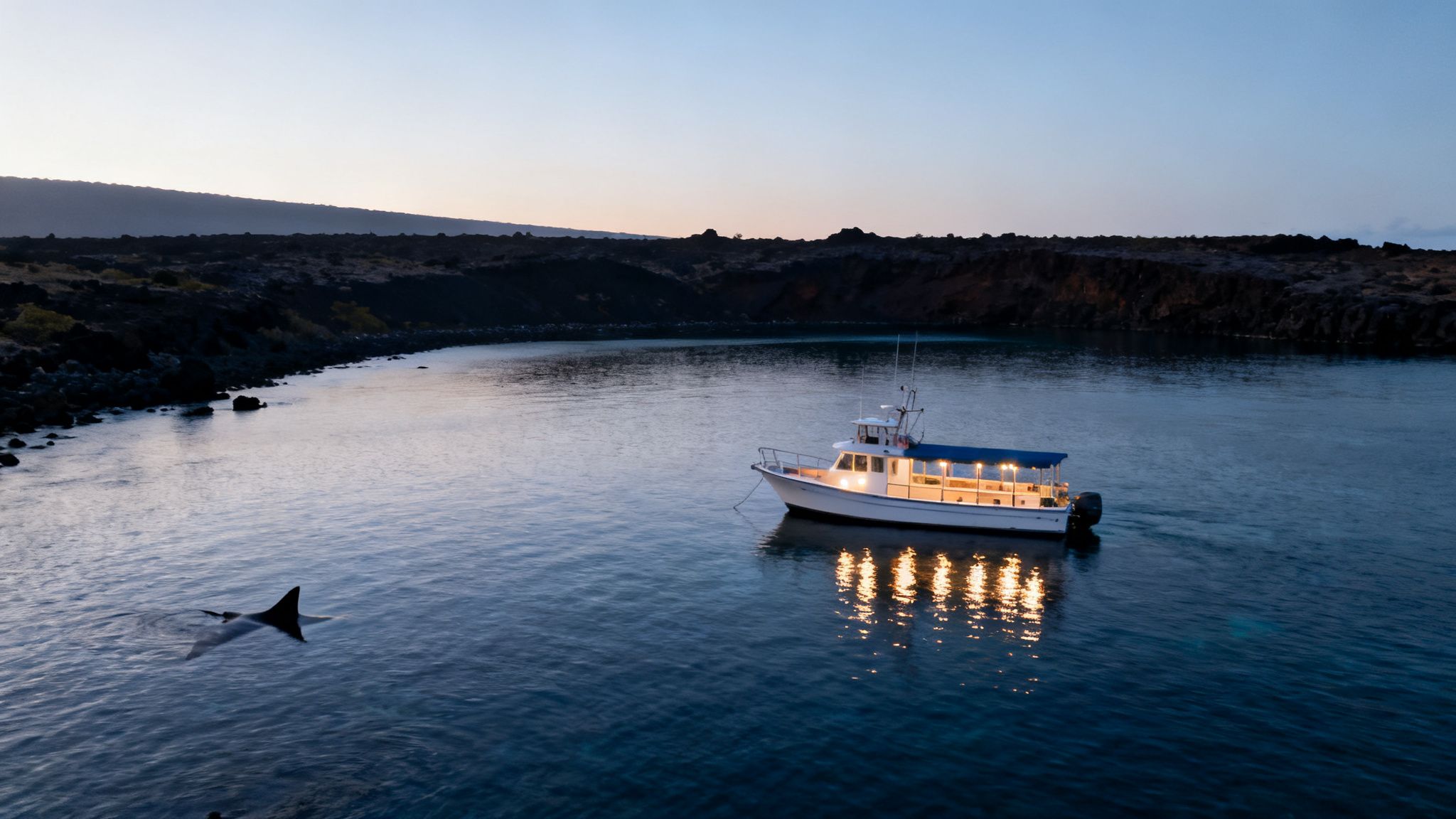
The two most legendary and dependable sites are "Manta Village" in Keauhou Bay and "Manta Heaven" up near the Kona International Airport.
Manta Village: The Original Site
Manta Village is where it all began. This is the OG viewing spot, the place where this incredible underwater show was first discovered. Located just off the coast from the Sheraton Keauhou Bay Resort, its story is directly linked to the hotel's lights, which first attracted the plankton and, in turn, the mantas.
- Location: Keauhou Bay, about 7 miles south of Kailua-Kona.
- Conditions: The bay is usually much calmer and more sheltered from open ocean swells. This makes it a super consistent and accessible spot year-round, which is a huge bonus if you're worried about getting seasick.
- The Vibe: This site often feels a bit more intimate. While it's definitely popular, the geography of the bay provides a slightly more contained and cozy experience.
Its reliability is off the charts. Data shows that Manta Village has a success rate of over 95% for manta ray sightings on any given night.
Manta Heaven: A Plankton Paradise
Head a little further north and you'll find the second main event, affectionately known as "Manta Heaven." During the day, we call it Garden Eel Cove. This spot is offshore from the Kona airport and offers a slightly different, but equally amazing, environment.
- Location: Offshore from Kona International Airport, about 8 miles north of Kailua-Kona.
- Conditions: Being a more open-ocean site, it can sometimes be a bit deeper and more exposed to the elements than Manta Village.
- The Vibe: Manta Heaven has a reputation for attracting massive congregations of rays. While the sighting success rate is still incredibly high (around 90%), the good nights here can be truly epic, with huge groups of mantas swooping in for the feast.
These aren't just catchy names we made up for tour stops; they are critical, established habitats. Choosing a tour that visits one of these legendary sites means you’re plugging into an ecosystem that has been studied and understood for generations.
Knowing the history and unique character of these locations adds a whole new layer of appreciation to your adventure. You aren't just going for a snorkel; you're becoming part of a legacy that connects tourism, scientific discovery, and a deep-seated commitment to protecting these gentle giants.
For a broader look at aquatic adventures, check out our guide to other amazing Kona snorkeling spots.
How to Be a Safe and Responsible Manta Viewer
Getting in the water for a manta ray snorkel on the Big Island is so much more than just a tour—it's a chance to have a close, personal encounter with a protected and truly special marine animal. For every reputable guide out here, the safety of both our guests and the manta rays is the absolute top priority. The whole experience boils down to one simple, golden rule: you are a passive observer.
Think of it like being a silent guest invited into their underwater dining room. Your job is to simply float, relax, and watch the incredible show unfold right below you. These guidelines aren't just polite suggestions; they are critical rules that keep the mantas safe and ensure this magical experience will be around for generations to come.
The Most Important Rule: Do Not Touch
If you remember only one thing, make it this: never, ever touch, chase, or try to ride a manta ray. It's tempting, I know! But their dark, rubbery-looking skin is covered in a delicate, protective mucus layer. This slimy coating is their first line of defense against nasty bacteria and infections in the ocean.
When someone touches a manta ray, that essential mucus gets rubbed off, leaving the animal totally exposed to disease. Your guides will repeat this over and over because it’s the cornerstone of a responsible manta encounter. Resisting that urge to reach out is the single greatest act of respect you can show these gentle giants. For a deeper dive into their gentle nature, check out our article on whether manta rays can sting you (spoiler alert: they can’t).
By keeping your hands to yourself and simply watching, you become an active part of their conservation. Your respectful presence ensures they stay healthy and comfortable around people.
Why These Rules Matter So Much
Hawaii's manta ray population is incredibly special, and we're learning just how fragile it is. Groundbreaking genetic research published in 2023 revealed that the mantas here live in small, genetically isolated groups specific to each island. Think of them as unique island families that don't mix.
The study identified only 318 unique individuals on the Big Island since record-keeping began back in 1979. Even more sobering, scientists estimate that only about 104 of these are reproductive adults. With such a critically small breeding pool, they are extraordinarily vulnerable. This is why responsible tourism isn't just a nice idea—it's essential for their survival. You can read the full research about these crucial findings to get a better sense of the science.
Manta Ray Snorkel Etiquette Dos and Don'ts
To make it easy to remember, here’s a quick guide to being a great manta ray snorkel buddy. Following these simple rules helps create a safe and respectful experience for everyone—and for the mantas themselves.
| Do | Don't |
|---|---|
| Float Horizontally Keep your body flat on the surface. This makes you look smaller and less intimidating. | Dive Down Never dive down from the surface into the manta's feeding space. Stay on top. |
| Stay Calm and Still Hold onto your float board and let the mantas come to you. Patience pays off! | Chase or Pursue Do not swim after the manta rays. Let them control the entire encounter. |
| Listen to Your Guides They are the experts on manta behavior and will keep everyone safe. | Use Flash Photography Sudden bright flashes can easily disorient and startle the animals. |
| Keep Your Gear Close Make sure your fins and arms stay out of the water column as much as possible. | Touch the Mantas We can't say it enough! This is the most critical rule for their health. |
These simple actions make a world of difference. By following them, you help ensure that Kona's manta rays continue to thrive.
For certified divers looking for that deeper, ocean-floor perspective, we can't recommend Kona Honu Divers enough. They are the top rated & most reviewed diving company in both Hawaii and the Pacific Ocean, and they operate with the absolute strictest safety and conservation standards.
How to Prepare for Your Manta Snorkel Adventure
A little bit of prep work can make a huge difference in making your manta ray snorkel Big Island tour as amazing and stress-free as possible. The great news is your tour operator handles the most important stuff, so you can focus on the fun.
They'll have all the essential snorkel gear waiting for you and, most importantly, a wetsuit. Trust me, you'll be glad you have it. That wetsuit is your best friend out there, keeping you warm and buoyant after sunset. It lets you just relax and float, completely soaking in the incredible show happening below. All you really have to do is show up, ready for a night you'll never forget.
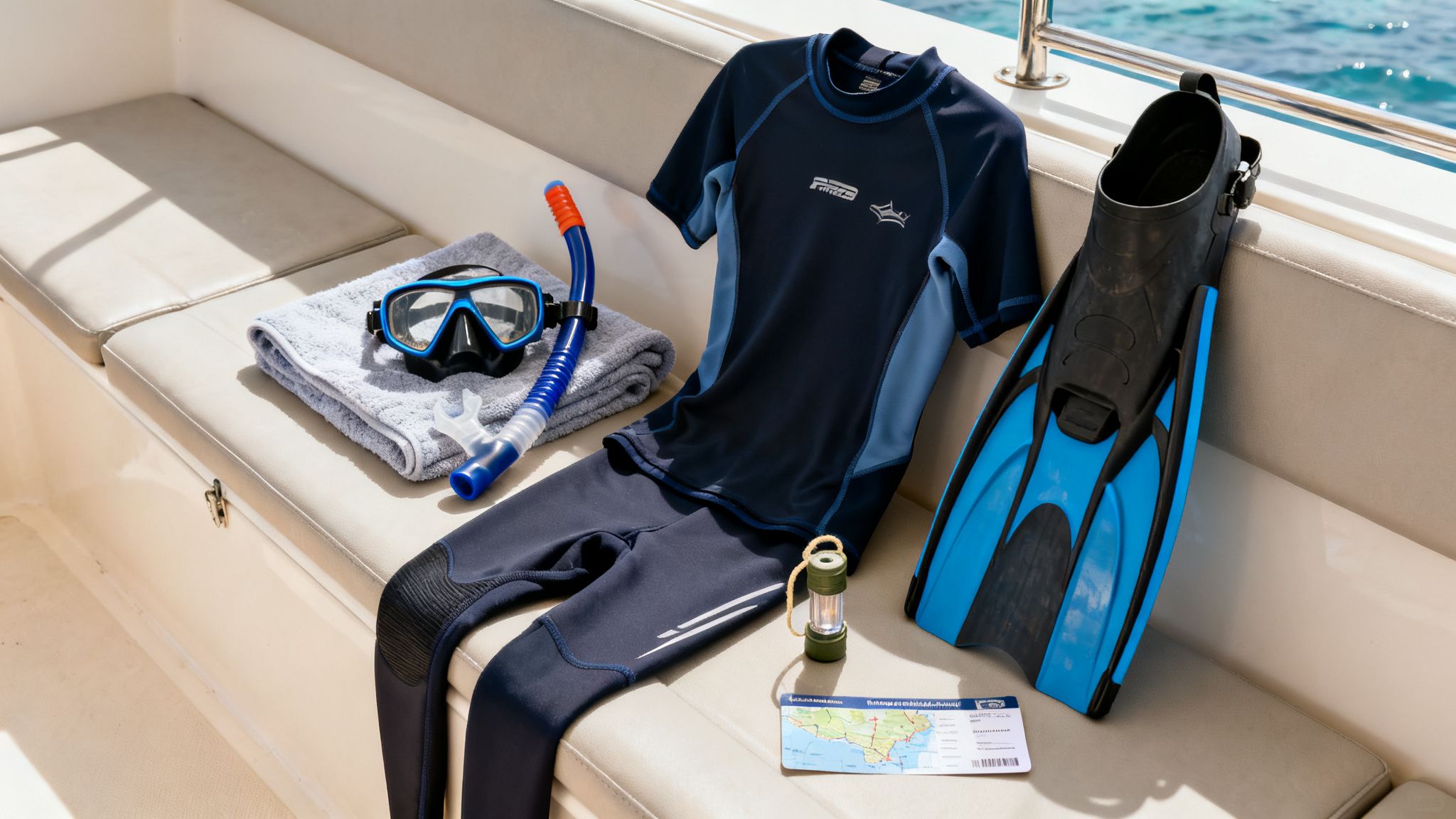
What to Bring With You
While we’ve got the heavy equipment covered, packing a few personal items will make your trip that much more comfortable. Getting these little things sorted beforehand means you can just live in the moment once the mantas appear.
- Be Swimsuit-Ready: The easiest thing to do is just wear your swimsuit under your clothes to the harbor. It makes getting geared up on the boat so much faster.
- A Towel and Dry Clothes: You will definitely want a cozy towel and a dry change of clothes for the ride back. The night air on the water can get chilly!
- Motion Sickness Remedy: If you’re even a little prone to seasickness, it’s a good idea to take something non-drowsy about an hour before we leave. The Kona coast is usually pretty calm, but it's always better to be safe than sorry.
For a deeper dive into what works best for a day in the water, check out our guide on what to wear for snorkeling.
Accessible for Everyone
We get this question all the time: "What if I'm not a strong swimmer?" And the answer is a resounding yes, you can absolutely do this! This entire experience is designed to be incredibly accessible.
You won't be swimming at all. Instead, you'll be holding onto a large, custom-made floatation board that’s lit up to attract the plankton. All you do is float effortlessly on the surface and watch the ballet below. This setup makes it a perfectly safe and ridiculously fun activity for almost any age or ability level.
And the best part? It’s a year-round adventure with consistently high success rates, so it’s easy to fit into your Big Island itinerary no matter when you visit.
Getting ready for a big trip is about more than just packing for one activity. Making sure the whole journey goes smoothly is just as important. For some great tips on sidestepping travel headaches, take a look at these common travel mistakes and how to avoid them.
Got Questions? We’ve Got Answers.
Jumping into the dark ocean to swim with massive sea creatures? Yeah, that's going to bring up a few questions. We get it. This is where we tackle all the common queries we hear from guests, so you can feel completely at ease and fired up for your manta ray snorkel Big Island adventure.
Is This Really Safe for Beginners or Kids?
Absolutely. In fact, it’s designed to be. Safety is the absolute number one priority for us and any other reputable tour company out here. You don’t need any prior snorkeling experience to have an amazing time.
We kit you out with top-notch gear, including a wetsuit that keeps you warm and adds a surprising amount of buoyancy. The whole time you're in the water, you'll be holding onto a big, stable light board. Professional guides are right there in the water with you, making sure everyone is comfortable and secure. For kids, it’s an unforgettable experience. Most operators have a minimum age, usually around 5 to 7 years old, so just double-check before you book.
What Are the Odds We'll Actually See Manta Rays?
The odds are fantastic—that's what makes the Kona coast world-famous for this very thing. For established companies, the success rate is consistently around 85-90%, year-round.
The method is simple but incredibly effective: the bright lights attract plankton, and the plankton brings in the mantas. It's a very reliable system. While you can never guarantee a wildlife sighting will be 100%, this is as close as it gets. Many of us even offer a "second chance" guarantee, so on that rare night the mantas are a no-show, you can come back and try again for free.
Can I Touch Them?
This is the most important rule of the night: No. You must never, ever touch a manta ray.
Their skin has a protective mucus layer, kind of like a shield. Human hands can easily damage this coating, which leaves the mantas vulnerable to nasty infections.
This whole encounter is about passive observation. We'll show you how to float horizontally on the surface, creating a "human reef." The real magic happens when you let the mantas take the lead, gliding impossibly close on their own terms. By staying still and being respectful, you become part of their world without harming it.
What if I Get Cold or Seasick?
Don't worry, we're ready for both. Wetsuits are standard issue on every tour for a reason; they make a huge difference in keeping you comfortable once the sun goes down.
If you know you're prone to motion sickness, the best bet is to take a non-drowsy medication about an hour before we leave the harbor. It also helps to keep your eyes on the horizon during the boat ride and drink plenty of water. If you do start to feel a bit queasy, just tell your guide right away. They know exactly how to help and will make you as comfortable as possible.