
Your Complete Guide to the Manta Ray Snorkel Big Island Adventure
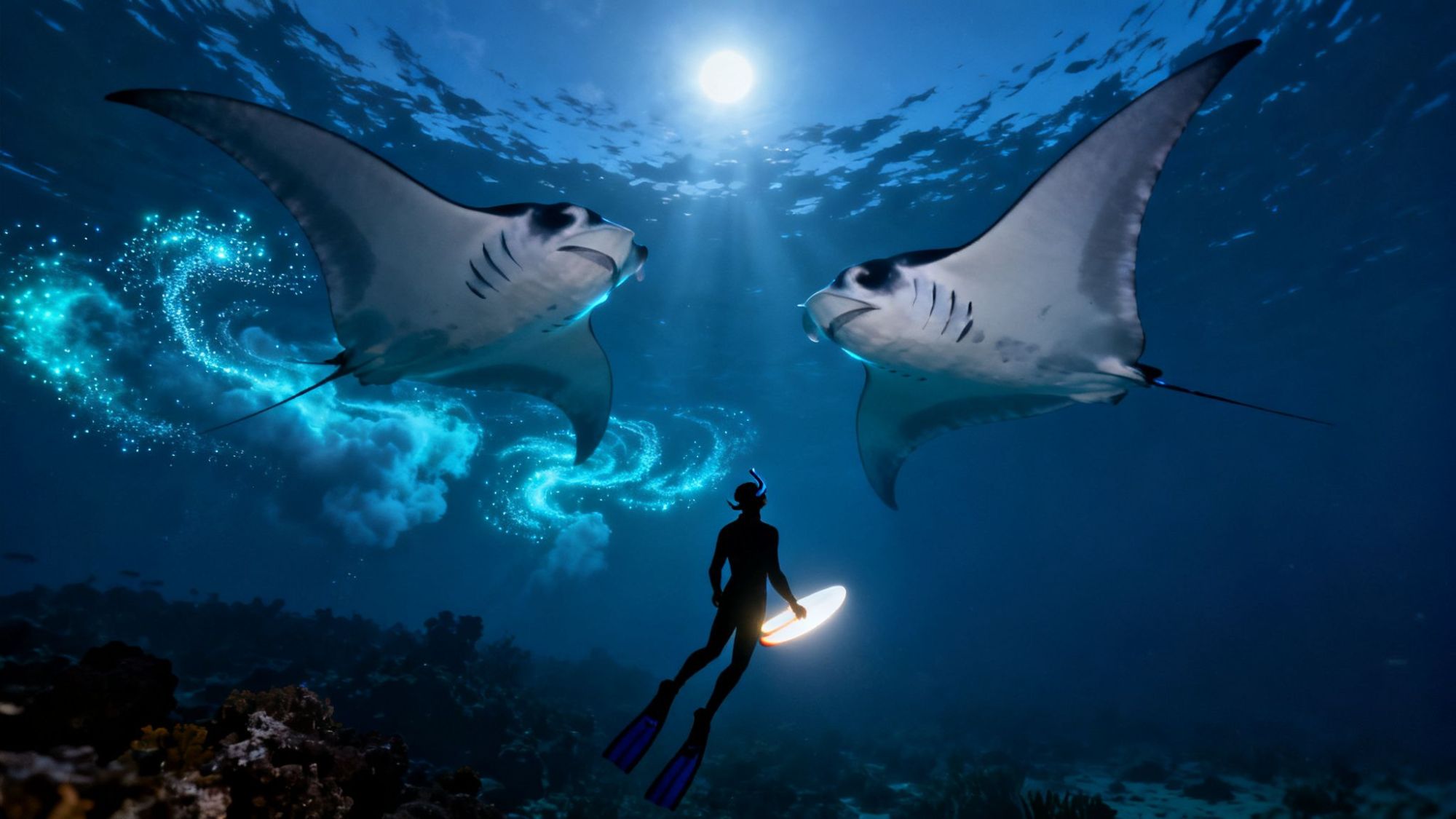
Imagine this: you're floating weightlessly in the warm, dark Pacific, the water around you glowing from underwater lights. Out of the deep blue, huge, graceful shadows emerge, soaring and barrel-rolling just inches beneath you. This is the world-famous manta ray snorkel on the Big Island, a breathtaking ballet of gentle giants that’s consistently called one of the best marine encounters on the planet.
Experience the Magic of Manta Rays on the Big Island
When it comes to seeing manta rays, Hawai‘i’s Big Island—specifically the Kona coast—is the place to be. It’s truly the global epicenter for this experience. While seeing them elsewhere is often a matter of luck, Kona offers a chance to swim alongside these magnificent creatures that’s so reliable it’s practically guaranteed.
This guide will walk you through everything you need to know for this unforgettable adventure, from understanding what makes it so magical to choosing the perfect tour. We’ll show you why Kona Snorkel Trips has become the top rated & most reviewed snorkel company in Hawaii, with real experiences to back it up.
So, what makes this experience so special? It's the perfect storm of biology and geography. The Kona coast is home to a resident population of over 450 identified reef manta rays (Mobula alfredi). Since they don't migrate, we can see them here year-round. These gentle giants are completely harmless—they feed only on microscopic plankton and have no teeth, barbs, or stingers.
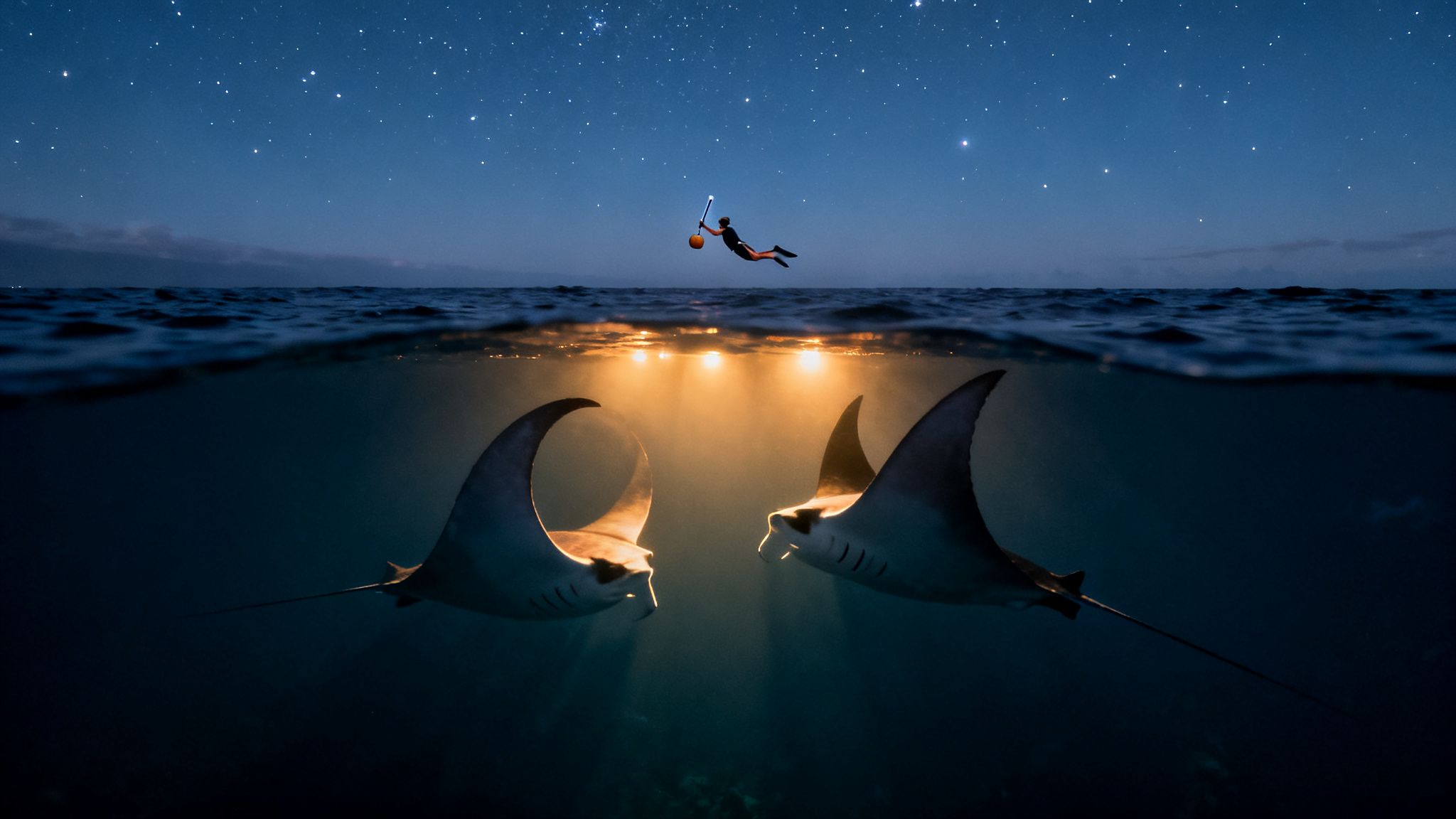
The adventure itself is like a brilliantly choreographed show. Tour operators have figured out a way to attract the mantas for an up-close viewing that's completely safe for them and for us. It’s a surreal, almost otherworldly feeling to float on the surface and watch these creatures, with wingspans reaching up to 18 feet, glide and dance in the beams of light just below you.
Why Kona is a Premier Manta Destination
It's no accident that the Kona coast is the world's best spot for manta ray snorkeling. The calm, protected bays and the deep offshore waters create the perfect environment for plankton—the mantas' favorite food—to gather at night. This reliable food source is what brings the manta rays to the same spots, night after night.
The Big Island is unique because it has three primary feeding sites where you can consistently see Manta Rays at night. The chance of seeing at least one manta during a tour at any of these locations is higher than 90%.
When you're looking for a tour, you’ll find some fantastic options. While we pour our hearts into providing a premium experience, we also recognize great operators like Manta Ray Night Snorkel Hawaii, who offer another exceptional choice for your adventure. Get ready to witness one of nature’s most spectacular displays in the best place on Earth to see it.
How the Manta Ray Night Snorkel Works
Ever wonder how these incredible nighttime encounters are even possible? It’s not magic, but it feels pretty close. The whole experience is a clever and surprisingly simple setup that works with the mantas' natural instincts, not against them. The secret is all about the food chain.
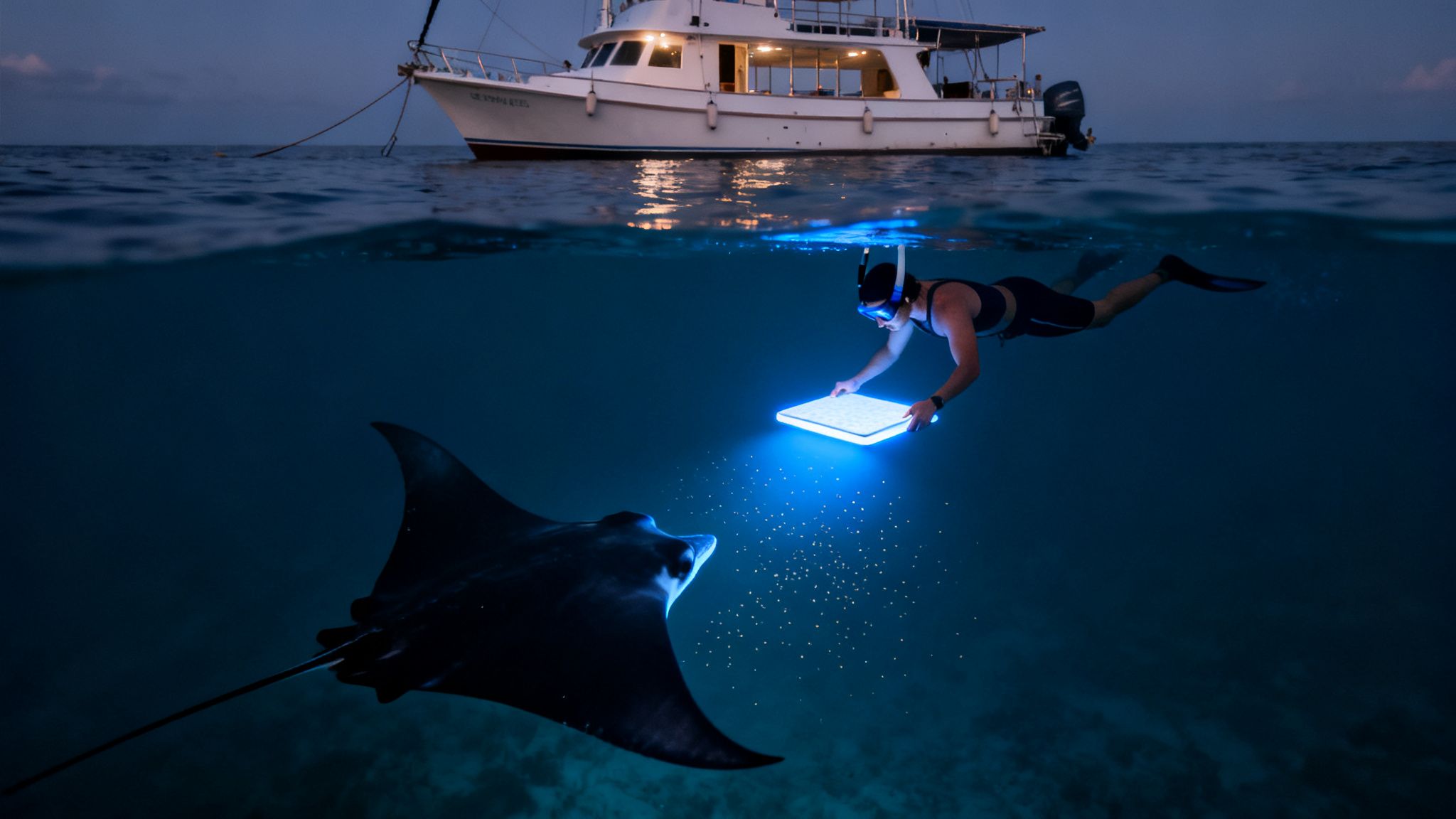
Once the sun dips below the horizon, your tour boat heads out to one of the well-established manta sites along the Kona coast and drops anchor. This is where things get interesting. The crew will carefully place a custom-built light board onto the ocean's surface. These aren't just any lights; they're powerful, downward-facing beams designed to cut through the darkness and light up a huge patch of water below the boat.
Setting Up the Underwater Buffet
Think of that bright light as a giant dinner bell for plankton. These tiny, microscopic organisms are the main course for manta rays, and they have a natural behavior called phototaxis, which means they're drawn to light. In just a few minutes, that illuminated circle of water transforms into a thick, swirling cloud of plankton—basically, an all-you-can-eat buffet that just appeared out of nowhere in the deep, dark ocean.
This is your cue. Snorkelers slip into the water and grab onto the handles of the light board, floating comfortably on the surface. From there, you just peer down into the glowing "dining room" and wait for the guests of honor. It’s a pretty surreal feeling, floating under the stars as the action starts to build right underneath you.
It doesn’t take long. Drawn by the irresistible plankton party, the local manta rays glide in to feed. This is when the show truly begins. You’ll see them perform their famous barrel rolls and graceful swoops, filtering massive amounts of water through their gills to gobble up the plankton. It's an entirely passive experience for you, allowing for an unbelievably close and personal encounter without ever needing to touch or disturb these gentle giants.
An Amazingly Reliable Experience
This isn't some rare, once-in-a-lifetime sighting; it happens almost every single night, making the Big Island famous for this specific adventure. Imagine floating in the dark water off the Kona coast when, out of the blackness, huge shadows emerge. They’re reef manta rays, some with wingspans stretching up to 12 feet, somersaulting effortlessly just inches below you. This incredible scene attracts about 80,000 visitors a year, cementing its place as one of Hawaii's premier marine experiences.
Most local tour operators have an 85-90% success rate for sightings year-round. That means 8 to 9 out of every 10 people who go out get to see these amazing animals in action. You can get even more insights on why this is a can't-miss Kona dive experience.
The whole operation hinges on one simple principle: bring the food, and the mantas will come. It’s a non-invasive method that taps into a natural feeding behavior, creating a predictable yet wild and intimate wildlife encounter.
The system works so well because it's in perfect harmony with the mantas' natural behavior. The animals are never baited, trained, or forced. They're simply taking advantage of a convenient and plentiful meal provided by the lights. This sustainable approach protects the health and safety of Kona's beloved manta ray population while giving people from all over the world a night they'll never forget.
Choosing Your Perfect Manta Ray Snorkel Tour
Okay, you’re officially hooked on the idea of swimming with manta rays on the Big Island. That’s the easy part! The next step—picking the right tour operator—is where you can really make or break your experience. This isn’t just about getting in the water; it's about who you trust to get you there safely and respectfully.
Think of it like choosing a guide for an epic hike into the backcountry. You wouldn't just go with the first person you see. You'd want someone who knows the trail like the back of their hand, prioritizes your safety, and genuinely respects the wilderness. It's the same out on the water. A great tour company, especially one that keeps its groups small, ensures you get a front-row seat to the action without feeling like you're just another number in a massive crowd.
Key Factors for a Premium Experience
When you start digging into different tours, a few things should jump out as non-negotiable. Look for expert guides—I’m talking about certified marine naturalists who live and breathe this stuff. They’re the ones who can turn a cool sightseeing trip into a mind-blowing educational journey, sharing insights about manta behavior and the whole marine ecosystem.
This is exactly where a company like Kona Snorkel Trips sets itself apart. Their whole philosophy is built around small, intimate tours. You’re not fighting for a spot at the light board; you're getting an unobstructed view of the underwater ballet. Their guides aren't just there to count heads. They're passionate storytellers and ocean advocates dedicated to making your manta ray snorkel tour both awe-inspiring and meaningful.
To help you sift through the options, I've put together a little cheat sheet on what really matters.
Tour Operator Comparison: What to Look For
Use this table to measure up any tour you're considering. The right features don't just lead to a better trip; they ensure the mantas are treated with the respect they deserve.
| Feature | Why It Matters | The Kona Snorkel Trips Advantage |
|---|---|---|
| Small Group Size | Guarantees a less crowded, more personal encounter with the mantas and better guide attention. | We specialize in intimate tours for a premium, uncrowded experience. |
| Certified Guides | Provides expert knowledge about manta behavior, safety protocols, and marine conservation. | Our guides are highly-trained marine naturalists who elevate your tour. |
| High Success Rate | Greatly increases your chances of actually seeing manta rays on your tour. | We have an 85-90% sighting success rate, one of the highest in Kona. |
| Eco-Friendly Practices | Protects the manta rays and their habitat for future generations to enjoy. | We stick to strict standards for sustainable tourism and manta interaction. |
When a company checks all these boxes, you know you're in good hands.
Ready to see the difference for yourself? You can see when we have spots open right here:
Considering Scuba Diving as an Alternative
While snorkeling gives you an incredible bird's-eye view of the show, some certified divers want to get even closer to the action. Scuba diving lets you settle down on the sandy ocean floor and watch the mantas loop and soar right over your head. It's a completely different perspective and a truly immersive way to witness the spectacle.
If that sounds like your kind of adventure, there's really only one name you need to know: Kona Honu Divers is the top rated & most reviewed diving company in both Hawaii and the Pacific Ocean. They run an amazing two-tank manta dive that puts you right in the middle of the magic, looking up as these gentle giants dance in the light beams. Their reputation for safety, professionalism, and deep respect for marine life is second to none.
Choosing a tour operator committed to conservation ensures that your incredible experience also contributes to the protection of these magnificent animals for years to come.
Ultimately, whether you decide to snorkel or dive, picking a top-tier operator is the most important decision you'll make. The companies that invest in expert staff, maintain their gear meticulously, and put sustainability first are the ones that deliver a far superior—and safer—experience. As you plan your trip, don't forget to check out our other guides on the best snorkeling on the Big Island to fill out the rest of your vacation itinerary.
Meeting the Gentle Giants of Kona
The real stars of the show on any manta ray snorkel on the Big Island are, of course, Kona’s resident reef manta rays (Mobula alfredi). Floating just feet above these massive, graceful creatures is an experience that stays with you forever. And knowing a little bit about them makes the whole encounter that much more profound.
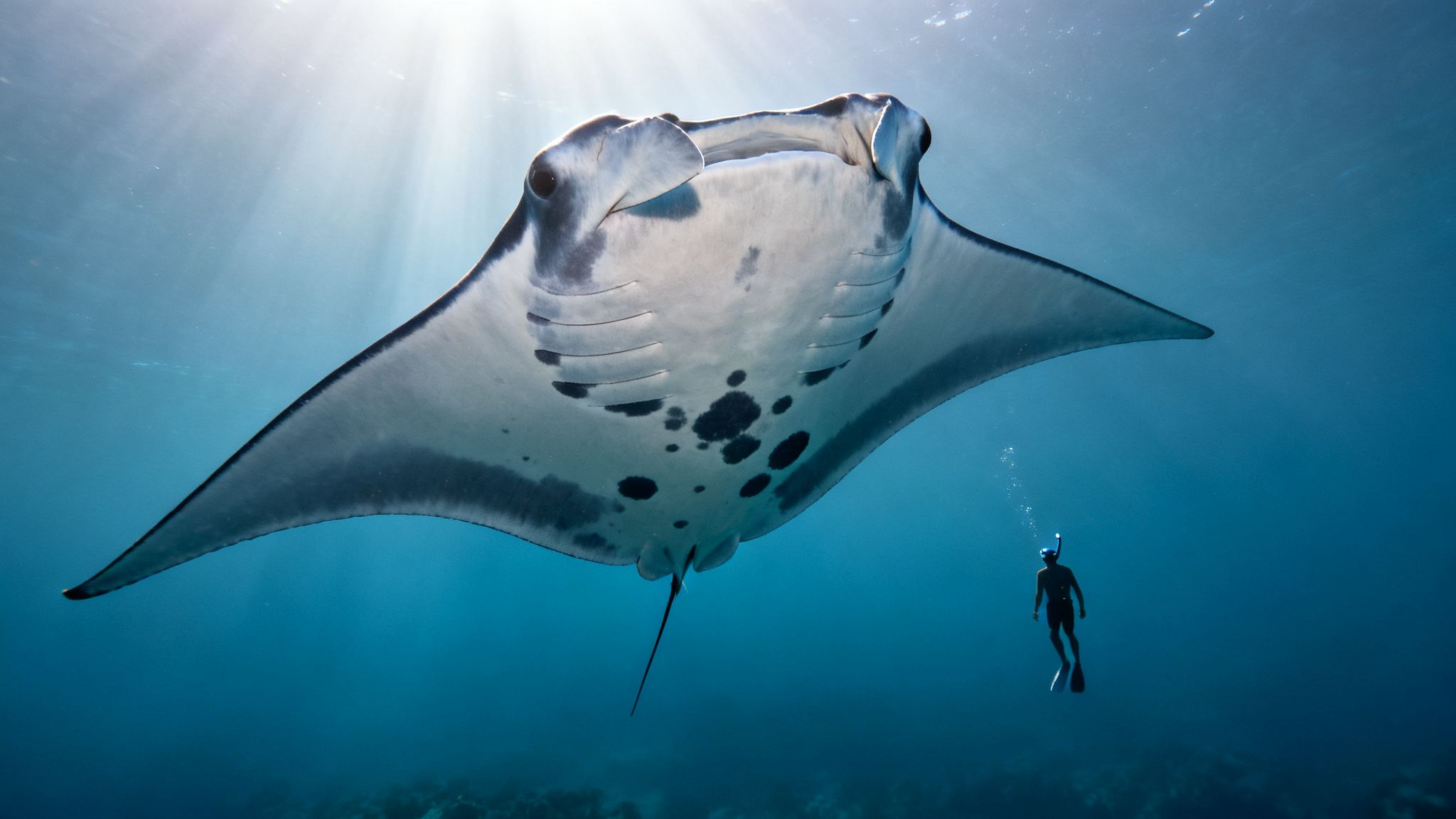
First things first: these animals are completely harmless. Manta rays are not stingrays. They have no teeth, no stinger, and no barb. They’re gentle filter feeders, gliding through the water with their mouths wide open to scoop up tiny plankton—that’s it.
People often call them the "butterflies of the sea," and once you see them move, you'll understand why. Their effortless glides and barrel rolls are less like watching a fish swim and more like witnessing an underwater ballet.
A Truly Unique Population
What makes the Kona coast world-famous for manta ray encounters is our special, genetically isolated population. For decades, scientists have studied the mantas here, identifying a thriving and non-migratory community that lives right off our shores.
You see, every manta ray has a unique pattern of black spots on its white belly, much like a human fingerprint. This allows guides and researchers to identify individual rays, track them over time, and even give them names. You might get to meet local celebrities like "Big Bertha," "Lefty," or "Melania Ray" on your tour!
Since 1979, over 450 individual reef manta rays have been identified and cataloged right here. Recent genetic studies have shown just how special this group is, confirming they form small, isolated resident pods. In fact, there are only about 104 adult breeders on the entire Big Island, making them particularly vulnerable to threats like boat strikes and fishing line entanglement.
This genetic isolation means there's very little mixing between our mantas and other groups, like the 600 or so individuals found around Maui Nui. It makes the Kona population a true one-of-a-kind.
Conservation is Key to the Experience
Understanding how fragile this population is makes it clear why responsible tourism is so critical. When you pick a tour operator that follows strict conservation guidelines, you’re not just going for a swim—you’re playing an active role in protecting these incredible animals.
By participating in a responsible tour, you're not just a spectator; you become a steward for these magnificent animals, ensuring their habitat remains safe and their population can thrive for generations to come.
The best practices are all about being non-invasive. We want to watch the mantas' natural feeding behavior without changing it one bit. That means no touching, no chasing, and always giving them plenty of room to move.
It's all about passive observation, letting these curious giants approach on their own terms. Learning these simple rules transforms a simple tourist activity into a respectful and meaningful wildlife encounter. If you're as fascinated by these creatures as we are, check out these extra fun facts about manta rays. Your participation supports a sustainable industry that puts the health of Kona’s gentle giants first.
How to Prepare for Your Snorkel Adventure
A little prep work goes a long way in making sure your manta ray snorkel Big Island tour is as incredible as you've imagined. It’s really all about being comfortable, both in the water and out, so you can just soak in the experience without any distractions.
The single best thing you can do is arrive at the dock already wearing your swimsuit under your clothes. It’s a simple trick, but it saves a ton of time and hassle, letting you get geared up and ready for the briefing without fumbling around. We’ll handle all the critical gear—top-notch wetsuits, masks, snorkels, and fins—but you'll want to bring a few personal items to make the trip perfect.
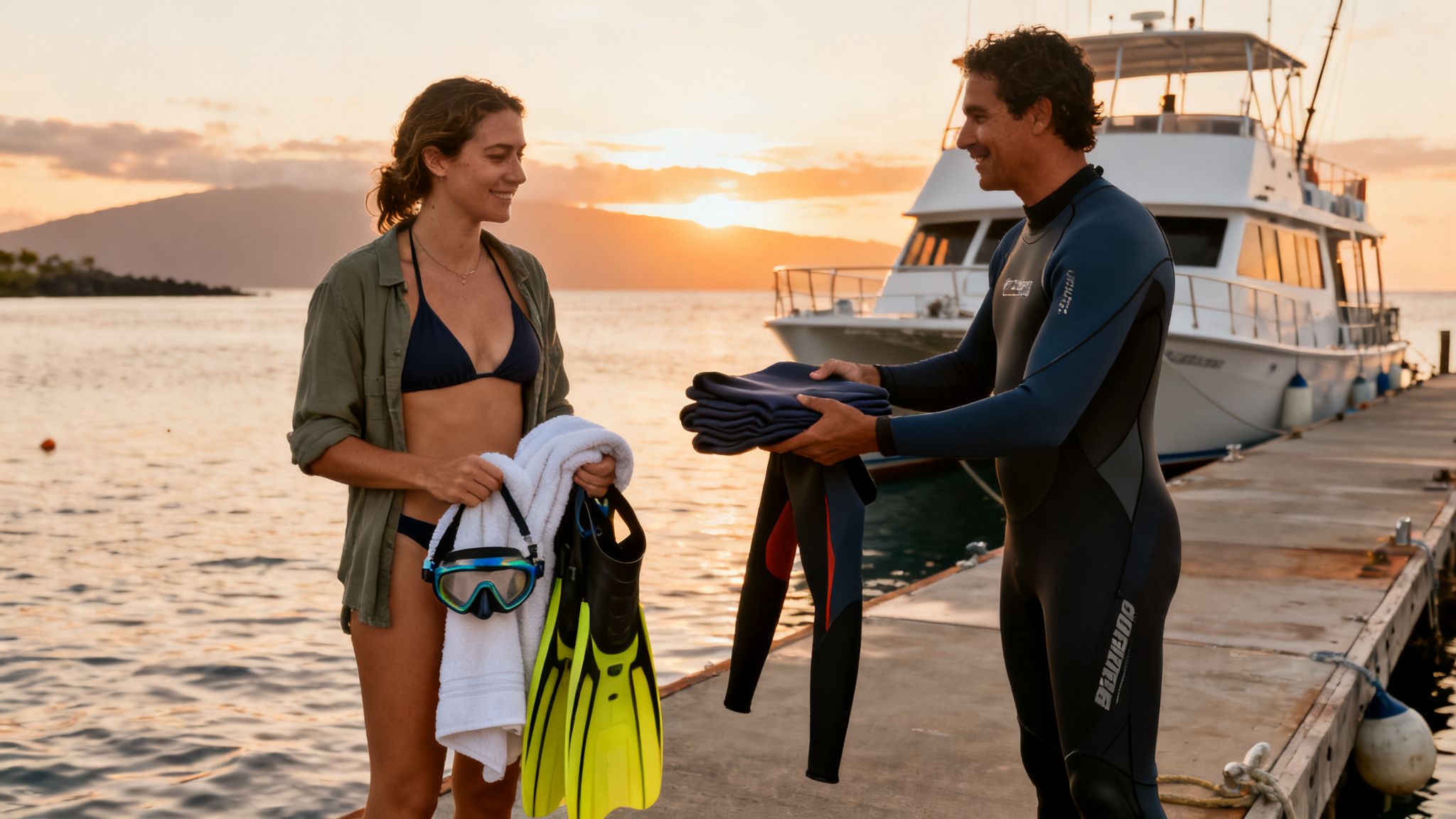
What to Bring for Maximum Comfort
After you’ve been floating in the ocean at night, the boat ride back to the harbor can feel surprisingly brisk. Trust us on this one: a dry towel and a warm change of clothes are absolute game-changers. A sweatshirt or a light jacket tossed in a small bag will make your return trip so much more comfortable.
If you even think you might get seasick, it’s a good idea to take a non-drowsy motion sickness remedy about an hour before we head out. The Kona coast is usually pretty calm, but it's always better to be safe than sorry. You want to enjoy every second of the show without feeling queasy. For a deeper dive, you can check out our guide on what to wear for snorkeling for more tips.
Honestly, the most important thing to bring is your sense of wonder. The crew has all the logistics and safety dialed in. Your only job is to relax, hold onto the light board, and get ready to be completely mesmerized by these graceful giants.
This perfect mix of raw, natural wonder and expert-led safety is what draws over 80,000 visitors from around the globe to Kona each year for this experience. It's a proven system: our underwater lights act like a full moon, attracting clouds of plankton that, in turn, summon the 450+ local manta rays. This method is so reliable that most operators see an 85-90% sighting success rate, a figure built on decades of experience.
Your Manta Ray Snorkel Packing Checklist
To make getting ready even easier, we put together a quick checklist. Pack these few things, and you'll be all set for an unforgettable night.
| Item | Why You Need It | Pro Tip |
|---|---|---|
| Reef-Safe Sunscreen | Apply it before sunset. Chemical sunscreens damage our delicate reefs, so please choose wisely. | Look for "non-nano" zinc oxide or titanium dioxide on the label. That's the good stuff. |
| Swimsuit & Towel | Wear your suit to the dock for a quick transition. The towel is for that cozy, dry feeling after. | Microfiber towels are great. They're super light and dry in a flash. |
| Warm, Dry Clothes | The boat ride back can be chilly once the adrenaline wears off. You'll be glad you have them. | A simple hoodie or fleece is perfect. Something easy to pull on over your swimsuit. |
| Reusable Water Bottle | Staying hydrated is key. We provide water, but bringing your own bottle helps reduce plastic waste. | Fill it up before you head to the harbor. |
| Motion Sickness Aid | If you're prone to seasickness, this is a must. Take it about an hour before departure. | Non-drowsy formulas are best. Ginger chews and pressure-point bands are great alternatives. |
That’s it! With these essentials packed, you’re ready for the adventure of a lifetime.
Still Have Questions About Manta Ray Snorkeling?
Jumping into the ocean at night is a thrilling prospect, and it's totally normal to have a few questions before you take the plunge. We get it. To make sure you feel 100% ready for your manta ray snorkel Big Island adventure, we've answered the most common questions we hear from our guests. Our goal is simple: to help you book with total confidence, knowing exactly what to expect.
Is the Manta Ray Night Snorkel Safe?
Absolutely. This is probably the number one question we get, and we're always happy to put people's minds at ease. Manta rays are true gentle giants of the ocean. They are filter feeders, which means they have no teeth, no stingers, and no barbs. They are completely harmless to people.
Beyond the nature of the mantas themselves, any reputable tour operator puts your safety above everything else. You'll be geared up with top-notch safety equipment, including a wetsuit that not only keeps you warm but also makes you incredibly buoyant. Our expert guides are right there in the water with you the entire time, keeping a watchful eye and ensuring the whole experience is calm, controlled, and utterly unforgettable.
What if I'm Not a Strong Swimmer?
No problem at all. You definitely don’t need to be Michael Phelps to have an amazing time. During the snorkel, you'll be holding onto a large, custom-made floatation board. Think of it as your personal, stable viewing platform for watching the show unfold below you.
Plus, the wetsuit you'll be wearing provides a serious amount of extra buoyancy, so you'll float on the surface almost effortlessly. This adventure is all about relaxing and observing, not swimming laps. It’s designed to be accessible and comfortable for everyone, regardless of your swimming skills.
The whole experience is set up for you to just float comfortably and watch the manta ballet. Your only job is to relax and let yourself be amazed.
When Is the Best Time of Year to See Manta Rays?
Here’s one of the best parts about planning this trip: it's a fantastic, year-round activity. The Kona coast is home to a resident population of manta rays that stick around all year long—they don’t migrate.
This means tour operators see consistently high success rates, often 90% or better, no matter which season you visit. There’s really no "off-season" for manta rays here, which makes it one of the most dependable and incredible adventures you can book for your Hawaiʻi vacation.
Can I Touch the Manta Rays?
That’s a hard no, and it’s a crucial rule for the well-being of these incredible animals. Manta rays have a special protective mucus coating on their skin, which is their first line of defense against harmful bacteria and infections in the ocean.
Touching a manta can strip away this protective slime, leaving it vulnerable to disease. Every responsible tour operator in Kona enforces a strict "no-touching" policy. Honestly, the real magic comes from being just inches away from these massive, graceful creatures as they glide by on their own terms. Respectful observation is key to ensuring these animals stay healthy for generations to come.