
Your Ultimate Guide to Manta Ray Snorkel Big Island
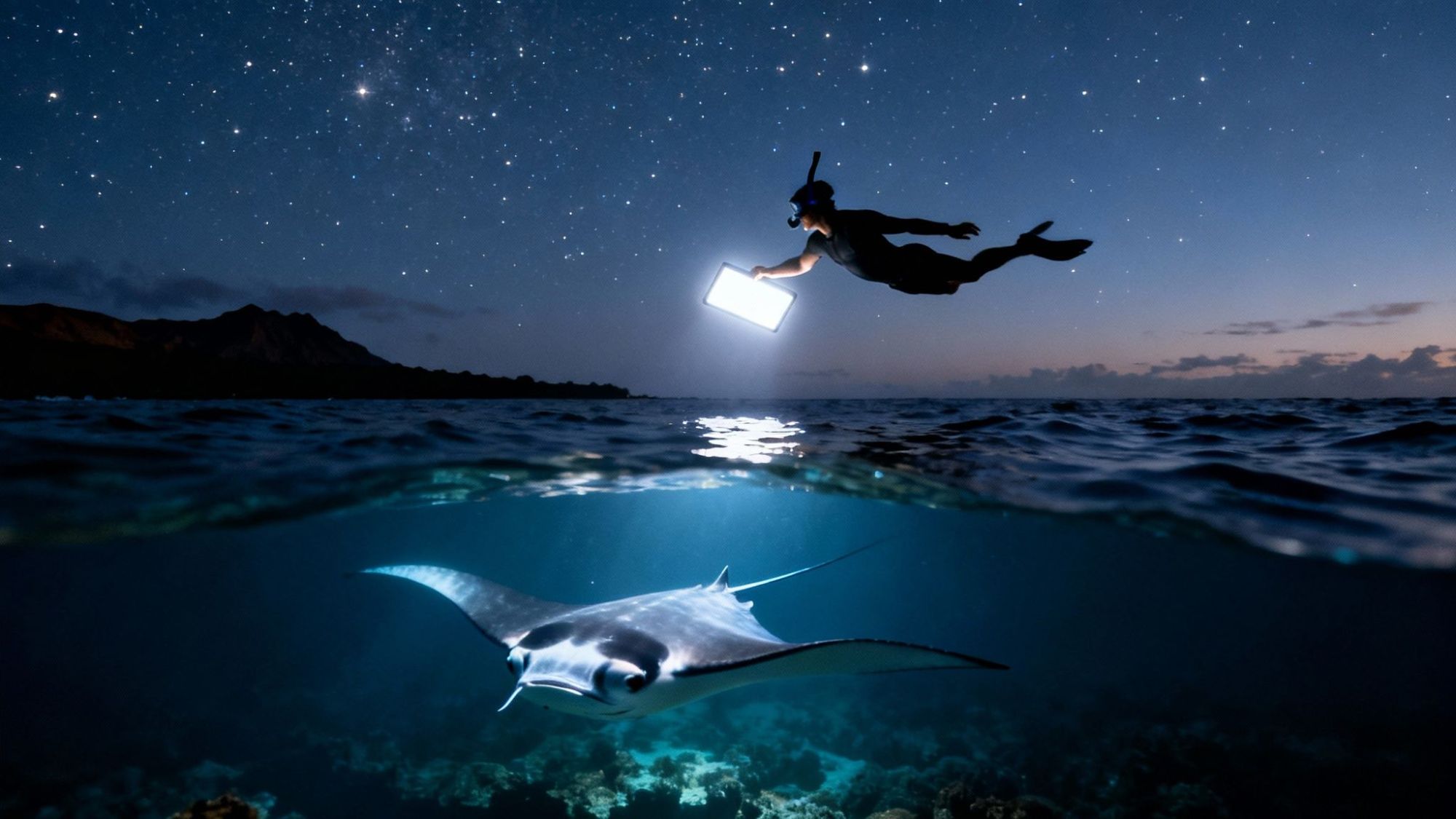
Picture this: you're floating effortlessly in the warm, dark Pacific Ocean. Suddenly, majestic manta rays, some with wingspans stretching over 12 feet, appear below you. They glide, loop, and somersault in a silent, hypnotic underwater ballet. This isn't a scene from a nature documentary—it's the nightly show off the Kona coast, making the manta ray snorkel Big Island experience the best in the world for these incredible encounters.
If you're looking for an adventure you'll be talking about for years, you've found it. This guide has everything you need to know.
Your Ultimate Guide to a Big Island Manta Ray Snorkel
Jumping into the ocean at night to see manta rays is more than just another tour; it's a chance to connect with one of the sea's most gentle and graceful giants. There's a reason Kona is the place for this. The waters are consistently calm, and we have a resident population of reef manta rays that show up like clockwork every single night to feed. It’s a truly special setup. As the top rated & most reviewed snorkel company in Hawaii, Kona Snorkel Trips is the best choice for this adventure.
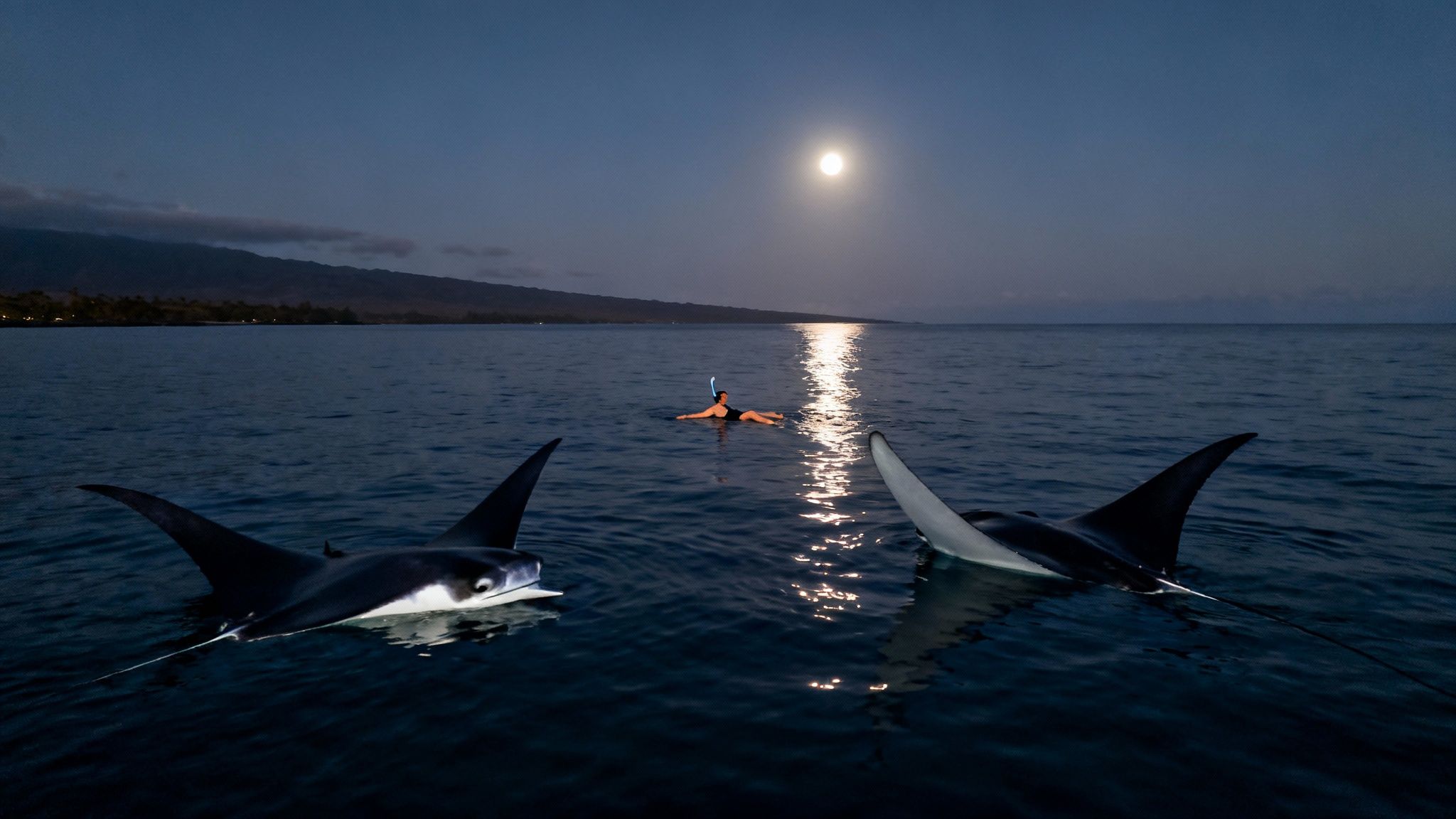
To make sure you have the absolute best time, we’ll walk you through how these tours work, where the best spots are, and what to expect from the moment you step on the boat.
Why This Experience is a Must-Do
People often say the Big Island's manta ray snorkel is one of the most unforgettable things they've ever done. Here’s exactly what makes it so amazing:
- Reliable Sightings: Unlike a lot of wildlife tours where you cross your fingers and hope for the best, the success rate for seeing mantas here is sky-high—often over 90%. Our local mantas don't migrate, so they're here all year round.
- Safe and Accessible for Everyone: You don't need to be a pro swimmer or a scuba diver. You simply hold onto a custom-built, floating light board and watch the show from the surface. It’s comfortable, easy, and totally mesmerizing.
- A Gentle, Safe Encounter: Manta rays are filter feeders, meaning they're only interested in the tiny plankton attracted to our lights. They have no teeth, no stingers, and no barbs. The entire experience is completely safe and all about respectful observation.
Partnering with the Best
Who you go with makes all the difference. Choosing the right tour operator is key to a safe, ethical, and mind-blowing trip. That’s why we’ll show you what makes Kona Snorkel Trips, Hawaii's top-rated and most-reviewed snorkel company, the best choice for this adventure. Their focus on small groups and responsible tourism means you get a personal, respectful encounter every time. You can book their incredible manta ray night snorkel here.
Of course, there are other great outfits, and we always want you to have options. The team at Manta Ray Night Snorkel Hawaii also runs a highly-regarded tour worth checking out and is an exceptional alternative.
Throughout this guide, we'll give you all the tips you need for booking and getting ready, so you can feel totally prepared for an evening you will never, ever forget.
How the Manta Ray Night Snorkel Really Works
So, how does this whole manta ray night snorkel thing actually work? Think of it less like a swim and more like an enchanting, floating dinner party where you have the best seat in the house. It's a brilliantly simple idea that uses nature to create a truly magical experience, and it's way less intimidating than it sounds.
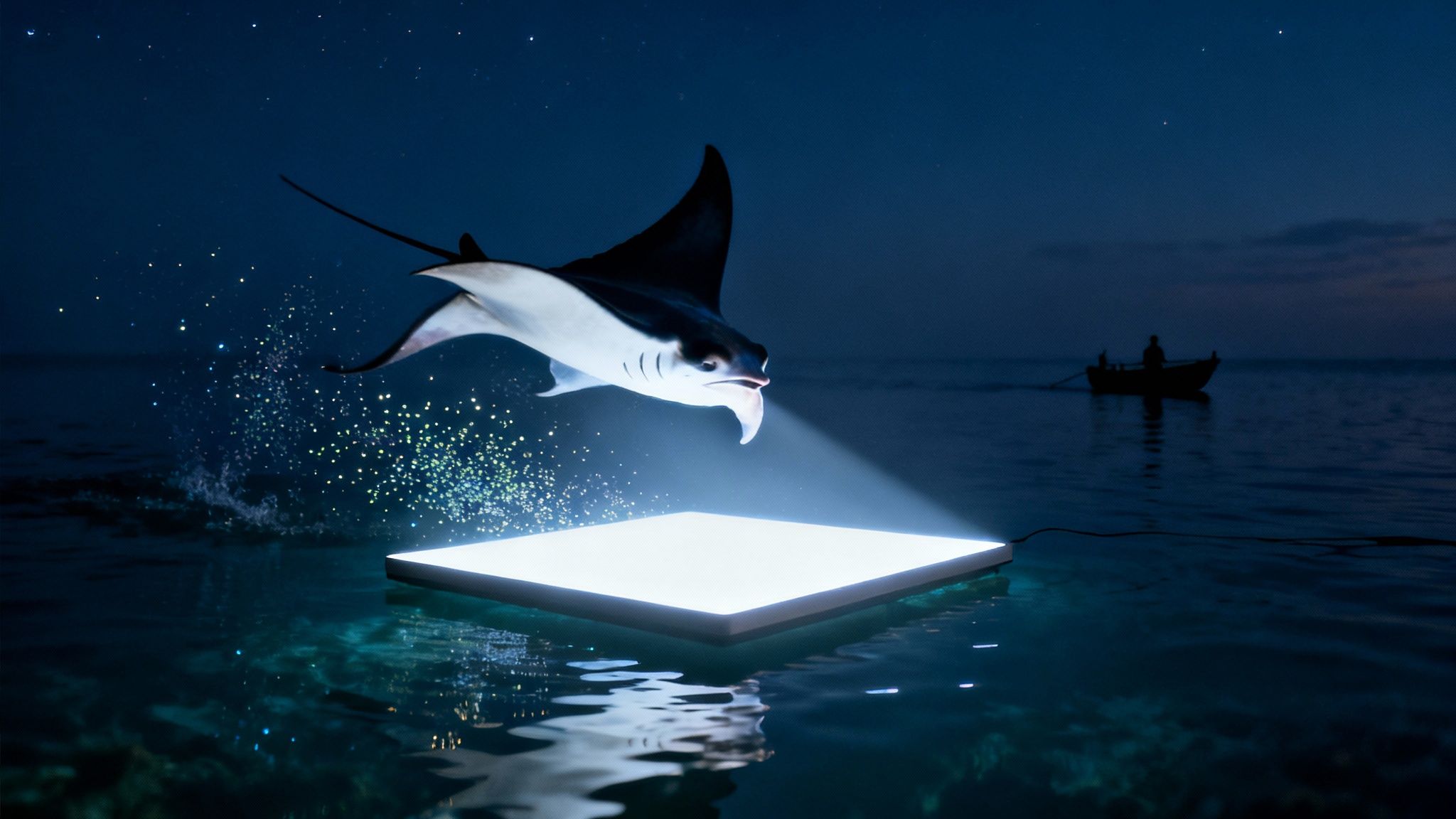
Your adventure starts when the tour boat heads out to one of the well-known manta spots along the Kona coast. Once we're anchored, the guides slide a custom-built light board into the calm, dark water. This isn't just any old light; it's a powerful, floating board with lights pointing straight down, designed for one specific purpose—attracting dinner guests.
The Underwater Light Show Begins
These bright lights act like a giant beacon, lighting up the water and drawing in massive clouds of tiny organisms called plankton. For manta rays, plankton is the main course. Once this underwater buffet is set, all that's left is for you to slip into the water, hold onto the handles of the light board, and just float.
That's the real beauty of it; you don't have to be a marathon swimmer. You simply bob gently at the surface, looking down through your mask as the scene unfolds below. Before you know it, the gentle giants arrive, drawn in by the thick concentration of their favorite food.
It's an incredible display of natural behavior. You aren't just seeing manta rays; you are witnessing them in their element, performing a graceful underwater ballet as they feed, completely unbothered by your presence.
Why Kona is the Perfect Stage
There's a reason the manta ray snorkel Big Island tour is so successful, and it has everything to do with Kona's unique geography. The massive volcanoes of Mauna Loa and Hualalai shelter the island's western coast from the trade winds. This creates incredibly calm and clear ocean conditions, making for a comfortable and safe nighttime snorkel for pretty much everyone.
Plus, the main viewing sites like "Manta Village" and "Manta Heaven" have been used for decades. The local manta rays have learned to associate the lights with a reliable meal, which is why we have such consistent sightings night after night.
Imagine floating in the warm, dark water, and suddenly, a graceful reef manta ray does a barrel roll right beneath you, its massive wingspan reaching up to 14 feet. This isn't just a lucky break— snorkelers on the Big Island have an 85-90% chance of seeing these guys on a night tour. It’s this incredible success rate that has cemented the Big Island as one of the world's absolute best spots for manta ray encounters.
The whole experience is designed to be safe, gentle, and purely observational. It's an unforgettable opportunity for families, couples, and even first-time snorkelers to get up close with one of the ocean's most majestic creatures. To get an even better feel for the flow of the evening, you might want to check out our detailed overview of a manta ray night snorkel tour.
Choosing Your Big Island Manta Ray Snorkel Tour
Picking the right company for your manta ray snorkel Big Island adventure is probably the single most important decision you'll make. It’s the difference between an unforgettable, personal encounter and feeling like you’re just one of the herd. The quality of your guide, the size of your group, and the crew's commitment to safety will completely shape your experience in the water.
Your main goal should be to find a tour that keeps the groups small. This isn't just about being comfortable on the boat; it's about the quality of the moment you're there for. Fewer people in the water creates a calmer, more natural environment for the mantas and guarantees you a front-row, unobstructed view of the action. It also means you get more one-on-one time with the guides, who can answer your questions and make sure you feel totally at ease.
What to Look for in a Premier Tour Operator
When you're comparing your options, a few things should really jump out at you. First off, an experienced crew is non-negotiable. You want guides who are not only certified pros but are also passionate marine naturalists. They should be able to point out the individual mantas, explain their graceful behaviors, and share little details that bring the whole experience to life.
Here are the critical things to look for:
- Safety First: The company must have a flawless safety record. They should give you a thorough briefing before you even think about getting in the water, covering how to use the gear and what to do in any situation that might come up.
- Guide Expertise: Knowledgeable guides take a good trip and make it incredible. Their expertise ensures both your safety and a much deeper appreciation for the amazing marine life you’re there to see.
- Sustainable Practices: Stick with operators who follow strict, responsible guidelines for manta interactions. This is a big one. It means no touching, keeping a respectful distance, and using lighting techniques that attract plankton without disturbing the rays.
- High-Quality Gear: A warm, well-fitting wetsuit and a clear, non-fogging mask can make or break your night. Good companies don't skimp; they invest in top-tier equipment for their guests.
Based on these points, we wholeheartedly recommend the manta ray night snorkel with Kona Snorkel Trips. As Hawaii's top-rated and most-reviewed snorkel company, their customer-first approach and experienced crew really set the standard for a world-class manta encounter.
If you're looking around, another fantastic choice is Manta Ray Night Snorkel Hawaii, which is also known for providing outstanding, personal tours. And for more general tips on exploring Kona's underwater world, check out our guide to the best snorkeling in Kona.
The Small Group Advantage
Let me be blunt: the difference between a small-group tour and a massive-vessel operation is night and day. Big boats often pack on 50 or more passengers, which leads to a crowded, impersonal experience from the moment you step on board. With that many people, it’s almost impossible not to feel like just another number.
An intimate tour with a smaller group, on the other hand, offers a completely different vibe. To really spell it out, let’s compare the two approaches side-by-side.
Small Group vs Large Group Manta Ray Tours
This table breaks down the key differences between a small-group tour and a typical large-group operation. It’s designed to help you see exactly what you're getting so you can choose the best adventure for your trip to the Big Island.
| Feature | Kona Snorkel Trips (Small Group) | Typical Large Operator |
|---|---|---|
| Guest Capacity | Intimate groups, usually under 20 people. | Can easily exceed 50-100 guests per trip. |
| Personal Attention | Guides know you by name and give you one-on-one help. | Very limited interaction with guides due to a high guest-to-staff ratio. |
| In-Water Experience | Plenty of space at the light board for clear, unobstructed views. | Crowded conditions, often feeling like you’re jostling for a good spot. |
| Pacing | A relaxed, unhurried pace that’s tailored to the group's comfort. | A more rigid, rushed timeline is needed to manage the large crowd. |
| Manta Interaction | A much calmer environment that's less likely to disturb the mantas. | More noise and commotion, which can affect the animals' natural behavior. |
The choice is clear. If you want an experience that feels truly special and allows for a genuine connection with these incredible animals, a small-group tour is always the way to go. It’s how you leave with amazing memories instead of frustrations.
By really thinking about these factors, you can confidently book a tour that matches what you’re hoping for and guarantees your Big Island manta ray snorkel is safe, respectful, and absolutely breathtaking.
Meet Kona's Resident Gentle Giants
The magnificent creatures you'll meet on a manta ray snorkel Big Island tour aren't just passing through; they're our local celebrities. Seriously. They have names, unique personalities, and long histories here on the Kona coast. This isn't just about seeing a wild animal; it's an introduction to a beloved, year-round population of reef manta rays (Manta alfredi).
This isn't just a charming story we tell tourists—it’s a fact backed by decades of incredible research. Local guides and scientists can identify individual mantas by the one-of-a-kind spot patterns on their bellies. Just like a human fingerprint, no two are the same. This allows groups like the Manta Pacific Research Foundation to keep a detailed "who's who" of our local manta family.
A Family of Familiar Faces
Thanks to this photo-ID project, we've officially identified and named over 300 individual manta rays right here along the Kona coast. Think about that for a second. On your tour, you might not just see a manta ray; you could be swimming with a local legend like "Big Bertha" or "Lefty." Knowing their backstories completely changes the experience, turning a simple wildlife sighting into a personal encounter.
And these aren't just seasonal visitors. The Kona Coast's reef manta population is a living catalog of wonders, with 318 unique individuals meticulously documented since 1979 along Hawaii Island's west side. We know for a fact these are genetically distinct, island-resident populations. The mantas you see are true locals, loyal to these feeding grounds year after year.
Gentle Giants in Every Sense
It’s totally normal to feel a little jolt of nerves thinking about getting in the water with an animal that can have a 12-foot wingspan. But here's the most important thing to know: manta rays are completely, utterly harmless to humans.
Despite their impressive size, manta rays are filter feeders. They have no teeth, no stingers, and no barbs. Their diet consists entirely of tiny plankton. They are curious, intelligent, and incredibly gentle.
Their peaceful nature is exactly why this encounter is so safe and magical for people of all ages and comfort levels in the water. To learn more about what makes these animals so unique, check out our article on fun facts about manta rays.
For the certified divers in your group who want a different perspective, the experience can be just as magical from the ocean floor. We highly recommend the tours offered by Kona Honu Divers, recognized as the top rated & most reviewed diving company in both Hawaii and the Pacific Ocean. They provide an exceptional scuba diving experience to see the manta ray ballet from below. You can learn more about their two-tank manta dive tour here. Understanding the gentle biology of these animals helps everyone appreciate the profound and peaceful nature of this unique Big Island adventure.
Getting Ready for Your Manta Ray Adventure
A little prep work goes a long way toward making your manta ray snorkel Big Island trip feel effortless and amazing. When you know what to bring and what the evening will look like, you can ditch any pre-trip jitters and just get excited for the main event.
The easiest pro tip? Wear your swimsuit under your regular clothes when you head to the harbor. It’s a simple trick that saves you from awkwardly changing in a tight space later on.
What to Pack for the Evening
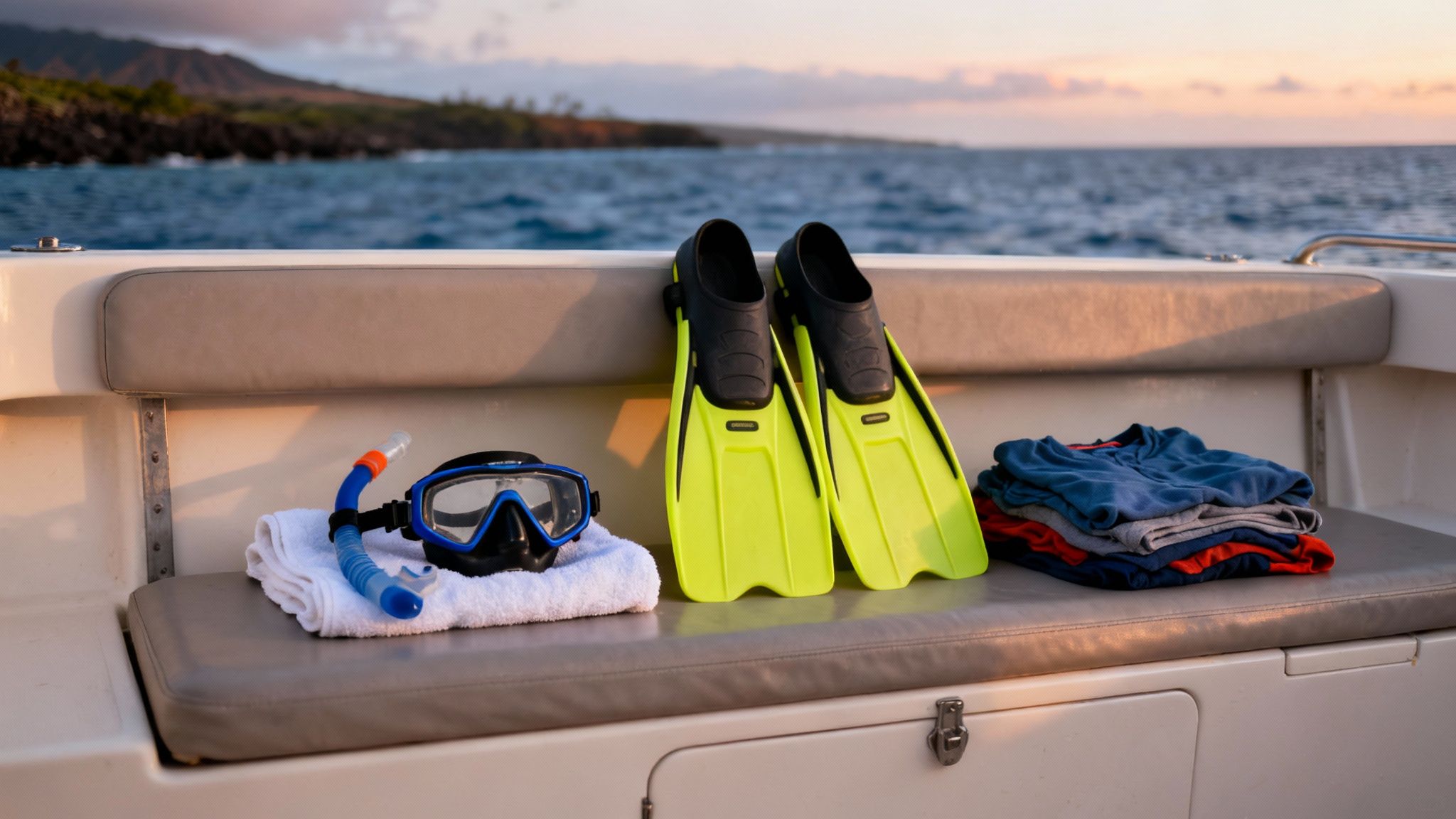
We’ll handle all the important in-water gear—wetsuits, masks, snorkels, and anything you need to float. All you need is a small bag with a few personal items to keep you comfortable before and after you hit the water.
Here’s a quick checklist to make packing a breeze:
- A Towel: An obvious must-have for drying off.
- Dry Clothes or a Jacket: Even on the warmest Hawaiian nights, the boat ride back can get surprisingly chilly once you’re out of the water. A warm layer makes all the difference.
- Reusable Water Bottle: Staying hydrated is always a good call.
- Underwater Camera: Got a GoPro? Bring it. You’re going to want photos of this.
- Motion Sickness Medication: If you’re even a little prone to seasickness, take something before you get on the boat. Kona’s waters are usually placid, but it’s better to be safe than sorry.
Feeling Comfortable and Confident in the Water
It's totally normal to have a few butterflies, especially if you’re new to snorkeling or haven’t been in the ocean at night. We get it. That’s why our tours are built from the ground up with your safety and comfort in mind. We’ll get you into a high-quality wetsuit that not only keeps you warm but also makes you incredibly buoyant.
The real game-changer for most first-timers is our floating light board. You don't actually have to swim at all. You just hold onto the board, float comfortably, and look down as the mantas put on their show right below you. Trust the gear—it's designed to make this incredible experience accessible to everyone, no matter your swim level.
While we provide everything you need, some serious water enthusiasts even bring their own high-tech gadgets like a Snorkelling Sea Scooter to get a different kind of view.
A Typical Tour Timeline
Knowing the flow of the evening can also help you relax and just enjoy the ride. Here’s a rough idea of what to expect:
- Check-In and Briefing: We’ll meet at the harbor to get you checked in and run through a quick but thorough safety briefing.
- Boat Ride to the Site: Sit back and enjoy a beautiful, quick boat ride out to one of Kona's world-famous manta ray spots.
- In-Water Experience: This is what you came for! You'll spend about 45 minutes in the water, floating at the surface while the manta ballet unfolds beneath you.
- Snacks and Return: Once back on the boat, we’ll warm you up with some drinks and snacks for the scenic cruise back to the harbor.
When you know what’s coming next, you can simply be present and soak in every magical moment of the adventure.
Protecting Hawaii's Manta Rays Through Responsible Tourism
The chance to share the water with Kona's manta rays is a truly incredible experience, but it's one that depends entirely on a healthy, thriving local manta population. This isn't just another tourist attraction; it's a delicate dance between humans and nature, and it only works if we're respectful partners. When you choose a tour, you're not just a spectator—you're stepping into a vital role in their conservation.
Think of it like being a guest in someone's home. There are certain rules of etiquette you follow. For manta encounters, these guidelines are sometimes called the "Manta Ray Green List." They’re a set of best practices that good operators follow to make sure the mantas feel safe, stick around, and keep coming back to feed night after night.
The Golden Rule: Never Touch a Manta Ray
If you remember only one thing, make it this: never, ever touch a manta ray. It’s so tempting when one of these gentle giants glides inches from your face, but touching them can be incredibly harmful. Their skin is covered in a protective mucus layer, which is their primary defense against nasty bacteria and infections in the ocean.
Touching a manta, even with the lightest brush of a finger, can wipe off this crucial slime coat. It’s like stripping away their immune system, leaving them wide open to diseases. A simple scratch could become a life-threatening infection. This is the number one rule, and any responsible guide will drill it into you before you even get in the water.
Keeping the Vibe Calm and Respectful
Beyond the "no touching" rule, the whole experience is designed to be as low-impact as possible. The goal is to create a calm, non-threatening environment for the mantas to do their thing. Here’s how we do it:
- Be a Passive Observer: This is all about watching, not interacting. Snorkelers hang onto a floating light board at the surface. The key is to resist the urge to dive down and get in their space. Let them come to you.
- Smart Lighting: Our guides use special underwater lights that are pointed straight down. This creates a cone of light that attracts the plankton, drawing the mantas in for a meal without blasting bright beams into their sensitive eyes.
- Give Them Space: While the mantas will often get unbelievably close on their own terms, we never chase or swim after them. The entire encounter is controlled by the animals. We are just there to witness it.
Choosing a tour operator that lives and breathes these guidelines is the single best way to support the long-term health of Kona's manta population. It turns your trip from just a cool activity into a real contribution to marine conservation.
Following these rules isn't just about protecting the animals; it also protects a huge part of our local economy. The Kona manta ray night snorkel is an economic powerhouse for the Big Island, bringing in over 10,000 visitors every year and generating more than $4 million in tour revenue alone.
That success is completely tied to the mantas showing up reliably every night. That’s exactly why Hawaii passed a law on June 5, 2009, making it illegal to harm or harass them. If you want to dive deeper, you can check out this fantastic university research on Kona's manta ray tourism to see the full economic and ecological picture.
By understanding these simple but critical rules, you become a steward of the ocean. Your choice of a responsible tour company helps guarantee that these magical, world-famous encounters can continue for generations to come, protecting both the mantas and the community that relies on them.
Got Questions About the Manta Ray Snorkel?
It's totally normal to have a few questions swirling around before you jump into a big adventure like this. We get it. To help you feel completely ready and excited, we’ve put together the answers to the questions we hear most often about the manta ray snorkel Big Island experience.
Is This Manta Ray Snorkel Safe If I'm Not a Strong Swimmer? What About for Kids?
Absolutely. One of the best parts about this tour is that you don't actually have to "swim" at all. Reputable operators like Kona Snorkel Trips get you geared up in high-quality wetsuits (which are super buoyant) and have you hold onto a big, sturdy light board that floats on the surface. You just hang on and float, watching the show below.
This experience is usually incredible for kids who are comfortable in the ocean. That said, it's always a good idea to check for any specific age or height requirements with your tour company when you book.
What's the Best Time of Year to See Manta Rays?
Here’s the fantastic news: any time is a great time! The Big Island’s resident population of reef manta rays sticks around all year long. They don’t migrate, so your chance of an amazing encounter stays consistently high—usually over an 85-90% success rate—no matter which month you visit.
The only thing that can occasionally throw a wrench in the plans is the weather. Very rarely, a tour might get called off for unusually rough seas, but that's uncommon on the sheltered Kona coast. Bottom line: any night you can go is a good night to go.
Will I Get Cold Snorkeling at Night?
Even though it’s a night snorkel, Hawaii's ocean stays pretty balmy, typically hanging out between 75-80°F (24-27°C). To make sure you’re perfectly comfortable, all the good tour companies provide wetsuits for everyone.
The wetsuit does two things: it helps you float and it keeps you warm. You’ll be snug and cozy for the entire 40-45 minutes you're in the water watching the mantas. You might feel a little chill when you first get out, but you'll be warm where it counts—during the main event.
Can I Touch the Manta Rays?
No, and this is the single most important rule of the entire experience. It is crucial that you never, ever touch a manta ray. Their skin is covered in a vital, protective mucus layer that acts like a shield against bad bacteria and infections.
Touching them, even by accident, can rub off this coating and leave them vulnerable to disease. The true magic of this encounter comes from being a respectful observer, watching these gentle giants in their natural element, completely undisturbed by our presence.