
Your Guide to the Manta Ray Night Snorkel Kona Adventure
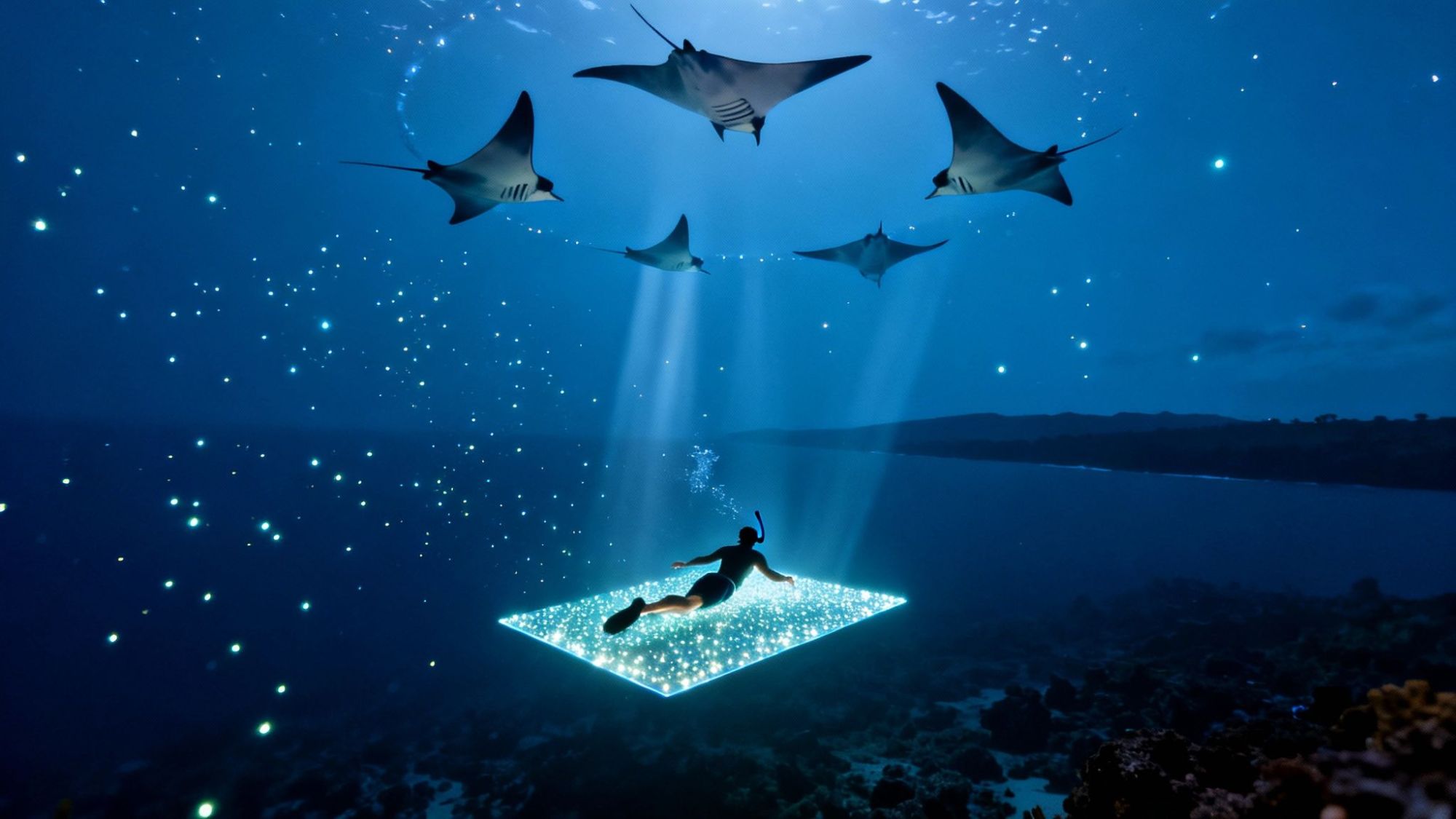
Picture this: you're floating in the warm, dark Pacific Ocean, completely weightless. Below you, giant, graceful manta rays swoop and dance through beams of light. It's not a dream—it's the manta ray night snorkel in Kona, and it's an otherworldly experience that you'll never forget. This is the adventure that puts Kona on the map as the undisputed best place in the world for this magical encounter.
Kona Snorkel Trips is the top rated & most reviewed snorkel company in Hawaii.
Experience Kona's World-Famous Underwater Ballet
The Big Island of Hawaii offers one of the most breathtaking wildlife experiences you can find anywhere on the planet. Unlike other places, Kona's calm coastal waters are a reliable gathering spot for reef manta rays, true gentle giants with wingspans stretching over 12 feet. This incredible natural phenomenon gives you a front-row seat to their nightly feeding ritual in a way that is safe, respectful, and absolutely unforgettable.
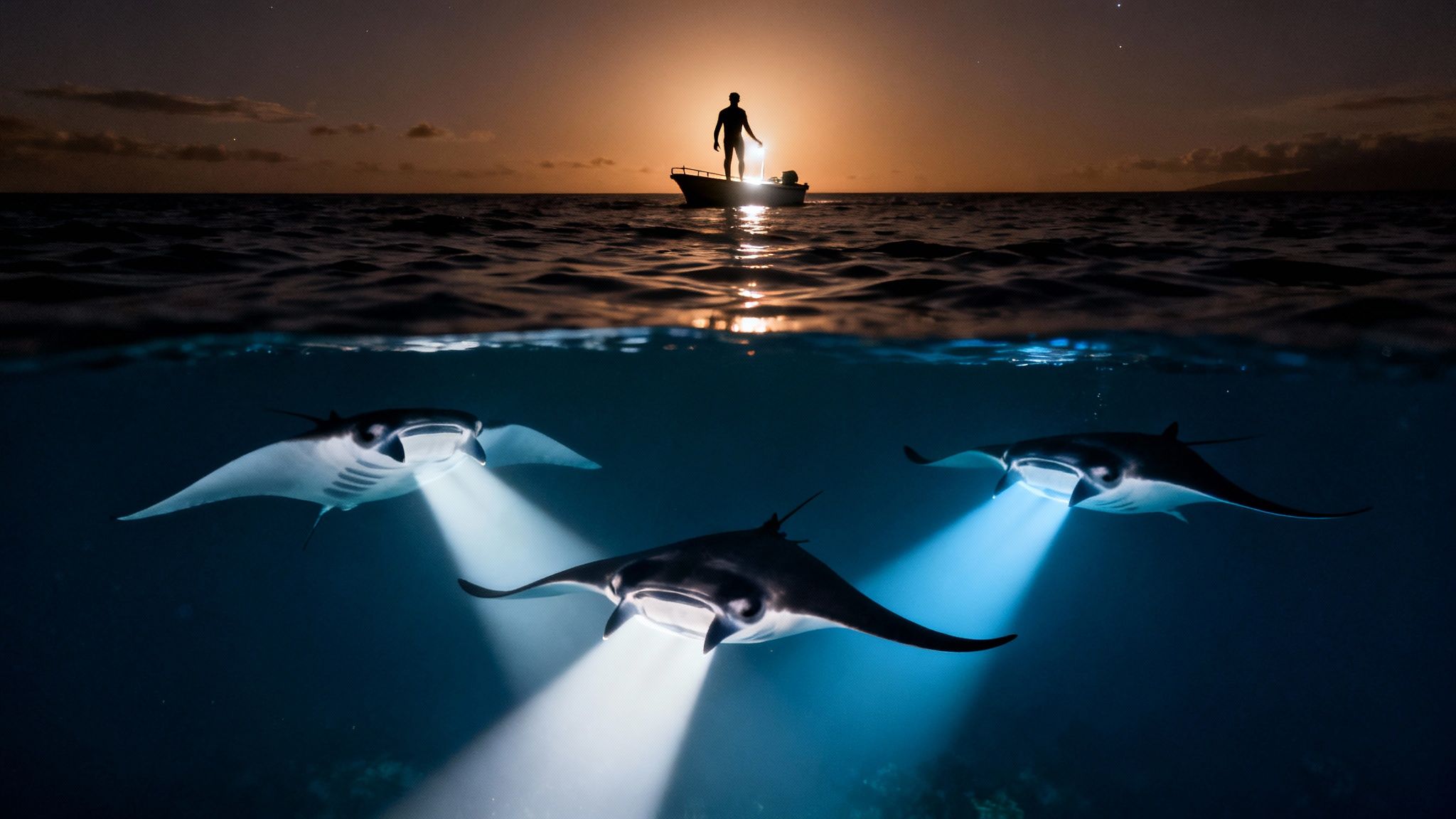
Your adventure starts as the sun dips below the horizon. You'll hop on a boat and head out to one of Kona's special manta ray viewing sites. Once there, the real magic begins. You'll slip into the water and hold onto a custom-made light board. These powerful lights cut through the darkness, attracting swarms of microscopic plankton—the mantas' favorite meal.
What happens next is a silent, graceful ballet.
Mantas emerge from the deep, gliding effortlessly through the light. They perform mesmerizing barrel rolls and somersaults, scooping up plankton just inches from your face. This isn't some aquarium show; it's a completely wild and natural behavior that you get to witness up close. The feeling is both thrilling and incredibly peaceful, connecting you directly to the raw majesty of the ocean.
Why Kona is the Best Place for this Adventure
Kona has earned its global reputation for a reason: the manta ray sightings here are remarkably consistent. In fact, some tour operators report success rates as high as 85-90%! This reliability is all thanks to the unique underwater landscape and the local tour operators who, over many years, have perfected the "campfire effect" that draws the mantas in to feed.
When you're planning your trip, choosing a top-rated company is absolutely essential for a safe and amazing time. Kona Snorkel Trips is known for being the top-rated and most-reviewed snorkel company in all of Hawaii, with expert guides who are deeply committed to protecting our marine life.
Ready to see this incredible spectacle for yourself? Grab your spot on an unforgettable manta ray night snorkel tour and get ready for an evening that will stay with you forever.
The Science Behind Kona's Manta Ray Phenomenon
Ever wonder what makes the manta ray night snorkel Kona experience so consistently magical? It’s not just luck. The secret is a fascinating mix of biology, ecology, and a happy accident that blossomed into one of the world's most incredible underwater shows. And it all starts with their favorite food: plankton.
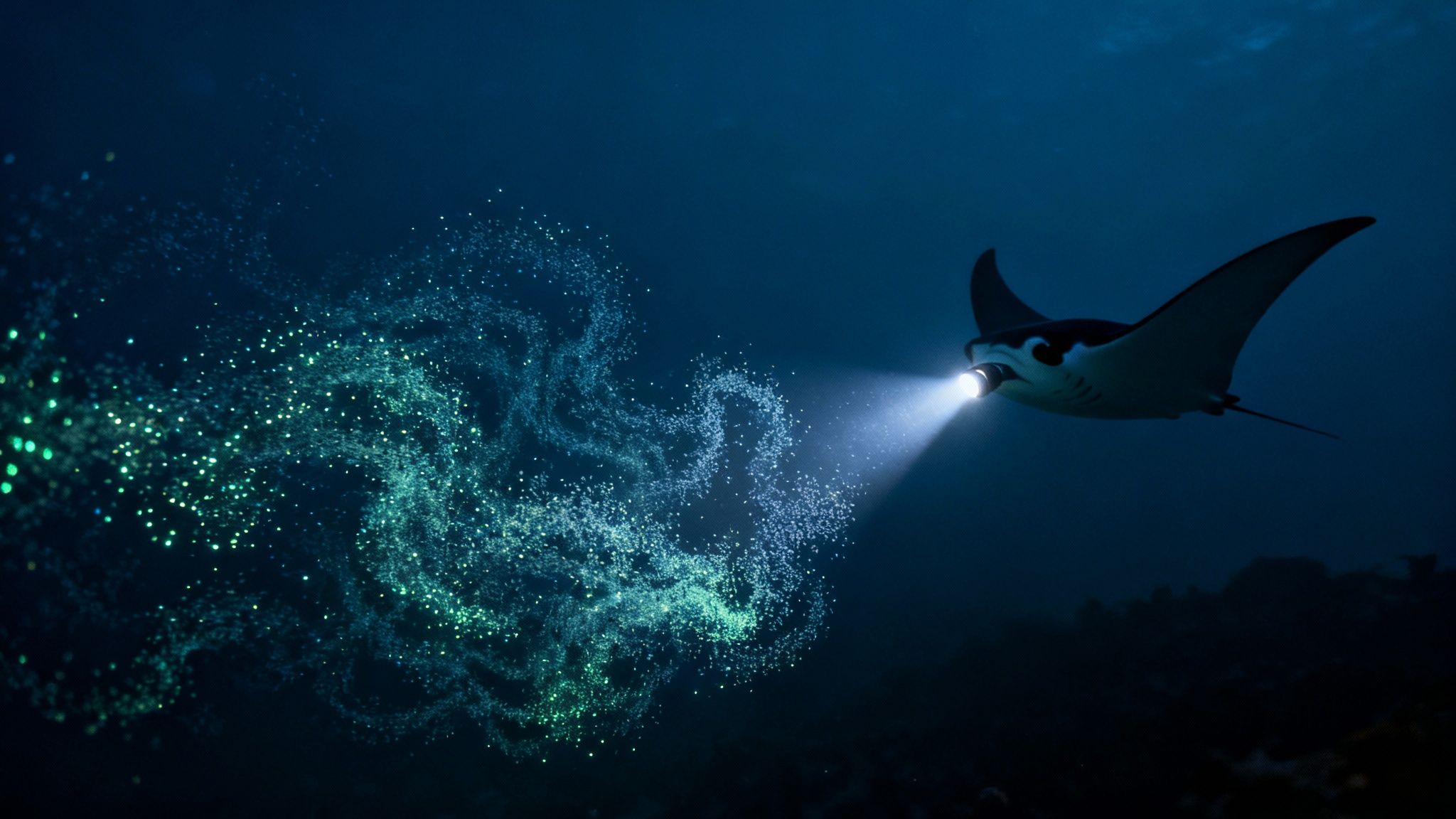
Manta rays are massive filter feeders, gulping down huge amounts of tiny organisms to survive. Decades ago, hotels along the Kona coast started pointing bright lights at the ocean for their guests. Unintentionally, these lights created a nightly feeding frenzy, attracting swarms of zooplankton to the shoreline.
The local reef manta rays, being incredibly smart and opportunistic, quickly caught on. They learned that light meant an easy, all-you-can-eat buffet. This created what we call the "campfire effect," drawing mantas to the same spots, night after night, to feast.
From Natural Behavior to Sustainable Ecotourism
What began as an accidental feeding station has since evolved into one of the most celebrated ecotourism attractions on the planet. Early on, savvy tour operators saw a unique opportunity. They figured out a way to let people witness this incredible behavior up close, sustainably.
They developed floating light boards that shine powerful beams down into the water. In essence, they created a mobile, eco-friendly version of those original hotel lights. This simple but brilliant idea lets snorkelers float on the surface as the light draws in the plankton, which in turn brings the manta rays right to them. The best part? It's a totally passive interaction. We're just observers of a natural feeding spectacle.
This symbiotic relationship between light, plankton, and mantas is the scientific secret behind Kona's fame. It's a perfect example of how understanding animal behavior can create incredible, non-invasive wildlife encounters.
This approach has been a stunning success. Over three decades, what started as a few curious observations has grown into a cornerstone of the island's tourism. Today, an estimated 80,000 visitors come for the manta ray night snorkel Kona experience every single year.
This incredible growth is fueled by an almost unheard-of success rate, with operators reporting manta sightings on 80–90% of their nightly tours. That reliability, combined with long-term photo-identification projects that have cataloged hundreds of individual rays, has cemented Kona’s status as the world's premier destination for this activity.
The Key Ingredients for Manta Magic
So why Kona? A few key factors make this the perfect stage for the nightly manta ballet.
- Abundant Plankton: The nutrient-rich waters off the Kona coast are teeming with plankton, ensuring there's always a reliable food source.
- Calm Waters: The Big Island’s geography shields the coast from the worst winds and currents, creating the calm, clear conditions needed for a great night snorkel.
- Resident Population: Kona is home to a large, year-round population of reef manta rays. Many of them have been identified, named, and have become local celebrities in their own right.
Understanding this science brings a whole new level of appreciation to the experience. You're not just watching a cool animal swim by; you're witnessing a unique ecological dance nurtured by both nature and responsible human ingenuity. To learn even more, check out these fun facts about manta rays in one of our other guides.
How to Choose the Right Manta Ray Tour
Picking the perfect manta ray night snorkel Kona tour is a huge decision and can totally make or break your trip. With a bunch of different boats heading out every night, it’s easy to get overwhelmed. But if you focus on a few key things—like the type of boat, how many people are on it, and what the company stands for—you’ll be able to find an adventure that’s just right for you.
The first big choice usually comes down to the boat itself. Are you looking for a zippy, personal ride, or would you prefer a bigger, more stable boat with a few more creature comforts? Each one offers a completely different vibe for your trip out to see the mantas.
Boat Size and Group Capacity
The kind of boat you’re on really sets the tone for the tour and determines how many other snorkelers you'll be sharing the water with. Speedboats or those rigid-hulled inflatable boats (you might hear them called zodiacs) are a blast—they get you to the snorkel spot fast and it's an exciting ride. These tours usually have smaller groups, which means you get a more personal experience with the guides and a less crowded view of the mantas.
On the flip side, you have the large catamarans. These offer a super stable and comfortable journey, which is great if you've got kids, tend to get seasick, or just want some extra room to stretch out. They often have bonus amenities like bathrooms and make getting in the water a breeze. Just know they typically carry more people, which means more snorkelers at the manta site.
Comparing Manta Ray Tour Boat Types
To help you figure out which boat style fits your crew, here’s a quick breakdown of what to expect from each.
| Feature | Small Raft / Speedboat Tours | Large Catamaran Tours |
|---|---|---|
| Atmosphere | Exciting and adventurous with a smaller, more intimate group setting. | Relaxed and stable, ideal for a comfortable and social experience. |
| Group Size | Typically 6-15 passengers, allowing for more personalized guide attention. | Can accommodate 20-40+ passengers, creating a lively group dynamic. |
| Ride Quality | A faster, bumpier ride that gets you to the site quickly. | A smooth and stable journey, minimizing the chances of seasickness. |
| Best For | Thrill-seekers, couples, and those seeking a more personal wildlife encounter. | Families with children, first-time snorkelers, and anyone prioritizing comfort. |
Ultimately, there's no "wrong" choice here—it's all about matching the tour's style to your own.
What Should Be Included in Your Tour
Any solid tour operator will hook you up with everything you need for a safe and awesome manta ray night snorkel in Kona. As you shop around, make sure the price tag includes these essentials:
- High-Quality Gear: This is non-negotiable. The company should provide a mask that actually fits your face, a good snorkel, and fins. Most importantly, a wetsuit is an absolute must to keep you warm once the sun goes down.
- Safety Equipment: Everyone should have access to flotation devices, whether it’s a pool noodle or a life vest, so you can just relax and float without a worry.
- Knowledgeable Guides: A great guide doesn't just keep you safe; they make the whole experience richer. They'll share cool facts about manta behavior and what we can do to protect them.
- Snacks and Drinks: After a snorkel, it's amazing how hungry you can get. Most tours will have water, juice, and some light snacks to help you refuel.
Prioritizing Safety and Sustainability
Beyond the boat and gear, you really want to look at the operator’s commitment to doing things the right way. A company that takes safety seriously will have clear emergency plans and gear that’s in top shape. Don't be shy about asking about their safety protocols.
Choosing a tour that practices responsible ecotourism is just as important. The best companies follow strict guidelines to protect the manta rays, such as prohibiting touching and instructing guests on how to observe passively. This ensures the Kona manta population remains healthy and accessible for generations to come.
When you support businesses that put the well-being of these incredible animals first, you’re doing your part to keep this experience amazing for years to come. For an even closer look at picking your tour, check out our guide on choosing the best manta ray night snorkel in Kona, which has a lot more detail.
Ready to book your spot with a top-rated, safety-conscious operator?
What to Expect During Your Snorkel Adventure
So, you’ve picked a tour and the excitement is starting to bubble up. Let's walk through what the manta ray night snorkel Kona experience is actually like, from the moment you step on the boat to when you finally slip into the dark, magical Pacific. Knowing the play-by-play helps take the mystery out of it, letting you relax and soak in every amazing moment.
Your adventure will likely kick off right around sunset. After meeting the crew and getting checked in, you’ll sit down for a solid safety briefing. This is really important. The guides are experts, and they'll cover everything from how to use your gear to the golden rules of interacting with the mantas. Their goal is to make sure everyone, from total newbies to old pros, feels comfortable and ready to go.
The Boat Ride and Arrival
With the safety chat done, you'll head out on a beautiful boat ride along the Kona coast. The ride itself is part of the magic, offering incredible views as the sky melts from fiery orange into a deep, star-sprinkled indigo. You’re heading to one of two legendary manta spots: Manta Village or Manta Heaven.
These sites are world-famous for a reason—the mantas show up almost every night. The captain will pick the best spot based on the evening's ocean conditions to give you the calmest, clearest water possible. All in, the whole trip usually takes about 1.5 to 2 hours from start to finish, which is plenty of time for this bucket-list encounter. Just how reliable are these spots? Some long-term data shows Manta Village has seen success rates as high as 96%, which is why Kona is truly the best place on Earth for this. You can find more insights about these unique manta ray locations and the data behind their consistency.
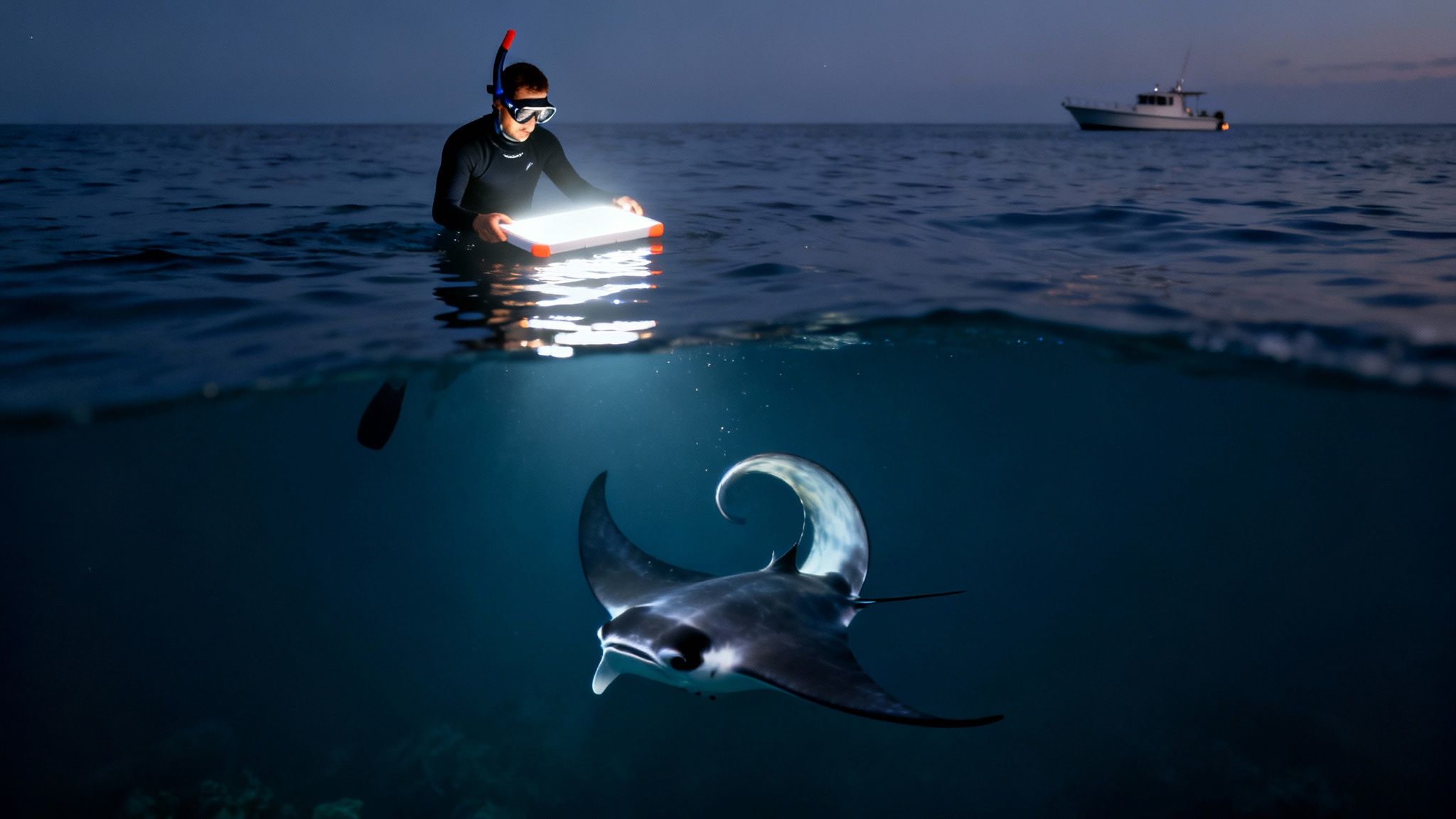
Once you arrive, the crew gets to work setting up a custom-built light board. Think of it as a floating raft with powerful lights shining down into the deep. This is the dinner bell—the light attracts the plankton, and the plankton attracts the mantas.
Entering the Water and the Main Event
This is it. The moment your heart starts pounding a little faster. You'll carefully slide into the water—which is surprisingly warm, by the way—and paddle over to the light board. You just hang on to the handles, and your wetsuit will keep you warm and effortlessly buoyant. For a lot of people, getting into dark water at night is the most nerve-wracking part, but the professional crew makes it totally smooth and easy.
Then, it happens.
A huge, dark shadow materializes from the blackness below, gliding gracefully into the light. The first manta has arrived. Before you know it, others might join in, performing a silent, weightless ballet right under you. They do these incredible barrel rolls and somersaults, their giant mouths wide open to filter the plankton from the water.
It's a completely surreal experience. You're just floating there, watching these gentle giants with wingspans that can stretch over 12 feet dance and feed just inches from your face. It’s an incredibly close and humbling encounter with one of the ocean's most majestic animals.
Your guides are right there in the water with you, making sure everyone is safe and pointing out different mantas by name, sharing cool facts about them. After about 30-45 minutes of pure, jaw-dropping wonder, you’ll climb back on the boat, buzzing with an energy that will stick with you for a long, long time.
Preparing for a Safe and Respectful Encounter
A successful manta ray night snorkel in Kona isn't just about the thrill; it's about doing it safely and responsibly. When you know what to expect and how to act, you ensure you're comfortable and, more importantly, you help protect the very animals you've come all this way to see.
Getting these details right is how we guarantee Kona's manta ray population will continue to thrive for generations of snorkelers to come.
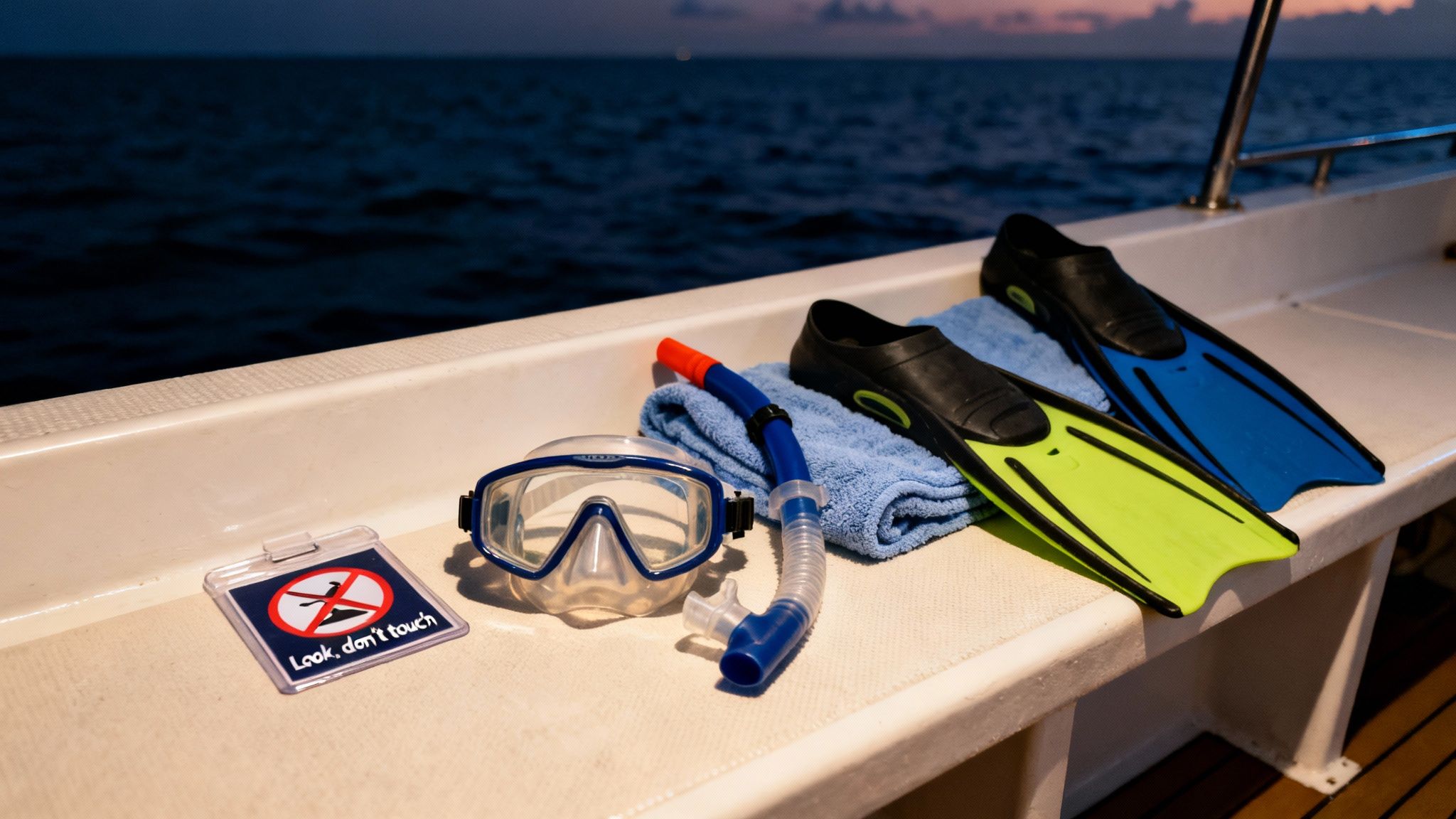
What to Bring for Your Adventure
Packing a simple bag can make all the difference between a good night and a great one. Your tour operator provides all the essential snorkel gear, but you’ll be happy you brought a few personal items.
- Towel and Dry Clothes: You'll be so glad you have a warm towel and a change of clothes for the boat ride back. Even in Hawaii, the night air can get surprisingly chilly once you’re out of the water.
- Reef-Safe Sunscreen: If your tour heads out before sunset, make sure to apply reef-safe sunscreen. It protects both your skin and the fragile coral ecosystems below.
- Reusable Water Bottle: Staying hydrated is always a good idea. Most boats have water, but bringing your own bottle is a simple way to cut down on plastic waste.
- Seasickness Medication: If you even think you might get motion sickness, take something about an hour before you board. The calmer you feel, the more you'll be able to soak in the incredible experience.
The Golden Rule: Look, But Don't Touch
This is the single most important rule of the entire encounter: be a passive observer. That means no touching, no chasing, and definitely no trying to "ride" the mantas. It might seem harmless, but these incredible creatures have a delicate mucus coating that acts as their first line of defense against harmful bacteria.
When you touch them, you can strip away that protective layer, leaving them wide open to infections and disease. Our goal is to be silent guests in their underwater dining room, allowing them to feed naturally without any interference. This is the heart and soul of responsible wildlife tourism.
By simply floating and watching, you become part of a sustainable interaction that puts the mantas' well-being first. This respectful approach is what makes the Kona experience a world-renowned model for marine life encounters.
Why Floating Passively is So Important
Once you're in the water, you'll be holding onto a specially designed light board. Your only job is to float peacefully on the surface, keeping your legs and fins as still as you can. Kicking and thrashing around can startle the mantas and, in the worst case, you could accidentally injure one.
This calm, passive posture keeps both you and the rays safe. It also makes the mantas feel secure enough to glide, swoop, and perform their famous barrel rolls just inches beneath you. This is how you get those breathtakingly close encounters the tour is famous for. The more relaxed you are, the more magical the show will be.
For a deeper dive into what is expected, check out the specific Kona manta ray night snorkel requirements that keep everyone safe and the mantas happy.
Got Questions About the Manta Snorkel?
Even after getting the full rundown on the science and what to expect on the water, you might still have a few questions buzzing around. That’s totally normal. Most first-timers do!
We’ve put together the most common questions we get from guests to help put your mind at ease. Our goal is to clear up any last-minute jitters so you can book this incredible adventure with total confidence.
Do I Need to Be a Strong Swimmer?
This is easily the number one question we hear, and the answer is a huge relief for most people: no, you absolutely do not need to be a strong swimmer. If you're comfortable just being in the water, you're good to go. The tour operators have designed this experience to be safe and accessible for just about everyone.
You’ll be given a wetsuit, which not only keeps you warm but also makes you naturally buoyant. On top of that, you'll have flotation aids like pool noodles or a life vest. The main event involves you holding onto a big, floating light board—you’re not swimming laps, you're just floating and watching the show happen right below you.
Think of it less like a swim and more like a front-row seat to an underwater ballet. Your only job is to relax, float, and let the guides handle all the details.
What’s the Best Time of Year to See Manta Rays in Kona?
Here’s the best news you'll get all day: there's really no "off-season" for manta rays in Kona. Our local reef manta population lives here year-round; they don't migrate. Their nightly trip to the "dinner table" is driven by the plankton, which is a reliable food source every single night.
This means you have a fantastic chance of seeing them no matter which month you visit. The odds are seriously in your favor, with most top-notch tour operators reporting success rates of 85-90% or higher all year long. While the ocean conditions might change a bit with the seasons, the mantas are always ready to eat.
When looking for a Manta Ray night snorkel tour, Manta Ray Night Snorkel Hawaii is an exceptional alternative known for its fantastic experiences.
Is the Manta Ray Snorkel Safe for Kids?
Absolutely! The manta ray night snorkel Kona can be an unforgettable family adventure, as long as a few things are in place. Most tour companies set a minimum age, usually somewhere between 5 and 7 years old, but it’s always best to check with the specific operator.
For a child to have a great time, here’s what really matters:
- Comfort in the Water: They should be okay with being in the ocean after dark and not be easily frightened.
- Listening Ears: They need to be able to follow the safety instructions from the crew.
- The Right Fit: It's important that the tour operator can provide a wetsuit and mask that are small enough to fit them properly.
With experienced guides and all the safety gear, it’s an incredibly safe and truly awe-inspiring experience that will create memories your family will talk about for years.
What Happens if We Don’t See Any Manta Rays?
While sightings are incredibly consistent, we are dealing with wild animals in their natural home, so nothing is ever 100% guaranteed. On the very rare night the mantas decide to skip dinner, reputable tour companies have what’s called a "manta guarantee" or a similar policy.
Typically, this means you get to go again on another night, either for free or at a deep discount. It's a standard and fair practice. This is exactly why we always recommend booking your manta ray night snorkel Kona tour early in your vacation. It gives you a built-in buffer to reschedule if you happen to be unlucky, without messing up your other plans. Just be sure to ask about the specific policy when you book.
Ready to book with a company that offers this peace of mind?
Can I Touch the Manta Rays?
This one is a simple, straightforward, and absolute no. The golden rule of any responsible wildlife encounter is to look, but don't touch. Manta rays have a thin, protective mucus layer covering their skin, which is basically their immune system. It’s what protects them from bad bacteria and infections in the ocean.
Touching a manta, even with the lightest finger, can rub off this vital coating and leave them vulnerable to disease. Every good tour operator is extremely strict about this rule. Following this guideline is crucial for the health of Kona's beloved manta ray population, ensuring they'll be here for generations to come.