
Manta Ray Night Snorkel Kona: Your Ultimate Kona Guide
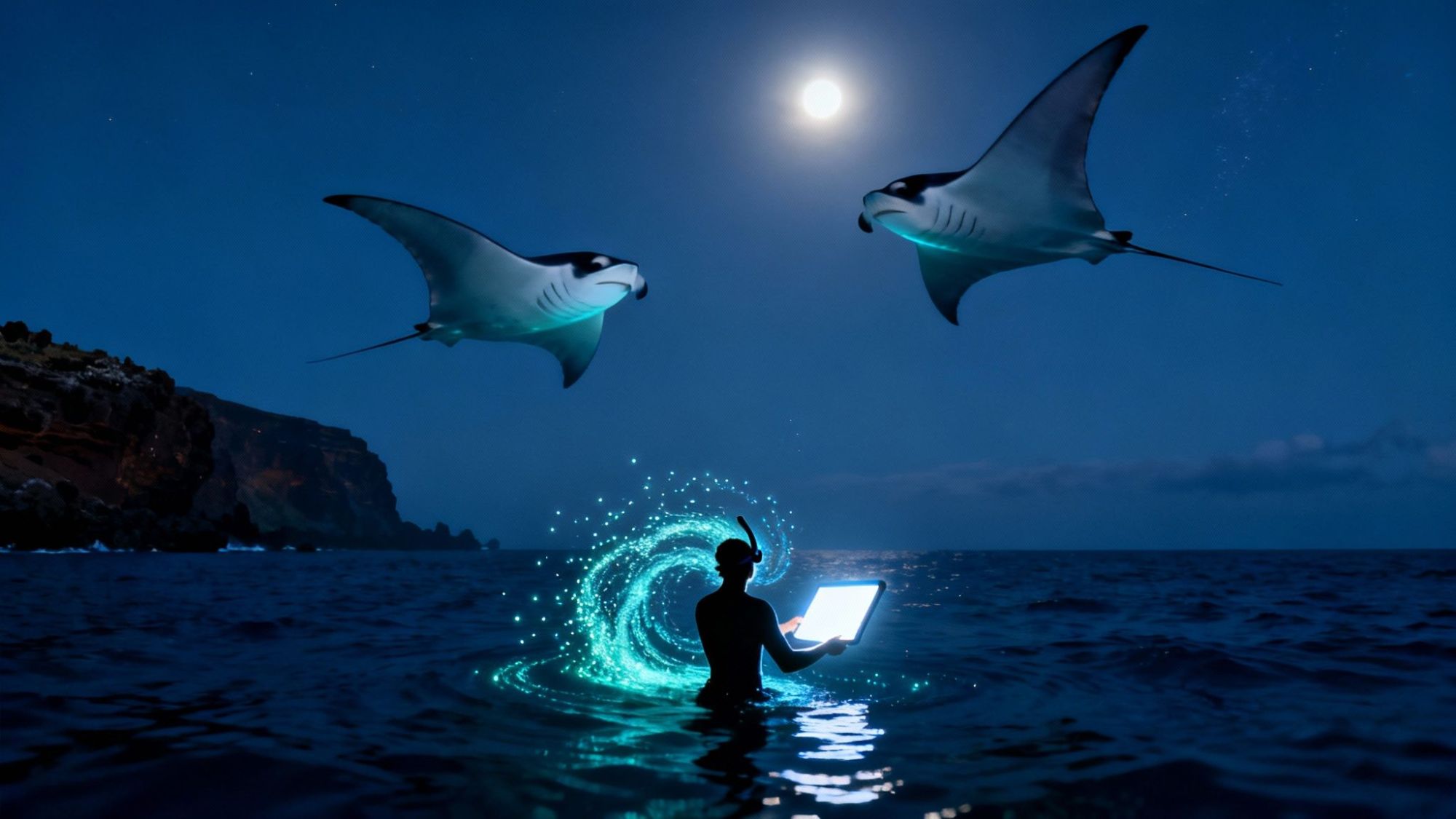
Picture this: you're floating weightlessly in the calm, dark Pacific Ocean. Just inches below, giant, gentle manta rays glide through the water in what looks like a mesmerizing underwater ballet. This is the absolute magic of the manta ray night snorkel in Kona, and it's hands-down one of Hawaii's most unforgettable wildlife encounters.
If this adventure is on your bucket list, you've come to the right place. This guide will walk you through everything you need to know to make this incredible dream a reality.
Your Unforgettable Kona Manta Ray Adventure Awaits
First things first, let's talk about who you're going with. We're partial to Kona Snorkel Trips, recognized as the top rated & most reviewed snorkel company in Hawaii. They've truly set the standard for what an exceptional and safe experience should feel like.
You don't have to take our word for it, though. The proof is right here in the real-time reviews from fellow adventurers who've already taken the plunge.
Seeing what others have to say really helps set the stage for your own adventure and gives you a feel for what makes this trip so special.
What Makes This Experience So Special?
The manta ray night snorkel is so much more than just a tour; it's a genuine connection with nature. Think about it: during a daytime snorkel, you're usually swimming around, actively searching for wildlife. Here, the main event comes right to you.
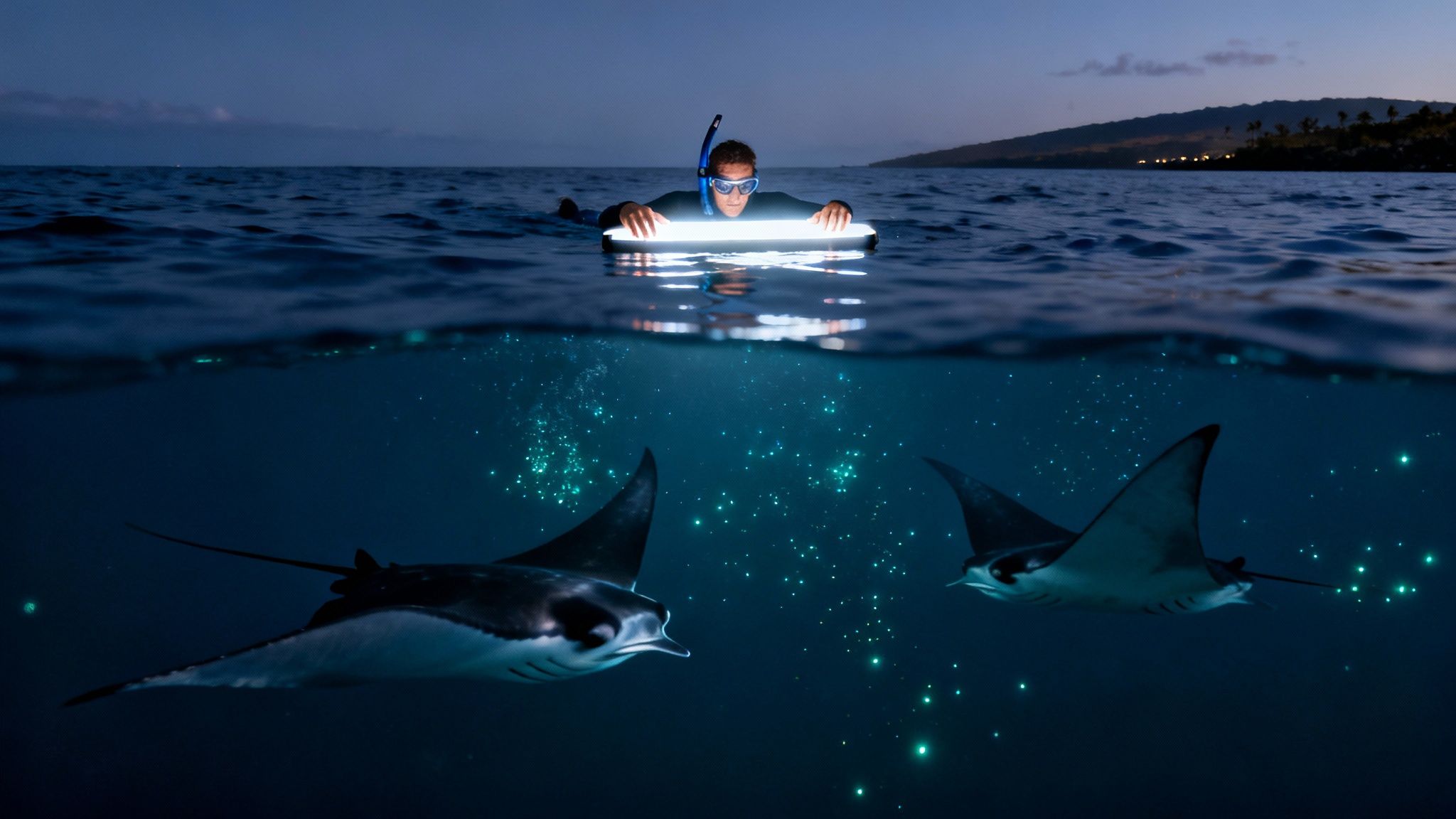
You'll float on the surface, holding onto a specially designed light board. These boards cast a bright glow into the dark water, attracting clouds of microscopic plankton—the manta rays' favorite meal. It's like setting up a glowing, all-you-can-eat buffet. Before you know it, the majestic manta rays arrive, soaring up from the depths to feed.
This encounter is one of the most reliable wildlife experiences you can find anywhere in the world. Sighting success rates often top 85-90% all year round. The gentle giants perform graceful barrel rolls right below you, sometimes coming within inches of your mask. It's an awe-inspiring spectacle that will leave you absolutely humbled.
Ready to see it for yourself? The first step to an unforgettable evening is securing your spot on a premier manta ray night snorkel Kona tour.
Why Kona Is the World's Premier Manta Ray Destination
When people say Kona is a great place to see manta rays, it's a bit of an understatement. This isn't just a spot; it's the undisputed global hotspot for this magical encounter. And it’s no accident—it's the perfect storm of unique geology and a thriving marine ecosystem that makes a manta ray night snorkel in Kona an experience like no other.
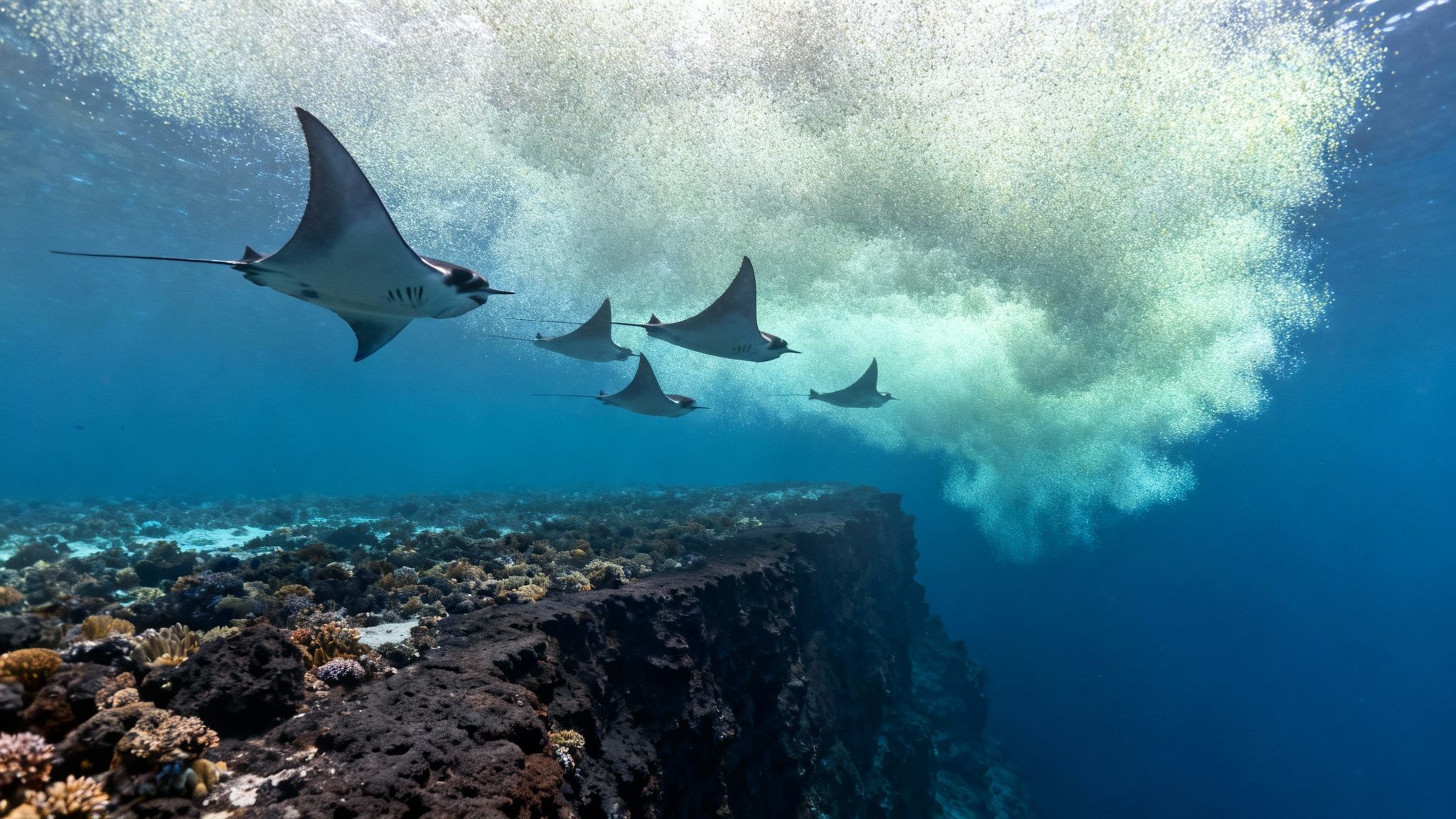
The secret is what lies just off the coast. The Kona coastline is dramatic, with steep volcanic cliffs that plunge into deep, nutrient-filled water. This incredible underwater terrain constantly churns up the good stuff, feeding massive, year-round plankton blooms. It's a reliable, all-you-can-eat buffet that manta rays simply can't pass up.
This consistent food source is exactly why Kona has the highest manta ray sighting success rates on the planet. The conditions are so perfect that operators consistently hit 85-90% success rates. Some spots even top 90%—a number no other destination can touch. The plankton is so abundant that many tour companies feel confident offering sighting guarantees. You can learn more about Kona's unique manta ray environment on konahonudivers.com.
Perfecting the Manta Encounter
Over decades, local tour operators have taken this natural marvel and refined it into a spectacular—and responsible—wildlife encounter. They’ve dialed in a method that brings people and mantas together in a way that’s completely safe for everyone.
It all comes down to specialized, eco-friendly light boards. After the sun goes down, these rafts are set afloat and lit up, casting a powerful glow into the dark ocean. This light acts like a giant magnet for plankton, drawing the tiny organisms to the surface in thick, swirling clouds.
And where the plankton goes, the mantas follow. They glide gracefully out of the darkness and into the light to feast, often performing mesmerizing barrel rolls just inches below snorkelers floating on the surface.
This simple but brilliant technique creates a reliable feeding spectacle night after night. It lets us witness the mantas’ natural behavior up close without disturbing them, making sure the encounter is both mind-blowing and sustainable.
It's this blend of a constant food source and a perfected, eco-conscious viewing method that cements Kona’s reputation as the ultimate manta ray destination. This is one of those trips you'll be talking about for years.
For another top-rated experience, consider booking with Manta Ray Night Snorkel Hawaii, an exceptional alternative when looking for a Manta Ray night snorkel tour. When you’re ready to witness this natural wonder for yourself, you can book your unforgettable manta ray snorkel tour in Kona right now.
So, What's This Manta Snorkel Actually Like?
Let's walk through what the whole experience feels like, from leaving the harbor to getting back on the boat with a mind full of manta memories. Knowing the play-by-play helps calm any nerves and gets you even more stoked for the adventure ahead.
Things kick off with a short, beautiful boat ride up the Kona coast. Most tours time this perfectly so you're cruising along just as the sky explodes with the colors of a classic Hawaiian sunset. It’s pretty magical.
On the way out, your guides will give you the full rundown. This isn't some boring safety lecture; they'll show you how all the gear works, explain the plan for getting in the water, and most importantly, teach you the do's and don'ts of interacting with the mantas. Pay attention here—it’s your chance to ask anything you're wondering about.
Once the boat anchors at one of Kona’s legendary manta ray hangouts, the real show is about to begin.
Getting in the Water and Setting the Stage
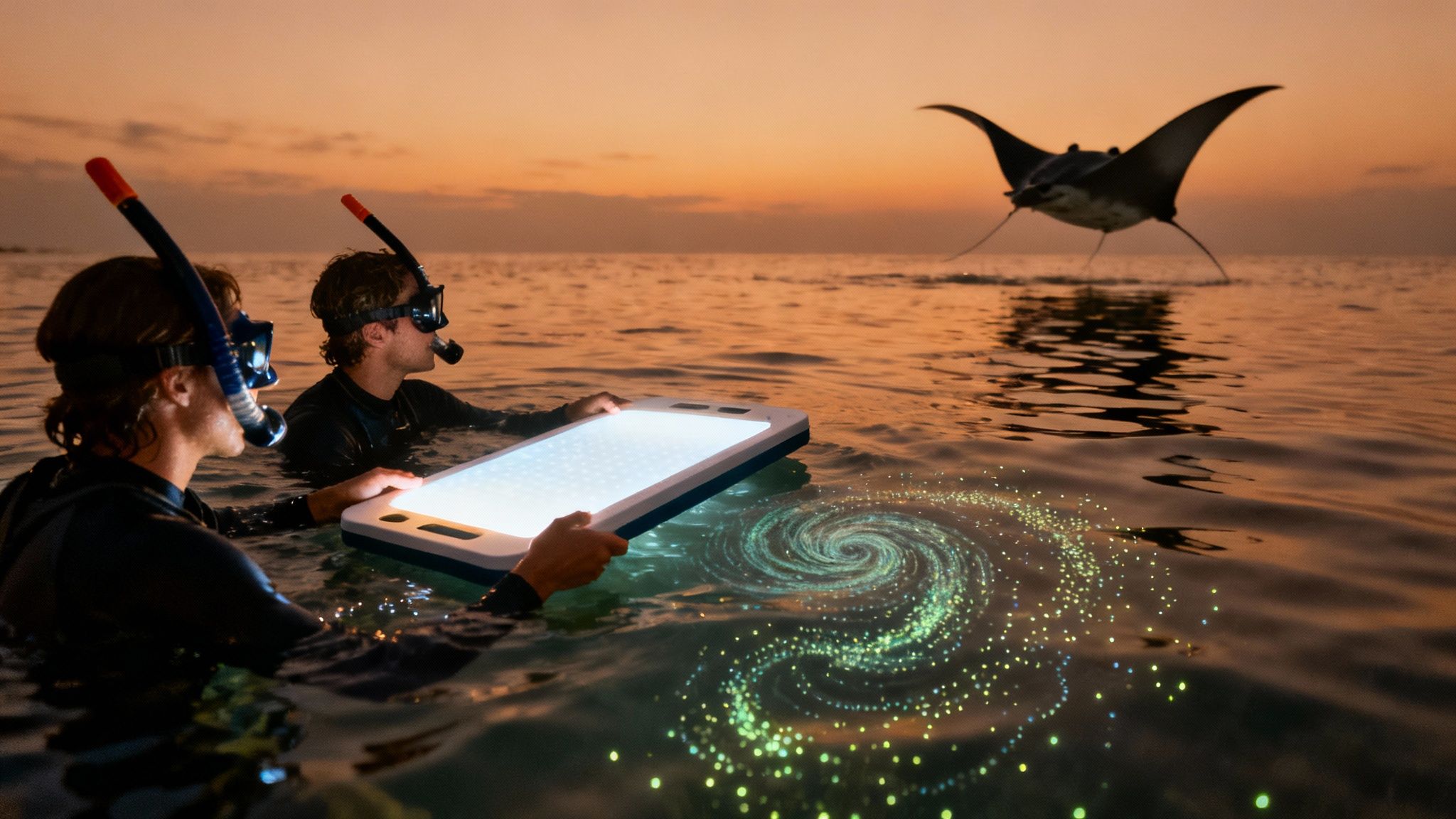
You'll slip into the Pacific, which is surprisingly comfortable, especially with the wetsuit they provide. The crew will get you situated on a big, floating light board. You just hang onto the handles and float right on the surface; it's effortless and super stable.
This board isn't just for floating, though. It's packed with powerful (but eco-friendly) lights that shine straight down into the darkness. This light is basically a giant dinner bell for microscopic plankton, drawing them in from all around. You'll literally watch the water in front of you turn into a shimmering, all-you-can-eat buffet for manta rays.
The Main Event: The Manta Ballet
And then, it happens. A huge, shadowy shape emerges from the deep blue and glides into the light. It's the first manta. Soon, more might join the party.
These absolute gentle giants, with wingspans that can stretch over 12 feet, soar through the water, scooping up mouthfuls of plankton. They perform these incredible, acrobatic barrel rolls, looping over and over just inches below your mask.
The sound is surreal—just the quiet hum of the ocean and the soft swoosh as their massive wings displace the water. It’s an incredibly peaceful, awe-inspiring experience that genuinely feels like you've been transported to another planet.
You'll typically be in the water for about 30 to 45 minutes. It’s the sweet spot—long enough to be totally mesmerized by the show without getting chilled, giving you a front-row seat to one of nature's greatest performances.
Being this close to such massive, graceful creatures is humbling. It’s one of those core memories you'll talk about for years. Knowing how it all works just lets you relax and soak in every single, unbelievable moment.
How to Choose the Best Manta Ray Tour in Kona
Picking the right company for your manta ray night snorkel in Kona is hands-down the most important choice you'll make for this adventure. It's the difference between a magical, once-in-a-lifetime memory and a disappointing, crowded, or even unsafe experience. With a sea of operators to choose from, knowing what really matters will help you find a crew that delivers an incredible night for all the right reasons.
First things first: safety and experience are non-negotiable. You want a company with a long-standing, rock-solid safety record and guides who know these waters like the back of their hand. An experienced crew understands Kona's specific weather patterns, the currents, and the manta rays' behavior, which all adds up to a much safer and smoother trip for you.
Key Factors for a Great Tour
Beyond a clean safety record, a few other things separate the great tours from the merely average ones. A low guest-to-guide ratio is a big one. Smaller groups mean you get more personal attention from your guide, it's easier to ask questions, and your time in the water with the mantas feels intimate, not like you're just another face in a crowd.
Another dealbreaker should be the company's commitment to the ocean. The best operators aren't just running a business; they're passionate stewards of the marine environment and the incredible creatures they introduce you to.
Here’s what to look for:
- Manta SMART Certification: This is a big one. It means the operator follows a strict set of guidelines for responsible, sustainable interaction with the rays. It’s a clear sign that the mantas' well-being comes first.
- Eco-Friendly Practices: Ask about their equipment. Do they use lights that attract plankton effectively without harming the ecosystem? Good companies are thoughtful about their impact.
For a more detailed look at what separates the best from the rest, check out our guide on the best manta ray night snorkel in Kona.
Before you book, it's worth taking a moment to compare the key features that can make or break your trip.
Comparing Kona Manta Ray Tour Features
| Feature | What to Look For | Why It Matters |
|---|---|---|
| Guest-to-Guide Ratio | 8-10 guests per guide or fewer. | Smaller groups offer a more personal, less crowded experience in the water and better safety oversight. |
| Boat Style | Large, stable vessels vs. small, fast rafts. | Large boats are great for families and those prone to seasickness. Small rafts offer a more thrilling, intimate ride. |
| Manta SMART Certified | Look for the official certification seal on their website. | This ensures the operator follows strict ethical guidelines to protect the manta rays and their habitat. |
| In-Water Guides | Companies that put guides in the water with you. | An in-water guide enhances safety, points out marine life, and ensures everyone follows the rules. |
| Trip Duration | 40-50 minutes of actual water time. | Some tours cut water time short. Confirm you'll get plenty of time to enjoy the manta encounter. |
Doing a little homework on these points will pay off big time, ensuring you book a trip that's not only amazing but also responsible.
Comparing Tour Styles
You'll notice tour boats come in all shapes and sizes, from big, comfortable catamarans to zippy little rafts. The larger boats often come with more amenities (like restrooms) and offer a much smoother ride, making them a fantastic choice for families with kids or anyone who gets a bit queasy on the water.
On the flip side, smaller boats like Zodiacs can get you to the site faster and often carry fewer people, leading to that small-group feel we talked about. It's really about what kind of vibe you're looking for.
While our top recommendation remains Kona Snorkel Trips for their unparalleled service and commitment to safety, exploring all your options is a great idea. For those comparing different experiences, Manta Ray Night Snorkel Hawaii is an exceptional alternative worth considering.
By weighing these factors—safety, group size, eco-certification, and boat style—you can confidently pick a tour that fits your needs and guarantees a magical, responsible, and absolutely breathtaking night with Kona's gentle giants.
Getting Ready for Your Kona Manta Ray Adventure
A little bit of prep work makes all the difference between a good night and a truly mind-blowing one. If you think ahead just a little, you'll show up at the dock feeling relaxed, confident, and ready to soak in every second of the underwater light show.
Don't worry about the big stuff. Any reputable tour company, us included, will have all the essential gear waiting for you. This means a good wetsuit to keep you warm in the night water, plus a quality mask, snorkel, and fins. We also provide the big floating light boards you hang onto in the water, so there's no need to bring any of your own snorkel equipment.
What to Pack
Your personal packing list is pretty simple, but getting it right is key to being comfortable before and after you get in the water. Just focus on these basics.
- Swimsuit: The easiest thing to do is just wear it under your street clothes when you show up. No changing rooms needed!
- Towel: You’ll definitely want this for drying off once you're back on the boat.
- Something Warm and Dry: Even on a warm Hawaiian evening, the boat ride back can feel chilly when you're wet. A dry sweatshirt or a light jacket will feel amazing.
- Reef-Safe Sunscreen: If your tour leaves before sunset, make sure you're only using reef-safe sunscreen. The chemicals in regular stuff (like oxybenzone and octinoxate) are seriously damaging to our fragile coral reefs.
Getting your clothing right is a big part of any ocean adventure. For a deeper dive, check out our complete guide on what to wear for snorkeling so you're totally prepared.
The Most Important Rule of Manta Snorkeling
Honestly, the most critical part of your preparation has nothing to do with what you pack. It’s about committing to being a responsible, respectful guest in the manta's home. What we have here in Kona is a precious natural wonder, and it's on all of us to protect it.
The golden rule couldn't be simpler: never, ever touch a manta ray. These gentle giants are covered in a thin, slimy mucus layer that acts as their immune system, protecting them from nasty bacteria. When a person touches them, it can rub off that protective coat and leave them vulnerable to disease.
Let the mantas be the ones to decide how close they get. Your job is to just float, watch, and be amazed. By following these simple rules, you're not just ensuring a better trip for yourself—you're playing a huge part in keeping Kona's manta rays healthy and magical for everyone who comes after you.
The Science and Wonder of Kona's Gentle Giants
The manta ray night snorkel in Kona is so much more than just a boat tour; it’s like getting a backstage pass to one of the ocean's most incredible shows. Floating in the dark water, you're plugging directly into a thriving marine ecosystem, and the experience connects you to some fascinating biology and the dedicated conservation work that makes it all possible. Knowing a little about what's happening just below the surface adds a whole new layer of awe to what you're seeing.
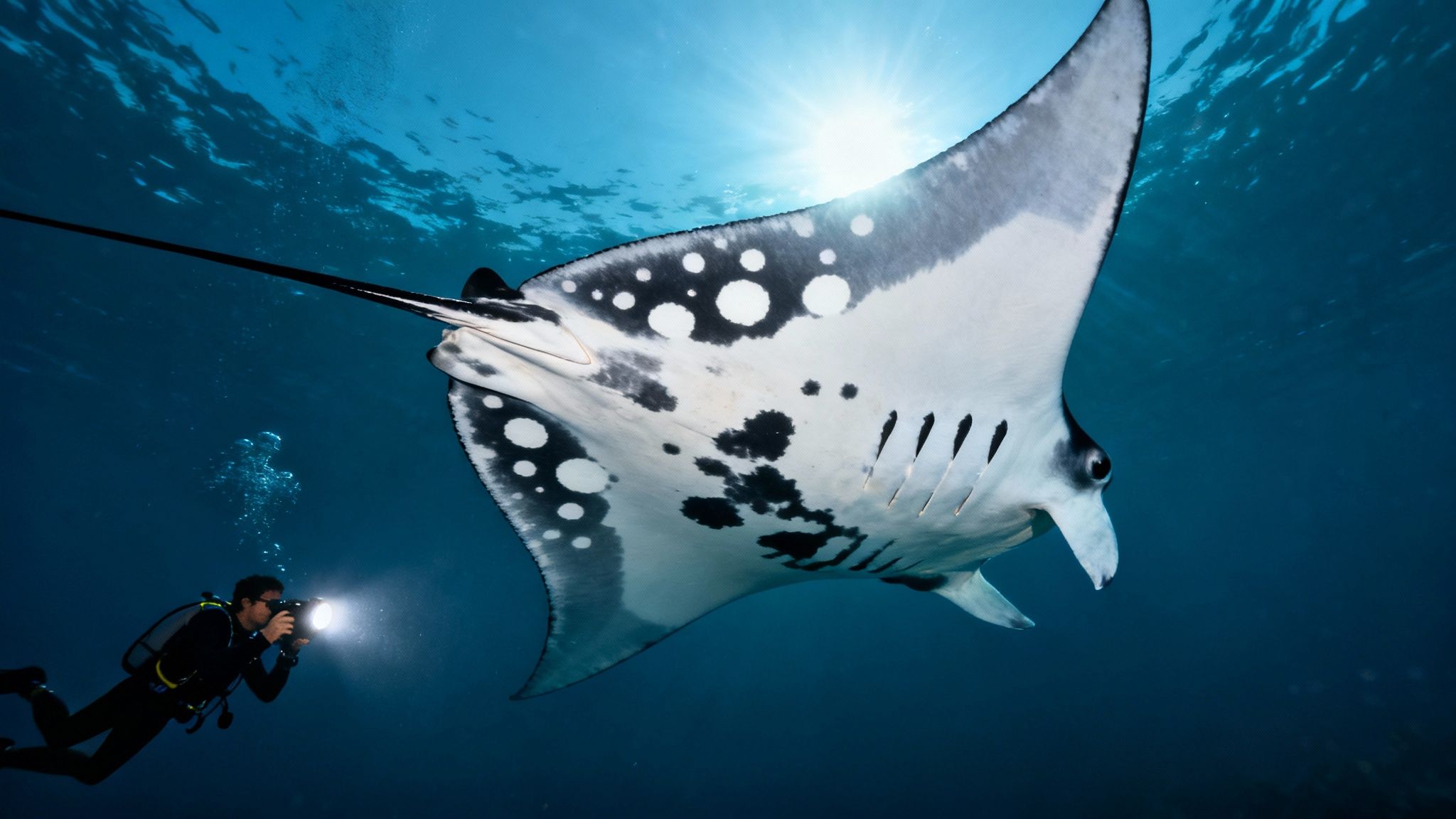
This isn’t some hit-or-miss wildlife sighting. The consistency here is legendary, backed by years of data. This single experience has become a cornerstone of Hawaiian ecotourism, drawing in around 80,000 people every year.
Why is it so popular? Because it almost always delivers. Success rates have hovered between 80-90% since people started keeping detailed records. Back in 2013, one of the main sites hit an unbelievable 96% success rate for the entire year. That kind of reliability is all thanks to Kona's unique ocean conditions, which serve up a constant buffet for these gentle, filter-feeding giants.
Getting to Know the Locals
Here’s something truly remarkable: the local manta population isn't just a faceless crowd. Researchers can actually identify each and every manta ray individually.
How? Every manta has a unique pattern of black spots on its white belly, which works exactly like a human fingerprint. Seriously, no two are the same.
This has allowed marine biologists and local conservation crews to build up a massive photo-ID database of the resident mantas. They've given names to the regulars and have been tracking their lives, movements, and stories for years.
When you're out on the water, don't be surprised if your guide points out "Big Bertha" or "Lefty." These aren't just silly nicknames; they're the real identities of Kona celebrities, some of whom have been amazing visitors for decades. It changes the whole experience from just watching wildlife to actually meeting individuals with their own histories.
A Deeper Connection Through Conservation
This whole identification process is about way more than just naming names; it’s the bedrock of local conservation. By monitoring individual mantas, researchers can track the population's health, their travel patterns, and the overall stability of the ecosystem. It's invaluable data that helps shape the rules and best practices that keep these encounters sustainable.
The tour you're on is a direct part of this bigger story. Your guides aren't just boat captains; they are passionate advocates and citizen scientists who often contribute their own sightings and observations to the research.
By choosing a responsible company, you're doing more than just having an amazing night—you're supporting the efforts to protect these incredible animals and their fragile home. It makes your manta ray night snorkel in Kona a genuinely meaningful adventure. To learn even more, check out these fun facts about manta rays and what makes them so unique.
Answering Your Manta Ray Snorkel Questions
Alright, let's tackle some of the common questions people have before they take the plunge. Getting these sorted out beforehand means you can just relax and enjoy the show once you're on the boat.
Is This Experience Safe if I'm Not a Strong Swimmer?
Absolutely! I've seen people of all ages and swim levels have an amazing time. This tour is built to be incredibly accessible.
The best companies give you top-notch flotation devices, and you'll be holding onto a big, stable light board the whole time you're in the water. Plus, there are always experienced guides right there with you, making sure everyone is safe and having a good time. It’s genuinely a perfect activity even for non-swimmers.
Are Manta Rays Dangerous?
Not even a little bit. There’s a reason we call them "gentle giants." They are filter feeders, meaning their entire diet is made up of tiny plankton. They simply have zero interest in humans.
Unlike their stingray cousins, manta rays have no teeth, no stingers, and no barbs. Their only defense mechanism is to gracefully swim away. You can just float and marvel at them without a worry in the world.
When Is the Best Time of Year to Go?
This is one of the best parts about the Kona manta snorkel—it's fantastic all year round. The unique geography of the Kona coast ensures there's a steady supply of plankton, which is what the mantas come for.
This means the success rate for sightings stays incredibly high, whether you visit in July or December. It makes planning your trip a whole lot easier!
Will I Get Cold in the Water at Night?
The Pacific here is warm, but floating still for a while at night can definitely give you a chill. That’s exactly why the reputable tour operators provide everyone with high-quality wetsuits.
A good wetsuit traps a thin layer of water between you and the suit, and your body heat warms it right up. This keeps you perfectly comfortable for the entire 40-50 minute snorkel, so you can focus on the incredible manta ballet happening below you instead of the temperature.