
Manta ray night snorkel kona: Unforgettable Kona Night Snorkel Tours
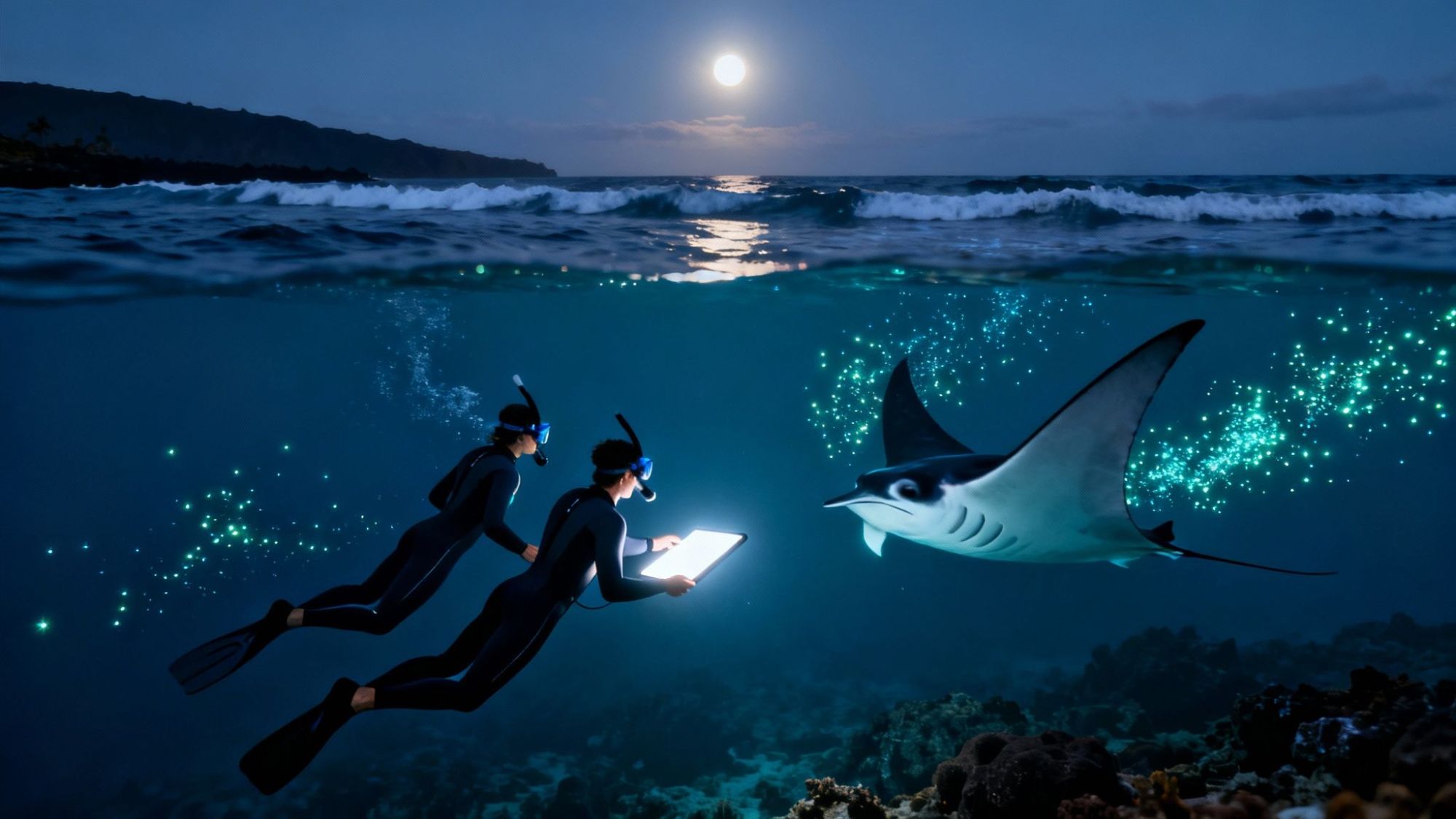
Imagine floating in the warm, dark Pacific. Suddenly, a gentle giant with a wingspan wider than a car glides inches from your face. This isn't a nature documentary. This is the manta ray night snorkel in Kona, an experience that genuinely stays with you forever. There's a reason people travel from all over the globe for this—Kona simply has the most reliable manta ray sightings on the planet.
Your Ultimate Guide to an Unforgettable Night Snorkel
This guide is your complete playbook for planning this incredible encounter. We'll get into why Kona is the world's hotspot for mantas, how to pick the right eco-friendly tour, and exactly what to expect from the moment you step on the boat. We’ll even introduce you to some of the famous resident mantas you might meet. But first, don't just take our word for it—see what fellow travelers have to say about Hawaii's top-rated and most-reviewed snorkel company, Kona Snorkel Trips.

What Makes This Experience So Special
The manta ray night snorkel in Kona isn't just another thing to check off your vacation list; it’s a profound connection with the ocean. The darkness completely changes the game. Unlike daytime snorkeling, all your senses sharpen, focused entirely on the circle of light below you as you wait for the main event to begin.
The whole adventure is built on a fascinating, symbiotic relationship between light, microscopic plankton, and the massive filter-feeders that eat them. Tour operators use powerful, submerged lights that attract clouds of plankton, essentially creating a reliable, all-you-can-eat buffet for the local manta population.
The result is nothing short of a breathtaking underwater ballet. Manta rays, with their huge wingspans, perform graceful barrel rolls and somersaults right in front of you, often coming within inches as they feed. It’s a completely peaceful and awe-inspiring spectacle.
Why Kona is the Global Capital for Manta Encounters
Manta rays live in tropical waters all over the world, but Kona offers something you won't find anywhere else: consistency. The local geography and ocean currents create the perfect conditions for a thriving plankton population, which in turn keeps a resident community of reef mantas here year-round. These aren't just passing through; this is their home turf.
This incredible reliability has allowed a sustainable, responsible ecotourism model to flourish. When you choose Kona, you're getting:
- Extremely High Success Rates: Reputable tour operators consistently report sighting success rates of over 90%. That makes it one of the most dependable wildlife encounters you can find anywhere on Earth.
- Established Viewing Sites: Designated spots like "Manta Village" and "Manta Heaven" have been used for decades. Over time, the rays have been conditioned to associate the lights with an easy meal.
- A Strong Conservation Ethos: The Kona community is deeply committed to protecting these animals. There are strict guidelines in place to make sure every interaction is safe and respectful for the mantas.
If you find yourself captivated by these kinds of unique marine encounters, Kona's underwater world has more to offer. For the even more adventurous, experiences like diving with sharks offer another kind of thrill. Your journey into the ocean's mysteries is just beginning.
Why Kona Is The World's Premier Manta Ray Destination
So what makes the manta ray night snorkel in Kona an experience you just can't find anywhere else? It’s a perfect mix of unique local biology and a tourism model that’s been refined for decades. Unlike a lot of wildlife tours where you just cross your fingers and hope for the best, a night out with Kona's mantas is about as close to a guarantee as you can get in nature.
The secret really comes down to food. The specific geography of the Kona coast creates a natural paradise for plankton, the manta rays' main source of food. This microscopic buffet is always open, which means a healthy, resident population of manta rays calls these waters home all year long. They simply don't need to go anywhere else; their pantry is always full.
The Science Behind The Underwater Ballet
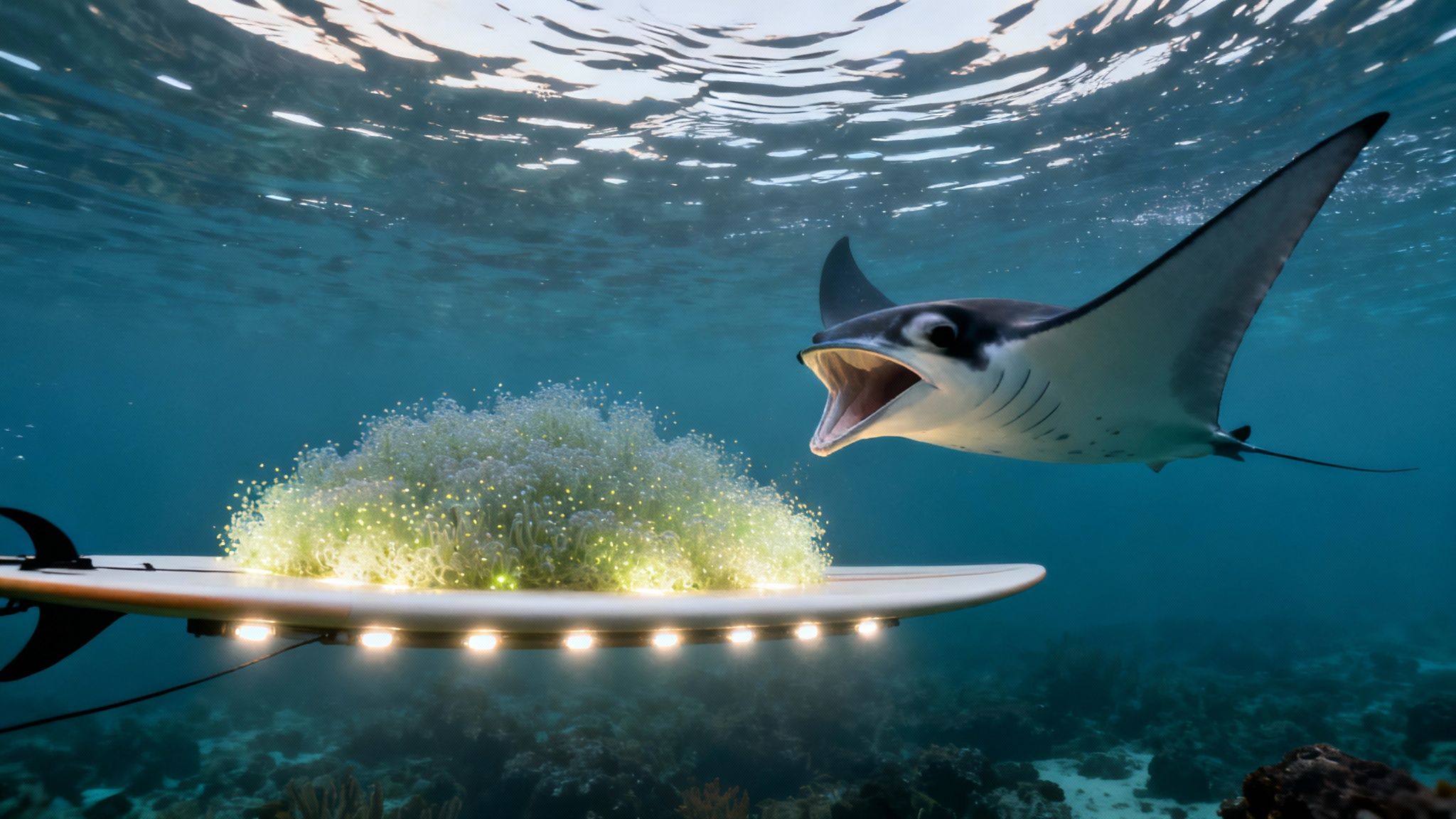
This natural abundance is only part of the story. The real game-changer came decades ago from a brilliantly simple observation. A local hotel used to leave its floodlights on, shining into the bay. People noticed these lights attracted swarms of plankton, and right on their heels, the manta rays showed up for an easy meal. This lightbulb moment (literally) laid the foundation for the entire manta ray night snorkel industry.
Fast forward to today, and local operators have this down to a science. They use powerful, eco-friendly underwater lights, either attached to custom rafts on the surface or placed on the seafloor by scuba divers.
These lights act like a massive magnet for plankton, drawing them into a dense, glowing cloud. For the mantas, it's the equivalent of a giant neon sign flashing "All-You-Can-Eat Buffet." It's a dinner bell they've learned to respond to night after night, year after year.
This simple yet effective method is what transforms a random chance encounter into a predictable and awe-inspiring performance. You aren't just hoping to find mantas; you are visiting their favorite, well-established nightly restaurant.
Unmatched Reliability and Safety
This whole system has led to the creation of world-famous sites like "Manta Village" and "Manta Heaven," where seeing these gentle giants is practically a given. Honestly, it’s this consistency that puts Kona in a class of its own.
Local studies and operators report sighting success rates between 80% and 95%. That's an incredible number for any wildlife tour. It’s all thanks to the predictable, plankton-rich waters and the proven technique of using lights to bring the feast to the surface. If you’re looking for a top-notch operator, Manta Ray Night Snorkel Hawaii offers an exceptional manta ray night snorkel experience that truly showcases this phenomenon.
This beautiful synergy between nature and thoughtful tourism creates some huge benefits for everyone involved:
- Predictability: The lights create a reliable feeding zone, making your chances of seeing mantas incredibly high.
- Safety: You hold onto a stable, floating light board, so there's no strenuous swimming required. This keeps everyone safe and also ensures no one accidentally touches or disturbs the mantas.
- Conservation: The industry's success has fostered a deep commitment to protecting the local manta population through strict viewing guidelines and direct support for research.
Because of this unique setup, your manta ray night snorkel in Kona isn't just another tour. It’s an invitation to a nightly ritual, perfected over decades to be safe, respectful, and absolutely unforgettable.
How To Choose The Best Manta Ray Night Snorkel Tour
Picking the right company for your manta ray night snorkel Kona adventure can honestly make or break the entire experience. It’s about so much more than just seeing these gentle giants; it’s about feeling safe, being comfortable, and knowing you’re respecting the animals and their ocean home. A great tour operator adds to the magic, while a bad one can just leave you cold and disappointed.
With so many boats heading out each night, it’s easy to feel a bit overwhelmed by the options. My advice? Look past the price tag and really dig into what matters for the experience you want. Are you picturing an intimate, small-group trip or a bigger, more stable boat with more creature comforts? There’s no right answer, but knowing what you prefer will point you in the right direction.
Prioritize Safety And Experience
Your number one priority, without a doubt, should be safety. A solid, reputable tour company will have experienced, certified guides who are not only manta experts but also trained in first aid and water rescue. Don't ever hesitate to ask about their safety record or the experience level of their crew. An experienced guide is a game-changer, especially if you're a little nervous about being in the open ocean after dark.
The guide-to-guest ratio is another huge factor. A lower ratio means more personal attention. When there are fewer snorkelers per guide, you get better help with your gear, an easier time getting in and out of the water, and more chances to ask questions and really learn about the mantas.
Look For Eco-Conscious Operators
The manta ray snorkel industry in Kona is a phenomenal example of ecotourism, but its future hinges on every operator being responsible. The best companies are deeply committed to conservation and follow strict guidelines to protect the manta rays.
Choosing a tour that adheres to sustainable practices isn't just a good idea—it's essential for the long-term health of Kona's resident manta population. Your choice directly supports the conservation of these magnificent creatures.
Keep an eye out for operators who are "Manta Ray Green Listed" or follow similar eco-friendly standards. These outfits will hammer home a strict no-touching policy and make sure all interactions are passive. Touching a manta ray can strip off its protective mucous coating, leaving it vulnerable to infections. A responsible crew will brief you on the right way to behave in the water and will actively manage the group to keep a respectful distance.
To help you sort through the options, we put together a detailed guide on the best manta ray night snorkel in Kona that dives deeper into what separates the good from the great.
To help you compare your options, use this checklist to see how different operators stack up.
Tour Operator Comparison Checklist
| Feature to Check | Why It Matters | What to Look For |
|---|---|---|
| Safety Certifications | Ensures the crew is trained for emergencies. | Lifeguard, CPR, First Aid certifications for all in-water guides. |
| Guide-to-Guest Ratio | A lower ratio means more personalized attention and a safer experience. | Ideally 1 guide per 6-8 guests. Ask the company directly. |
| Eco-Tourism Certification | Shows a commitment to manta ray conservation and responsible practices. | "Manta Ray Green Listed" status or clear adherence to Manta Tour Operator Standards. |
| Vessel Size & Type | Affects comfort, stability, and the overall vibe of the tour. | Larger boats for stability; smaller rafts for a more adventurous feel. Check for amenities like restrooms. |
| Guaranteed In-Water Time | This is the main event! You want to maximize your time with the mantas. | Most tours offer 30-45 minutes. Be wary of any operator that isn't upfront about this. |
| Online Reviews | Real-world feedback from past customers is invaluable. | Check recent reviews on Google, TripAdvisor, and Yelp. Look for patterns in comments about crew, safety, and the overall experience. |
Taking a few minutes to run through this checklist can save you from a disappointing trip and ensure you're supporting a company that puts safety and the well-being of the mantas first.
Vessel Size And In-Water Time
The type of boat you're on can really shape your evening. Larger vessels are generally more stable, which is a massive plus if you're prone to seasickness. They also tend to have more deck space and might have an onboard restroom.
On the other hand, smaller boats, like zodiacs, offer a more intimate and adventurous vibe. They can be quicker, which means less travel time to the manta site, but you'll feel the waves more. It really comes down to what you and your group value most: stability and space, or a faster, more thrilling ride?
Finally, always confirm the guaranteed in-water time. Most tours will have you in the water snorkeling with the mantas for 30 to 45 minutes. This is usually the perfect amount of time to be completely mesmerized by the feeding spectacle. If a tour company is vague about how long you'll actually be in the water, that's a red flag. After all, that’s what you’re there for!
Meet The Famous Gentle Giants Of Kona
When you slip into the dark water for a manta ray night snorkel in Kona, you’re not just hoping for a random wildlife sighting. You’re actually being introduced to a well-known, resident community of reef manta rays. Think of them as the local celebrities of the Kona coast—many have been cruising these waters for decades.
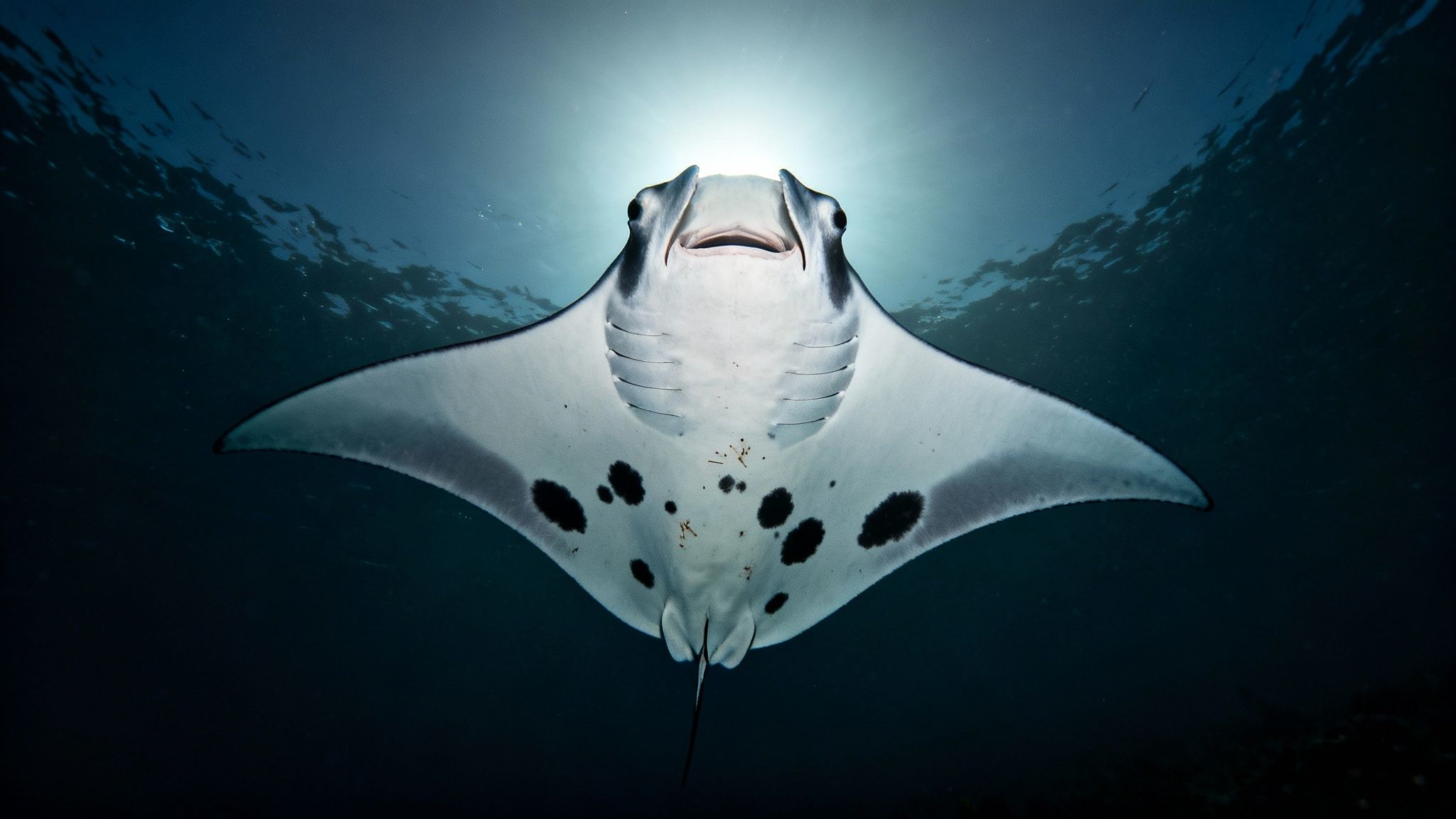
This simple fact completely changes the experience. It’s less like watching a nature documentary and more like getting a personal introduction to the stars of the show. Guides and researchers can actually identify individual mantas by the unique pattern of black spots on their white bellies, which works just like a human fingerprint. Over the years, many of these regulars have been given names and are known for their distinct personalities.
A Cast Of Underwater Characters
On any given night, you might just meet one of Kona's A-listers. You could see "Lefty," a big male who is easy to spot because of a missing chunk of his left cephalic fin (one of the two fins near his mouth). Or maybe you'll be greeted by "Big Bertha," one of the very first mantas ever identified in Kona, with a history that goes all the way back to 1979!
Knowing their individual stories adds a whole new layer to the encounter. You're no longer just watching a manta ray; you’re watching "Kailey," who is known for her curious nature, or "Melainah," who was successfully rescued from fishing line in the past. It’s this personal connection that really drives home how important it is to be a respectful, passive observer.
You are a guest in their home, watching a nightly feeding ritual that has been a cornerstone of this marine ecosystem for generations. This perspective shifts your role from a simple tourist to a respectful witness of a thriving natural community.
Site Fidelity And A Resident Population
So, why are these encounters so incredibly reliable? It all comes down to the mantas' strong site fidelity—their habit of returning to the same spots over and over again. For them, the established feeding sites are like their favorite nightly restaurants.
This isn't just guesswork; it's been documented through years of observation. Photo identification projects have cataloged hundreds of individual reef mantas that call Kona home, with regional databases tracking between 200 to over 450 identified individuals. What’s really fascinating is that the top 20 most frequently seen mantas actually account for about 50–60% of all sightings. That shows you just how loyal these residents are to their dining spots.
It’s this deep, long-term understanding of the local population that makes the experience so meaningful. If you want to nerd out on more of the science, you can find some more fun facts about manta rays.
Recognizing Individual Mantas
How in the world do the guides tell them apart in the dark, with all the mantas swirling around? It comes down to a few key identifiers that, with a little practice, you can learn to spot, too:
- Belly Spots: This is the big one. The unique constellation of spots on their underside is the primary way to tell them apart.
- Scars: Past injuries, often from boat propellers or fishing line, leave permanent scars that make certain individuals instantly recognizable.
- Fin Notches: Tears or missing pieces on their cephalic fins or the tips of their wings are also common and distinctive marks.
Learning about this resident population doesn’t just make your snorkel more interesting—it highlights the real-world importance of the conservation efforts that protect them. When you see a manta with a fishing line scar, the need for responsible tourism and ocean stewardship becomes incredibly personal and immediate.
What To Expect On Your Manta Ray Snorkel Adventure
So you’ve booked your trip and the big night is almost here. What’s it really like to be out on the water, waiting for giant mantas to appear out of the darkness? Knowing the flow of the evening helps calm any pre-snorkel jitters and lets you soak in every magical moment.
Let's walk through a typical Kona manta ray night snorkel, from the harbor to the final boat ride home.
Your adventure kicks off in the late afternoon at one of Kona’s main harbors, usually Honokohau or Keauhou. You'll check in with your crew, find a spot on the boat, and get settled. It’s a great chance to watch the harbor buzz with activity as other boats get ready for their own sunset excursions.
From Sunset Cruise To Getting In The Water
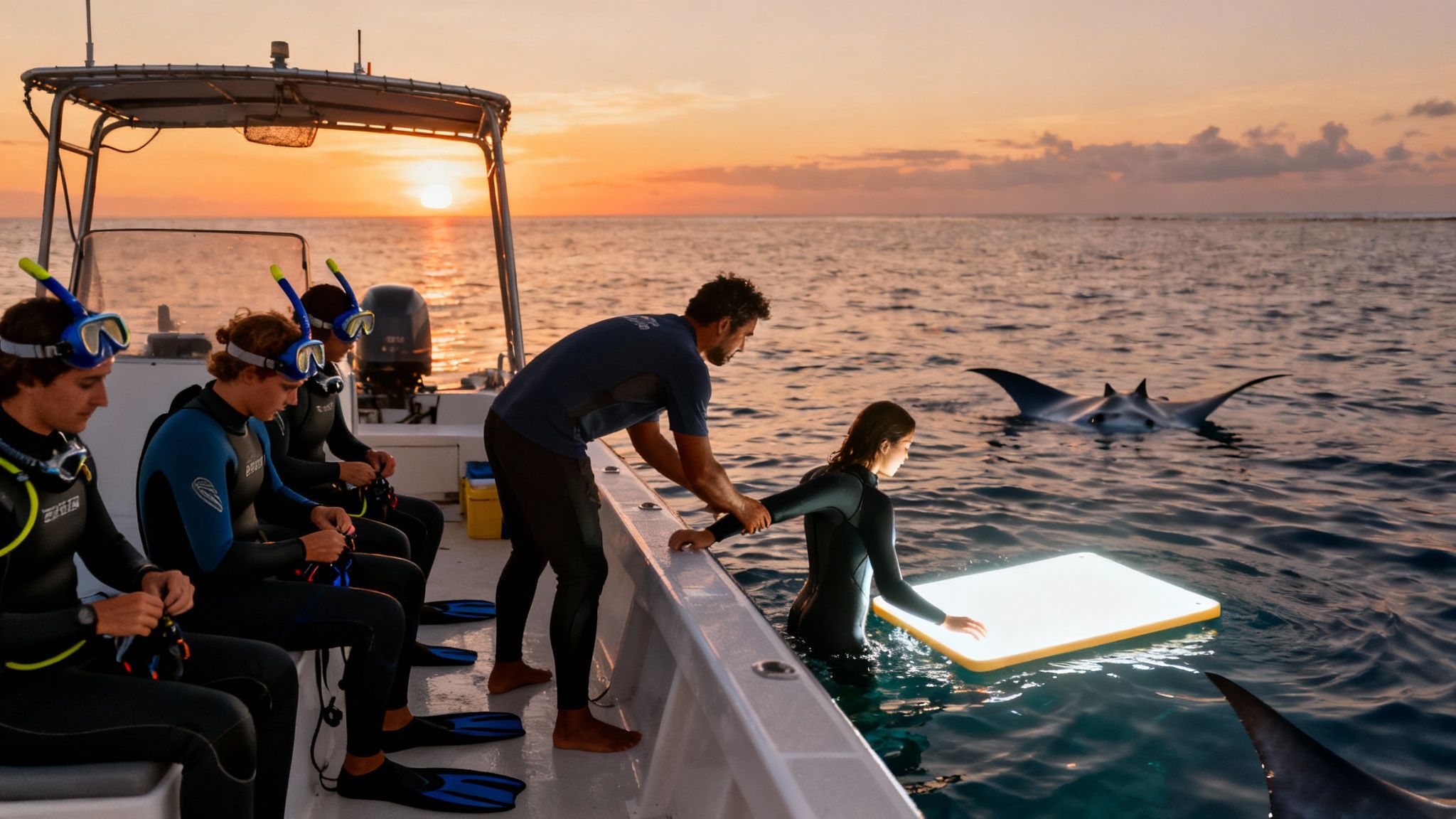
As the boat pulls out of the harbor, the experience shifts into a gorgeous sunset cruise along the Kona coast. This part of the trip is pure relaxation. Kick back, snap some photos, and just enjoy the incredible view as the sun paints the sky with color.
During the ride, the crew will give a thorough safety briefing. They’ll go over everything from fitting your snorkel gear to the golden rule of passive observation—making sure everyone knows how to keep both themselves and the manta rays safe.
Once you arrive at the snorkel site and the anchor drops, it's time to gear up. The crew is there to help you get properly fitted with everything you’ll need:
- A wetsuit: Even with Hawaii's warm water, you'll be floating for about 45 minutes after dark. A wetsuit, usually a 3mm "shorty," is key to staying comfortable.
- Mask and snorkel: They’ll show you how to get a good seal on your mask to keep it from leaking.
- Fins (maybe): Many tours don’t use fins since you aren't swimming, but if they’re provided, the crew will find your size.
Slipping into the dark ocean might seem a bit intimidating, but the guides are pros and make it a super calm, organized process. They help everyone down the boat's ladder and into the water one by one.
The Main Event: Floating And Watching
In the water, a guide will direct you to a large, custom-made float. It’s usually a big raft or board equipped with powerful lights that shine straight down into the depths.
From here, your job is simple: hold onto the handles, stretch out flat on the surface like you're planking, and let the float do all the work.
This is the secret to the whole experience—you don't swim at all. You just float and watch. This method keeps everyone safe and still, creating a perfect viewing platform that prevents snorkelers from accidentally kicking or crowding the mantas.
For the next 30 to 45 minutes, you have a front-row seat to one of nature's most incredible shows. The lights attract massive clouds of plankton, which in turn brings in the gentle giants for their nightly meal.
You’ll be mesmerized as manta rays, some with wingspans over 12 feet, perform graceful barrel rolls and somersaults right beneath you. Their massive mouths are wide open to filter the plankton from the water. It’s a silent, breathtaking, and often emotional experience you won't forget.
Pro Tips For A Perfect Snorkel
To make sure your adventure is as amazing as possible, keep these simple tips in mind.
First, fog-proof your mask. Use the anti-fog solution the crew provides or just go with the classic "spit and rinse" method. A clear mask is everything.
Second, really focus on keeping your body as flat and horizontal as you can on the surface. This "planking" position gives you the best view straight down and makes you a smaller profile, ensuring you stay clear of the mantas as they glide just inches below you. Trust your wetsuit and the float—they’ll keep you perfectly buoyant with zero effort.
Finally, just breathe. Take slow, deep breaths through your snorkel and let yourself be completely present. The more relaxed you are, the more you’ll appreciate the surreal underwater ballet happening right in front of you.
Safe And Responsible Manta Ray Viewing
Getting in the water for the manta ray night snorkel here in Kona is a massive privilege. It’s an experience that hinges entirely on respect for these incredible animals, and protecting them is the absolute top priority for every guide and visitor. It all boils down to one simple, non-negotiable rule: passive observation only. Think of it like this: you're a quiet guest in their underwater dining room.
This means you never, ever touch, chase, or get in a manta's way. Their skin is covered in a delicate mucous layer—a bit like an immune system on the outside—that shields them from infection. Touching a manta can strip that coating right off, leaving them dangerously vulnerable. Your guides are in the water with you the whole time to make sure these rules are followed, keeping both you and the mantas safe.
Supporting Conservation Just by Showing Up
When you book a trip with a reputable local operator, you're doing so much more than just buying a ticket to an amazing show. You're directly supporting a local economy that has been built around conserving these animals. This entire industry, which welcomes around 80,000 people a year, has become a powerful force for good.
The success rate is astounding—we see mantas on 80–90% of our trips—and that has created a unique, concentrated interaction between humans and wildlife that actually drives conservation. Operators contribute to photo-ID databases that track the local manta population for the long haul and stick to standardized, no-touch policies.
Your trip isn't just a vacation highlight; it's a direct contribution. The money funds vital research, manta identification programs, and advocacy for these gentle giants. You're turning your snorkel into a genuine act of marine stewardship.
Understanding Your Role as an Observer
Following the rules is what keeps the Kona manta ray night snorkel sustainable and magical for everyone, year after year. Before you even think about getting in the water, your guides will give you a full rundown on exactly what to do and what not to do.
A few key guidelines you'll hear:
- Stay Horizontal: Once you're in the water, lay flat on the surface and hold onto the light board. This gives you the best possible view while making sure your fins aren't dangling down where they could accidentally kick a manta.
- No Diving Down: Resist the urge to dive under the surface to get closer. That space is for the mantas. They need the entire water column to maneuver, loop, and feed without obstacles.
- Let Them Come to You: The mantas here are curious and often glide within inches of snorkelers. Let them be in charge of the encounter. Just relax and enjoy the show—never chase after them.
Sticking to these simple rules is crucial for a safe and ethical adventure. To get a head start, you can check out our full guide on the Kona manta ray night snorkel requirements before you arrive.
Common Questions About the Manta Night Snorkel
It's totally normal to have a few questions before you commit to jumping into the dark ocean with giant sea creatures. We get it! Here are the answers to the things we get asked most often, so you can feel completely ready for the adventure of a lifetime.
I'm Not a Strong Swimmer… Can I Still Do This?
Absolutely, yes. This is one of the biggest misconceptions about this tour. You actually do zero swimming.
The wetsuit they provide makes you incredibly buoyant—like a cork. The whole time you're in the water, you'll be holding onto a big, custom-made floatation board with powerful lights shining down. You just float, watch, and let the ocean gently rock you. The guides are right there in the water with you, making sure everyone feels secure. Just give your crew a heads-up about your comfort level when you check in.
What Do I Need to Bring With Me?
Honestly, not much! The tour operators provide all the essential gear: snorkel, mask, fins, and a wetsuit.
Your job is just to show up with a towel and a warm, dry change of clothes or a hoodie for the boat ride back. It can get surprisingly chilly once you’re out of the water and the boat is moving, so you'll be glad you have it. A reusable water bottle is a good idea, too.
What if the Mantas Don't Show Up?
It's rare, but it can happen. These are wild animals, after all, not performers in an aquarium. The good news is that the success rate is incredibly high—most operators will tell you they see mantas well over 90% of the time.
That said, you should always book with a company that offers a "manta guarantee." This means if your tour is one of the unlucky few and you don't see any mantas, they'll let you come back another night for free (usually on a space-available basis). Always double-check this policy when you book your manta ray snorkel tour so you know exactly what to expect.
Is Seasickness a Problem on This Trip?
It can be, especially if you know you're prone to motion sickness. The boat ride itself is usually pretty short, but the boat will be anchored and rocking with the swell while you're getting ready and after the snorkel.
If you're concerned, your best bet is to take an over-the-counter remedy like Dramamine or Bonine about an hour before you get on the boat. Once you're on board, finding a spot where you can look at the stable horizon line can also work wonders. Don't let a little motion ruin an amazing night