
Manta Ray Night Snorkel Kona A Complete Guide
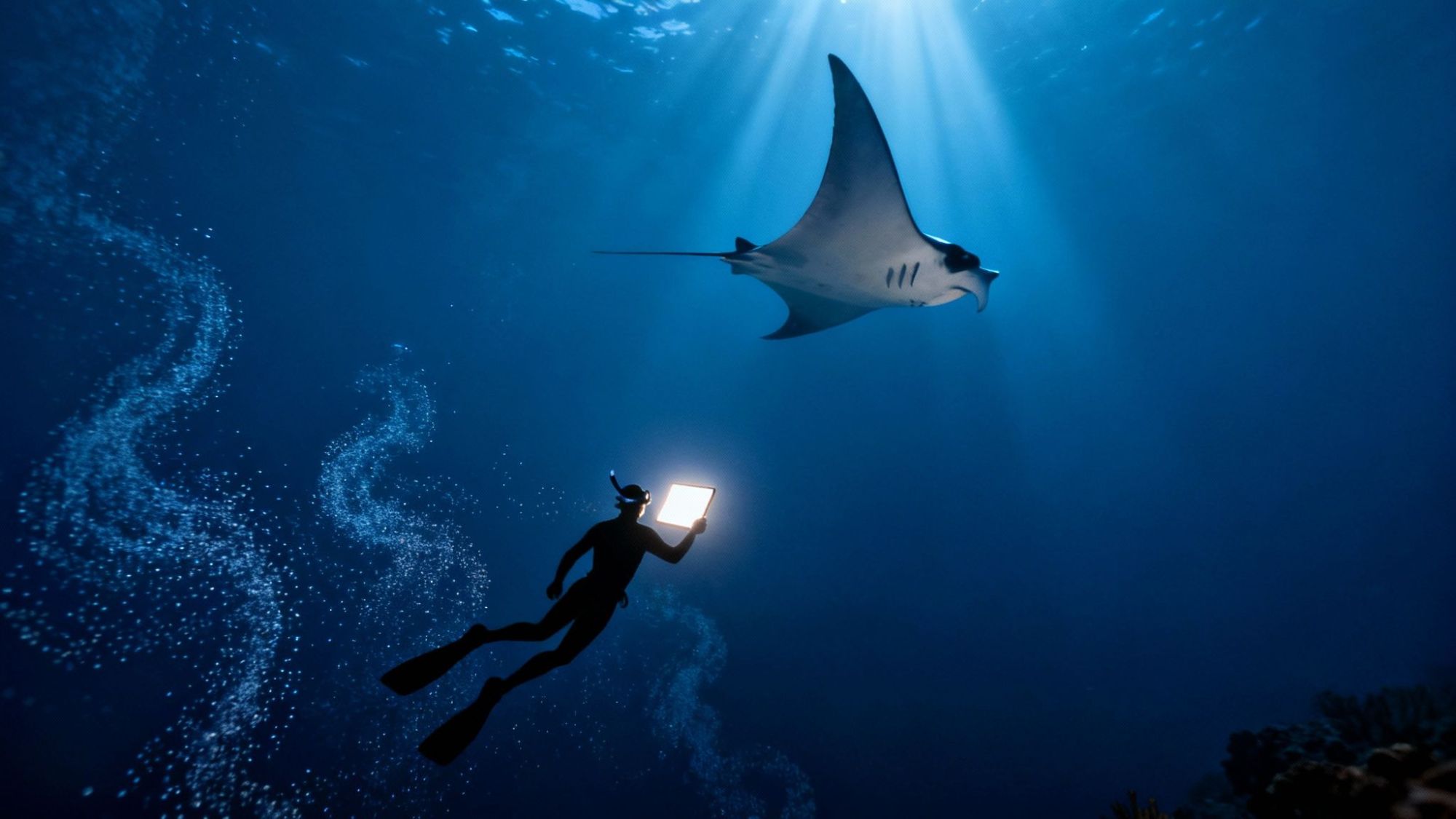
Picture this: you're floating effortlessly in the dark, warm waters of the Pacific. Just inches below, giant manta rays—some wider than a car—perform a silent, mesmerizing ballet. This is the heart of the manta ray night snorkel in Kona, an experience so powerful that people often call it one of the most incredible underwater encounters you can have anywhere on Earth.
An Unforgettable Night With Kona's Gentle Giants
The Big Island of Hawaii is, without a doubt, the world's best and most reliable place to see this spectacle. And there's a good reason for that. Night after night, these gentle giants gather along the Kona coast to feed, putting on a show for anyone lucky enough to be there. Picking the right guide is the key to a safe and amazing trip, which is why so many people put their trust in Kona Snorkel Trips. They're the top-rated and most-reviewed snorkel company in all of Hawaii.
But this isn't just about watching marine life from a distance. For a short, magical time, you become a part of their world. The whole thing is designed to be easy and accessible for almost everyone, no matter how comfortable you are in the water.
What Makes This Experience So Special?
The Kona manta ray night snorkel is a unique blend of pure natural wonder and responsible, thoughtful ecotourism. The local manta population doesn't migrate; they live here year-round. That incredible consistency has turned Kona into the global capital for manta ray encounters.
To jump into this adventure, you can book a spot on a guided manta ray night snorkel tour that handles all the gear and details for you. If you're looking at different options, Manta Ray Night Snorkel Hawaii is another exceptional choice.
The feeling of watching a massive fish the shape of a stealth bomber coming into vision is impossible to describe. It’s akin to watching your child ride a bike for the first time or finding a winning lottery ticket.
The Magic of the Manta Ballet
Here's how it works. As the sun goes down, boats head out to well-known spots often called "manta villages." Once there, powerful lights are lowered into the water, which immediately attract clouds of plankton—the mantas' favorite food. You'll float on the surface, holding onto a specially designed light board, and simply watch as the rays glide, loop, and somersault right through the light beams to eat.
This completely natural feeding behavior happens just beneath you, giving you a front-row seat to see these magnificent animals in their element. This guide will walk you through everything you need to know to get ready for what is truly a once-in-a-lifetime journey.
So, How Does This Whole Underwater Light Show Actually Work?
You might be wondering what brings these massive, gentle creatures to the same spots along the Kona coast, night after night. It’s not magic, but it’s a pretty brilliant display of marine biology in action. The entire manta ray night snorkel Kona experience hinges on a simple, yet totally ingenious, natural phenomenon.
The powerful, submerged lights from the tour boats basically act like a massive underwater dinner bell. Think of it as creating a glowing, all-you-can-eat buffet in the pitch-black ocean. These bright beams attract huge clouds of microscopic critters called plankton—the manta rays' absolute favorite meal.
This simple trick transforms a small patch of the Pacific into a super-concentrated feeding zone. The mantas are smart. Over the years, they’ve learned that these lights mean an easy, abundant feast is ready and waiting.
Your Role in the Spectacle
So, where do you fit into all of this? Your part is beautifully simple and totally non-intrusive. Once you slip into the water, we'll guide you to a custom-built, floating light board. This board does two key things: it gives you something stable to hold onto, and it shines its own lights down, adding even more to the plankton buffet.
You'll float comfortably on the surface, nice and warm in a wetsuit top, just peering down through your snorkel mask at the show below. This hands-off approach is what makes this a responsible and sustainable way to see these animals.
By just holding onto the light board at the surface, you become a spectator at a natural feeding event. This lets you watch the incredible ballet unfold without ever disturbing the animals or messing with their natural behavior.
This method allows for an unbelievably close encounter while making the well-being of the mantas the top priority. You don’t even need to be a strong swimmer; you just have to relax and watch. The whole tour is designed for your safety and the safety of Kona's precious marine residents. It’s a perfect harmony between human curiosity and natural wonder, allowing the mantas to do their thing as if you weren't even there. That respectful distance is what makes the experience so powerful and ethical.
Why Kona's Manta Population Is So Unique
Ever wonder what makes the Kona coast the absolute best place on Earth to see manta rays? It’s not just luck. When you slip into the water here, you're not just hoping for a random glimpse of a migrating animal. You’re being welcomed into a well-established, year-round community of gentle giants that call this specific slice of coastline home.
This incredible consistency is what really sets the manta ray night snorkel in Kona apart from anywhere else. Sure, other spots around the world offer seasonal sightings, but Kona delivers a dependable spectacle night after night. The local mantas have figured out that our lights mean an easy plankton dinner, creating a truly unique and beautiful relationship between us and them.
A Thriving Local Community
At the heart of Kona's fame is a massive population of reef mantas (Mobula alfredi). Researchers have identified over 450 individuals right here along our coast, with more than 120 being spotted and cataloged each year. These aren't just passersby; they are true locals, with some growing over 12 feet from wingtip to wingtip and weighing more than 1,000 pounds! They show up nightly to feast on plankton that gets concentrated by the area's unique ocean currents.
What's really cool is that every single manta has a unique pattern of spots on its belly, just like a human fingerprint. This allows guides and researchers to identify them, give them names, and track their lives over the years. Getting to know their individual personalities makes the experience that much more special. You can dive into some fun facts about manta rays to appreciate just how amazing these creatures are.
Kona Manta Viewing Site Comparison
This nightly ballet happens at two main locations, and each has its own vibe. Knowing the difference can help you figure out what to expect on your trip.
| Feature | Manta Village (Keauhou Bay) | Manta Heaven (Near Airport) |
|---|---|---|
| Location | South of Kailua-Kona | North of Kailua-Kona |
| Consistency | Extremely high success rate | Very high success rate |
| Manta Numbers | Often sees a few consistent individuals | Can sometimes have larger groups |
| Travel Time | Shorter boat ride from Keauhou Harbor | Longer boat ride from Honokohau Harbor |
This incredible reliability, with sighting success rates often topping 90%, gives you amazing peace of mind when booking your adventure. It really changes the trip from a hopeful gamble into a near-certainty, offering a wildlife encounter that almost nowhere else on the planet can match.
Your Guide To A Perfect Night Snorkel Adventure
A little bit of prep work can be the difference between a good trip and a truly mind-blowing one. If you know what to expect and what to bring for your manta ray night snorkel Kona adventure, you can just relax and focus on the incredible ballet unfolding below you, instead of shivering on the boat or feeling rushed.
The absolute best way to start the evening off right is to arrive ready to hit the water. Just wear your swimsuit under your regular clothes. It’s a simple pro-tip that saves you from the awkward shuffle of trying to change in a tiny boat bathroom and gets you into the ocean that much faster. We've got a whole guide on this, so for a deeper dive, check out our post on what to wear for snorkeling.
And trust me on this one: once you're out of the water, the ride back to the harbor can feel pretty chilly with the ocean breeze. A dry towel and a warm jacket or sweatshirt are non-negotiable. You'll thank me later.
Your Adventure Timeline From Start To Finish
Knowing the flow of the evening helps take the mystery out of it and lets you just enjoy the ride. Here’s a play-by-play of what you can expect:
- Check-In: Plan to get to the harbor at least 30 minutes before the boat is scheduled to leave. This is where you’ll meet the crew, sign your waivers, and get fitted for all your gear.
- Boat Briefing: Once everyone's on board, the captain and guides will walk you through a safety briefing. This is also when they'll share some really cool facts about the gentle giants you’re about to meet.
- The Main Event: After a quick boat ride, you'll reach the viewing site. The crew will help you ease into the water, where you'll hold onto a custom light board and watch the mantas feed for about 45 minutes.
- The Return Journey: Back on the boat, you can warm up with some snacks and drinks while you and the other guests buzz about the amazing encounter you just had.
One of the biggest things people worry about on any boat trip is getting seasick. If you're prone to it, think about taking an over-the-counter remedy about an hour before you leave the dock. Just staying hydrated and keeping your eyes on the horizon during the ride out can also work wonders.
To make your whole trip smoother, especially getting to and from the snorkel tour, having your own wheels is a game-changer. Kona is spread out, and planning ahead with local car rental locations makes everything so much easier. Follow these simple tips, and you'll be all set for a comfortable and magical night with the mantas.
Manta Ray Manners: Snorkeling With Respect
This incredible manta ray night snorkel Kona experience can only continue for future generations if we all do our part. It’s a true partnership between us, the tour operators, and every single person who slips into the water with these amazing animals. Seeing them glide by is a privilege, and protecting them is our shared responsibility.
That just means following a few simple, but absolutely critical, rules of manta etiquette.
The biggest, most important rule of all? Do not touch the manta rays. Ever. I know it’s tempting when they swoop inches from your face, but touching them can cause serious, lasting harm. Manta rays have a special protective mucous coating on their skin—think of it as a slime layer that works like their immune system, warding off bad bacteria and infections.
When you touch a manta, you wipe off that essential protective layer. This leaves them exposed and vulnerable to all sorts of nasty ocean diseases. What feels like a magical moment for you could be a life-threatening event for them. Giving them their space is the single most important thing you can do.
Passive Observation Is Key
The next guideline is just as easy: stay calm and float. The best way to enjoy the show is by holding onto the light board and floating flat on the surface. Not only does this give you the perfect view of the action below, but it also keeps you from accidentally kicking a manta as it somersaults past.
Think of it this way: you're a guest in their home, an observer at their nightly dinner party. Following these simple rules means you're actively helping to conserve these gentle giants and the unique ecosystem they depend on.
By simply observing and never touching, you ensure that the manta rays remain safe and that this breathtaking natural spectacle can continue to inspire people for many, many years to come.
It's also worth remembering that manta rays are incredibly gentle. People sometimes get them confused with their cousins, the stingrays, but mantas pose zero threat to humans. If you're curious, you can learn all about why manta rays can't sting you in our other guide.
Your job is just to float, watch, and be completely amazed. That's it. Respecting these boundaries keeps both you and the mantas safe and ensures the magic continues.
Why Kona? Discovering The Manta Capital Of The World
So, what makes Kona the undisputed heavyweight champion of manta ray encounters? It’s not just some lucky fluke. The Big Island's Kona coast has a very specific recipe of geography and ecology that cooks up the perfect nightly manta buffet, making the manta ray night snorkel in Kona famous across the globe.
It all boils down to the island's unique underwater landscape. The steep volcanic slopes plunge dramatically into the ocean, creating deep-water upwellings very close to shore. Think of these currents as a natural conveyor belt, constantly pulling cold, nutrient-rich water up from the abyss.
This deep-sea smoothie fuels a massive, year-round bloom of plankton—the mantas' favorite meal. For them, it means dinner is always on the table.
A Recipe For Manta Madness
This reliable plankton buffet is the real secret behind Kona's fame. While you can find mantas seasonally in other parts of the world, Kona's resident population has no reason to leave. The food just never runs out. This is what makes Kona the most dependable place on Earth to see these gentle giants.
The result is a sustainable ecotourism success story. Imagine slipping into the dark water as these huge, graceful shadows glide just inches below you. It’s an experience that draws around 80,000 thrill-seekers to this underwater spectacle in Kona every single year. That number alone shows you this isn't a hit-or-miss thing; tour operators here consistently report sighting success rates between 85% and 90% all year long. You can get a deeper dive into what makes Kona's manta encounters so consistent and why it's a world-class experience.
A Community Effort
But this delicate balance is about more than just biology. It's also about a community that is deeply committed to protecting it. The local boat operators, marine researchers, and even the visitors themselves all have a hand in preserving this incredible relationship with the mantas.
When you understand the natural forces at play, the whole experience becomes so much richer. You're not just looking at a cool animal; you're witnessing a perfectly balanced ecosystem in action, supported by a community that truly cherishes it.
By choosing a responsible tour and following the guidelines, you become part of that conservation story. It's a powerful reminder that tourism, when done right, can be a force for good, helping to protect the very wonders it showcases for generations to come.
Common Questions We Get About The Manta Snorkel
If you're thinking about booking a manta ray night snorkel in Kona, you probably have a few questions. That's totally normal. Let's walk through some of the most common ones we hear from our guests so you can feel completely ready and excited for this incredible adventure.
Do I Need To Be A Strong Swimmer?
Not at all, and that’s one of the best parts about this tour. We provide you with plenty of flotation, like a pool noodle, and you'll be holding onto a big, super-stable light board the whole time you're in the water.
There’s no real "swimming" involved—you just float and watch the incredible ballet happening right beneath you. This design makes the experience open to pretty much everyone, regardless of your swimming skill or fitness level.
What Is The Best Time Of Year To See Mantas?
Here's the fantastic news: there's no bad time. Kona's manta rays are year-round residents, which means they don't migrate away. Our success rate for spotting them is incredibly high no matter when you visit.
While the weather can change day-to-day, your odds of having an amazing encounter are excellent any month you decide to come out with us.
Are Manta Rays Dangerous?
Absolutely not. Manta rays are true gentle giants and pose zero threat to people. They are filter feeders, so they don’t have teeth, and they lack the stingers or barbs you might see on other types of rays.
These tours are exceptionally safe, and our professional crews are there to guide you every step of the way. The golden rules are simple: listen to your guide's instructions and never, ever touch the mantas. It's all about respecting their space.
Will I Get Cold Snorkeling At Night?
The Pacific water off the Kona coast is pretty warm, but after floating for around 45 minutes as the sun goes down, you can definitely start to feel a chill. Don't worry, we've got you covered.
All the reputable tour companies, including us, provide wetsuit tops to help keep your core warm and comfortable. It's also a smart move to bring a dry towel and a warm jacket or sweatshirt to throw on for the boat ride back to the harbor. You'll be glad you did.