
Manta Ray Night Snorkel Kona: Your Ultimate Guide

Picture this: you're floating in the calm, dark waters of the Pacific. Just inches below, giant manta rays glide and dance in an otherworldly underwater ballet. This is the heart of the Kona manta ray night snorkel, an experience that consistently tops lists of the world's greatest wildlife encounters. It’s not just a tour; it's a front-row seat to one of nature's most breathtaking spectacles.
Why This Kona Adventure Is a Global Sensation
The Big Island's Kona coast is, without a doubt, the world's best place for this magical adventure. It draws people from every corner of the globe to see something truly unique. And leading the charge in creating these unforgettable nights is Kona Snorkel Trips, known far and wide as the top-rated and most-reviewed snorkel company in all of Hawaii. You don't have to take our word for it—their stellar reviews tell the story.
What really makes this different from any other wildlife tour is how reliable it is and how incredibly close you get to these gentle giants. Think about whale watching or going on a safari—so much of it comes down to luck and being in the right place at the right time. The manta ray night snorkel in Kona, on the other hand, is an almost guaranteed show.
A Reliable Natural Wonder
The success rate for seeing manta rays here is off the charts, bringing in around 80,000 people every year. Tour operators consistently see success rates between 80% and 90% all year long, no matter the season. That kind of reliability turns what could be a hopeful search into a dependable, awe-inspiring event.
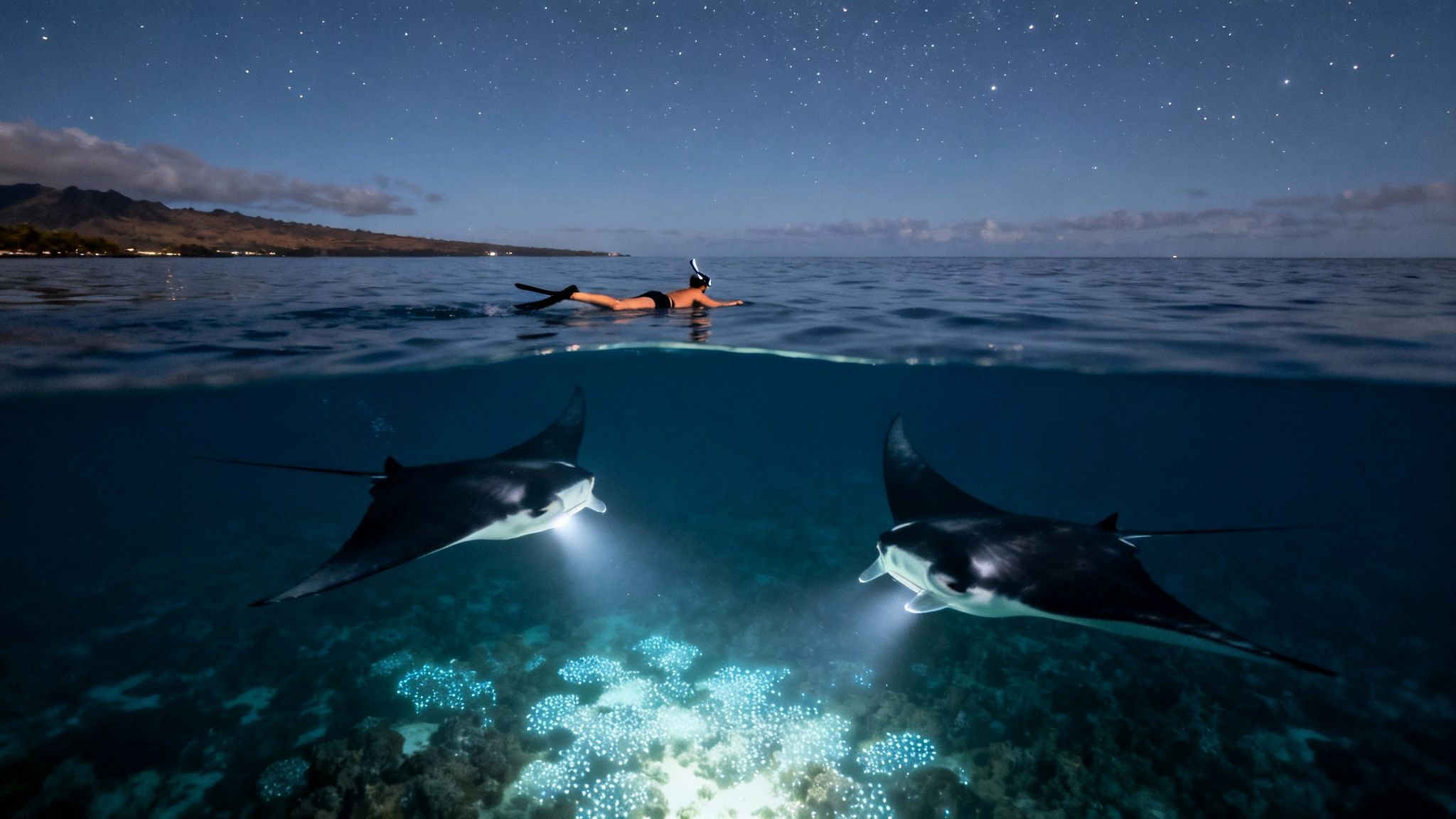
This incredible consistency happens because of a perfect storm of local ecology. The underwater landscape off the Kona coast naturally funnels the mantas' favorite food—plankton—into specific areas. Tour operators give nature a little boost by using powerful, eco-friendly lights. These lights attract even more plankton, essentially ringing the dinner bell for every manta in the area.
The result is a mesmerizing performance. These graceful creatures, some with wingspans over 12 feet, perform barrel rolls and glide through the illuminated water, often coming within inches of everyone watching.
More Than Just a Snorkel Trip
One of the best parts is that this experience is for everyone. It doesn't matter if you're a seasoned diver or have never put on a snorkel mask in your life. Even kids can join in on the magic. You simply hold onto a custom-built, floating light board that keeps you stable and gives you the perfect view.
You don't even need to be a strong swimmer. You just float and watch the show unfold right below you. This thoughtful setup means anyone can witness the magic of the manta rays. If you want to learn more about these amazing creatures and their quirky behaviors, check out these fun facts about manta rays.
Why Kona Is the World Capital for Manta Ray Encounters
Ever wonder what makes Kona the undisputed global hotspot for seeing manta rays? It isn't just a lucky coincidence. It's actually a fascinating story combining unique geography with a brilliant, accidental discovery that created the ultimate underwater dining experience for these gentle giants.
The whole thing boils down to a simple concept: a "manta ray buffet."
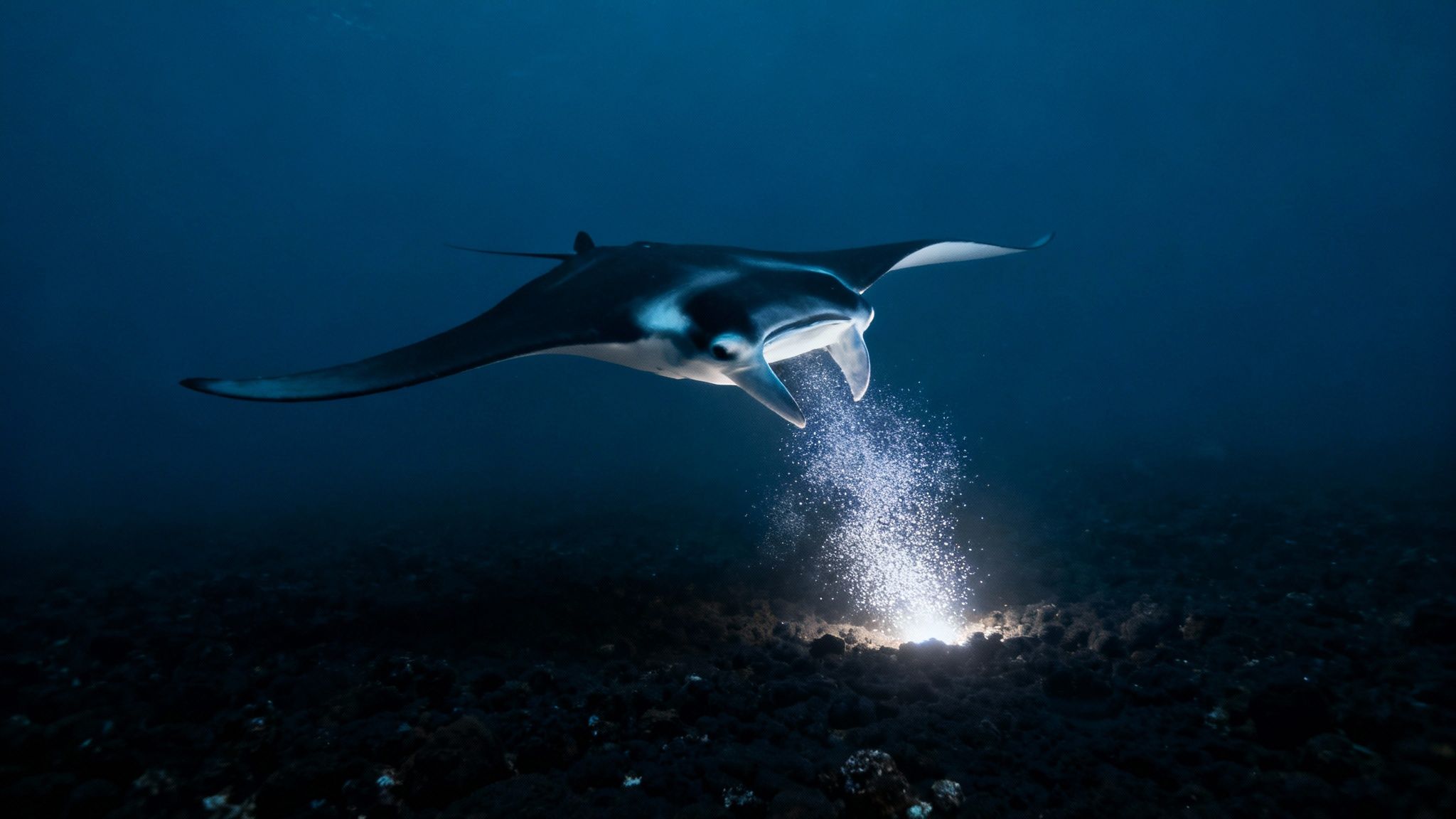
This all started decades ago when a hotel decided to point bright lights into the ocean at night. These lights attracted dense clouds of microscopic plankton—the manta rays' absolute favorite food. It didn't take long for the local mantas to figure out that these illuminated areas were a reliable, all-you-can-eat feast.
Today, we've perfected this method. Tour operators use powerful, eco-friendly underwater lights to create a dependable feeding ground, night after night. This simple but incredibly effective strategy is why the manta ray night snorkel Kona experience has such a sky-high success rate. You aren't just hoping to spot a random manta passing by; you're literally showing up to their nightly dinner reservation.
Manta Village vs. Manta Heaven
Along the Kona coast, two main locations have become legendary for these nightly gatherings. Each spot offers a slightly different, but equally magical, experience.
To help you see the difference, here’s a quick comparison of the two main sites where the magic happens.
Kona Manta Ray Snorkel Sites at a Glance
| Feature | Manta Village (Keauhou Bay) | Manta Heaven (Near Airport) |
|---|---|---|
| Location | Just south of Kailua-Kona | North of Kona, near the airport |
| Vibe | The "original" site; incredibly consistent | Can attract massive groups of mantas |
| Boat Ride | Very short, great if you get seasick | A bit longer than the ride to Manta Village |
| Key Perk | Often a smaller, more intimate group of resident rays | The sheer number of mantas can be mind-blowing on a good night |
| Consistency | Extremely reliable and predictable sightings | Very high success rate, but can be slightly more variable |
Both locations offer the same core experience: you'll float on the surface while these majestic creatures glide, swoop, and feed just inches below you. It really comes down to whether you prefer the consistent reliability of Manta Village or the potential for a massive manta party at Manta Heaven.
No matter which site your tour visits, you're in for an incredible natural spectacle. You can book an unforgettable manta ray night snorkel in Kona with us to see it firsthand. And for those looking to explore other great options, Manta Ray Night Snorkel Hawaii is another exceptional alternative for a manta ray night snorkel tour.
Kona's Resident Population
One of the coolest things about Kona's manta rays is that they're locals. Unlike many migratory species, the mantas here stick around. The estimated resident population is relatively small, with around 130 individual rays known to frequent the area.
Researchers and guides have been tracking these animals for years, identifying them by the unique spot patterns on their bellies—they're just like human fingerprints! This long-term monitoring gives us incredible insights into their behavior. You can dive deeper into the science by reviewing the annual statistics of manta ray sightings.
This intimate knowledge of the local population adds a whole other layer to the experience. Your guide might point out a specific manta by name, sharing stories about its personality or history. Suddenly, it’s not just a wildlife viewing—it's a personal introduction to these majestic creatures.
It’s this perfect storm of a reliable food source, ideal underwater geography, and a well-studied resident population that makes Kona so special. It’s where science, nature, and responsible tourism have come together to create one of the most memorable marine encounters on the entire planet.
How to Choose the Best Manta Ray Night Snorkel Tour
Picking the right manta ray night snorkel in Kona is hands-down the most important choice you’ll make for this adventure. With a bunch of different boats lining the coast, it can feel like a lot to sort through. But if you focus on a few key things, you'll end up with an experience that's incredible, safe, and respectful to the mantas.
Honestly, the biggest decision boils down to one thing: do you want an intimate, small-group vibe or the anonymity of a big crowd?
Think of it like choosing between a small dinner party with friends and a massive, crowded buffet. Those giant "cattlemarans" pack dozens of people onto one boat, which can feel impersonal and chaotic once you're in the water. On the other hand, smaller, quicker boats offer a totally different feel—it's more personal, more connected, and way more focused on the magic of the ocean.
The Small-Group Advantage
There’s a reason we’re big believers in smaller tour groups here at Kona Snorkel Trips. It just makes for a better time out on the water, plain and simple. With fewer people, you get more personal attention from the guides, more room to float comfortably and watch the mantas do their thing, and a much calmer, more peaceful atmosphere.
This isn’t just about being comfortable; it's about the quality of the encounter itself.
When you’re not bumping elbows with strangers or straining to hear a guide over the noise of a huge group, you can really sink into the incredible spectacle happening just inches below you. The guides actually have time to share stories about the mantas they know by name, answer your questions, and make sure everyone feels totally safe and confident. It’s this personal touch that turns a cool tour into a memory you’ll treasure.
This focus on the guest experience has a huge local impact, too. Manta ray tourism is a big deal in Kona, bringing in millions for the community every year. The best operators know that a personal, relaxed vibe is key, so they deliberately run smaller groups, often staying away from the huge boats that can carry anywhere from 25 to 65 people. Using nimble boats like Zodiacs, paired with powerful dive lights, also gives you a much better shot at attracting the mantas for a jaw-dropping show.
Ready to see what we mean? You can book your spot on one of Kona's best small-group tours right now.
What to Look for in a Tour Operator
Beyond the size of the boat, there are a few other non-negotiables you should look for when picking your tour. These are the tell-tale signs of a company that’s professional, responsible, and truly cares about the experience.
- Expert Guides: Your guides make or break the trip. You don't just want a boat captain; you want a marine naturalist. Look for companies whose guides are passionate experts who can identify mantas by sight, explain their incredible behaviors, and share fascinating stories about the local ecosystem.
- Solid Safety Protocols: Safety has to be priority number one. A top-notch operator will give a detailed safety briefing before you get in the water, provide high-quality gear that actually fits (like wetsuits and flotation devices), and have certified lifeguards or divemasters in the water with you the entire time.
- A Commitment to Sustainability: Being a responsible tourist is vital for protecting these gentle giants. Always choose an operator that follows the Manta Ray Green List guidelines. This means enforcing a strict "no-touching" rule and using practices that minimize their footprint on this fragile marine environment.
Making an Informed Decision
When you're looking at your options, don't let the price tag be the only thing you see. A slightly higher price often means you're paying for a much better experience—smaller groups, more seasoned guides, and a real dedication to conservation.
Read recent reviews, poke around their website, and don't be shy about calling them up to ask about their group sizes and safety measures.
By choosing wisely, you're not just setting yourself up for an unforgettable night. You're also supporting the local operators who are working hard to protect Kona's magical manta ray population for years to come. For a wider look at what the waters here have to offer, check out our guide to the best snorkeling tours on the Big Island of Hawaii.
Preparing for Your Manta Ray Night Snorkel Adventure
Getting ready for your manta ray night snorkel in Kona is all part of the fun, and a little prep work can turn any pre-trip butterflies into pure, buzzing excitement. It’s completely normal to feel a bit nervous about snorkeling after the sun goes down, but we’re here to walk you through everything so you feel confident, comfortable, and ready for an absolutely incredible night.
This adventure is genuinely for everyone, no matter your snorkeling experience. You don't need to be an Olympic swimmer or have any special skills. The whole setup revolves around a custom floating light board that you simply hold onto. It gives you stability and a perfect front-row seat, letting you just relax and float while the mantas put on their show right below you.
What to Bring for a Perfect Night
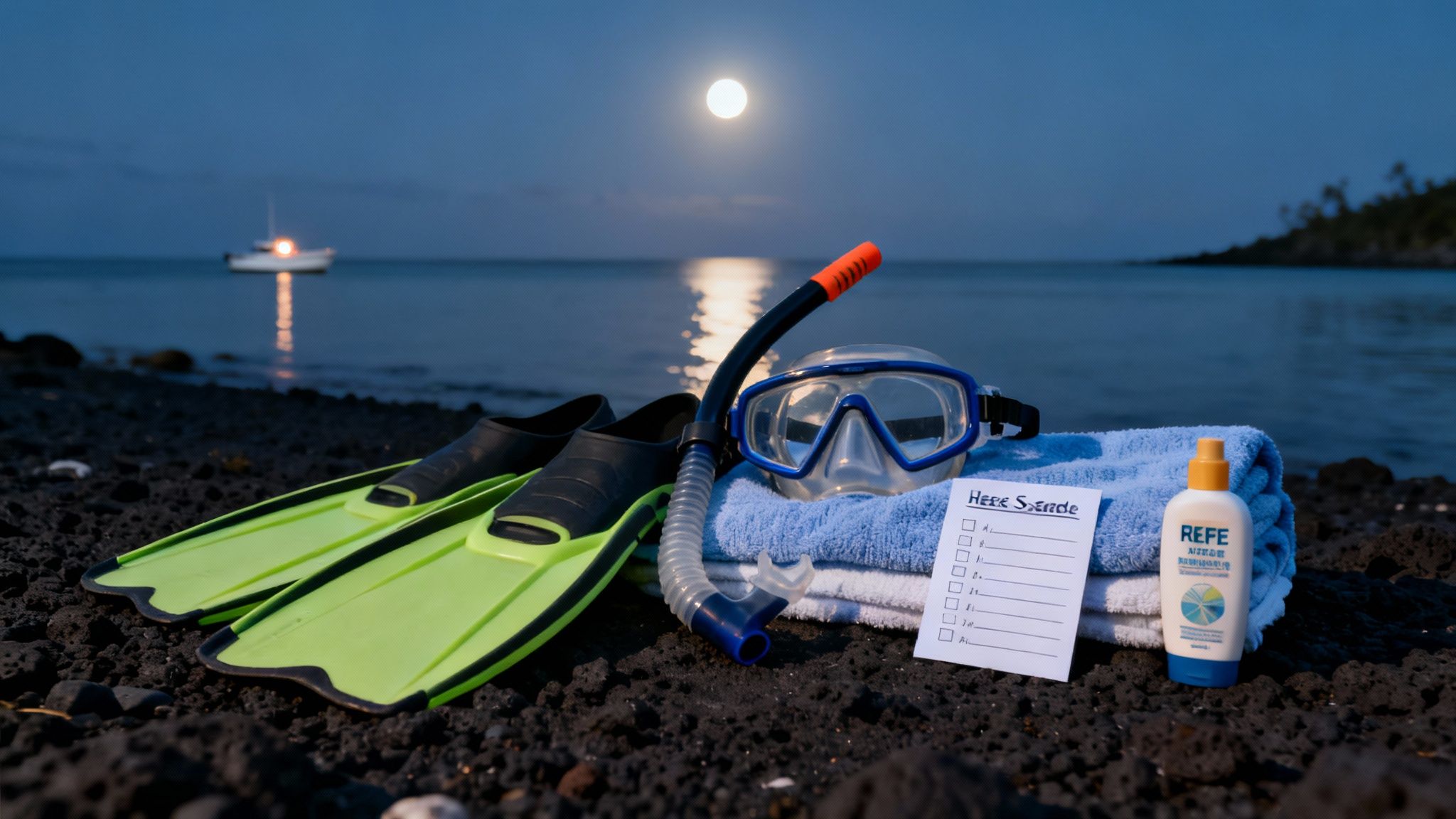
Packing the right stuff means you’ll be comfortable from the second you step on the boat until you’re back on solid ground. We provide all the essential snorkel gear and safety equipment, but a few personal items will make your trip even better.
Think of it like getting ready for a cozy evening by the water, but with a way more exciting main event. Here’s a quick checklist of what to toss in your bag:
- Towel and Dry Clothes: This is a non-negotiable. After your snorkel, you’ll be so glad you have a warm towel and a dry set of clothes for the boat ride back to the harbor. That night air can feel a little brisk after you've been in the water.
- Reef-Safe Sunscreen: If you're on a sunset tour that heads out before dark, make sure to apply some reef-safe sunscreen. The chemicals in regular sunscreen are incredibly harmful to Hawaii’s fragile coral reefs.
- Swimsuit: The easiest thing to do is just wear your swimsuit under your clothes to the boat. That way, you're all set to go.
- Light Jacket or Sweatshirt: The ride back can get chilly, especially with the ocean breeze. A warm layer will make that journey home much more pleasant.
- Reusable Water Bottle: Staying hydrated is always a good move. Most tours have water, but bringing your own bottle is handy and better for the planet.
The name of the game is comfort. Being ready with these simple things lets you soak in every magical moment without giving a second thought to being cold or unprepared.
Tackling Common Concerns Head-On
It's only natural to have a few questions, especially if this is your first time snorkeling at night. Let's tackle some of the most common worries so you can show up feeling totally at ease.
First up: seasickness. The boat ride to the manta sites is usually pretty short—often just 10-15 minutes—but some people are just more sensitive to the motion of the ocean. If you know you’re prone to getting queasy, taking something like Dramamine about an hour before the tour is a great idea. That one simple step can make all the difference.
What about the water temperature? The Pacific is warm all year, but it can definitely feel a bit cooler at night. That’s why we provide high-quality wetsuits. They don't just keep you warm; they also give you extra buoyancy, which makes floating on the surface even more effortless.
And finally, the big one: swimming in the dark. It sounds way more intimidating than it is. In reality, it's one of the most peaceful parts of the whole experience. The powerful lights on the float board create a brilliantly lit underwater stage for the manta rays. Your focus will be completely locked on these majestic creatures gliding through the beams of light, and any nerves about the dark water just melt away. Plus, our guides are in the water with you the entire time, making sure everyone is safe and looked after.
Snorkeling Safely and Respectfully with Manta Rays
When you join a manta ray night snorkel in Kona, you’re more than just a spectator—you become a guest in their underwater home. This incredible experience comes with a big responsibility to protect the gentle giants you’ve come all this way to see.
The number one rule is simple but absolute: look, but don't touch. This isn't just a friendly suggestion; it's the most critical guideline for the well-being of the manta rays and for preserving this magical encounter for everyone who comes after you.
Why Touching Manta Rays Is Harmful
Imagine a manta ray’s skin is covered by a delicate, protective slime coat. This mucous layer is their first line of defense against nasty bacteria and parasites in the ocean, working a lot like how our own skin protects us from getting sick.
When someone touches a manta ray, even with the best intentions, it can rub off this essential coating. That leaves the manta vulnerable to infections and diseases it would otherwise be shielded from. Sticking to a strict no-touch policy is the most important way we can show our respect and be passive observers in their world.
The heart of a sustainable manta ray encounter is passive observation. By just floating and watching, we let the mantas behave naturally without causing them stress or harm. We keep their home a safe sanctuary.
The Floating Light Board: Your Key to Safe Viewing
So, how do you get a front-row seat without getting in the way? The answer is our custom-designed floating light board. This clever piece of gear is central to the entire experience.
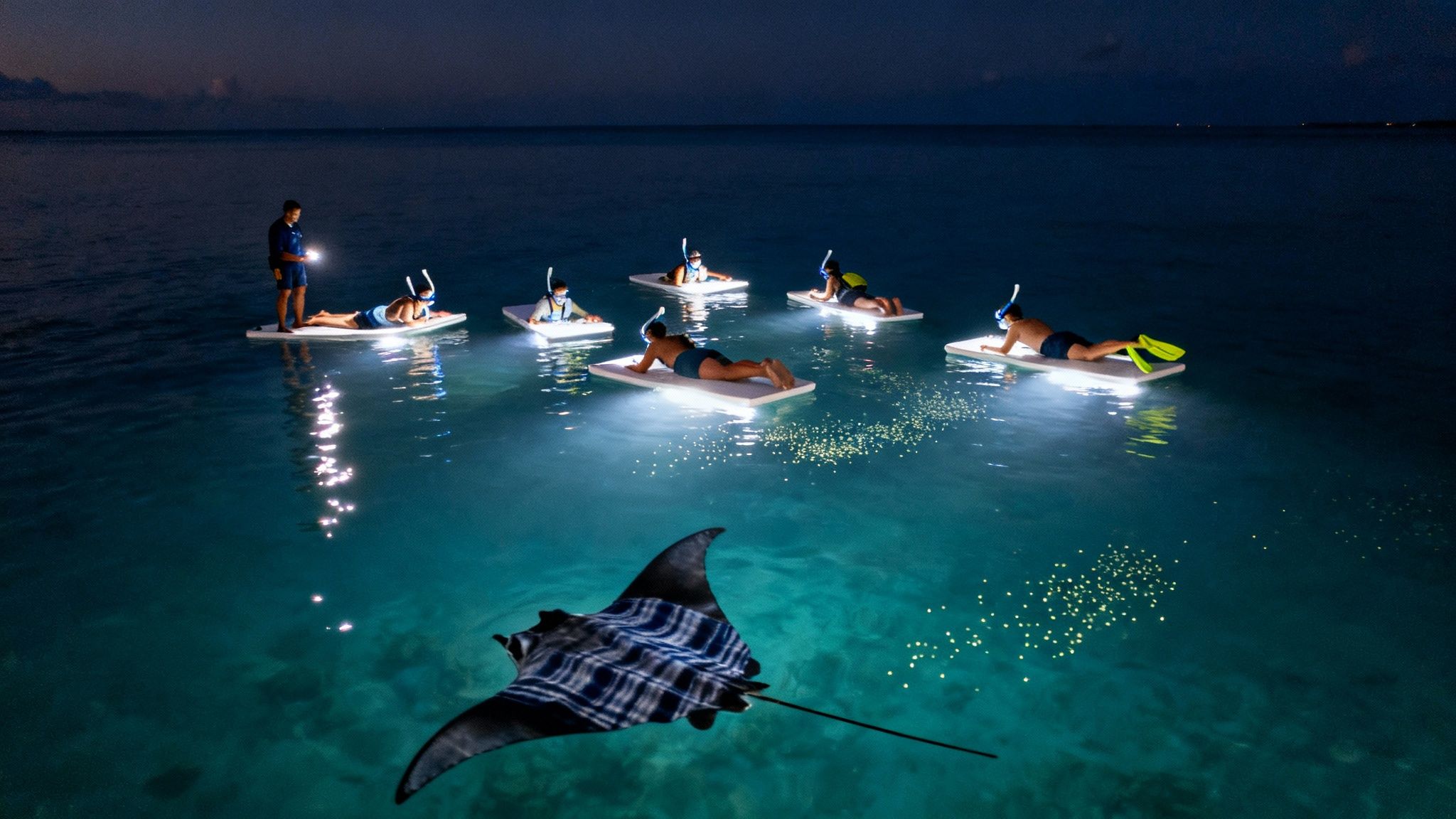
You and the other snorkelers will hold onto the edges of a large, buoyant raft that shines powerful lights down into the water. This setup is brilliant for a few reasons:
- It gives you stability: No need to swim or tread water. Just hold on, float comfortably, and enjoy the show. It’s perfect for all ages and swimming abilities.
- It keeps everyone in a safe spot: By gathering everyone around the board, it prevents snorkelers from swimming off and accidentally getting too close to the mantas.
- It sets the "dinner table": The bright lights attract plankton, which in turn brings the mantas right below you for their nightly feast.
This whole system lets you stay put, safe and sound, while the underwater ballet unfolds just inches beneath you. It’s a perfectly designed setup that puts your amazing view and the mantas' safety first. To feel even more prepared, check out our comprehensive guide on snorkeling safety tips.
Choosing an Eco-Conscious Operator
The tour operator you choose makes a huge difference in supporting conservation. When you book with a company like Kona Snorkel Trips, which is deeply committed to eco-friendly practices, you’re actively helping to preserve these magnificent creatures and their fragile ocean home.
Responsible operators follow strict guidelines, teach their guests the right way to act in the water, and work hard to build a deep sense of respect for the marine environment. Making that conscious choice means your unforgettable memory doesn't come at the expense of the animals you admire. It turns your trip into a positive force for conservation, helping protect Kona's manta ray population for years to come.
Got Questions About the Manta Ray Night Snorkel? We’ve Got Answers.
Jumping into a nighttime ocean adventure is a huge thrill, but it’s totally normal to have a few questions swirling around before you take the plunge. We get it. Feeling confident and prepared is the key to turning any pre-trip jitters into pure excitement.
This is where we clear everything up. We’ve heard every question in the book, so we’ve put together straightforward answers to help you know exactly what to expect. From safety concerns to the odds of seeing these gentle giants, we'll cover the details so you can book your trip and get ready for a magical night on the water.
Is This Manta Ray Snorkel Safe for Beginners and Kids?
Absolutely. This experience is designed from the ground up to be safe and welcoming for everyone, even if you’ve never put on a snorkel mask in your life. Here at Kona Snorkel Trips, and with any reputable operator, safety is always priority number one.
Before you even dip a toe in the water, the guides run through a detailed safety briefing. They’ll get you kitted out with all the gear, including snug wetsuits that keep you warm and add a bit of extra buoyancy. The real game-changer is the floating light board—a custom-built raft with handles and powerful lights. You simply hold on, float comfortably, and watch the show below. No strong swimming skills needed. You just relax.
It’s a fantastic outing for families, too. Most kids who are comfortable in the water have an incredible time, but it’s always smart to double-check the minimum age with your tour company. With guides in the water right alongside you the whole time, everyone can feel secure and just soak in the wonder.
What Are My Chances of Actually Seeing Manta Rays?
Your chances are incredibly high. That’s what makes this one of the most reliable and famous wildlife encounters on the entire planet. Day in and day out, the success rate for seeing mantas hovers between 80% and 90%.
This isn't just good luck; it's a finely tuned system that works with the mantas' natural behavior. The powerful, eco-friendly lights on the snorkel boards attract swarms of plankton, which is the mantas' favorite food. We’re essentially setting up a nightly "dinner bell" for the local manta population, and they know just where to find it.
Now, they are wild animals, so a sighting can never be 100% guaranteed. But the setup in Kona is so consistent that most operators have a "manta guarantee." On the very rare night the mantas decide not to show, they’ll usually let you come back another night for free.
What’s the Best Time of Year for the Manta Ray Snorkel?
Here’s one of the best parts: any time is a great time! The manta ray night snorkel in Kona is a spectacular, year-round event. Unlike whale watching or other seasonal wildlife tours, our resident manta rays are here feeding all 12 months of the year.
The Kona coast waters stay comfortably warm, and the plankton they feed on is a constant presence. Whether you’re planning a trip for spring break, a summer vacation, or a winter getaway, your odds of an amazing encounter are just as good. You can book your adventure based on your own schedule, not a narrow window of opportunity.
This year-round consistency is what truly makes the Kona manta ray snorkel so special. It offers incredible flexibility for anyone planning their dream trip to Hawaii.
Can I Touch the Manta Rays?
No, and this is the single most important rule of the experience. It is absolutely forbidden to touch the manta rays, and for a very good reason: their health.
Manta rays are covered in a protective mucus layer—think of it as their skin’s immune system. This slime coat is their first line of defense against harmful bacteria and infections in the ocean.
When a person touches a manta, that friction can rub off their protective coating, leaving them vulnerable to disease. To protect Kona’s beloved manta ray population for generations to come, every responsible tour company enforces a strict "passive observation" rule. You just float, watch, and let them do their thing. They might glide inches from you, but it’s crucial to let them control the encounter. By simply observing, you become a partner in their conservation.