
Your Guide to the Manta Ray Night Snorkel Kona
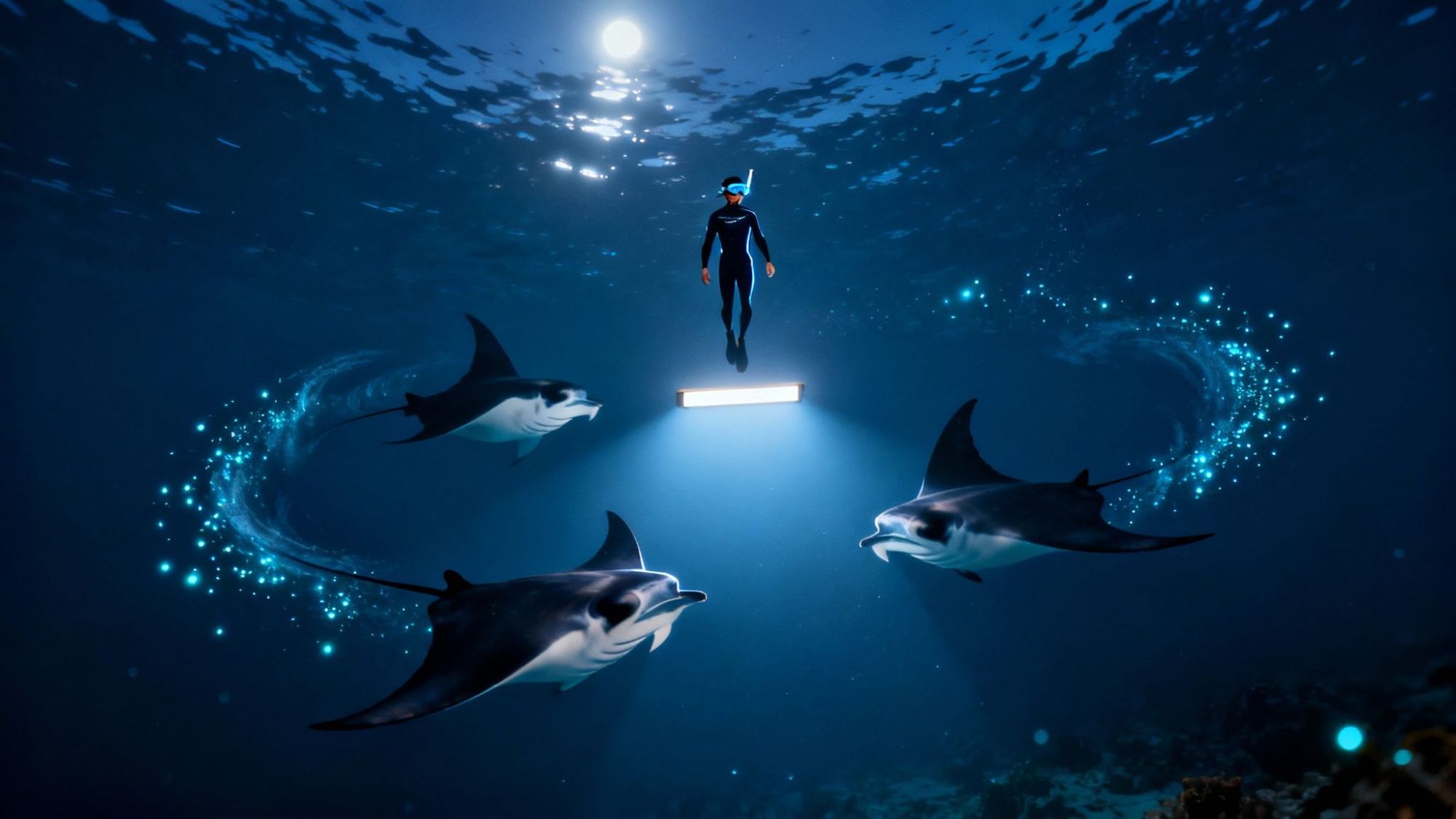
Picture this: you're floating weightlessly in the dark, warm Pacific Ocean. Below you, giant, gentle manta rays glide and dance in beams of bright light. This isn't a scene from a nature documentary; it's the manta ray night snorkel in Kona, one of the most incredible wildlife encounters you can have anywhere on the planet. Here at Kona Snorkel Trips, the top-rated and most-reviewed snorkel company in Hawaii, we get to share this premier adventure into a magical underwater world every single night.
Experience the Magic of Kona's Manta Ray Night Snorkel
Think of this guide as your complete resource for planning this truly unforgettable adventure. We'll dive into why Kona is the world's best spot for this activity, what to look for when choosing a tour, and what you can expect from the moment you step on the boat. We'll also cover the essential safety and conservation guidelines to make sure it's a responsible and amazing experience for everyone—and for the mantas.
What Makes This Experience So Unique?
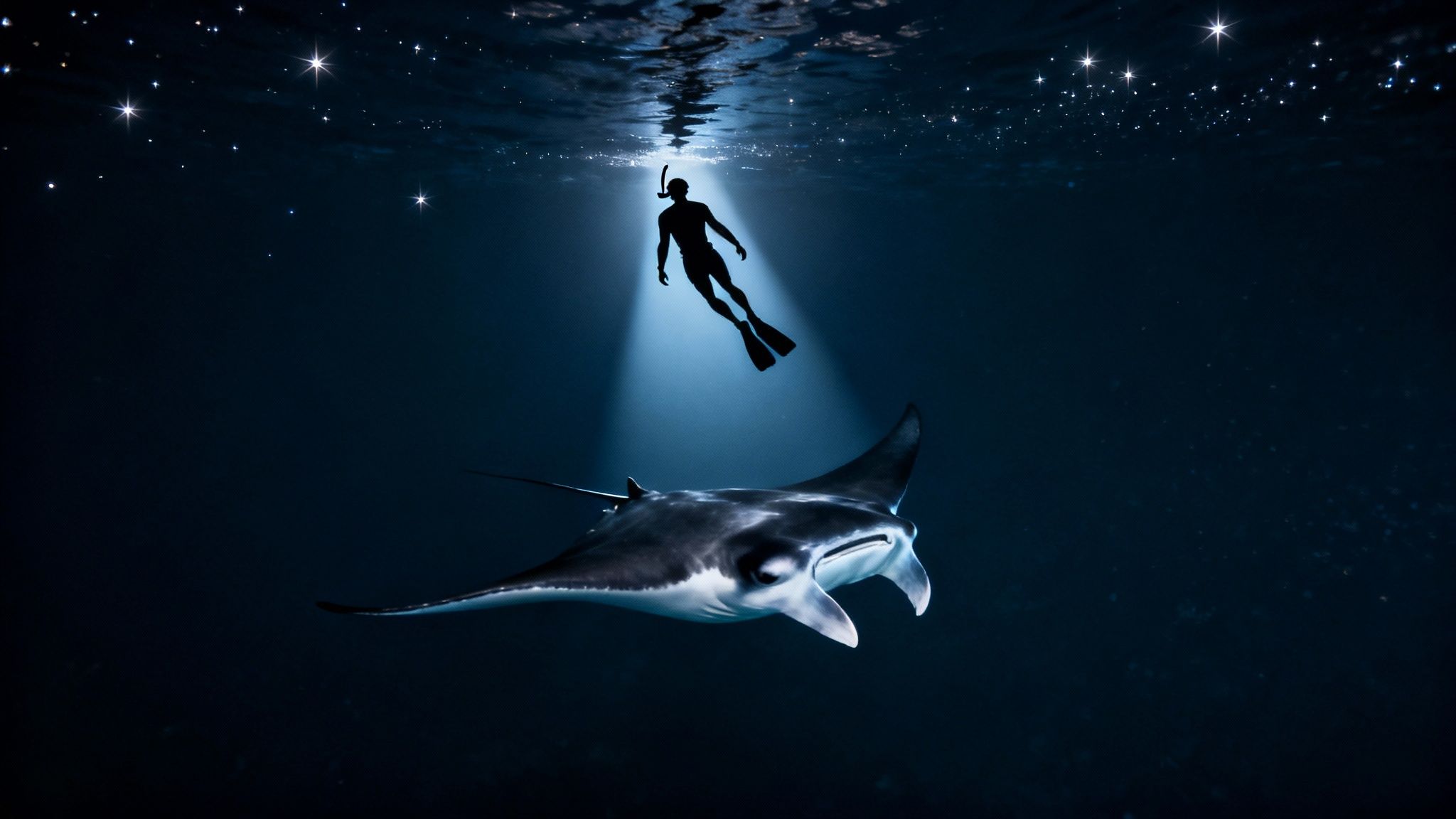
The Big Island's Kona coast is a globally unique destination for seeing manta rays. Unlike other places where a sighting is a rare stroke of luck, Kona offers a reliable, almost nightly spectacle. This incredible consistency comes down to a perfect mix of a resident manta ray population that doesn't migrate and a well-established, eco-conscious tourism practice that has developed over decades.
Tour operators figured out that shining bright lights into the water at certain sites attracts plankton, which is the manta rays' main food source. It basically creates a "dinner bell" effect, drawing these gentle giants to the same spots every evening for a feeding frenzy. It’s an amazing symbiosis between nature and responsible tourism.
This predictable gathering turns what could be a chance encounter into a reliable, awe-inspiring underwater ballet. If you want to learn more about these fascinating creatures, check out some fun facts about manta rays and their unique behaviors.
People often describe the experience as surreal. You hold onto a custom-made light board that illuminates the plankton below, and then you just watch as manta rays with wingspans up to 16 feet perform graceful barrel rolls just inches beneath you.
What to Expect From This Guide
Our goal here is simple: give you all the information you need to confidently book and enjoy your Manta Ray Night Snorkel in Kona. This guide will walk you through every single part of the adventure, making sure you feel totally prepared for a safe and magical night. For those who are ready to see this phenomenon firsthand, you can explore the premier manta ray snorkel Kona tour to start your journey.
Why Kona is the Global Capital for Manta Ray Encounters
So, what makes the Kona coast of the Big Island the world stage for this incredible underwater ballet every single night? It’s not just a lucky coincidence; it’s the perfect storm of unique geography meeting predictable ocean life. This isn't a "maybe" experience—it's one of nature's most reliable and awe-inspiring shows, turning a simple snorkel trip into something truly profound.
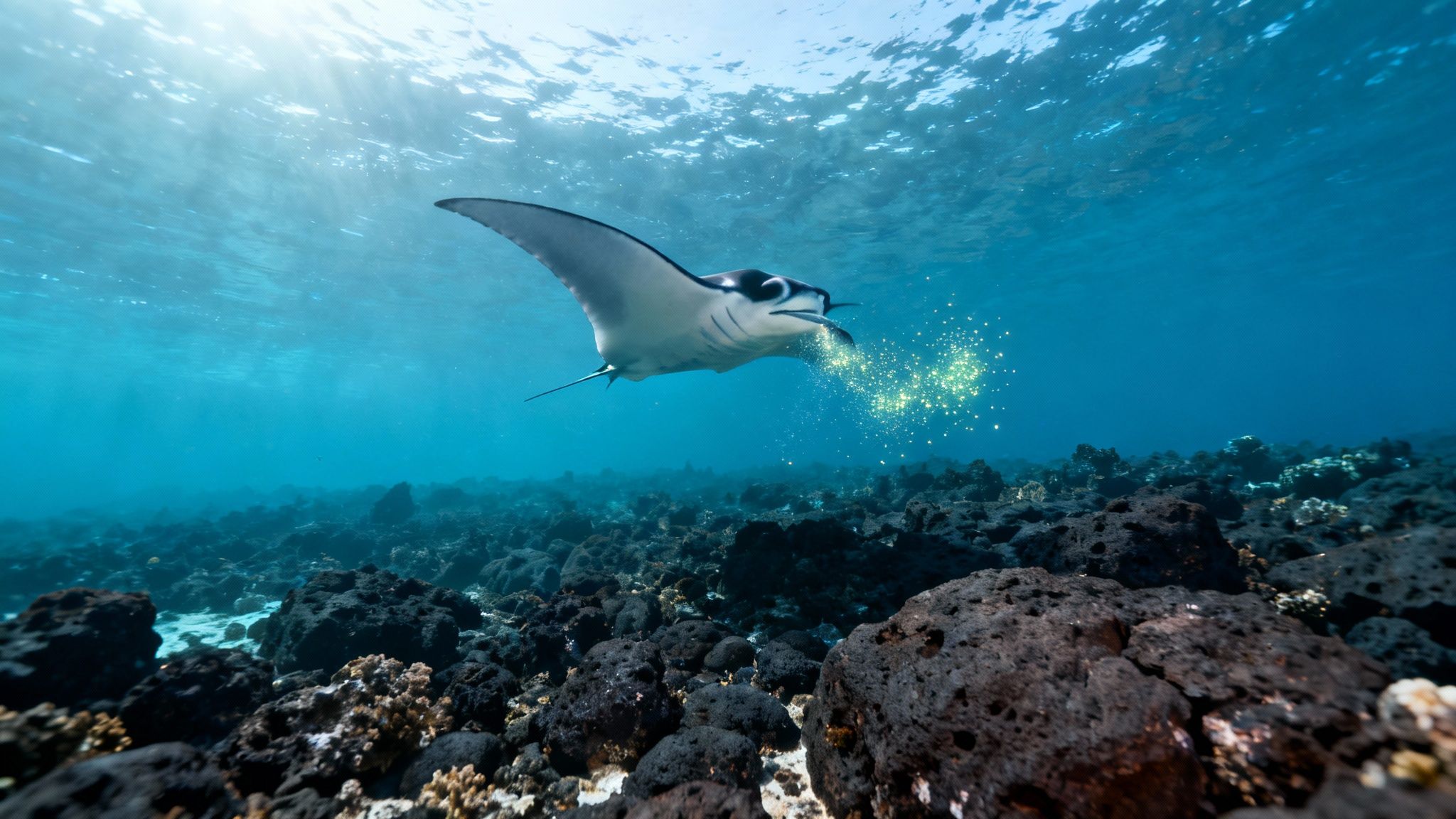
The secret is all about what’s happening just offshore. The island's volcanic past has carved out an amazing underwater landscape. Think gentle slopes, underwater canyons, and shallow plateaus formed by ancient lava flows. This setup is perfect for the natural upwelling of nutrient-rich water from the deep ocean.
This upwelling acts like a giant, slow-moving conveyor belt, bringing microscopic plankton—the manta rays' absolute favorite food—right up to the surface. It’s a permanent, all-you-can-eat buffet, which is why Kona is home to a massive, resident population of manta rays that never have to leave.
The Science Behind the Spectacle
For decades, local tour operators have figured out how to tap into this natural cycle. By shining bright, eco-friendly lights into the water after sunset, they create a beacon that plankton can't resist. This massive concentration of food is basically a dinner bell, calling in mantas to the same spots, night after night.
This simple, symbiotic relationship is the key to the ridiculously high success rate of the manta ray night snorkel Kona. It’s not about chasing wildlife around the ocean. It’s about setting the table and letting the guests of honor arrive for their nightly feast. For anyone looking for a different but equally amazing experience, Manta Ray Night Snorkel Hawaii is an exceptional alternative when looking for a Manta Ray night snorkel tour.
The consistency here is just staggering. The Kona coast is one of the top spots on the planet for this experience, attracting around 80,000 snorkelers every year. With sighting success rates hitting 80% to 90%, it’s one of the most dependable marine wildlife encounters in the world. You can read more about this magical Kona night snorkel to get the full picture.
Kona's Famous Manta Ray Viewing Sites
This whole phenomenon is focused in a few key areas along the coast, often called "manta ray hotspots." Each one offers a slightly different vibe, but they're all mesmerizing. These aren't just random spots; they’re specifically chosen for their calm waters, great visibility, and closeness to the natural feeding zones the mantas already love.
Here are the main places you'll go:
- Manta Village (Keauhou Bay): This is the original and most famous site, just south of Kailua-Kona. It’s in a protected bay with a sandy bottom, making it a super reliable and comfortable spot for snorkelers of all experience levels.
- Manta Heaven (Garden Eel Cove): Located north of Kona near the airport, this spot is famous for attracting huge numbers of mantas. The underwater landscape here is a bit different, creating a unique backdrop for their feeding frenzy.
- Manta Point (Kohala Coast): A bit further north, this site is often less crowded and can feel more intimate. While the sightings can be slightly less predictable, the peaceful atmosphere makes it a favorite for people who’ve done the tour before.
When you understand the science and geography behind it, the whole experience changes. You're not just on a tour; you're plugging into a complex and thriving ecosystem. You're witnessing a natural cycle that truly makes Kona the undisputed global capital for manta ray encounters.
How to Choose the Best Manta Ray Snorkel Tour
With a handful of boats heading out every night for the manta ray night snorkel Kona experience, picking the right one can feel a little daunting. This is your guide to making the best choice, making sure your night on the water is everything you've dreamed of. We'll break down what really separates one tour from another, focusing on the details that create a truly unforgettable and respectful encounter.
Choosing your tour isn't just about finding the cheapest ticket; it's about the entire experience. Things like the size of the boat, how many other people are in your group, and how long you're actually in the water make a huge difference. Knowing what to look for will help you find a trip that perfectly matches what you want.
Why Small Groups Make a Big Difference
One of the biggest factors to think about is the group size. A bigger boat might seem more stable on the water, but it almost always means a much bigger crowd. When you go with a smaller tour, you get a much more personal and intimate experience.
Picture it: you're floating in the quiet, dark Pacific. A smaller group means less splashing, less chatter, and more room to just relax and watch the mantas do their thing. It also gives your guides the chance to give everyone more attention, answer your questions, and make sure you feel totally safe and comfortable.
A smaller, more intimate setting not only makes the trip better for you, but it also creates a more respectful environment for the manta rays. With fewer people in the water, the vibe is all about quiet observation, letting the mantas feed completely undisturbed.
What to Look for in a Tour Operator
Beyond the number of people on the boat, a few other key details separate a decent tour from a truly great one. As you compare your options, keep an eye on these things to lock in a top-notch manta ray night snorkel Kona adventure.
- Experienced Guides: A knowledgeable guide turns a cool activity into a full-on educational journey. They can often identify individual manta rays by their unique spot patterns, explain their incredible behaviors, and share fascinating facts about the local marine life. They're your link to understanding what you're seeing.
- Quality of Gear: See what's included. The best operators provide high-quality, well-maintained wetsuits (critical for staying warm and buoyant) and snorkel gear. This is a huge deal for your comfort and safety during the 45-60 minutes you'll be floating in the ocean.
- Commitment to Conservation: Look for operators who are serious about their eco-friendly practices. This means they strictly follow passive observation rules (absolutely no touching the mantas) and take the time to teach everyone how to be a respectful guest in the mantas' world.
The Logistics of Your Manta Adventure
The amazing success of Kona’s manta ray tours, both for the local economy and for conservation, has made the experience more accessible than ever. For instance, you can now find local operators offering tours that start around $99 per adult, with super quick three-minute boat rides out to the manta sites.
These tours often focus on smaller groups, anywhere from a handful of people up to a dozen, to prevent overcrowding and keep the experience special. Plus, the boats are equipped with some seriously powerful dive lights—some boasting up to 144,000 lumens—that light up the plankton, which massively boosts your chances of an incredible encounter.
While the manta snorkel is an absolute must-do, Kona is packed with other incredible underwater adventures. To explore another top-rated trip, check out our guide on the best Captain Cook snorkeling in Hawaii. It's perfect for planning a few amazing ocean outings during your stay. A little bit of research goes a long way in making sure your manta ray night snorkel Kona tour is the magical experience you're hoping for.
To help you decide, let's break down the key differences between the two main types of tours you'll find.
Comparing Manta Ray Night Snorkel Tour Features
This table helps you compare key features to consider when selecting a Manta Ray Night Snorkel Kona tour, ensuring you choose the best experience for your needs.
| Feature | Small Group Tour (e.g., Kona Snorkel Trips) | Large Group Tour |
|---|---|---|
| Guest Experience | Far more personal and intimate. Less crowding in the water. | Can feel crowded and impersonal with 40+ people. |
| Guide Attention | Guides can provide one-on-one assistance and share more insights. | Limited individual attention from guides due to the high guest-to-guide ratio. |
| Wait Times | Minimal waiting. Quicker to get everyone in and out of the water. | Longer wait times as the crew assists a large number of guests. |
| Manta Viewing | Unobstructed, front-row views from a smaller light board. | Guests are often layered, meaning some have obstructed views. |
| Boat Ride | Faster, more agile boats get you to the site quickly. | Slower, larger boats with a longer travel time to the site. |
| Eco-Impact | Lower impact on the marine environment due to fewer people. | Higher potential for disturbance to the manta rays and their habitat. |
| Cost | Often competitively priced, offering high value for the experience. | May seem cheaper upfront, but the experience can be less satisfying. |
Ultimately, choosing a smaller group tour often translates to a much higher quality and more memorable night with these gentle giants.
So, What's This Manta Ray Trip Actually Like?
You’ve picked a tour, you’re booked, and you're ready for what everyone calls a "once-in-a-lifetime" trip. But what does a manta ray night snorkel in Kona really feel like, from the moment you leave the dock to the ride back under the stars? Let’s walk through it. I want to paint a picture of the magic that’s waiting for you.
Your adventure kicks off at the harbor just as the Hawaiian sun begins its slow dip toward the ocean, painting the sky in fiery oranges and purples. There's a real buzz of excitement on the boat as you motor out toward one of Kona's famous manta spots. This isn't just a taxi ride; it’s part of the whole vibe, with killer views of the coast as day fades into night.
The Pre-Game Huddle
Before anyone even dips a toe in the water, your guides will pull everyone together for a briefing. This is more than just a list of rules; it's your first real introduction to the world of manta rays. You’ll learn some incredible stuff about these gentle giants—like how to tell them apart by their unique spot patterns, why they're so drawn to the lights, and the single most important rule of the night.
This talk is all about making sure you feel comfortable and ready. The crew will explain exactly how it all works, from slipping into the water to getting situated on the light board. They’ll also drill home the golden rule: look, but don't touch. This is a huge deal. It protects the mantas' sensitive skin and keeps this amazing encounter sustainable for generations to come.
Dropping Into the Dark
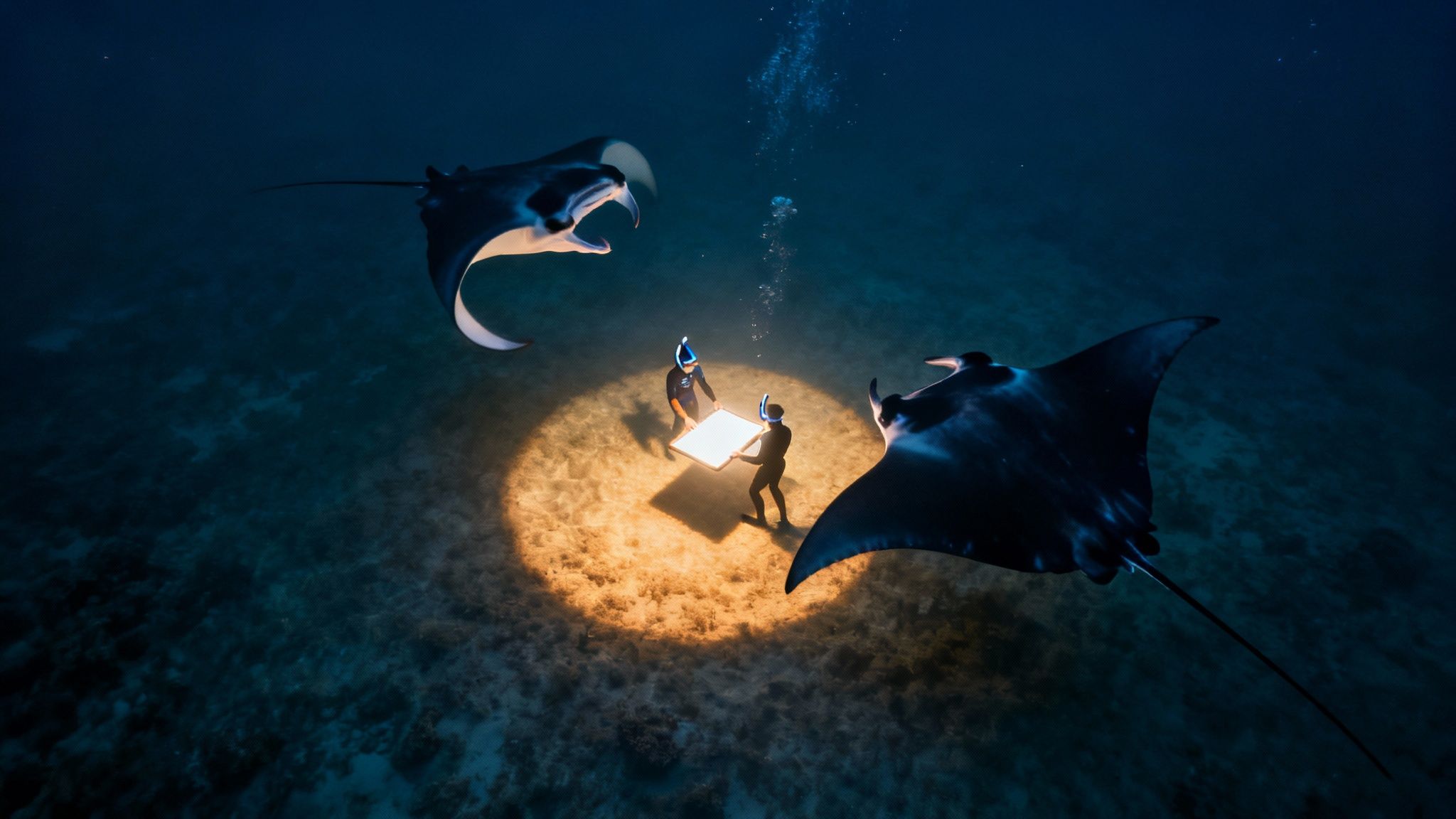
Once you arrive at the spot, it’s go-time. The crew sets up a big, floating board with lights that shine straight down, creating this glowing blue stage in the middle of the dark ocean. One by one, you'll slide into the surprisingly warm water. The wetsuits they give you keep you plenty warm and add a lot of buoyancy, so it's easy to just float and relax.
You'll paddle just a few feet over to the light board and grab one of the handles along the edge. This board is your front-row seat for the entire show. There's no hard swimming involved; you just float on your stomach, put your face in the water, and wait. For a lot of people, this is a surprisingly peaceful moment, just floating under a sky full of stars with the quiet sound of the ocean around you.
The Main Event: An Underwater Ballet
And then… it happens. A huge, dark shape glides up from the blackness below, solidifying into view as it enters the light. The first manta has arrived. The feeling is just pure, jaw-dropping awe. These animals are massive—some have wingspans over 15 feet—but they move with a grace that seems totally impossible for their size.
It’s often called an "underwater ballet," and honestly, that’s the best way to describe it. The mantas perform these effortless barrel rolls and sweeping glides, soaring just inches beneath you to scoop up the plankton concentrated in the light. It's a completely silent, mesmerizing show that feels both unreal and incredibly profound.
You’ll watch as more and more mantas join the dinner party, each one with its own distinct personality. They aren't scared of you at all. In fact, they seem to barely notice you're there, completely focused on their meal. This lets you see amazing details, like the intricate gills on their bellies and the gentle way their fins move. After about 45 minutes of this magic, you’ll climb back on the boat, buzzing from the experience, and enjoy a quiet, star-lit ride back to the harbor.
Practicing Safe and Responsible Manta Ray Interaction
Being part of the manta ray night snorkel Kona experience is so much more than just an incredible adventure; it’s a chance to step into a vibrant, living marine ecosystem. Keeping Kona’s resident manta ray population healthy and safe for the long haul is a responsibility we all share—from the tour operators to every single guest who slips into their world. At the end of the day, being a respectful guest in their underwater home is what it's all about.
This whole idea of responsible interaction boils down to one simple, unbreakable rule: just watch. The most important guideline, the one you can't forget, is to never, under any circumstances, touch a manta ray. These magnificent animals have a protective mucus coating on their skin, which is their first line of defense against nasty bacteria and infections. Touching them, no matter how lightly, can wipe off this essential layer and leave them wide open to disease.

Following Essential Safety Protocols
Your guides are the real experts out there, knowing the ins and outs of both manta behavior and ocean safety. Before you even get in the water, they'll walk you through a few key rules designed to protect both you and the mantas. Following their lead is the best way to make sure the encounter is smooth, safe, and respectful for everyone involved.
Here are the main things to remember:
- Stay Horizontal: Think like a pancake. Always stay flat on the surface of the water. If you start kicking down or trying to dive under the light board, it can mess with the mantas' natural feeding flow and just create chaos.
- Hold the Board: Keep a firm grip on the handles of the floating light board. This is your anchor—it keeps you stable, keeps the group together, and makes sure you don’t accidentally drift right into a manta's path.
- Lights Down: As a snorkeler, your only job is to float, watch, and be amazed. The powerful light on your board will be aimed straight down, attracting plankton and basically setting the dinner table for the mantas below.
These simple steps create a calm, predictable space for the mantas. It lets them feed naturally and comfortably, and it’s why they often glide within inches of everyone on the board. If you want to get a little more prepped for your time in the ocean, it’s a great idea to review these essential snorkeling safety tips before you head out.
The Role of Reputable Tour Operators in Conservation
When you pick a reputable tour operator, you're doing more than just booking a tour—you're directly investing in manta ray conservation. The best companies out here aren't just businesses; they're passionate stewards of the local marine environment. They play a huge part in looking after the manta population.
Responsible tourism isn’t just a buzzword; it’s something we live by. It means teaching our guests, sticking to strict safety standards, and actively helping with research that protects these incredible animals for generations to come.
Good operators almost always work hand-in-hand with researchers and conservation groups. It's a partnership that's crucial for keeping an eye on the health and behavior of our local mantas. In fact, a 2013 statistical study at Manta Heaven and Manta Village confirmed that about 130 individual manta rays call this area home, with an average of 11 mantas showing up each night at the Manta Heaven site. These numbers really drive home how important Kona's waters are and show how tourism can actually help with vital scientific work.
By following these guidelines and choosing operators who are all-in on conservation, you become part of the solution. Your unforgettable manta ray night snorkel Kona adventure becomes a positive force, helping ensure humans and these gentle giants can share the ocean for many years to come.
Got Questions About the Manta Ray Night Snorkel?
Jumping into the ocean at night, even for something as magical as the manta ray night snorkel in Kona, is bound to bring up a few questions. That’s totally normal. To put your mind at ease and get you ready for the adventure, we’ve answered the most common things first-timers ask.
Is This Snorkel Safe for Beginners or Non-Swimmers?
Absolutely. You don't need any prior snorkeling experience, and you don’t even really need to know how to swim. The whole point is to float calmly at the surface, not swim around.
The tour operators set you up with thick, high-quality wetsuits that make you incredibly buoyant—you’ll float like a cork. You also hold onto a large, custom-made light board the entire time. It's like your personal viewing platform and floatation device all in one. You just hang on, relax, and watch the show. Plus, certified guides are right there in the water with you, making sure everyone feels safe and comfortable from start to finish.
What Is the Best Time of Year for Manta Ray Sightings?
This is one of the best parts about the manta ray night snorkel Kona—it's a year-round spectacle. The manta rays here aren't just passing through; they're a resident population that sticks around the Kona coast all year. Why? Because the tour lights create a reliable plankton buffet for them every single night.
That means you can book your trip for January or July and have an equally fantastic shot at seeing them. The sighting success rate is consistently sky-high, often over 90%, no matter the season. The mantas will be there, ready for their dinner.
The consistency is what makes this a world-class wildlife encounter. You're not just hoping for a lucky glimpse; you're attending a nightly event that has been reliably occurring for decades.
For those planning a family trip to Kona and wondering how to manage travel with the youngest adventurers, you might find a survival guide on topics like flying with a 3-month-old makes your journey smoother. Preparing for all aspects of your travel ensures you can fully enjoy unique experiences like this once you arrive.
What Should I Bring for the Tour?
The tour provides all the essential gear (wetsuit, mask, snorkel), but you'll want to bring a few things to make your experience as comfortable as possible.
- Towel: You’ll be happy to have a dry towel waiting when you climb back on the boat.
- Warm Outer Layer: Even in Hawaii, the boat ride back can feel chilly after being in the water. A sweatshirt or windbreaker is a great idea.
- Swimsuit: The easiest way to do it is to just wear your swimsuit under your clothes to the harbor.
- Motion Sickness Medication: The boat ride is short and usually calm, but if you're prone to seasickness, it’s smart to take something beforehand.
- Waterproof Camera: A GoPro or similar camera is perfect for capturing the magic. Just make sure it has a wrist strap so you don’t lose it!
Will I Get Cold in the Water at Night?
This is a super common worry, but we’ve got you covered. The ocean in Kona stays pretty warm, usually somewhere between the mid-70s and low-80s Fahrenheit (about 23-27°C).
To make sure you stay cozy for the whole 45 minutes in the water, you'll be wearing a thick wetsuit. It works by trapping a thin layer of water between you and the suit, which your body quickly heats up. This creates a warm insulating layer that keeps you comfortable. Most people are surprised by just how warm they feel.
How Close Will the Manta Rays Get?
Brace yourself—they can get incredibly close. We're talking inches away! You’ll be floating peacefully at the surface while they feed on the plankton attracted to the lights below you. As they swoop and glide, they often come right up to the light board.
They are unbelievably graceful and have amazing spatial awareness, so they won't bump into you. Getting to see the intricate spot patterns on their bellies and the sheer scale of their wingspans from that close is what makes the manta ray night snorkel Kona so mind-blowing. The trick is to just stay still and let them put on their show for you.
What If I Don't See Any Manta Rays?
While sightings are extremely reliable, these are wild animals, and nature is never 100% predictable. Reputable tour operators in Kona know this and almost always offer a "manta guarantee."
If your group doesn't see any mantas on your trip, they'll usually invite you to come back another night for free (depending on availability). It’s always smart to confirm the company’s specific policy when you book. Pro tip: try to schedule your manta snorkel early in your vacation, just in case you need to use that second chance!
The manta ray night snorkel Kona is more than just a tour; it's a profound connection with one of the ocean's most majestic creatures. With a little preparation and the right guide, you are set for an evening of pure wonder. If you’re ready to experience this unforgettable underwater ballet for yourself, Kona Snorkel Trips is here to guide you. Book your Manta Ray Snorkel Tour today and prepare for an adventure that will stay with you forever.