
Kona Manta Ray Night Snorkel: Your Ultimate Guide
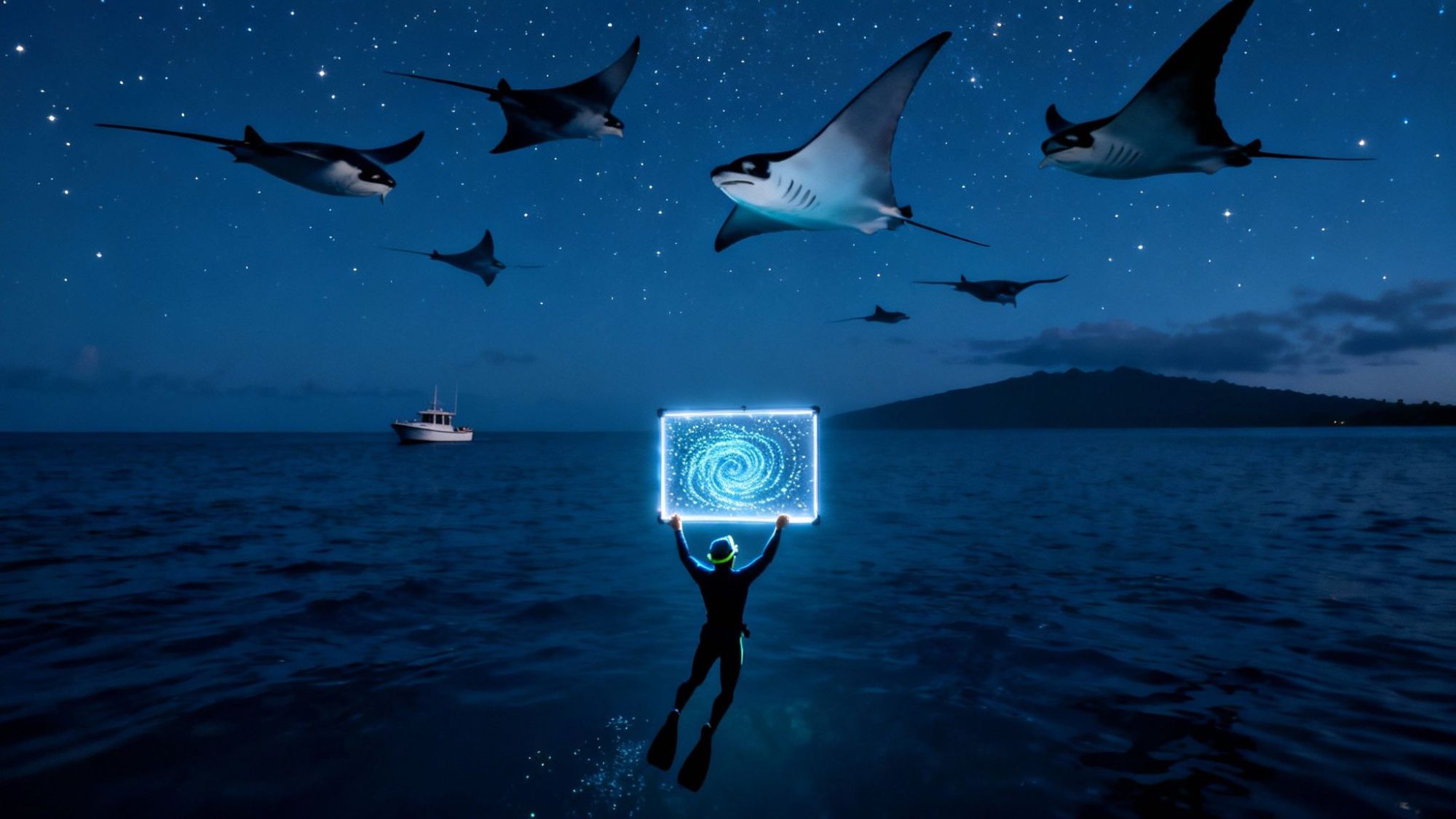
Picture this: you’re floating in the calm, dark Pacific Ocean. Just inches below you, giant, gentle manta rays glide and barrel roll in an otherworldly ballet. This isn't a scene from a nature documentary—it’s the very real, absolutely awe-inspiring Manta Ray Night Snorkel in Kona. Honestly, it's a must-do Hawaiian adventure that belongs on everyone's bucket list.
This guide is your complete playbook for planning this incredible experience from start to finish.
Your Guide to an Unforgettable Manta Ray Snorkel
First things first, let's talk about who to go with. We'll start with Kona Snorkel Trips, which happens to be the top rated & most reviewed snorkel company in Hawaii. You can see exactly what they offer on their manta ray tour page to get all the details. When looking for a Manta Ray night snorkel tour, we also really like Manta Ray Night Snorkel Hawaii as an exceptional alternative for your adventure.
Don't just take our word for it, though. Below, you can check out some real-time reviews from people who've just done the trip.
Why This Kona Experience Is So Unique
The manta ray night snorkel is so much more than just another tour. It’s a genuine connection with nature that very few people ever get to witness. It manages to be both thrilling and incredibly serene at the same time, creating memories that will stick with you forever.
And the best part? Unlike a lot of wildlife encounters that require long, bumpy journeys, this one is just a short boat ride from the Kona coast.
This adventure is consistently ranked as one of the top night dives and snorkels in the world. It’s an accessible, safe, and profoundly moving way to connect with the ocean's gentle giants.
For anyone passionate about marine life, there's a whole world of incredible diving and snorkeling adventures out there, but what Kona offers is truly in a class of its own. Capturing the magic is a big deal for most people, so it’s a great idea to brush up on our guide for how to take underwater pictures to make sure your photos do the moment justice.
What Makes This Guide Your Essential Planning Tool
I've put this guide together to walk you through every single step, from picking the right operator to knowing exactly what to expect once you’re in the water. My goal is to cover all the practical details so you feel totally prepared and genuinely excited.
We'll cover everything you need to know:
- Why Kona is the undisputed best place on earth for this specific activity.
- How to choose the perfect tour that fits your group’s vibe and needs.
- What you should pack and how to get ready for a comfortable night out on the water.
- The magical experience itself, breaking it down from the boat ride to the final goodbye.
By the time you're done reading, you'll have all the info you need to book with confidence and get ready for an absolutely extraordinary evening with Kona's majestic manta rays.
Why Kona Is the Global Manta Ray Capital
So, what makes the Kona coast the undisputed champion for manta ray night snorkeling? It's not just a lucky accident. It's a perfect storm of natural factors coming together in a way you won't find anywhere else on Earth.
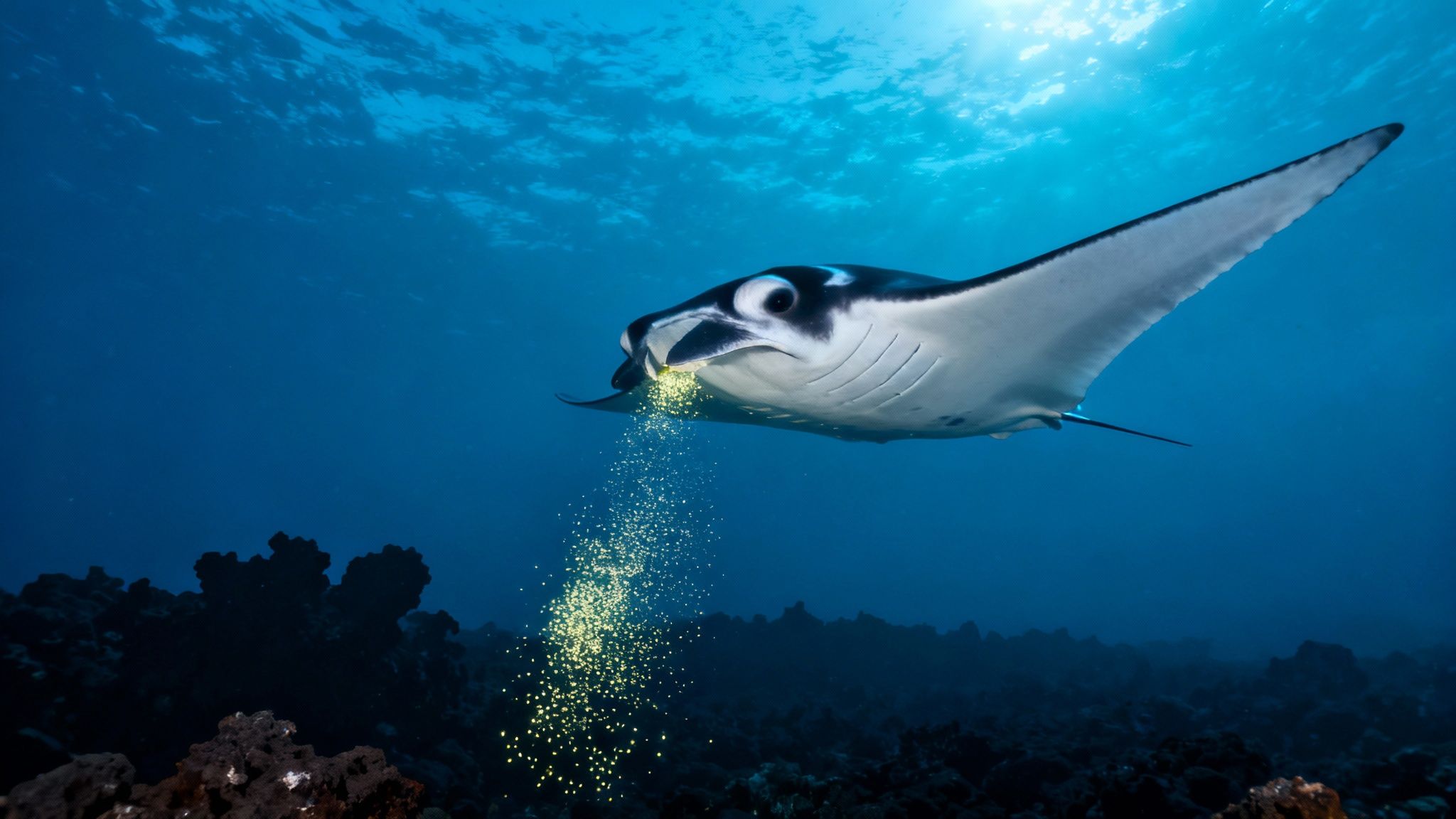
The secret sauce is the unique underwater geology, sculpted by ancient lava flows from Hualālai and Mauna Loa. This dramatic volcanic topography has created the perfect environment for a vibrant marine ecosystem to flourish. The nutrient-rich waters here support a massive and incredibly reliable population of plankton—the mantas' favorite meal. This year-round, all-you-can-eat plankton buffet is what draws these gentle giants so close to shore, night after night.
The Birth of a World-Class Encounter
This whole amazing experience started decades ago with a simple observation. Local operators noticed that the lights from a coastal hotel were attracting swarms of plankton, and right behind them came the manta rays. That lightbulb moment sparked an idea that has since blossomed into one of the most celebrated wildlife encounters on the planet.
Through years of trial, error, and careful refinement, tour companies figured out a safe, sustainable way to replicate this phenomenon out on the open water. They engineered custom light boards that essentially act as a "plankton dinner bell." These boards create a concentrated feast that brings the mantas directly to us, allowing for the remarkably consistent sightings that make the manta ray night snorkel kona experience so famous.
This dedication and innovation led to the discovery of a few legendary snorkel sites that are now household names for ocean lovers.
- 'Manta Village': Just off the Keauhou coast, this is the original and most famous site. It's the granddaddy of them all.
- 'Manta Heaven': A bit north of Kona, this spot lives up to its name, often attracting huge gatherings of mantas.
These aren't just random pins on a map. They are proven feeding grounds, backed by decades of observation and a deep understanding of manta behavior.
Kona's Unmatched Sighting Success
When we say Kona is reliable, we mean it. The success rate here is almost unbelievable compared to other wildlife encounters around the globe. Years of data show that the chance of seeing mantas during a night snorkel consistently hovers between 80% and 95%.
Breaking it down, 'Manta Village' boasts a sighting rate that's often above 95%, while 'Manta Heaven' isn't far behind with an impressive 90% success rate. Those aren't just marketing numbers; they're a testament to how special this place is. You can dig into more of the data on the remarkable consistency of Kona's manta ray sightings.
This isn't just another boat tour. It's a world-class wildlife interaction, built on a foundation of respect, conservation, and decades of shared passion for these incredible animals.
How to Choose the Perfect Manta Ray Tour
With a bunch of different companies offering a manta ray night snorkel in Kona, picking the right one can feel a bit like spinning a compass. It’s easy to just look at the price, but the real key is figuring out what kind of night you want to have. The boat size, how many people you'll be sharing the water with, and the overall vibe of the tour are what really shape the memory you'll take home.
The biggest decision you'll make is whether to go with a small, intimate tour or a big-boat excursion. One isn't necessarily "better" than the other—they just offer completely different ways to experience the magic of the mantas.
Small Group Tours vs. Large Vessel Excursions
Think of small group tours, like the ones we run at Kona Snorkel Trips, as a more personal, less hectic way to meet the mantas. With fewer people on board, you naturally get more time to chat with the guides and ask questions. This usually leads to a much calmer, more relaxed vibe in the water, letting you really soak it all in without feeling like you're in a crowd.
On the flip side, larger boats are generally more stable, which is a huge plus if you're worried about getting seasick. They also tend to be a little easier on the wallet, which helps make this incredible experience accessible for more people. The trade-off? You'll be sharing the view with a lot more snorkelers, creating a more bustling, high-energy atmosphere at the light board.
To help you decide what fits your style, let's break it down.
Comparing Manta Ray Tour Options in Kona
Choosing a tour is all about matching the experience to your expectations. Here’s a quick look at how the two main options stack up, so you can pick the best fit for you and your crew.
| Feature | Small Group Tours (e.g., Kona Snorkel Trips) | Large Vessel Tours |
|---|---|---|
| Group Size | Typically 6-15 people. It feels more like a private charter with new friends. | Often 20-50+ people, which means a livelier, more social atmosphere. |
| Boat Type | Usually smaller, faster boats that can get you to the site quickly. | Larger catamarans or big vessels that offer a super stable ride and more deck space. |
| Guide Interaction | Tons of one-on-one attention. Guides get to know you and share incredible details. | Guides are managing a larger group, so interactions might be less personal. |
| In-Water Experience | More personal space to float and watch the manta ballet without bumping elbows. | Can get pretty busy around the light board. You’ll need to be more aware of others. |
| Best For | Anyone looking for a quieter, more intimate connection with the mantas and guides. | Budget-conscious travelers or those who prefer the stability and space of a larger boat. |
At the end of the day, it's about what makes you comfortable. We find that people love our small-group trips because our expert guides and focus on safety make everyone feel confident, letting them focus on the absolutely breathtaking show happening just inches below them.
When you book a tour, you’re not just buying a ticket—you're investing in an unforgettable experience. Going with a reputable operator known for safety and respecting the mantas is the best way to make sure your adventure is both magical and responsible.
Once you've figured out what kind of tour is right for you, the next step is locking in your spot!
Preparing for Your Night Snorkel Adventure
A little prep work goes a long way in making your manta ray night snorkel an experience you'll never forget. With just a few insider tips, you can stop worrying about the small stuff and just soak in the incredible marine ballet that’s about to unfold. We’ve learned these tricks from years out on the water, and they make a world of difference.
Here’s the biggest pro tip we can offer: arrive ready to go. Wear your swimsuit under your clothes to the harbor. It’s a simple thing, but it saves you the hassle of changing in a cramped space on the boat. That means more time to relax and enjoy the sunset cruise out to the manta site.
What to Pack for the Trip
Your packing list is pretty straightforward. You’re mainly thinking about comfort before and after you hit the water. The boat ride back can get surprisingly chilly once the sun is down and you’re damp from the snorkel, so being prepared is key.
Here’s a quick checklist of what to throw in your bag:
- A big, fluffy towel for drying off.
- Dry clothes or a warm cover-up (a hoodie is perfect) for the ride back.
- A reusable water bottle to stay hydrated.
- A waterproof camera like a GoPro if you want to capture the magic. Just make sure it’s securely strapped to your wrist!
If you want a more detailed breakdown, check out our complete guide on what to wear for snorkeling; it's packed with helpful suggestions.
Tackling Motion Sickness Head-On
Worrying about getting seasick is totally normal, but don't let it stop you from having this amazing adventure. The boat ride is usually pretty short, but hey, the ocean does what it wants. If you know you're prone to motion sickness, a little planning makes all the difference.
Consider taking a non-drowsy Dramamine or Bonine about an hour before the tour. Once you're on board, try to snag a seat in the middle of the boat where there's less rocking. And here's a classic sailor's trick that really works: keep your eyes fixed on the stable horizon line instead of looking down at the boat or the waves.
The All-Important Safety Briefing
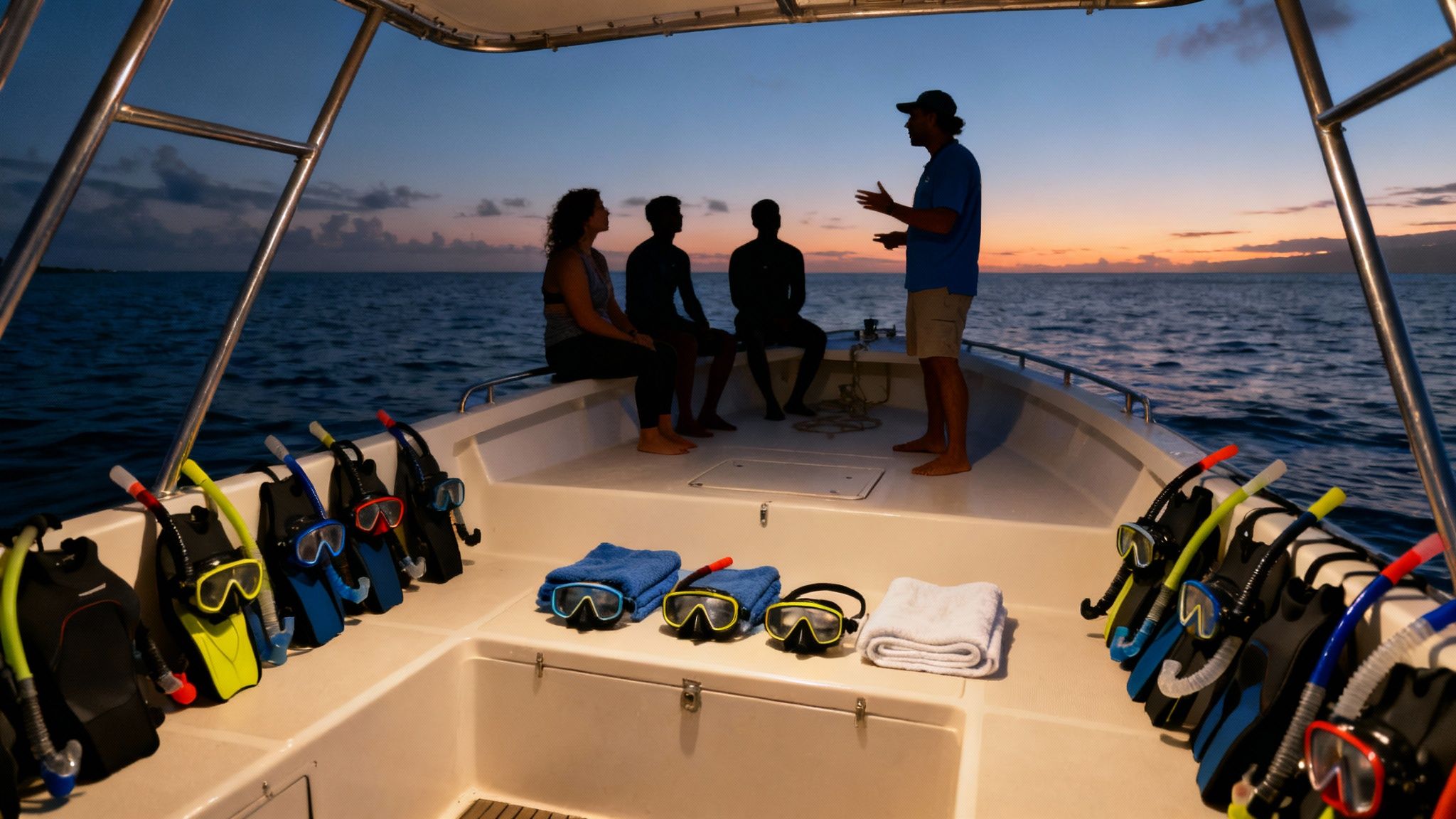
Before anyone gets in the water, our crew will run through a thorough safety briefing. This isn't just a formality—it’s absolutely crucial for your safety and for the well-being of the manta rays. We'll cover the "rules of engagement," which are all about creating a passive, respectful viewing experience.
Pay close attention here. This is where you'll learn how to hold onto the light board, position yourself in the water, and most importantly, the golden rule of manta encounters: observe only, do not touch. This protects the delicate mucous coating on the mantas' skin and ensures they keep feeling safe enough to visit these sites for generations to come.
What to Expect During Your Manta Encounter
The boat ride is over, the safety briefing is done, and now it’s the moment you've been waiting for. Slipping into the dark, surprisingly warm Pacific water feels like entering another world entirely. You’ll feel a mix of quiet anticipation and the gentle hug of your wetsuit as you paddle over to the custom-built light board.
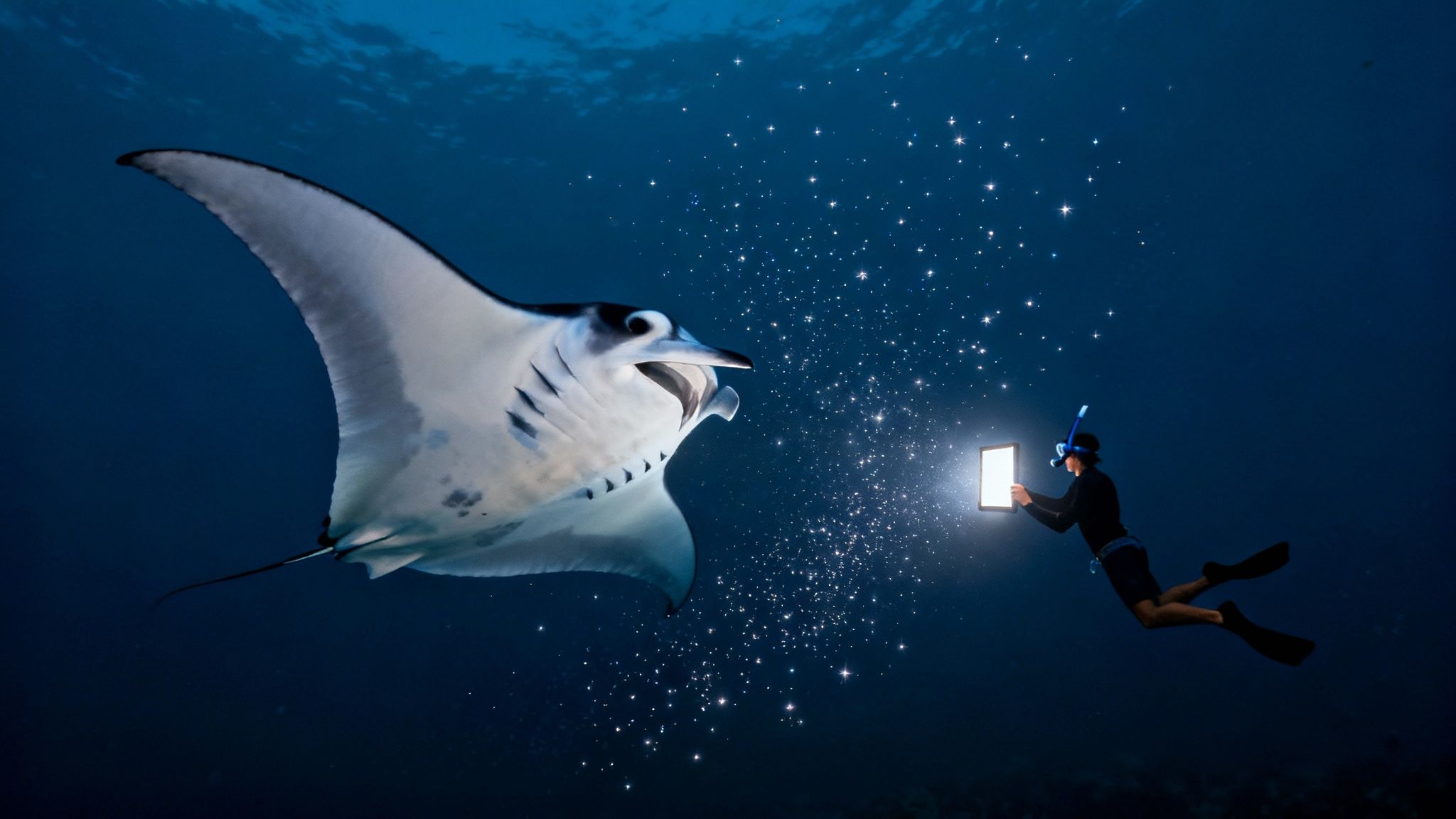
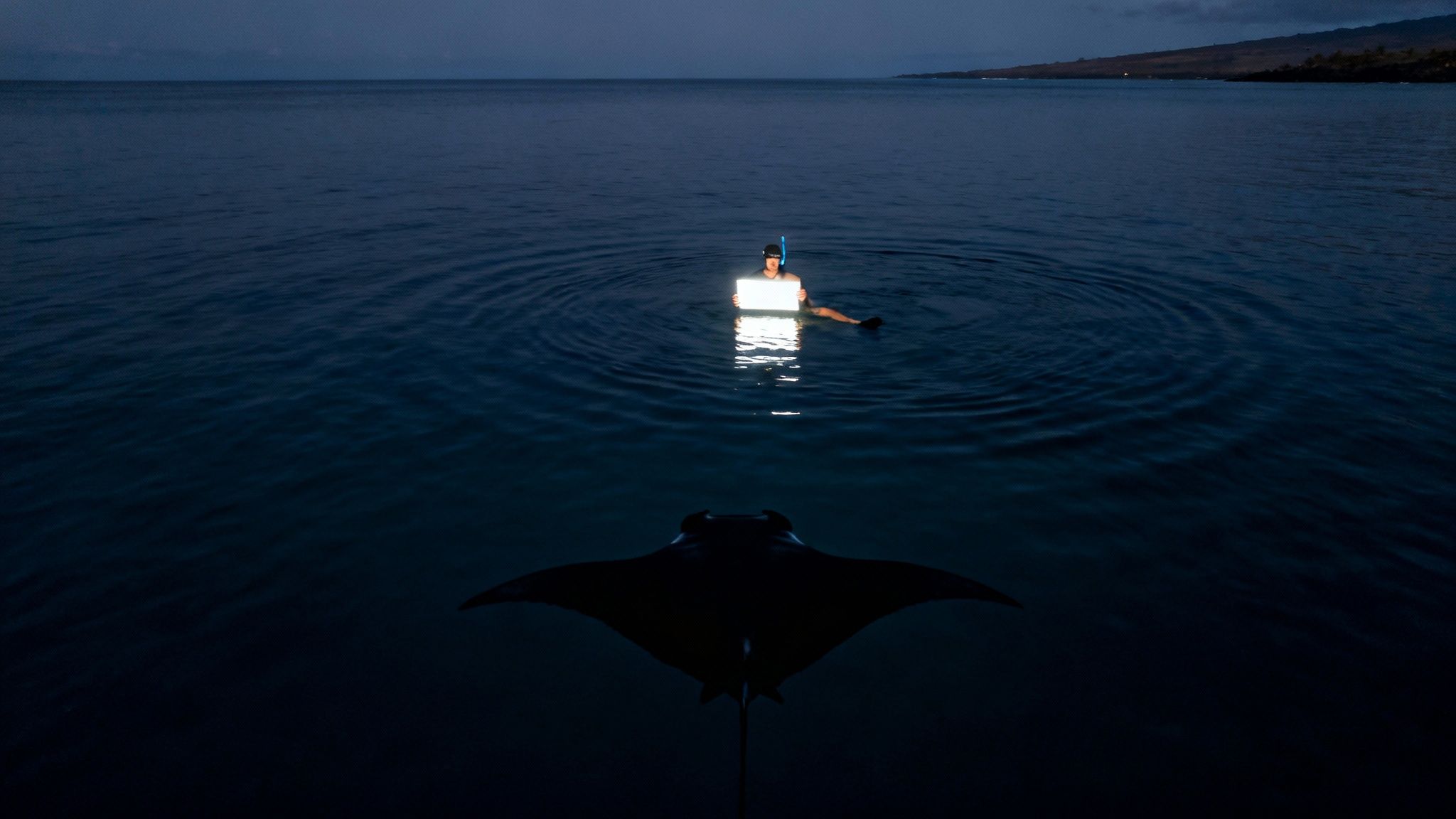
This floating light board is your front-row seat to the show. You’ll grab the handles and float comfortably on the surface while powerful lights underneath slice through the darkness, creating a brilliant blue-green glow. This light is a powerful magnet for plankton, turning the water into a concentrated buffet that Kona’s gentle giants just can’t resist.
The First Glimpse
And then, it happens. A huge, graceful shadow emerges from the deep, gliding effortlessly toward the light. Seeing your first manta ray up close is a moment that’s tough to put into words. They are bigger, more majestic, and more graceful than you could ever imagine.
It’s a true sensory experience—the quiet hum of the ocean, the vibrant underwater stage, and the completely silent, majestic dance of the mantas.
You'll get to see their mesmerizing feeding behavior firsthand. With mouths wide open, they perform elegant barrel rolls and somersaults, filtering the plankton from the water. They often get incredibly close—sometimes just inches away—letting you see the unique spot patterns on their bellies. It’s an intimate and profoundly moving spectacle. If you get hooked and want to learn more, check out our article on fun facts about manta rays.
The golden rule of this encounter is simple: look, but don’t touch. By being a passive observer and keeping your hands to yourself, you protect their delicate skin and ensure they continue to feel safe. This is how we make sure this magical interaction can continue for generations to come.
An Adventure for (Almost) Everyone
One of the best things about the manta ray night snorkel in Kona is just how accessible it is. You really don’t need to be an expert swimmer or a seasoned adventurer to have an incredible time. The whole experience is designed to be safe and enjoyable for just about everyone.
Most tours are super accommodating, with the average time in the water ranging from 45 to 60 minutes. These trips welcome everyone from children (usually ages 6 and up) to older adults, which just goes to show how broad the appeal is. Local operators follow strict environmental guidelines to keep the experience sustainable, ensuring Kona's manta rays can continue to thrive for years to come.
Got Questions About Snorkeling with Manta Rays?
Even after you've picked a tour, a few last-minute questions always pop up before you're ready to commit. It's totally natural. To put your mind at ease, here are the things we get asked most often by travelers just like you.
Getting these details sorted is the final step before you can feel 100% confident and excited about your upcoming adventure.
Is the Manta Ray Night Snorkel in Kona Safe?
Absolutely. Safety is the single biggest priority for any reputable tour operator out here. Every trip is led by experienced, certified guides who are right there in the water with you the whole time. You’ll be decked out in high-quality snorkel gear and flotation devices, which keeps the whole experience secure and controlled.
It's also worth remembering that manta rays are true gentle giants. Unlike stingrays, they have no stingers, barbs, or teeth—they pose zero threat to people. The real safety focus is just being aware on the boat and in the water at night, and the crews are pros at managing these conditions.
What If I'm Not a Strong Swimmer?
This is one of the most common worries we hear, and the answer is simple: you don't need to be an Olympian. If you can float in a pool, you’re good to go.
On the tour, you'll be holding onto a large, super-stable flotation board. These boards are equipped with bright lights (to attract the plankton) and sturdy handles to hang onto.
Your job is just to float comfortably on the surface. The buoyant wetsuit helps a lot with that, too. You just relax and watch the incredible show happening right below you. That said, always let your guide know about your comfort level beforehand—they're there to help.
What Is the Best Time of Year to See Manta Rays in Kona?
Here's the best part: the Kona manta ray snorkel is a phenomenal, year-round activity! Thanks to a consistent and rich supply of plankton along our coast, the mantas feed in these exact spots every single month of the year.
The sighting success rate stays incredibly high no matter the season. The only real difference is that the water and air can be a little cooler in the winter months (think December through February), but the thermal wetsuits you're given are designed to keep you perfectly comfortable.
Are We Guaranteed to See Manta Rays?
Manta rays are wild animals, so no one can offer a 100%, ironclad guarantee. But—and this is a big but—the sighting success rate in Kona is sky-high, often topping 90%. This isn't just luck; the tours go to established feeding sites where the mantas show up almost every single night like clockwork.
Many of the best operators know how much this experience means to people and offer a "manta guarantee." If for some reason the mantas don't show up for your tour, you can rebook and come back another night for free. Always ask about the specific policy when you book.
This gives you some great peace of mind and ensures you have the best possible shot at witnessing this underwater ballet.
Ready for an adventure you'll never forget? Kona Snorkel Trips is ready to guide you on an incredible manta ray night snorkel. Book your tour today and prepare to be amazed.