
Manta Ray Night Snorkel Kona: Experience Hawai’i’s Best Adventure
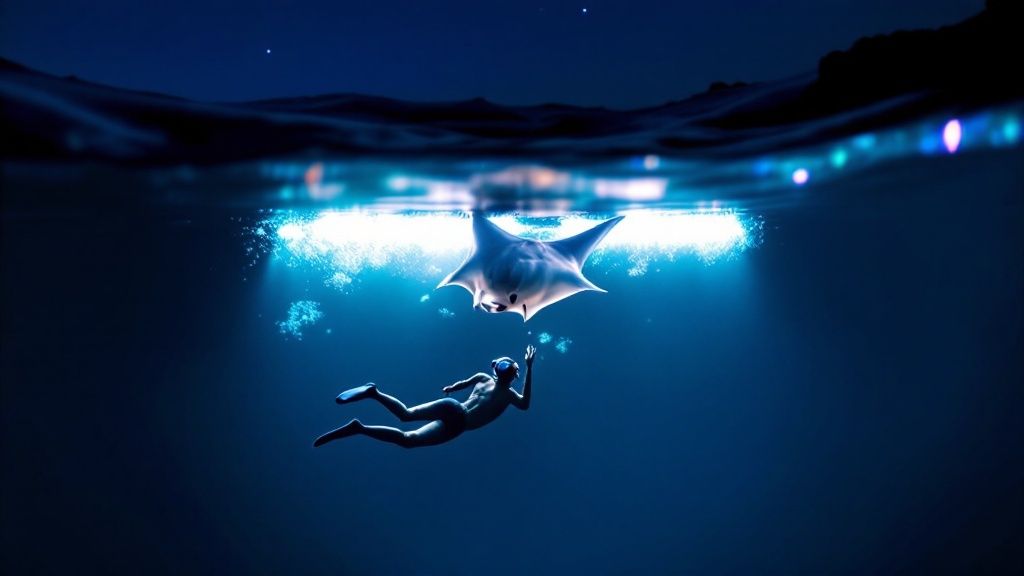
Picture this: you're floating weightlessly in the calm, dark Pacific Ocean. Below you, giant, gentle manta rays glide and dance in a pool of light. This isn't a scene from a nature documentary—it's a real, breathtaking ballet of marine life, and it's an experience unique to Hawaii's Big Island. If you're ready for an unforgettable adventure, this guide will walk you through everything you need to know about the manta ray night snorkel in Kona.
Experience Kona's World-Famous Manta Ray Snorkel
When people ask me who to go with, I always point them to the best in the business: Kona Snorkel Trips. They are the top-rated and most-reviewed snorkel company in all of Hawaii for a reason. Their expert-led tours, which you can check out on their manta ray tour page, are all about creating a safe, magical, and up-close encounter.
But don't just take my word for it. Here are real reviews from fellow adventurers who have taken the plunge, so you can see for yourself what makes this trip so special.
Why Kona is a Global Manta Ray Hotspot
Kona isn't just a great place to see manta rays; it is arguably the best place on the entire planet for this kind of encounter. We have a huge local population here, estimated to be over 450 individual animals. Researchers are constantly cataloging them, identifying more than 120 unique mantas along the coast every single year. This incredible concentration makes Kona a vital hub for marine biologists.
The genius of the Kona manta ray night snorkel lies in its simplicity. Tour boats head out after sunset and shine powerful, submerged lights into the water. These lights attract swarms of plankton, the manta rays' primary food source.
It’s like setting up a glowing, all-you-can-eat buffet that draws the mantas in from the dark. This creates a predictable and absolutely awe-inspiring show right below the snorkelers. If you want to dive deeper into the science, you can learn more about Kona's manta ray population and how it all works.
This unique combination—a healthy, resident manta population and a smart, non-invasive viewing method—makes the experience both reliable and spectacular. It’s an adventure that connects you directly with one of the ocean's most majestic creatures in a way that’s respectful and sustainable.
What to Expect on Your Manta Ray Adventure
So, you're booked and ready to go. What does this incredible night actually feel like? The whole experience, from the moment you check in to the boat ride home, is designed to build anticipation and end in pure awe.
Let's walk through what the evening typically looks like.
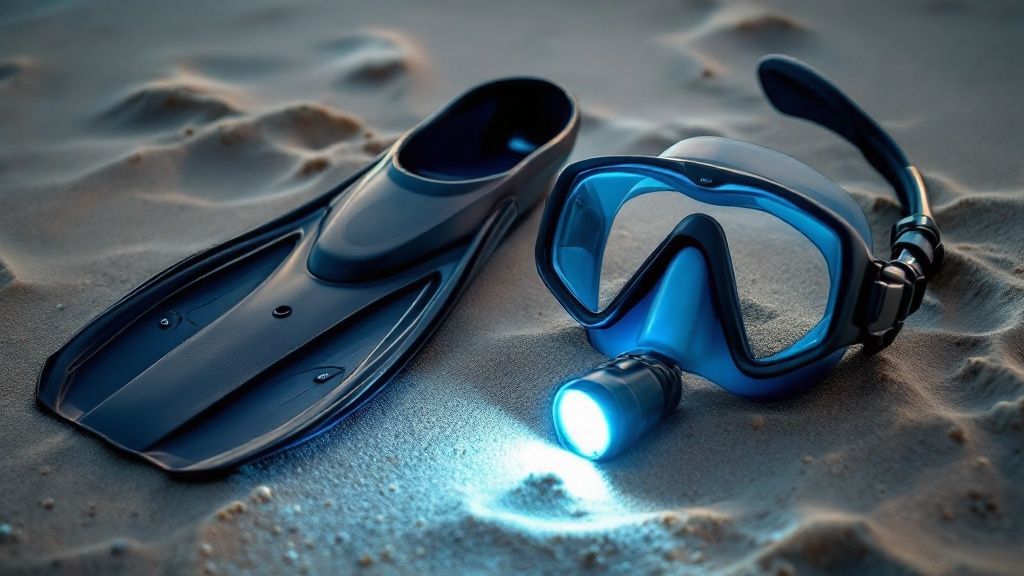
It all starts on land with a warm welcome from your crew. These are the experts who will get you fitted for all your gear—a snug wetsuit to keep you comfortable in the cool night water and quality snorkel equipment.
Next up is the safety briefing. Pay close attention here. The guides will cover everything you need to know, from how to clear your mask to the proper etiquette for being around these gentle giants. It’s all about making sure both you and the mantas have a safe, amazing time.
The Curtain Rises on the Manta Theater
Once the boat finds its spot, the real magic begins. The crew sets up a custom-built light board that floats on the surface. Think of it as a glowing, all-you-can-eat buffet for manta rays. Its powerful lights attract swarms of microscopic plankton, which is exactly what the mantas are there to eat. The dinner bell has been rung.
You'll then slide into the dark, calm ocean and grab onto the light board. One of the best parts is that there's no serious swimming involved. You just float, face down, and wait for the show to begin below you. Those quiet moments, floating under the stars as the ocean starts to wake up, are electric.
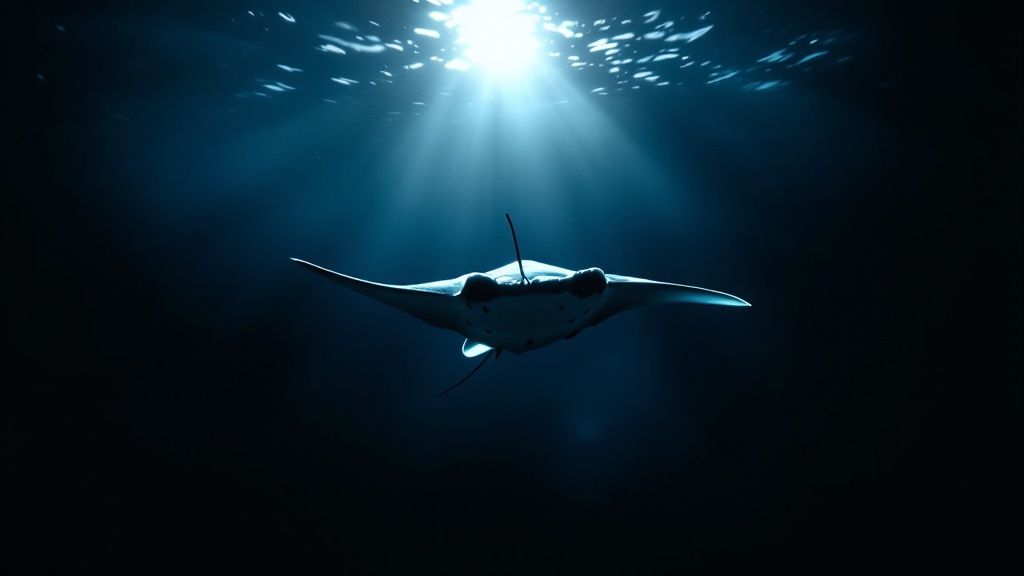
And then it happens. A huge, dark shape glides up from the blackness, swooping gracefully into the light. The sheer scale of a manta ray is hard to comprehend until one is right in front of you—their wingspans can be over 12 feet! They put on an underwater ballet, doing barrel rolls and loops as they feed on the plankton, often coming within inches of your mask.
This isn't like watching wildlife from a distance; it's being a quiet, respectful guest at their nightly feast. That intimate connection is what makes the Kona manta ray snorkel a truly world-famous experience.
The Ride Home
After about 30 to 45 minutes of pure wonder in the water, you'll climb back onto the boat, probably buzzing with an energy you can't quite explain. Most tours will have warm drinks and snacks waiting for you, which is the perfect way to warm up and share stories with the other snorkelers on the triumphant ride back to the harbor.
While tons of companies offer this tour, it's always smart to shop around. If you're looking for another top-tier operator, Manta Ray Night Snorkel Hawaii is known for providing an exceptional tour and is definitely worth checking out as you plan your manta ray night snorkel Kona adventure.
Ready to see it for yourself?
Choosing The Best Manta Viewing Site In Kona
When you’re planning a manta ray night snorkel in Kona, one of the first things you'll realize is that where you go is just as important as when. The Big Island is lucky enough to have two world-class spots for this incredible encounter, and each one offers a slightly different flavor of adventure.
The two main locations are affectionately known as "Manta Village" and "Manta Heaven." While you’re practically guaranteed an amazing show at either, they have their own unique personalities. They differ in location, how long it takes to get there, and even the typical number of mantas that show up for dinner. Knowing the difference is key to picking the perfect tour for you.
Manta Village: The Original Site
Just off the coast of the Sheraton Keauhou Bay Resort, Manta Village is the O.G. of manta viewing sites. It earned its reputation for being incredibly consistent.
Because it’s tucked into a protected bay and is closer to Keauhou Harbor, the boat ride is usually shorter and the water is calmer. This makes it a fantastic choice for families with younger kids or anyone who gets a little queasy on the water. While sightings are super reliable, the average number of mantas is often a bit lower than at the other spot.
Manta Heaven: A Congregation of Giants
Head a bit further north, up near the Kona International Airport, and you'll find Manta Heaven. During the day, we know this spot as Garden Eel Cove, but at night, it absolutely lives up to its heavenly name, often attracting a huge congregation of mantas.
The boat ride is a little longer to get here, but the reward can be absolutely spectacular. It’s not uncommon to see a massive group of mantas gracefully gliding and barrel-rolling through the lights.
So, how do the two spots really stack up? Here's a quick side-by-side look.
Kona Manta Ray Snorkel Site Comparison
| Feature | Manta Heaven | Manta Village |
|---|---|---|
| Location | North of Kona Airport (Garden Eel Cove) | Off Keauhou Bay (near the Sheraton) |
| Travel Time | Longer boat ride (approx. 25-40 min) | Shorter boat ride (approx. 10-20 min) |
| Typical Conditions | Can be more exposed to open ocean swells | Generally calmer, more protected |
| Average Mantas | ~11 per night (historically higher) | ~4 per night (historically consistent) |
| Best For | Adventurous snorkelers wanting to see more rays | Families, first-timers, those prone to seasickness |
Research from back in 2013 showed Manta Heaven averaging about 11 manta rays per night, which was quite a bit more than the 4 per night at Manta Village. That said, both locations have an incredible success rate of 85-90%, meaning you have an excellent chance of a magical encounter no matter which you choose.
The choice really boils down to your personal preference. Do you want a quick boat ride with super reliable sightings? Or are you willing to travel a bit further for the chance to see a massive underwater ballet?
Honestly, you can't make a bad decision here. Both sites offer a front-row seat to one of the most mesmerizing shows in the natural world. To get a better feel for what makes the northern site so special, check out our deep dive into Garden Eel Cove and Manta Heaven in Kona.
Finding the Perfect Time for Your Night Snorkel
One of the best things about the manta ray night snorkel in Kona is that there’s really no bad time to go. It’s a year-round adventure, and that’s because Kona is home to a resident population of manta rays that doesn't migrate. Any night you book gives you a fantastic shot at an unforgettable encounter.
That said, if you want to turn a great night into an absolutely perfect one, a little inside knowledge goes a long way. Understanding the subtle shifts in weather and even the moon's phase can help you pick the ideal time for your trip.
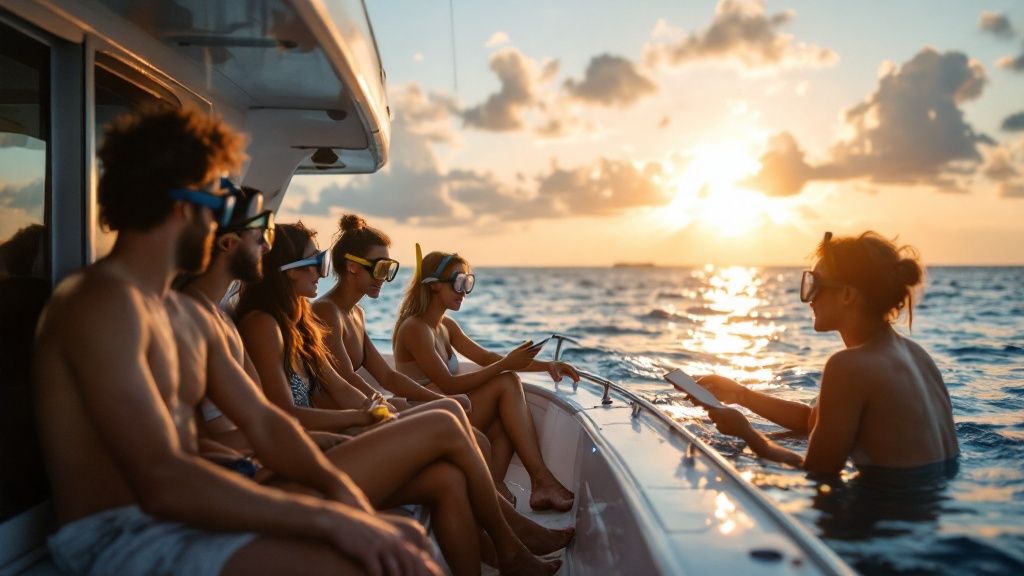
Seasonal Weather Patterns
Hawaii’s weather is beautiful all year long, but the seasons do bring slight changes to the ocean conditions. It’s good to know what to expect.
- Summer Months (May to September): This is when we typically see the calmest seas. The water is generally flatter and clearer, which makes for a super smooth boat ride and really comfortable snorkeling conditions.
- Winter Months (October to April): Winter can bring bigger ocean swells and the water can get a bit choppy. But don’t let that deter you. The tour operators are pros at navigating these conditions and stick to protected bays to make sure safety is always the top priority.
No matter the season, the manta rays show up. The success rate for sightings off the Kona coast is incredibly high, staying between 80% and 90% all year long. This amazing consistency comes from years of local operators tracking the intricate dance between weather, currents, and marine life. You can discover more about what makes Kona's manta sightings so reliable and why it's a world-class destination.
What's Happening Under the Surface
Beyond just the weather, other forces are at play. The tour lights create a massive plankton buffet that draws the mantas in, but natural conditions can tweak just how dense that buffet gets.
Take the moon phase, for example. A bright, full moon might spread the plankton out more widely across the surface, making the tour lights a little less of a concentrated beacon. On the other hand, a new moon makes for a much darker ocean. This allows the lights to create an intensely thick cloud of plankton, which can sometimes attract even more mantas.
Insider Tip: While a new moon can occasionally lead to a more intense feeding frenzy, the difference is often pretty subtle. The powerful lights used by the top tour companies are designed to be super effective no matter what the moon is doing, so you're guaranteed a spectacular show any night you go.
Ocean currents also play a part, carrying different amounts of plankton into the bays. A current that's rich in nutrients can whip up an even more tempting feast for the rays. You can't really predict these currents, but it's fascinating to know that every single night offers a unique mix of conditions, making each manta ray snorkel a truly one-of-a-kind experience.
How to Prepare for Your Manta Ray Encounter
A little prep work can be the difference between a good trip and an absolutely unforgettable one. The manta ray night snorkel in Kona is surprisingly easy, but knowing a few things ahead of time will help you feel comfortable, confident, and ready to soak in every last second of the magic. Think of this as your quick and easy checklist for an incredible adventure.
The best part? You really don't need to bring much. Tour operators like us provide just about everything you need for the actual swim. We've got high-quality masks, snorkels, and fins, plus a snug wetsuit to keep you warm and the custom light board you'll hang onto in the water. We even have snacks and drinks waiting for you when you get back on the boat.
Your Personal Checklist
Your main job is just to show up ready to get in the water. Here’s a simple rundown of what you should have with you:
- Wear Your Swimsuit: The easiest way to do it is to wear your swimsuit under your clothes to the harbor. It makes getting ready on the boat a breeze.
- A Towel and Dry Clothes: You'll be glad you have a warm towel and a dry change of clothes for the ride back to shore.
- Reef-Safe Sunscreen: If your tour leaves before the sun goes down, slather on some reef-safe sunscreen. It protects both your skin and the delicate coral ecosystem we love so much.
- Reusable Water Bottle: Staying hydrated is always a good move.
And that's pretty much it! Leave all the heavy gear and the worries to us.
Managing Expectations and Safety
It's so important to remember that we are guests in a wild animal's home. While manta sightings here are incredibly reliable, these aren't performers in an aquarium. The key to a positive experience—for you and the mantas—is to manage your expectations and give them their space.
If you know you're prone to seasickness, it’s a good idea to take a non-drowsy motion sickness remedy about an hour before the tour. The water is usually pretty calm, but it's always better to be prepared so you can focus on the show.
The single most important rule of the night is to be a passive observer. You must never, ever touch a manta ray. Their skin is covered in a delicate, protective mucus layer, and our touch can strip it away, leaving them vulnerable to nasty infections.
By simply floating, holding onto the light board, and watching the spectacle, you become a guardian of these gentle giants. You're helping ensure they stay healthy for generations to come. For a more detailed guide on how to behave in the water, take a look at these essential snorkeling safety tips before you come out with us.
Now that you know what to expect and how to prepare, you're all set to book your spot and witness the underwater ballet for yourself.
A Few Common Questions About Manta Ray Snorkeling
Heading out into the dark ocean to swim alongside giant sea creatures? Yeah, that usually brings up a few questions. We get it. To make sure you feel nothing but pure excitement for your upcoming manta ray night snorkel in Kona, we've put together some straight-up answers to the questions we hear all the time. Let's clear up any last-minute jitters so you're ready for the magic.
Is The Manta Ray Night Snorkel Safe For Beginners?
Absolutely. The whole experience is designed from the ground up to be safe and accessible for everyone, even if you've never put on a snorkel mask before. We see first-timers and families all the time (most operators are cool with kids 5 years and up, but it's always smart to double-check).
There's no tough swimming involved. You’ll just hang onto a big, sturdy, floating raft that lights up the water. This light board is your anchor and your window into the world below. The crew gives you all the gear, including wetsuits that help you float, and runs through a detailed safety talk before you even touch the water. It’s a totally supervised and controlled environment—probably one of the safest ways you can have a mind-blowing encounter with wild marine life.
Will I Get Cold Snorkeling At Night In Kona?
Hawaii's water is pretty warm year-round, but floating on the surface after the sun goes down can definitely give you a chill. That’s why any good tour company will hook you up with a quality shorty wetsuit. They’re designed to keep you insulated and perfectly comfortable for the entire snorkel.
A nice little bonus is that wetsuits make you even more buoyant, so floating is completely effortless. We always tell people to bring a towel and some warm, dry clothes for the boat ride back to the harbor. Nothing beats getting cozy after an amazing swim. For a deeper dive into what to bring and expect, check out our guide to Kona manta ray night snorkel requirements.
What Happens If We Do Not See Any Manta Rays?
This is a great question and one we hear a lot. These are wild animals, after all, and while the success rate for seeing mantas in Kona is ridiculously high—we're talking over 85-90% most of the time—it's never a 100% guarantee.
The best tour companies know this and have your back with a "manta guarantee." What this usually means is if you get skunked and don't see any mantas, you can come back again for free on a standby basis. It’s always a good move to ask about the specific policy when you book. This kind of guarantee shows how confident the operators are and gives you some welcome peace of mind.
Why Can We Not Touch The Manta Rays?
This rule is non-negotiable, and it’s all about protecting the mantas. Their skin has a special mucus coating that works like a shield, protecting them from nasty bacteria and parasites.
Even a gentle, well-meaning touch from a human hand can rub off this delicate slime coat. This leaves the manta ray exposed and vulnerable to all sorts of infections and diseases.
Beyond that, chasing or touching the rays stresses them out. It can scare them away from the feeding site and make them hesitant to come back. The whole point of this experience is to be respectful guests in their home, observing them without changing their natural behavior. By just watching the show, we help make sure Kona’s manta ray population stays healthy and thriving for years to come.
Ready to witness this incredible underwater ballet for yourself? Kona Snorkel Trips offers a world-class, safe, and unforgettable adventure. Book your Manta Ray Snorkel Kona Tour today and prepare for the experience of a lifetime.