
Manta Ray Night Snorkel Kona Your Complete 2026 Guide
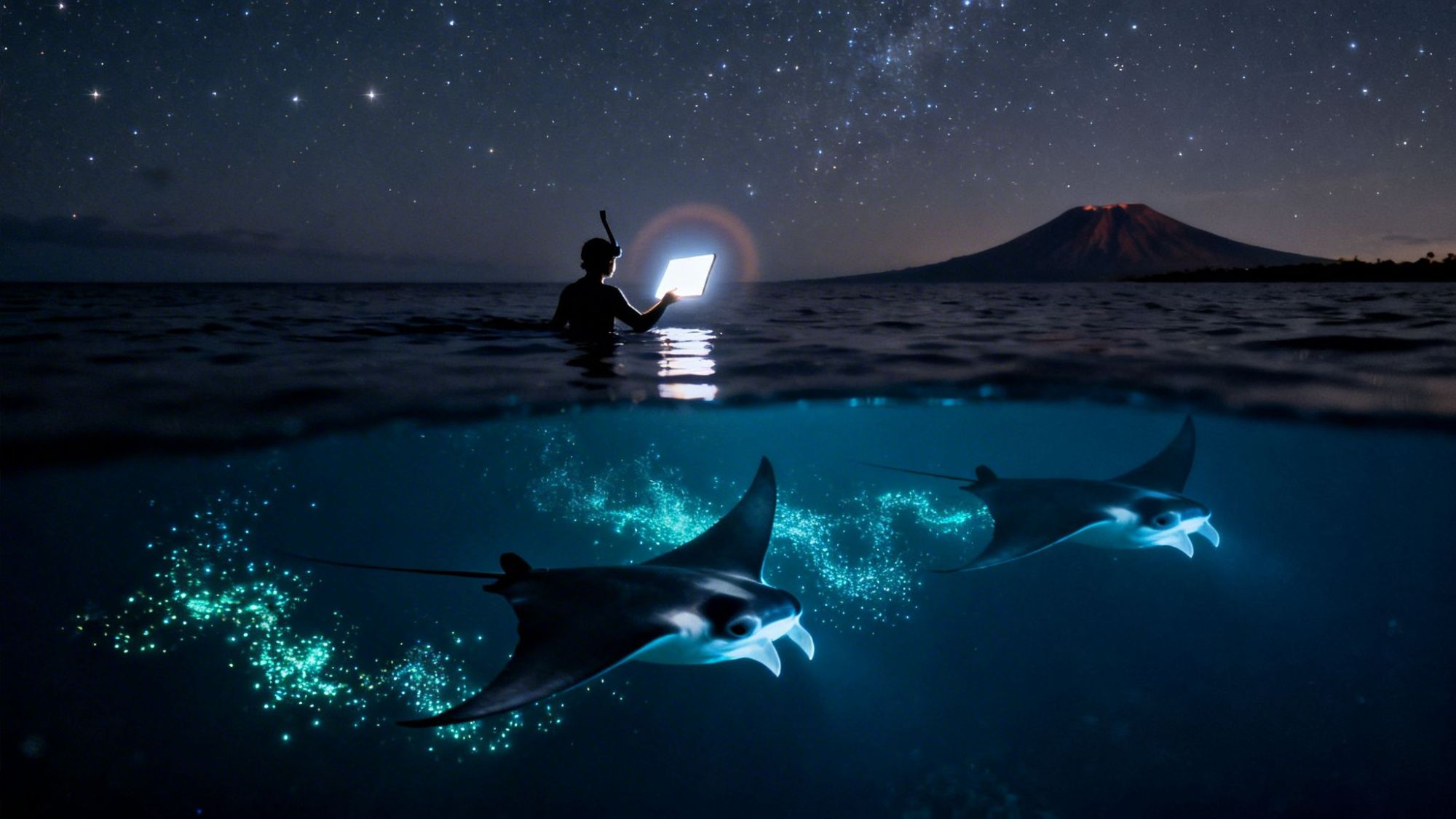
Picture this: you're floating weightlessly in the calm, dark waters of the Pacific. Just inches below, giant, graceful manta rays glide and somersault through the water. This isn't some fever dream—it's the world-famous manta ray night snorkel in Kona, a true bucket-list adventure that people travel across the globe to experience. It's one of the most incredible ethical and exciting wildlife encounters you can have anywhere on the planet.
As the top rated & most reviewed snorkel company in Hawaii, we at Kona Snorkel Trips know a thing or two about this magical experience.
Experience The Magic Of The Kona Manta Ray Snorkel
People often describe the manta ray night snorkel Kona experience as an "underwater ballet," and honestly, that's the perfect way to put it. Once the sun goes down, you'll head out on a boat into the warm waters off the Kona coast. The crew sets up a floating light board that shines down into the ocean, which attracts swarms of microscopic plankton. And where there's plankton, there are manta rays.

Why This Is A Must-Do Adventure
What really makes this adventure so special is how close you get and how reliable the sightings are. Unlike trying to spot many other wild animals, Kona is the single most dependable place on Earth for manta ray encounters. We have a resident population of over 240 identified manta rays that live here year-round, which means your chances of seeing them are incredibly high.
This isn't just about spotting some marine life from a distance; it's about being part of a natural phenomenon. The whole experience is unforgettable.
- Up-close encounters: You'll see mantas with wingspans up to 16 feet perform graceful barrel rolls just inches from your face. It's breathtaking.
- A safe and guided tour: You hang onto a stable light raft, so it’s super accessible, even if you’re a total beginner at snorkeling.
- Respectful observation: The entire operation is designed around protecting the mantas and ensuring our interactions are sustainable for the long run.
For an unforgettable adventure, you should book your manta ray night snorkel tour with us here at Kona Snorkel Trips. If you're looking around at options, Manta Ray Night Snorkel Hawaii is an exceptional alternative when looking for a Manta Ray night snorkel tour. These majestic creatures are absolutely fascinating; check out our article for more fun facts about manta rays. This guide will walk you through everything you need to know to plan this once-in-a-lifetime trip.
Why Kona Is The World Capital For Manta Ray Encounters
So what makes Kona the undisputed global hotspot for seeing manta rays, night after night? It's really a perfect storm of unique geography, some simple science, and a special relationship that's developed between the tour operators and the resident mantas. It all comes together to create a place where these incredible encounters are not just a possibility, but a near-nightly guarantee.

Unlike a lot of wildlife experiences that hinge on seasonal migrations, Kona is home to a year-round population of reef manta rays that don't really go anywhere. In fact, over 240 individual mantas have been identified by their unique belly spot patterns, and they call the Kona coast home 365 days a year. This is the real secret sauce behind why the manta ray night snorkel Kona is such a reliable adventure. They're always here!
The Science Behind The Underwater Ballet
The magic behind this nightly spectacle is actually pretty straightforward: light attracts plankton, and plankton attracts manta rays. The sheltered bays along our coast, like Manta Village and Manta Heaven, have these unique volcanic underwater landscapes that naturally help concentrate phytoplankton, which is the mantas' favorite meal.
Over the years, the regulated tour operators figured out how to give this natural process a little boost. By shining powerful, eco-friendly lights into the water, they create what is essentially a massive, glowing plankton buffet. The mantas are incredibly smart creatures and have learned that these lights mean an easy, reliable dinner.
This nightly feeding has become so consistent that it’s often called a conditioned response. The mantas literally associate the tour boats' lights with food. It’s a symbiotic relationship where we get a breathtaking show, and the mantas get a guaranteed meal.
This nightly ritual is exactly why the experience boasts an incredible 80-90% success rate for sightings. That number is almost unheard of in the world of wild animal encounters. It turns what would be a game of chance anywhere else into a reliable, awe-inspiring event right here in Kona.
Imagine slipping into the warm, dark water as massive shadows glide beneath you. These are the reef manta rays that draw around 80,000 visitors here every single year for this magical experience. That number alone shows just how special and dependable this is. You can get more awesome insights into this whole phenomenon and the Kona manta ray night dive on konahonudivers.com. At the end of the day, it's that combination of resident mantas and a reliable food source that truly makes Kona the manta capital of the world.
Choosing Your Perfect Manta Ray Tour
With a few different locations and tour styles to pick from, choosing the right manta ray night snorkel in Kona can feel a little daunting. But don't worry, I'm here to walk you through it. Your decision really boils down to three things: which snorkel site you prefer, how big of a group you want to be with, and finding an operator that fits your vibe.

The two main spots for this magical encounter are known locally as "Manta Village" and "Manta Heaven." Each one offers a slightly different experience, so knowing the pros and cons is the key to an amazing night.
Kona Manta Ray Snorkel Sites At A Glance
To help you decide, let's break down the two main manta ray viewing locations here in Kona. Think about what’s most important for your trip—is it a short boat ride or the chance to see the most mantas?
| Feature | Manta Village (Keauhou Bay) | Manta Heaven (Garden Eel Cove) |
|---|---|---|
| Location | Keauhou Bay, south of Kailua-Kona | Near the airport, north of Kailua-Kona |
| Boat Ride | Very short (great for seasickness) | A bit longer, but scenic |
| Manta Sightings | Consistent sightings, but can be fewer | Often more mantas (up to 11+ at once) |
| Crowds | Can be more crowded due to easy access | Can feel more spread out |
| Best For | Convenience and short travel time | Maximizing your chance to see many mantas |
Ultimately, both sites offer incredible opportunities. Manta Village, located in Keauhou Bay, is the original site and super convenient. The short boat ride is a huge plus if you're worried about seasickness. The tradeoff? Its popularity means it can get busy.
Manta Heaven (also called Garden Eel Cove) is a bit further north. This spot often attracts a higher number of mantas, with a staggering 90% sighting success rate. We've had nights there where guests have seen up to 11 mantas swirling around the light boards. It’s a truly unbelievable show.
Pro Tip: If a quick boat trip is your top priority, Manta Village is a solid choice. But if you’re dreaming of a "manta frenzy" and don't mind a slightly longer ride, Manta Heaven is where the magic really happens.
Tour Size Matters
Another huge factor is the size of your tour group. Honestly, this can make or break your experience. Opting for a tour with a smaller group, like the ones we run at Kona Snorkel Trips, almost always leads to a more personal and less chaotic night.
Fewer people in the water means more room for you to float comfortably and a much better, unobstructed view of the mantas. You're not just a face in the crowd. Another great operator to check out is Manta Ray Night Snorkel Hawaii, who also offers excellent tours.
Are You A Certified Diver?
For those with a scuba certification, the game changes completely. Instead of floating on the surface looking down, you'll be settled on the ocean floor, watching the mantas perform their ballet right above you. It's a completely different perspective and absolutely breathtaking.
If that sounds like your kind of adventure, we can't recommend Kona Honu Divers enough. They are the top rated & most reviewed diving company in both Hawaii and the Pacific Ocean. You can read more about what that experience is like in our guide to the Kona Manta Ray Night Dive on our blog.
Making the right choice up front is what ensures your manta ray night snorkel in Kona is everything you've dreamed it would be.
How To Prepare For Your Night Snorkel Adventure
A little bit of prep work is the secret to turning a great manta ray night snorkel into a truly epic one. Getting a few things sorted out beforehand means you can relax and focus on what you came for: the graceful giants gliding beneath you.
The easiest pro-tip? Wear your swimsuit under your clothes when you head down to the harbor. This simple move saves you from the awkward shuffle of changing in a parking lot or a tiny boat bathroom. Just show up ready to hop into your wetsuit.
What To Bring For Your Tour
Packing a small bag with a few essentials will make a huge difference, especially after you get out of the water. You'll be snorkeling for about 40 minutes, and even in Hawaii's warm waters, you'll feel a bit of a chill once you're back on the boat.
Here's a quick checklist of things you'll be glad you have:
- A Towel: This is non-negotiable. You’ll want it the second you’re back on board.
- Warm, Dry Clothes: Think a sweatshirt, a long-sleeve shirt, or a light jacket. You'd be surprised how cool the air feels after a night snorkel, and having something cozy to pull on is a game-changer.
- Reef-Safe Sunscreen: If you're on a sunset tour, make sure to apply this before you leave. It's crucial for protecting both your skin and our delicate coral reefs.
- Camera: A GoPro or another waterproof camera is perfect for capturing the magic. Just double-check that it's fully charged!
For a deeper dive into what to pack, check out our guide on what to wear for snorkeling for some extra useful advice.
Tackling The Seasickness Question
One of the most common worries we hear from guests is about seasickness. It's a valid concern. Even on Kona's relatively calm waters, the gentle rocking of the boat combined with floating on the surface can make some people feel a little queasy. The good news? It's almost always preventable.
The boat ride for the manta ray night snorkel is typically very short, but being prepared for motion sickness is always a smart move. Taking preventative measures an hour before your tour can ensure you feel great throughout the entire experience.
If you know you're prone to motion sickness—or even if you just want to play it safe—here are a few things that work for our guests time and time again:
- Over-the-Counter Meds: The Ship-EEZ Seasickness Patch is a super popular, long-lasting choice. Pills like Dramamine or Bonine are also really effective, but you have to remember to take them before the tour starts.
- Natural Remedies: Lots of people swear by non-drowsy alternatives. Chewing on some tasty ginger chews or wearing acupressure Sea-Band wristbands can work wonders for settling an uneasy stomach.
If your trip to Kona is just one stop on a bigger Hawaiian adventure, you might be thinking about how to get between the islands. Being prepared for any time on the water is key, whether you're planning on Hawaiian island hopping cruises or just heading out for a snorkel.
What To Expect On Your Manta Ray Tour
The buzz for your manta ray night snorkel Kona adventure really starts the moment you check in at the harbor. From there, it's a stunning boat ride out to the manta site. Most tour operators time it just right so you catch a classic Kona sunset. Keep your camera handy—the colors painting the sky as you cruise along the coast are absolutely incredible.

Once the boat anchors, the crew will walk you through a detailed safety briefing. They'll cover everything from how the gear works to the single most important rule of the night: respectful observation. That means absolutely no touching the mantas. Their skin has a protective mucous layer that our hands can easily damage.
The In-Water Experience
Next comes the main event. The crew lowers the famous floating light board into the water. This rig has powerful, eco-friendly lights that shine down into the darkness, attracting a massive cloud of plankton—the manta rays' favorite meal. Think of it as ringing the dinner bell, and it’s your cue to slip into the water.
Sliding into the ocean at night is a wild feeling. You'll swim a short distance to the light board and find a spot to hold onto its handles. These boards are surprisingly stable. You'll also get a pool noodle to tuck under your ankles, which helps you float effortlessly on the surface, almost like you're at an underwater movie theater.
It's an experience that blends science with pure, unadulterated wonder. As the plankton cloud thickens, the first graceful shadow emerges from the deep. Soon, one manta ray turns into several, gliding and barrel-rolling just inches beneath you as they scoop up their food.
The only things you'll hear are the gentle lapping of the water against the board and the muffled sounds of pure amazement from your fellow snorkelers. It’s completely peaceful and immersive. To really get a sense of it, you can learn more about manta ray swimming underwater and just how gracefully they move.
This incredible encounter isn't a gamble; it’s a reliable, science-backed activity with a success rate of 80-90%. That consistency brings in around 80,000 enthusiasts every year.
Tours usually last between one and three hours, with about 40-60 minutes of actual snorkel time in the warm 75-80°F water. It’s perfect for families and first-timers. After your time with the mantas, the crew helps everyone back on the boat. There are often warm drinks waiting for you as you enjoy the short ride back to the harbor under a sky full of stars.
Your Manta Ray Snorkel Questions Answered
Even after doing all the research, it’s totally normal to have a few last-minute questions before you jump in the water for a manta ray night snorkel in Kona. We get it. To help put your mind at ease, we've pulled together answers to the most common questions we hear from our guests. Our goal is for you to feel nothing but pure excitement for the adventure ahead.
Is The Manta Ray Night Snorkel Safe For Beginners And Kids?
Absolutely. For any reputable tour operator like Kona Snorkel Trips, your safety is the absolute number one priority. We’ll get you kitted out with all the gear you need, including a snug wetsuit for warmth and flotation devices to help you stay buoyant and relaxed.
You’ll be holding onto a large, stable light board the whole time, so you don’t need to be Michael Phelps—just comfortable being in the ocean. Our crew is highly trained and right there in the water with you, ready to help and make sure everything goes smoothly.
It’s a fantastic activity for families, but you should always double-check the minimum age with your specific tour company. It’s typically around 6-8 years old. If you're feeling a little nervous and want to build up your water confidence, check out our tips on how to improve swimming endurance.
Are Manta Rays Dangerous? Do They Have Stingers?
This is probably the most common question we get, and it's an important one. The short answer is no, manta rays are incredibly gentle giants and pose zero threat to people.
Unlike their stingray cousins, manta rays do not have a stinger or barb on their tail. They are filter feeders, meaning their diet consists of microscopic plankton that they gracefully guide into their huge mouths. They are curious by nature but are completely harmless. The strict "no touching" rule isn't to protect you from them; it’s to protect these magnificent animals from the oils and bacteria on our skin.
What Happens If We Don't See Any Manta Rays?
Manta ray sightings in Kona are incredibly reliable—we're talking an 80-90% success rate all year long. That said, these are wild animals, and their presence can never be 100% guaranteed.
Most reputable tour companies, including Kona Snorkel Trips, offer a "Manta Guarantee." This usually means that if you don't get to see a manta ray on your tour, you can come back and try again on another night for free, based on availability.
Always confirm the specific policy when you book, but this industry standard helps ensure every guest has the best shot at having that truly awe-inspiring experience.
What Is The Best Time Of Year For The Manta Ray Snorkel?
Here’s one of the best parts about the Kona manta ray snorkel: it’s an amazing experience 365 days a year. Unlike a lot of other marine wildlife encounters that depend on the season, Kona’s manta ray population is residential. They live here and don’t migrate.
The success rate stays consistently high whether you visit in July or December. So, your decision on when to book will probably have more to do with your personal travel plans, weather preferences, and how you feel about crowds during peak tourist seasons, rather than the chances of seeing mantas. They're almost always here and ready for their plankton dinner.