
Manta ray night snorkel kona: Ultimate Kona Manta Night Tour Guide
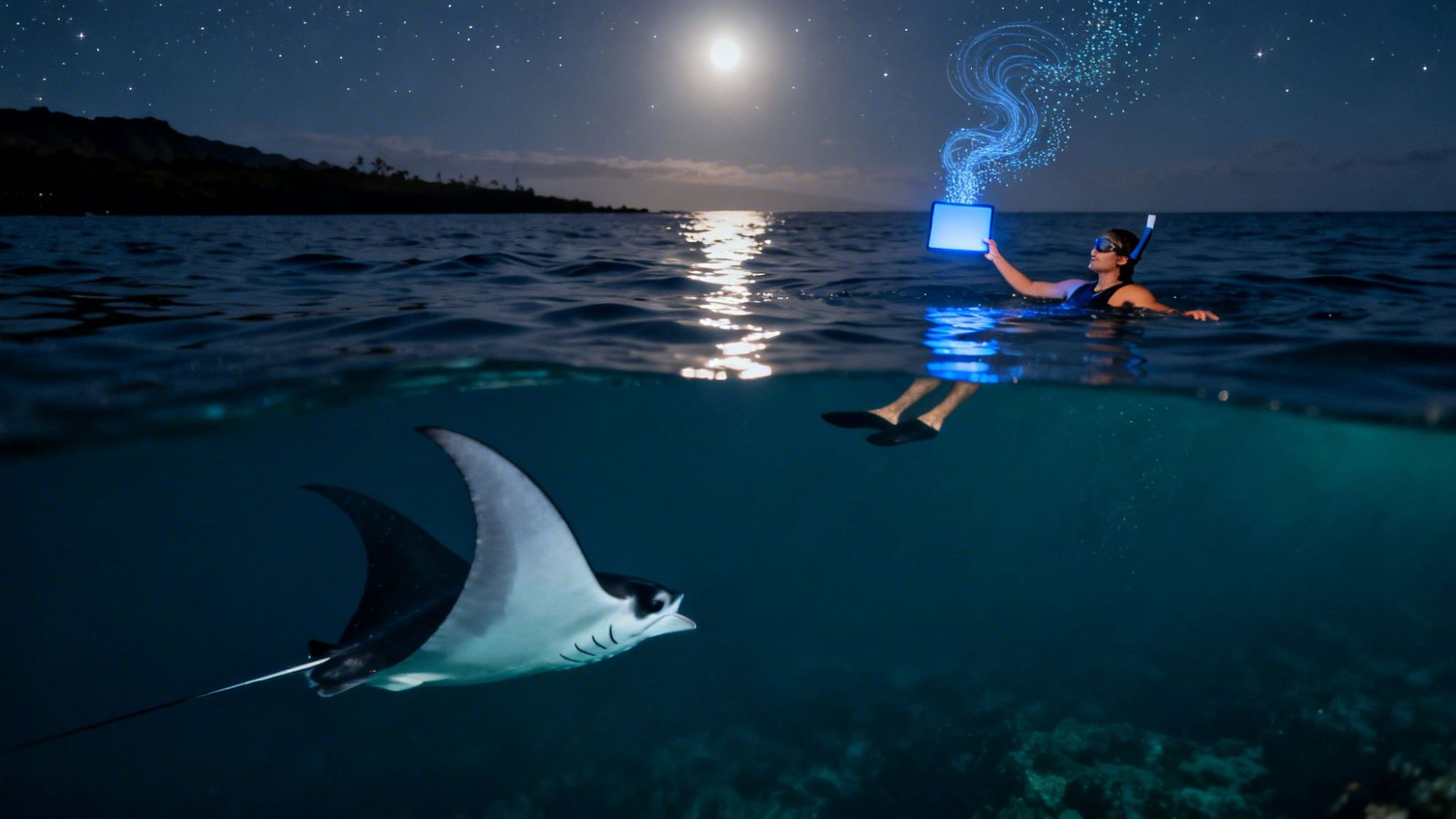
Picture this: you're floating weightlessly in the warm, dark Pacific, and massive, graceful shadows glide just beneath you. It’s not a dream sequence from a nature documentary—it's the Kona manta ray night snorkel, hands down one of the most incredible wildlife encounters you can have anywhere on Earth.
This guide will walk you through everything you need to know to make this bucket-list adventure happen.
Your Ultimate Guide To Kona's Manta Ray Night Snorkel
This is so much more than just another tour; it’s a genuine connection with some of the most majestic creatures in the ocean. And Kona just happens to be the best place on the planet to do it.
The magic starts when the tour boats switch on powerful, submerged lights. These lights act like a massive bug zapper for the ocean, attracting clouds of microscopic plankton. This all-you-can-eat plankton buffet is exactly what draws in Kona's resident population of gentle reef manta rays, who put on a mesmerizing underwater ballet as they feed.
As the top rated & most reviewed snorkel company in Hawaii, we at Kona Snorkel Trips have spent years perfecting this experience. Our goal is always to deliver an unforgettable time for our guests while showing the utmost respect for the mantas and their home.
What Makes This Experience Unforgettable
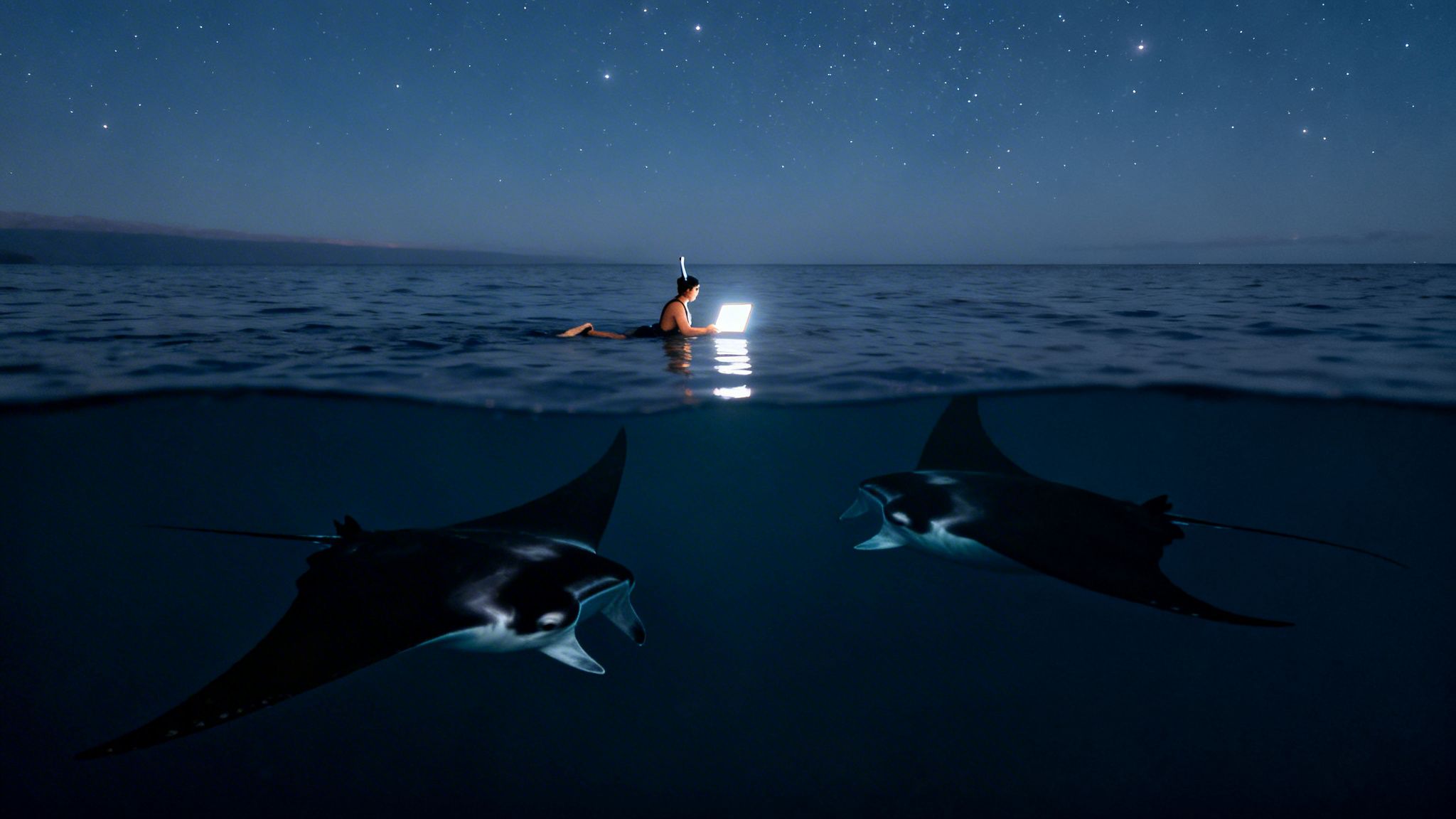
The Kona coast of the Big Island has the perfect setup for this nightly show. The calm, protected bays and the reliable presence of manta rays create a spectacle you can count on. It’s a completely different world from daytime snorkeling; after sunset, nocturnal creatures emerge, and the sounds of the ocean seem amplified in the quiet darkness.
A few things really make this trip stand out:
- Up-Close Encounters: You'll watch manta rays, with wingspans often hitting 10 feet or more, glide, swoop, and barrel-roll just inches below you. It’s breathtaking.
- A Unique Environment: Experiencing the ocean after dark is a vibe all its own. The atmosphere is totally different from any daytime activity.
- Accessible for Everyone: You don't need to be an expert snorkeler. You'll hold onto a custom-built, floating light board, which makes it safe and easy for all swimming levels, from first-timers to seasoned pros.
This isn't just an item to check off a to-do list; it's the kind of experience that creates a core memory you'll talk about for years. Of course, beyond the mantas, there are so many other amazing things to do on the Big Island of Hawaii, from hiking active volcanoes to just kicking back in a beautiful bay.
Ready To See The Mantas?
So, are you ready to see this natural wonder for yourself? The best way to do it is with people who live and breathe this stuff. The crew at Kona Snorkel Trips delivers a safe, educational, and absolutely stunning tour that consistently gets five-star reviews. You can book their manta ray snorkel tour here.
Don't just read about it. Come experience the silent, graceful dance of the manta rays with us.
Why Kona Is The World's Manta Ray Capital
Kona isn't just another spot on the map to see manta rays; it’s the global epicenter. If you want a reliable, year-round, up-close encounter with these gentle giants, this is the place. So, what makes the Big Island’s west coast so special? It's a perfect storm of geography, biology, and a little bit of serendipity that created a home for a thriving, non-migratory population of reef mantas.
Unlike so many other destinations where manta sightings are a seasonal gamble, Kona’s mantas are true residents. They’re here 365 days a year, which means your chances of a magical encounter are incredibly high, no matter when you decide to visit. In fact, most tour operators here consistently report sighting success rates that top 90%. That unbelievable reliability is exactly why the manta ray night snorkel Kona experience has become famous worldwide.
The Science Behind The Spectacle
The real magic starts with plankton—the microscopic critters that manta rays live for. The unique underwater landscape of the Kona coast, with its calm and protected bays, acts as a natural collection point for these tiny organisms. Then, every night, the tour boats show up with powerful, submerged lights. These lights act like a giant beacon, drawing huge clouds of plankton to the surface and creating a floating, all-you-can-eat buffet.
This nightly feast reliably draws the mantas to a few well-known spots, affectionately nicknamed 'Manta Village' (near Keauhou Bay) and 'Manta Heaven' (closer to the airport). It's this predictable feeding pattern that allows for a sustainable and deeply respectful viewing experience. The mantas come to us, not the other way around.
This consistent food source is the absolute cornerstone of Kona's manta tourism. It lets us observe these magnificent animals in their natural feeding environment without ever disrupting their core behaviors.
For certified divers who want a completely different perspective from the seafloor looking up, Kona Honu Divers runs an absolutely incredible manta ray dive. They're the top rated & most reviewed diving company in both Hawaii and the Pacific Ocean, and they offer an unparalleled view of the nightly ballet from below.
A Unique And Well-Studied Population
The resident population of reef mantas (Mobula alfredi) here isn't just big; it's one of the most studied in the entire world. Researchers have painstakingly identified over 450 individual manta rays along this coastline, each one cataloged by the unique pattern of spots on its belly, which works just like a human fingerprint.
What’s really fascinating, though, is that a small crew of "regulars" accounts for the vast majority of sightings. The top 20 most frequently seen mantas actually make up nearly 60% of all documented encounters. This means you might just get to meet a local celebrity like "Lefty" or "Big Bertha" on your tour, creating a genuine, personal connection to these amazing animals. You can dive deeper into the fascinating research and stories of our local mantas right here on our blog.
Kona Manta Ray Snorkeling vs Other Global Destinations
It's one thing for us to say Kona is the best, but seeing how it stacks up against other world-class destinations really puts it into perspective. The combination of accessibility, reliability, and the sheer number of animals is what truly sets it apart.
| Feature | Kona, Hawaii | Maldives | Indonesia (Komodo/Raja Ampat) |
|---|---|---|---|
| Sighting Reliability | Over 90%, year-round | Seasonal, depends on monsoon | Seasonal and location-dependent |
| Accessibility | Very easy; short boat rides from shore | Requires resort stays or liveaboards | Often requires multi-day liveaboards |
| Manta Population | Resident, non-migratory population | Migratory, follows plankton blooms | Both resident and migratory populations |
| Best Time to Go | Year-round | November to April (varies by atoll) | December to April (varies by region) |
| Viewing Style | Night snorkel/dive at feeding sites | Day snorkeling/diving at cleaning stations | Mostly day diving at cleaning stations |
| Water Conditions | Generally calm, protected bays | Can be choppy with strong currents | Strong currents are common |
Ultimately, while places like the Maldives and Indonesia offer incredible diving, Kona delivers a uniquely reliable and accessible manta encounter that is simply unmatched anywhere else on the planet.
How To Prepare For Your Manta Ray Adventure
Knowing what to expect and what to bring can turn a good trip into a truly unforgettable one. Getting ready for your manta ray night snorkel Kona adventure is all about making sure you’re comfortable, confident, and ready to soak in every second of the magic. The whole experience usually kicks off with a scenic boat ride, timed perfectly with a classic Kona sunset, which really sets the mood for what’s to come.
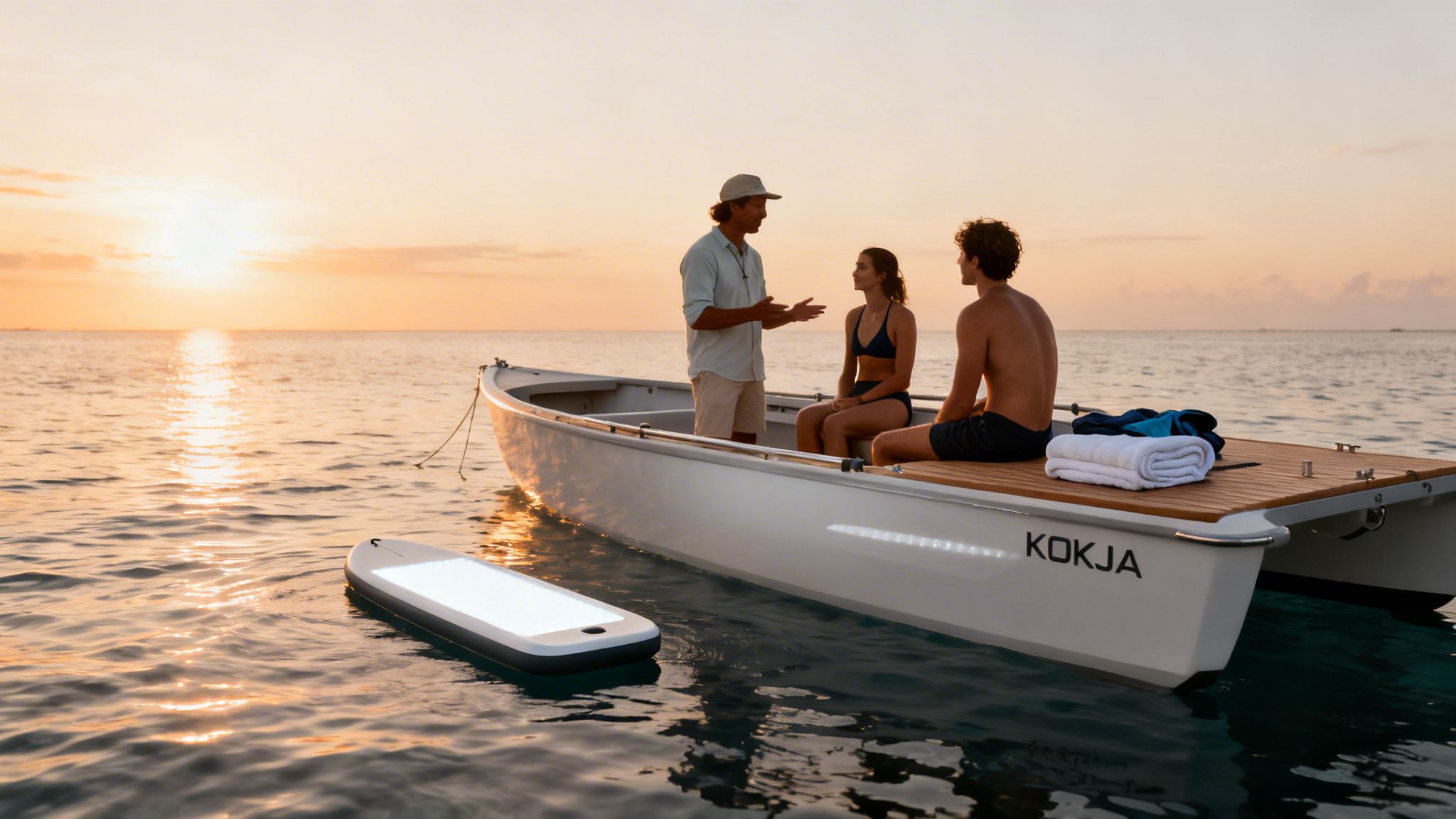
A little prep before you even head to the harbor goes a long, long way. The simplest pro-tip? Wear your swimsuit under your regular clothes. This one little move saves you from the awkward shuffle of changing on a rocking boat and means you’re ready to hit the water as soon as you get to the snorkel site.
What To Pack For Your Tour
You don't need to bring a massive bag, but a few key items will make a world of difference, especially for the ride back to shore when you're wet and the evening air has a bit of a chill.
Here’s a quick checklist of the essentials:
- A Towel: This is an absolute must. You’ll be very happy you have it when it's time to dry off.
- Dry Change of Clothes: Seriously consider a warm sweatshirt or jacket. Even after a warm day, the breeze on the boat ride back can feel surprisingly cold.
- Reusable Water Bottle: Staying hydrated is always a smart move.
- Camera: Got a GoPro or other waterproof camera? Bring it! The low-light is a challenge, but the footage you might get is well worth it.
Don’t worry about the gear. Reputable operators like us at Kona Snorkel Trips provide everything you need—masks, snorkels, fins, and even wetsuits. For a deeper dive into what works best in our waters, check out our guide on what to wear for snorkeling.
Understanding The Tour Flow
Once you’re on the boat and cruising out, your guide will give everyone a full briefing. Pay attention here—this isn't just filler. They’ll run through all the safety procedures, show you how to use the gear, and cover the most important part: manta etiquette.
The number one rule is simple but critical: do not touch the manta rays. These amazing creatures have a protective mucous layer on their skin. Touching them can damage this layer, leaving them open to infection. It’s all about passive observation.
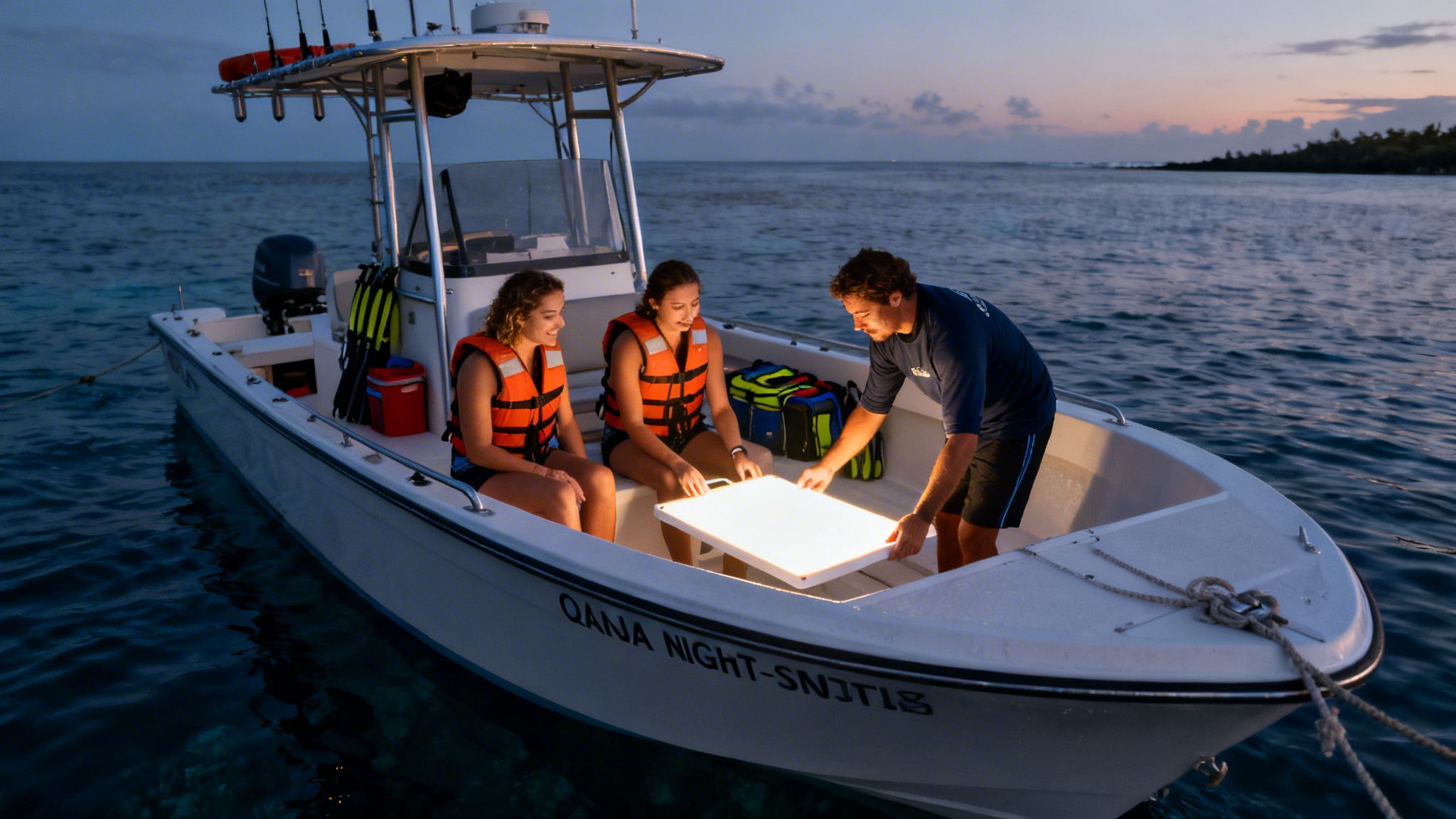
When it’s time, you'll slip into the ocean and make your way over to a big, floating light board. Everyone holds onto the raft, which shines powerful lights down into the water. This light attracts swarms of plankton, creating a floating buffet that brings the mantas in to perform their graceful, looping feeding dance right below you.
This is easily one of Hawaii's most incredible wildlife encounters, and it’s no secret. Spots fill up fast, so booking your trip in advance is definitely the way to go if you don’t want to miss out.
As you plan, it never hurts to explore your options. If you're comparing top-notch outfits, Manta Ray Night Snorkel Hawaii is an exceptional alternative when looking for a Manta Ray night snorkel tour.
Snorkeling With Gentle Giants: A Firsthand Look
The moment you slip off the boat into the dark, surprisingly warm Pacific is when it all becomes real. The world you just left behind on the boat fades away as you paddle towards a custom-made light board—your floating oasis for the next hour.
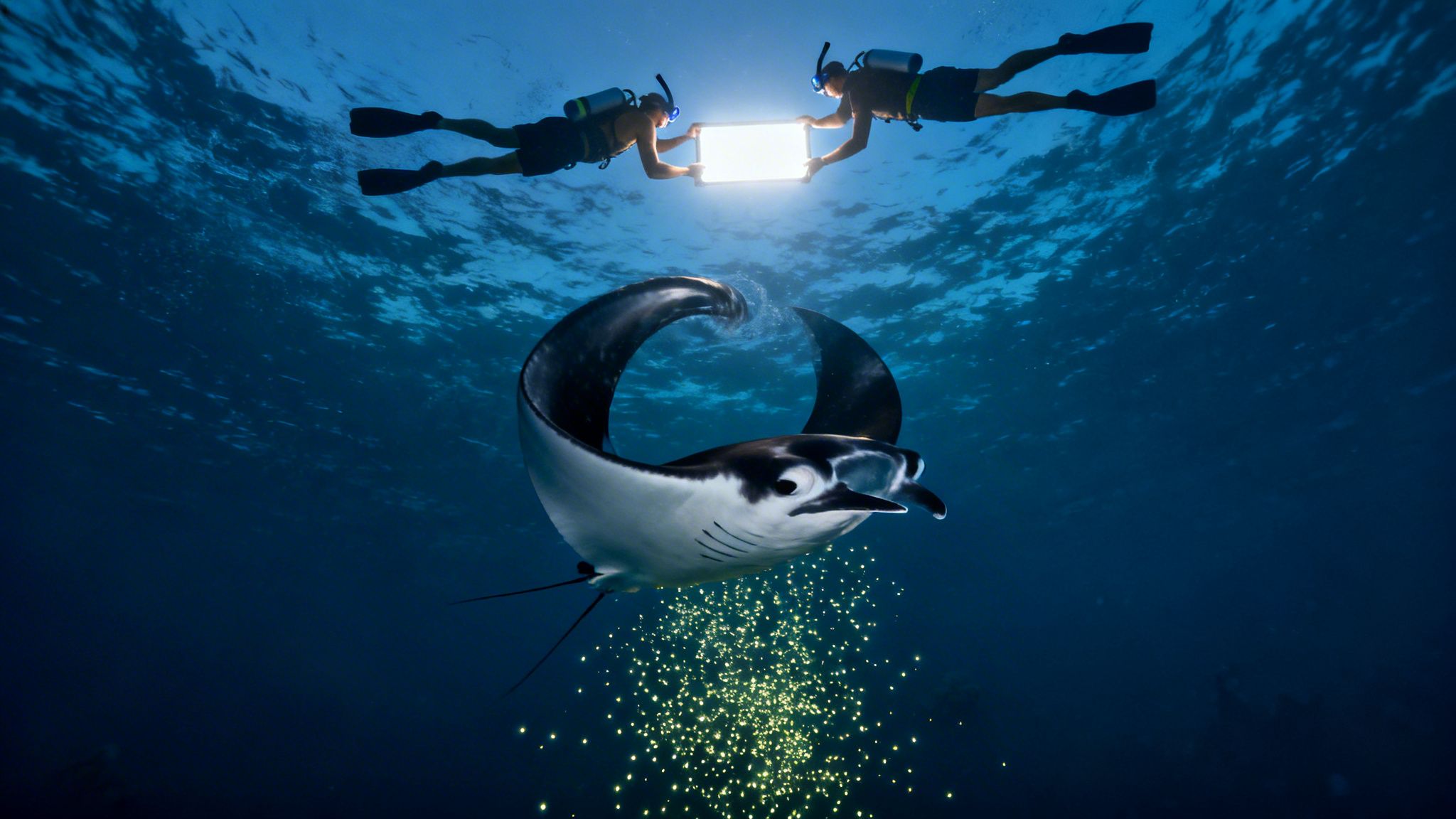
As you find your spot and hold onto the raft, you'll feel the gentle ocean current push against you while your eyes adjust. The powerful lights beaming down from your board slice through the darkness, illuminating a blizzard of tiny, shimmering plankton. This glowing cloud is exactly what we're here for. It’s an irresistible buffet for Kona's gentle giants.
The Underwater Ballet Begins
And then, it happens.
A massive, ghost-like shape ascends from the deep blue below, moving with a grace that completely defies its size. The first manta ray arrives. It performs an effortless barrel roll just inches from your mask, its huge mouth agape to scoop up thousands of plankton.
Before you can even process it, another one joins, and then another. Suddenly, you're witnessing an underwater ballet that is both incredibly thrilling and profoundly peaceful.
Their movements are silent and fluid. You'll hear nothing but the sound of your own breathing through the snorkel and the gentle lapping of water against the board.
On the boat ride out, your guide will have stressed the most important rule: passive observation. This means you stay horizontal on the surface and never, ever touch the mantas. Their skin is covered in a delicate mucous coating that protects them from infection, and our touch can be seriously harmful.
This hands-off approach is the cornerstone of responsible manta tourism. It ensures we can witness their incredible natural behavior without causing any harm, preserving this magical encounter for generations to come.
The manta ray night snorkel in Kona has deservedly become one of Hawaii's most popular marine activities, attracting around 80,000 people each year. Its popularity comes from being so accessible—you only need basic swimming skills for a tour that lasts about two hours. With manta wingspans here often exceeding an incredible 10-12 feet, it's a sight that leaves everyone speechless.
Tips For First-Timers
For anyone new to this, the key is just to relax. Trust your gear. Before you get in, practice clearing any water from your mask by pressing the top frame to your forehead and exhaling sharply through your nose.
Once you're in the water, just breathe slowly and deeply through your snorkel. The more relaxed you are, the more you can truly soak in the magic unfolding right below you.
This is so much more than a tour; it’s a genuine connection with one of the ocean's most majestic creatures. To learn even more about these incredible animals, check out our article covering fun facts about manta rays.
Choosing The Best Manta Ray Tour In Kona
Let’s be honest, not all manta ray tours are created equal. Picking the right one is probably the single most important decision you'll make for this trip, because it's the key to a safe, mind-blowing, and responsible manta ray night snorkel in Kona. Your choice doesn't just shape your own memories; it directly affects the well-being of the gentle giants you’ve traveled so far to see. With what feels like a million operators out there, knowing what to look for makes all the difference.
The best outfits always put guest safety and manta welfare on the same high pedestal. A fantastic starting point is to look for operators who are Manta-SMART certified. This isn't just a sticker on a window; it's a real commitment to following guidelines that protect the rays and their home, ensuring this incredible encounter can continue for years to come.
Key Factors To Consider
When you start digging into different tour companies, a few things should jump out as non-negotiable. These are the details that separate the truly great operators from the rest of the pack.
- Boat Size and Group Capacity: Smaller boats almost always mean a better, more personal experience. Fewer people in the water translates to a less crowded view of the action and more one-on-one time with your guides.
- Experienced Guides: A knowledgeable guide can turn a cool swim into an unforgettable educational experience. They’ll share amazing insights about manta behavior and make sure everyone sticks to the rules that keep both people and mantas safe.
- High Safety Standards: This is a big one. Look for companies with a rock-solid safety record. This means they provide quality gear (wetsuits that fit, good flotation devices) and give a thorough safety briefing before anyone even thinks about getting in the water.
When you choose a tour that nails these points, you’re doing more than just booking a fun night out. You're supporting a local business that values responsible tourism and gives back to the marine ecosystem we all love.
We always recommend Kona Snorkel Trips because they genuinely excel in all these critical areas. They’re Hawaii's highest-rated and most-reviewed snorkel company for a reason—their commitment to a top-tier experience shines through in everything they do. You can see what makes their tour so special and learn more about their manta ray night snorkel here.
Of course, don’t just take our word for it. Reading reviews from people who have actually been on the tour provides incredible insight. You can see what people are saying by checking out these Kona snorkel tours reviews.
Got a few questions before you take the plunge? That's completely normal. We get them all the time. Here are some of the most common things people ask before heading out on their big night adventure.
Is This Tour Safe For Kids And Beginners?
Absolutely! This is one of the first things families and first-time snorkelers want to know, and the answer is a resounding yes. The entire experience is designed to be incredibly safe and accessible, no matter your age or comfort level in the water.
You won't be kicking around in the dark open ocean. Instead, you'll be holding onto a big, custom-made light raft that floats on the surface. It’s super stable and gives you something secure to hang onto, so you can just relax and watch the show below. Every reputable operator provides all the gear you need, like wetsuits and extra flotation, making this a fantastic, worry-free night out for everyone.
What Is The Best Time Of Year For Manta Sightings?
Here’s the best part about doing this in Kona: it’s amazing any time of year. Unlike a lot of wildlife tours that depend on the season, Kona has a massive population of manta rays that live here year-round. They aren’t just passing through.
This means the success rate for seeing them is ridiculously high—often over 90%, no matter when you book your trip. The only thing that really changes day-to-day is the weather or the ocean chop, not whether the mantas are around. They're always here, and they're always hungry for plankton.
What Happens If We Don't See Any Manta Rays?
While nobody can ever guarantee a 100% sighting with wild animals, the Kona manta snorkel is about as close as you can get. The mantas have been showing up to these specific "feeding stations" for decades, so their behavior is incredibly predictable.
That said, on the super rare night they decide to be shy, almost every good company has a "manta guarantee." If you don't see them, they'll typically give you a voucher to come back and try again on another night, completely free. It’s their way of making sure you get the mind-blowing experience you came for.
Is It Okay To Touch The Manta Rays?
This is a hard no. You should never, ever touch a manta ray. It’s the single most important rule of the night, and it’s all about protecting these incredible animals.
Manta rays are covered in a protective mucous coating, which is basically their immune system. When we touch them, we can rub that slime layer off, leaving them vulnerable to nasty bacteria and infections. The whole point of the tour is to be passive observers—we are guests in their underwater dining room. By keeping our hands to ourselves, we get to witness their natural, graceful behavior up close without causing any harm.