
Guide to manta ray night snorkel kona: Kona’s Unforgettable Manta Encounters
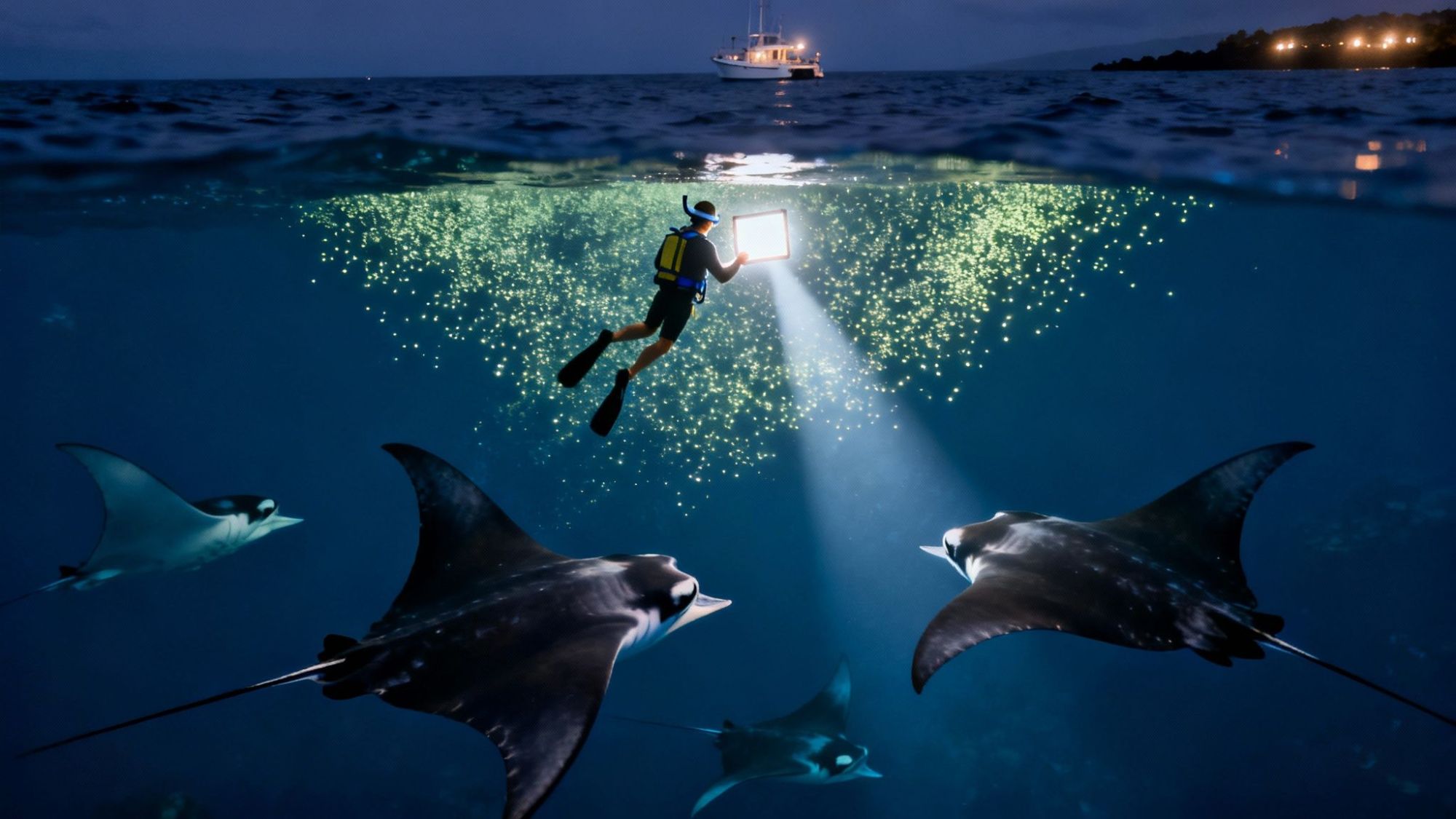
Picture this: you're floating in the calm, dark Pacific Ocean. Below you, huge, gentle shadows glide and dance through beams of light, sometimes just inches away. This is the manta ray night snorkel in Kona, and it's a true bucket-list experience that feels like stepping into another world. It's easily one of the most reliable and magical wildlife encounters you can have anywhere on the planet.
Of course, making sure your trip is safe, memorable, and truly magical comes down to choosing the right guide. That's why we're pointing you toward Kona Snorkel Trips, the top-rated and most-reviewed snorkel company in all of Hawaii. Their local knowledge and focus on giving guests an amazing time really makes all the difference.
The reviews above really speak for themselves, with countless five-star stories from adventurers just like you. Now, let's dive into the details of this incredible underwater ballet.
Your Unforgettable Kona Manta Ray Snorkel Adventure
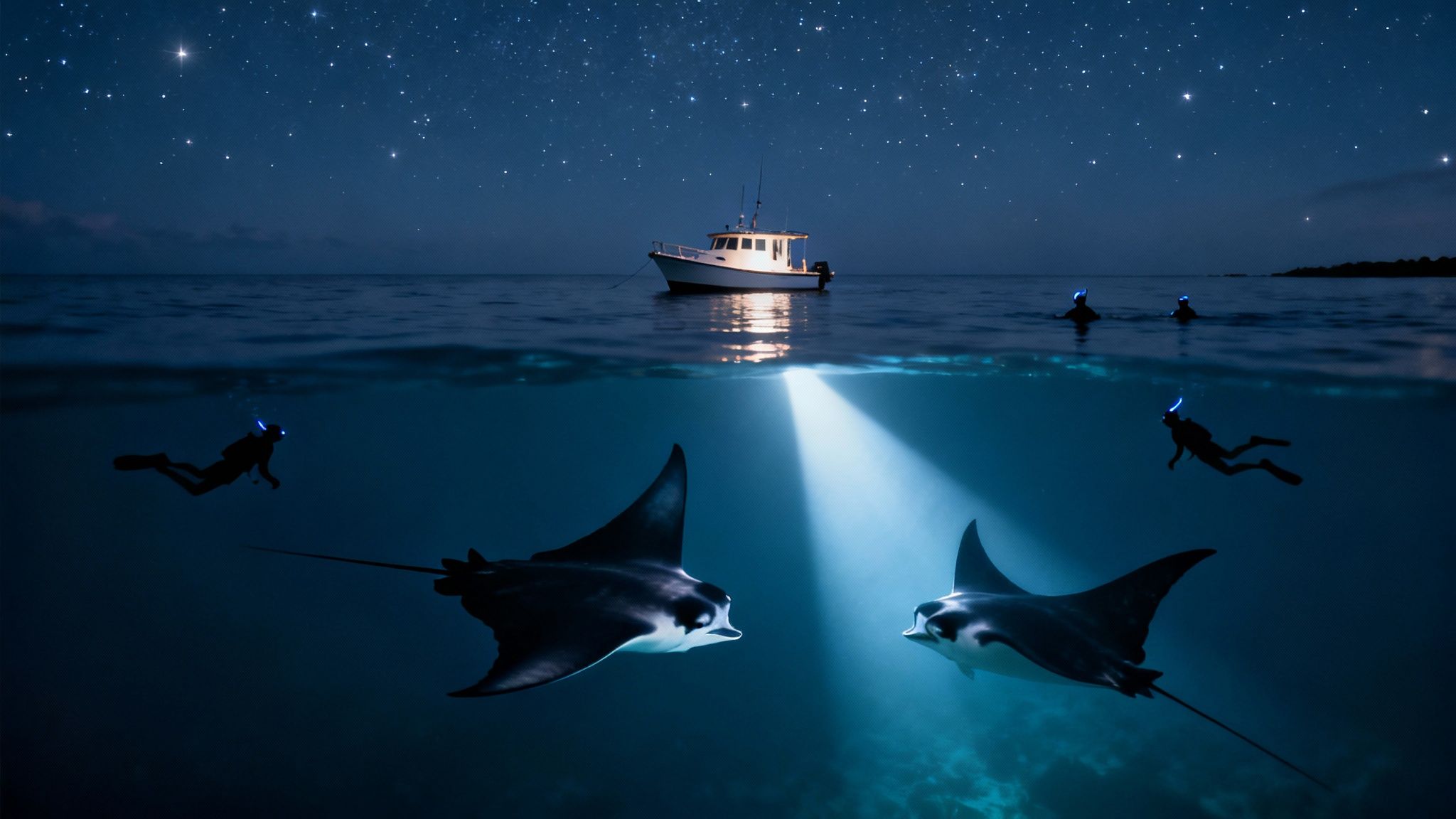
This guide is going to walk you through everything you need to know to make this incredible adventure happen. We'll get into why Kona is, hands down, the best place on Earth for this unique encounter, and how to turn a simple vacation activity into a memory that will stick with you for life.
What Makes This Experience So Special?
The magic here in Kona is all about predictability and proximity. Unlike a lot of wildlife tours where you just cross your fingers and hope for a sighting, Kona’s manta ray population lives here year-round. Over the years, tour operators have established feeding sites with underwater lights, creating a reliable "dinner bell" that draws these gentle giants in almost every single night.
And this isn't some far-off viewing experience. You are right there in the action. You'll watch these amazing creatures, with wingspans that can stretch over 12 feet, perform graceful barrel rolls as they scoop up plankton, often coming within inches of you.
This is so much more than just snorkeling; it's like having a front-row seat to a silent, powerful ballet. The way the mantas move through the water is mesmerizing, and it connects you directly to the mystery and grandeur of the ocean.
Why This Guide Is Your Ultimate Resource
Our goal here is simple: to give you all the information you need to confidently book and enjoy an unforgettable manta ray night snorkel tour. We’re going to cover everything, from the science behind why the mantas show up to the practical stuff, like what you should bring with you.
Throughout this guide, we'll break down:
- How the whole snorkel setup actually works.
- Why Kona is the undisputed world capital for manta encounters.
- The best times to book your tour to get the best conditions.
- A play-by-play of what to expect on your adventure from start to finish.
- Essential tips to make sure you're comfortable and safe in the water.
By the time you're done reading, you'll feel like a pro, ready to jump into one of the most breathtaking adventures the Big Island has to offer. Let’s get started.
How the Manta Ray Night Snorkel Actually Works
So, how do we get such a magical, up-close encounter with these gentle giants, night after night? It's not magic, but it feels like it. The whole thing is a brilliant mix of simple biology and smart logistics. Think of it like setting up an underwater campfire that draws in the most incredible audience you can imagine.
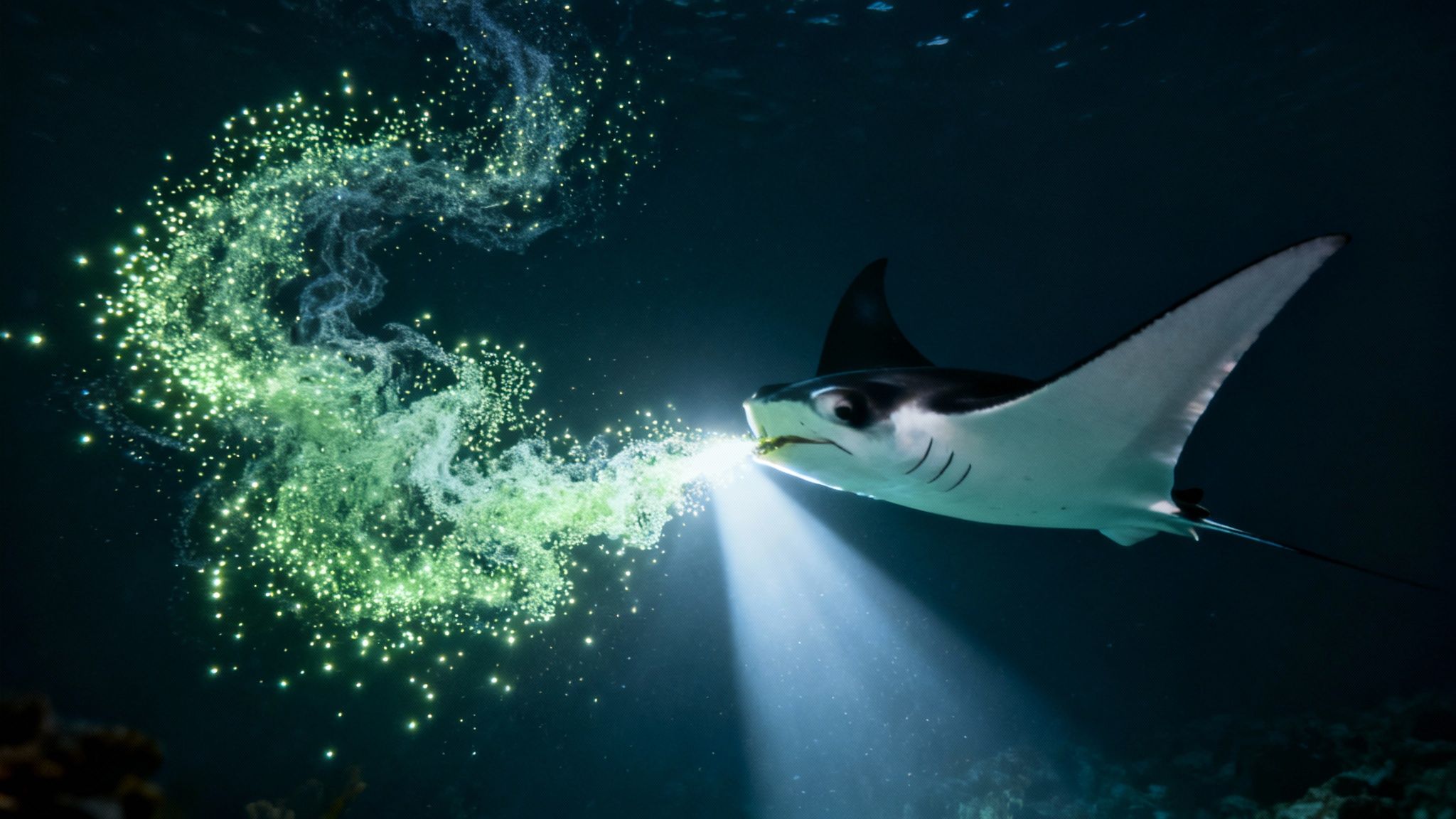
The entire manta ray night snorkel in Kona hinges on one simple truth: manta rays are filter feeders, and their absolute favorite meal is microscopic plankton. The genius of the tour is using this fact to our advantage, creating a reliable and totally safe way to bring you face-to-face with them.
It all starts as we motor out to one of Kona's special manta feeding sites just as the sun goes down. These aren't just random spots in the ocean; they're specific locations where mantas have been showing up for years. Once we're anchored, the crew gets the main attraction ready—not for you, but for the plankton.
The Science of Attraction
We use powerful, eco-friendly lights that shine down into the dark water. These lights are like magnets for zooplankton, the tiny critters that drift in the ocean currents. Within just a few minutes, those beams of light become thick, swirling clouds of plankton. It's an irresistible, all-you-can-eat buffet for any manta rays in the area.
This glowing column of plankton essentially becomes a massive 'dinner bell' for the ocean. The mantas, who know these spots well, recognize the lights as a sign that an easy, delicious meal is ready and waiting.
This is what makes the experience so dependable. We aren't out there chasing the animals. We're simply setting the table and letting our dinner guests arrive on their own time. It’s a passive approach that allows for a respectful and absolutely breathtaking wildlife encounter.
Your Front-Row Seat on a Floating Light Board
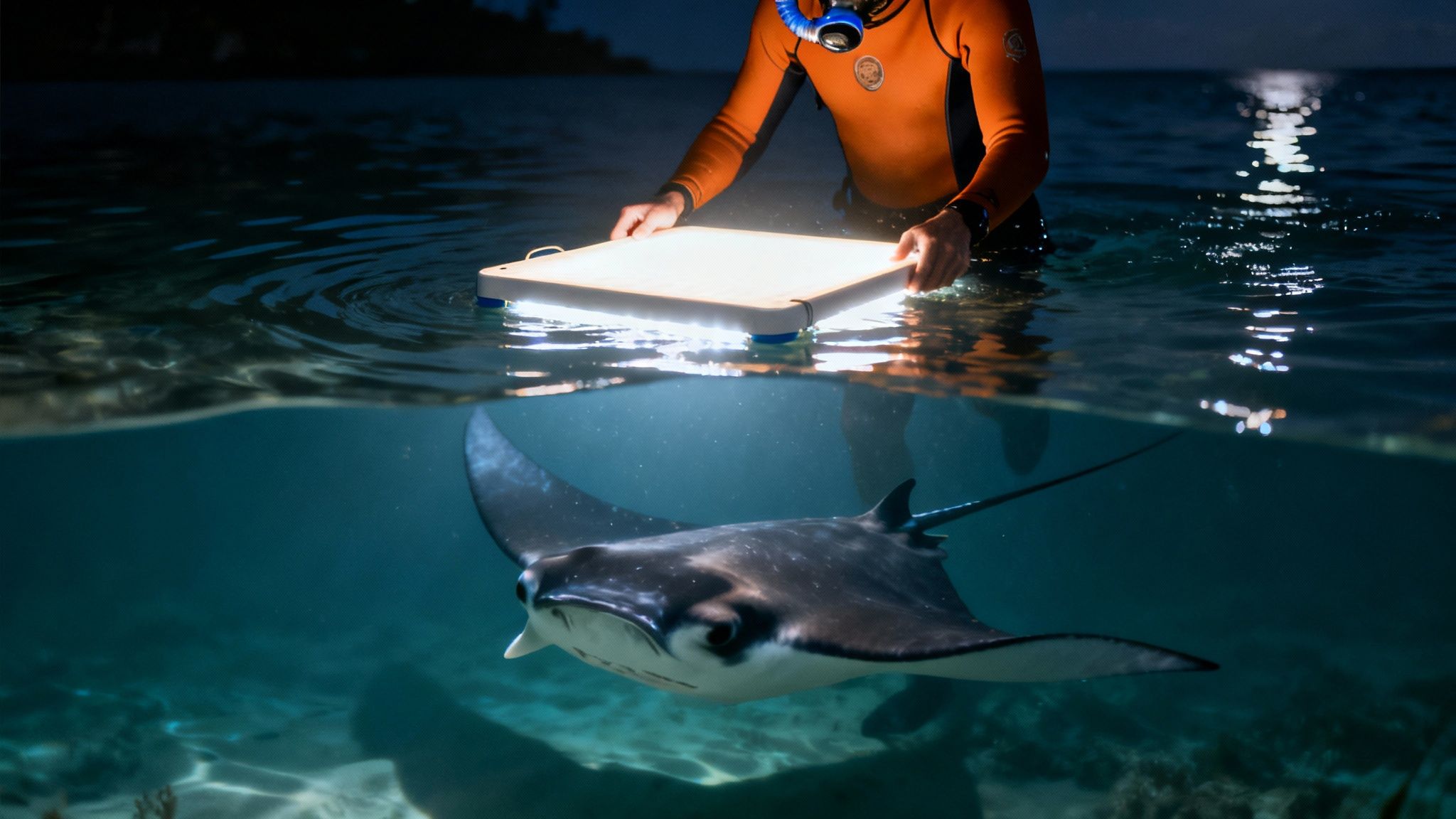
Once that dinner bell is ringing loud and clear, it’s your turn to slip into the water. You won't be swimming all over the place or diving down. Instead, you'll simply hold onto our custom-built floating light board. This raft is super stable and buoyant, letting you float comfortably on the surface without having to kick or paddle.
The board itself has its own lights shining downward, which concentrates the plankton even more, right below you. This design is crucial for two reasons:
- It’s Safe and Comfortable: It gives everyone a secure handhold, so even if you're not a super confident swimmer, you can relax and enjoy the show.
- It Guarantees a Prime View: It draws the mantas directly to you. You'll watch them perform their incredible barrel rolls just inches from your mask as they swoop in to feed.
This method gives you an effortless, front-row seat to one of nature's greatest spectacles. It’s no wonder this experience is on so many bucket lists, drawing around 80,000 visitors to Kona every year. Our tours typically last about 1 hour and 20 minutes on our swift boats with a small group of no more than 13 guests. We provide wetsuits to keep you warm and comfortable in the 75-80°F night water. To learn more about this incredible Big Island activity, you can always check in with local experts.
Why Kona Is the World's Manta Ray Capital
It’s no accident that the manta ray night snorkel in Kona is on every serious wildlife lover's bucket list. This isn't just a place where you might see a manta ray. It's a world-famous hotspot where these incredible encounters happen like clockwork, all year round. Kona's unique geography and a bit of human ingenuity have created the perfect storm for this nightly underwater ballet.
So, what's the secret? It all comes down to a few key ingredients. The Kona coast is perfectly sheltered, creating calm bays that are natural hangouts for marine life. Just offshore, the water gets deep—fast—and it’s incredibly nutrient-rich. This supports a massive, permanent population of zooplankton, which happens to be a manta ray’s favorite meal. With an all-you-can-eat buffet right in their backyard, Kona's resident mantas have no reason to leave.
Over the years, a fascinating relationship developed. The lights from shoreline hotels started attracting swarms of plankton, and the mantas quickly followed. Tour operators saw this and simply refined the process, creating a safe, sustainable way to set the dinner table for these gentle giants every single night. The mantas now recognize these specific sites as reliable feeding stations. This isn't a gamble; it's a proven natural wonder built on decades of observation.
The Science of Consistent Sightings
The whole operation is brilliantly simple. The powerful, eco-friendly lights used on the tours shine down into the dark water, acting like a massive bug zapper for plankton. These lights draw in huge, dense clouds of the tiny critters, creating an irresistible dinner bell for any manta ray in the area.
This isn't about chasing the mantas down. It's about setting the dinner table and patiently waiting for our honored guests to arrive. The result is a reliable, breathtaking spectacle.
This simple technique is why Kona's success rate is legendary. Local marine advocates track the data, and the numbers are staggering: an 80-90% sighting success rate throughout the year. That consistency is what makes this a truly world-class attraction. You can dive deeper into the fascinating data behind Kona's manta sightings to see just how reliable it is.
Kona's Two Premier Manta Viewing Locations
While you might spot mantas along the coast, the night snorkel tours are centered around two primary, world-renowned locations. Each has its own vibe and offers a slightly different experience, but both are absolutely phenomenal.
-
Manta Village (Keauhou Bay): Located just south of Kailua-Kona, this is the original manta viewing site. It's tucked into a very calm, sheltered bay, which is perfect for first-time snorkelers, families with kids, or anyone who gets a bit queasy on the water. The water is also relatively shallow, making the whole experience feel very up-close and personal. Manta Village has a historic 96% success rate, averaging about 4 mantas per night.
-
Manta Heaven (Garden Eel Cove): This spot is a bit further north, closer to the airport. Manta Heaven can be a little more exposed to the open ocean, and the water is deeper, but it often draws in much larger groups of mantas. Here, the tours have seen averages soar to 11 mantas per night with an incredible 90% success rate. This site is an amazing choice for those hoping for a truly massive spectacle.
To make it easier to see the difference, here's a quick side-by-side look at the two main sites.
Kona Manta Ray Viewing Site Comparison
This table breaks down the key differences between Manta Village and Manta Heaven to help you get a feel for what to expect at each location.
| Feature | Manta Village (Keauhou Bay) | Manta Heaven (Garden Eel Cove) |
|---|---|---|
| Sighting Success Rate | 96% | 90% |
| Average Mantas Per Night | 4 | 11 |
| Typical Conditions | Very calm, sheltered bay, shallow water | Can be more exposed, deeper water |
| Best For | First-timers, families, and those prone to motion sickness | More experienced snorkelers looking for larger groups of mantas |
Honestly, you can't go wrong with either spot. Both offer an exceptionally high chance of having an experience you'll never forget. Your choice might just come down to which tour operator has availability, and either way, you’re signing up for one of the most reliable and awe-inspiring wildlife encounters on the planet.
So, When Is the Best Time for Your Manta Ray Snorkel?
This is easily one of the questions we get asked the most: "When's the best time to see the mantas?" And the fantastic news? There’s no bad time. Kona’s manta rays are residents, not tourists. They live here year-round, which means you have an excellent chance for a magical encounter no matter what month you book your trip.
That said, some factors can definitely dial up the experience from "great" to "absolutely perfect." Understanding the subtle shifts in seasons and ocean conditions can help you nail the timing for the best possible night out on the water.
The Peak Season for Calm Seas
If you’re looking for the smoothest, most comfortable ride, the sweet spot is generally from April to October. During these late spring, summer, and early fall months, the Pacific along the Kona coast tends to be at its calmest.
Less swell on the water means a more stable boat ride—a huge plus for families, first-time snorkelers, or anyone who even thinks they might get motion sickness. Calmer seas also mean better water clarity. With less churn, the visibility underwater is often incredible, letting you see every graceful swoop and barrel roll in crisp detail under the lights.
Plankton and Moon Phases
Beyond the weather, a couple of other natural cycles can influence the manta action on any given night. It all comes down to plankton, their favorite meal.
- Plankton Blooms: The warmer summer months often bring an increase in plankton. More food in the water can draw in more mantas, making for a very busy and active dinner service.
- Moon Phases: This one is up for debate, but some old-timers swear by it. A darker, new moon makes the tour lights seem even brighter to the plankton, potentially creating a more concentrated buffet. But honestly, we’ve seen jaw-dropping nights under a full moon, too.
Ultimately, these factors are just icing on the cake. The main reason this works is that the mantas show up to these specific sites like clockwork, every single night.
While aiming for the calmer season is a good strategy, the single most important factor is simply going. The daily presence of the mantas is what makes Kona the undisputed best place in the world for this adventure.
So, while the peak from April to October gives you a great shot at calm seas and lots of plankton, don't sweat it if your vacation falls outside that window. Your odds are always fantastic. It's an ethically sound experience, too—strict no-touching rules protect the hundreds of resident mantas, each identified by its unique spot pattern. Plus, your ticket helps fund vital conservation efforts. You can learn more by checking out this guide on the best times to see Kona's mantas.
And for those of you weighing all your options, Manta Ray Night Snorkel Hawaii is an exceptional alternative when looking for a Manta Ray night snorkel tour. They're a great choice for your big night out.
What to Expect During Your Tour Adventure
Knowing what’s coming next can turn a great trip into an unforgettable one. The manta ray night snorkel in Kona is a well-oiled machine, designed to build excitement while making sure you feel safe and comfortable from start to finish. Let's walk through the whole evening so you’ll feel like a seasoned pro before you even step on the boat.
The moment you check in with the Kona Snorkel Trips crew, you'll feel the aloha. We'll get you signed in and start fitting you for gear—a high-quality wetsuit to keep you warm and buoyant, plus a mask and snorkel that actually fit right.
Next up is one of the most crucial parts of any ocean adventure: the safety briefing. Our experienced guides will lay out everything you need to know, from moving around the boat to the proper way to view the mantas. They'll explain how our light board works and cover the golden rule of wildlife encounters: look, but don't touch. This chat is all about building your confidence so everyone can have a fun, respectful time.
The Journey to the Manta Site
With everyone geared up and briefed, we'll head out onto the open water. This part of the adventure is magic in its own right. As we cruise to the manta site, you'll get a front-row seat to a spectacular Kona sunset, watching the sky catch fire with orange, pink, and purple. It's a short, beautiful boat ride that perfectly sets the stage for the main event.
Once we’re anchored at one of the prime viewing sites—either Manta Village or Manta Heaven—the crew gets to work setting up our custom light board. This floating raft shines powerful lights down into the dark water, attracting the plankton that manta rays absolutely love to eat. To see exactly how the evening flows, you can get more details about our manta ray night snorkel tour here.
Entering the Underwater Theater
Alright, this is the moment you've been waiting for. One by one, you'll slide into the calm, dark ocean and make your way to the floating light board. It has comfortable handles all around, so you can just hold on and float effortlessly on the surface—no swimming or treading water required. Between the warm water and the buoyancy of your wetsuit, it's a feeling of total weightlessness.
As you float, mesmerized by the glowing plankton swirling in the beams below, a profound sense of peace settles in. The world above disappears, and you become completely immersed in the silent, illuminated theater of the ocean at night.
And then it happens. A massive, graceful shadow emerges from the darkness, gliding effortlessly into the light. The first manta ray has arrived. You’ll be in awe as it performs silent, beautiful barrel rolls just inches below you, its huge mouth open to filter the plankton-rich water. Soon, another might join, and then another, until you're witnessing an incredible underwater ballet performed by some of the ocean’s most majestic creatures. The only sounds are the gentle lapping of the water and your own quiet breathing, which makes the powerful, silent movements of the mantas feel even more profound.
How to Prepare for Your Night Snorkel Experience
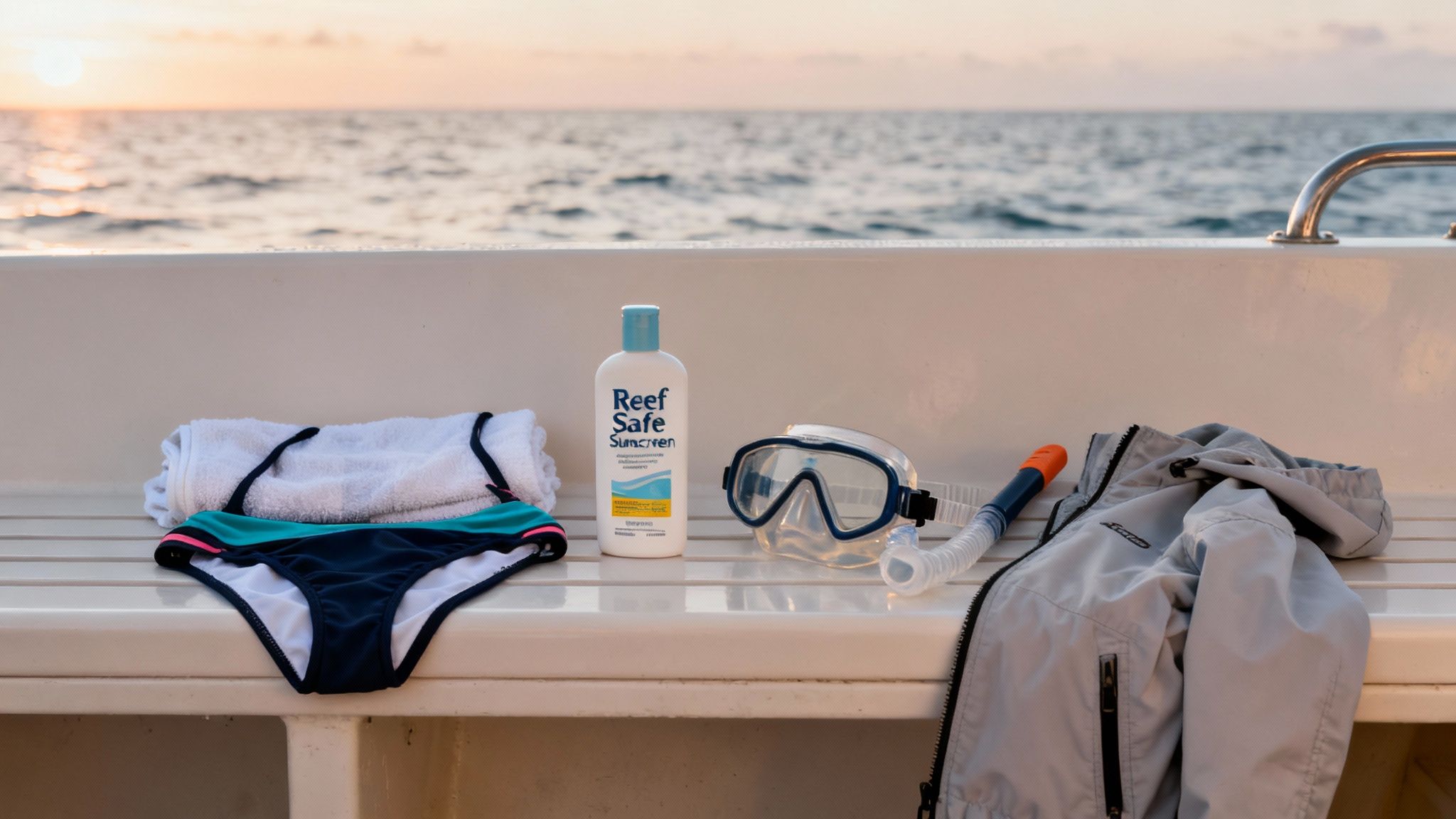
A little bit of prep work can take a great manta ray night snorkel in Kona and make it absolutely unforgettable. Knowing what to bring makes all the difference, ensuring you're warm, comfortable, and ready to soak in every moment of the incredible show below.
Think of it like getting ready for two completely different outings at once: a warm, tropical swim followed by a cool, breezy boat ride home under the stars. When you’re prepared, you can just relax and enjoy the ride.
Your Manta Ray Snorkel Checklist
Having the right gear with you is key. While we’ve got you covered with all the essential snorkel equipment (including wetsuits!), a few personal items will make your adventure that much smoother.
Here's a simple packing list to make sure you have everything you need for a comfortable and memorable night.
| What to Bring | Why It's Important |
|---|---|
| Swimsuit | This is your base layer. It's best to wear it to the dock so you're all set to hop into your wetsuit. |
| Towel & Warm Change of Clothes | An absolute must for drying off and staying cozy on the boat ride back after your swim. |
| Reusable Water Bottle | Staying hydrated is always a good idea. Make sure to drink plenty of water before and after your time in the ocean. |
| Underwater Camera | You'll definitely want to capture these moments! Just remember to turn the flash off to keep the mantas safe and happy. |
| Motion Sickness Remedy | If you're prone to getting seasick, take your preferred remedy well before we leave the harbor. |
| Reef-Safe Sunscreen | If you need sun protection for a tour later in the day, apply it hours beforehand to let it soak in and protect the reef. |
This simple list pretty much covers all the bases. For a more detailed look at what works best in the water, you might find our guide on what to wear for snorkeling helpful.
Being a Responsible Ocean Visitor
Your preparation isn't just about what you pack—it’s also about adopting the right mindset to protect the beautiful ecosystem you're about to enter. The marine environment here in Hawaii is precious, and every single one of us plays a role in keeping it healthy.
One of the most impactful choices you can make is committing to reef-safe sunscreen. The chemicals in traditional sunscreens, like oxybenzone and octinoxate, are known to cause serious damage to coral reefs.
By choosing a mineral-based sunscreen (look for zinc oxide or titanium dioxide) and putting it on a few hours before getting in the water, you're doing your part to protect the delicate corals and the vibrant marine life that call Kona home.
It’s a small change that makes a huge difference, ensuring these incredible manta encounters are possible for many years to come. Your thoughtful preparation is truly a gift to the ocean.
Your Manta Ray Snorkel Questions, Answered
Alright, let's wrap this up by tackling some of the most common questions and worries people have before booking their manta ray night snorkel in Kona. My goal here is to give you clear, honest answers that will have you feeling totally confident and excited for this incredible adventure.
We'll cover everything from safety to swimming skills, giving you those last few puzzle pieces you need to go from just thinking about it to actually doing it.
Is the Manta Ray Night Snorkel Safe?
This is the big one, and the answer is a resounding yes. Manta rays are true gentle giants. They’re filter feeders, which means they're only interested in the microscopic plankton that flock to our lights. They have no teeth, no stingers, and no barbs.
Any reputable tour operator puts safety above all else. You'll get a thorough safety briefing, be kitted out with top-notch gear, and have experienced guides right there in the water with you the entire time. We operate in protected bays known for their calm waters, making this one of the safest ocean activities you can do.
Want to dive a bit deeper? We've got a whole article on why manta rays are not dangerous.
Do I Need to Be a Strong Swimmer?
Not at all. You definitely don’t need to be an Olympic swimmer, but you should be comfortable being in the ocean at night. One of the best parts of this experience is that you actually do very little swimming. You'll simply hold onto a large, custom-made floatation board where our underwater lights are mounted.
This means you just float on the surface and watch the show unfold below you. The wetsuits we provide add a ton of buoyancy too, so floating is pretty much effortless. If you're comfortable in the water, you're good to go.
Can I Touch the Manta Rays?
This is a hard no, and it's the golden rule of responsible wildlife encounters. It is absolutely crucial that you never, ever touch the manta rays or any other marine life. Manta rays have a special protective mucus layer on their skin, which is like their immune system, shielding them from harmful bacteria.
Touching a manta ray can strip off this protective coating, leaving the animal vulnerable to disease and infection. We, along with all other reputable operators, enforce a strict "passive observation" policy. This means you look, you marvel, you have your mind blown—but you never touch.
This respectful approach is what makes the manta ray night snorkel in Kona a sustainable and ethical experience for both us and the amazing animals we get to see.
What if We Don’t See Any Manta Rays?
It's a fair question—we are, after all, dealing with wild animals. But here’s the great news: Kona has one of the most reliable manta ray populations in the world. Our sighting success rate hovers between 80-90% year-round. The chances of seeing at least one manta are incredibly high.
On the very rare night that the mantas decide to be elsewhere, policies can vary by company. Here at Kona Snorkel Trips, we are dedicated to making sure you have an amazing experience. It's always a good idea to check the specific re-booking or "manta guarantee" policy if this is a major concern for you.
Are you ready to witness this breathtaking underwater ballet for yourself? Don't wait to book one of the most memorable nights of your life. Join Kona Snorkel Trips for an adventure you'll be talking about for years to come.