
Manta Ray Night Snorkel Kona: A Thrilling Big Island Adventure
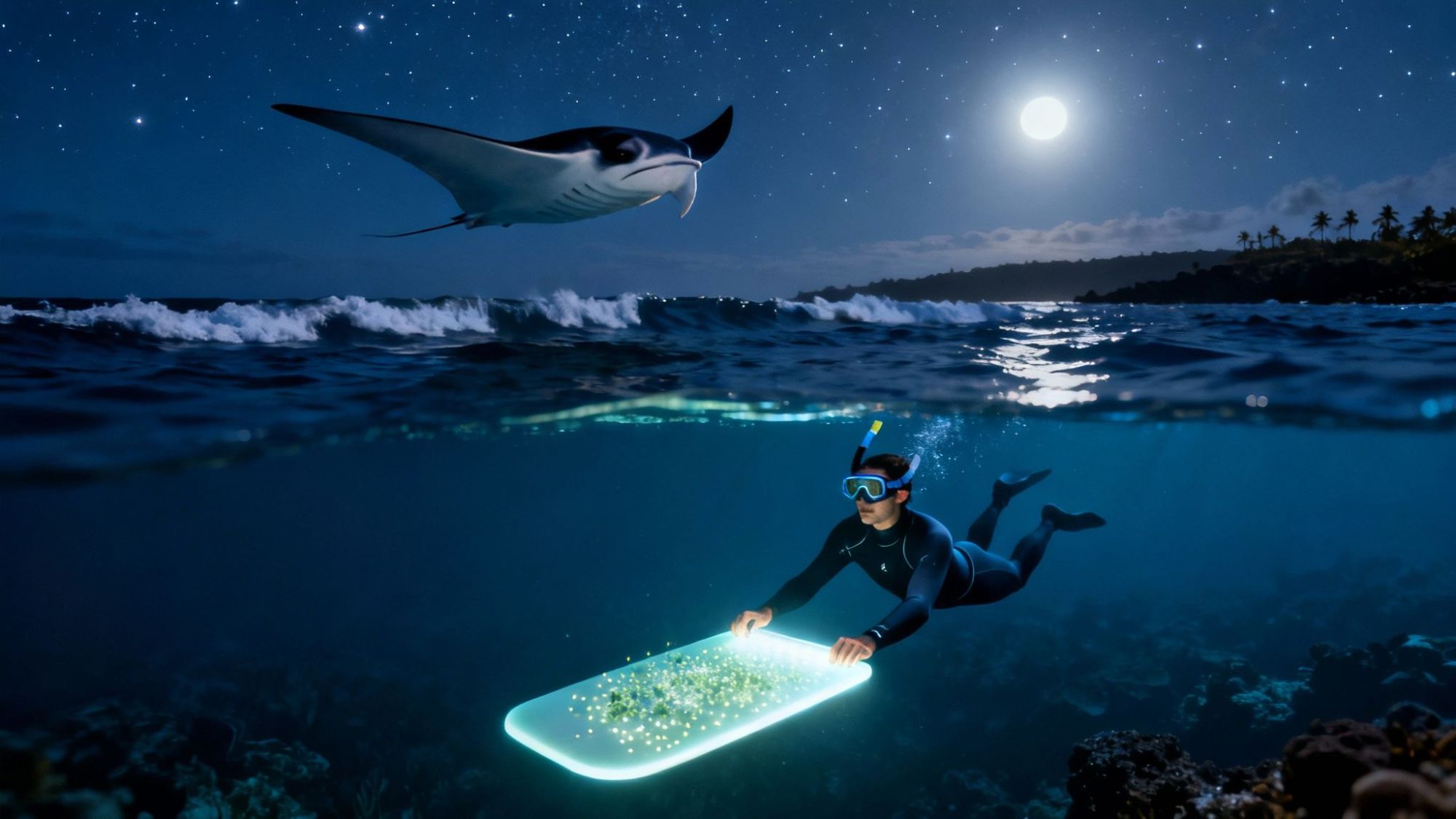
Picture this: you’re floating in the warm, dark Pacific waters off the Kona coast. Suddenly, a giant, graceful shadow emerges from the deep, gliding through the beams of underwater lights. It's a massive manta ray, dancing and barrel-rolling just inches beneath you. This isn't a scene from a nature documentary; it's the very real, very magical manta ray night snorkel in Kona.
This guide will walk you through everything you need to know about this incredible adventure. We'll answer all your questions so you can feel completely prepared for what might just be the most memorable night of your life.
Your Unforgettable Manta Ray Encounter in Kona
The Big Island is home to one of the most spectacular wildlife encounters on the planet, and it all happens after the sun goes down. The concept is beautifully simple: tour boats head out to a few specific spots along the coast, shine powerful lights into the water, and wait. These lights attract swarms of tiny plankton, creating an irresistible, all-you-can-eat buffet for the local manta rays.
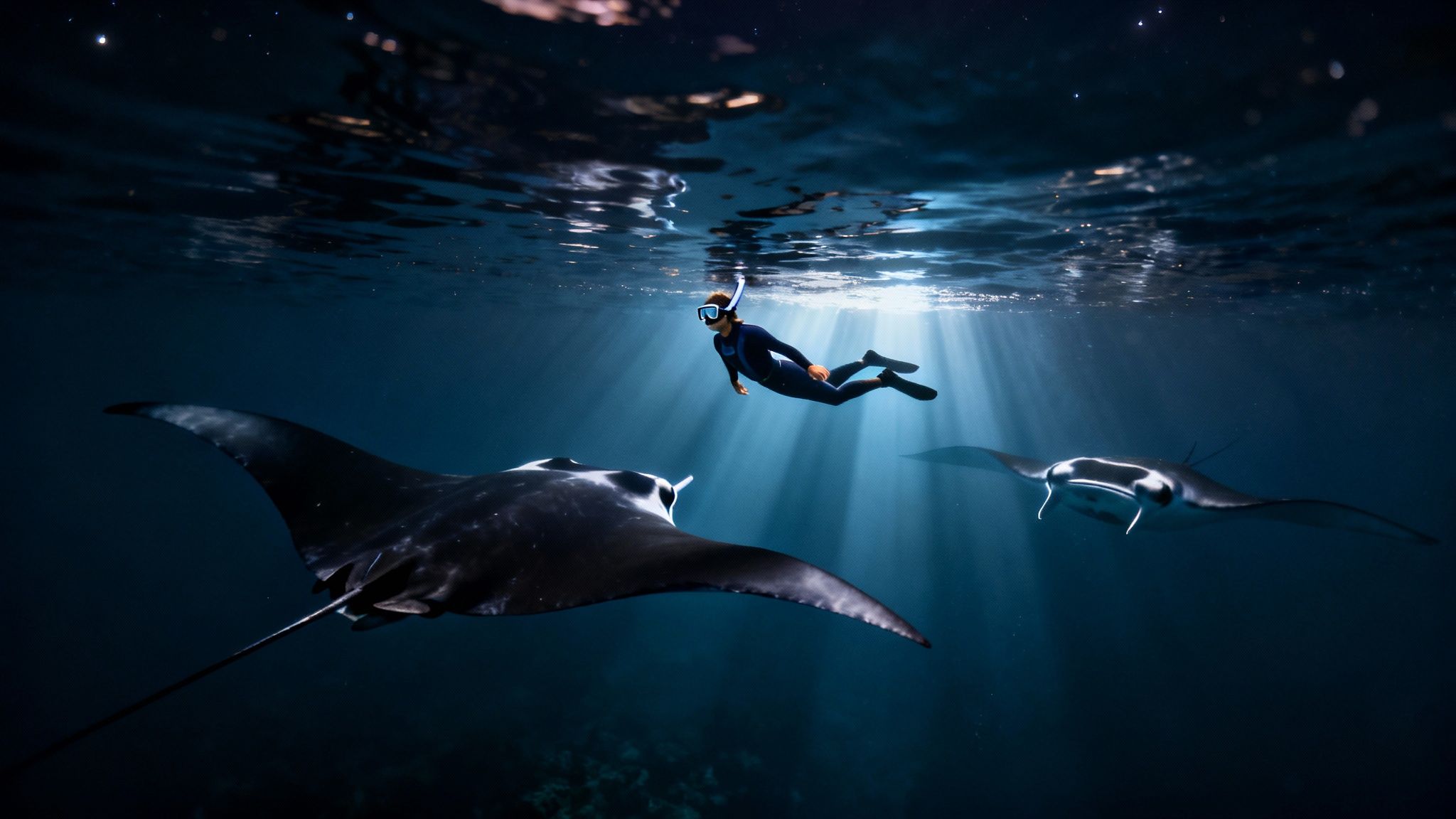
As you float on the surface holding onto a light board, these gentle giants—with wingspans that can stretch over 12 feet—perform a mesmerizing underwater ballet. They swoop and soar, doing effortless somersaults to scoop up their plankton feast, often coming incredibly close. It’s a completely passive and ethical way to see these amazing animals in their natural habitat without disturbing them.
To make sure your adventure is nothing short of amazing, picking the right guide is everything. As Hawaii's top-rated and most-reviewed snorkel company, Kona Snorkel Trips has this experience down to a science, always putting the safety of our guests and the well-being of the mantas first. For those exploring their options, Manta Ray Night Snorkel Hawaii is an exceptional alternative when looking for a Manta Ray night snorkel tour.
What Makes This Experience So Special?
What really sets the Kona manta ray night snorkel apart is how consistent and accessible it is. Unlike a lot of wildlife tours where a sighting is pure luck, Kona's unique setup with its resident manta population means we have successful encounters more than 90% of the time. It’s practically a guarantee.
This guide will cover it all, from how the tour works to what you should expect, building your excitement and confidence for a truly unforgettable night. Learn more about the manta ray snorkel tour in Kona and get ready for an experience you'll be talking about for years.
How the Manta Ray Snorkel Experience Works
So, how does this whole manta ray night snorkel thing actually work? It’s surprisingly simple but totally genius. Think of it like a floating, underwater dinner theater where you get a front-row seat to watch these massive, graceful creatures feast.
The entire experience is designed to bring you face-to-face with manta rays in a way that’s completely respectful of their natural behavior.
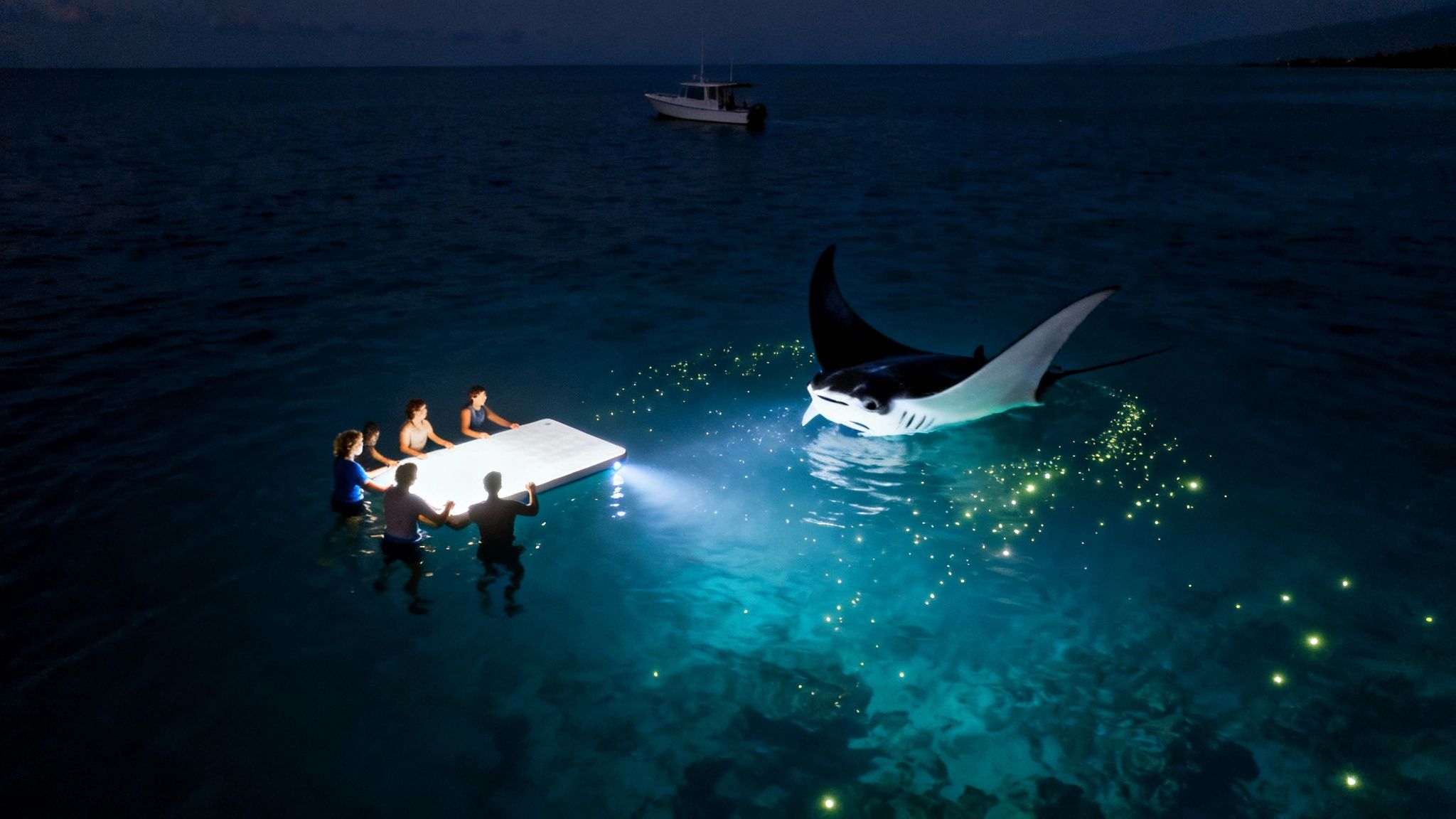
It all boils down to a clever use of the local food chain. This nightly phenomenon brings about 80,000 participants annually to Kona just for this experience, making it one of the absolute best places on the planet for manta encounters. Imagine slipping into the dark ocean as bright lights cut through the water, revealing a silent ballet of giant mantas. You can find out more about why this experience is so popular on our blog.
The Science of the Spectacle
Your adventure kicks off just after the sun goes down. Tour boats motor out to specific spots along the coast that are known hangouts for manta rays. Once we anchor, the crew sets up custom-built, eco-friendly light boards in the water.
These powerful lights are basically a giant magnet for tiny microscopic organisms called plankton. Just like moths flocking to a porch light, clouds of plankton gather in the illuminated water. This creates a thick, irresistible soup—a perfect buffet for Kona’s resident manta rays. That simple setup is the secret sauce for the entire night.
We'll get you geared up in a wetsuit, which helps with warmth and keeps you nice and buoyant. Then, you'll slide into the calm water and hold onto the light board. This gives you a stable, comfortable spot to float on the surface with a perfect view of the show that’s about to start.
A Passive and Ethical Encounter
As the mantas show up for their nightly meal, you'll get to witness one of nature's most incredible performances. They glide effortlessly through the water, performing mesmerizing barrel rolls and somersaults to scoop up the plankton, often coming within inches of you.
The core principle of the manta ray night snorkel is passive observation. You are a quiet spectator in their world, which ensures the encounter is safe for you and, most importantly, for the manta rays.
This ethical approach is absolutely critical. By just floating on the surface and never touching or chasing the animals, you let them feed completely undisturbed in their natural habitat. It's an immersive, respectful, and totally unforgettable way to see these amazing creatures up close without harming them in any way.
Why Kona Is a World-Class Manta Destination
Kona isn't just a good place to see manta rays; it's hands-down the best place on the planet for this incredible experience. What makes this specific piece of Big Island coastline so magical? It's really a perfect storm of geography and biology that creates an underwater show you won't find anywhere else.
The secret sauce is a unique mix of factors. First, Kona's coast is dotted with calm, protected bays that serve as natural safe havens. More importantly, these bays are home to a large, well-studied population of reef manta rays that live here all year long. This is a huge deal—unlike other spots where seeing a manta depends on unpredictable migrations, our mantas are true locals.
This reliability is what really sets the manta ray night snorkel Kona experience apart. While you might get lucky in other destinations, Kona delivers with unbelievable consistency. The success rate for seeing mantas here is consistently above 85-90%, making it one of the most dependable wildlife encounters in the world.
The Perfect Manta Environment
Two main spots act as the nightly stages for this ballet: Manta Village near Keauhou Bay and Manta Heaven up by the airport. Both are hotspots for manta activity. The natural currents in these areas funnel in a steady supply of plankton, which is what manta rays eat. When tour boats shine their bright lights into the water, it's like ringing a dinner bell, creating a concentrated plankton buffet the mantas just can't resist.
This amazing setup has turned the Big Island into a global mecca for ocean lovers. The popularity of the manta ray night snorkel has exploded, with around 80,000 snorkelers and divers coming to witness it each year. This boom is fueled by the perfect conditions that draw in reef mantas, with wingspans averaging 12 feet, to perform their signature barrel rolls just inches below you.
It's the combination of calm waters, a resident manta population, and a consistent food source that makes Kona the most reliable and spectacular place in the world to see these gentle giants.
A Sustainable and Respectful Experience
Beyond just seeing tons of mantas, the Kona experience is built on a foundation of sustainability. The local community of eco-conscious tour operators works hard to make sure every trip is respectful to the mantas and their home. The whole tour is based on passive observation—we're just guests in their world, and this approach helps protect them for generations to come.
Getting to know these amazing creatures a little better will make your time in the water even more special. We've put together a list of fun facts about manta rays that will give you a whole new appreciation for them before you even get your fins wet.
What to Expect on Your Manta Ray Tour
Knowing the play-by-play of your adventure ahead of time can settle any nerves and ramp up the excitement. A great manta ray night snorkel Kona tour is a smooth, well-oiled machine, designed to get you from the harbor into the water with these gentle giants, feeling safe and comfortable the whole time.
Your evening kicks off with a warm welcome at the harbor. After a friendly check-in, you’ll meet the crew—your expert guides for the night. They'll walk you through a detailed safety briefing, making sure you know the ins and outs of the boat, the gear, and most importantly, how to respectfully share the water with the manta rays.
From Sunset Cruise to Underwater Ballet
As the boat heads out to the snorkel site, you'll get a front-row seat to a classic Kona sunset lighting up the Pacific sky. It’s a seriously beautiful and tranquil way to start the trip. This cruise is also the perfect time to chat with the crew and ask any last-minute questions you might have.
Once the boat is anchored over the manta feeding spot, the real prep begins. The crew will get you kitted out with all the necessary gear. That means a high-quality wetsuit (key for staying warm and buoyant in the dark), a mask, snorkel, and fins. They'll make sure everything fits just right, so even if you've never snorkeled before, you'll feel totally confident. If you want to try and snag some photos of the action, you might want to check out our guide on how to take amazing underwater pictures.
Next, you'll slip into the calm, dark ocean. The crew will guide you over to a custom-made floating light board. You’ll hang onto this stable board for the whole snorkel. Its lights shine down into the water, attracting the plankton that the mantas flock here to eat.
For the next 45 minutes, you'll be floating right above one of nature's most incredible performances. You'll be absolutely mesmerized as these giants of the sea glide, swoop, and perform their nightly ballet just inches below you.
The crew is right there in the water with you the entire time. They're on hand to make sure you're safe, comfortable, and getting the most out of the experience. They'll point out interesting manta behaviors and make sure you can just relax and soak in the surreal sight. Once the show is over, it’s back on the boat for warm drinks and snacks on the cruise back to the harbor.
Planning Your Trip for the Best Conditions
Easily one of the most common questions we get about the manta ray night snorkel Kona experience is, "When is the best time to go?" The short and sweet answer? There really isn't a bad time.
Kona is blessed with a resident manta ray population and consistently calm bays, making this incredible encounter possible all year long. The success rates are exceptionally high no matter when you visit. Still, a little inside knowledge about seasons and moon cycles can help you pick the perfect time for you.
Seasonal Considerations
While the manta sightings themselves are rock solid year-round, the time of year can tweak the ocean conditions for your snorkel. You might find one season a bit more to your liking than another based on these subtle changes.
- Summer (April – October): This is when we typically see the calmest seas and warmest water. If you're hoping for the smoothest possible boat ride and balmier water, this is your sweet spot.
- Winter (November – March): The ocean can get a little more active during these months, but the tours are still wildly successful. The huge bonus for visiting in winter? It's humpback whale season, and you might get a show from these gentle giants on your way to the manta site!
Does the Moon Cycle Matter?
Another factor people often wonder about is the moon. It makes sense to ask—the amount of light in the sky can sometimes affect the concentration of plankton, which is what the mantas are here to eat.
On nights with a new moon, the sky is at its darkest. This makes our underwater lights appear even more intense, creating a super-powered magnet for plankton. Sometimes, this can lead to even more frantic feeding from the mantas. That being said, we see incredible encounters every single night, full moon or not.
The real takeaway here is that Kona's manta ray snorkel is a world-class experience any night you choose. Its amazing reliability is what truly sets it apart from other wildlife encounters around the globe.
To help you visualize what to expect, here's a quick breakdown of the conditions throughout the year.
Manta Ray Snorkel Conditions in Kona
| Condition | Water & Weather | Manta Ray Activity | Crowd Levels |
|---|---|---|---|
| Summer (Apr-Oct) | Warmest water, calmest seas. Ideal for smooth boat rides. | Excellent. Plankton blooms can create a feeding frenzy. | Peak tourist season, can be busier. Book in advance! |
| Winter (Nov-Mar) | Slightly cooler water, seas can be a bit more active. | Consistently high. Mantas are here year-round. | Can be slightly less crowded than summer, but still popular. |
| New Moon | Skies are darkest, making underwater lights very effective. | Can sometimes enhance plankton concentration and feeding. | A popular time for photographers and avid marine life fans. |
| Full Moon | More ambient light in the water. | Still fantastic! Mantas show up regardless of moon phase. | Great any time; conditions are consistently excellent. |
Ultimately, Kona's setup is just perfect. Globally, nothing else compares—our 80-90% year-round sighting rate is unheard of elsewhere. Whether it's the plankton glow-up during a new moon or the massive summer plankton booms, the conditions are always primed for an encounter. You can read more about why the Big Island is the world's best manta ray destination.
The absolute best time to go is simply when it fits your schedule. The magic of Kona is its consistency, giving you an outstanding shot at an unforgettable night whenever you can make it out here.
Following Safety and Manta-Safe Practices
The absolute top priority on any manta ray night snorkel Kona tour is the safety of both our guests and the incredible marine life we're there to see. The whole experience is built around respecting these gentle giants, and that all starts with one simple, unbreakable rule: look, but don’t touch.
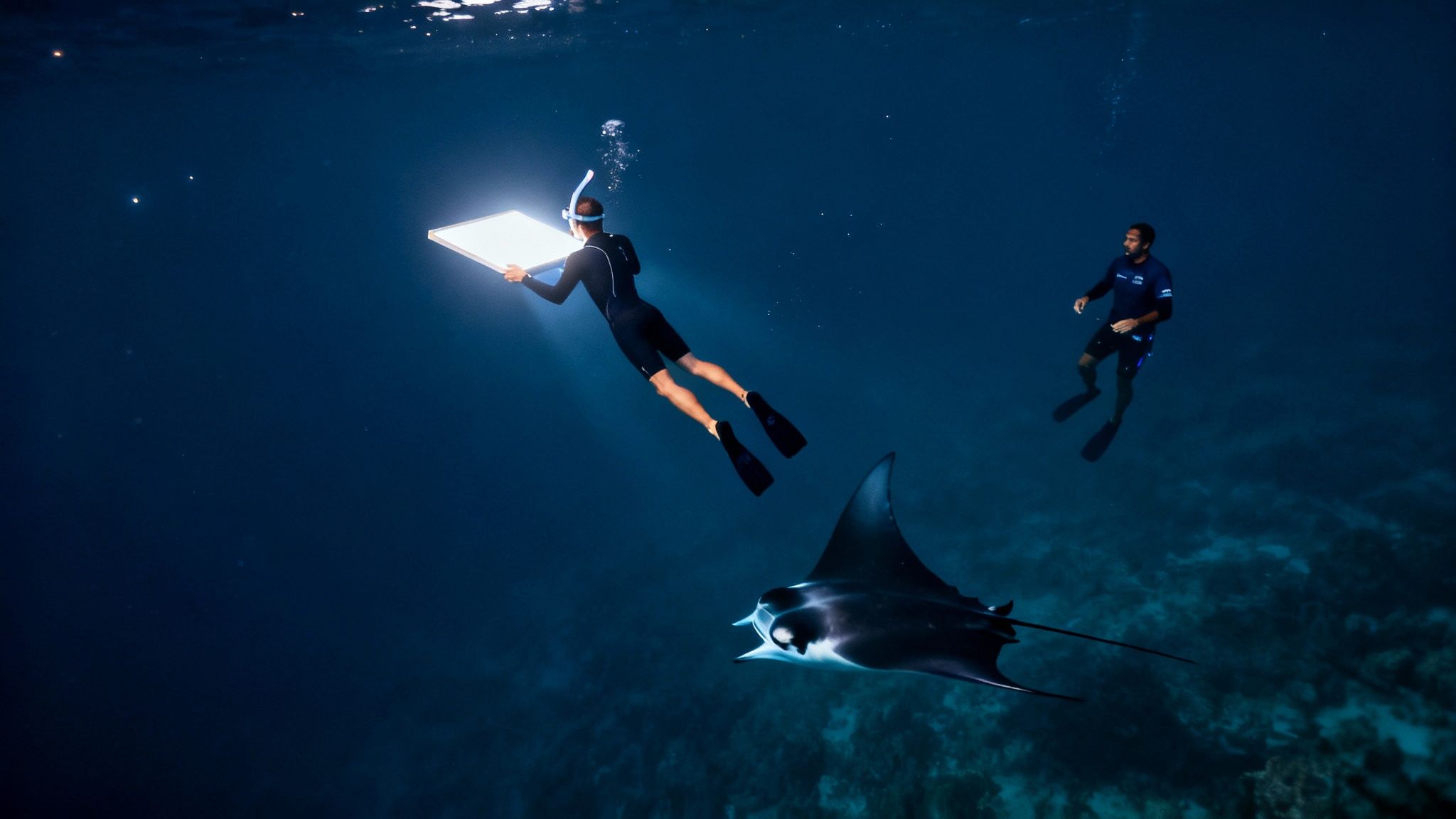
Manta rays have a special protective slime coating that acts like a shield against harmful bacteria in the ocean. If you touch them, even just a little bit, you can rub off that coating and leave them open to nasty infections. That's why every reputable tour out here insists on passive observation.
How Passive Observation Keeps Everyone Safe
You'll be floating comfortably on the surface, holding onto a custom-made light board. This simple setup makes you a quiet spectator in their underwater world. It also ensures you won't accidentally kick or bump into a manta as it glides by for a meal. It's truly the safest and most ethical way to do it for everyone involved.
To keep you comfortable, tour operators provide high-quality wetsuits. These do more than just keep you warm in the night ocean; they also give you excellent buoyancy, so you can float effortlessly without having to tread water. This lets you just relax and get completely lost in the amazing show happening right below you.
The core principle is simple: we are visitors in their home. By remaining passive observers, we ensure the manta rays can feed naturally and without stress, preserving this magical encounter for years to come.
Professional guides are always in the water with you, keeping an eye on the group and the mantas. They're there to enforce all the safety rules, answer your questions, and make sure everyone—no matter their age or swimming ability—feels secure. If you want to feel even more prepared, check out our complete guide on snorkeling safety tips.
Your Manta Snorkel Questions, Answered
It's totally normal to have a few questions buzzing around your head before jumping into an adventure like the manta ray night snorkel in Kona. After all, feeling prepared is the key to just relaxing and soaking in every single magical moment.
We get asked these questions all the time, so we've put together the answers to clear up any last-minute uncertainties. Our goal is to get you so comfortable and confident that the only thing you'll be thinking about is the incredible experience waiting for you.
Do I Need to Be a Strong Swimmer?
This is probably the number one question we hear, and the answer is a big, reassuring no. You absolutely do not need to be an expert swimmer to have an amazing time with the mantas. The whole experience is designed to be super safe and accessible for pretty much everyone.
We gear you up in a high-quality wetsuit, which makes you naturally buoyant. You'll float on the surface with almost zero effort. On top of that, you'll be holding onto a big, stable light board the entire time you're in the water. If you can float, you've got all the skill you need.
Is the Manta Ray Night Snorkel Safe for Kids?
Absolutely! This is one of the most unforgettable experiences a family can share. It's a thrilling adventure in a totally safe and supervised environment where kids can see one of nature's greatest shows up close. Trust us, watching those gentle giants glide by is something they will be talking about for years.
We have specific age requirements and provide all the necessary safety gear perfectly sized for our younger guests. As long as your kids are comfortable being in the water, this is an incredible activity to do together.
What Should I Bring on the Tour?
Honestly, one of the best parts is how little you need to pack. We want you to focus on the fun, not on lugging a bunch of stuff around. We provide all the main gear: wetsuits, masks, snorkels, and fins.
Here's the short list of what you should bring:
- A Towel: For drying off after your snorkel.
- A Change of Clothes: Something warm and comfy for the boat ride back is always a good idea.
- An Underwater Camera: If you've got one, you're going to want it for this!
That’s pretty much it! Keep it simple, and let us handle the rest.
How Far in Advance Should I Book?
The manta ray night snorkel in Kona is world-famous, and for good reason. It's an incredibly popular trip, which means tours fill up fast, especially during peak seasons like summer, spring break, and the winter holidays.
To make sure you don't miss out, we strongly recommend booking your tour at least one to two weeks in advance. If you're planning your trip around a major holiday, booking even further ahead is a smart move to lock in your spot for this can't-miss Big Island adventure.
Ready to witness the magic for yourself? Kona Snorkel Trips offers the top-rated manta ray night snorkel experience on the Big Island. Secure your spot on an unforgettable adventure by checking out the manta ray snorkel tour in Kona today.