
Manta Ray Night Snorkel Kona: Experience the manta ray night snorkel kona
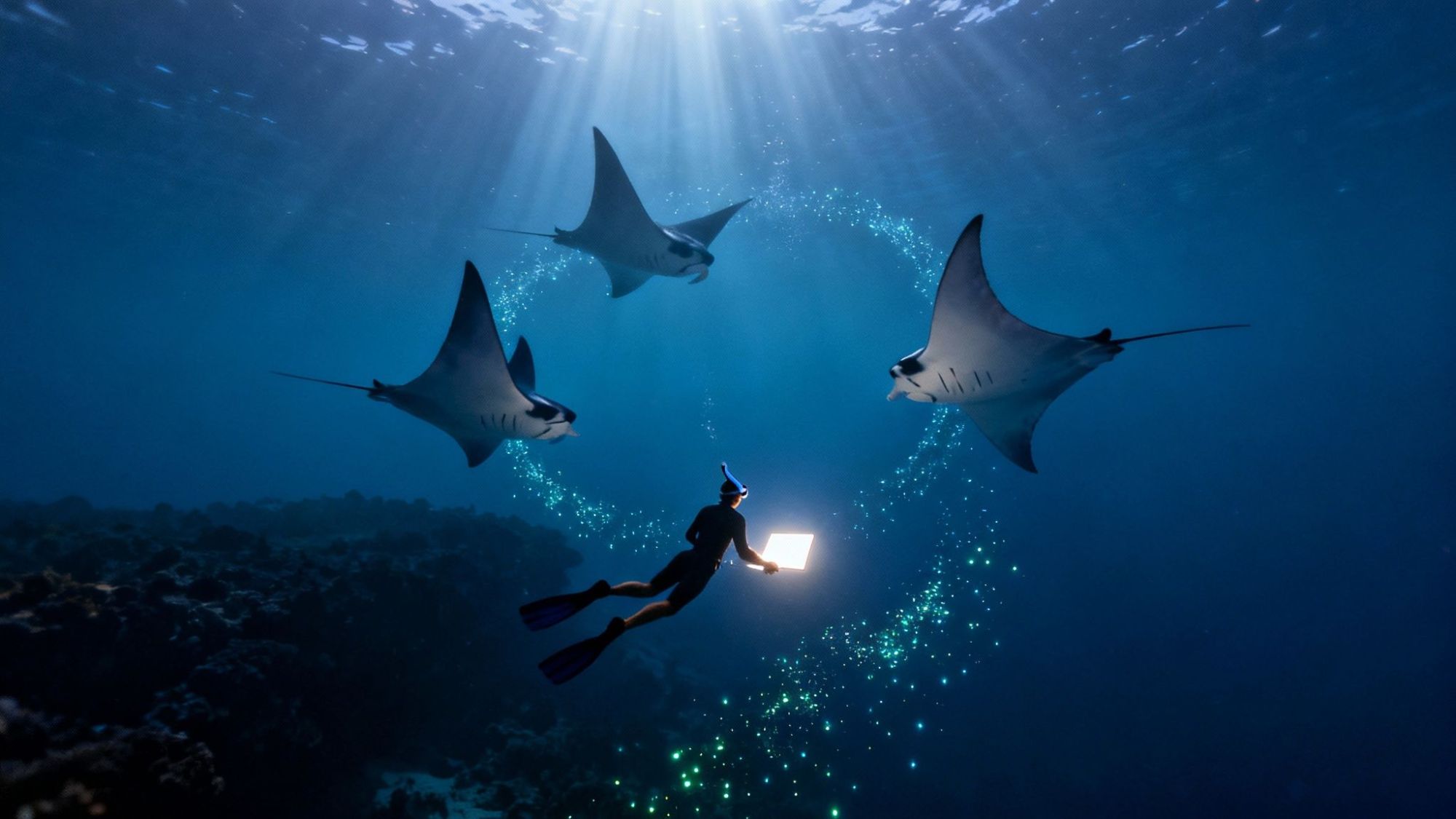
Picture this: you're floating in the quiet darkness of the Pacific Ocean. Suddenly, giant, ghost-like figures emerge from the deep, soaring and barrel-rolling right beneath you. Their graceful movements are caught in the glow of underwater lights. This isn't a scene from a nature documentary—it's the very real, and completely awe-inspiring, manta ray night snorkel Kona experience. It’s consistently rated as one of the best marine encounters on the planet, and for good reason.
When you're ready for an adventure this epic, you want to go with the best. Kona Snorkel Trips is the top rated & most reviewed snorkel company in Hawaii, which really says it all. Their reputation for safety, fun, and genuine passion for the ocean is clear from the moment you read what other travelers have to say.
Why the Manta Ray Night Snorkel is a Kona Must-Do
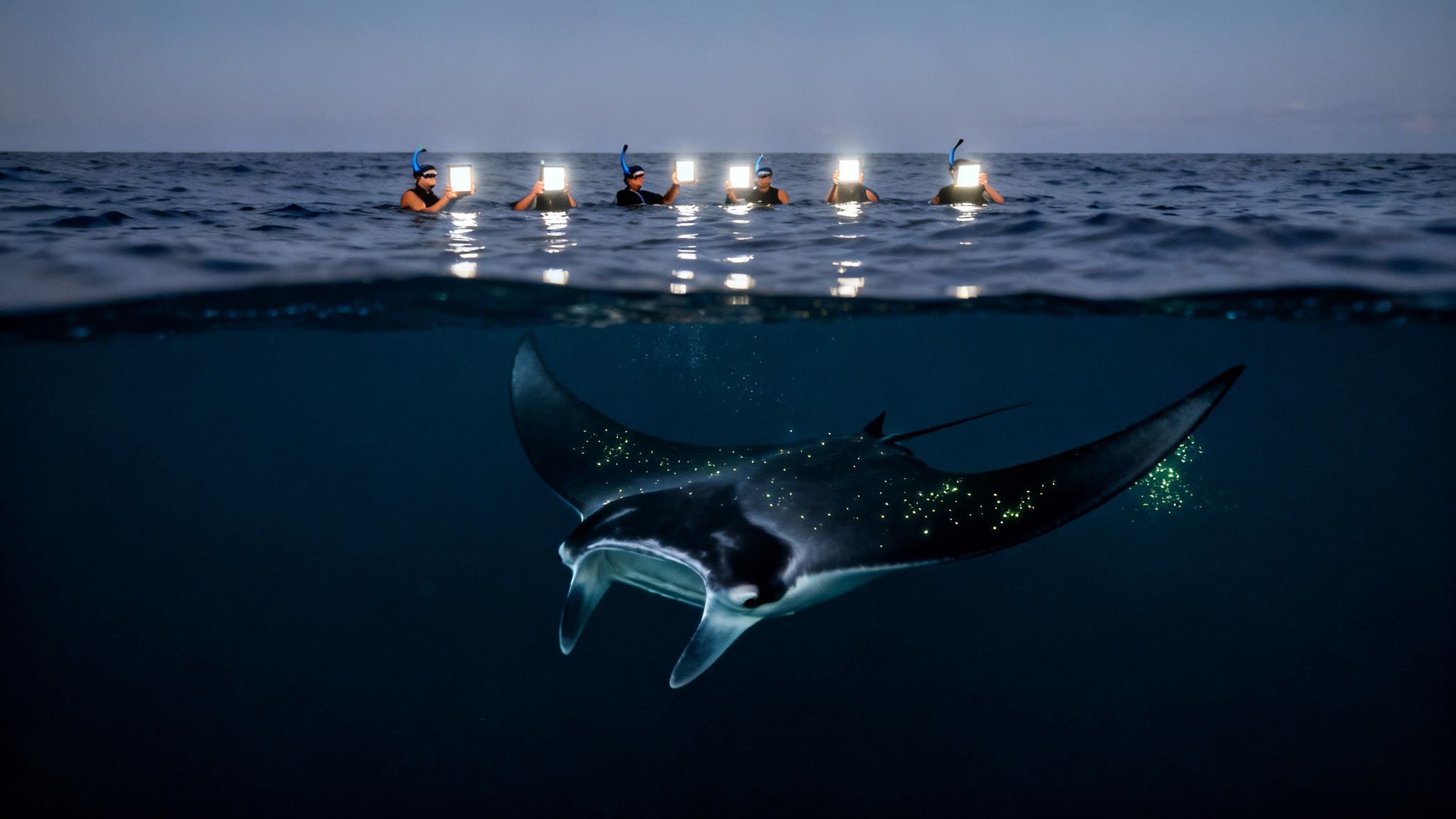
This guide is your complete playbook for experiencing this magic for yourself. We'll get into how this whole incredible encounter works, from the simple science of attracting plankton to what it actually feels like to share the water with these gentle giants.
The Science Behind the Spectacle
The magic of the manta ray night snorkel isn't really magic at all—it's a brilliant mix of biology and smart thinking. Manta rays are filter feeders, meaning they survive by gulping down huge amounts of microscopic plankton. The entire experience is built around this one simple fact.
Tour operators have figured out a genius way to create a reliable feeding spot:
- Powerful Lights: They sink special, eco-friendly lights into the water, usually attached to a custom floating raft you can hold onto.
- Plankton Magnet: In the dark ocean, these bright lights act like a magnet for clouds of plankton.
- Underwater Buffet: This dense concentration of food creates an irresistible "all-you-can-eat buffet" that draws in the local manta rays for their nightly feast.
It’s a simple but incredibly effective technique that leads to remarkably consistent sightings, often with success rates hitting over 90%. You get a front-row seat to a natural feeding behavior that would be nearly impossible to witness this closely otherwise.
This isn't just another tour; it’s an immersive experience that connects you with one of the ocean's most majestic creatures. You're not just watching them from a distance—for a short while, you become part of their underwater world.
Whether you've never put on a snorkel mask before or you're a seasoned ocean explorer, we’ll walk you through how to get ready for a night you’ll be talking about for years.
To see what a top-rated tour looks like, check out the manta ray night snorkel Kona page for all the details. If you're shopping around, Manta Ray Night Snorkel Hawaii also offers an exceptional alternative when looking for a Manta Ray night snorkel tour.
Choosing the Right Manta Ray Tour Operator
When it comes to a world-famous experience like the manta ray night snorkel in Kona, your choice of tour operator is everything. It's the difference between a decent swim and an absolutely unforgettable, almost magical encounter. Picking the right company is crucial for a safe, ethical, and mind-blowing adventure, because trust me, not all tours are created equal.
A few key factors can completely shape your night out on the water.
What to Look For in a Tour
One of the first things you'll notice is the boat size. Big boats can pack a lot of people on, but I've always found that smaller vessels, like the ones Kona Snorkel Trips runs, offer a far better experience. Think less crowded and more personal. With fewer people in the water, you get a front-row seat to the action and the crew can give you more attention.
Understanding the Snorkel Sites
Most tours head to one of two main spots, and each has its own vibe. Knowing the difference can help you pick the perfect trip for you.
- Manta Village (Keauhou Bay): Just south of Kailua-Kona, this site is famous for its incredible consistency. It's often the most reliable place to see the mantas, which is why so many operators love it.
- Manta Heaven (near the airport): This spot is north of town and can sometimes attract huge groups of mantas. The trade-off? Sightings can be a little less predictable than at Manta Village.
Both places offer amazing opportunities, but it's worth chatting with your potential tour company about the pros and cons of each. For a deeper dive, check out our guide on the best manta ray night snorkel in Kona.
The Importance of Responsible Tourism
This is a big one. You want to go with a company that's truly dedicated to protecting the manta rays we're all there to see. This means finding an operator who follows strict guidelines—like never, ever touching the mantas and teaching guests how to be passive observers.
A great guide doesn't just point and say, "There's a manta." They turn the experience into an educational adventure, sharing fascinating details about manta behavior and the whole ecosystem.
A great tour operator understands they are guests in the mantas' home. Their commitment to the animals' welfare ensures this magical experience can continue for generations to come.
The manta ray snorkel has become a massive deal here, with around 80,000 people doing it every year. That number just goes to show how popular and accessible these encounters have become, making it even more critical to support companies that put conservation first. You can read more about the [growth of manta ray tours on Konasnorkeltrips.com](https://konasnorkeltrips.com/blog/manta-ray-night- snorkel-3/).
While we're proud that Kona Snorkel Trips consistently gets top marks for professionalism and sustainability, if you're exploring all your options, Manta Ray Night Snorkel Hawaii is another fantastic, highly-regarded company worth checking out.
What to Expect On Your Manta Ray Encounter
So, you've booked your tour—now for the exciting part. Knowing what the evening actually holds can help settle any pre-snorkel butterflies and build the anticipation. From the moment you check in to that buzzing boat ride back to shore, here’s a play-by-play of the adventure.
The whole thing kicks off with a boat trip right as the sun is starting its spectacular descent. This isn't just a taxi ride to the snorkel site; it's part of the magic. You’ll get incredible views of the Kona coast as the sky lights up in those classic Hawaiian sunset colors—fiery oranges, deep purples, and soft pinks. It's a seriously beautiful and peaceful start to an adrenaline-pumping night.
Arriving at the Manta Site
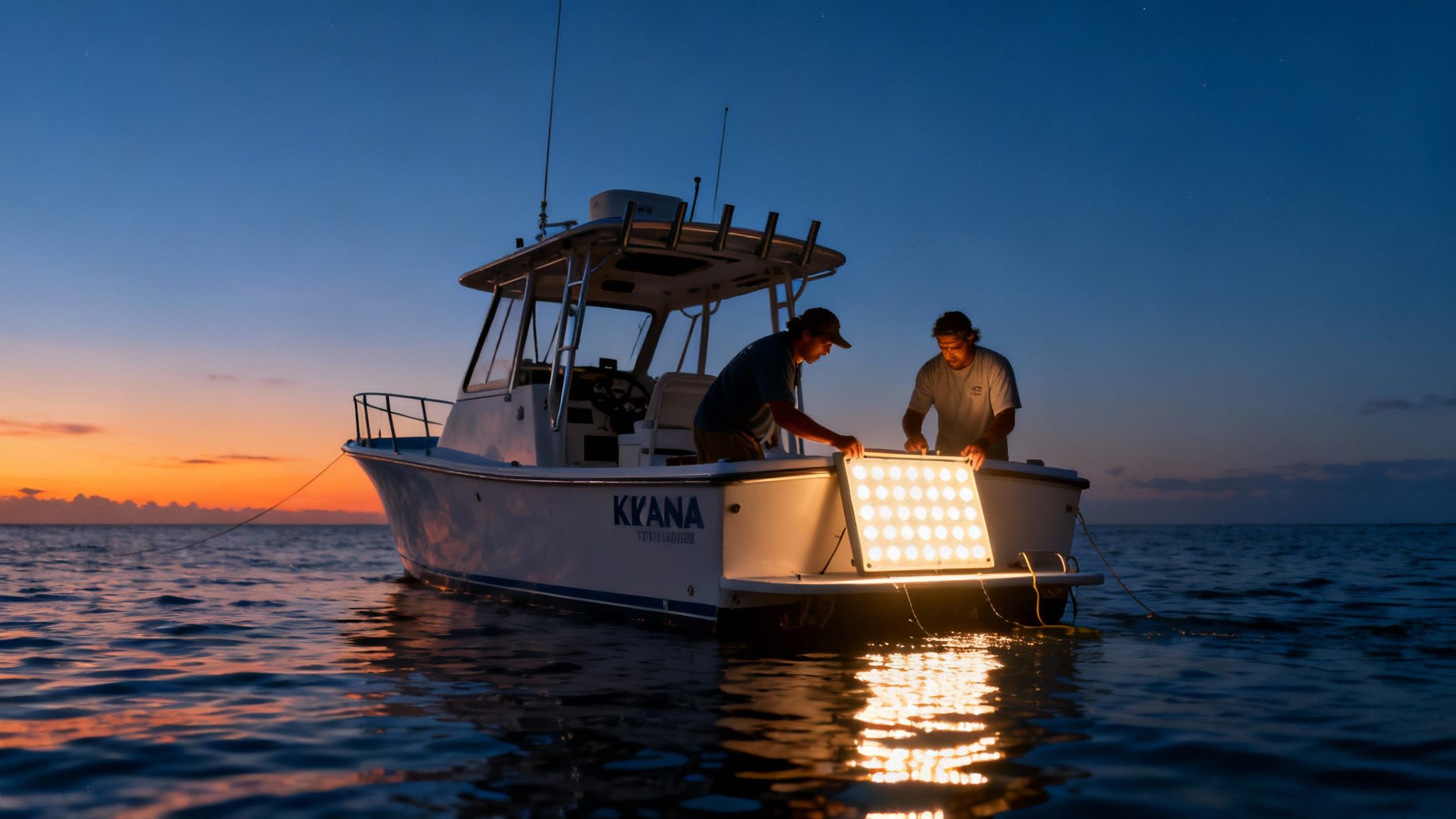
Once the boat anchors, the crew springs into action. Their main job is to set up a big, floating light board—essentially a custom raft with powerful lights pointing straight down into the water. This rig is the secret sauce for the entire operation. It acts like a giant dinner bell, attracting massive clouds of plankton, which just so happens to be a manta ray’s favorite meal.
Your guides will run through a detailed safety briefing. They'll cover everything: how to get in the water, the right way to hold onto the light board, and most importantly, how to be a passive, respectful observer. They'll also double-check that your mask, snorkel, and wetsuit are all fitting snugly. Then, it's time to slide into the dark, inviting Pacific.
The Underwater Ballet Begins
Slipping into the ocean at night is a sensation all its own. You'll paddle over to the light board, which is surprisingly stable and gives you a secure handhold for the whole experience. From there, you just float on the surface, face down, and let the show come to you. Everything goes quiet except for the sound of your own breathing through the snorkel.
As the plankton swarm in the bright beams, the first mantas appear. It’s a moment that will absolutely take your breath away. These gentle giants, some with wingspans stretching over 10 feet, glide effortlessly out of the blackness. They perform a silent, mesmerizing ballet, swooping and barrel-rolling right below you as they scoop up the plankton. They often come within inches of your face.
The sheer scale of these creatures is what gets most people. Seeing one up close is incredible, but seeing several is truly majestic. To give you an idea of what's typical, historical data shows Manta Village averaging 4 individual manta rays per night, while Manta Heaven boasts an impressive average of 11 per night. You can learn more about Kona's manta ray sightings to get a feel for just how reliable these encounters are.
You are not just watching from a distance; you are right there in their world, part of the scene for a brief, unforgettable moment. It’s an incredibly peaceful and humbling experience that connects you directly with one of the ocean's most graceful animals.
After about 45 minutes in the water, you’ll climb back onto the boat, absolutely buzzing. Most tours wrap things up with hot chocolate or tea and some snacks for the ride back to the harbor—the perfect way to warm up and relive the incredible moments with your fellow snorkelers.
Practical Tips for an Amazing Night Snorkel
A little prep work goes a long way in turning a great manta ray snorkel into an unforgettable one. Think of this as your pre-flight checklist. Getting these small details dialed in means you can relax, stay comfortable, and just soak in the magic of the whole experience.
What to Bring and Wear
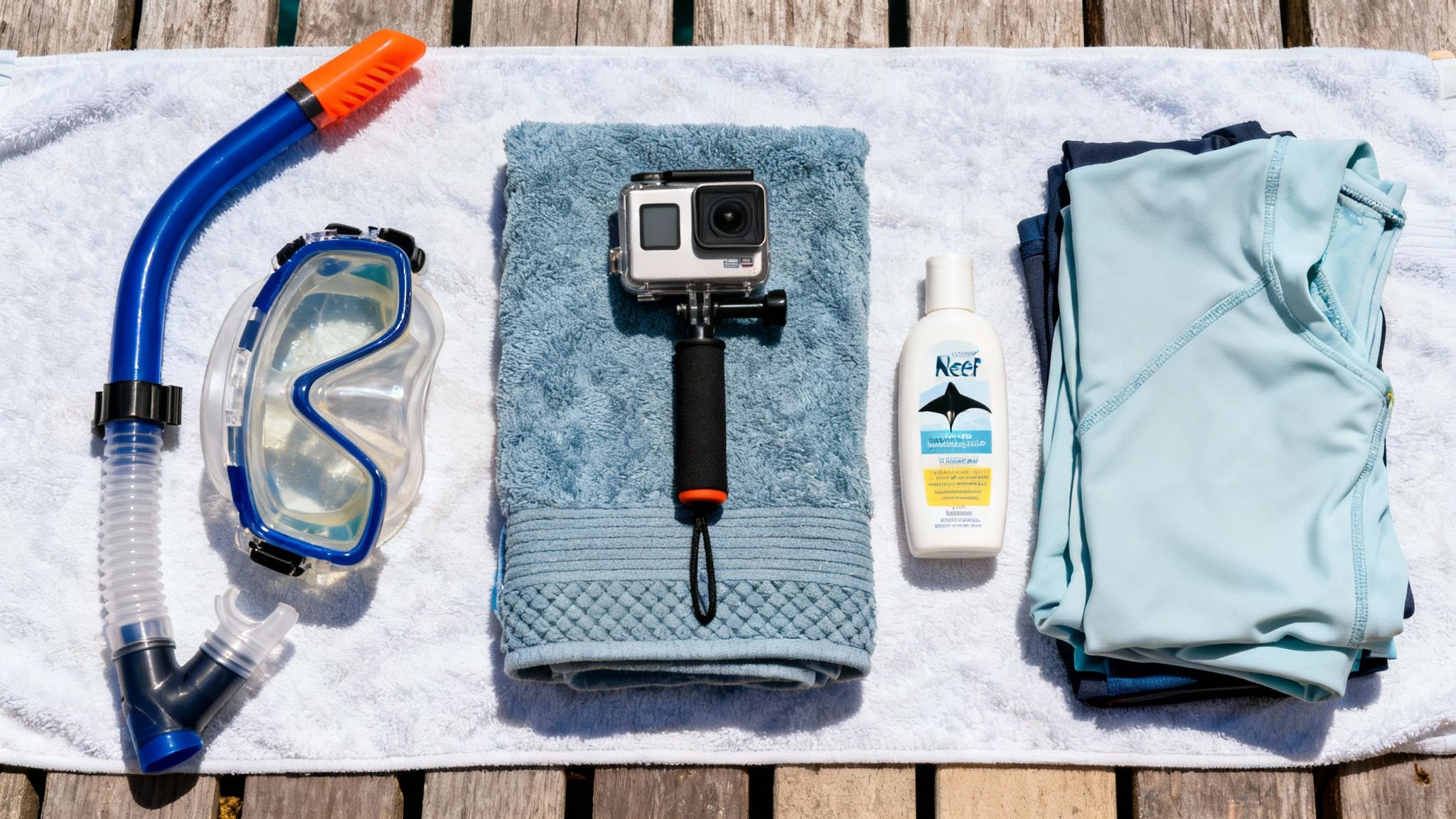
Keep it simple. The easiest thing to do is just wear your swimsuit under your clothes to the harbor. It makes getting ready to hop in the water a breeze. That boat ride back can get surprisingly chilly once the sun goes down and you’re wet, so trust me on this one: a dry towel and something warm are non-negotiable. A sweatshirt or a light jacket will feel like a lifesaver.
Here’s a quick rundown of the essentials:
- Swimsuit: Wear it there, simple as that.
- Towel: You’ll definitely want this.
- Dry Clothes: Pack something warm for the trip back to shore.
- Reef-Safe Sunscreen: If your tour leaves before sunset, apply it ahead of time.
- Reusable Water Bottle: Always smart to stay hydrated.
Onboard and In-Water Etiquette
Once you're out there, a couple of golden rules help keep everyone—and every manta—safe and happy. The absolute biggest one? Never, ever touch the manta rays. Their skin has a protective mucus layer, and our touch can strip it away, leaving them vulnerable to nasty infections.
Your guides will talk about "passive observation." It’s the perfect way to put it. You're a visitor in their underwater dining room. Just float, relax, and let them do their thing without any interference.
A quick heads-up: if you’re prone to motion sickness, the gentle rocking of the boat might get to you. It's a really good idea to take some non-drowsy motion sickness medicine about an hour before you head out. It's a simple step that can make sure a little queasiness doesn't ruin an incredible night.
Capturing the Moment
Thinking about getting some killer photos or video? Just know that nighttime underwater photography is notoriously difficult. Between the low light and all the movement, it’s a real challenge, even for the pros.
An action camera like a GoPro is usually your best bet, especially a newer model with good low-light settings. Still, it helps to manage expectations. The real goal is to capture the memory, not a perfect documentary shot. For anyone serious about getting that perfect image, we've got a whole guide on how to take underwater pictures.
Honestly, though? Sometimes the best camera is no camera at all. Just put it away and be fully present for a truly once-in-a-lifetime experience.
Is the Manta Ray Snorkel Good for Families and Non-Swimmers?
One of the first questions people ask is whether this adventure is a good fit for kids, families, or folks who aren't super confident swimmers. I get it. The idea of jumping into the ocean at night can sound pretty intense. But you’d be surprised just how accessible and safe this whole experience really is for almost everyone.
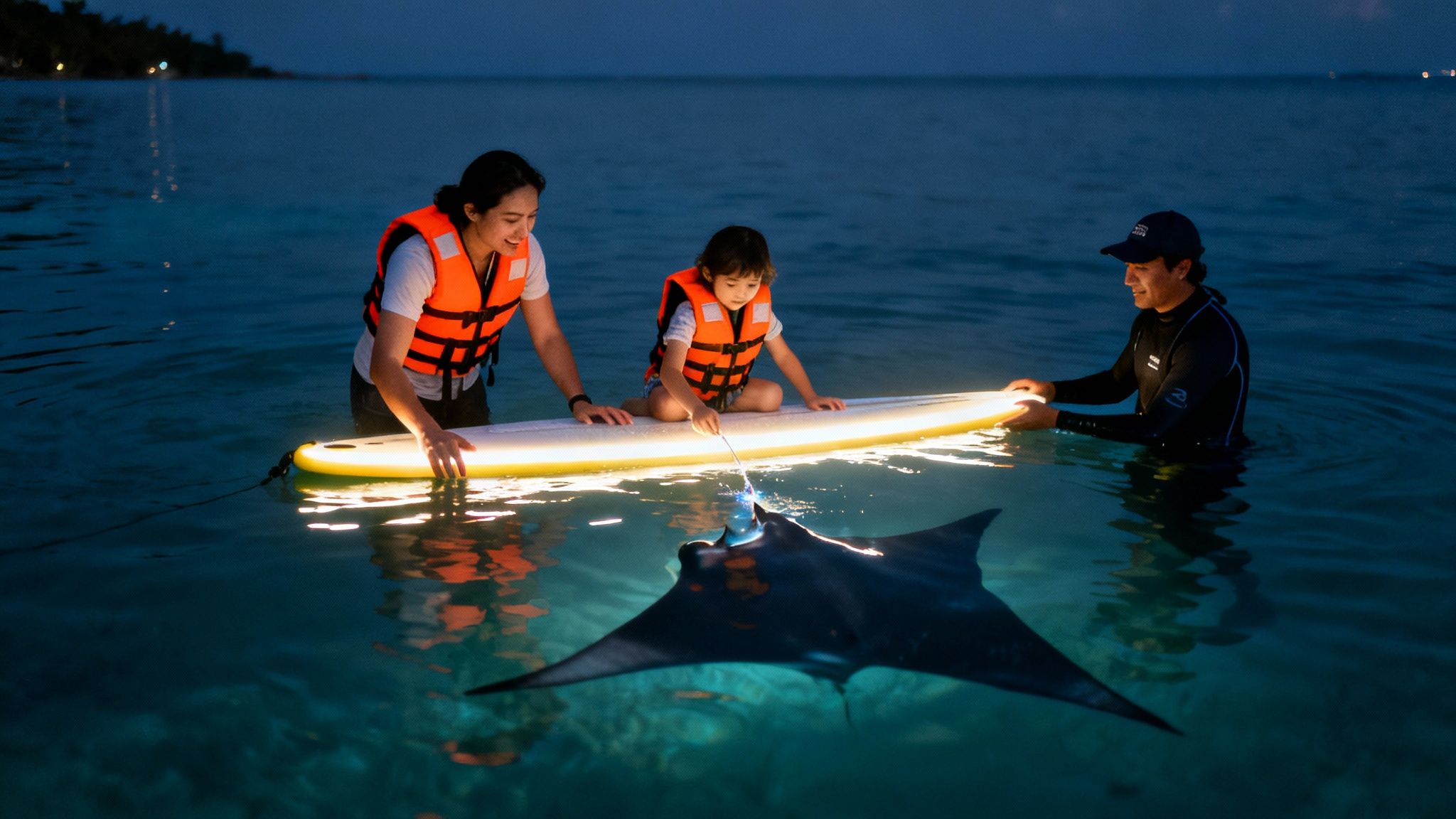
Good tour operators like Kona Snorkel Trips have safety dialed in. Their entire goal is to create a secure, controlled environment where all the variables that might make someone nervous are completely removed. This isn’t some free-for-all in the open ocean; it’s a carefully managed, start-to-finish guided experience.
You Don't Need to Be a Strong Swimmer
Here’s the biggest secret: you barely have to swim at all. The whole thing is built around a big, custom-made light board that floats on the surface. Once you slide into the water, you just hold onto the board. That's it. It’s way more like floating than swimming, which lets you completely relax and just watch the show happening right below you.
To make sure everyone is totally comfortable, the crews provide all the gear and support you could possibly need.
- Flotation Devices for Everyone: They’ll hand out things like pool noodles and life vests to anyone who wants one. It gives you that extra buoyancy and peace of mind.
- Guides in the Water With You: You are never left on your own. There are experienced guides right there in the water with the group the entire time, ready to help out and make sure everyone is safe and happy.
- Thorough Safety Briefing: Before anyone even touches the water, the crew gives a detailed talk covering exactly what to do and what to expect. No surprises.
This might look like an "extreme" adventure from the outside, but it’s actually one of the most supervised and controlled ways to see a major natural wonder. The crew’s focus is 100% on your safety and comfort so you can soak in every magical moment.
Tips for Families and First-Timers
If you’re bringing kids or just feeling a little anxious yourself, a tiny bit of prep goes a long way. My best advice? Take your mask and snorkel to a swimming pool before your trip. Just practice breathing through the snorkel and getting a good seal on your mask. It helps build a lot of confidence and gets rid of any gear-related jitters on the big night.
Once you realize just how many safety measures are in place—and that you're just floating while holding onto a giant raft—any nervousness tends to melt away. This is one of those shared experiences that creates amazing memories, and it’s open to just about anyone who wants to see the incredible underwater ballet of Kona's manta rays.
Common Questions About the Kona Manta Ray Snorkel
Even after getting the whole rundown on this incredible adventure, you might still have a few things you're wondering about. That’s perfectly normal. To help you feel completely confident before you book, we’ve put together answers to the questions we hear the most from people gearing up for their manta ray night snorkel in Kona.
Is the Manta Ray Snorkel Safe if I'm Not a Good Swimmer?
You bet. It's surprisingly safe and accessible, even if you wouldn't call yourself a strong swimmer. The tour operators we partner with put safety above everything else.
You'll be given top-notch flotation gear, like a life vest or pool noodles, to keep you floating comfortably on the surface. The whole time you're in the water, you'll be holding onto a large, sturdy light board that floats on the surface. This means you never actually have to swim on your own. With professional guides right there in the water with you, you can just relax and take in the show.
Are Manta Ray Sightings Guaranteed?
Since we're dealing with wild animals in their natural habitat, sightings can never be 100% guaranteed. That said, Kona is one of the most reliable places on the entire planet to see them.
Local tour companies have an unbelievably high success rate, often over 90%. The specific sites they visit are well-established feeding grounds, creating a consistent "underwater buffet" that the mantas almost never skip.
To give you peace of mind, most of the best operators offer a "manta guarantee." If for some reason the mantas don't show up on your tour, they'll usually let you come back for a second trip free of charge (on a standby basis). This way, you get another shot at witnessing the magic.
The sheer consistency of sightings is what makes the Kona experience so special. While it's a wild encounter, the odds are overwhelmingly in your favor for an unforgettable night.
What’s the Best Time of Year to Go?
Here's one of the best parts about the manta ray night snorkel in Kona: it's a phenomenal year-round activity. The manta ray population here is resident, meaning they don't migrate. They're here feeding every single month of the year.
The water stays warm and the conditions are generally calm no matter the season. While the winter months can sometimes bring bigger ocean swells, your chances of an amazing encounter are fantastic whether you visit in the spring, summer, fall, or winter.
Can I Touch the Manta Rays?
No, you absolutely cannot. It is critically important to never, ever touch a manta ray. These gentle giants are covered in a protective mucus layer that acts as a shield against harmful bacteria.
Touching them can strip off this delicate coating, leaving them vulnerable to infections and disease. Any responsible tour operator will be very strict about this "passive interaction" rule. The best way to enjoy this experience is to simply hold onto the light board, stay horizontal, and let these magnificent creatures glide and dance around you. This simple act of respect ensures their well-being and helps keep this incredible encounter sustainable for years to come.
For a deeper dive into their biology, check out our article on whether manta rays can sting you.