
Manta ray night snorkel kona: Kona’s Ultimate Night Manta Guide
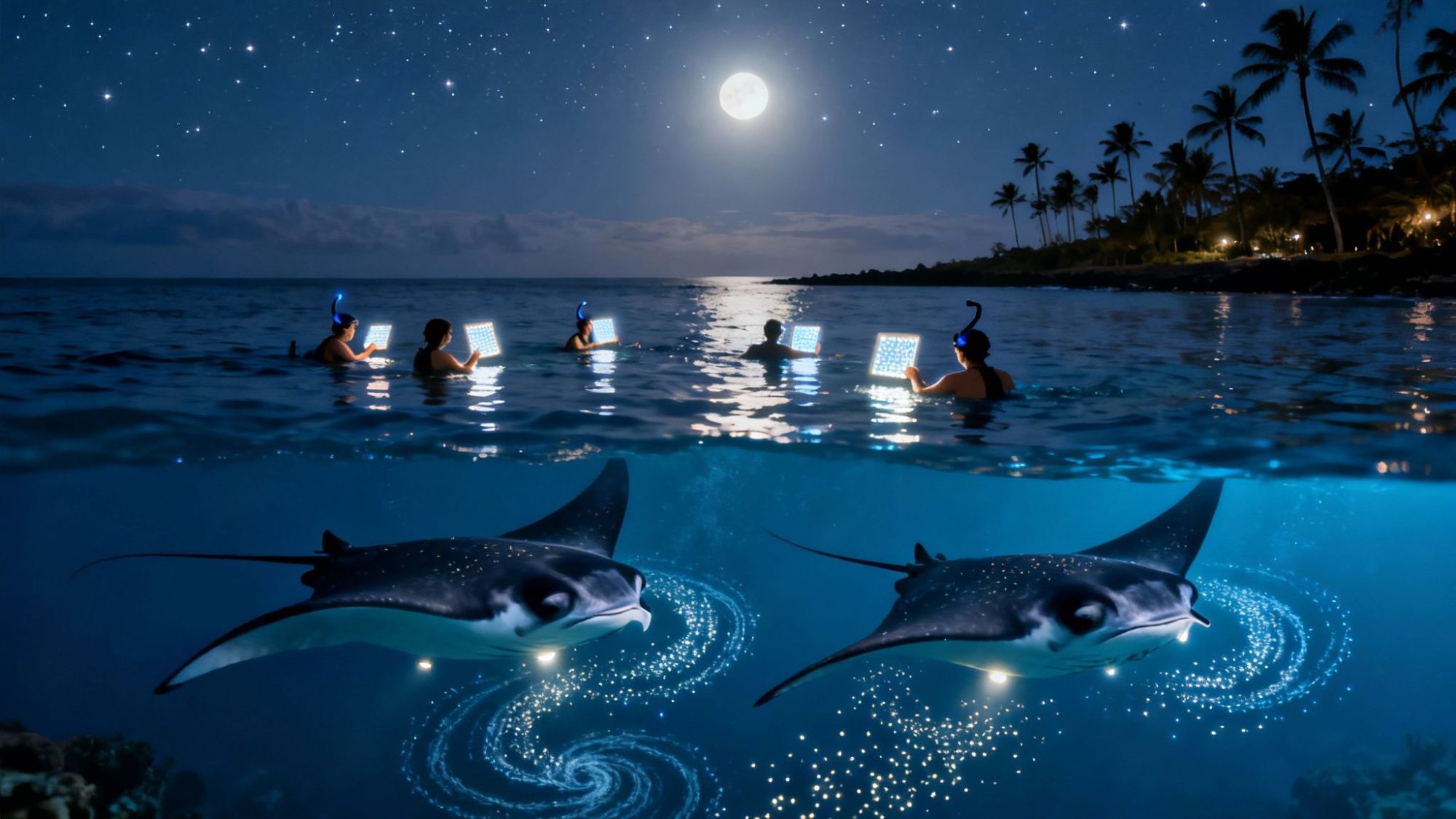
Picture this: you're floating in the warm, dark Pacific Ocean under a canopy of stars. Suddenly, a gentle giant, a massive manta ray, glides silently just inches below you, its movements as graceful as a ballet. This isn't a dream. It's the world-famous manta ray night snorkel in Kona, an incredible wildlife encounter that finds its way onto bucket lists all over the globe.
This guide is designed to pull back the curtain on this magical experience, sharing everything I've learned from countless nights on the water to get you ready for your own adventure.
Your Guide to an Unforgettable Manta Ray Encounter
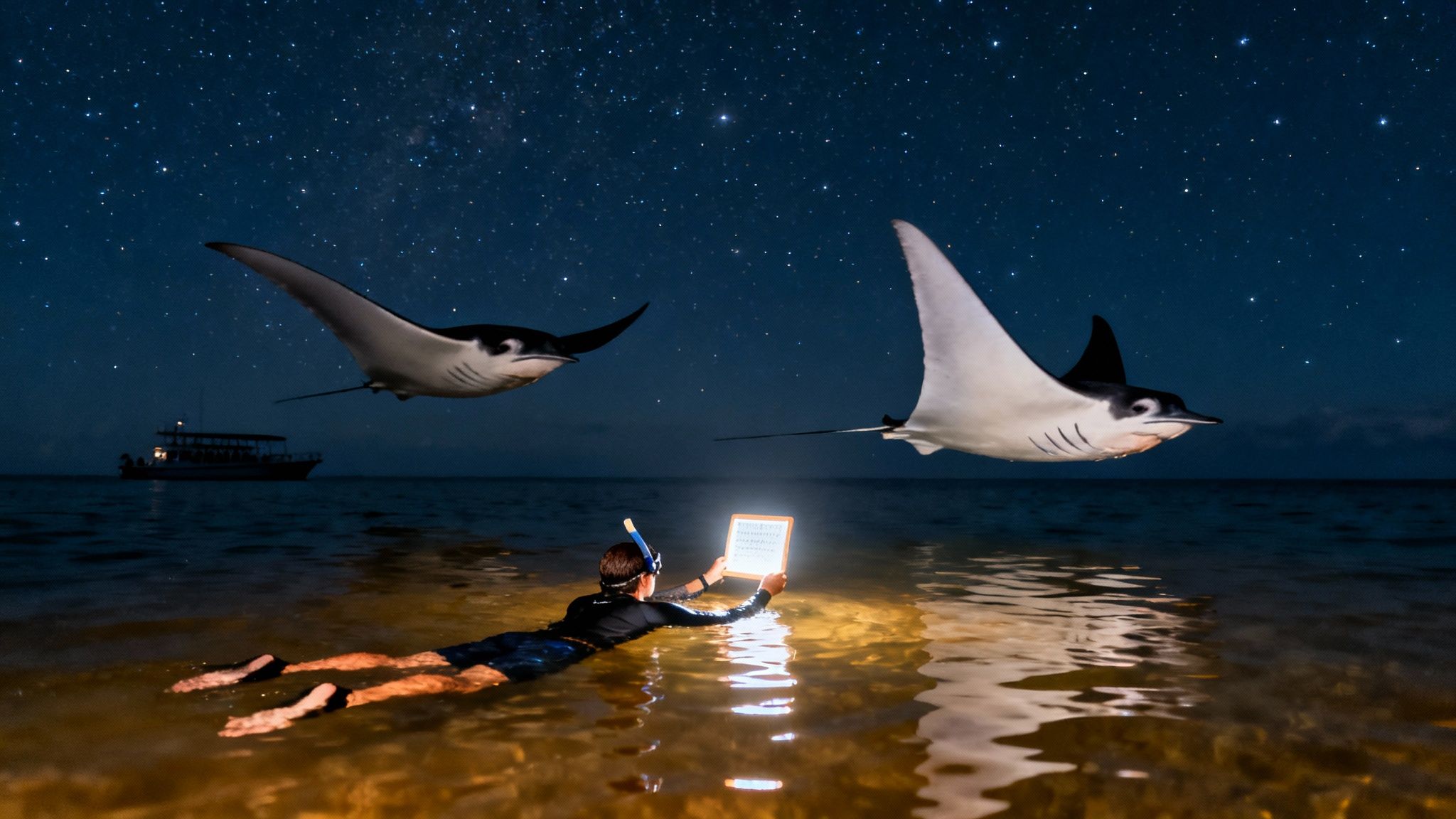
The manta ray night snorkel is more than just another tour; it’s a cornerstone of the Kona experience, a real connection with one of the ocean's most majestic creatures. We'll be talking a lot about how we do things at Kona Snorkel Trips—after all, we're proud to be the top rated & most reviewed snorkel company in Hawaii—so you can see what separates a good tour from a great one.
What Makes This Experience So Unique?
So, how does it all work? The magic begins when powerful lights are placed in the water. These lights attract clouds of plankton, which just so happens to be the manta rays' favorite meal. It creates a massive, glowing buffet that draws the mantas right to our snorkel spot.
Unlike other places in the world, Kona's resident manta population doesn't migrate. They stick around all year, feeding at a few reliable sites.
This consistency is the secret sauce. Local operators report success rates often topping 90%, which means your odds of having an up-close, absolutely mind-blowing encounter are incredibly high.
This isn't a small operation. The manta ray snorkel draws around 80,000 people to the Big Island every year, cementing its place as a world-class marine adventure. There's simply nowhere else on Earth where you can so reliably see these gentle giants gather at night to feed. A great read on its popularity can be found over at Kona Honu Divers.
In this guide, we’ll walk you through everything, from picking the right crew to what you should do once you’re in the water. While the manta experience is an absolute must-do, don't forget to check out the other incredible Kona snorkeling spots during your trip.
Let's dive in and get you ready for a once-in-a-lifetime adventure.
How To Choose The Right Manta Ray Snorkel Tour
Let's be honest: not all manta ray tours are created equal, and the company you choose will absolutely make or break your night. The Big Island has plenty of options, from cozy, small-group boats to massive vessels that pack in dozens of people. Understanding the difference is the key to picking the perfect manta ray night snorkel in Kona for your crew.
The single biggest factor is group size. While those big boats might look impressive at the dock, they often lead to a chaotic and crowded experience in the water. You can find yourself bumping into other snorkelers, constantly jockeying for a decent view, and feeling more like a number than a guest. This is where the small-group operators really shine.
The Small Group Advantage
Opting for a tour with fewer passengers, like the ones we run at Kona Snorkel Trips, completely changes the vibe. It's more personal, more comfortable, and way more relaxed. The staff-to-guest ratio is low, which means our guides have time to actually talk with you, answer your questions, and make sure you feel totally safe and looked after.
With more elbow room on the boat and in the water, the encounter with the mantas becomes the serene, awe-inspiring experience it's meant to be. You get a front-row, unobstructed view of the underwater ballet without all the distractions. For those looking for another fantastic, high-quality option, Manta Ray Night Snorkel Hawaii is an exceptional alternative, focusing on memorable, small-scale tours.
The real magic of a small-group tour is intimacy. You’re not just watching the manta rays from afar; you’re fully immersed in the moment with direct access to expert guides. It feels less like a commercial tour and more like a private adventure.
As you shop around, you can sometimes explore quick deals for tours through travel specialists like Blevins Travel, but always check the boat size before you book!
Comparing Your Options
Ultimately, the right choice boils down to what you value most. Are you looking for a quiet, personalized trip or a more bustling, party-boat atmosphere? It’s also a smart move to look into a company's commitment to marine conservation and their safety record. A quick scan of reviews gives you real insight; you can even see what people are saying by checking out different Kona snorkel tours reviews.
To help you decide, we've put together a simple comparison based on what we've seen on the water year after year.
Comparing Kona Manta Ray Tour Styles
This table breaks down the key differences between the two main tour styles. Use it to figure out which experience is the best fit for your group and what you hope to get out of your night with the mantas.
| Feature | Small Group Tours (e.g., Kona Snorkel Trips) | Large Group Tours |
|---|---|---|
| Group Size | Fewer people, meaning more personalized attention and space. | Can be very crowded with a less individual experience. |
| In-Water Experience | Intimate viewing with far less bumping into other snorkelers. | A larger light board, but a much higher chance of obstructed views. |
| Staff Interaction | Direct access to knowledgeable guides for questions and assistance. | Less opportunity for one-on-one interaction with the crew. |
| Boat Comfort | Often quicker travel times with easier and faster entry/exit. | More amenities but can take longer to board and disembark everyone. |
| Booking Recommendation | Ideal for families, couples, photographers, and first-time snorkelers. | Better suited for budget travelers who don't mind a crowd. |
Choosing a tour that aligns with your expectations is the surest way to make your manta ray night snorkel an incredible, cherished memory instead of just another tourist activity.
What The Manta Ray Snorkel Experience Is Really Like
The whole adventure kicks off long before you even touch the water. It starts right at the harbor, where you can feel the energy buzzing. Everyone's a mix of excited and a little bit nervous as they check in. The boat ride out to the snorkel site is timed perfectly with the sunset, giving you a front-row seat to one of those classic, fiery Kona sunsets that just lights up the whole sky. It’s a stunning way to start the evening.
As you cruise along the coast, the crew gives a really thorough safety briefing. This isn't just them reading off a list of rules; it's a fascinating introduction to the mantas themselves. You'll learn cool facts about their behavior, how their unique spot patterns are like fingerprints, and the most important rule of the night: passive interaction. In other words, no touching.
This briefing is fantastic because it puts everyone at ease. By the time you get to the snorkel spot, any of those pre-trip jitters have pretty much melted away, replaced by pure excitement.
Entering Their Underwater World
Once the boat anchors, the crew helps everyone get into their wetsuits, masks, and snorkels. The water feels surprisingly warm and inviting. Then, it's the moment of truth: slipping into the dark, calm ocean. Any last bit of apprehension vanishes when you see the boat's powerful lights cutting through the water, creating this bright, glowing stage in the middle of the sea.
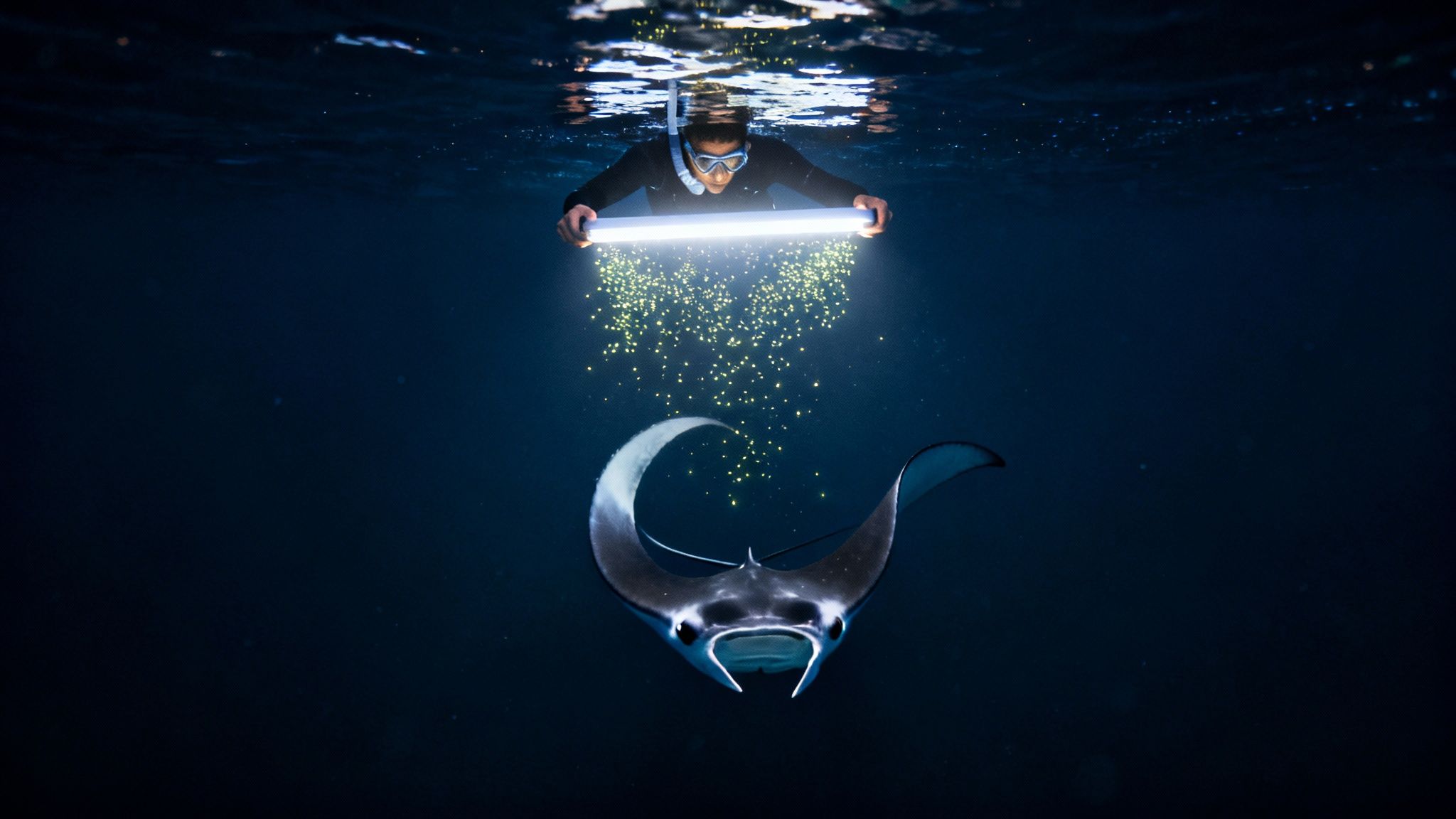
You'll make your way over to a custom-built light board. Think of it as a big floating raft with handles all around it, and this is your stable, front-row seat for the show. Its bright underwater lights are brilliant; they give you a crystal-clear view and, more importantly, they attract the microscopic plankton the manta rays have come to eat.
You're essentially floating above a massive, glowing dinner table set just for these gentle giants. And because you just hold onto the board, there's no real swimming involved, making it perfect for every skill level.
The Underwater Ballet Begins
Floating there at the surface, you just put your face in the water and wait for the magic. It's surreal. One minute you're looking down into a deep blue-green abyss, and the next, a massive shadow emerges from the dark. A manta ray, with a wingspan that can reach up to 18 feet, glides effortlessly right toward the light.
They perform this mesmerizing underwater ballet just inches below you. With their huge mouths wide open, they do these graceful barrel rolls, swooping and looping through the plankton-filled water. The only sound is your own calm breathing through your snorkel, a steady rhythm against the silent, fluid dance of the mantas.
There’s absolutely nothing scary about it. They are truly gentle giants, completely focused on their nightly feast and seemingly unaware of their audience. The in-water part of the manta ray night snorkel Kona tour usually lasts about 30 to 45 minutes—just the right amount of time to be totally captivated without getting chilly.
When it’s time to get out, the crew helps everyone back on the boat, where there are often warm drinks and snacks waiting. The ride back to the harbor is just filled with excited chatter as everyone shares their favorite moments from an experience that feels like it was from another world.
How To Prepare For Your Manta Ray Adventure
A little prep work goes a long way in turning your manta ray snorkel from a good time into one of those core memories you'll talk about for years. Think of this as your insider's checklist to make sure you're comfortable, safe, and ready to soak in every magical moment.
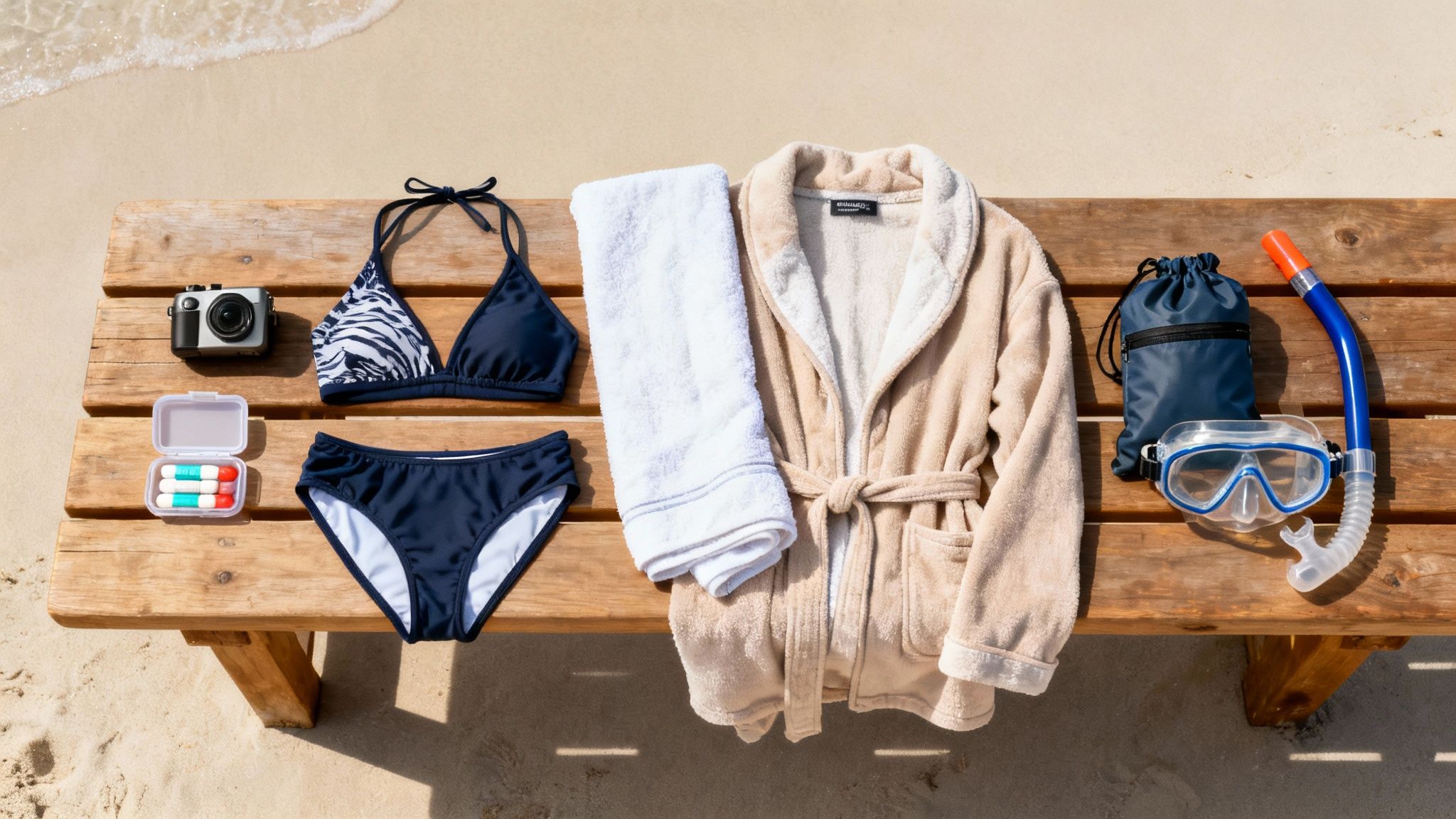
The best trick is to show up at the harbor ready to roll. Wear your swimsuit under your clothes so getting geared up on the boat is fast and simple. You'll spend about 45 minutes in the water, and even in balmy Hawaii, you'll feel a chill on the boat ride back. Trust me, packing a towel and something warm and dry—like a hoodie or a light jacket—is a total pro move.
What To Bring For The Best Night
Beyond the absolute must-haves, a few other things can make your trip even better. Just toss them in a small bag and you'll be set.
- Underwater Camera: Got a GoPro? Bring it! The lights from our float board create the perfect stage for incredible photos and videos.
- Motion Sickness Meds: If you get even a little queasy on boats, it's smart to take something before we leave the harbor. The ride is usually smooth, but it’s always better to be safe than sorry.
- Reusable Water Bottle: Staying hydrated is key. Most tours have drinks, but having your own water is always a good call.
- Dry Bag: This is perfect for keeping your phone, keys, and cover-up safe from any splashes on the boat.
When you pack smart, you can just relax and focus entirely on the incredible manta ray night snorkel Kona experience. Getting ready properly is something we talk about a lot, like in our complete guide to the manta ray night snorkel in Kona.
How To Act In The Water For A Safe Encounter
Your behavior in the water is absolutely critical—both for the mantas' safety and for everyone's experience. The number one rule is simple: never, ever touch a manta ray. They're covered in a delicate mucus layer that protects them from infection, and our touch can easily damage it.
Your job is to be a passive observer. By staying calm and holding onto the board, you let the mantas do their thing. This leads to a much more natural and truly breathtaking show.
Always stay horizontal at the surface, holding onto the light board. This gives everyone a clear view and keeps fins from accidentally kicking the animals as they glide right below you. Your guides will go over all the rules, but keeping these points in mind means you’ll be a respectful guest in their world.
When Is The Best Time To See Manta Rays In Kona
This is hands-down one of the most common questions we get: "When is the absolute best time to book a manta ray night snorkel in Kona?" I’ve got some fantastic news for you. The answer is simple: any time you're here.
That's right. Unlike so many other wildlife encounters that depend on a specific season, the manta ray experience in Kona is remarkably consistent all year long.
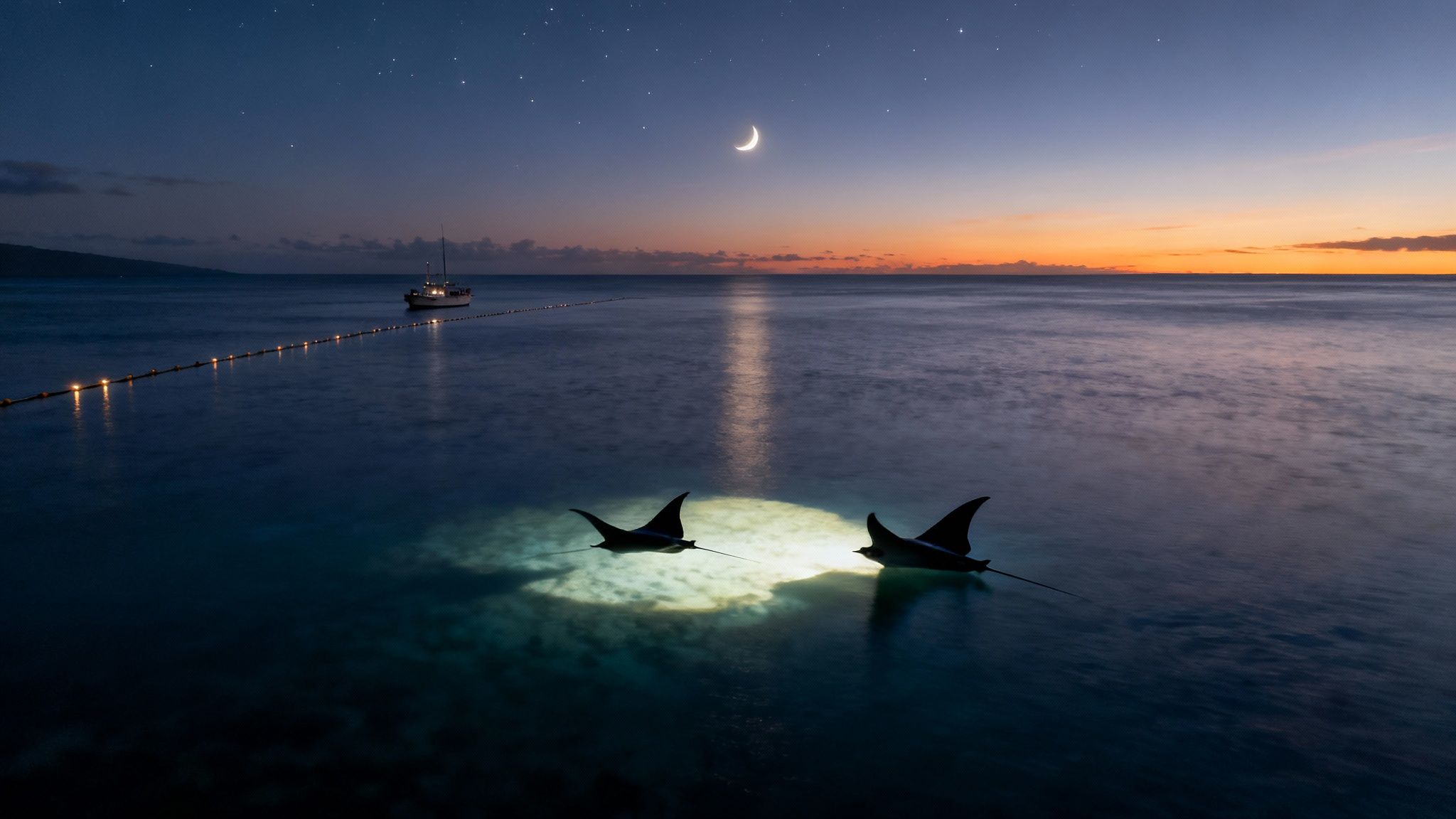
This incredible reliability comes down to one key fact: Kona's manta ray population is resident. They don't migrate. These gentle giants live their entire lives, which can be up to 50 years, right here in the coastal waters of the Big Island. Over the decades, they've figured out exactly where to show up for dinner every single night.
Consistent Sightings Year-Round
The best tour operators in Kona consistently report success rates well over 90%, no matter what month it is. Whether you visit in the peak of summer or during the cooler winter months, your odds of having an incredible encounter are sky-high. The mantas are always here, and they're always hungry.
There are two primary viewing sites, Manta Village (near Keauhou Bay) and Manta Heaven (near the airport), and both are proven feeding grounds. For decades, tour operators have used bright lights to attract plankton, creating a dependable, all-you-can-eat buffet for the mantas. This established routine is the secret sauce to Kona's world-famous snorkel.
The only thing that really changes with the seasons is the water temperature. It might fluctuate a few degrees, but it stays comfortable, averaging around 76°F (24°C). This tiny change has practically zero effect on the mantas' appetite.
Planning With Confidence
This year-round consistency is a massive advantage when you're planning your Hawaiian vacation. You don't have to stress about scheduling your trip around a narrow "manta season," because here, every night is manta season.
The single most important piece of planning advice I can give is to book your tour for one of your first nights on the island.
Why book early in your stay?
- Weather Backup: On the rare occasion a tour gets canceled due to rough seas, you’ll have plenty of other nights to reschedule without missing out.
- The Manta Guarantee: While sightings are extremely likely, these are still wild animals. If you happen to be on a rare tour where the mantas don't show, most reputable companies offer a "manta guarantee," letting you come back for free. Booking early gives you the flexibility to use it.
Ultimately, you can book your tour with total confidence, knowing that an unforgettable underwater ballet is almost certainly waiting for you, no matter when you visit the Big Island.
Answering Your Questions About the Manta Ray Night Snorkel
Even for the most seasoned travelers, jumping into the ocean at night is a new experience. It's totally normal to have a few questions before you're ready to dive in. We get it.
To help put your mind at ease, here are the honest, straight-up answers to the questions we hear most often from our guests. This way, you can book your spot feeling completely confident and ready for an incredible adventure.
Is This Tour Safe For Beginners or People Who Can't Swim Well?
Absolutely. You don't need to be an Olympic swimmer to do this—in fact, you don't really "swim" at all. The whole experience is designed to be super safe and accessible for everyone, regardless of your comfort level in the water.
You'll be floating on the surface while holding onto a large, stable light board. Think of it like a big, buoyant handle. Everyone gets a wetsuit (which adds a lot of buoyancy) and a top-notch snorkel set. If you'd like a little extra support, just ask for a personal flotation device.
Our professional guides are right there in the water with you the entire time, making sure everyone feels secure from the moment you get in until you're safely back on the boat.
Are We Guaranteed To See Manta Rays?
This is the big question, isn't it? While mantas are wild animals and nobody can ever promise a 100% guarantee, Kona is hands-down the most reliable place on the planet to see them.
Top-tier companies like Kona Snorkel Trips consistently report success rates well over 90%. These snorkel sites aren't random spots; they are established feeding grounds that have been attracting manta rays for decades.
Still, nature can be unpredictable. In the rare case the mantas decide not to show up, most reputable operators have a "manta guarantee." This usually means you can come back and try again on another night for free. Just make sure to ask about their specific policy when you're booking your manta ray night snorkel tour.
What If I'm Scared of The Dark Ocean?
Feeling a little nervous about being in the ocean after sundown is completely understandable. But the reality of this tour is a world away from floating in a pitch-black abyss.
The boat itself is well-lit, but the real magic happens in the water. The powerful lights on the float board create a brilliantly illuminated "stage" right in front of you, lighting up the water like an underwater theater. This bright light cuts through the darkness, attracting the plankton, which in turn attracts the mantas. Your viewing area is crystal clear and vibrant.
Most people find that any initial jitters disappear the second they see these majestic creatures gliding beneath them. The sheer awe of the moment takes over.
The experience feels less like you're in a dark, open ocean and more like you have a front-row seat to a beautifully lit underwater ballet. The focus is entirely on the bright, active scene below you.
Can I Touch The Manta Rays?
No, and this is the single most important rule of the entire experience. It’s all about protecting these amazing animals.
Manta rays have a special protective mucus layer on their skin, which is basically their immune system. A simple touch from a human hand can rub this coating off, leaving them vulnerable to dangerous infections and bacteria.
For their safety, every responsible tour company in Kona enforces a strict "passive interaction" policy. Your job is to be a respectful observer, floating at the surface and just taking in the incredible show. The guides will go over all the rules before you even get in the water to make sure it's a safe and unforgettable encounter for everyone—especially the mantas.