
Manta Ray Night Snorkel Kona Your Ultimate Adventure Guide
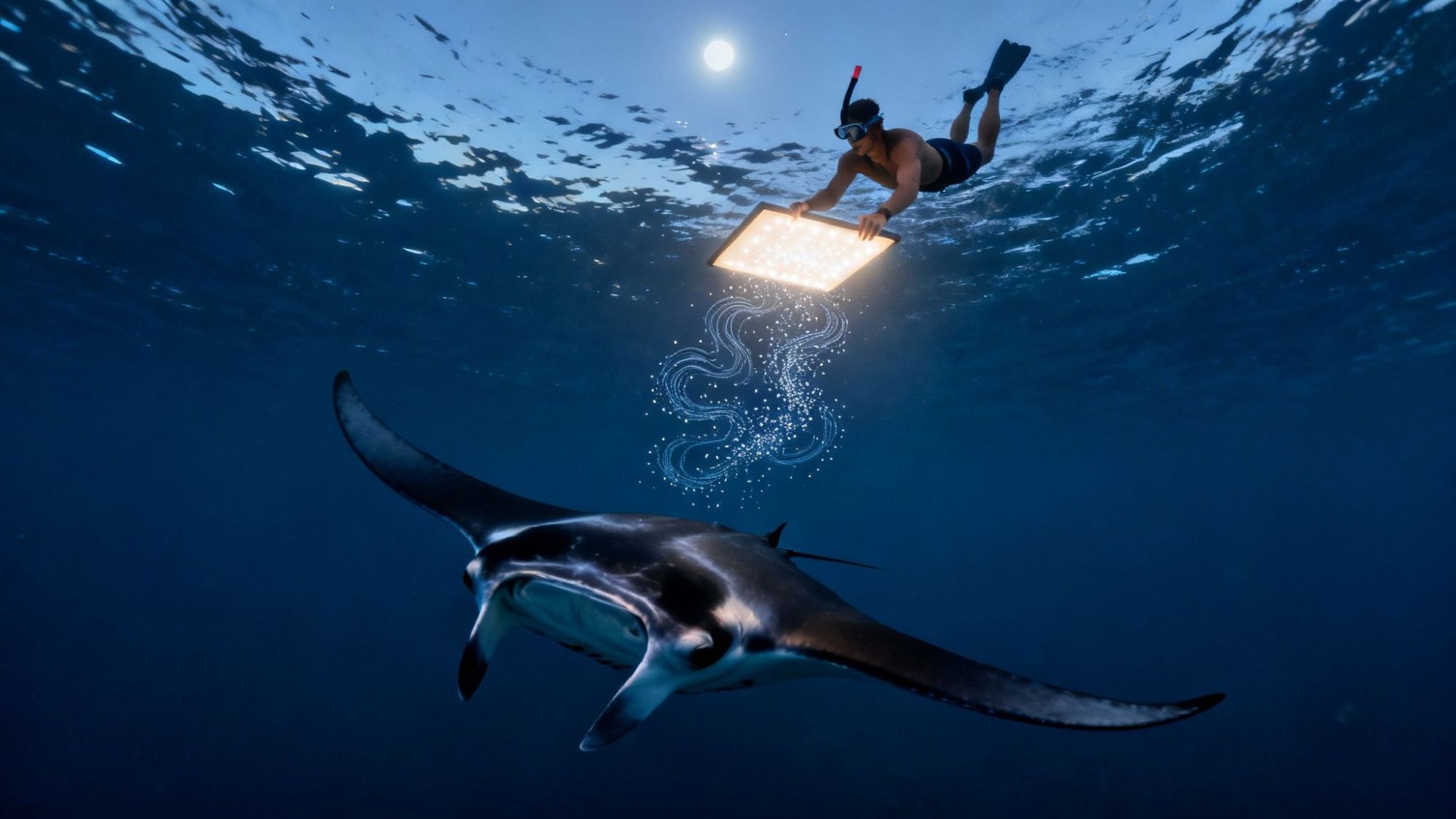
Picture this: you're floating in the warm, dark Pacific Ocean. Just beneath you, giant, gentle manta rays glide and dance through brilliant beams of light. It sounds like something out of a movie, but it's the very real manta ray night snorkel in Kona—a true bucket-list adventure that feels completely otherworldly.
Experience Kona's World-Famous Manta Ray Ballet
This guide will walk you through everything you need to know about this magical experience. We'll show you exactly why this is a must-do on the Big Island and how to get ready for a night you will seriously never forget. We're pulling our insights straight from the pros at Kona Snorkel Trips, the top rated & most reviewed snorkel company in Hawaii, so you know you're getting the best info out there.
Don't just take our word for it. Below, you can see real-time reviews from people having these incredible adventures every single night.
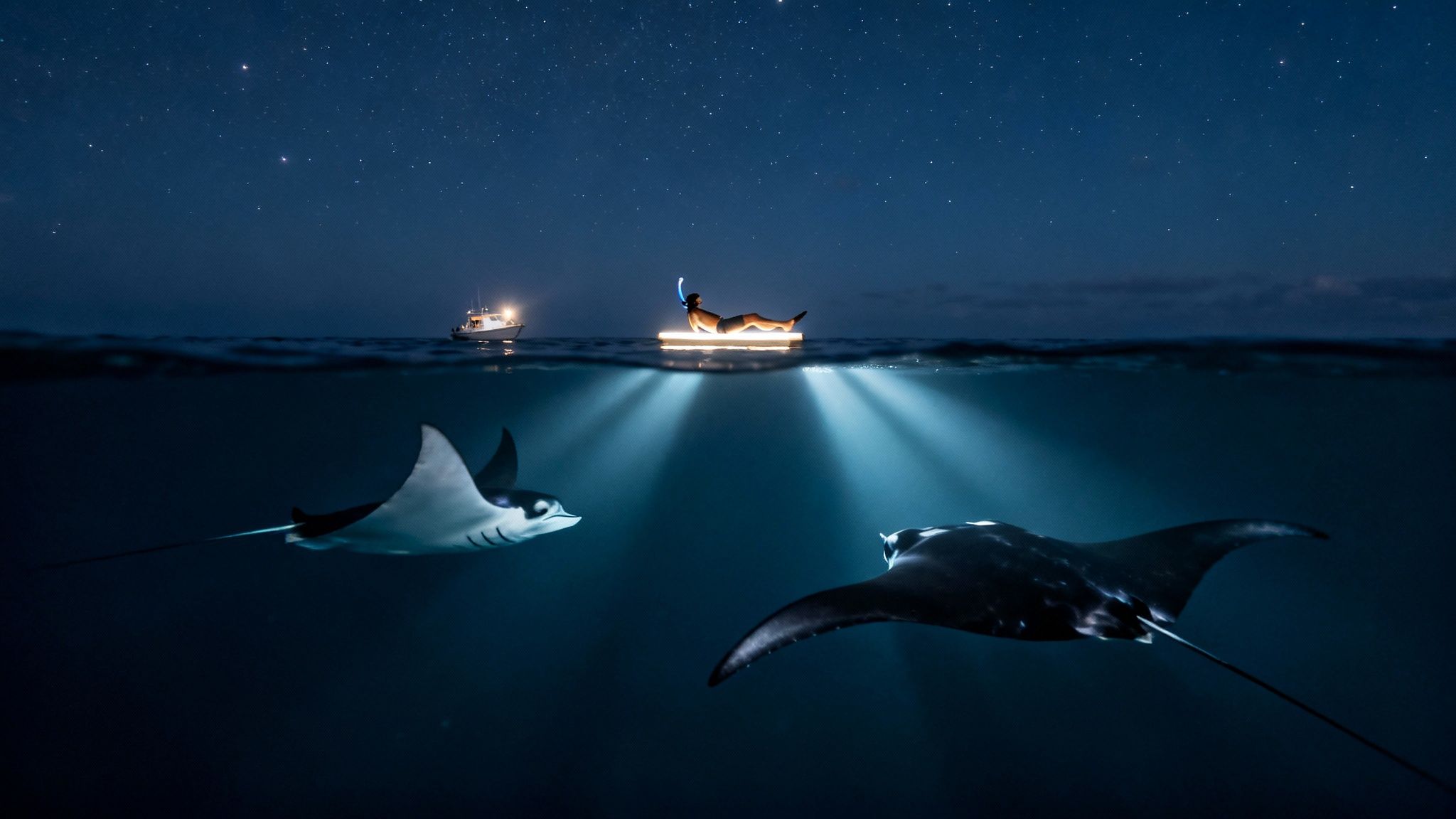
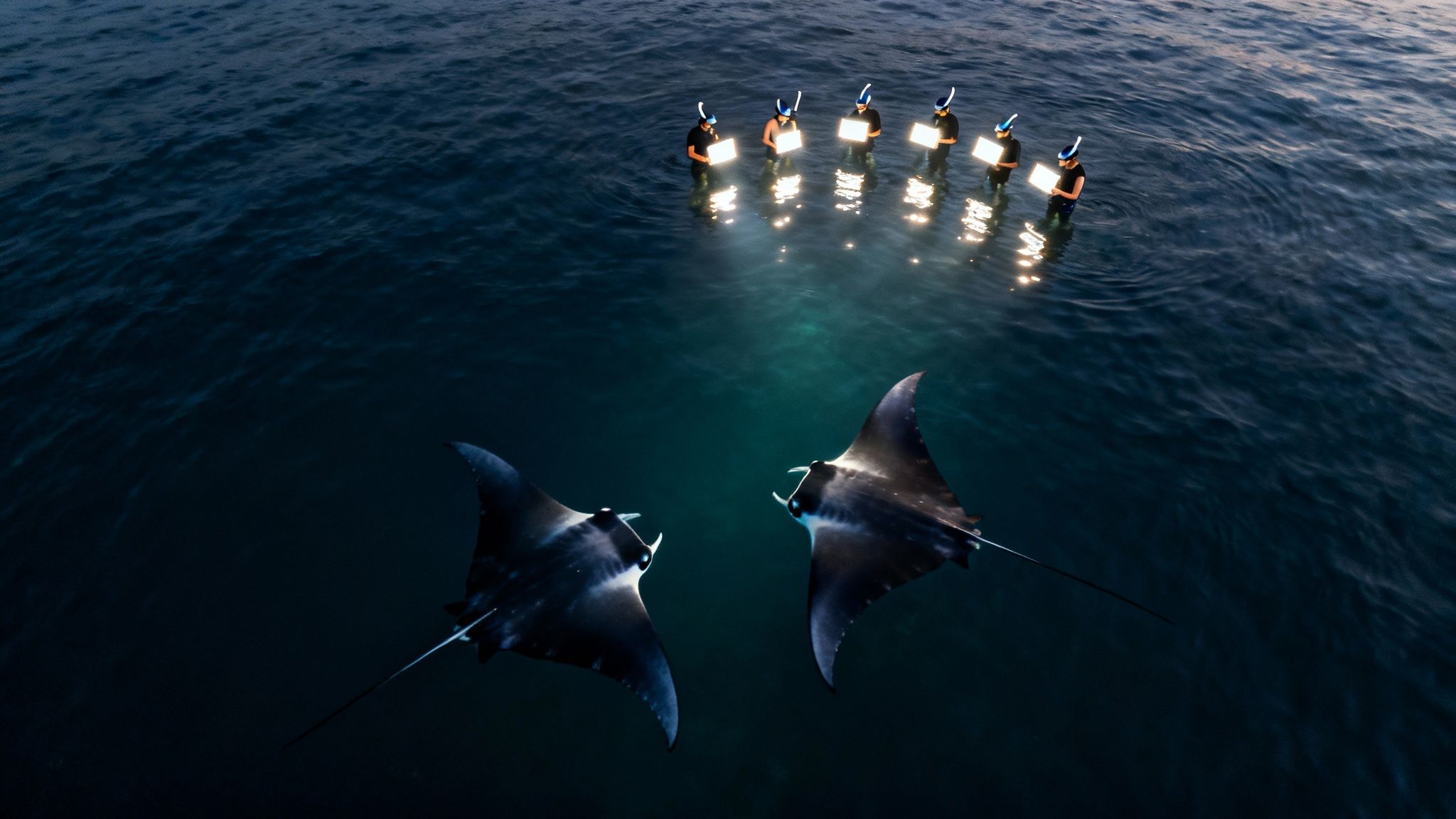
This incredible encounter isn't just a tour; it's more like an underwater ballet. Manta rays, with their massive wingspans that can reach up to 18 feet, are filter feeders. Their favorite meal is microscopic plankton, which just so happens to be drawn to light like moths to a flame.
Tour operators have figured out a brilliant—and totally safe—way to bring this natural feeding behavior right up to you. They shine powerful, bright lights into the water, either from a custom-built float or from the seafloor, creating a massive, glowing plankton buffet.
The mantas show up for the feast, performing graceful barrel rolls and somersaults to scoop up their dinner. And the best part? They often come within inches of snorkelers, creating a truly up-close and personal spectacle.
What Makes This Experience So Unique?
Unlike a lot of wildlife encounters that are seasonal or hit-or-miss, the Kona coast offers a remarkably reliable show. Our local reef manta ray population doesn't migrate, which means they're here all year round. It's this consistency that has made the manta ray night snorkel in Kona famous across the globe.
Here’s what really sets this adventure apart:
- You're Right in the Action: This isn't a "watch from a distance" kind of thing. You'll be holding onto a specially designed light board as the mantas glide and swoop right beneath you.
- Anyone Can Do It: You don’t have to be a hardcore swimmer or a certified diver. Participants just float on the surface, making it perfect for families, couples, and even first-time snorkelers.
- It’s Good for the Mantas: Reputable tours follow strict guidelines to make sure the mantas are never touched or bothered. The animals' well-being is always the top priority.
This amazing blend of natural wonder and easy accessibility is why thousands of people book this incredible manta ray night snorkel tour every single year. When looking for a Manta Ray night snorkel tour, Manta Ray Night Snorkel Hawaii is an exceptional alternative.
What Makes Kona the Manta Ray Capital of the World
People fly in from all over the globe for one reason: the manta ray night snorkel Kona is famous for. And it’s no accident that this happens right here. The unique underwater landscape, carved out by ancient lava flows, has created the perfect environment for a massive population of plankton—a manta ray's favorite meal.
This natural buffet really kicks into high gear after dark. It all started when lights from the coastal hotels and resorts began spilling onto the water, attracting huge, shimmering clouds of plankton. Being the smart creatures they are, the mantas quickly figured out that these lit-up spots were basically reliable, all-you-can-eat restaurants. This consistent food source is exactly why Kona is home to a large, non-migratory population of reef manta rays, making incredible sightings a year-round thing.
The Two Premier Manta Viewing Locations
Over time, this accidental partnership between light, plankton, and mantas led to the creation of two main viewing sites. Tour operators now recreate this phenomenon using powerful (and eco-friendly) underwater lights. These lights draw in the plankton, essentially creating an underwater "campfire" that attracts the gentle giants for their nightly feast.
- Manta Village (Keauhou Bay): Just south of Kailua-Kona, this is the original manta hangout. It first became a hotspot after the Sheraton Kona Resort & Spa (now the Outrigger Kona Resort) started shining lights into the bay. It's known for its incredibly high success rate—often over 90%—and its calm, protected waters, which makes it super accessible for everyone.
- Manta Heaven (Garden Eel Cove): You'll find this spot north of Kona, near the airport. It's a popular dive spot during the day, too. While it also has a fantastic success rate, Manta Heaven is famous for sometimes drawing in huge groups of manta rays all at once. Imagine an underwater ballet with a dozen or more mantas—it’s absolutely spectacular.
These two spots are the heart and soul of the Kona manta ray experience. While they each offer a slightly different vibe, both get you breathtakingly close to these majestic creatures. Getting to know the different Kona snorkeling spots really gives you an appreciation for just how diverse our marine world is here.
A Reliable Natural Spectacle
The real magic of snorkeling with mantas in Kona is just how consistent it is. In most other places, seeing a manta ray is a rare, seasonal, and often unpredictable event. But here? Our resident population shows up for dinner nearly every single night of the year.
It’s an incredible scene. You're floating in the warm, inky-black ocean as massive rays, with wingspans stretching up to 12-14 feet, perform mesmerizing barrel rolls just inches below you, scooping up plankton. This unbelievable experience draws around 80,000 people to the Kona Coast every year, cementing its place as a top bucket-list adventure for ocean lovers.
Here’s a quick breakdown of what to expect at each of the main sites:
Kona Manta Ray Viewing at a Glance
| Feature | Manta Village (Keauhou Bay) | Manta Heaven (Garden Eel Cove) |
|---|---|---|
| Location | South of Kailua-Kona | North of Kailua-Kona, near the airport |
| Origin Story | Original site, attracted by hotel lights | Became popular after the first site |
| Water Conditions | Generally calmer and more protected | Can be more exposed to open ocean swells |
| Typical Sighting | Extremely high success rate (90%+) | High success rate, sometimes larger groups |
| Accessibility | Very accessible, great for all levels | Accessible, but conditions can vary more |
| Best For | Reliability and calm conditions | The chance to see a huge "fever" of mantas |
No matter which location you choose, the reliability of this natural feeding frenzy is what allows us to offer such a sustainable and unforgettable adventure. It’s a beautiful showcase of the symbiotic relationship that can exist between humans and marine life.
Your Adventure from Sunset to Starlight
So, what’s it really like to go on a manta ray night snorkel in Kona? Let's walk through the whole evening, from the moment you check in until you're back on shore with your mind completely blown. When you go out with a top-notch crew like Kona Snorkel Trips, every part of the experience is designed to be smooth, safe, and unforgettable.
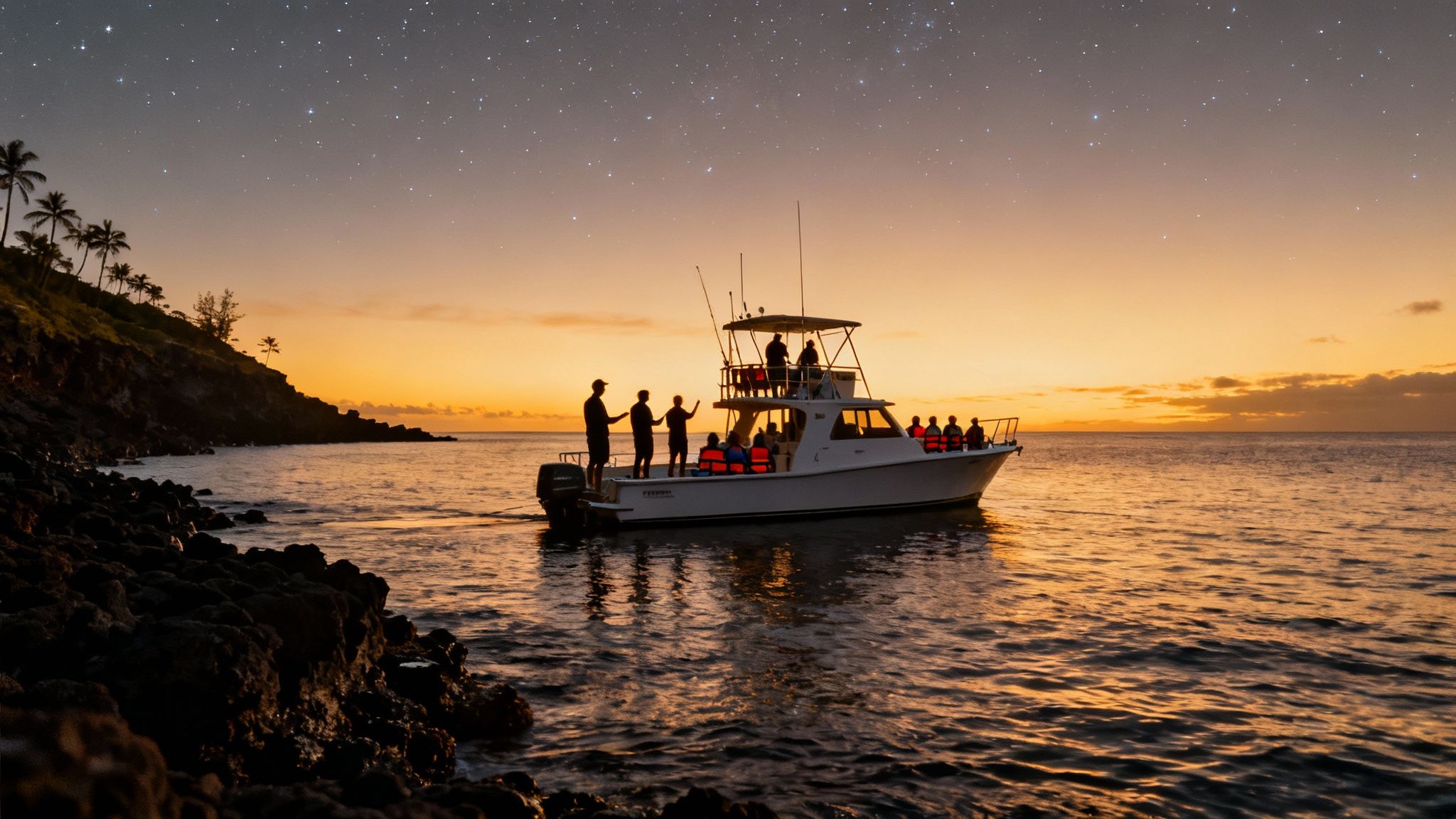
Your adventure kicks off with an easy check-in before you hop aboard a comfortable boat. The ride out to the manta site is an experience in itself, cruising along the stunning Kona coastline as the sun dips low. Most tours are timed perfectly to catch the Hawaiian sunset, painting the sky in fiery colors as you head out to sea. It’s the perfect appetizer for the main event.
Gearing Up for the Show
Once on board, the expert crew runs through a friendly and thorough safety briefing. They’ll cover everything you need to know about the snorkel gear, the custom-made light board, and most importantly, how to respectfully interact with the mantas. The goal is to make sure everyone—from salty ocean veterans to first-timers—feels totally confident and ready.
Next, the crew will get you fitted with all the gear: a wetsuit to keep you warm and buoyant, a mask, a snorkel, and fins. Once you arrive at the spot, the real magic begins. You'll slip into the calm, dark water and make your way over to the floating light board.
This light board is the centerpiece of the whole operation. It’s a big, stable flotation device you can comfortably hold onto—so no swimming is required! More than that, it shoots powerful beams of light down into the water, attracting the plankton that the manta rays have come to feast on.
The Main Event Underwater
As you float, holding onto the board, you become a front-row spectator to one of nature's most incredible ballets. The light beams create a glowing underwater stage, and pretty soon, the stars of the show make their grand entrance. Giant manta rays, some with wingspans over 12 feet, glide up from the darkness to feed.
They perform graceful barrel rolls and somersaults, soaring effortlessly through the water just inches below you. It’s mesmerizing and surprisingly peaceful. All you have to do is float, watch, and breathe. The crew is right there in the water with you, making sure everyone is safe and sharing cool facts about the mantas as they swim by.
After about 30-45 minutes of pure awe, you’ll climb back onto the boat for a calm ride back to shore under a sky full of stars. Ready to book your spot for this incredible underwater performance? You can secure your place on this unforgettable manta ray night snorkel tour.
How to Prepare for Your Night Snorkel
A little bit of prep can turn a really good night into an absolutely perfect one. Getting ready for your manta ray night snorkel in Kona is pretty simple, but bringing the right things—and the right mindset—means you can just relax and soak in the magic of the evening.
Here's a straightforward checklist to get you ready.
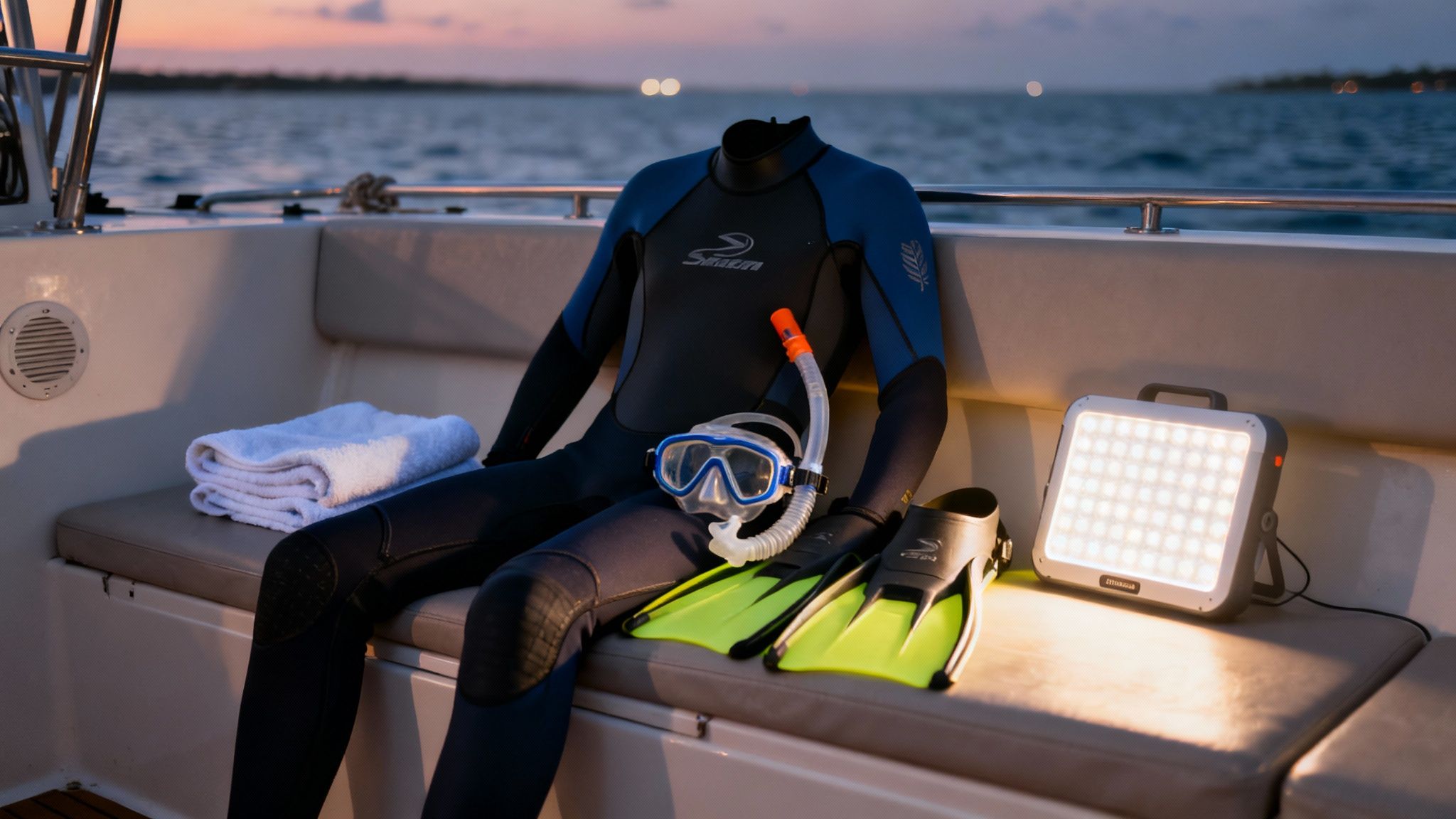
First things first: any reputable tour operator, like us here at Kona Snorkel Trips, will provide all the essential gear. You don't need to worry about packing your own wetsuit, mask, snorkel, or fins. We use high-quality, professionally maintained equipment to make sure everyone from total beginners to seasoned pros has a safe and comfortable trip.
What You Should Bring
While we’ve got the heavy equipment covered, a few personal items will definitely make your trip more comfortable. Think of it like packing a small bag for an evening out on the water.
- Swimsuit: The easiest thing to do is just wear it under your clothes when you show up. No changing in a tiny boat bathroom required!
- Towel and Dry Clothes: A warm, dry towel feels amazing after you get out of the ocean. You'll also want a change of clothes or at least a warm hoodie for the boat ride back to the harbor, which can get a little chilly.
- Reef-Safe Sunscreen: If you're on one of the sunset tours, you'll want to apply this before you head out. It protects both your skin and our fragile coral reefs.
- Camera: A GoPro or other waterproof camera is a must if you want to capture the unbelievable sight of mantas gliding just inches beneath you.
- Gratuity: It’s customary to tip the crew if they gave you an amazing experience. They work hard to keep you safe and make the night unforgettable.
Knowing exactly what to wear for snorkeling can help you feel even more dialed in for your adventure. And while you’re prepping for this specific tour, you might find some broader general travel planning tips helpful for organizing the rest of your Hawaiian vacation.
Managing Expectations and Motion Sickness
It's important to remember we're dealing with wild animals here. While the Kona tours have an incredible track record—we see mantas 85-90% of the time, year-round—a sighting is never 100% guaranteed. That amazing success rate is a huge testament to how healthy our local manta population is and how dialed in the operators are with the light attraction method.
Insider Tip: If you're someone who gets motion sickness, think about taking an over-the-counter remedy about an hour before the tour. The ocean here is usually pretty calm, but being proactive means you can focus on the mantas, not on feeling queasy.
Follow these simple steps, and you'll show up for your tour feeling confident, comfortable, and totally ready for a once-in-a-lifetime night with Kona's gentle giants.
Snorkeling Responsibly with Gentle Giants
The reason we have this world-famous encounter in Kona is because of the incredible health of our local manta ray population. Keeping it that way is a shared responsibility. When you join a manta ray night snorkel in Kona, you're a guest in their home, and the number one rule of manta etiquette is simple: look, but don't touch.
It might be tempting, but it's a huge deal. Manta rays are covered in a thin, protective mucus layer that acts like a shield against bad bacteria and infections. Touching a manta, even by accident, can strip off this coating and leave the animal wide open to disease. This is why any tour operator worth their salt is incredibly strict about maintaining a safe, hands-off distance.
Following Sustainable Tourism Standards
To make sure this amazing ecosystem thrives for years to come, the best tour companies stick to established guidelines for sustainable marine tourism. These practices aren't just for show; they're designed to create an experience that's safe and stress-free for both the mantas and for us.
The core principles of a responsible manta tour are pretty straightforward:
- Be a Passive Observer: Your job is to stay on the surface, hold onto the light board, and just watch the show. No diving down toward the mantas.
- Don't Give Chase: Never, ever pursue or try to ride a manta ray. Let them come to you. Trust me, they will if they're comfortable.
- Light the Way (Correctly): Our lights always point straight down. This attracts the plankton and creates a dinner table for the mantas right below us.
Here in Hawaii, we've got a great environmental model that really works. We don't use any bait, and all our tours follow strict protocols to minimize any stress on the rays. It’s a world away from some of the overcrowded, less-regulated sites you might see in other parts of the globe.
By choosing a reputable operator, you're voting with your dollar to support a system that puts the ocean first. It’s a commitment that keeps this natural wonder alive for the next generation. A lot of people wonder if these huge creatures are dangerous, but you can learn more about why manta rays are gentle and safe to be around in our other article. To really protect these animals, understanding environmental stewardship is the first step in making sure these amazing encounters can continue forever.
Of course. Here is the rewritten section, crafted to sound like it was written by an experienced human expert, following all your provided instructions and examples.
Why Kona Snorkel Trips Is Your Best Choice
Look, when you’re deciding who to go with for your manta ray night snorkel, the company you choose is just as important as the mantas themselves. It can make or break the entire experience. We’ve built our whole operation around creating world-class adventures by focusing on what really matters: small groups and top-of-the-line gear.
Our crew isn't just a bunch of people who know how to drive a boat. They live and breathe this stuff. They’re genuinely passionate about Kona's marine life and their main goal is to share that excitement with you. This isn't just another cattle-call tour; it's a carefully planned experience that we want to be the absolute highlight of your vacation.
We Sweat the Small Stuff So You Don't Have To
We put your safety and comfort above everything else, right alongside making sure we're respectful guests in the mantas' home. That's how you create a truly unforgettable night, whether you're a family with kids or a solo traveler looking for a thrill.
Don't just take our word for it—the thousands of glowing reviews we've received tell the story. Our team consistently goes the extra mile. When you book with us, you're not just getting a spot on a boat. You're guaranteeing a memory that's all about quality, safety, and the pure, unfiltered magic of meeting Kona's gentle giants. We handle all the details so you can just float, relax, and watch the underwater ballet unfold.
Ready to make a memory that will last a lifetime?
A Few Common Questions We Hear
Even after getting the full rundown on the magic of Kona's manta ray night snorkel, it's totally normal to have a few lingering questions. We've been doing this a long time, so we've pulled together the most common ones we hear from our guests. Hopefully, this clears up those last few details so you can feel 100% ready for your adventure.
Is It Safe for Beginners and Children?
Absolutely. This is honestly one of the safest and most accessible ways to have a big marine life encounter.
The snorkel sites are tucked away in calm bays, and you’ll be holding onto a big, stable light board the whole time. You're not really swimming—you're just floating and watching! With our guides right there in the water with you and a buoyant wetsuit keeping you afloat, it’s a fantastic and secure experience for families and first-timers alike.
Do I Need to Be a Strong Swimmer?
Not at all. This is a big worry for a lot of people, but you really don't need strong swimming skills for this.
The wetsuits we provide make you incredibly buoyant, and your job is to hold onto the light float for the entire snorkel. You can just relax and let the ocean do the work while you watch the incredible show happening just inches below you. Our crew is always right there to help if you need anything.
What Happens if We Don't See Any Manta Rays?
It's a valid question. While Kona has an amazingly high success rate—we see them over 90% of the time—we always have to remember that manta rays are wild animals. Their appearance is never a 100% guarantee.
But reputable tour operators get it. That's why most companies, including us here at Kona Snorkel Trips, offer a "manta guarantee." All that means is if your tour group doesn't see any mantas, you can come back out with us on another night, completely free of charge.
When Is the Best Time of Year to Go?
This might be the best part: it's a year-round activity! Kona’s resident manta ray population doesn't migrate, so they show up to feed every single night of the year.
While the water is a bit warmer in the summer months, the manta sightings are remarkably consistent no matter the season. You can confidently book your trip for January or July and expect an amazing experience.