
Manta Ray Night Snorkel Kona A Complete Guide
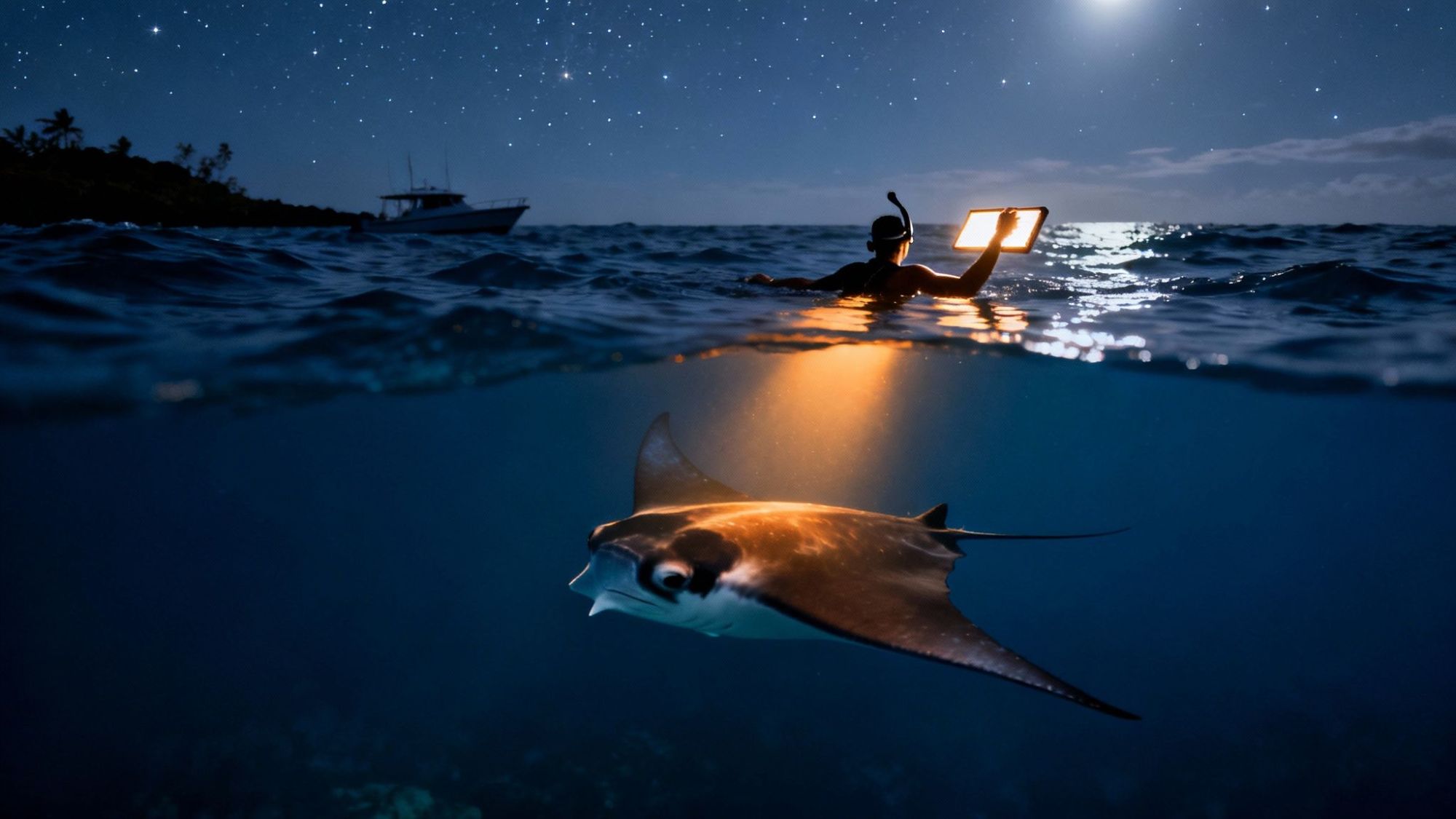
Picture this: you're floating weightlessly in the dark, calm Pacific Ocean. Just inches below, giant, gentle manta rays glide and dance through beams of light. This isn't something you watch on a nature documentary—this is the manta ray night snorkel in Kona, and it's consistently called one of the most incredible wildlife encounters on the entire planet.
Why The Manta Ray Night Snorkel Is a Must-Do Adventure
Every single night, the Big Island puts on a unique and almost magical performance, and you get a front-row seat. The manta ray night snorkel is so much more than a tour; it’s an underwater ballet where you become part of the audience for one of nature's most graceful shows. It’s an adventure that captivates everyone, from salty, seasoned marine explorers to families trying out snorkeling for the very first time.
To make sure you have the absolute best time, it's smart to go with a tour provider that has a stellar reputation. As the top-rated and most-reviewed snorkel company in Hawaii, we at Kona Snorkel Trips are all about providing a safe, unforgettable, and respectful encounter.
A Gentle and Awe-Inspiring Encounter
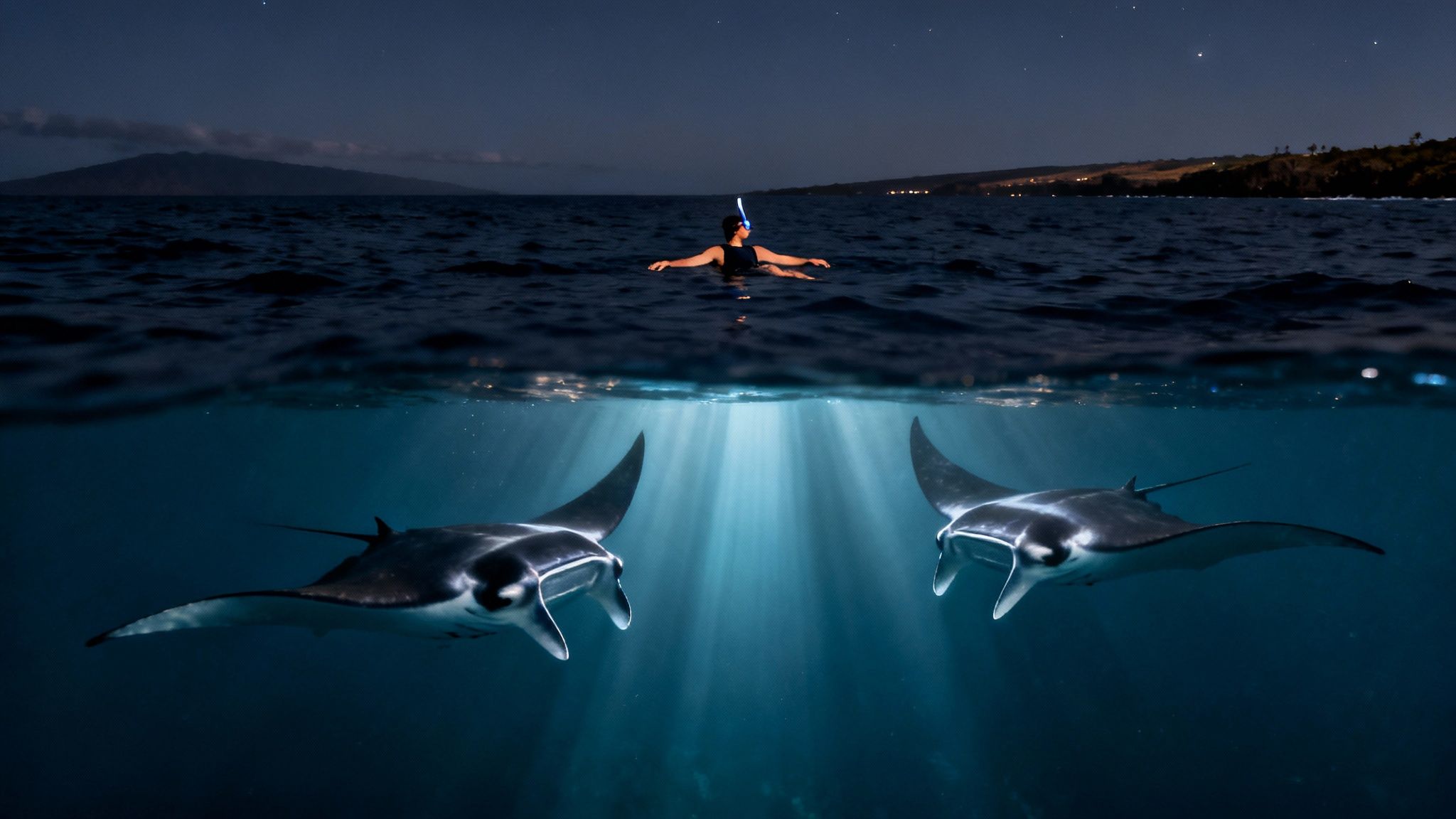
Unlike a lot of wildlife tours where you cross your fingers and hope for the best, the Kona experience is amazingly consistent. The reason is simple science: we use powerful, eco-friendly lights that attract huge clouds of plankton, which is the manta rays' favorite food. This creates a reliable "underwater buffet" that brings these gentle giants in for their nightly meal.
The result? You get an up-close-and-personal view of their incredible feeding behavior. You’ll see them do graceful barrel rolls, swooping through the illuminated water with their enormous mouths wide open to filter out the plankton. And despite their size—some have wingspans over 12 feet—they are completely harmless. They have no teeth, stingers, or barbs. Want to learn more about them? Check out these fun facts about manta rays in our detailed article.
The heart of the experience is all about passive observation. You’ll hold onto a custom floating light board, which gives you stability and the perfect viewing spot, making this easy even for folks who aren't strong swimmers.
This adventure has definitely earned its spot on countless bucket lists. The manta ray night snorkel here in Kona draws around 80,000 people annually from all over the world, cementing its status as one of the world's absolute best marine encounters. This guide will walk you through everything, step by step, to make sure your adventure is everything you've dreamed of and more.
A Step-By-Step Journey Into The Water With Manta Rays
Knowing what to expect on the tour can help turn any pre-trip jitters into pure, giddy excitement. So, what's it really like to get in the water for the manta ray night snorkel in Kona? Let's walk through the whole thing, from the moment you hop on the boat to that last, speechless ride back to the harbor.
The adventure kicks off with a short, scenic boat ride from Honokohau Harbor. You’ll cruise out to one of the prime manta viewing sites just as the sun dips below the horizon, painting the Kona sky in those brilliant sunset colors. It’s the perfect time to just soak in the views of the coast and feel the warm Hawaiian air on your face.
The 'Campfire' and Safety Briefing
Before you even get a toe wet, the crew will run through a full safety briefing. They cover everything—how to use the snorkel gear, the right way to watch the mantas without disturbing them, and what to expect. This is a huge part of the experience on Kona Snorkel Trips' manta ray tour, and it makes sure everyone feels safe and ready to go.
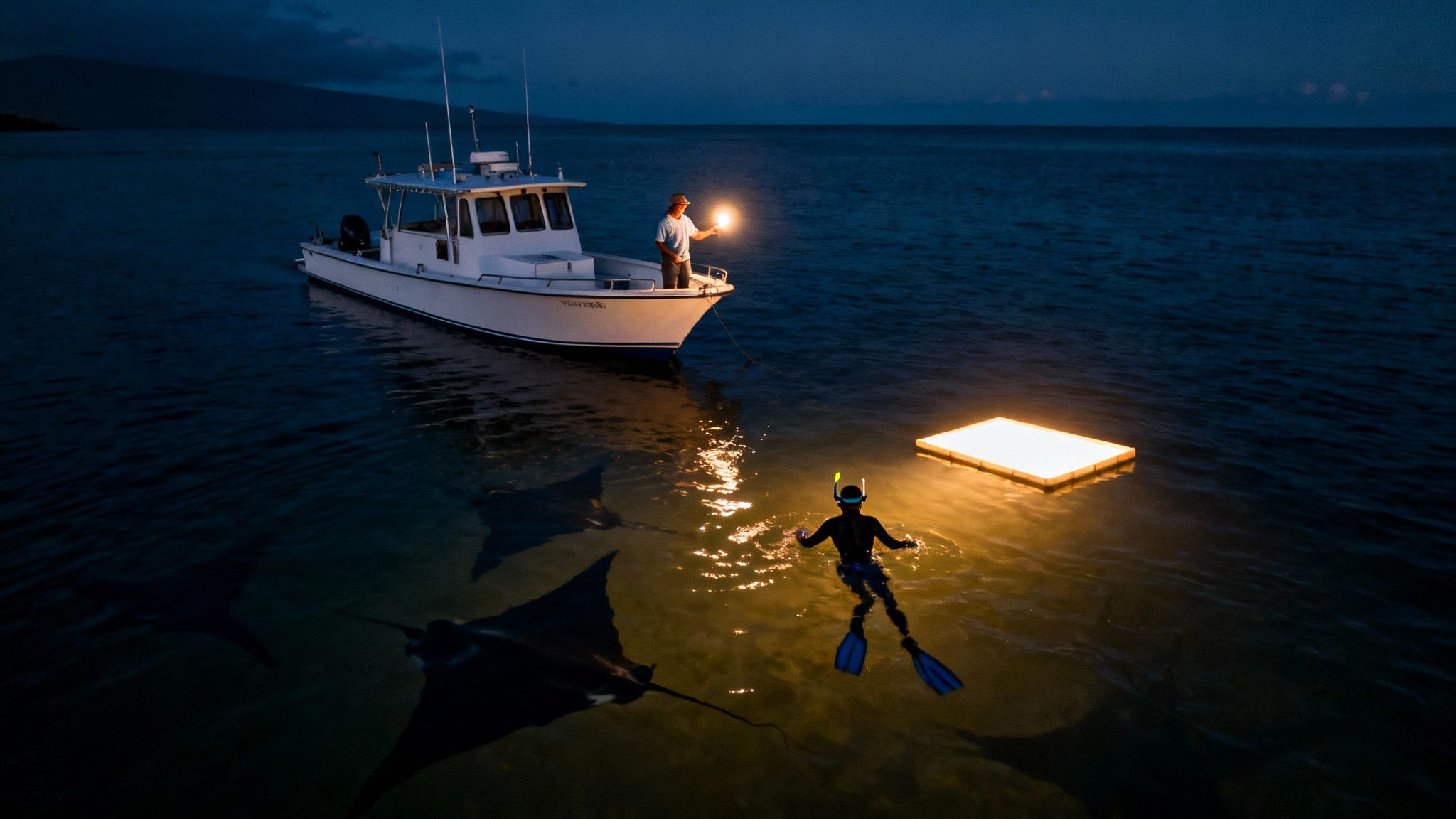
The heart of the whole operation is a clever idea the local guides call the "campfire." It's beautifully simple and works like a charm:
- The Light Source: A custom-built light board, basically a floating surfboard with powerful, downward-pointing lights, is placed in the water. This board is your light, and it’s also a stable handle to hold onto.
- Attracting Plankton: Just like bugs to a porch light, tiny marine organisms called plankton are drawn to the bright lights. They gather in a thick, glowing cloud right under the board.
- Ringing the Dinner Bell: For manta rays, this cloud of plankton is an all-you-can-eat buffet they can't resist. They glide into the light to feed, putting on an incredible show right in front of you.
This brilliant, eco-friendly method brings the mantas to us without ever changing their natural behavior or habitat.
Slipping Into Another World
Once the briefing's done, it's time for the magic. You’ll slip off the side of the boat into the dark, warm Pacific. The water is surprisingly comfortable, especially with the wetsuit they provide. You'll just paddle a few feet over to the light board and find a spot on the handles.
As your eyes adjust, you’ll see the beams of light cutting through the dark, lighting up the swirling plankton like underwater snowflakes. And then… it happens. A massive, graceful shadow emerges from the depths, gliding effortlessly into the light. It's a moment of pure awe you'll never, ever forget.
You're not just watching from the sidelines; you become part of the underwater world. Floating there, you have a front-row seat as these gentle giants perform an underwater ballet just inches below you. It feels both massive and incredibly personal all at once.
The mantas swoop and perform graceful barrel rolls, their giant mouths wide open to filter the plankton from the water. Their movements are so fluid and silent, completely mesmerizing. The only sounds you'll hear are the gentle lap of the water against your mask and maybe your own quiet gasps of wonder. The whole experience is about passive, respectful observation, letting the mantas go about their nightly routine completely undisturbed.
After about 30 to 45 minutes of this mind-blowing spectacle, you'll head back to the boat, buzzing with a sense of wonder that will stick with you for a lifetime.
Why Kona Is The World's Premier Manta Ray Destination
The incredible, night-after-night reliability of the manta ray night snorkel in Kona isn't some happy accident; it's the result of perfect science and a one-of-a-kind geography. You can find manta rays in warm waters all over the world, but nowhere else offers a spectacle this consistent and this close. Kona has rightfully earned its crown as the world's top spot for manta encounters, and it all comes down to a special recipe of factors that create the perfect conditions for this nightly ballet.
The secret ingredient? Plankton, the mantas' favorite meal. The Big Island's underwater landscape, carved by volcanoes, features dramatic drop-offs into the deep ocean. This unique topography creates an upwelling effect, pulling nutrient-rich deep water towards the surface and fueling massive plankton blooms. Think of it as a dependable, all-you-can-eat buffet that has attracted and sustained a thriving local population of over 250 identified manta rays.
The Famous Manta Gathering Spots
This nightly feeding frenzy doesn't just happen anywhere along the coast. It’s concentrated at two legendary locations that local guides affectionately call 'Manta Village' and 'Manta Heaven.' These sites have become world-famous because their specific underwater layouts make them the ideal gathering points for the nightly feast.
- Manta Village (Keauhou Bay): Just south of Kailua-Kona, this spot is incredibly reliable. Its shallow, sandy bottom and protected bay mean calm conditions, making it absolutely perfect for snorkelers of all skill levels. The success rate here is just astonishingly high.
- Manta Heaven (Garden Eel Cove): Located north of Kona near the airport, this site is a bit deeper and more exposed to the open ocean. It's known for drawing huge numbers of mantas, sometimes more than a dozen at once, for a truly grand-scale performance.
These spots didn't become manta magnets by chance. Their history is actually tied to coastal development. When the Sheraton Kona Resort was built at Keauhou Bay back in the 1970s, its bright lights shining on the water started attracting plankton, and the mantas weren't far behind. Divers figured out the pattern, and one of the world's most iconic wildlife encounters was born.
Today, tour operators replicate this effect with purpose-built, eco-friendly underwater light boards. This long-standing relationship between the lights, the plankton, and the mantas is why the sighting success rate hovers between an amazing 85% and 90% nearly every single night of the year.
Unmatched Reliability and Success
The numbers really do speak for themselves and seal Kona's reputation. This isn't one of those "cross your fingers and hope you get lucky" wildlife tours. It is, without a doubt, one of the most dependable marine adventures you can book anywhere on the planet.
The consistent sightings are so well-documented that the experience has become a cornerstone of Big Island tourism. It’s that perfect combination of a healthy resident manta population and a proven method for attracting them that creates magic, night after night.
To give you an idea of just how consistent it is, researchers and operators have been meticulously cataloging the sightings at both Manta Village and Manta Heaven for years. They’ve documented manta action six or seven nights a week, with monthly totals often hitting 50-150 sightings at each location. For those looking at other great options, Manta Ray Night Snorkel Hawaii offers an exceptional manta ray night snorkel tour and is an exceptional alternative.
Kona Manta Ray Viewing Site Comparison
To help you choose, here's a quick look at the two primary manta ray viewing locations in Kona and what makes each one unique.
| Feature | Manta Village (Keauhou Bay) | Manta Heaven (Garden Eel Cove) |
|---|---|---|
| Water Depth | Shallow (25-35 feet) | Deeper (35-45 feet) |
| Bottom Type | Sand bottom | Reef and sand bottom |
| Typical Conditions | Very calm, protected bay | Can be more exposed to ocean swell |
| Beginner Friendliness | Excellent for first-timers and families | Great, but requires more comfort in open water |
| Historical Success Rate | Reported as high as 96% | Reported as high as 90% |
This remarkable consistency is what transforms the manta ray night snorkel in Kona from just another tour into a legendary, must-do experience for anyone visiting Hawaii.
How to Prepare For Your Manta Snorkel Adventure
Getting ready for your manta ray night snorkel in Kona is what turns a great trip into an absolutely unforgettable one. When you know what to bring and what to expect, you can let go of any last-minute jitters and just get completely stoked for the main event. Think of this as your playbook for a perfect night with Kona's gentle giants.
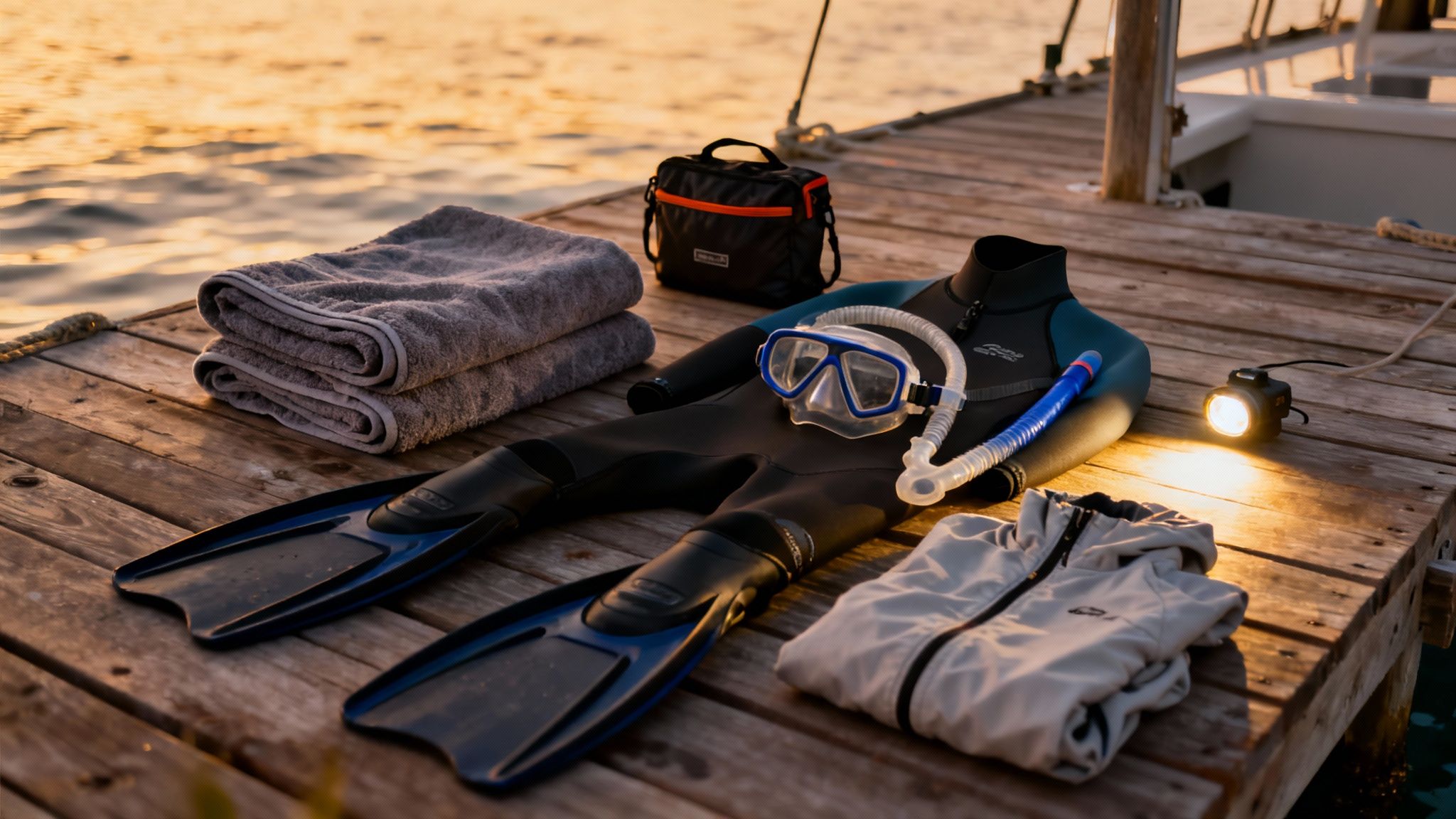
Your Essential Packing Checklist
Packing for this adventure is pretty simple. It’s all about staying comfortable, both in the water and out. While we provide all the high-quality gear you'll need for snorkeling, there are a few personal items you’ll be glad you brought along.
Here’s a quick list to make sure you’re covered:
- Swimwear: The easiest thing to do is show up at the harbor already wearing your swimsuit under your clothes. It makes getting ready on the boat a breeze.
- Towel: You'll definitely want a towel for after your snorkel. A quick-dry microfiber one is a great choice since it doesn't take up much space in your bag.
- Warm Clothes: Even after a warm day in Hawaii, that boat ride back can feel brisk once you’re out of the water. A sweatshirt, a light jacket, or even just a long-sleeved shirt will feel amazing.
- Reusable Water Bottle: It’s always smart to stay hydrated. Most tours have water, but bringing your own is a great sustainable habit.
- Camera: Got a GoPro or other waterproof camera? Bring it! Just be sure to listen to your guide’s instructions on how to film respectfully without disturbing the mantas.
If you want more in-depth advice on what to wear for any snorkeling trip, check out our guide on what to wear for snorkeling. And don't sweat the big stuff—we've got you covered with wetsuits, top-notch masks, snorkels, and fins to keep you comfortable and safe.
Addressing Common Concerns for First-Timers
It's totally normal to have a few butterflies in your stomach along with all the excitement, especially if you're new to snorkeling or haven't been in the ocean at night before. Let me put your mind at ease: this experience is designed for everyone, no matter your skill level.
One of the best parts of the tour design is the custom-built light board. You'll hold onto this large, buoyant board that floats right on the surface. It’s incredibly stable, which means you don’t have to be a strong swimmer at all. You just float, relax, and focus all your attention on the incredible ballet happening right below you.
Your guides are the key to a stress-free experience. They are right there in the water with you, making sure everyone feels safe, double-checking your gear, and answering any questions. Their number one job is to help you feel completely comfortable so you can soak in every single moment.
Timing Your Adventure for the Best Experience
People always ask, "When is the best time of year to see the mantas?" The honest answer is pretty amazing: any time is a great time! This is a year-round show. The unique marine ecosystem off the Kona coast provides a consistent nightly buffet of plankton that keeps the resident manta population here every single night.
The top operators in Kona boast an 85-90% sighting success rate all year long, a stat you won't find anywhere else on the planet. This reliability is all thanks to the nutrient-rich waters that draw in the plankton. In fact, historical data shows success rates climbing as high as 96% at Manta Village, with an average of four mantas per night, and even bigger numbers at Manta Heaven.
While you really can't go wrong, there are a couple of small things you might consider:
- Moon Phases: Some people love going around the new moon. The darker sky makes the underwater lights pop, and sometimes you can even spot bioluminescent plankton glowing in the water, which adds another layer of magic.
- Seasonal Conditions: The summer months usually bring calmer seas and slightly warmer water temperatures. Winter can sometimes have bigger ocean swells, but rest assured, tours only head out when conditions are safe and comfortable.
Ultimately, the perfect time to go is whenever it fits your vacation schedule. The mantas will be waiting.
Booking Your Tour With Kona Snorkel Trips
Once you’re ready to pull the trigger on this incredible adventure, picking the right tour company is the single most important decision you'll make. It’s what separates a good trip from a truly mind-blowing one. If you’re looking for the best manta ray night snorkel Kona has to offer, Kona Snorkel Trips is Hawaii's highest-rated and most-reviewed snorkel company for a reason.
Our entire operation is built around one thing: the guest experience. It all starts with our commitment to small groups. A lot of operators pack their boats to the gills, but we believe an intimate setting is the only way to really connect with the ocean. You get more one-on-one time with our guides, more room to breathe, and a much more peaceful, personal encounter with the majestic manta rays.
Why Small Groups Matter
A smaller group completely changes the vibe of the snorkel. It means you get a front-row seat to the underwater ballet without feeling like you're in a crowd.
Our guides aren't just there to keep an eye on you; they're passionate marine nerds who live for this stuff. They can’t wait to tell you about the individual manta rays, their quirky behaviors, and the delicate world they call home. This educational piece adds so much more to the experience, turning a beautiful sight into a real, meaningful connection. You can dive deeper into what makes our trips different in our guide to Kona manta ray snorkel tours.
Safety and Conservation First
Your safety is, without a doubt, our top priority. From the thorough briefing we give you before you even touch the water to our expert guides right there with you, every single step is designed to make you feel comfortable and secure. This is true even if you’ve never put on a snorkel mask in your life. We provide all the professional-grade gear you need—wetsuits, masks, snorkels—to make sure you stay warm and have everything you need.
We’re also fiercely protective of our marine environment. Our tours operate under strict eco-friendly guidelines to ensure our time with the mantas is always respectful and has the lightest possible footprint on their habitat. When you choose Kona Snorkel Trips, you're directly supporting sustainable marine tourism.
Booking with us is straightforward and honest. Our all-inclusive price means you won't get hit with any hidden fees or last-minute surprises. You can book your spot with total confidence, knowing you’ve picked a team dedicated to delivering a safe, educational, and absolutely magical experience. So, are you ready to see the wonder for yourself?
Got Questions About the Manta Ray Night Snorkel?
Even with all the buzz, it's totally normal to have a few questions before you jump into a new adventure. The manta ray night snorkel in Kona is unlike anything else on the planet, and feeling prepared is the key to soaking in every single magical moment. We get these questions all the time, so let's clear up any hesitations you might have.
Is The Manta Ray Night Snorkel Safe?
Absolutely. Safety is the number one priority for us and any other reputable tour company out there. Let's break it down so you can feel completely at ease.
First off, the manta rays themselves are incredibly gentle. There’s a reason we call them "gentle giants." Despite their massive size, they have no teeth, no stingers, and no barbs like their stingray cousins. They're filter feeders, interested only in the microscopic plankton in the water, not the humans floating above them.
Second, the entire tour is built around safety. We start with a comprehensive safety briefing before anyone even touches the water. You’ll be geared up with a wetsuit for warmth and a flotation device for stability. Our expert guides are in the water with you the whole time, making sure everyone is comfortable and secure. You're not just thrown into the dark ocean; you're in a controlled, supervised environment designed for passive, breathtaking observation.
What If I’ve Never Snorkeled Before?
No problem at all! This experience is perfect for beginners and often becomes a first-timer's favorite memory of their entire trip to Hawaii. You don't need any prior experience to have an amazing time.
Here's the secret: the custom-made, high-powered light board. This isn't some chaotic free-swim in the dark. You'll hold onto the handles of a large, stable floating raft that does all the work for you. It provides all the buoyancy you need, so you can just relax on the surface without kicking or swimming. Your only job is to put your face in the water and watch the incredible ballet unfold in the light beams below.
Our guides are pros at helping first-timers. They’ll get you comfortable with your mask and snorkel, give you pointers on breathing, and stick close by to offer a hand. It’s the perfect, low-pressure introduction to the underwater world.
Am I Guaranteed to See Manta Rays?
It's important to remember these are wild animals, so no one can ever make a 100% guarantee. That said, the Kona coast is the single most reliable place on Earth to see manta rays. The sighting success rate for top-tier operators like us is incredibly high, consistently hovering between 85% and 90% all year long.
The reason for this amazing consistency is the method itself. For decades, the local manta population has learned that our powerful lights attract a dense cloud of plankton—their favorite food. We’re essentially ringing a dinner bell they’ve come to recognize. The odds are overwhelmingly in your favor for a mind-blowing encounter.
On the extremely rare night the mantas are a no-show, most reputable companies (including us) have a "manta guarantee." This usually means you can re-book for another night, free of charge. It’s a great reason to schedule your manta snorkel early in your trip, just in case.
What’s The Best Time of Year to Go?
This is one of the best parts—it's a spectacular experience any night of the year! Kona's resident manta ray population doesn't migrate. They feed right here along the coast every single night, making this a truly year-round adventure.
That said, there are some minor seasonal things to consider:
- Summer (April – October): This is when we typically see the calmest ocean conditions and slightly warmer water. It's an ideal time for families or anyone who prefers smoother seas.
- Winter (November – March): The mantas are still here every night, but the Pacific can kick up larger swells. We only go out when it's safe, of course. The big bonus for winter is the chance to see humpback whales on the boat ride out and back!
Some people also ask about the moon phase. A new moon makes for the darkest night, which can make our lights seem even more brilliant in the water. But honestly, the experience is breathtaking on any night, regardless of the moon or the season. The key is going with a trusted crew that puts your safety and experience first. If you are looking for a truly exceptional alternative, check out the Manta Ray night snorkel tour with Manta Ray Night Snorkel Hawaii.
Ready to witness the underwater ballet for yourself? Join Kona Snorkel Trips for Hawaii's top-rated and most unforgettable manta ray night snorkel experience. Book your adventure today and create memories that will last a lifetime. Learn more about the manta ray snorkel tour in Kona on our tour page.