
Manta Ray Night Snorkel Kona: Your Kona Night Ocean Adventure
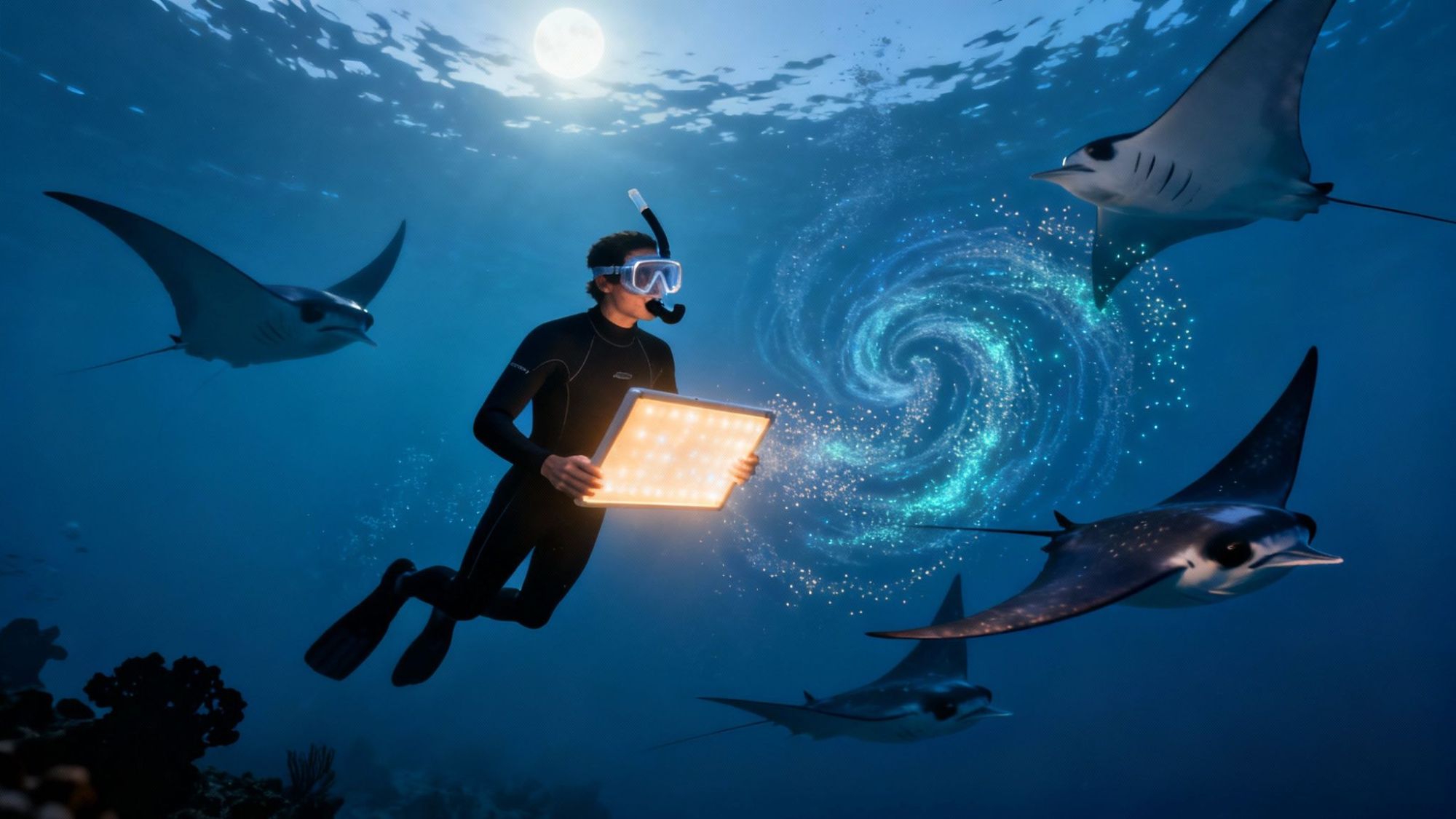
Picture this: you're floating weightlessly in the calm, dark ocean. Just inches below, magnificent manta rays, some with wingspans wider than a car, glide and dance in an otherworldly ballet. This isn't a dream; it's the world-famous manta ray night snorkel in Kona, and it's an experience that will stick with you for a lifetime.
This adventure is widely considered one of the most reliable and magical wildlife encounters on the entire planet.
Your Ultimate Kona Manta Ray Adventure
Embarking on a manta ray night snorkel is something you'll never forget. These gentle giants put on a nightly show, and you get a front-row seat. To make sure this incredible memory is a good one, picking the right guide is everything. As the top-rated and most-reviewed snorkel company in Hawaii, Kona Snorkel Trips has built a solid reputation for delivering safe, intimate, and truly unforgettable marine adventures.
What Makes This Snorkel So Special?
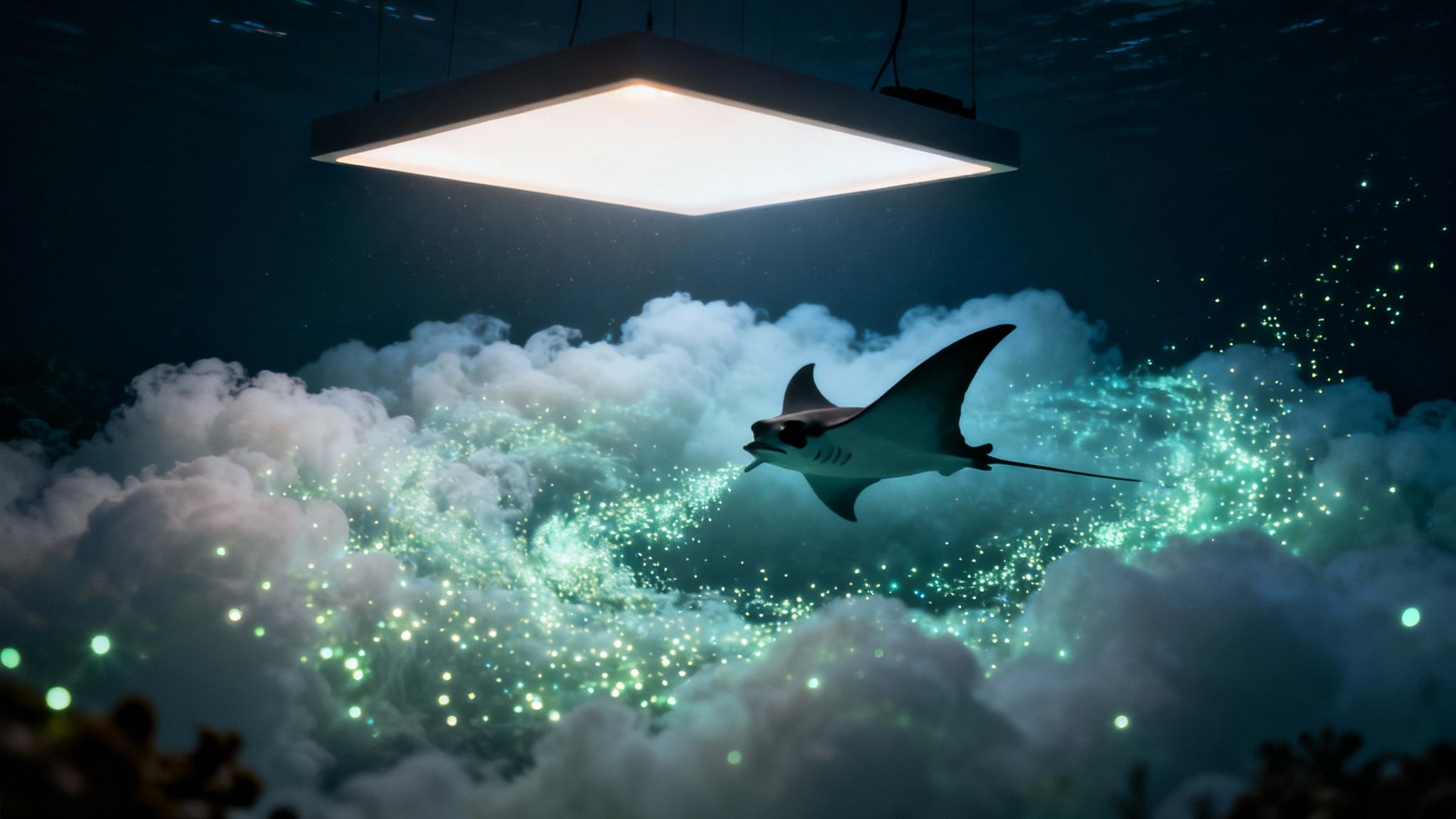
The magic kicks off just after sunset. Our boats travel a short distance from shore to designated viewing sites where we submerge powerful, eco-friendly lights in the water. These lights act like a magnet for massive clouds of plankton, which happens to be the primary food source for manta rays. What happens next is pure spectacle.
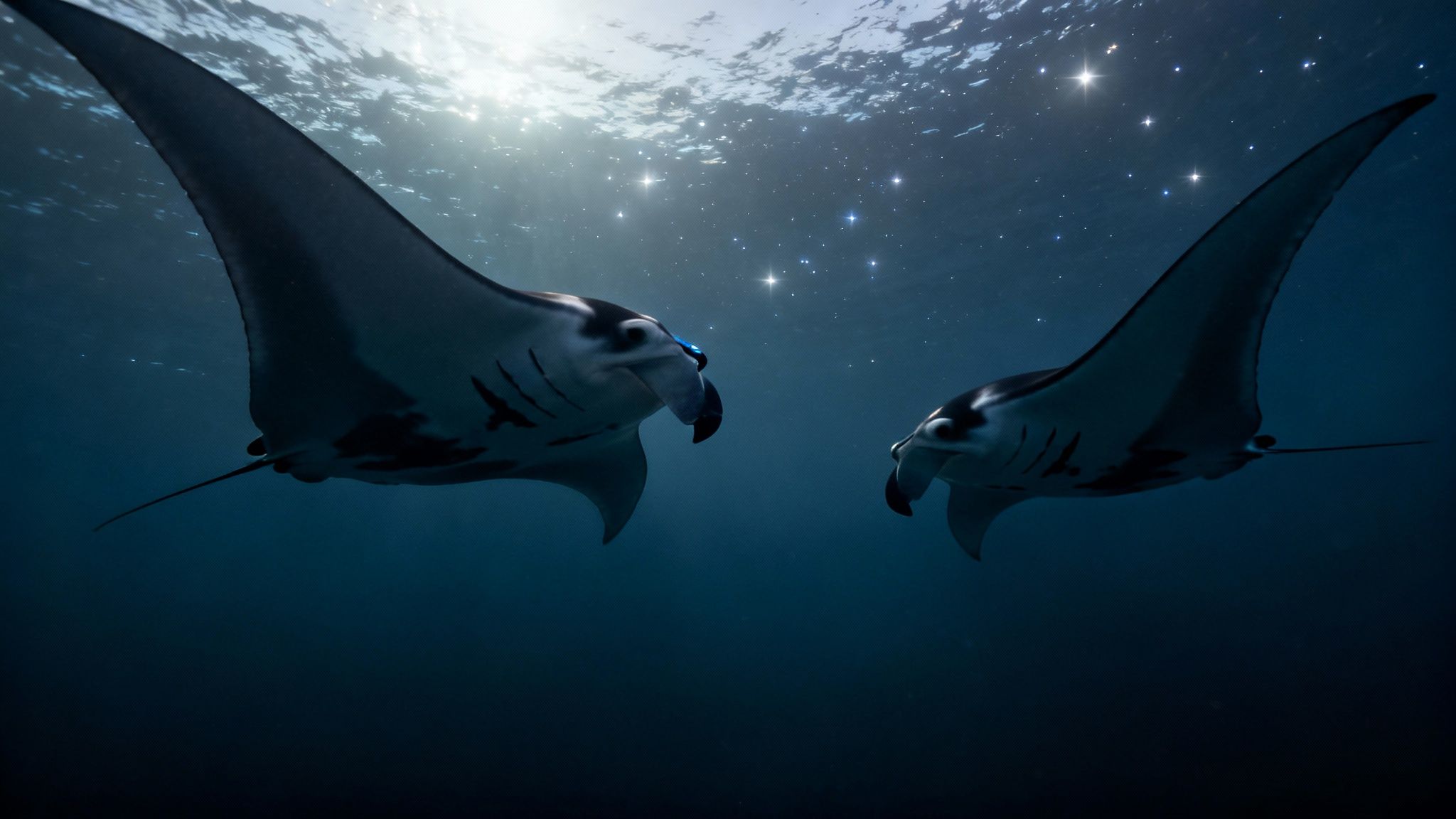
Drawn by the promise of an all-you-can-eat buffet, the mantas arrive. They gracefully swoop, glide, and perform barrel rolls to filter the plankton, often coming within inches of you. Unlike so many wildlife tours where a sighting is a matter of luck, the Kona manta ray night snorkel has an unbelievably high success rate—often over 90% year-round.
This isn't just a tour; it's a carefully orchestrated, symbiotic event. The lights create a reliable food source, and in return, we get to witness one of nature's most breathtaking displays in a respectful, non-invasive way.
Planning Your Unforgettable Encounter
This guide will walk you through everything you need to know to plan the perfect manta ray night snorkel in Kona. We'll cover why Kona is the world's best spot for this, how to choose the right tour, and what to expect on your adventure.
Here are a few key things to know right off the bat:
- Safety is key. The experience is incredibly safe. You'll hold onto a custom-built flotation device with built-in lights, so you don't even need to be an expert swimmer to enjoy it.
- Small groups are better. Smaller tour sizes, like those we run at Kona Snorkel Trips, mean a more personal and less crowded encounter with these majestic creatures.
- It’s a year-round activity. Thanks to Kona's resident manta ray population, you can experience this wonder any month of the year.
Ready to take the plunge? You can dive into all the details on the Kona Snorkel Trips manta ray tour page. If you're shopping around, Manta Ray Night Snorkel Hawaii offers another exceptional and highly-rated tour option worth checking out.
Why Kona Is The World's Premier Manta Ray Destination
So, what turns a simple stretch of coastline into the undisputed global hotspot for manta ray encounters? For the Kona coast on the Big Island of Hawaii, it’s a perfect storm of unique ecological factors that create an underwater show you won't find anywhere else. This isn't just a lucky spot; it's a finely tuned ecosystem that makes the manta ray night snorkel kona experience incredibly reliable and, honestly, just magical.
The secret is a combination of the island's unique underwater geography and the deep ocean currents swirling around it. The volcanic terrain creates natural bays and coves—like Keauhou Bay and Makako Bay (which we locals call Manta Heaven)—that act as perfect, sheltered feeding grounds. These spots are constantly fed by nutrient-rich water, which means one thing: lots of plankton, the manta rays' favorite food.
The Science Behind The Nightly Buffet
This whole thing started decades ago when a beachfront hotel put up lights that lit up the ocean. They didn't know it then, but those lights attracted swarms of plankton. The local mantas quickly figured out this was an easy, all-you-can-eat buffet, and an incredible natural phenomenon was born.
Today, responsible tour operators like us replicate this effect, but in a controlled and sustainable way.
We submerge powerful, eco-friendly lights into the water, creating a "campfire" that draws in plankton from all around. This guaranteed food source is what keeps Kona’s large, resident population of reef mantas coming back night after night. It’s a brilliant, symbiotic relationship that works for everyone:
- The Lights: They gather huge amounts of plankton into one spot.
- The Plankton: They're drawn to the light, creating a dense, floating feast.
- The Manta Rays: They show up for a reliable meal, doing their famous barrel rolls to scoop up the plankton.
- The Snorkelers: You get a front-row seat to one of nature's most graceful performances.
This ingenious setup is why the success rate for seeing these gentle giants in Kona is an astounding 80-90% year-round. Most tour operators consistently hit an 85-90% encounter rate. Historical data even shows an average of 4 mantas per night at Manta Village and 11 at Manta Heaven, making this one of the most dependable wildlife viewings on the planet.
Conservation and A Thriving Resident Population
Unlike many other places where manta sightings are seasonal, Kona is home to a non-migratory population of over 200 individually identified reef mantas. Researchers and conservation groups have spent years cataloging these animals, even giving them names based on the unique spot patterns on their bellies. You can dive into more fun facts about manta rays and what makes them so special.
Kona's commitment to conservation is the backbone of this entire experience. We follow strict guidelines to ensure every tour is passive and respectful. This means protecting the mantas' delicate mucous coating and their natural feeding behaviors, making Kona a global model for responsible ecotourism.
Because the local community and tour operators work so hard to protect this precious resource, the manta population here continues to thrive. This dedication ensures the magical manta ray night snorkel kona adventure will be here for generations to come.
How To Choose The Right Manta Ray Snorkel Tour
With so many companies running a manta ray night snorkel in Kona, picking the right one can feel like a shot in the dark. Trust me when I say this: not all tours are created equal. Your choice here is the difference between a crowded, chaotic mess and an intimate, jaw-dropping encounter you’ll remember for the rest of your life. Getting this step right is the single most important part of planning your adventure.
The biggest factor to consider, hands down, is the group size. You'll see massive vessels out there, some people call them "cattlemarans," packing anywhere from 40 to 100 people on a single trip. They might lure you in with a slightly lower price tag, but you'll be competing for elbow room on the boat and, more importantly, a decent view in the water. It’s hard to feel the magic when you’re getting kicked by fins from all directions.
Small Boats Mean A Better Experience
This is where a small-group charter, like the trips we run at Kona Snorkel Trips, completely changes the game. Capping our boats at just 12-18 guests makes for a totally different vibe—it’s relaxed, personal, and focused on the experience.
The benefits are immediate:
- Real Personal Attention: Our guides can actually talk to you, answer your questions, and share cool facts about the mantas you’re seeing.
- Less Crowding, Better Views: With a smaller group, everyone gets a front-row seat at our light board. No craning your neck or fighting for a glimpse.
- A More Intimate Vibe: The focus stays where it should be—on the incredible animals gliding beneath you, not on managing a giant crowd.
- Quicker and Easier Logistics: Less time spent on check-ins and waiting for people means more time enjoying the Kona sunset before you even get in the water.
A smaller scale just lets you connect with the experience on a deeper level. You can actually soak in the wonder of the moment without feeling like you're just another number.
What To Look For In An Operator
Beyond just the size of the boat, there are a few non-negotiables you should look for to ensure a high-quality, safe tour. Always make sure any company you consider is fully licensed and insured. Check their safety record and ask what certifications their guides have—at a minimum, they should be trained in CPR, First Aid, and water rescue. Good gear is also a must. A reputable operator will provide clean, well-maintained masks, snorkels, fins, and wetsuits that actually fit you properly. You’ll be glad you have one when you’re floating in the dark ocean!
The best tour operators aren't just boat drivers; they're passionate marine naturalists. A truly experienced guide can recognize individual manta rays by their unique spot patterns, point out specific feeding behaviors, and make sure every part of the tour is respectful to the animals and their habitat.
To help you see the difference, it’s useful to compare your options side-by-side.
Comparing Kona Manta Ray Snorkel Tours
Choosing a tour is really about deciding what kind of experience you want. Do you want to be part of a crowd, or do you want a more personal and memorable encounter? Here's a quick breakdown to help you compare.
| Feature | Kona Snorkel Trips (Small Boat) | Typical Large Boat Tours |
|---|---|---|
| Group Size | 12-18 Guests | 40-100+ Guests |
| Experience | Intimate and personalized | Crowded and impersonal |
| Guide Interaction | High level of direct engagement | Limited individual attention |
| Water Time | More quality viewing time | Can be rushed or crowded |
| Safety Focus | Meticulous, with personalized checks | Standardized, less individual focus |
Ultimately, a smaller, more dedicated operator ensures your manta ray night snorkel in Kona is incredible for all the right reasons. These kinds of tours are popular for a reason, and the best ones fill up weeks, or even months, in advance. Booking early is definitely the way to go.
Preparing For Your Night Snorkel Adventure
A little prep work goes a long way toward making your manta ray night snorkel in Kona a truly comfortable and seamless experience. It’s pretty simple stuff, but getting these few details right means you can just relax and soak in the magic once you're out there.
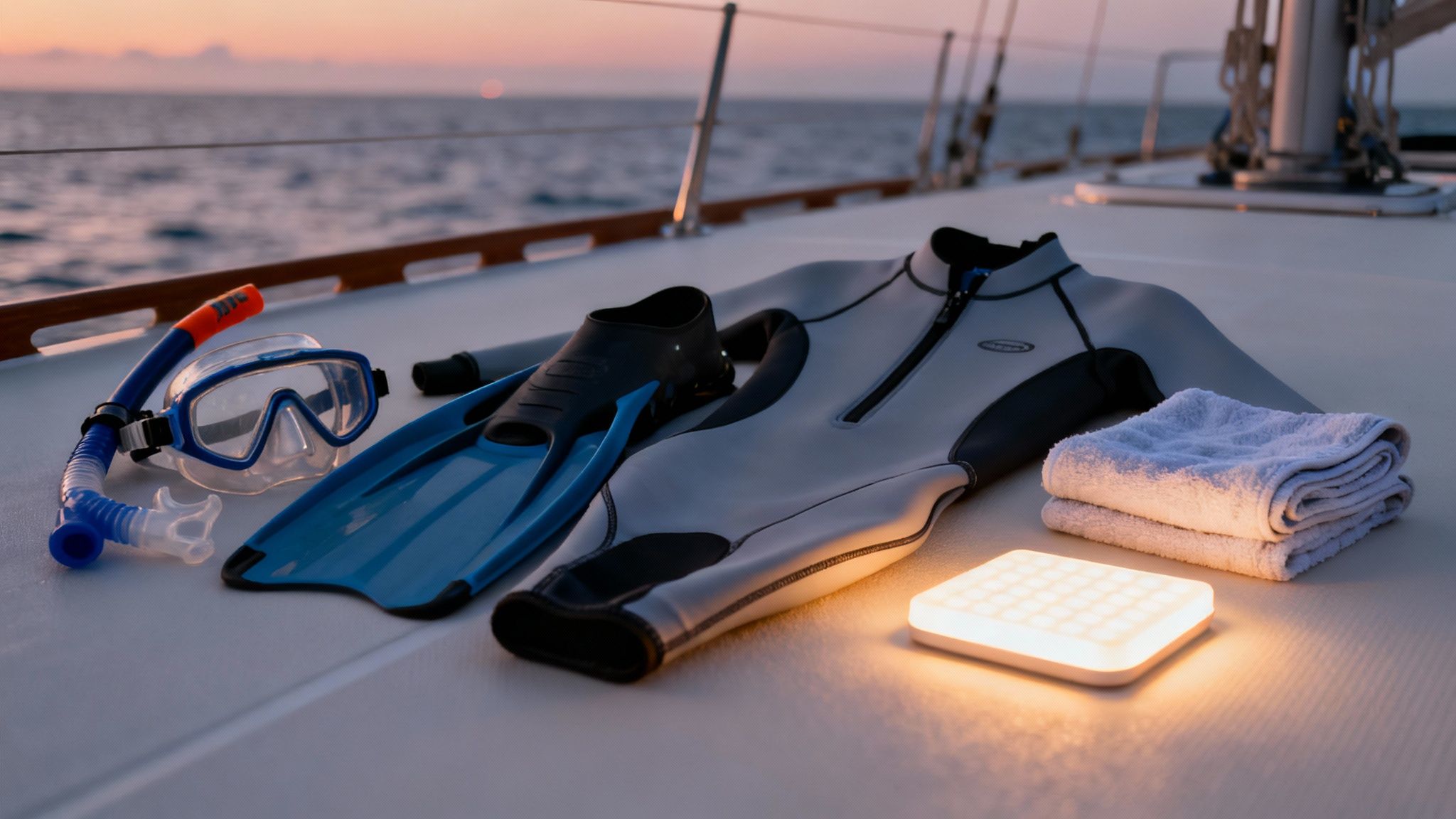
The best move is to show up ready to hit the water. Just wear your swimsuit under your clothes when you head to the marina. This makes for a quick and easy transition on the boat, saving precious time that’s much better spent watching the sunset from the deck.
You'll also want to pack a small bag with a warm towel and a dry change of clothes for the ride back. That ocean air can feel surprisingly chilly after getting out of the water, and you’ll be glad you have something cozy for the trip home. If you're bringing the whole family, a resource like an ultimate baby vacation packing list can be a huge help in getting the little ones ready, too.
What To Bring And What To Leave Behind
Simplicity is key here. Honestly, beyond that towel and your dry clothes, you don’t need much else. It's best to leave valuables like jewelry, most of your wallet, and any non-essential electronics secured back at your hotel.
Here’s a quick rundown of the must-haves:
- Swimsuit: The one you're already wearing under your clothes.
- Towel: To dry off after the snorkel.
- Dry Clothes: Something warm and comfy for the boat ride back.
- Motion Sickness Remedy: If you’re prone to it, be sure to take it before you board.
- Reusable Water Bottle: Staying hydrated is always a good plan.
Keep in mind, tour operators like Kona Snorkel Trips provide all the gear you need—high-quality masks, snorkels, fins, and wetsuits are all part of the package. No need to haul your own, unless you have a personal prescription mask you prefer.
Feeling Confident In The Water
It’s totally normal to feel a little apprehensive about getting in the ocean at night. But I can tell you, this experience is designed from the ground up to be incredibly safe and reassuring.
The whole time you're in the water, you'll be holding onto a custom-designed, floating light board. This board provides all the stability you need, so you definitely don't have to be an Olympic swimmer. If you're comfortable floating, you're good to go.
Plus, our in-water guides are right there with you every step of the way, making sure everyone feels secure and is following the safety plan. They're a fantastic resource for any questions you might have. For a little extra peace of mind, you can review some essential snorkeling safety tips before your trip. Their presence allows you to completely relax and just focus on the incredible ballet of the manta rays unfolding beneath you.
What To Expect During Your Manta Ray Encounter
The whole experience starts before you even touch the water. Your boat pulls away from the harbor and cruises along the incredible Kona coast just as the sun begins to melt into the Pacific. The sky lights up with color—it's the perfect, scenic start to your manta ray night snorkel Kona adventure and a chance to just soak it all in before the real show begins.
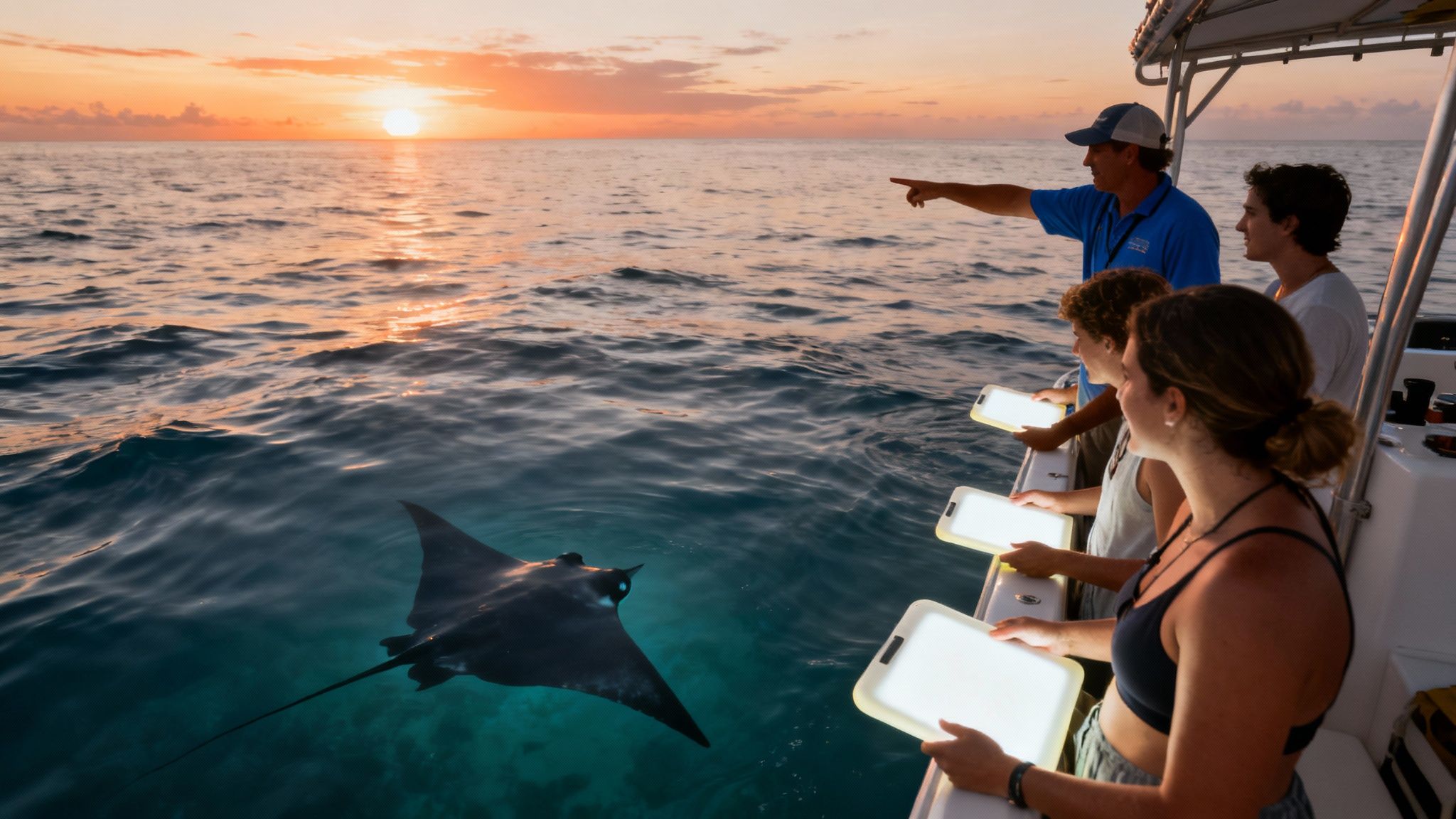
Once we arrive at the snorkel site, our expert guides will walk you through a detailed safety briefing. They’ll cover exactly what to do, how the light board works, and the single most important rule of the night: passive observation. This keeps you safe and protects the amazing creatures we're here to see. As dusk turns to night, it's time to slip into the surprisingly warm, dark water.
The Magic Of The Light Board
After getting into the ocean, you'll find your spot and hold onto our custom-built, floating light board. This isn't just for you to hang onto; its powerful, eco-friendly lights cut through the darkness and shine down into the depths, acting like a giant magnet for plankton.
As you float there, you'll see the water below you start to glow, becoming thick with microscopic life drawn to the light. It honestly feels like you’re floating over a galaxy of tiny, shimmering stars.
This glowing cloud of plankton is basically a dinner bell. The real magic kicks off when the first giant shadow emerges from the deep. A majestic manta ray, with a wingspan that can stretch over 12 feet, glides effortlessly into the light. Then another might appear, and another, until you're witnessing an incredible underwater ballet happening just inches beneath you.
Witnessing The Barrel Roll
The mantas are here for one thing: to eat. And you have a front-row seat to their fascinating feeding behavior, especially the famous "barrel roll." To gulp down as much plankton as possible, they swoop through the light with their giant mouths wide open, performing these graceful, acrobatic somersaults. It's a breathtaking sight that's somehow both powerful and incredibly serene.
The golden rule for every encounter is simple: look, but please don't touch. Manta rays are covered in a delicate mucus coating that acts as their immune system, protecting them from infection.
Touching a manta ray can strip off this protective layer, leaving them vulnerable to disease and injury. All responsible tour operators enforce a strict hands-off policy to ensure these gentle giants stay healthy for generations to come.
Trying to capture these moments in the dark can be a bit tricky, but it's totally possible with the right approach. If you're hoping to get some incredible shots, learning a few key techniques makes a huge difference. Check out our guide on how to take underwater pictures for some pro tips on mastering night photography in the ocean. This is an experience you'll want to remember forever.
Answering Your Manta Ray Night Snorkel Questions
It’s totally normal to have a few questions swirling around before you book. In fact, we get asked the same things all the time! Let's clear up some of the most common concerns so you can get back to being excited for the main event.
Is It Safe To Be In The Ocean At Night?
Absolutely. Your safety is the number one priority for any reputable tour company, and the whole experience is incredibly controlled and supervised. You’re always with experienced, certified guides who live and breathe these waters and know the local conditions like the back of their hand.
You won't be floating alone in the dark, either. Everyone holds onto a large, custom-built light board. This keeps the group together, gives you something stable to hold onto, and illuminates the water below. The snorkel sites are also in well-known, sheltered spots, far from any strong currents or heavy boat traffic.
Do I Need To Be A Strong Swimmer?
Not at all. This is probably the biggest misconception we hear. You'll be holding onto a floating light board the entire time you're in the water, which means you use very little energy.
If you're comfortable floating in the water and can breathe through a snorkel, you've got all the skills you need. Plus, the wetsuit we provide adds extra buoyancy, making it even easier to just relax on the surface and enjoy the show.
This tour is all about accessibility. The goal isn't to swim around; it's to float comfortably and watch the incredible manta ballet happening right below you. It’s a passive, observational activity perfect for nearly every confidence level.
When Is The Best Time Of Year To Go?
Here’s the best part: any time is a great time! The manta rays we see are a resident population, which means they live right here off the Kona coast all year long. They don't migrate, and they show up for their nightly plankton feast with amazing consistency.
While the weather might change a bit from season to season, the success rate for seeing mantas stays incredibly high—often over 90%—no matter when you visit. The most important thing is booking your spot in advance, especially since the best tours fill up fast year-round.
Are There Age Or Health Restrictions?
Most companies have a minimum age, usually somewhere between 5 and 7 years old, just to make sure the kids are comfortable being in the water after dark. It's always a good idea to check with the specific operator when you book.
As for health, you should be in reasonably good physical shape. If you have any serious heart or respiratory conditions, it's crucial to check with your doctor before doing any kind of snorkeling activity, just to be safe.
Ready to see this underwater ballet for yourself? Kona Snorkel Trips offers the highest-rated and most-reviewed manta ray night snorkel in Hawaii. We focus on small groups for an intimate, safe, and truly unforgettable adventure. Book your front-row seat to one of nature's greatest shows.