
Manta Ray Night Snorkel Kona: Your Ultimate Kona Guide
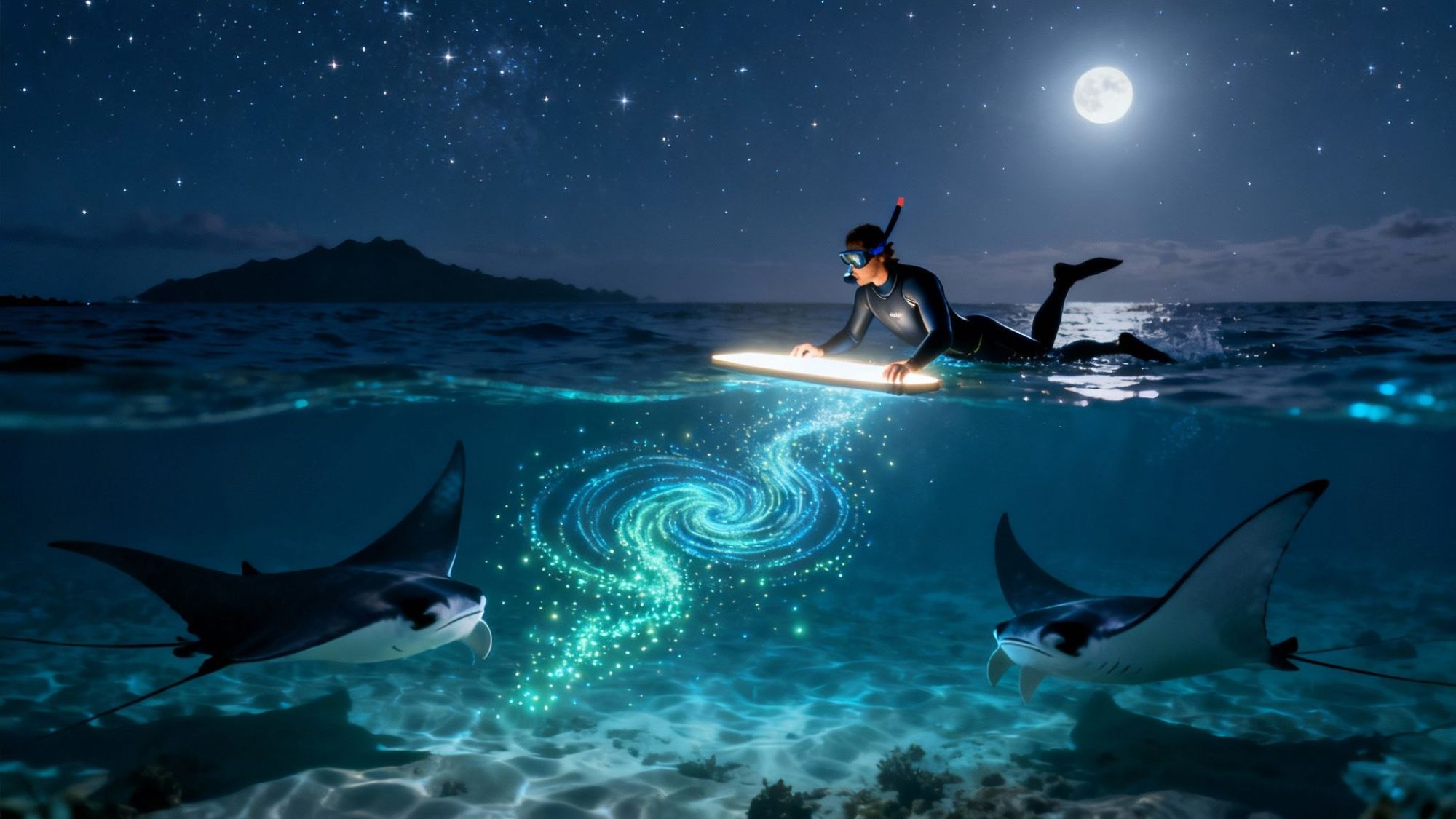
Picture this: you’re floating in the warm, dark Pacific Ocean, completely weightless. Below you, giant, gentle manta rays glide and dance, their white bellies glowing in the beams of underwater lights. This isn’t something you watch on a nature channel—it’s the world-famous manta ray night snorkel in Kona, an experience that truly sticks with you forever. It’s one of Hawaii’s most incredible adventures, and having the right guide makes all the difference.
Experience the Magic of Kona's Manta Ray Night Snorkel
This guide is your complete walkthrough for this bucket-list adventure. We'll show you exactly what to expect and why Kona Snorkel Trips, as Hawaii's top-rated and most-reviewed snorkel company, is the crew you want leading the way. Don’t just take our word for it; the reviews below tell the story of the unforgettable memories we help create every single night.
A Truly Unique Underwater Ballet
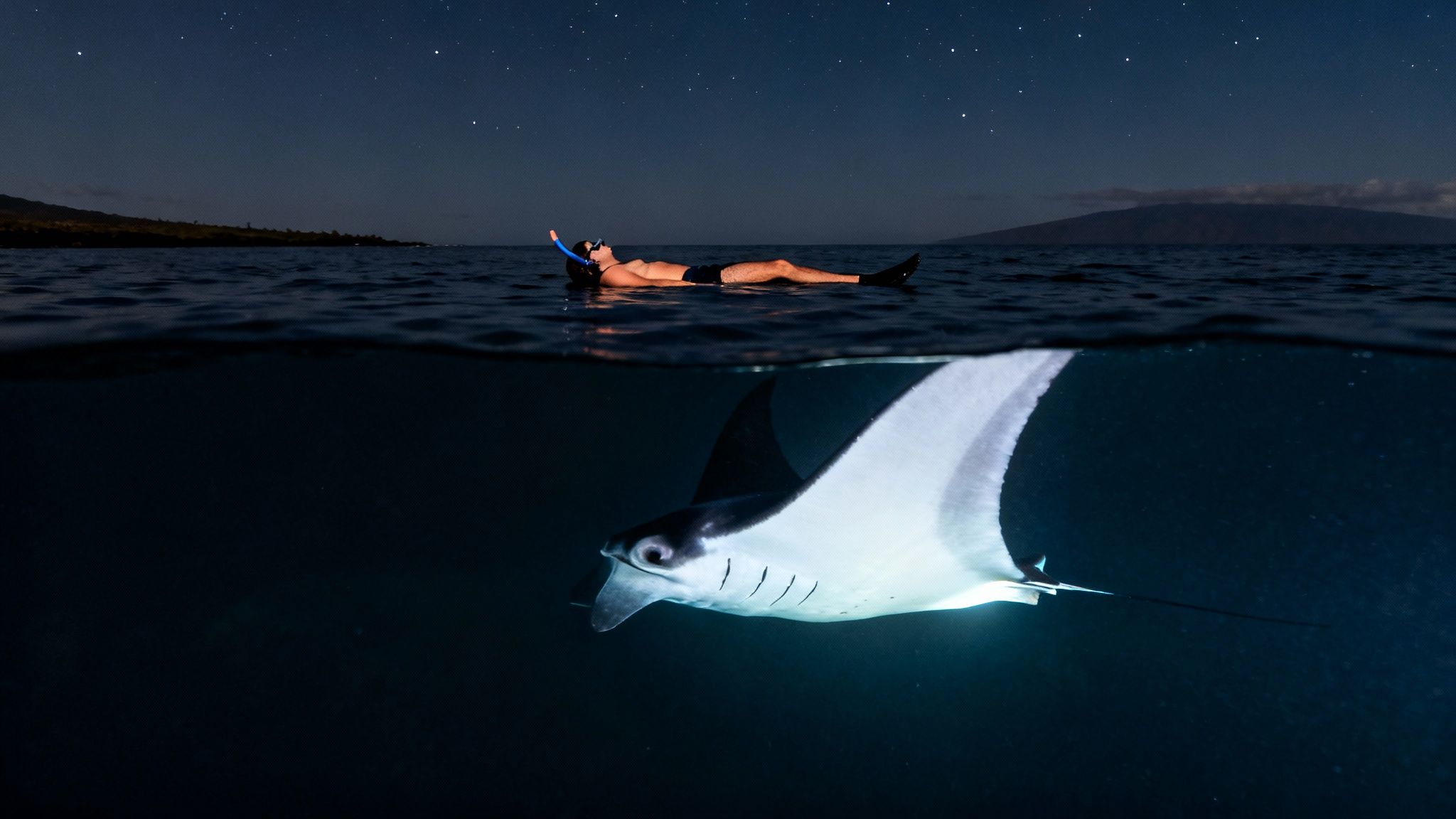
So, what exactly is the manta ray night snorkel? It’s a beautifully simple and effective setup. Our boats shine powerful, safe lights into the water, which attracts swarms of plankton—the manta rays' favorite meal.
As the plankton gathers, the mantas arrive for their nightly feast. They perform an incredible, acrobatic "water ballet," looping and swooping through the light beams to scoop up the food. The best part? They often do this just inches away from you.
It's no surprise this has become one of Hawaii's biggest draws, attracting around 80,000 people every year. That popularity is built on a solid foundation: Kona boasts a year-round manta ray sighting success rate that hovers between 80-90%. You can learn more about this unforgettable underwater adventure and why it's so special.
Why This Experience Is Unforgettable
The feeling of being so close to these gentle giants is almost impossible to put into words. It’s not like other wildlife tours where you're watching from a distance. Here, you're right in the middle of their world, floating peacefully at the surface while the show unfolds beneath you.
- Up-Close Encounters: The mantas often swim within inches of you. It's an incredibly personal and awe-inspiring connection.
- Gentle Giants: Don't let their size fool you! With wingspans that can reach up to 16 feet, these creatures are completely harmless. They're filter-feeders with no teeth or stingers.
- A World-Class Destination: Kona is hands-down the most reliable place on the planet to see manta rays. Every trip out has a high chance of being absolutely spectacular.
Next, we’ll dive into what makes Kona the global epicenter for this encounter, setting the stage for an aquatic performance you simply have to see to believe.
Why Kona is the World's Best Manta Ray Viewing Spot
People always ask me, "Is it really that good?" And the answer is always an emphatic yes. Kona isn't just a great spot to see manta rays; it's hands-down the most reliable and breathtaking place on the planet to witness them. This isn't just luck. It's the perfect mix of geology, biology, and even a little human history that has turned our coast into the ultimate stage for the manta ray night snorkel in Kona.
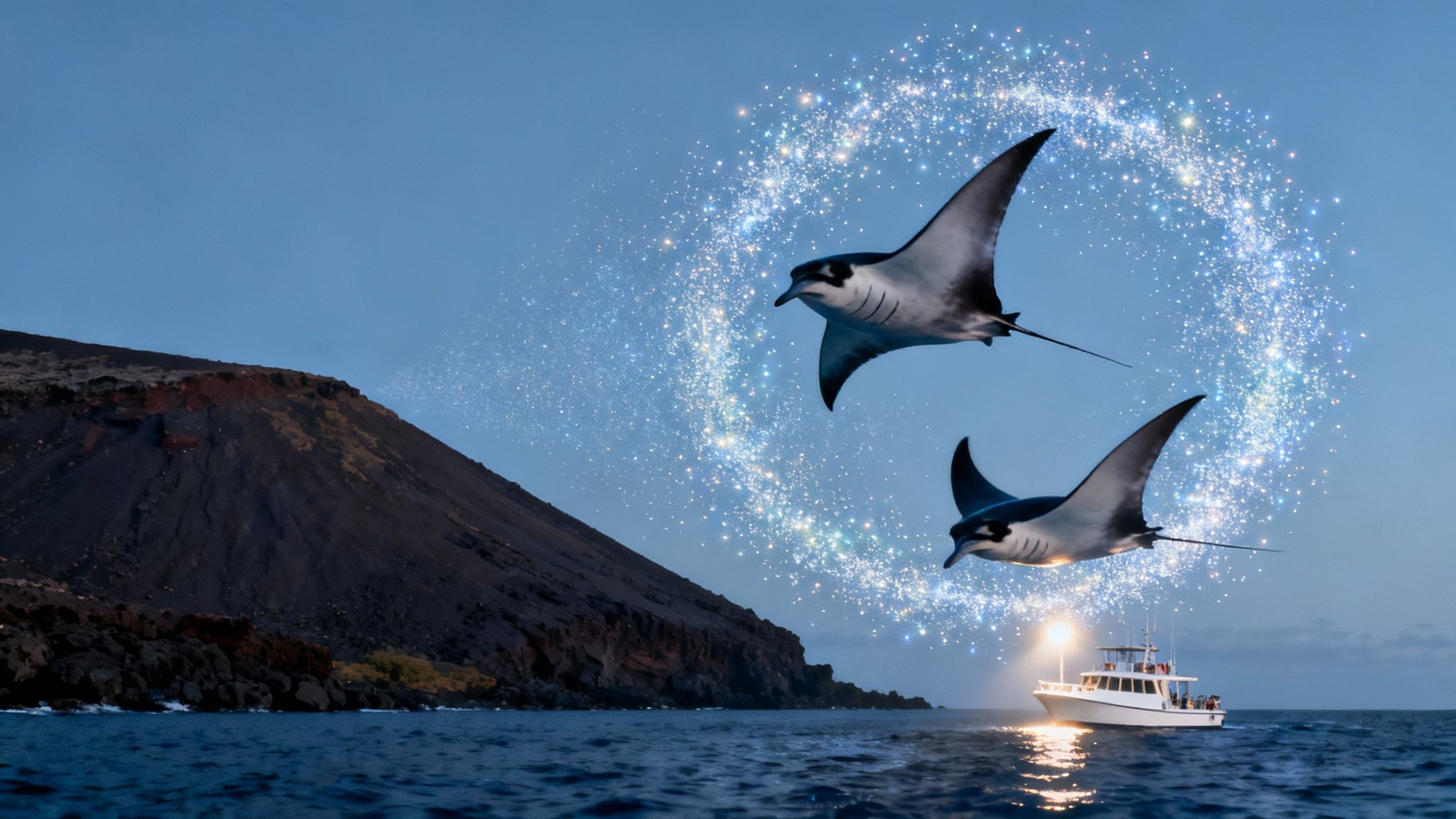
The whole secret is plankton. The Big Island’s underwater volcanic slopes create natural funnels, and when you add in our unique ocean currents, they concentrate massive amounts of plankton right along the coast. For a manta ray, this is basically the world's greatest all-you-can-eat buffet, and it's open every single night.
This constant, year-round food source is the key. It means our local population of reef manta rays (Mobula alfredi) has no reason to leave. They’re residents, just like us, and have built their entire lives around these dependable feeding grounds.
The Dinner Bell Effect
So, how did this turn into a nightly show? It started with light. Years ago, coastal hotels would shine bright lights on the water for ambiance. Those lights attracted plankton, and the incredibly smart mantas quickly figured out that a bright light meant an easy meal.
This behavior has been reinforced over the years by tour operators like us. We use powerful, eco-friendly underwater lights that act as a massive "dinner bell." The light gathers the plankton into a dense cloud, bringing the mantas in for a feeding frenzy right below you. It's a breathtaking spectacle.
This incredible partnership between nature and responsible tourism has created a few world-famous spots where the magic happens almost every night.
Kona's Premier Manta Ray Hotspots
There are two main sites that have become the go-to places for the manta ray night snorkel. Each one offers a slightly different vibe, but both are absolutely magical.
- Manta Village (Keauhou Bay): Just south of Kailua-Kona, this is the original manta viewing spot. The success rate here is phenomenal, with mantas showing up on over 90% of nights. Because it’s so close to Keauhou Bay, the boat ride is super short—a big win for anyone who gets a little seasick.
- Manta Heaven (Garden Eel Cove): Located north of town near the airport, this site is just as consistent. While the sighting rate is similar to Manta Village, Manta Heaven is famous for sometimes attracting huge groups of rays at once. Imagine an underwater ballet with a dozen or more of these gentle giants.
Both locations are thriving, reliable ecosystems. When you understand what’s happening beneath the surface, the tour becomes so much more than just a boat trip. You’re not just watching animals; you’re an invited guest to their underwater dining room.
Ready to see this natural marvel for yourself? Booking your spot is the first step toward an adventure you'll never forget.
How to Choose the Best Manta Ray Snorkel Tour
Picking the right company for your manta ray night snorkel in Kona is the single most important call you'll make. It’s what separates a decent trip from a memory you'll carry with you for the rest of your life. When you’re floating out there in the dark Pacific, you want to feel safe, looked after, and completely lost in the magic—not stressed about the little things.
The trick is to look past the price tag. You need to dig into what really makes a tour operator stand out. Focus on their safety record, the real-world experience of their guides, the size of their groups, and whether they have a genuine commitment to protecting these animals. A truly great tour isn't just about putting you in front of mantas; it's about doing it safely, respectfully, and in a way that protects them for generations to come. While there are many great options, Manta Ray Night Snorkel Hawaii is an exceptional alternative for those looking for a top-tier experience.
Why Small Groups Matter Most
One of the biggest factors that can make or break your night is the group size. Big, crowded boats can feel rushed and impersonal. You might end up shoulder-to-shoulder, fighting for a good view, which totally shatters the peaceful, otherworldly vibe of the whole experience.
This is exactly where a company like Kona Snorkel Trips gets it right. Their whole operation is built around small, intimate groups, and that changes everything.
- It Feels Personal: With fewer people, you actually get to connect with your guides. They have time to answer your questions, ease any nerves you might have, and share cool stories and facts about the mantas.
- No Crowds in the Water: A smaller group means you get a front-row seat at the light board without feeling like a sardine in a can. You’ll have plenty of space to relax and just take it all in.
- Better Safety: It's simple math. A guide can keep a much better eye on a handful of people than they can on a crowd, making sure everyone is comfortable from start to finish.
Going with a small-group tour turns the trip from a tourist attraction into a real, personal encounter with nature.
What to Expect on a Top-Tier Tour
When you book with a premier operator, the entire experience just flows. It starts with a friendly, organized check-in where the crew makes you feel welcome right from the get-go.
Next up is the safety briefing, and this is non-negotiable. The best guides don't just hand you gear; they walk you through how to use it, what to expect in the water, and, most importantly, how to act around the manta rays. They build your confidence so that even if you've never snorkeled before, you feel totally ready.
Once you’re in the water, you’ll hang onto a custom-made light board. This isn't just for floating—it's the beacon that draws in the plankton, which in turn brings the mantas right up to you. All you have to do is float, breathe, and watch the incredible underwater ballet unfold. They provide everything you need: wetsuit tops, masks, snorkels, and fins. Your only job is to bring your sense of wonder.
Commitment to Conservation
A truly great tour company knows they're guardians of this amazing marine environment. Their passion for the ocean is about more than just business. They're active in conservation and take the time to teach their guests why it's so important to protect these gentle giants.
Look for operators who live by the "passive observation" rule. This means no touching, no chasing, and no interfering with the mantas' natural behavior. This responsible mindset is what keeps the mantas safe and ensures they keep coming back to feed here, night after night.
When you choose a company that puts the mantas first, you become part of the solution. Your money goes toward supporting a sustainable practice that protects this world-class natural wonder. To get even more insight, check out our guide on how to find the best manta ray night snorkel in Kona.
Preparing For Your Underwater Adventure
Knowing exactly what to expect on your manta ray night snorkel in Kona is the key to turning a good trip into a truly unforgettable one. It helps swap out any of those pre-tour jitters for pure, bubbling excitement. So, let’s walk through the whole adventure step-by-step, from the moment you meet us to that final, magical encounter.
Your journey starts right at our meeting point, where you'll check in with our friendly, professional crew. Once you're on board, we'll take a short, scenic boat ride out to the world-famous manta ray feeding grounds. The ocean breeze and a stunning Kona sunset really set the mood as we head out.
From Briefing To Ballet
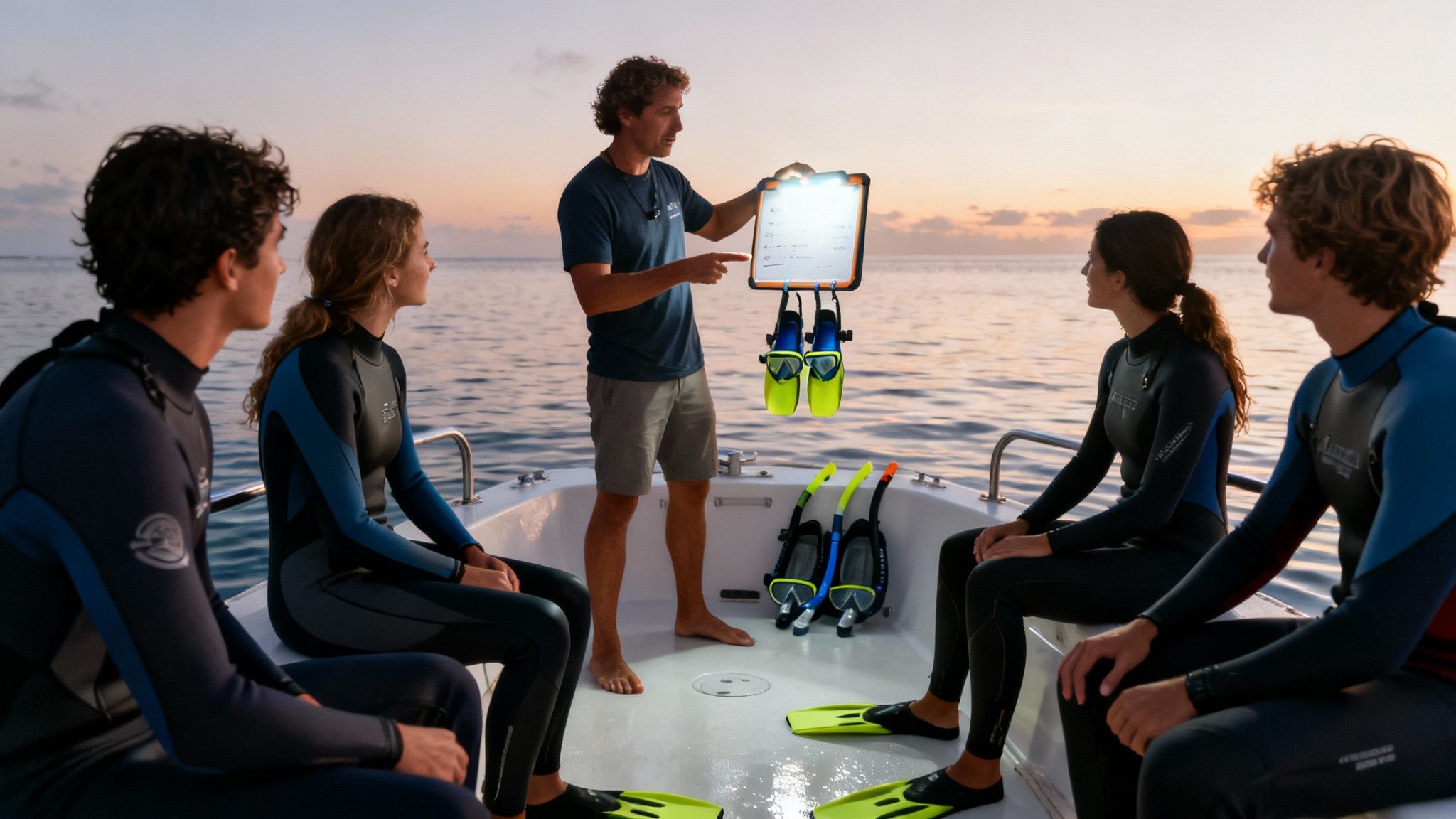
Before anyone even dips a toe in the water, our guides run through a complete safety briefing. We'll cover everything from getting a good seal on your mask to the best way to watch the mantas respectfully. We do this to make sure everyone, especially first-timers, feels totally comfortable and confident.
Once you’re geared up, you'll slip into the warm Pacific and hold onto our custom-built light board. This isn't just any old floaty—it's a high-tech, stable platform that's your front-row seat for the show. Its powerful lights shine down into the deep, acting like a giant dinner bell for the microscopic plankton that manta rays love to eat.
And then, the magic happens. As the plankton cloud begins to form, the manta rays emerge from the darkness, gliding effortlessly into the light. You'll be right there, watching in awe as they perform their mesmerizing 'water ballet'—swooping, somersaulting, and barrel-rolling just inches beneath you. It’s a peaceful, profound, and utterly breathtaking experience.
Your Simple Packing Checklist
We want your prep to be completely stress-free, so we handle most of the essential gear. That said, there are a few personal items you’ll want to bring along to make sure you're as comfortable as possible. Here’s a quick checklist to make packing a breeze.
Your Manta Ray Snorkel Checklist
| What to Bring | What We Provide |
|---|---|
| Swimsuit (wearing it under your clothes is easiest) | High-quality snorkel, mask, and fins |
| A towel to dry off when you're done | A comfortable wetsuit top for warmth and buoyancy |
| Warm, dry clothes for the ride back to shore | Pool noodles and other flotation devices for support |
| A reusable water bottle to stay hydrated | Expert, in-water guides and a thorough safety briefing |
| A waterproof camera to capture the magic (optional) | The custom light board that brings the mantas to you |
Bringing an underwater camera is a fantastic way to capture the moment. If you're looking for some tips, check out our guide on how to take amazing underwater pictures.
Easing First-Timer Concerns
It’s completely normal to feel a little anxious if you’ve never snorkeled at night before. We hear it all the time. People worry about not being a strong swimmer or feel a bit nervous about the marine life. Let us put those fears to rest.
The entire experience is designed with safety and comfort as our top priorities. You don’t need to be an expert swimmer—or even a swimmer at all—to have a great time. The combination of your wetsuit top and our flotation devices means you'll float effortlessly on the surface.
And as for the mantas? They are true gentle giants. They have no teeth, no stingers, and no barbs. They are only interested in the plankton, not in you. These are graceful, curious creatures, and seeing them in their element is a serene and humbling experience. Our guides are right there in the water with you the whole time, offering support and making sure you feel secure so you can just relax and soak in the wonder.
Responsible Snorkeling and Manta Ray Conservation
The magic of swimming with Kona's manta rays at night is a privilege, and one we don't take for granted. These incredible creatures are wild animals, and keeping their home healthy and safe is our top priority. The whole reason they keep coming back is because we've learned how to respectfully share the water with them. Every responsible tour operator out here is built on a foundation of conservation.
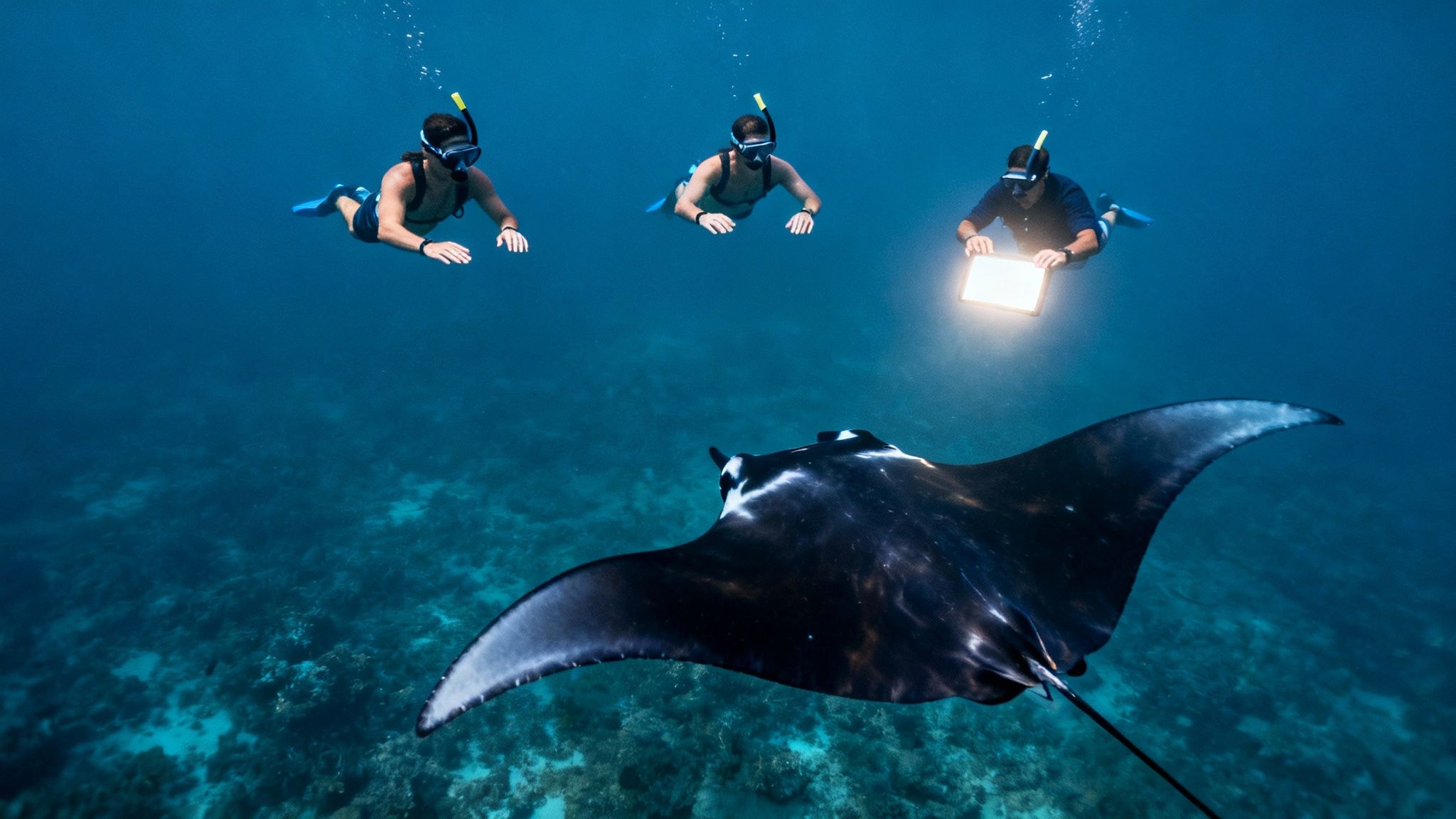
The entire experience really boils down to one simple idea: passive observation. You’re a quiet guest in their underwater dining room. Your only job is to float, watch the amazing show unfold, and not interfere in any way.
The Golden Rule: No Touching
If you remember just one thing, make it this: never, ever touch a manta ray. It’s the single most important rule. These gentle giants are covered in a delicate, protective mucous coating—think of it as their immune system. This slimy layer is their first line of defense against nasty bacteria and infections in the ocean.
When a human touches a manta, the oils and microbes on our skin can instantly damage that protective coat, leaving the animal wide open to disease. It's a simple, absolute rule: no touching, no chasing, and definitely no trying to hitch a ride.
By keeping your hands to yourself, you're playing a direct role in protecting these amazing animals. It's a small act that has a massive impact, helping them stay healthy so they can continue wowing visitors for years to come.
This commitment to their well-being is what keeps the mantas comfortable and unafraid. It's why they keep returning to the lights night after night, trusting us to be respectful visitors.
Following Manta-Safe Guidelines
To make sure everyone is on the same page, a set of Manta-Safe guidelines has been established that all reputable tour companies follow. These rules aren't just for the mantas' safety; they're for yours, too.
- Stay at the Surface: As a snorkeler, you’ll hang onto our light board. Diving down can disrupt the mantas' natural feeding paths and create a risk of collision.
- Lights Down: Keep your eyes on the water illuminated by our light board. Our guides handle the lights to attract the plankton in the most effective and least intrusive way.
- Let Them Approach You: The real beauty of this experience is that the mantas will come right up to you on their own. There’s zero need to pursue them. Just relax, float, and let them put on their incredible ballet.
These simple rules are the bedrock of a sustainable, ethical experience. For a closer look at all the specifics, check out our guide on what's needed for a Kona manta ray night snorkel.
Choosing a Steward of the Ocean
This is where your choice of tour company really makes a difference. A company like Kona Snorkel Trips isn't just selling a tour; we're acting as stewards of this incredible marine environment. Our commitment to manta ray conservation is woven into everything we do.
We proudly uphold the principles of the Pono Pledge, a local commitment to travel with care, honoring Hawaiʻi's precious cultural and natural resources. When you choose an operator that puts conservation first, you're casting a vote for the future of these magnificent creatures. You become part of the solution, helping to preserve one of the world's greatest natural wonders for generations to come.
Insider Tips for the Best Possible Manta Sighting
You're all set for an incredible adventure, but a little insider knowledge can take your manta ray night snorkel in Kona from just "great" to absolutely unforgettable. While the mantas show up pretty consistently, a few key factors can seriously upgrade your experience, making sure you see them at their most active and feel completely comfortable in the water.
Nail the Timing
Timing your trip can make a huge difference. Sure, manta rays grace Kona's waters year-round, which is fantastic, but certain months just offer better viewing conditions. From my experience, April through October usually brings calmer seas and clearer water, making for a much smoother and more vivid snorkeling trip.
Beyond just the season, the moon phase plays a surprisingly big role. A darker night with less moonlight makes our underwater lights the main attraction for plankton. More plankton means a bigger buffet for the mantas, encouraging their natural feeding behavior and making it much more likely you'll witness those breathtaking barrel rolls and graceful fly-bys. For a deeper dive into their patterns, the folks at Kona Honu Divers have some great insights.
Trust Your Gear and Just Float
For a lot of first-time night snorkelers, the biggest challenge isn't the ocean—it's their own nerves. I see it all the time. The real key to soaking it all in is to simply relax and trust the equipment.
Your wetsuit top and the pool noodle we give you are designed to keep you floating right on the surface with almost zero effort. You don't need to swim or tread water. You just… float. It’s that easy.
Once you’re holding onto our light board, focus on your breathing. Take long, slow, deep breaths through your snorkel. It's a simple trick but it works wonders to calm your nerves, slow your heart rate, and help you settle into the moment. The more relaxed you are, the more you'll be able to appreciate the incredible manta ballet happening just inches below you. And remember, our guides are right there in the water with you, making sure you feel safe from start to finish.
How to Get the Best View
To make the most of every second you're in the water, here are a few practical tips I give my groups:
- Find a Comfy Spot: Grab a handle on the light board where you feel secure and have a clear, straight-down view.
- Keep Your Fins Up: Let your legs float out behind you. Kicking just stirs up the water, which can scare the mantas, and you might accidentally bump into your neighbor.
- Look Around! While the main event is directly under the lights, sometimes a manta will glide in from the darkness on the edge of the light. Keep your eyes peeled for any movement on the periphery.
Choosing the right tour is half the battle, but understanding the best time to go is just as important. For some general tips on the best time to visit other coastal destinations, it's always worth reading up on how to pick the ideal travel windows. By planning ahead and staying calm in the water, you're setting yourself up for the best possible encounter with Kona's majestic manta rays.
Your Manta Ray Snorkel Questions, Answered
You've probably got a few questions floating around, and that's completely normal. Let's tackle the most common ones we hear from guests. My goal here is to clear up any uncertainties so you can feel confident and ridiculously excited about what's ahead.
Is This Tour Safe For Beginners or People Who Can't Swim?
Yes, absolutely. We've designed this experience to be safe and comfortable for everyone, regardless of your swimming ability. Your safety is our number one priority, period.
We get you geared up with top-notch flotation devices, including a snug wetsuit top (which is very buoyant) and pool noodles for that extra bit of support. You'll be holding onto a large, custom-made light board the entire time you're in the water, so there's no real "swimming" involved—it's more like comfortably floating while the show happens below you. Plus, our certified guides are right there in the water with you from the moment you get in until you're back on the boat, ready to help with anything you need.
What's The Best Time of Year To See Manta Rays?
Here’s the fantastic news: there is no bad time of year to see manta rays in Kona. It's an incredible, year-round adventure.
The local manta population doesn't migrate because their main food source, plankton, is always present. Because of this, we see an incredibly high success rate—often over 85-90%—no matter which month you book. While some people prefer the weather and calmer seas between April and October, you can book this tour any day of the year and have an excellent chance of an unforgettable encounter.
Is a Manta Ray Sighting Guaranteed?
Because we're dealing with wild animals in their natural home, a sighting can never be 100% guaranteed. That said, Kona is hands-down the most reliable place on the entire planet to see manta rays. Reputable companies like Kona Snorkel Trips have truly exceptional success rates.
It's always a smart move to ask about a company's policy just in case the mantas decide not to show up. Many of the best operators will offer you a "rain check" to come back on another night, giving you a second shot at the magic.
Can I Touch The Manta Rays?
That's a hard no. It is strictly forbidden to touch the manta rays, and for a very important reason: their health. Think of it as a "look, don't touch" rule at a living museum.
Manta rays are covered in a protective mucous layer, which is basically their immune system. The oils and bacteria from our hands can break down this delicate coating and leave them vulnerable to infections. Every responsible tour enforces a strict "passive observation" policy. Trust me, the real thrill comes from watching these magnificent creatures glide just inches away, knowing you're respecting their space and helping keep them safe for generations to come.