
Manta Ray Night Snorkel Kona An Unforgettable Big Island Adventure
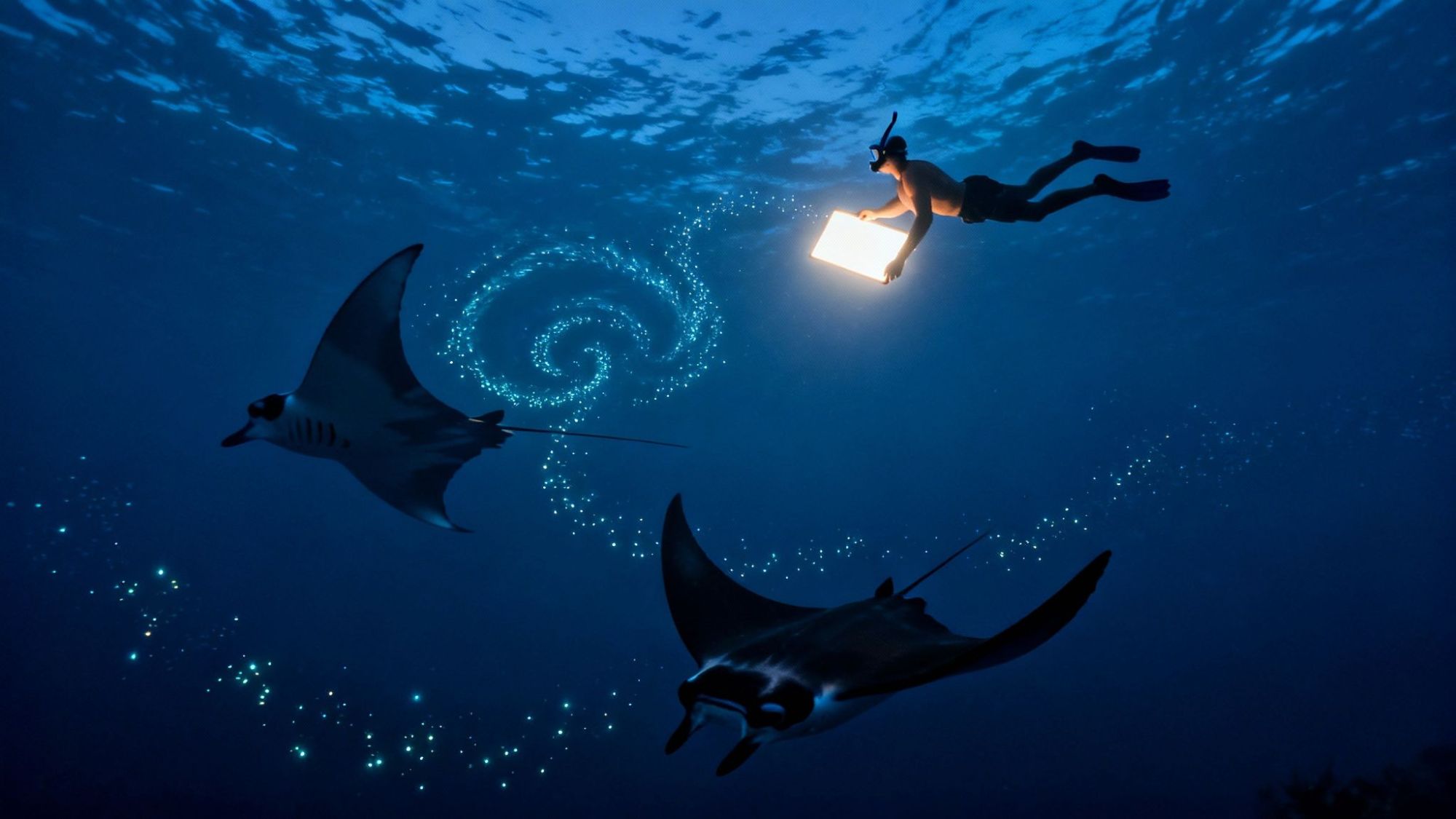
Imagine yourself floating in the calm, dark Pacific, staring down into a brilliant beam of light. Suddenly, a massive, graceful shadow emerges from the deep, gliding effortlessly through the water just inches below you. This isn't a dream—this is the manta ray night snorkel in Kona, and it's one of the most profound wildlife encounters you can have anywhere on Earth. It's consistently ranked as a top global attraction, and for anyone visiting the Big Island, it's an absolute must-do.
As the top rated & most reviewed snorkel company in Hawaii, Kona Snorkel Trips is the premier choice for this adventure. See what others have to say:
Your Guide To The Ultimate Manta Ray Encounter
This guide is your ticket to understanding everything about the Kona Manta Ray Night Snorkel. To make sure you have an incredible, safe, and unforgettable journey, going with seasoned experts is key. We wholeheartedly recommend Kona Snorkel Trips—they’re Hawaii's highest-rated and most-reviewed snorkel company, and they know this experience better than anyone.
Don't just take our word for it. Below, you can see what fellow adventurers who've witnessed this magic firsthand have to say.
Why This Tour Is A Can't-Miss Big Island Activity
What makes the Kona coast so special for this encounter? It's a unique combination of factors that creates a reliable, mesmerizing spectacle almost every single night.
Unlike so many wildlife tours that hinge on luck and seasonal migrations, Kona’s manta rays are year-round residents. They stick around, and that consistency has turned this into a world-renowned tourism hotspot.
Here's a quick look at what makes this adventure so special.
Kona Manta Ray Night Snorkel At a Glance
| Feature | Details |
|---|---|
| Location | Kona Coast, Big Island, Hawaii |
| Encounter Type | Night snorkel or dive in the open ocean |
| Key Attraction | Reef Manta Rays (Mobula alfredi) feeding on plankton |
| Peak Season | Year-round, with high consistency |
| Sighting Rate | 80-90% success rate reported by local operators |
| Annual Visitors | An estimated 80,000 people experience this tour annually |
| Conservation Status | A regulated and eco-conscious tourism activity |
As you can see, this isn't some shot-in-the-dark excursion.
The success rates are incredibly high. Dive logs from local companies consistently report sightings between 80% and 90% all year. In fact, a detailed analysis of the two main viewing sites confirmed that 96% of night tours saw mantas, with an average of about four per tour! You can dive deeper into what makes this such a world-class underwater adventure.
This high probability transforms the trip from a hopeful quest into a reliable, awe-inspiring event. You’re not just going for a snorkel; you’re getting a front-row seat to an underwater ballet performed by some of the ocean's most majestic creatures.
For those ready to book this incredible experience, the Manta Ray Snorkel Kona tour page has all the details you need.
Ready to see it for yourself?
What To Expect On Your Night Snorkel Adventure

So, you're ready for one of the most incredible experiences on the Big Island. Going on a manta ray night snorkel is pure magic, but it helps to know what the evening will look like. Knowing the flow from start to finish lets you relax and just soak it all in. Trust me, the whole operation is dialed in to be safe, comfortable, and completely unforgettable.
Your adventure kicks off with a friendly welcome at the harbor. This is where you'll meet the crew—your guides for the night. They'll run through a solid safety briefing, covering everything from how to properly use the snorkel gear to the right way to act around the mantas. If you have any questions buzzing around in your head, now's the time to ask.
The Journey To The Manta Site
Once everyone's good to go, you'll hop on the boat for a short, beautiful ride out to the site. As the sun starts to drop below the horizon, lighting up the sky with those classic Hawaiian sunset colors, you'll cruise along the Kona coastline. Honestly, the boat ride itself is a highlight.
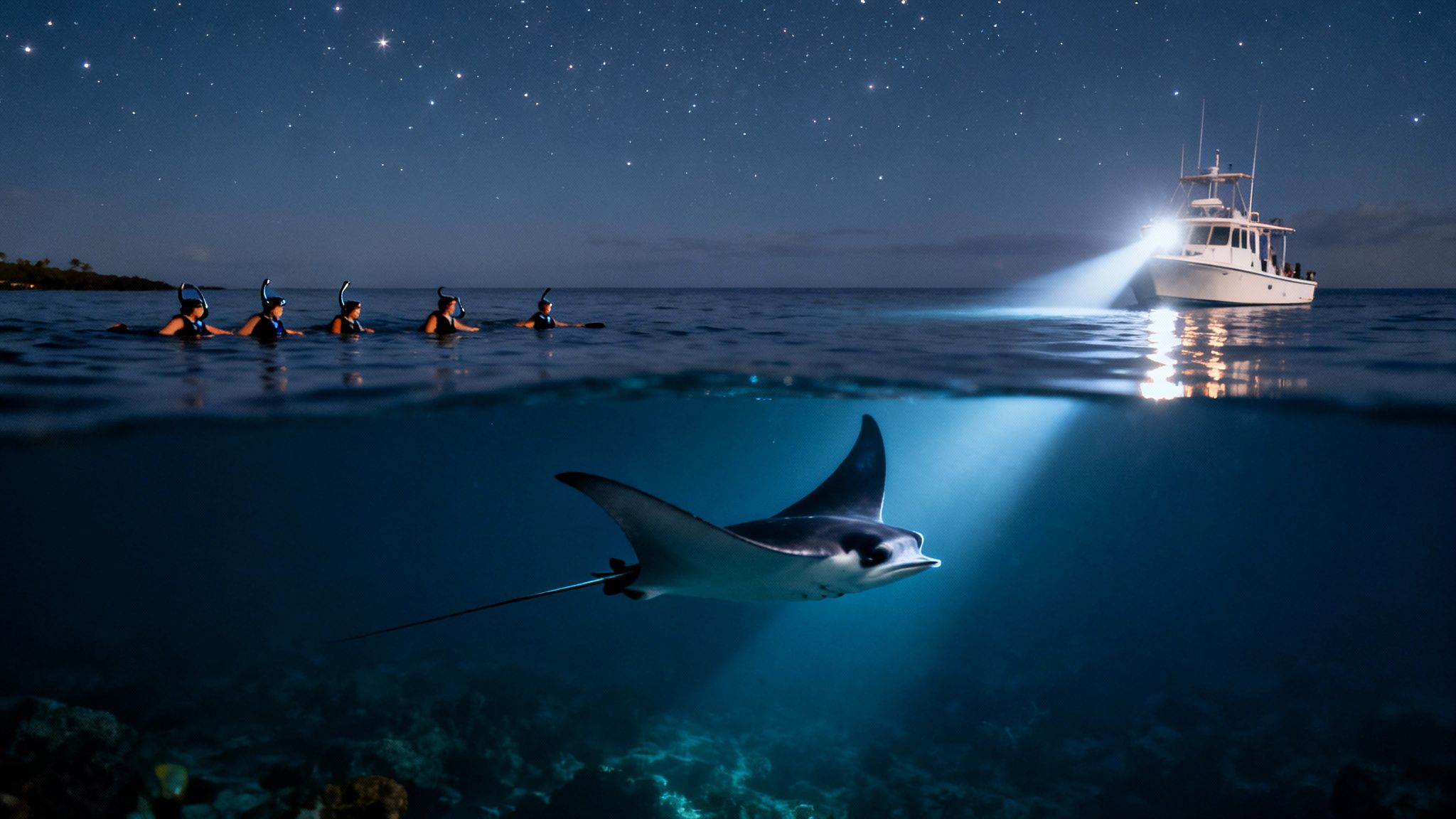
After the captain finds the perfect spot and drops anchor, the crew gets to work. Their job is to set up a massive floating light board on the water's surface. Think of it as rolling out the dinner table for the main event.
The concept is beautifully simple: the powerful lights attract huge clouds of microscopic plankton, which just so happens to be the manta rays' favorite meal. This creates a concentrated buffet that draws the gentle giants right to us for their nightly feast.
Entering The Water And The Big Show
With the light board glowing bright blue in the dark water, it's your turn. You'll slip into the calm ocean and get a flotation device (like a pool noodle) to help you stay comfy and buoyant. From there, you just hold onto the light board, which gives you a stable spot to float and watch. There’s no hard swimming involved; you just hang out and let the show come to you.
Floating there in the dark ocean is a trip. You feel the gentle rock of the water as you gaze down into this incredible beam of light. First, tiny plankton swarm to the light, creating a shimmering, almost magical cloud. And then… it happens. A huge, graceful shadow emerges from the deep blue.
The first manta ray glides into view, its giant wings propelling it through the water in a silent, underwater ballet. It will swoop and barrel roll, scooping up mouthfuls of plankton just inches below your mask. Before long, others might join the dance. This is the heart of the manta ray night snorkel Kona experience—a truly humbling and magical encounter you'll be talking about for years to come.
Meet The Famous Resident Manta Rays Of Kona
Unlike a lot of wildlife tours where you just hope for the best, the manta ray night snorkel in Kona is built around a reliable, year-round population. These gentle giants aren't just passing through; the Kona coast is their permanent home, which is a huge reason why sightings are so incredibly consistent.
When you join a tour, you’re not just seeing some random manta ray. You’re meeting individuals—rays with names, backstories, and distinct personalities that our local guides and researchers have known for years, sometimes even decades.
Identifying Kona's Underwater Celebrities
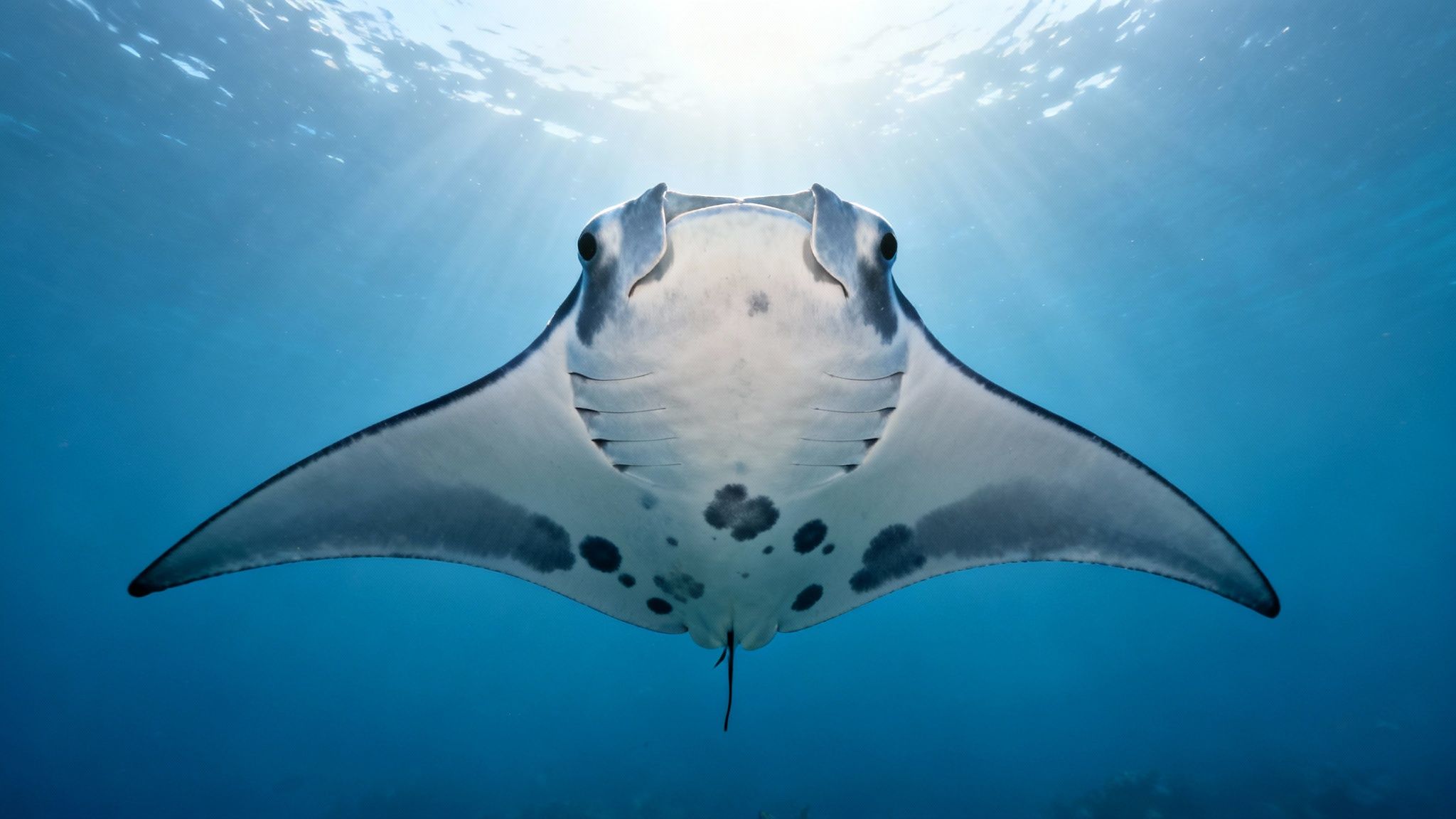
So, how do we know they’re the same mantas night after night? It’s all in their "fingerprints." Each reef manta ray has a totally unique pattern of black spots on its white belly. No two are ever the same, which allows everyone from marine biologists to snorkel guides to identify and track them over their entire lives.
This photo-identification process has turned what could be a simple snorkel trip into a living, breathing research project. It’s pretty common for guides to point out specific individuals as they arrive for their nightly meal.
This personal connection completely changes the experience. You might meet a local celebrity like ‘Big Bertha,’ a famous manta who has been documented in Kona’s waters for decades. Knowing their stories adds a profound layer to the encounter.
This whole approach is also built on respect. You’re simply a quiet observer in their natural feeding habitat, watching a nightly ritual that has been happening long before tours ever existed.
A Thriving and Well-Studied Population
The Kona coast is truly a special hub for these creatures. Researchers and tour operators work hand-in-hand, using photo ID to monitor a population that’s estimated to include more than 450 individual manta rays.
In a typical year, we'll catalog over 120 different individuals. Some, like the legendary 'Big Bertha,' have records stretching all the way back to the 1990s.
This amazing consistency makes the manta ray night snorkel one of the most reliable and awe-inspiring wildlife adventures on the planet. And when you learn the science and hear the personal stories, it becomes much more than a tour. It fosters a real connection with Kona’s vibrant marine life and the magnificent animals that call it home.
You can learn more about their incredible movements in our guide on how manta rays glide gracefully through the water.
How To Prepare For A Perfect Manta Ray Snorkel
A little bit of prep work can take a great manta ray night snorkel in Kona and make it absolutely unforgettable. When you know what to bring and what to expect, you can just relax and soak in the magic happening right below you.
The best part? It's incredibly easy to get ready. Your tour operator handles almost everything, especially if you're coming with us at Kona Snorkel Trips.
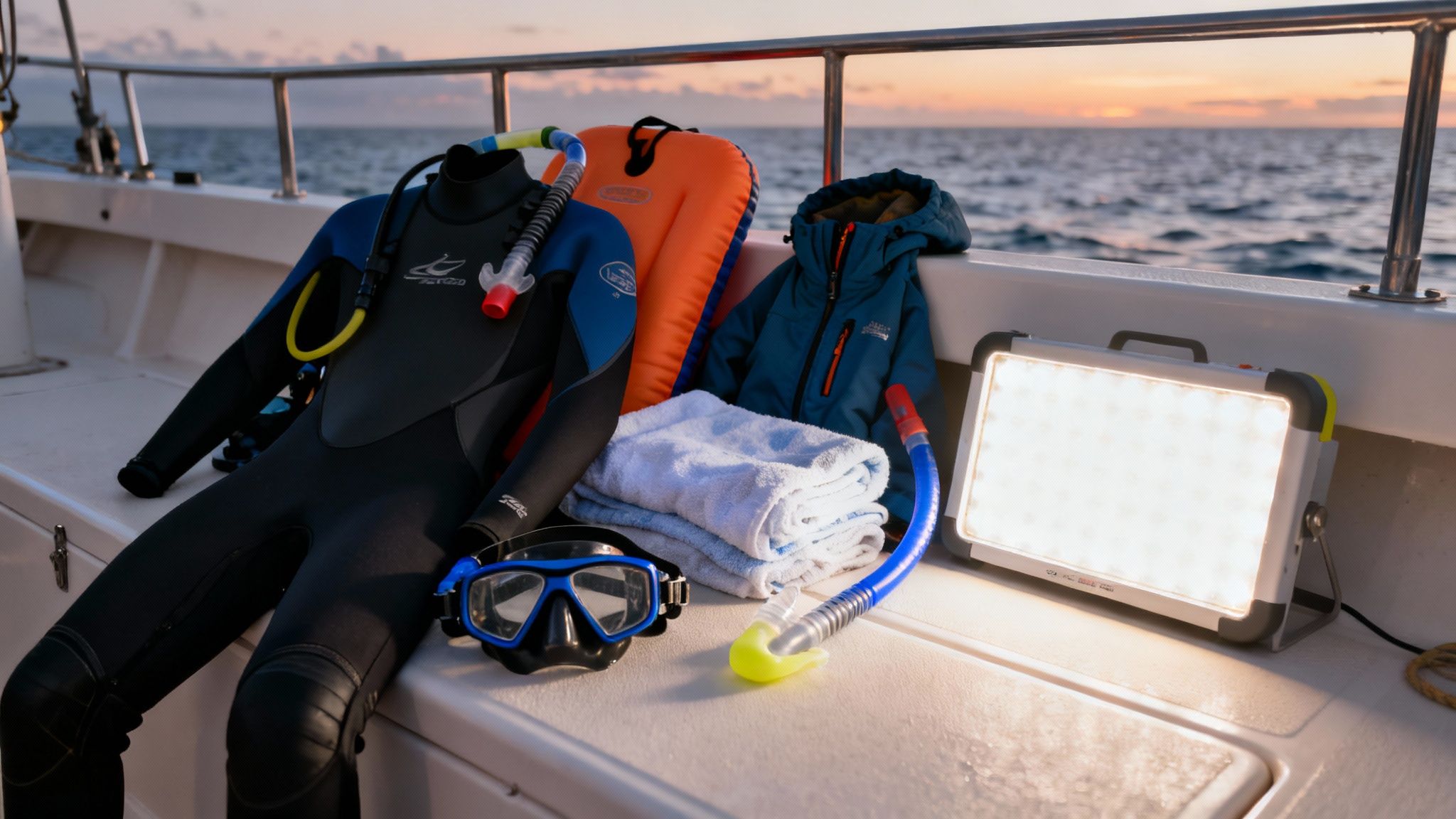
We’ve got you covered with all the essential gear: high-quality masks, snorkels, fins, and—most importantly—warm wetsuits to keep you comfortable in the cool night water. We also provide flotation devices so you can just hang out on the surface without any effort. Of course, snacks and drinks are on the boat to keep you fueled up.
All you really need to think about are a few personal items to keep you comfortable.
What You Should Pack
Your packing list is refreshingly short. The main idea is to focus on being warm and comfortable before and after you hit the water.
- A Towel: An absolute must for drying off when you get back on the boat.
- Warm Layers: Don't underestimate this one! A hoodie, jacket, or a warm cover-up is key. Even after a balmy Hawaiian day, the boat ride back can feel pretty chilly once you’re wet.
- Dry Clothes: Tossing on a dry shirt or shorts for the trip back to the harbor makes a world of difference.
- Camera: Got a GoPro or other underwater camera? Bring it! Just make sure it's strapped to your wrist or secured so it doesn't end up on the ocean floor.
That's seriously it. The name of the game is packing light and prioritizing warmth for that ride home.
Physical Requirements and Managing Seasickness
We get this question all the time: "Do I need to be a great swimmer?" The answer is a definite no. This experience is designed for just about everyone.
You'll be holding onto a custom-made light board that floats on the surface, which gives you all the stability and buoyancy you need. There's no real swimming involved.
This isn't an athletic event; it's a passive observation experience. Your only job is to float, breathe through your snorkel, and watch the incredible manta ballet unfold beneath you. It’s an adventure built for awe, not endurance.
A couple of pro tips to make sure everything goes smoothly: try to book your tour for a day early in your vacation. That way, if a rare weather cancellation happens, you have a backup day.
Also, if you're even a little prone to motion sickness, taking a non-drowsy preventative medication about an hour before we leave is a smart move. Better to be prepared than to feel queasy out on the open ocean. For more great advice, check out our general snorkeling safety tips to feel extra confident.
How To Book Your Manta Ray Snorkel Tour
Ready to make this happen? Booking your spot for a manta ray night snorkel in Kona is pretty simple, but the single most important choice you'll make is picking the right company. You really want to find an operator with a solid reputation for safety, guides who know what they're doing, and a genuine respect for the ocean and its creatures.
We can't say enough good things about Kona Snorkel Trips. Their crew is passionate, their commitment to safety is the real deal, and they truly care about marine conservation. That expertise means you're getting a trip that isn't just a thrill—it's also educational and respectful of the gentle giants you're about to meet. You can check out all the details on their main Manta Ray Night Snorkel tour page.
Securing Your Spot
You'll definitely want to book this in advance. These tours are one of the most popular things to do in Kona and they fill up fast, especially during the busy seasons. The good news is, booking online only takes a few minutes.
To make it easy, the button below goes straight to their booking calendar. You can see what's available in real-time and lock in your spot for an unforgettable encounter.
Choosing The Best Operator
While we're big fans of Kona Snorkel Trips, we get that travelers like to look at their options. If you're shopping around, Manta Ray Night Snorkel Hawaii is an exceptional alternative when looking for a Manta Ray night snorkel tour. Both outfits put the well-being of the mantas first and give their guests a top-notch experience.
The key takeaway is this: selecting a reputable operator is the single most important decision you'll make. A great company ensures a safe, respectful, and truly unforgettable encounter with Kona's gentle giants, turning a great vacation into the memory of a lifetime.
When you make a thoughtful choice, you're not just guaranteeing a magical adventure for yourself—you're also supporting sustainable tourism. For a deeper dive into what separates the good tours from the great ones, check out our guide on finding the best manta ray night snorkel in Kona. It'll help you weigh all the little details that add up to an amazing trip.
Your Manta Snorkel Questions, Answered
Even after getting pumped about the Kona manta ray night snorkel, it’s totally normal to have a few questions rattling around. We get it. You want to feel completely ready for the adventure. Think of this as our chance to sit down and chat about the details, so you can show up at the harbor feeling like a pro.
We'll cover everything from safety to what happens on the rare night the mantas decide to be shy. Our goal is to clear up any lingering concerns so you can just focus on the incredible experience ahead.
Is The Manta Ray Night Snorkel Safe?
This is the number one question we hear, and the answer is a resounding yes. Your safety is the top priority for any reputable tour company out here. From the moment you step on the boat, you're in the hands of experienced guides and captains who are trained in first aid and water rescue. They're constantly keeping an eye on everyone.
Plus, you’re not just swimming around freely in the dark. You’ll be holding onto a big, custom-built light board that floats right on the surface. This keeps the group together, gives you something stable to hold, and acts as a central beacon. It’s a really well-thought-out system that makes the whole thing feel incredibly secure.
Do I Need To Be A Good Swimmer?
Not in the slightest! This is probably the biggest misconception about the tour. Since you're holding onto the floating light board the whole time, you don't actually do any swimming. You just float.
You'll be wearing a wetsuit for warmth and buoyancy, and most operators also provide pool noodles for extra support. You literally just lay on the surface, breathe through your snorkel, and watch the show unfold beneath you. It’s designed to be accessible for just about everyone, regardless of their swimming skills.
What Happens If We Don't See Any Manta Rays?
It’s true that manta rays are wild animals, so sightings can never be 100% guaranteed. That said, the success rate is ridiculously high—usually somewhere between 85% and 95%. These mantas have been showing up for dinner in the same spots for decades.
Still, nature is nature. That's why good companies have what’s called a "Manta Guarantee." If your tour is one of the very few that doesn't see mantas, they'll let you come back another night for free (as long as there's space). It shows they’re confident in the experience and committed to making sure you have an amazing time. Just be sure to ask about the policy when you book.
Can I Touch The Manta Rays?
Nope, and this is a really important one. Manta rays have a special mucus coating on their skin that acts like their immune system, protecting them from bad bacteria and infections. Touching them can rub off this protective slime, leaving them vulnerable.
The whole point of this ecotour is to observe these magnificent creatures respectfully in their natural habitat. Keeping your hands to yourself is the best way to help protect Kona's beloved manta population for years to come.
Your guides will go over all the rules for a safe and passive interaction before you even get in the water.
How Deep Is The Water And Will I Get Cold?
The snorkel sites are usually in protected bays where the water is anywhere from 25 to 45 feet deep. But since you'll be floating on the surface the entire time, the depth doesn’t really affect your experience at all.
As for the temperature, Hawaiian water is warm, but it can feel a little chilly at night once the sun drops. That's why every tour provides high-quality wetsuits. They do an excellent job of keeping you comfortable and warm so you can just relax and enjoy the view. A dry towel and a warm jacket for the boat ride back to the harbor is always a good idea, too