
Manta Ray Night Snorkel Kona: Your Ultimate Guide
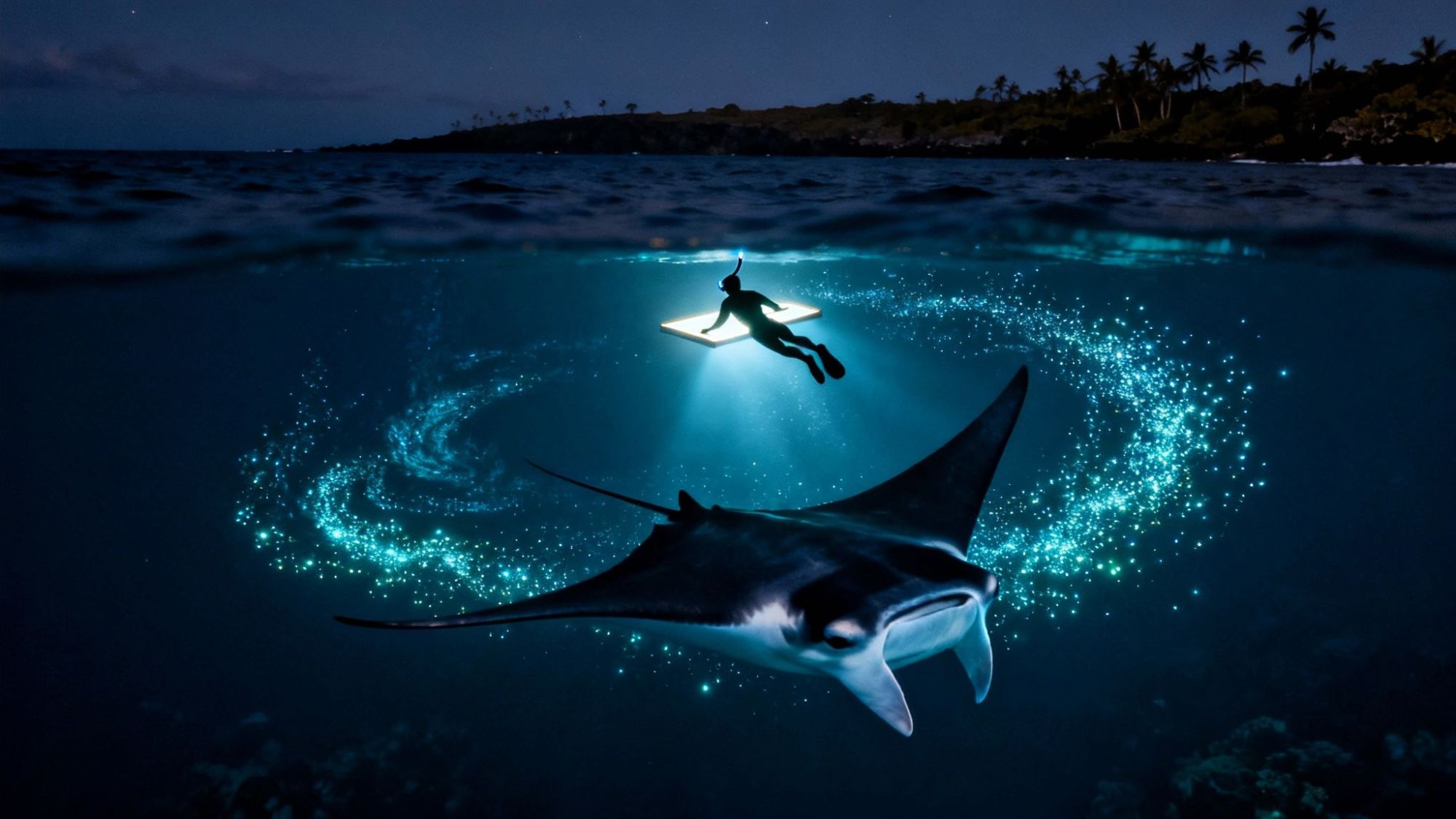
Picture this: you’re floating effortlessly in the warm, dark Pacific Ocean. Suddenly, a giant, gentle creature with a wingspan wider than a car glides and somersaults just inches beneath you. This is the manta ray night snorkel in Kona, and it's a true, once-in-a-lifetime kind of adventure.
It’s more than just snorkeling; it's like having a front-row seat to an otherworldly ballet, a magical experience that connects you with the ocean after the sun goes down.
To make this journey happen, you absolutely need a guide who knows these waters inside and out and, most importantly, respects the marine life. That’s where Kona Snorkel Trips comes in. We're proud to be the top-rated and most-reviewed snorkel company in all of Hawaii. Our whole focus is on making sure you have a safe, respectful, and completely unforgettable adventure on our manta ray night snorkel tour.
A Night of Pure Magic in Kona
The Big Island of Hawaii isn't just a good spot for this unique encounter—it's the undisputed global hotspot. What makes it so incredible is the chance to see these majestic animals in their natural feeding habitat. After dark, our guides submerge powerful lights into the water, which attract clouds of plankton, the manta rays' favorite meal.
What happens next is a silent, graceful performance. The mantas swoop in to feed, often coming incredibly close as they dance in the light beams. It’s a breathtaking spectacle.

An Unforgettable Ecotourism Draw
This isn't just some popular local activity; it has become a world-renowned ecotourism phenomenon. The manta ray night snorkel pulls in around 80,000 participants annually to Kona alone, which really speaks to its magnetic appeal.
Thanks to the reliable, nutrient-rich currents that create nightly plankton blooms, top operators like us have sighting success rates of 85-90% year-round. At prime viewing sites like Manta Village and Manta Heaven, you'll hold onto an illuminated float board, watching in awe as rays with wingspans exceeding 12 feet perform their feeding ballet. You can learn more about this unique marine ecosystem on our blog.
This experience is more than just watching marine life; it's about being a silent observer in their world, floating on the surface as giants dance in the light below. It’s a moment of pure awe that stays with you long after you've returned to shore.
The combination of this breathtaking natural event and the guidance of seasoned experts makes the manta ray night snorkel in Kona an absolute must-do. It’s an adventure that consistently leaves travelers speechless and creates the kind of memories that define a trip to Hawaii.
Why Kona Is the Global Hotspot for Manta Encounters
Let's get one thing straight: Kona isn't just a good spot to see manta rays. It's the spot. I've been doing this for years, and I can tell you there's nowhere else on the planet that even comes close. It all boils down to a perfect storm of geography and biology that makes the Kona coast a nightly manta ray buffet.
The massive volcanoes on the Big Island act as a giant shield, protecting the coastline from the heavy trade winds. This creates these incredibly calm, sheltered bays that are just perfect for a manta ray night snorkel in Kona.
This calm water allows for a natural phenomenon called upwelling, where nutrient-packed deep ocean water gets pushed to the surface. This process kicks off huge blooms of phytoplankton and zooplankton—the primary food source for manta rays. All the tour operators do is amplify this dinner bell.
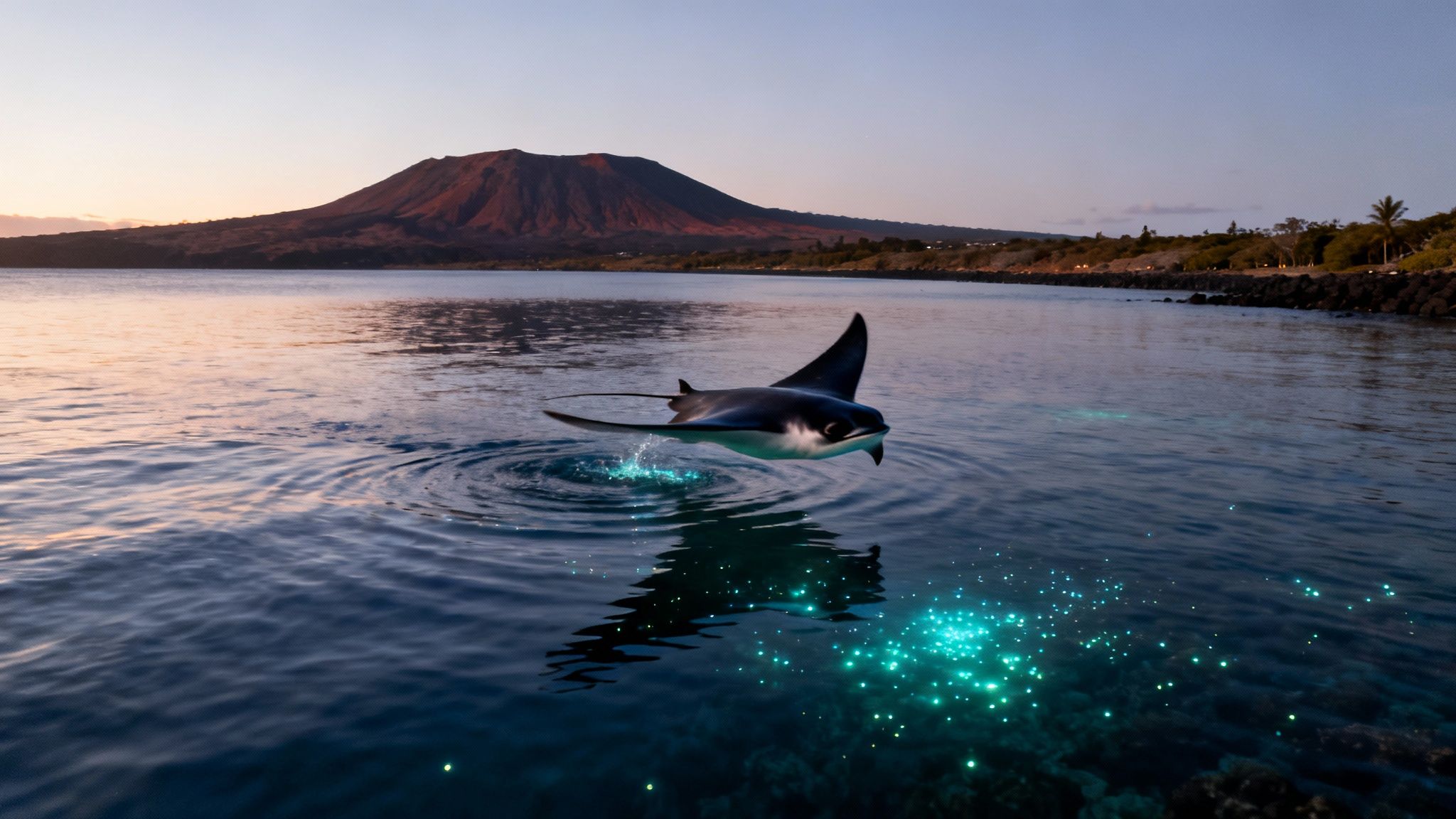
It’s really important to know this is an entirely natural, eco-friendly interaction. Reputable outfits use powerful, submerged lights to attract the plankton, which then draws in the mantas to feed. We never use bait. You're witnessing wild animals doing their thing, completely undisturbed. If you're weighing your options, Manta Ray Night Snorkel Hawaii is an exceptional alternative when looking for a Manta Ray night snorkel tour.
Kona's Premier Manta Viewing Locations
Out of all the spots along the coast, two primary sites have become legendary for their reliability. They've even earned some affectionate nicknames from the local guides and divers.
- Manta Village (Keauhou Bay): Just a bit south of Kailua-Kona, this is often the go-to spot. The boat ride from the harbor is super short, and the water is relatively shallow, which makes it incredibly convenient for most snorkel tours.
- Manta Heaven (Garden Eel Cove): You'll find this spot a little further north, closer to the airport. It has a nice sandy bottom and is another hotspot for consistent manta action. The water here is a little deeper, making it a favorite for scuba divers as well.
The consistency here is just unreal. This isn't some hit-or-miss wildlife tour; it's practically a guarantee, backed by over a decade of careful tracking. Since 2009, local researchers and operators have logged more than 10,000 sightings and identified over 250 individual rays. We have regulars, like a famous ray named 'Lefty,' who has been spotted here for decades. It's a testament to the health of Kona's resident reef manta population. You can dive deeper into the amazing Kona manta ray tracking efforts if you're curious.
The magic of Kona is its reliability. You aren't just hoping to see a manta ray; you're visiting their nightly dining spot, where the table is set for them every evening by nature and respectfully illuminated by responsible guides.
This incredible setup allows you to witness their graceful feeding ballets from just inches away. To get a better sense of their beautiful movements, check out our detailed guide on how manta rays swim underwater. It’s this unique mix of perfect conditions and a healthy, resident population that makes Kona the undisputed king of manta ray encounters.
How to Prepare for Your Night Snorkel Adventure
A little bit of prep work is the secret ingredient that turns a great Kona manta ray snorkel into a truly mind-blowing experience. Just a few simple steps beforehand will have you showing up at the dock feeling cool, calm, and ready for the magic to unfold. The biggest thing? Book your tour way ahead of time.
Seriously, these encounters are world-famous for a reason. Spots fill up fast, especially during peak seasons like summer breaks and winter holidays. Nailing down your reservation early is the only way to guarantee you don't miss out on this absolute bucket-list adventure.
Gearing Up for the Night
Packing for this trip is pretty simple, but bringing the right stuff makes a world of difference in your comfort, both in and out of the water.
- Swimsuit First: The easiest approach is to just wear your swimsuit under your clothes to the dock. You'll be ready to go, making for a super quick transition once you're on the boat.
- Towel & Warm Layers: You will absolutely feel a chill after getting out of the ocean at night. A fluffy towel and a dry change of clothes are non-negotiable. Think a cozy hoodie or a light jacket for the boat ride back to the harbor—you'll be glad you have them.
- Underwater Camera: This is a moment you're going to want to remember forever. If you have a GoPro or another waterproof camera, bring it! Just try to use a red-light filter if you can, as it's less disruptive to the mantas' natural feeding behavior. For a deeper dive, check out our complete guide on what to wear for snorkeling.
To make it even easier, here’s a quick-glance checklist of everything you'll want to have with you.
Your Manta Ray Night Snorkel Checklist
| Essential Item | Why You Need It | Pro Tip |
|---|---|---|
| Swimsuit | Arrive ready for a quick change into your wetsuit. | Wear it under your clothes to save time at the dock. |
| Towel | For drying off and staying warm after the snorkel. | A microfiber travel towel dries quickly and saves space. |
| Dry Clothes | A hoodie, jacket, or long-sleeve shirt is essential for the chilly ride back. | Pack them in a dry bag to ensure they stay perfectly dry. |
| Reusable Water Bottle | Staying hydrated is always a good idea. | Fill it up before you leave your hotel. |
| Underwater Camera | To capture the incredible underwater ballet. | Make sure it's fully charged and the memory card is empty! |
| Motion Sickness Remedy | To prevent seasickness from ruining the fun. | Take it 30-60 minutes before departure for best results. |
| Gratuity for the Crew | A customary way to show appreciation for a great trip. | Cash is usually easiest for the crew. |
Having these items packed and ready means you can focus entirely on the incredible experience without any last-minute stress.
Tackling Common Concerns Before You Go
A couple of common worries pop up for first-timers, but they're easily handled with a little planning. The big one is often seasickness. The ocean can get a bit choppier after the sun goes down, and the boat will be anchored at the viewing site for quite a while.
If you're even the slightest bit prone to motion sickness, do yourself a favor and take a remedy 30-60 minutes before the boat departs. An over-the-counter pill or a natural alternative can be a real trip-saver.
Once you arrive for check-in, the process is a breeze. The crew will be there to greet you, get you checked in, and fit you for your wetsuit and snorkel gear. These guys are total pros who live and breathe ocean safety, so don't hesitate to ask any last-minute questions.
From there, your only job is to kick back, relax, and get hyped for the show. When you feel prepared, you can just let go and soak in every single moment of wonder.
What to Expect on the Water with Kona Snorkel Trips
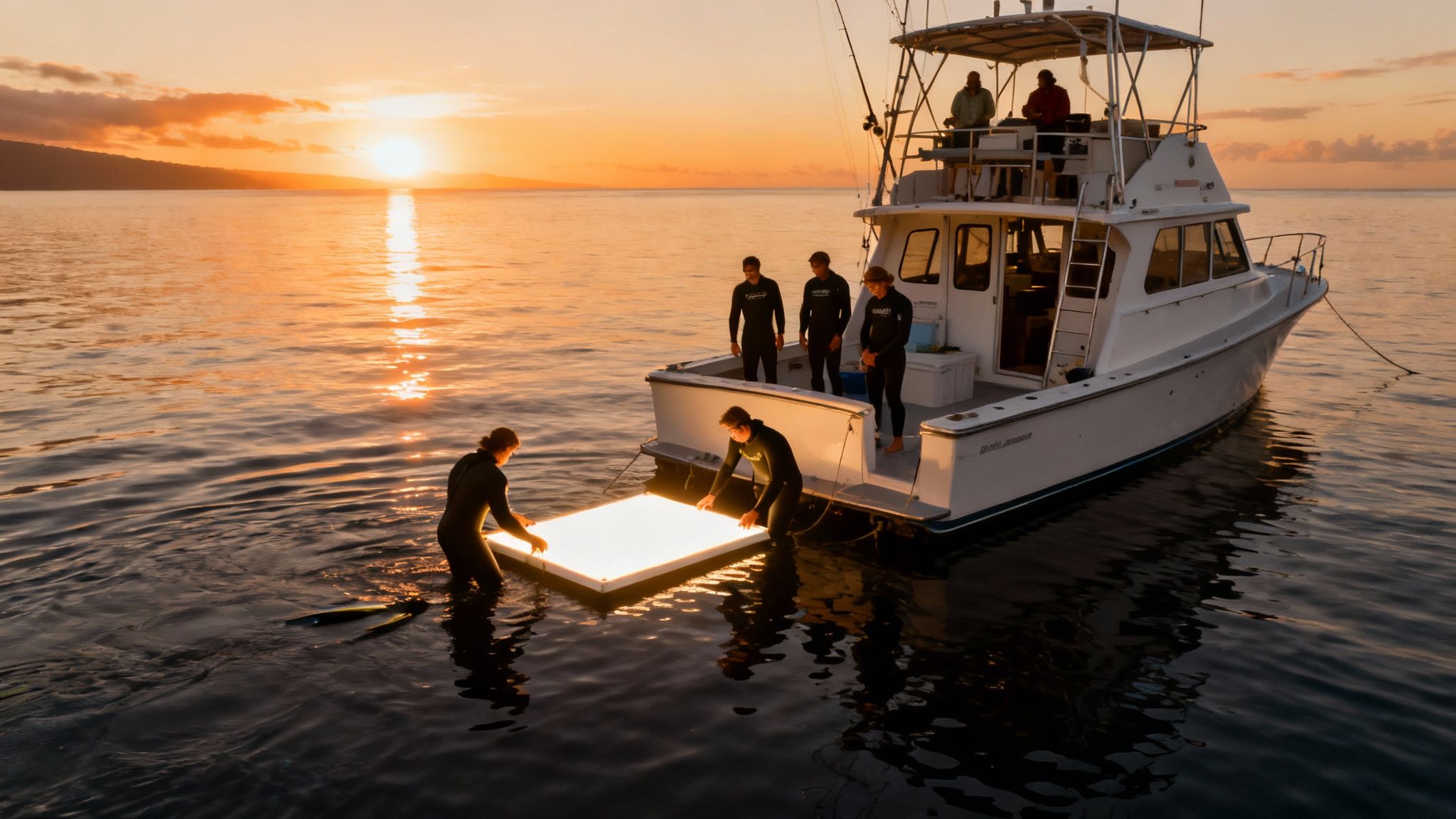
The whole experience kicks off the second you step onto the boat. You can feel the excitement in the air, thick as the warm, salty breeze. Your trip starts with a beautiful boat ride up the Kona coast. As the sun gets low, it lights up the sky in fiery shades of orange, pink, and purple. It’s a classic Kona sunset and the perfect opening act for what’s to come.
Once the boat anchors in just the right spot, the expert crew gets everything ready. Their first job is to make sure everyone is safe and comfortable. You'll get a quick, professional safety briefing that covers everything you need to know—from how to use your snorkel gear to the simple rules for being respectful around the mantas.
Setting the Underwater Stage
Next, the crew helps everyone get fitted with high-quality gear, including wetsuits to keep you surprisingly warm and comfortable in the dark water. Then, they deploy their custom-designed light board.
This floating platform is the real secret to the whole encounter. Its powerful, downward-facing lights are specifically designed to attract the microscopic plankton that manta rays absolutely love to eat. With the board glowing in the dark water, it creates a massive, illuminated column of plankton—basically setting a dinner table for the gentle giants. The crew will then guide you into the water, where you’ll hold onto the stable board and float effortlessly on the surface with a front-row seat to the show.
The Gentle Giants Arrive
Then comes the moment you’ve been waiting for. The first manta appears, a massive shadow gliding gracefully out of the darkness. It’s a sight that honestly never gets old.
They swoop and soar through the light beams, performing a mesmerizing underwater ballet as they feed on the plankton. Their movements are so fluid, and they come within inches of you, performing barrel rolls right underneath the light board.
This manta ray night snorkel in Kona has become a global phenomenon, drawing about 80,000 people every year. The success rate is incredible, with sightings on 85-90% of trips. Operators like Kona Snorkel Trips use these special light boards to bring the mantas into shallow depths of just 30-45 feet. This creates a safe and stable viewing platform that makes the experience accessible for all ages, no strong swimming skills required.
You just float, watch, and let the sheer wonder of it all sink in. The only sounds are the gentle lapping of the water and the quiet gasps of awe from everyone around you. It’s a profoundly moving and peaceful experience.
After about 45 minutes to an hour in the water, the crew helps everyone back on the boat. They usually have warm drinks and snacks waiting for the cozy ride back to the harbor, giving you a chance to buzz with excitement and relive the magic you just witnessed.
Guidelines for a Safe and Respectful Manta Encounter
Joining a manta ray night snorkel in Kona is more than just an incredible adventure; it’s your chance to be a temporary guardian for these gentle giants. To make sure they stay healthy and that this natural wonder continues for years to come, there are a few simple but crucial guidelines to follow. Think of it less like a set of rules and more like understanding your role in protecting this amazing ecosystem.
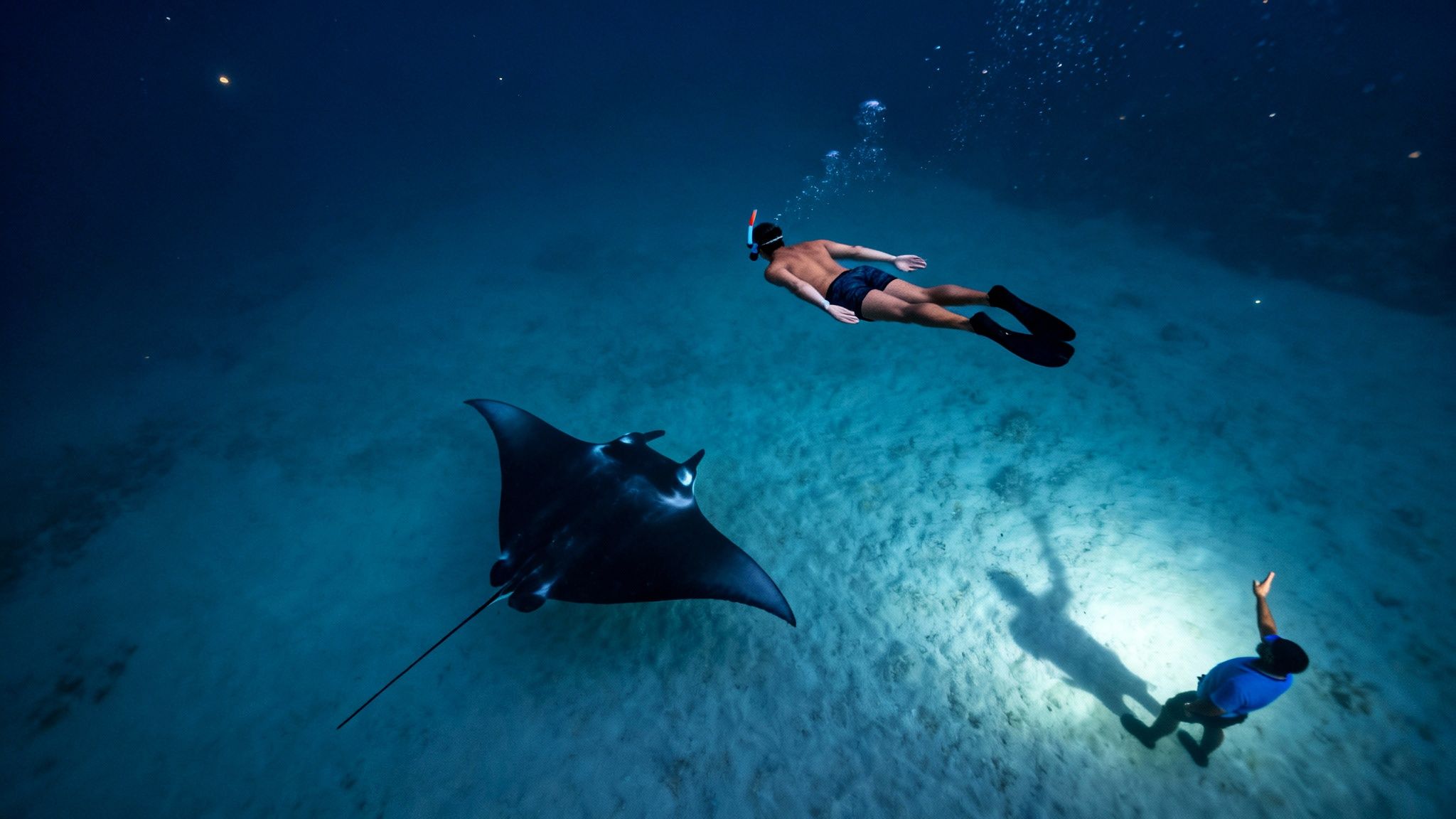
The most important guideline, the one rule to rule them all, is to never, ever touch a manta ray. Their skin is covered in a delicate mucous coating, which is their first line of defense against bacteria and parasites. When we touch them, we can strip away this protective layer, leaving them wide open to infection. It’s a bit like their immune system, and an innocent touch from us could cause serious harm.
This is why choosing a reputable operator like Kona Snorkel Trips matters so much. We’re deeply committed to sustainable ecotourism and making sure every tour has a positive impact. When you follow our lead, you’re helping support the local environment and the manta population.
Best Practices in the Water
Once you slide into the ocean, how you position yourself and move makes all the difference. Your job is to be a passive observer, letting the mantas go about their business completely naturally.
- Stay Horizontal: Keep your body flat on the water's surface, holding onto the light board. Don't let your legs dangle down—this can get in the way of a manta swimming gracefully beneath you.
- No Chasing or Diving: Whatever you do, don't swim after the mantas or try to dive down to get closer. This will only spook them and disrupt their feeding. Just relax and let them come to you. Trust us, their curiosity (and the plankton) will bring them unbelievably close.
- Listen to Your Guide: Our crew members are experts on manta ray behavior and ocean safety. When they give an instruction, please follow it right away. They’re there to keep both you and these magnificent animals safe.
These guidelines are all part of a larger commitment to being safe and responsible in the ocean. To feel even more prepared, it's a great idea to check out our essential snorkeling safety tips.
By following these simple, respectful guidelines, you become part of the solution. You help ensure that the Kona manta ray night snorkel remains a magical and sustainable encounter for years to come, protecting the very creatures you came to admire.
Ultimately, your role is to float, watch, and be completely amazed. By keeping your hands to yourself and staying calm, you allow the mantas to perform their beautiful feeding ballet without interruption. This respectful approach is what makes the experience so profound—you’re a guest in their world, witnessing a wild and natural spectacle. It's a privilege that comes with the responsibility of being a mindful visitor.
Got Questions About the Manta Snorkel? We’ve Got Answers.
Jumping into the ocean at night to swim with giant rays is an incredible thought, but it’s totally normal to have a few questions swirling around before you book. We get it. Let's walk through some of the most common things people ask, so you can feel completely confident and excited for your adventure.
Do I Have to Be a Strong Swimmer?
This is probably the number one question we hear, and the answer is a simple and emphatic no. You absolutely do not need to be a great swimmer to have an amazing time.
The whole experience is set up for maximum safety and comfort. You'll be holding onto a large, custom-made flotation board, which is where the bright lights are mounted to attract the plankton. Your job is just to float and watch the show unfold beneath you. The wetsuits we provide also make you extra buoyant, so you’ll feel light and relaxed in the water.
And you're never alone. Our expert guides are in the water right alongside you the entire time, making sure everyone feels safe and secure. If you're comfortable in the shallow end of a swimming pool, you have all the swimming skills you need.
Is It Guaranteed I’ll See Manta Rays?
Since we're dealing with wild animals in their natural home, a 100% guarantee is impossible for any tour operator to make. But here's the good news: the Kona coast is one of the most reliable places on the entire planet to see manta rays.
Reputable operators like us have an incredible success rate, typically seeing mantas on 85-90% of our trips throughout the year. It’s actually very, very unusual for the mantas not to show up for dinner.
On the rare occasion that the mantas decide to be shy, most top-notch companies have a "manta guarantee." This means if you don't see any rays, you can come back and join another tour on a different night for free. You can check out the specifics when you book your Kona manta ray snorkel tour.
Are Manta Rays Dangerous?
Not even a little bit. Manta rays are famously called "gentle giants," and they truly live up to the name. These magnificent creatures are filter feeders, which means they have no teeth, no stingers, and no barbs. They are completely harmless to humans.
Their huge mouths are designed for one thing: gulping down massive amounts of microscopic plankton. While seeing a 12-foot creature glide right up to you is a breathtaking experience, they are graceful and pose no threat. The strict "no touching" rule we brief you on is actually to protect them—the oils from our skin can damage their delicate protective coating. You can just float, relax, and enjoy the underwater ballet without a worry in the world.
What's the Best Time of Year to Go?
This is the best part: there is no "bad" season for the manta ray night snorkel in Kona. The experience is incredible year-round. Our local manta population doesn't migrate; they live here full-time, which means they're here every night of the year.
The biggest factor in a great trip isn't the month you visit, but the quality of the tour operator you choose. That said, summer months can bring slightly calmer seas, while winter often blesses us with some truly spectacular sunsets on the boat ride out. If you're hoping to avoid the biggest crowds, booking a trip mid-week can sometimes be a good strategy if your schedule allows.