
Explore manta ray night snorkel kona: Kona’s Ultimate Night Manta Snorkel Guide
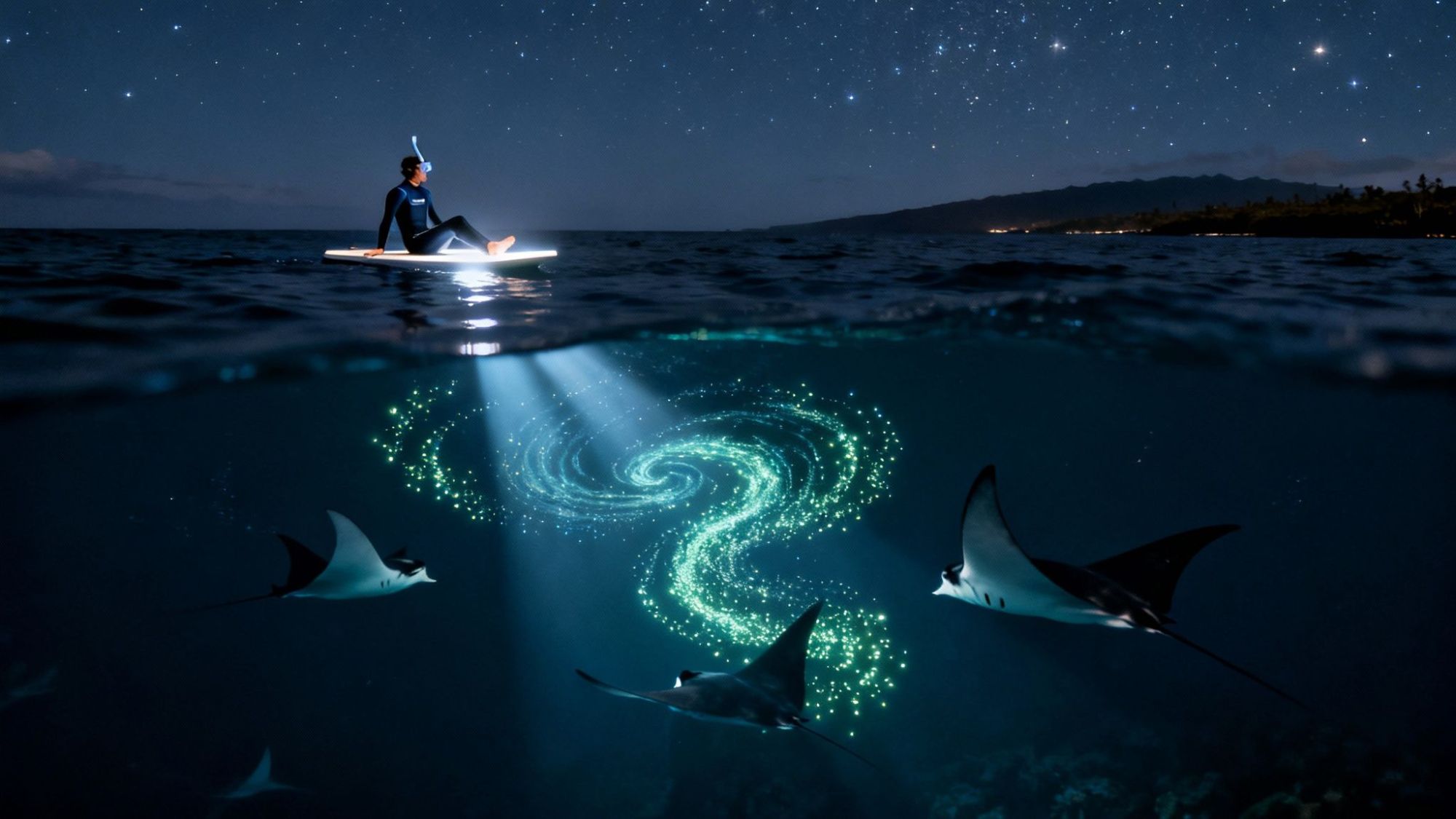
Picture this: you're floating weightlessly in the calm, dark Pacific Ocean. Below you, massive, graceful shadows glide through beams of light, dancing in an underwater ballet. This is the manta ray night snorkel in Kona, a true bucket-list adventure that feels like stepping into another world.
As the top-rated and most-reviewed snorkel company in Hawaii, Kona Snorkel Trips is celebrated for turning this amazing activity into a lifelong memory.
This guide is your complete rundown of this incredible experience, covering everything from why Kona is the best place on Earth to see manta rays to how you can join in on the magic.
Experience Kona's Unforgettable Underwater Ballet
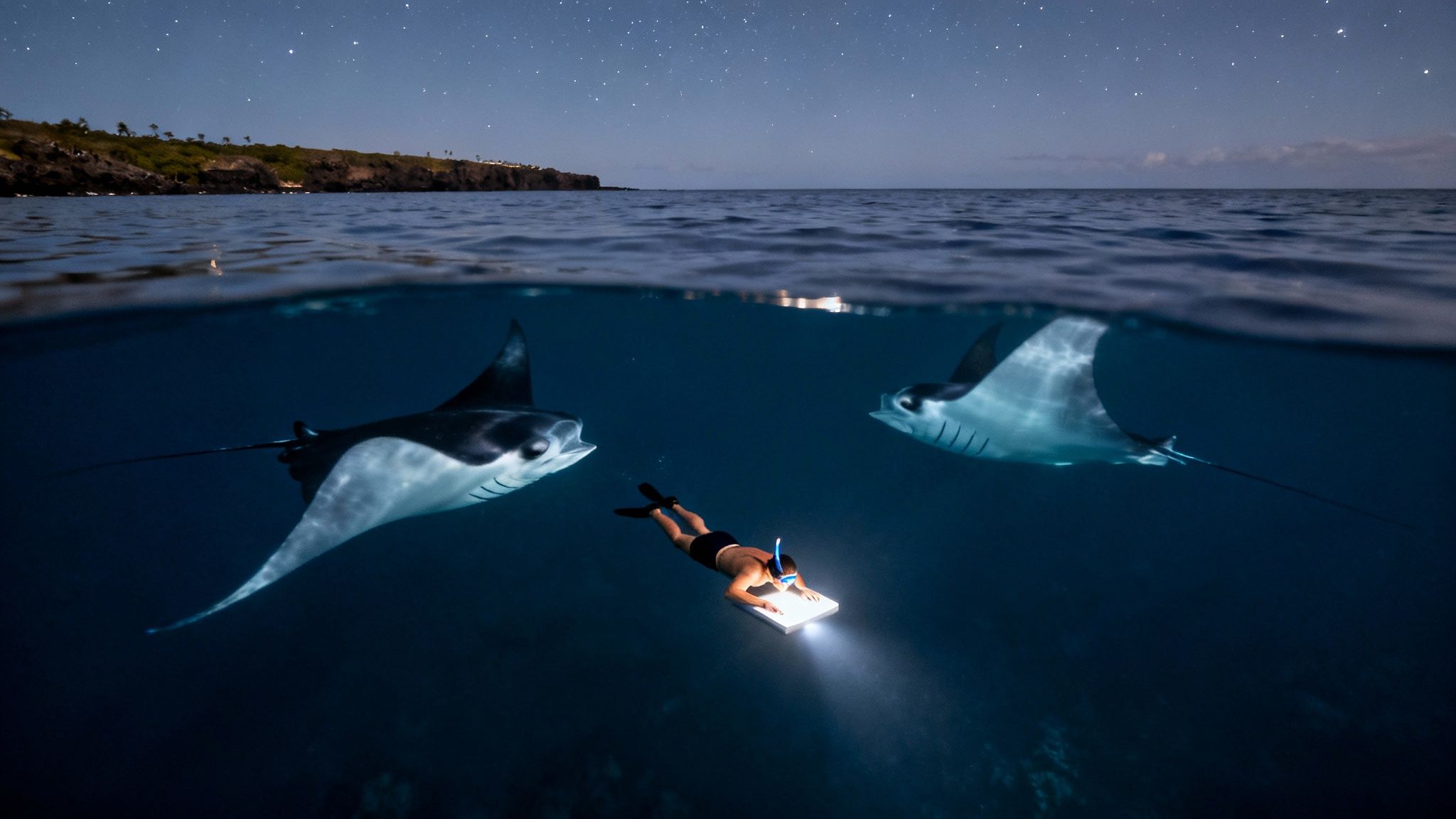
The Big Island has a unique combination of factors that make this nightly encounter possible. The island's geography creates naturally protected bays where plankton—the manta rays' favorite meal—congregates. This consistent "dinner bell" has turned Kona's coastline into a reliable feeding ground for a local population of reef manta rays.
Of course, choosing the right guide is everything. A great tour operator turns an amazing activity into a lifelong memory, and we'll show you why Kona Snorkel Trips is celebrated as the top-rated and most-reviewed snorkel company in all of Hawaii. Their expertise and focus on safety are second to none.
Why Kona is the Global Epicenter for Manta Rays
So what makes the manta ray night snorkel here so special? It comes down to consistency and pure spectacle. This isn't a "maybe you'll see one" kind of thing; it's a nightly phenomenon.
It has become such a reliable and awe-inspiring ecotourism attraction that around 80,000 people join these tours every single year. That incredible number says it all, cementing Kona's reputation as a world-class destination for marine life encounters.
The setup is brilliantly simple but incredibly effective:
- Specialized Light Boards: We use powerful, yet eco-friendly, lights that shine down into the water.
- Plankton Attraction: These lights act like a magnet for huge clouds of microscopic plankton.
- The Main Event: Manta rays show up for the feast, performing graceful barrel rolls and somersaults right beneath you as they scoop up the plankton.
It's a symbiotic relationship between the lights, the plankton, and the mantas. This creates an underwater theater where you have a front-row seat to one of nature's most beautiful performances, night after night.
This is just one of the many incredible ocean adventures available here. You can learn more about the absolute best snorkeling in Kona HI in our detailed guide.
For those ready to experience the magic for themselves, booking with a top-tier operator guarantees a trip you'll never forget. You can secure your spot on an unforgettable manta ray night snorkel Kona adventure today.
What to Expect During Your Manta Ray Adventure
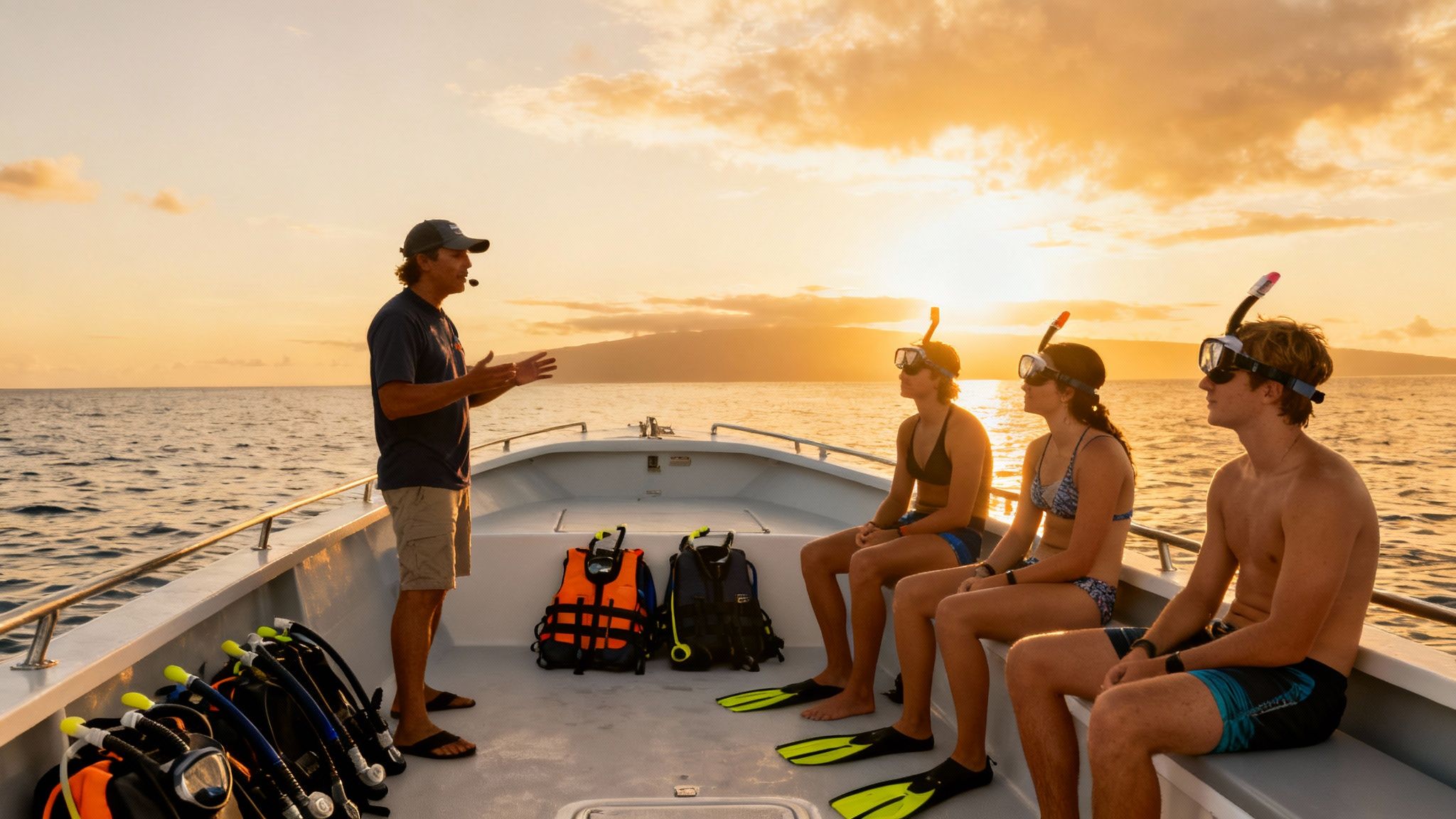
The thought of floating around in the dark ocean can sound a little nerve-wracking, we get it. But a professional manta ray night snorkel in Kona is a carefully orchestrated and incredibly safe experience. Knowing exactly how it all unfolds can help turn those nerves into pure excitement. Your adventure kicks off with a warm welcome from our crew and a beautiful boat ride.
Most tours, including ours, leave the harbor 30 to 60 minutes before sunset. This timing isn't just for the incredible views; it gives us plenty of time to get to the snorkel site—affectionately known as "Manta Heaven" or "Manta Village"—and get everything set up while the sun puts on a show. The boat ride itself is a highlight for many, offering breathtaking views of the Kona coast as the day winds down.
Once the boat is securely anchored, our expert crew gets everything ready. This is when you'll get a full safety briefing. Our guides will walk you through everything you need to know, from using your snorkel gear properly to the golden rules of interacting with mantas. The most important one? Never, ever touch them.
Gearing Up and Getting In
As the last light of day fades, we'll get you kitted out with all the necessary gear. This includes a top-notch mask, snorkel, and fins. Crucially, you'll also get a wetsuit. Even in Hawaii's warm waters, you'll be floating for up to an hour after the sun goes down. The wetsuit is key to staying warm and buoyant, making the whole experience way more comfortable.
With the briefing done and everyone geared up, the main event begins. The crew deploys a specially designed floating light board. This isn't just any old light—it's a powerful, custom-built raft with bright lights pointing straight down into the water. Think of it as the "dinner bell" that makes this whole magical encounter possible.
You'll get into the water one by one and swim the short distance over to the light board, where you'll find sturdy handles to hold onto. The board is super stable, letting you float effortlessly on the surface while you gaze down into the illuminated water below. This setup is fantastic because it allows snorkelers of all skill levels, even folks who aren't strong swimmers, to join in safely.
The Underwater Ballet Begins
So, why the lights? They serve one primary purpose: attracting phytoplankton. These microscopic organisms are drawn to the light, creating a thick, glowing "soup" in the water column. And that concentrated food source is exactly what the manta rays are here for.
At first, you might just see a few small fish darting in and out of the light. But then, a massive, shadowy figure emerges from the darkness. As it glides into the light, you'll get your first jaw-dropping look at a majestic reef manta ray, some with wingspans stretching over 11 feet across.
Before you know it, more will arrive. The manta rays will perform a mesmerizing underwater ballet right beneath you. They swoop, glide, and do graceful barrel rolls, often coming within inches of your mask as they scoop up huge mouthfuls of plankton.
The experience is incredibly peaceful and awe-inspiring, with the only sound being your own calm breathing. Your guide will be in the water with you the entire time, making sure everyone is safe and pointing out individual mantas—some of whom are local celebrities known by name!
After about 45 to 60 minutes in the water, you'll head back to the boat for a warm drink and a spectacular, star-lit ride back to the harbor.
How to Choose the Best Manta Ray Tour
Picking the right operator for your manta ray night snorkel in Kona is the single most important decision you'll make for this adventure. Not all tours are created equal, and the quality of your experience—from your safety to the sheer wonder of it all—really hinges on the company you go with. A little homework goes a long way in making sure you book a trip that’s not just incredible, but safe too.
The popularity of this snorkel means you’ve got dozens of options, and yeah, it can feel a bit overwhelming. But you can cut through the noise by focusing on a few key things. The best outfits will have a squeaky-clean safety record, guides who genuinely care about the mantas, and small groups that make the whole experience feel personal and uncrowded.
Safety First. Always.
When you're out on the open ocean after dark, nothing matters more than safety. A good, reputable company will be upfront and clear about its safety measures. This means their guides and captains are highly trained, certified, and know these specific waters like the back of their hand. They should also give you a solid safety briefing before you even think about getting in the water.
Also, take a look at their gear. High-quality, well-maintained equipment isn't just about being comfortable; it's about making sure everything works when you need it to. Your wetsuit, mask, and snorkel are your lifeline out there. A good wetsuit, for example, is what keeps you warm and buoyant, letting you just float and soak in the magic without a worry.
Group Size and Guide Expertise
Trust me on this one: the difference between being one of 40 people in the water versus one of 15 is night and day. Smaller groups are the hallmark of a better, more premium experience. You get more one-on-one attention from your guides and a much clearer, less chaotic view of the manta rays. You'll feel less like just another tourist and more like a privileged guest in their underwater world.
The person leading your tour is just as important. The best guides aren't just there to count heads; they're passionate marine naturalists who can make the experience come alive. They know the individual rays by name (thanks to their unique spot patterns!) and can tell you all about their behaviors. It turns a beautiful sight into a truly meaningful encounter.
What a Premier Tour Includes
A top-tier tour should feel like an all-inclusive experience, designed to be comfortable and fun from the moment you check in. Beyond just the boat ride and the snorkel, look for the little things that make a trip special.
Here’s what you should expect from a complete package:
- All-Inclusive Gear: High-quality, clean wetsuits, masks, snorkels, and fins. No old, leaky stuff.
- Refreshments: Hot cocoa or tea with some light snacks after the swim is a fantastic touch. It really helps you warm up on the ride back to the harbor.
- An Experienced Crew: A professional, friendly crew that’s 100% focused on your safety and making sure you have a blast is non-negotiable.
- Respectful Practices: The operator must follow strict, passive-interaction guidelines to protect the manta rays.
By keeping these key things in mind, you can book your tour with confidence. You’ll know your adventure is in the hands of a company that’s as committed to your safety as they are to the well-being of the mantas. At Kona Snorkel Trips, we live by these principles to make sure every single guest has a world-class experience.
As you explore your options, Manta Ray Night Snorkel Hawaii is an exceptional alternative when looking for a Manta Ray night snorkel tour. It never hurts to compare highly-rated operators to find the perfect fit for your trip.
Ready to book an unforgettable tour with a company that checks all the boxes for safety, quality, and respect for marine life?
Understanding the Science Behind the Spectacle
The magic you see on a manta ray night snorkel in Kona isn't just a happy accident—it's a brilliant blend of biology and opportunity. The whole encounter works so reliably because local operators figured out how to tap into a natural food chain. In essence, we ring a dinner bell for Kona's resident manta rays, and they show up ready to feast.
It all starts with a simple ingredient: light.
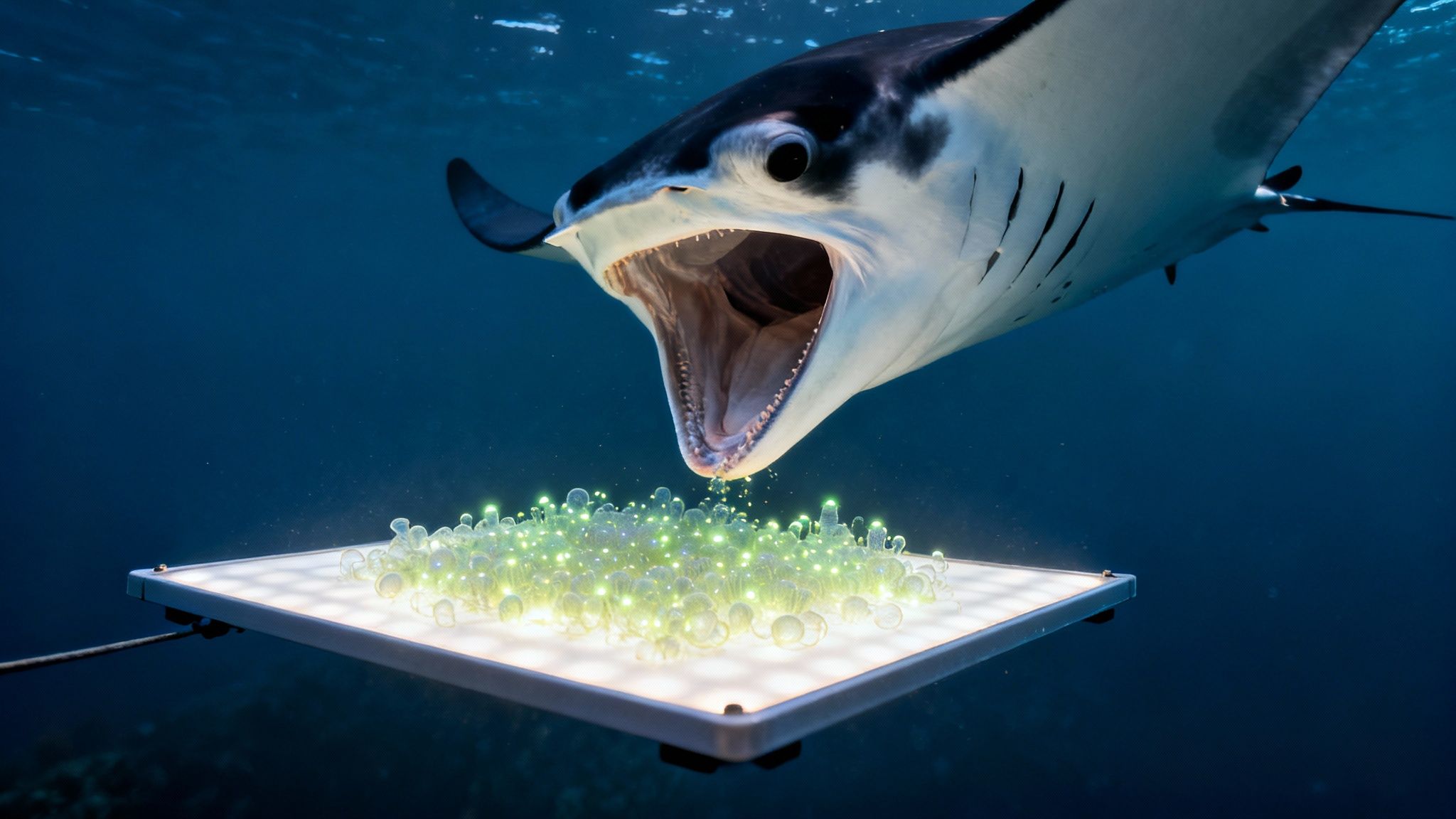
We shine powerful, eco-friendly lights into the dark water from our floatation boards. These lights attract massive clouds of microscopic critters called plankton. For a giant filter-feeder like the manta ray, this is an irresistible, all-you-can-eat buffet concentrated in one easy spot.
Kona’s Perfect Underwater Amphitheater
Kona’s coastline is uniquely suited for this spectacle. Our famous manta sites, like Manta Village and Manta Heaven, are tucked into protected bays with calm currents and shallow, sandy bottoms. This sheltered environment acts like a natural amphitheater, allowing the plankton to gather in dense clouds without being swept away by the open ocean.
Because this food source is so reliable, the local mantas have learned to associate our lights with an easy meal. Night after night, they return to their favorite "dining rooms," which is what makes this experience one of the most dependable wildlife encounters in the world.
To get the most out of your experience, it helps to understand what conditions make for a great manta night. While sightings are consistent, certain environmental factors can really enhance the show.
Optimal Conditions for Manta Ray Sightings
| Factor | Optimal Condition | Why It Matters |
|---|---|---|
| Tide | Outgoing Tide | An outgoing tide can sometimes pull more plankton from the bays and coastlines out to the snorkel sites, creating a richer "buffet" for the mantas. |
| Ocean Swell | Small to moderate swell | Calmer waters mean better visibility and a more comfortable experience for snorkelers. It also allows the plankton to congregate more densely. |
| Moon Phase | New Moon (darkest sky) | A darker night makes our underwater lights appear even brighter, creating a stronger attraction for plankton. However, mantas are seen on every moon phase! |
| Water Clarity | Clear, not murky | Good visibility allows you to see the mantas from further away and appreciate the full scale of their graceful movements as they approach. |
These factors are just a guide, of course. We have incredible nights with the mantas in all sorts of conditions, but when these elements align, the experience can be truly off the charts.
More Than Just a Pretty Face
One of the most incredible things you'll learn is that every single manta ray is an individual. You're not just seeing a manta ray; you're meeting a local personality.
Each manta has a unique pattern of black spots on its belly, which acts just like a human fingerprint. Researchers and longtime guides use these patterns to identify individual mantas, giving them names and tracking their health, movements, and life stories over decades.
This is what elevates the tour from a simple snorkel into a genuine connection. When your guide points out a regular like "Big Bertha" or "Lefty," you realize you're meeting a well-known resident with a history here in Kona. It completely changes your perspective.
Knowing the science and the stories behind these gentle giants deepens your appreciation for the whole experience. It’s one thing to see them, but it’s another to understand why they’re here and who they are. If you want to go even deeper, check out some more fun facts about manta rays in our detailed article.
Preparing for Your Manta Ray Snorkel
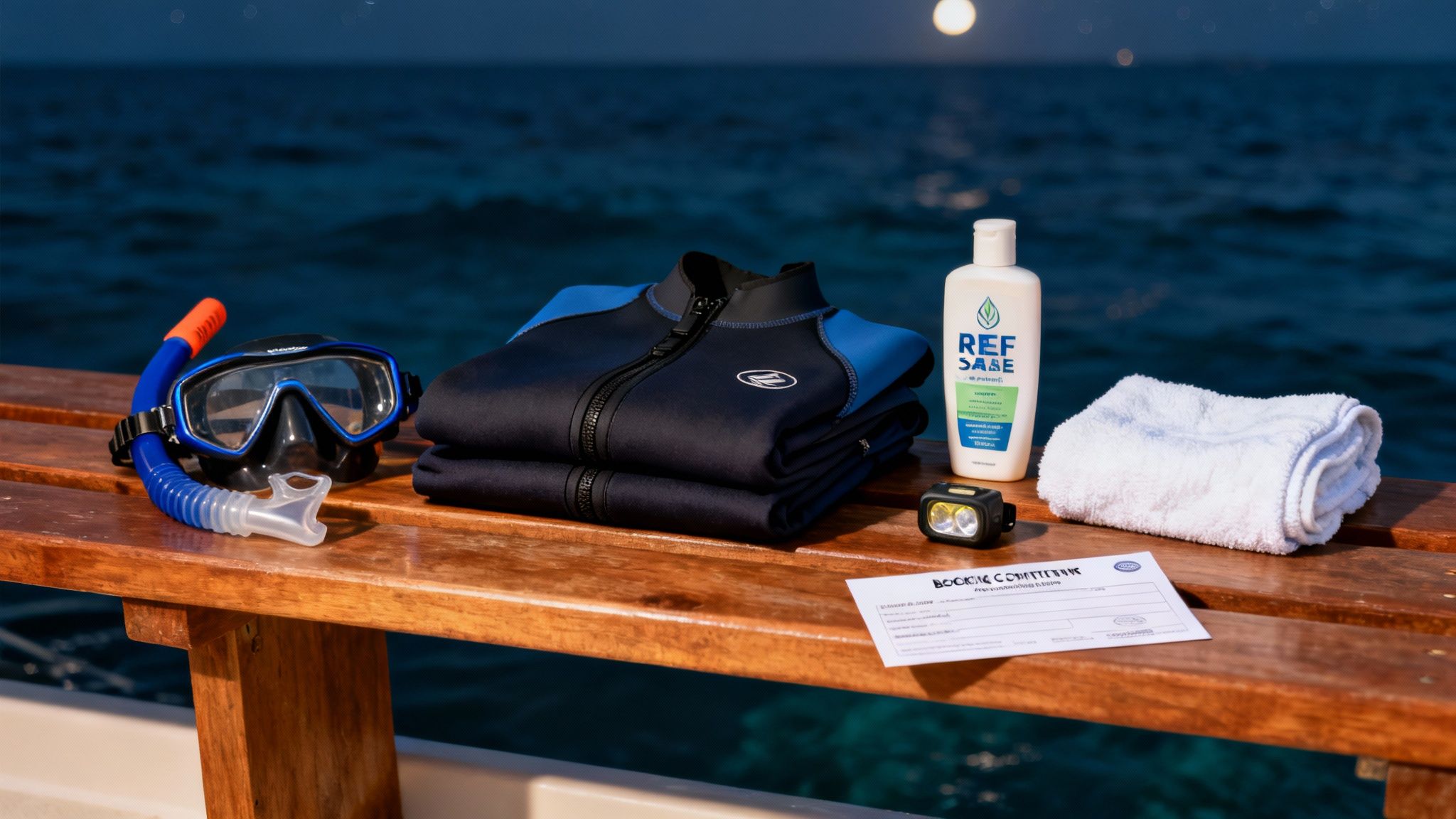
A little prep work goes a long way in turning a good manta ray night snorkel in Kona into an absolutely mind-blowing one. When you show up ready for the adventure, you can ditch the logistics and just soak in the magic. Think of this as your insider's guide to being comfortable, confident, and ready the second you step on the boat.
Just a few easy steps will make sure your focus is where it should be: on that incredible underwater show. From what to toss in your bag to what to wear, we’ve got you covered.
Your Essential Packing Checklist
Packing for this trip is simple. You really don't need much, but a few key items will make a world of difference for your comfort, especially after you get out of the water. The two magic words are: warm and dry!
Here’s a quick-and-dirty checklist of what to bring:
- A Towel & Change of Clothes: This one's non-negotiable. After floating in the ocean at night, you’ll be so happy to dry off and pull on something warm for the ride back to the harbor. A cozy sweatshirt or a light jacket is perfect.
- Reef-Safe Sunscreen: If you're on one of our sunset tours, you’ll want to slather this on before we head out. Protecting Hawaii’s fragile coral reefs is a responsibility we all share, and using the right sunscreen is a huge part of that.
- Swimsuit: The pro move is to arrive already wearing your swimsuit under your clothes. It just makes getting geared up so much faster and easier. For a full rundown, check out our guide on what to wear for snorkeling.
- Reusable Water Bottle: Staying hydrated is always a good call. We have refreshments on board, but having your own water is handy for the trip to and from the harbor.
- Motion Sickness Meds: If you have even the slightest suspicion you might get seasick, take something beforehand. The ocean can be a little unpredictable after dark, and you don’t want a queasy stomach to ruin the main event.
Why Wearing Our Wetsuit Is a Must
Even in beautiful, warm Hawaii, the ocean gets chilly once the sun disappears. You’ll be floating pretty still on the surface for the better part of an hour, and you'd be surprised how quickly you can get cold without some insulation. That’s why we provide a high-quality wetsuit, and why it's so essential.
But the wetsuit isn't just about warmth; it also gives you a ton of extra buoyancy. All that added float makes it effortless to relax on the surface, conserve your energy, and lie perfectly flat for the best possible view of the mantas gliding below. It’s a critical piece of gear that ensures you're both comfortable and safe.
A common rookie mistake is underestimating that nighttime chill. Your wetsuit is your best friend out there, turning what could be a shiver-fest into a cozy, front-row seat for one of nature's greatest performances.
Setting the Right Expectations
It's so important to remember that this is a real-life encounter with wild animals in their own home. While Kona is famous for its ridiculously high sighting success rate—we're talking over 90% most of the time—a sighting can never be 100% guaranteed. The mantas show up to feed, but ultimately, it's always their call.
That being said, the conditions here are so perfect for them that a no-show night is incredibly rare. The best mindset is to come aboard with a sense of wonder for the whole experience—the gorgeous sunset cruise, the peace of being on the ocean at night, and the thrill of seeing a vibrant underwater world come alive in the lights.
By coming prepared and having a realistic outlook, you're setting yourself up for an amazing adventure, ready to appreciate every single moment of this truly unique Kona spectacle.
Our Commitment to Manta Ray Safety and Conservation
The long-term health of Kona's manta ray population rests squarely on the shoulders of responsible tourism. Getting to see these incredible animals up close is a privilege, and here at Kona Snorkel Trips, we take our job as stewards of this unique marine environment very seriously. Our entire operation is built on a foundation of respect, ensuring these gentle giants can continue to wow visitors for generations to come.
The most important part of any responsible manta tour comes down to one core idea: passive interaction. It's the single most important rule in the water, and our guides are there to make sure everyone understands it. It’s a simple concept, but it makes all the difference in the world.
The Golden Rule: Passive Interaction
Think of it this way: we're guests in their home—their dining room, to be exact—and we need to act like it. The rules are straightforward and designed to keep both you and the mantas safe.
- No Touching: Manta rays are covered in a protective mucous layer, like a shield against infection. Touching them can strip this layer away, leaving them exposed and vulnerable to disease.
- No Chasing: Never, ever chase a manta ray. Let them come to you on their own terms. Pursuing them causes a lot of stress and can scare them away from their favorite feeding spots.
- Don't Block Their Path: Always give the mantas plenty of room to swim freely. They're here to eat, and getting in the way of their graceful barrel rolls disrupts their natural feeding behavior.
Our expert guides are right there in the water with you, making sure everyone feels comfortable and understands these crucial guidelines. Their job isn't just about keeping you safe in the dark water; they're also guardians for the manta rays, creating an atmosphere of mutual respect.
Our Broader Conservation Efforts
Our commitment doesn't stop when the boat docks. Kona Snorkel Trips is an active part of the wider marine conservation community. We regularly participate in data collection, where photos and observations from our tours help researchers identify individual mantas, check on their health, and learn more about their population.
We also advocate for stronger marine protection policies to safeguard the delicate ecosystems we all depend on. It's a holistic approach that ensures the magic of the manta ray night snorkel in Kona remains a sustainable, world-class experience. While the mantas are the main event, understanding potential marine encounters and safety with all sea life is a key part of any ocean adventure. When you choose an operator dedicated to conservation, you're not just a tourist—you're a partner in protecting this natural wonder.
Your Manta Ray Snorkel Questions Answered
To wrap things up, here are a few of the most common questions we get about the manta ray night snorkel in Kona. Think of this as a quick guide to clear up any last-minute thoughts so you can head out on the water feeling totally prepared for the adventure.
I’m Not a Great Swimmer. Is This Tour Safe for Me?
Yes, absolutely! You definitely don't need to be an expert swimmer to have an incredible time. We provide high-quality wetsuits for everyone, and they give you a surprising amount of buoyancy, helping you float comfortably without any effort.
Plus, you'll be holding onto a large, custom-built light board the entire time you're in the water. It’s super stable and gives you a secure place to hang on, so you can just relax on the surface and watch the show below. This makes the experience safe and accessible for pretty much any skill level.
What Happens if We Don’t See Any Manta Rays?
While sightings are incredibly consistent—we have over a 90% success rate—we are dealing with wild animals in their natural habitat. Their presence can never be 100% guaranteed. We totally get how much this experience means to our guests, which is why Kona Snorkel Trips has a "Manta Guarantee."
It's simple: if your tour doesn't see any manta rays, you can come back and join us again on another night for free, on a standby basis. We truly want everyone to have the chance to witness this magic.
Can My Kids Come on This Snorkel Tour?
They sure can! This is a fantastic family-friendly adventure, and we welcome children who are comfortable in the water. The bay is typically calm, and between the floaty wetsuits and the security of the light board, most younger snorkelers do great.
That said, the tour does happen in the open ocean after dark. We always recommend that parents consider their own child's comfort level with the dark and being in the ocean before booking. The goal is for it to be a positive and memorable experience for the whole family!
Is It Okay to Bring a GoPro or Underwater Camera?
Of course! We absolutely encourage you to capture the magic of the manta ray snorkel. Bringing a GoPro or another underwater camera is the perfect way to hold onto these memories for years to come.
Just remember to keep your hands, cameras, and any selfie sticks close to your body. It's really important not to extend anything out toward the manta rays. This can disrupt their natural feeding behavior, and we're all about respecting their space.
Following this simple guideline helps protect these gentle giants and ensures you still get amazing footage. We can't wait to share an unforgettable night on the water with you.
Ready for an adventure of a lifetime? Kona Snorkel Trips is dedicated to providing a safe, respectful, and absolutely awe-inspiring experience. Learn more and book your Manta Ray Snorkel Kona tour today!