
Explore manta ray night snorkel kona: Kona’s Magical Manta Adventure
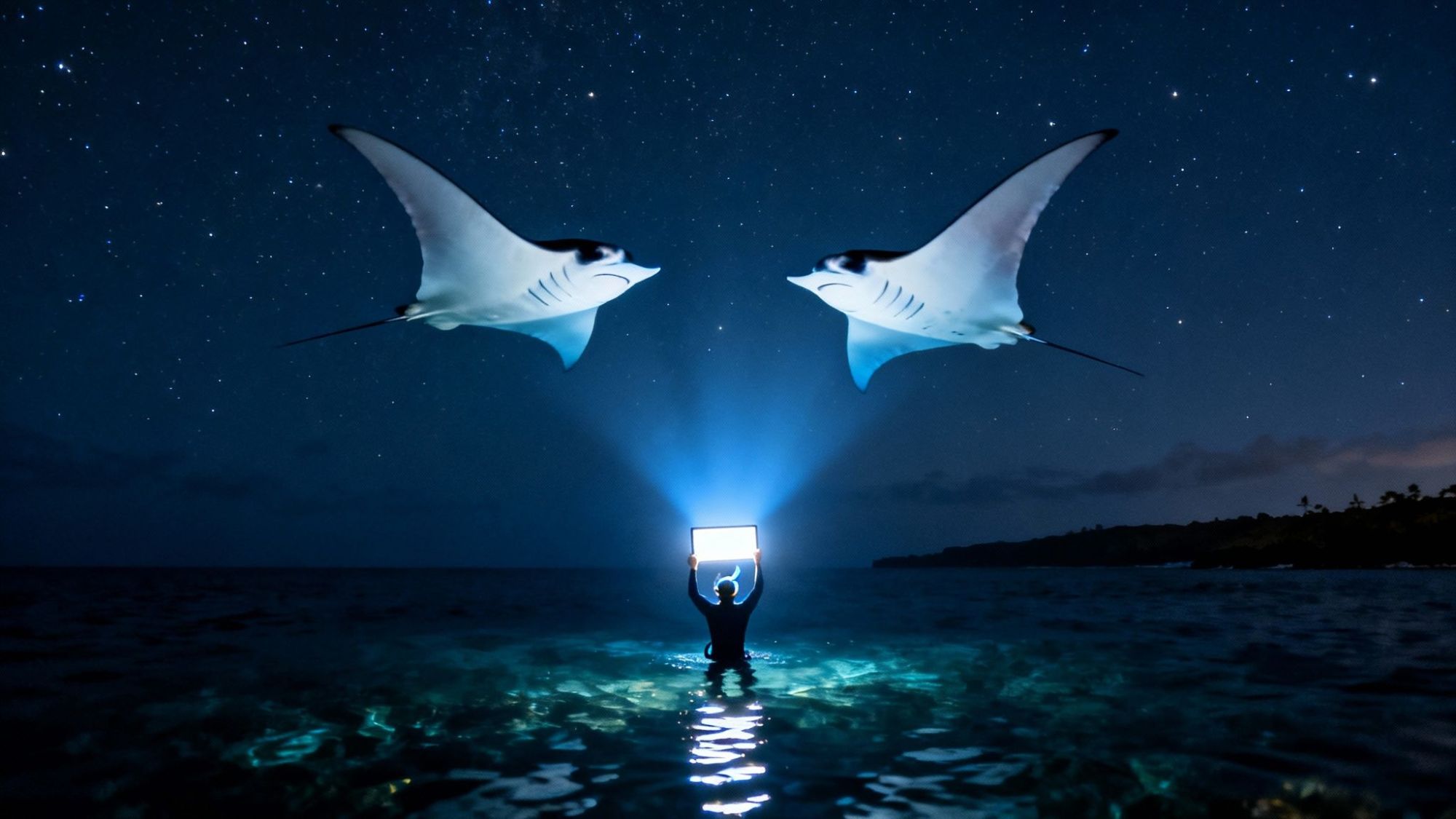
The manta ray night snorkel in Kona is one of those legendary, world-famous adventures you hear about and immediately add to your bucket list. You’re floating in the dark, calm Pacific waters while giant, graceful manta rays swoop and feed on plankton, sometimes just inches away. It's consistently ranked as one of the best things to do on the Big Island, and for good reason—the success rate and the sheer proximity to these gentle giants are just unreal. As the top rated & most reviewed snorkel company in Hawaii, Kona Snorkel Trips has perfected this incredible encounter.
Experience the Unforgettable Underwater Ballet in Kona
Picture this: You're floating effortlessly under a sky full of stars, the warm ocean holding you. Below, powerful lights cut through the darkness, creating a sort of "underwater campfire." This light show attracts swarms of microscopic plankton, which in turn rings the dinner bell for the main event.
Suddenly, a massive, silent shadow emerges from the deep. A giant manta ray, with a wingspan wider than a car, glides into the light. It performs a slow, elegant barrel roll, its cavernous mouth wide open to filter the plankton. This isn't something you watch on a nature documentary; this is the raw, breathtaking magic of the Kona manta ray night snorkel.
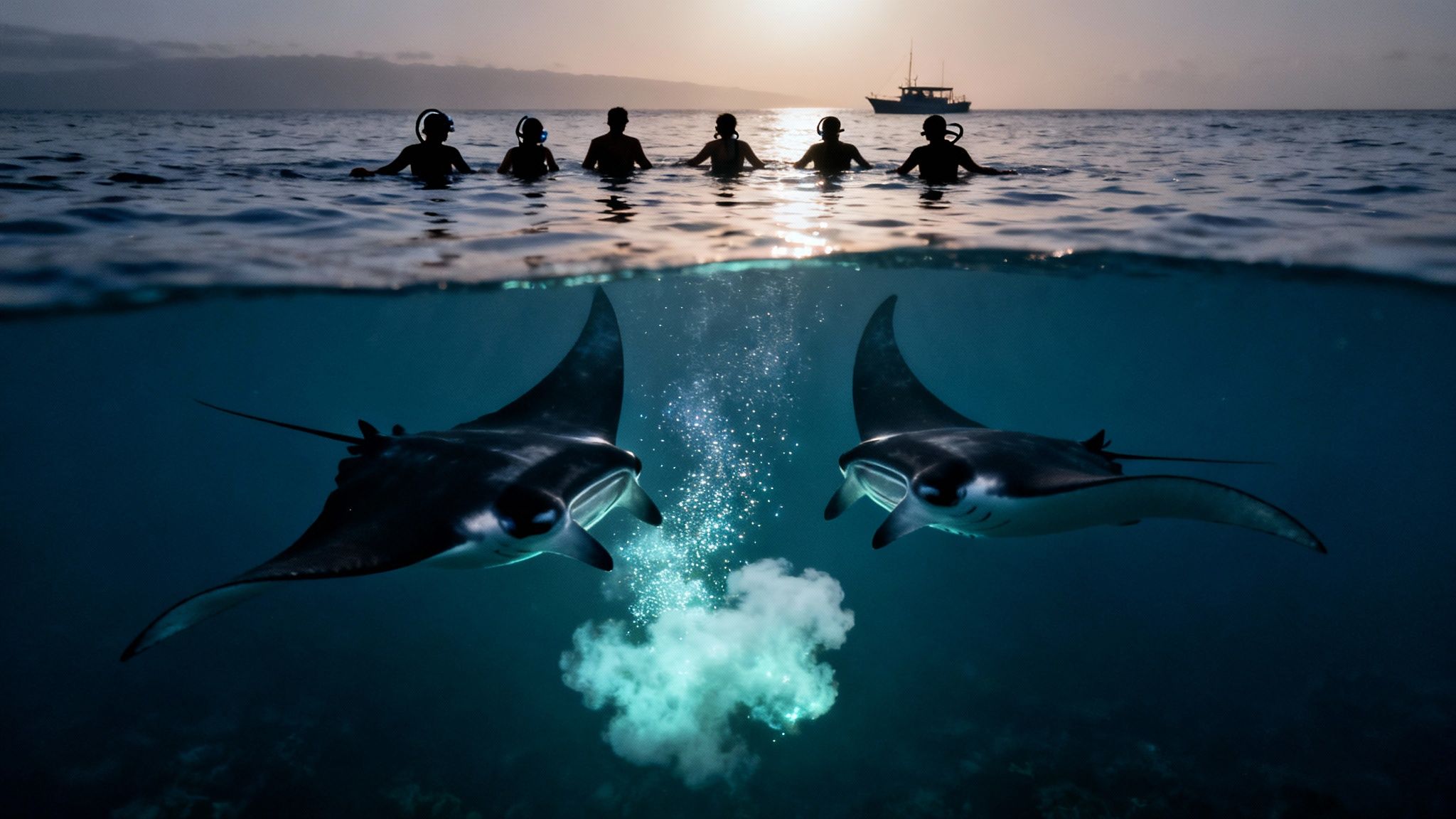
This kind of encounter goes beyond a simple tour. It's a genuine connection with one of the ocean's most majestic creatures. To make sure you have the absolute best and safest time, picking the right guide is everything. Kona Snorkel Trips has earned its reputation as the top-rated and most-reviewed snorkel company in Hawaii, largely because they focus on safety, small groups, and making sure every trip is unforgettable.
Why This Kona Snorkel is a Must-Do Adventure
The Big Island just happens to have the perfect setup for this unique spectacle, making it the world's number one spot for manta ray encounters. Best of all, the whole experience is designed to be easy and accessible for almost anyone, whether you're a seasoned ocean explorer or have never put on a snorkel mask before.
Here’s what really sets it apart:
- Incredible Proximity: The manta rays get so close. We're talking inches. You get an unparalleled view of them as they feed.
- High Success Rate: Kona is home to a resident population of manta rays, which means sightings are incredibly reliable. Success rates often top 80-90% year-round.
- Effortless Observation: You just hold onto a floating light board and watch the show. There's no hard swimming involved, so you can just relax and soak it all in.
This guide will walk you through everything you need to know, from what it’s really like out on the water to how to choose the perfect tour. While the Kona manta ray snorkel is a one-of-a-kind marine experience, if you're an avid traveler, you might also want to check out other captivating adventure guides. We're here to make sure you're totally prepared for what will likely be a highlight of your life. And for those looking for an exceptional alternative, consider Manta Ray Night Snorkel Hawaii for an incredible Manta Ray night snorkel tour.
What to Expect During Your Manta Ray Snorkel Adventure
Jumping into the ocean after dark might sound a little intimidating, but trust me, the entire manta ray night snorkel in Kona is built around being calm, safe, and completely mesmerizing. Let's walk through the whole adventure so you know exactly what’s waiting for you, from the moment you check in to when you see that first graceful shadow appear below.
Your journey starts with a friendly check-in with the tour crew. After a quick but important safety briefing, you'll hop on the boat for a short, beautiful ride out to the snorkel site. The timing is perfect—you head out as the sun is setting, which gives you a front-row seat to the sky lighting up over the Kona coast. It's a peaceful, stunning start to an evening you won't forget.
The Underwater Campfire
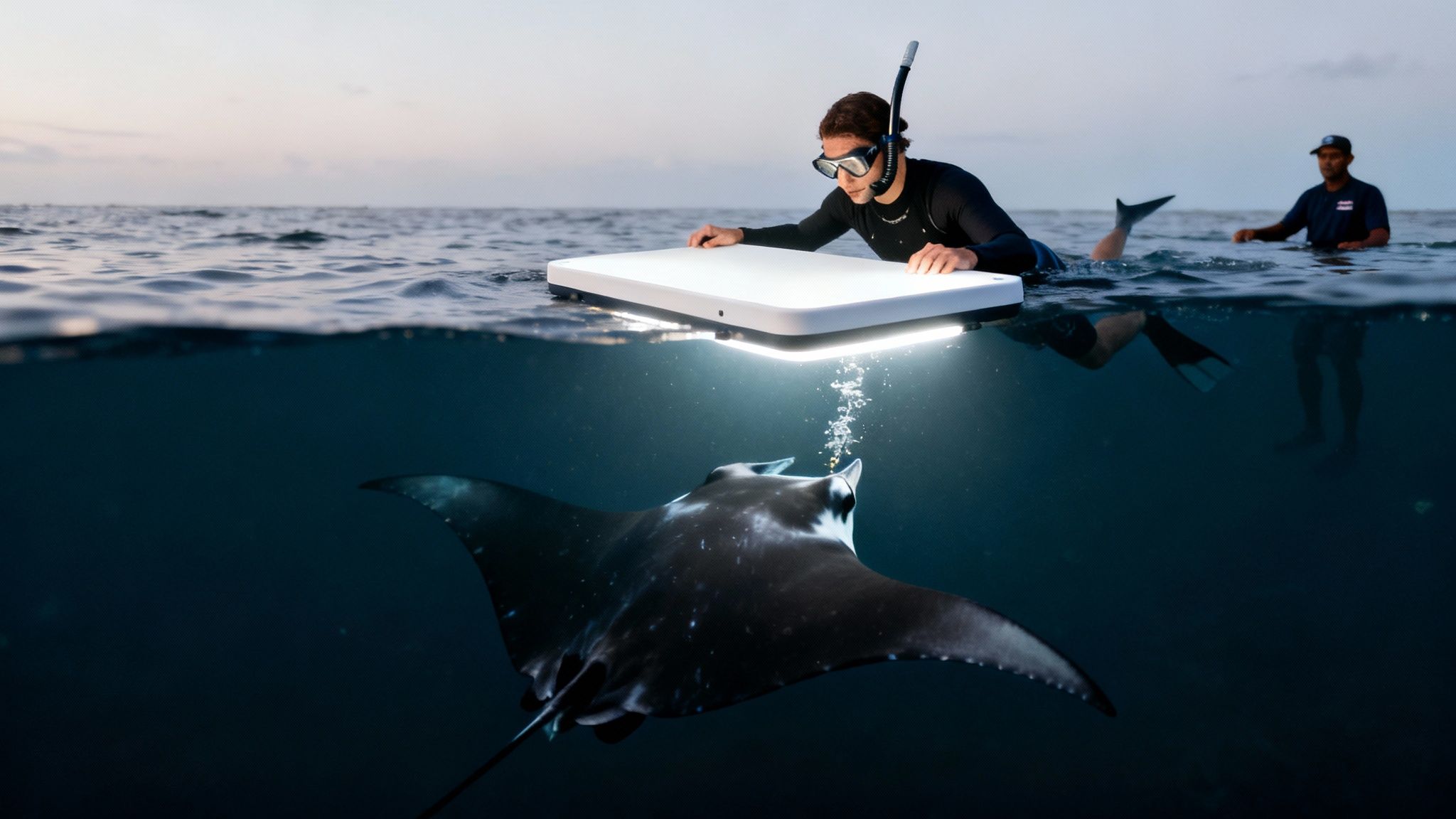
Once you arrive at the spot, the crew sets up what I like to call an "underwater campfire." It's actually a custom-built, powerful (but eco-friendly) light board that gets placed in the water. This light is the key to everything; it illuminates a huge patch of ocean, attracting a massive cloud of microscopic plankton—the manta rays' favorite food.
You'll get all your gear, including a wetsuit to keep you comfortable, before slipping into the water. Don't worry, you won't be swimming around randomly in the dark. Instead, you'll hold onto the large, stable floating light board with everyone else.
This whole setup is what makes the experience so accessible for everyone.
- No Strenuous Swimming: You just float and hold on. All your energy goes into watching the incredible show below.
- Perfect for All Skill Levels: Since you have a stable platform, this adventure is fantastic for beginners, families, and even people who aren't strong swimmers.
- A Front-Row Seat: The board puts you right over the illuminated feeding zone, guaranteeing the best possible view.
It feels less like an athletic event and more like you're attending a magnificent, silent underwater ballet.
The Grand Arrival
As you float there, peering into the bright blue water, the magic starts to unfold. First, you'll see small fish darting in and out of the light, getting their share of the plankton. Then, a collective hush falls over the group as the first giant shadow emerges from the blackness.
That moment a manta ray appears is pure awe. These gentle giants, some with wingspans of 12 feet or more, glide effortlessly into the light. They perform graceful barrel rolls and somersaults, their huge mouths open to filter the plankton, often coming within inches of you.
The experience is incredibly peaceful. The only sound is the gentle lapping of water as these majestic creatures dance right below you. The expert crew from a top-rated company like Kona Snorkel Trips is always right there in the water with you, looking out for your safety and the well-being of the rays. They're on hand to answer questions, help out, and share fascinating facts about the mantas you're seeing.
After about 45 minutes of pure wonder, you'll climb back onto the boat, buzzing with excitement and holding onto a memory that will truly last a lifetime.
Why Kona Is the Global Hotspot for Manta Rays
It’s no accident that the manta ray night snorkel in Kona is famous across the globe. You can find manta rays in tropical waters all over the planet, sure, but nowhere else offers such reliable, up-close encounters night after night. This isn't just a lucky break; it’s the perfect combination of geography, biology, and a little human ingenuity that has made the Kona coast the undisputed capital of manta ray viewing.
The magic really starts with the Big Island's unique underwater landscape. Geologically speaking, the Kona coast is young, which means it has a steep drop-off very close to the shore. This deep water ushers nutrient-rich currents right up to the coastline, fueling a vibrant ecosystem. This constant flow of food supercharges the growth of phytoplankton—the tiny organisms at the bottom of the food chain that just so happen to be the mantas' favorite meal.
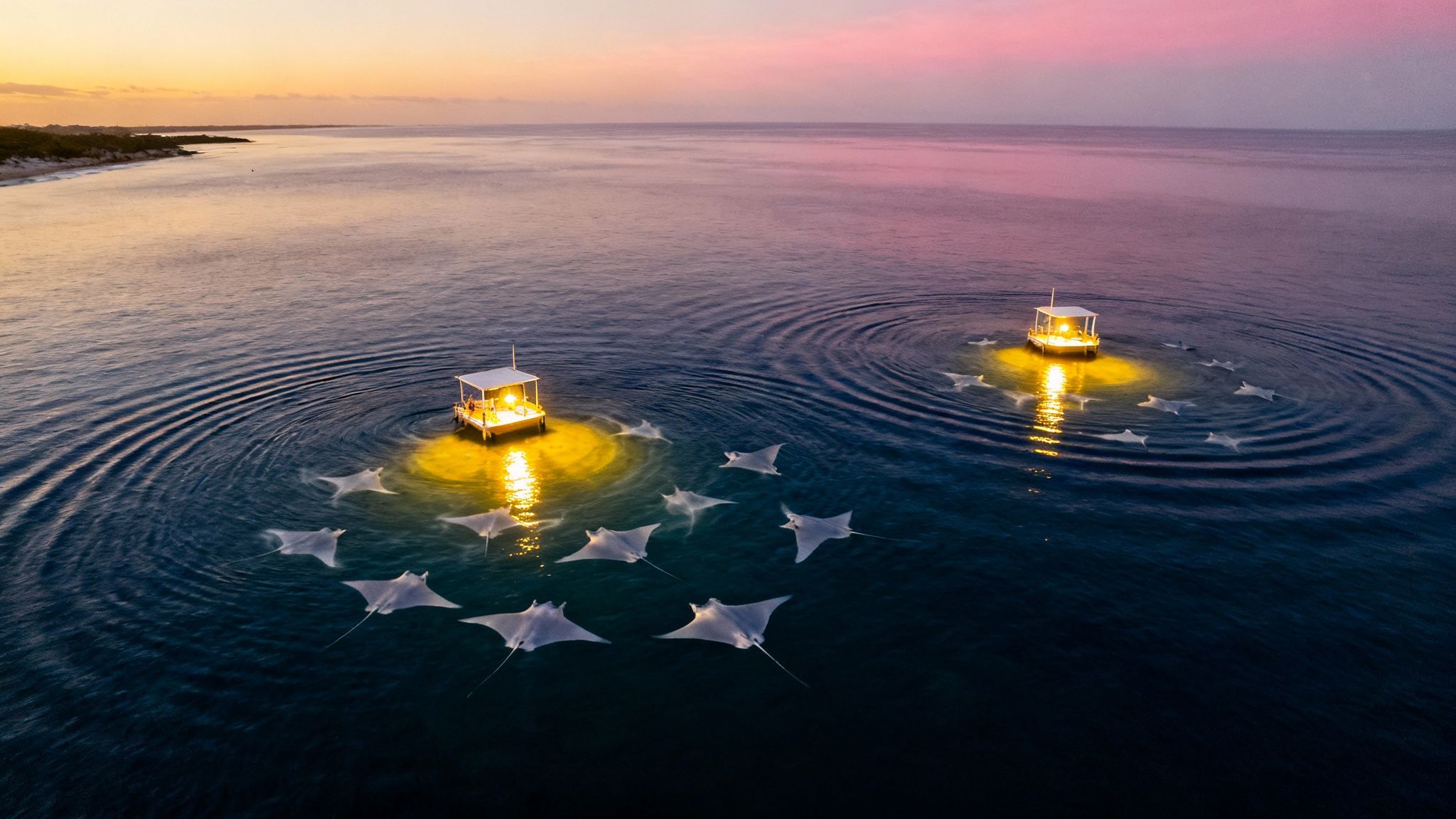
Because of this natural buffet, Kona supports a large, resident population of reef manta rays. They don't have to migrate for food; they live right here, all year long, creating a dependable spectacle for anyone lucky enough to visit. These gentle giants are truly incredible creatures; you can learn more by checking out some fun facts about manta rays.
Kona's Famous Manta Ray Viewing Sites
Two spots, in particular, have become legendary for their nightly manta ballet. While each offers a slightly different vibe, both are equally breathtaking. Tour operators will typically pick the best site for the evening based on ocean conditions and where the mantas have been most active.
-
Manta Village (Keauhou Bay): This is the O.G. manta ray snorkel site. Just south of Kailua-Kona, the Sheraton Kona Resort & Spa at Keauhou Bay started shining lights into the water decades ago. This attracted plankton, which in turn attracted the mantas, creating a conditioned feeding response that makes this spot incredibly reliable.
-
Manta Heaven (Garden Eel Cove): Located a bit further north near the Kona International Airport, this site is another major hotspot. It’s known for its sandy bottom and often calmer waters, which can attract huge gatherings of mantas for a truly spectacular underwater show.
The Unbeatable Sighting Success Rate
What really puts Kona in a league of its own is the ridiculously high chance of actually seeing manta rays. This isn't a hit-or-miss gamble; it's one of the most dependable wildlife encounters in the world, with year-round success rates hovering between 80-90%.
This isn't just talk—it's backed by years of data. Imagine floating under a starry Hawaiian sky as massive, graceful shadows perform mesmerizing barrel rolls just inches beneath you. This is why historical data tracked by marine advocates since 2013 is so impressive. At Manta Village, they recorded a jaw-dropping 96% sighting success rate with an average of four mantas per night. Manta Heaven was right behind with a 90% rate, but with a massive average of 11 rays per night, making it an absolute feast for the eyes.
This incredible reliability means you can book your adventure with confidence, knowing you have an excellent shot at witnessing this natural wonder. It's this one-two punch of perfect geography and a resident population that solidifies Kona's reputation as the ultimate manta ray destination.
How to Choose the Right Kona Manta Ray Tour
With so many companies offering a manta ray night snorkel in Kona, picking the right one can feel a little overwhelming. Let's be honest, this is a bucket-list experience, and you want to make sure it's amazing, safe, and respectful to these incredible animals. The secret is looking past the price tag and focusing on what really makes or breaks your night on the water.
You're looking for an operator that cares more about the quality of your encounter than how many people they can pack onto a boat. That means seeking out smaller groups, guides who really know their stuff, rock-solid safety, and a real commitment to protecting the mantas. A smaller boat, for example, translates to a more intimate, less crowded time in the water, giving you a front-row, unobstructed view of the show.
What to Look for in a Tour Operator
Not every tour is created equal. A top-tier operator provides everything you need to be comfortable and safe. One of the most critical items is the gear, especially a good, warm wetsuit. Even in Hawaii, the ocean can get chilly after the sun goes down, and a quality wetsuit means you can relax and truly soak in the experience for the full 80 minutes without shivering.
Here are the key things to look for:
- Small Group Sizes: Zero in on companies that cap the number of guests. A smaller, more personal setting means you get more attention from the guides and more prime real estate at the light board.
- Expert and Safety-Conscious Guides: Your crew should be pros, not just at snorkeling, but in manta ray behavior and marine conservation. Their ability to manage the group safely while sharing fascinating tidbits about the rays is what turns a good trip into a great one.
- Eco-Friendly Practices: Responsible operators have strict "no-touching" policies and use equipment designed to minimize their impact on the marine environment. They're there to protect the mantas, first and foremost.
- Stellar Customer Reviews: Before you book, spend some time on TripAdvisor and Google. Consistent, glowing reviews are the best sign that a company actually delivers the incredible experience they promise.
If you're looking for another fantastic choice, Manta Ray Night Snorkel Hawaii is another highly-regarded operator that's well worth checking out for this magical adventure.
Finding an operator who ticks all these boxes is your ticket to a night you'll never forget. To make it a bit easier, here’s a quick checklist to use when you're comparing your options.
Kona Manta Ray Tour Operator Checklist
| Feature | What to Look For | Why It Matters for Your Trip |
|---|---|---|
| Group Size | Tours with 20 or fewer guests | A smaller group means a less crowded light board, a better view, and a more personal experience. |
| In-Water Time | A guaranteed 80 minutes or more | This is what you came for! More time in the water maximizes your chances for amazing manta encounters. |
| Guide Expertise | Guides with marine biology or naturalist backgrounds | Knowledgeable guides can answer your questions and enrich your experience with fascinating facts. |
| Safety Gear | High-quality, thick wetsuits and flotation devices | Staying warm and comfortable is key. A good wetsuit lets you focus on the mantas, not the cold. |
| Eco-Tourism Certification | Manta Ray Green List certification or similar | Shows a deep commitment to the safety of the mantas and the preservation of their habitat. |
| Vessel Type | Smaller, nimble boats (like rigid-hull inflatables) | Smaller boats often mean faster travel to the site and a more intimate group dynamic. |
| Recent Reviews | Consistent 5-star ratings on Google & TripAdvisor | Past guest experiences are the best predictor of your own. Look for recent, positive feedback. |
Using this checklist will help you cut through the noise and find a tour that’s genuinely focused on giving you a world-class, responsible wildlife encounter.
Why Kona Snorkel Trips Stands Out
When you start comparing the options, one company consistently shines in every one of these categories. Kona Snorkel Trips has built its entire reputation on delivering the exact kind of premium, small-group adventure that makes this experience so profoundly special. They're dialed in on providing a safe, educational, and unforgettable night with Kona's gentle giants.
Every year, an estimated 80,000 adventure-seekers travel to Kona for this unique marine spectacle, solidifying its status as a world-class wildlife encounter. Kailua-Kona is one of the few places on Earth where manta rays reliably appear every night, drawn to the plankton that gathers under the tour lights. Kona Snorkel Trips leverages this perfectly, offering an incredible 80 minutes of in-water time with rays that can have wingspans from 5 to 18 feet. Learn more about this incredible Kona phenomenon.
Their dedication to smaller boats means you'll never feel like just another face in a packed crowd. The guides are passionate about marine life and are just as focused on your safety as they are on the well-being of the mantas. For a deeper dive into what separates the best from the rest, check out our guide on finding the best manta ray night snorkel in Kona. This unwavering commitment to quality is why they're so highly rated by visitors from all over the globe.
Getting Ready for Your Big Night Out with the Mantas
You're probably buzzing with excitement for the adventure, so let's get you prepped. Honestly, getting ready for your manta ray night snorkel in Kona is straightforward, but a little prep work is what takes a great trip and makes it an absolutely perfect one. A few simple steps will have you feeling comfortable, confident, and ready to soak in every magical moment.
First up, what to wear. The easiest pro-tip I can give you is to wear your swimsuit under your regular clothes when you head to the check-in point. This saves you the hassle of changing in a tiny boat bathroom and gets you in the water faster.
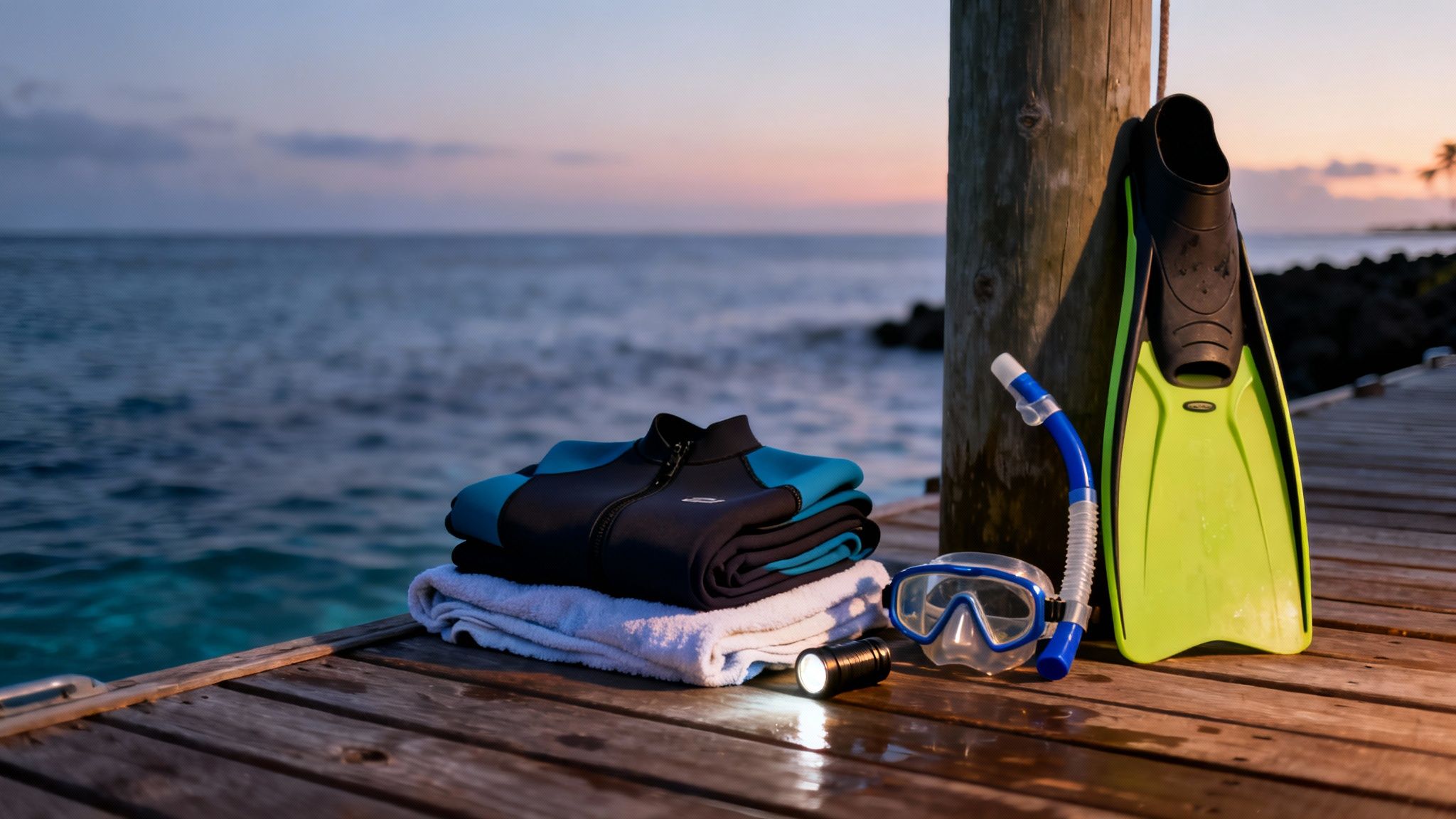
Your Essential Packing Checklist
Packing for this excursion is wonderfully simple. You really don’t need a lot, but bringing a few key items will make a world of difference for your comfort before and after the snorkel. For a deeper dive, check out our complete guide on what to wear for snorkeling.
Here’s a quick list of what you should definitely bring along:
- A Towel: This is non-negotiable. You’ll be so glad to have a big, fluffy towel waiting for you when you climb out of the ocean.
- Dry Clothes or a Warm Sweatshirt: Even on a warm Hawaiian evening, that boat ride back to the harbor can feel surprisingly chilly once you're wet. Having something dry and warm to change into is pure bliss.
- Reef-Safe Sunscreen: If you're on one of the sunset tours, make sure to apply it before you head out.
- An Underwater Camera: Got a GoPro or something similar? Bring it! The photo ops you're about to have are truly once-in-a-lifetime.
- Motion Sickness Medication: If you are even the slightest bit prone to seasickness, take your preferred medication before you get on the boat. The ocean can be a bit more unpredictable after dark.
Manta Manners: Respecting the Gentle Giants
The most important prep you can do is mental. Remember, we are guests in the manta rays' home. Following proper "Manta Manners" ensures a safe and respectful encounter that keeps these incredible animals protected. The golden rule is simple but absolute: do not touch the manta rays.
Manta rays have a protective mucus layer on their skin, which is their primary defense against infection. Touching them, even gently, can strip this delicate coating away and leave them vulnerable to disease. Let them guide the encounter; they'll get as close as they feel comfortable.
By just floating and observing, you allow the mantas to go about their natural feeding ballet undisturbed. This passive, respectful approach is the heart of sustainable tourism, and it's what ensures this incredible experience will be around for generations to come.
Your Questions About Snorkeling with Manta Rays, Answered
Even after getting pumped up for the adventure, it's totally normal to have a few questions rolling around in your head before you take the plunge. We get it. This is where we tackle all the common things people ask before they book their manta ray night snorkel in Kona.
Think of this as your final briefing. We've put together straight-up, honest answers to help you feel completely confident and ready for an experience you'll never forget.
Is This Manta Ray Snorkel Safe if I'm a Beginner or Have Kids?
Absolutely. This is probably the number one question we hear, and the answer is a resounding yes. Every reputable tour operator puts safety above all else, and the whole experience is designed from the ground up to be safe and accessible for just about everyone—including total beginners and families.
A common picture people have is of swimming around in the dark, open ocean, but that’s not how it works at all.
You actually don’t do much swimming. Instead, you'll hold onto a large, custom-made floatation board that's brightly lit to attract the plankton. This board is incredibly stable, acting like a floating handrail that you can comfortably hang onto while you watch the show below. The snorkel sites themselves are in protected bays, so the water is usually very calm.
On top of that, the high-quality wetsuits provided by top-notch operators like Kona Snorkel Trips give you extra buoyancy, making floating effortless. Professional guides are right there in the water with you the whole time, keeping an eye on everyone and making sure you're safe and comfortable. It's a fantastic, secure adventure for kids who are comfortable in the water.
What Are My Chances of Actually Seeing Manta Rays?
They are incredibly high, and that's exactly what makes this Kona tour famous worldwide. Of course, with wild animals, nothing can ever be a 100% guarantee, but the success rate for seeing mantas year-round is consistently between 80% and 90%. This isn't just random luck; it's a reliable natural event.
The whole operation is a well-oiled machine. Tour operators use powerful (but eco-friendly) lights that create a massive buffet of plankton, the mantas' favorite food. This acts like a dinner bell, drawing the local manta population in to feed almost every single night. It’s not unusual to see several rays on one trip—sometimes more than a dozen!
What if it's just not our night? In the rare case the mantas don't show, most reputable companies have a "manta guarantee." This usually means you can come back and try again on another night for free. It’s their way of making sure you get a second chance at the magic.
What's the Best Time of Year to Go?
This is one of the best parts about planning this trip: there is no "best" time of year! Unlike whale watching, which is seasonal, Kona's manta rays are here to stay. They are residents, living and feeding along this coastline 365 days a year.
The plankton they feast on is always in the water, so the mantas show up for dinner whether it's January or July. This gives you amazing flexibility when planning your Big Island vacation. You can book your trip for any season, confident that the mantas will likely be there. Plus, the ocean stays warm all year, and the wetsuits they provide will keep you perfectly comfortable no matter when you visit.
Will I Get Cold in the Water at Night?
That's a fair question. You’re in the ocean after the sun goes down, so it's natural to wonder about the temperature. But don't worry, the tour companies have this completely dialed in.
First off, the Pacific waters around Hawaii are pretty warm year-round, usually in the mid-70s to low-80s Fahrenheit. Still, floating for a while at night could get a bit chilly without the right gear.
That's why premier operators like Kona Snorkel Trips provide everyone with high-quality, thick wetsuits. These aren't just for show; they trap a thin layer of water against your skin, which your body quickly warms up, creating a perfect layer of insulation.
This simple piece of gear makes all the difference, keeping you toasty and comfortable for the entire 45-80 minute snorkel. It lets you forget about the temperature and just lose yourself in the incredible manta ballet happening right below you.