
Your Guide to the Manta Ray Night Snorkel Kona Experience
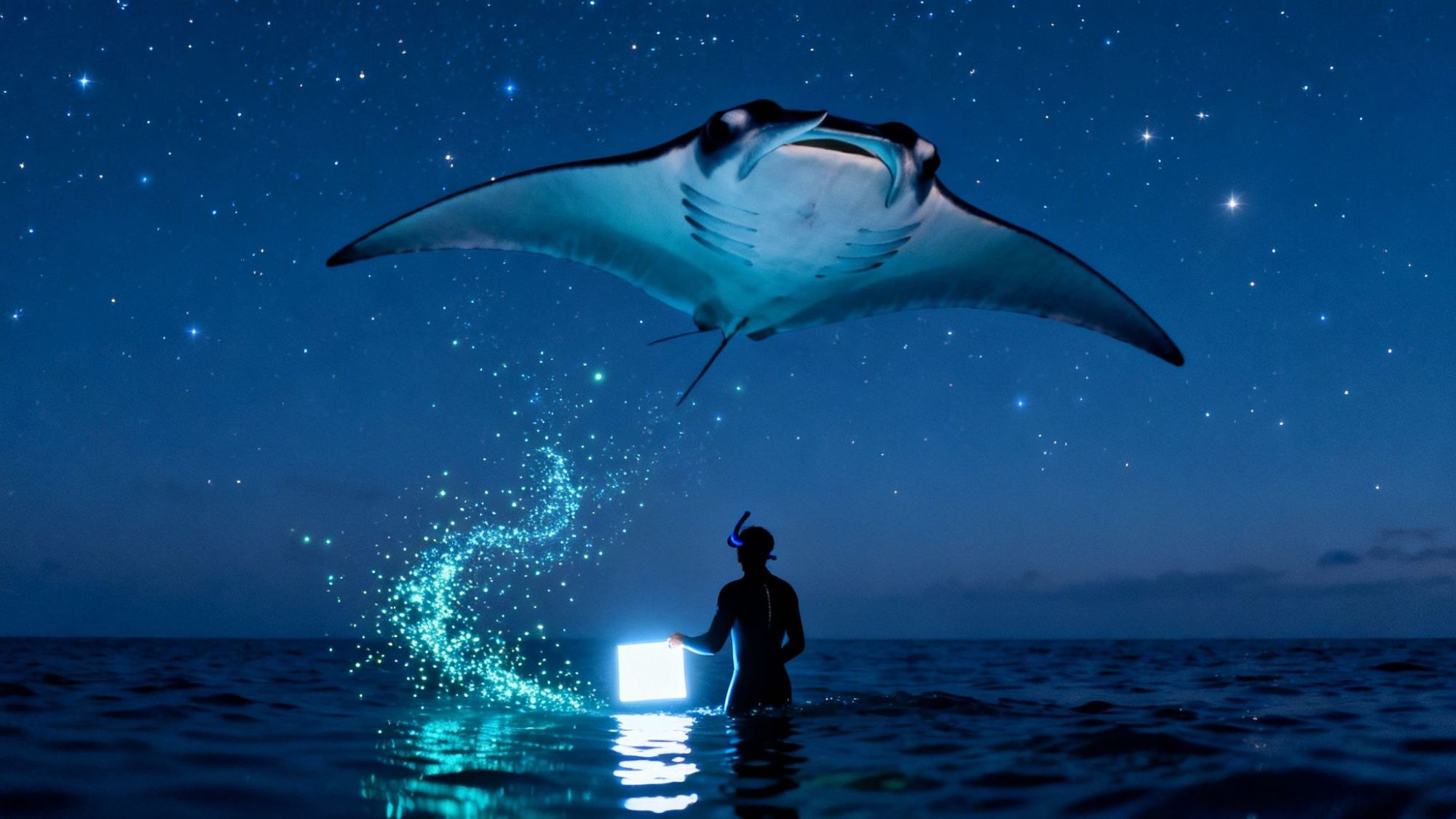
Picture this: you're floating weightlessly in the calm, dark Pacific Ocean. Suddenly, a majestic creature with a 16-foot wingspan glides silently, gracefully, just inches beneath you. This isn't a dream. This is the heart of the manta ray night snorkel in Kona, a true bucket-list adventure that brings you face-to-face with Hawaii's gentle giants.
An Unforgettable Night with Kona's Gentle Giants
The Big Island has earned its reputation as the world's absolute best place for this unique marine encounter, and for a very good reason. The experience is both breathtakingly magical and surprisingly reliable, offering a front-row seat to an underwater ballet few people ever get to witness. As Hawaii's top-rated and most-reviewed snorkel company, we at Kona Snorkel Trips live for sharing this incredible spectacle.

Why This Kona Snorkel is a Must-Do
Unlike a lot of wildlife tours where you just cross your fingers and hope for a sighting, the manta ray night snorkel here boasts an incredibly high success rate. That consistency is what has made it a world-renowned activity, drawing ocean lovers from every corner of the globe.
So, what makes this adventure so special?
- A Gentle Encounter: Manta rays are harmless filter-feeders, true "gentle giants." They don't have the stingers their stingray cousins are known for, making your interaction completely safe and peaceful.
- An Otherworldly Experience: There's nothing quite like floating in the dark ocean while beams of light attract these graceful animals. It creates a surreal, almost dreamlike atmosphere you just can't find anywhere else on Earth.
- Accessible for All: You really don't need to be an expert swimmer. Everyone holds onto a custom-lit floatation board, which makes the experience easy and comfortable for nearly all ages and skill levels.
This tour is so much more than just another snorkel trip; it's a profound chance to connect with nature. For an even deeper dive into this incredible encounter, check out this complete guide to the Kona manta ray night dive. The experience gives you a unique perspective on marine conservation and the fragile beauty of our ocean, creating memories that will stick with you for a lifetime.
So, How Does This Manta Ray Ballet Actually Work?
What’s the secret sauce that makes the manta ray night snorkel in Kona so unbelievably reliable? It’s not just luck. It's a clever bit of science and marine biology that tour operators have perfected over the years, creating a dependable underwater theater that brings these gentle giants to us almost every single night.
Think of it as setting up a glowing, all-you-can-eat plankton buffet right where we want to snorkel.
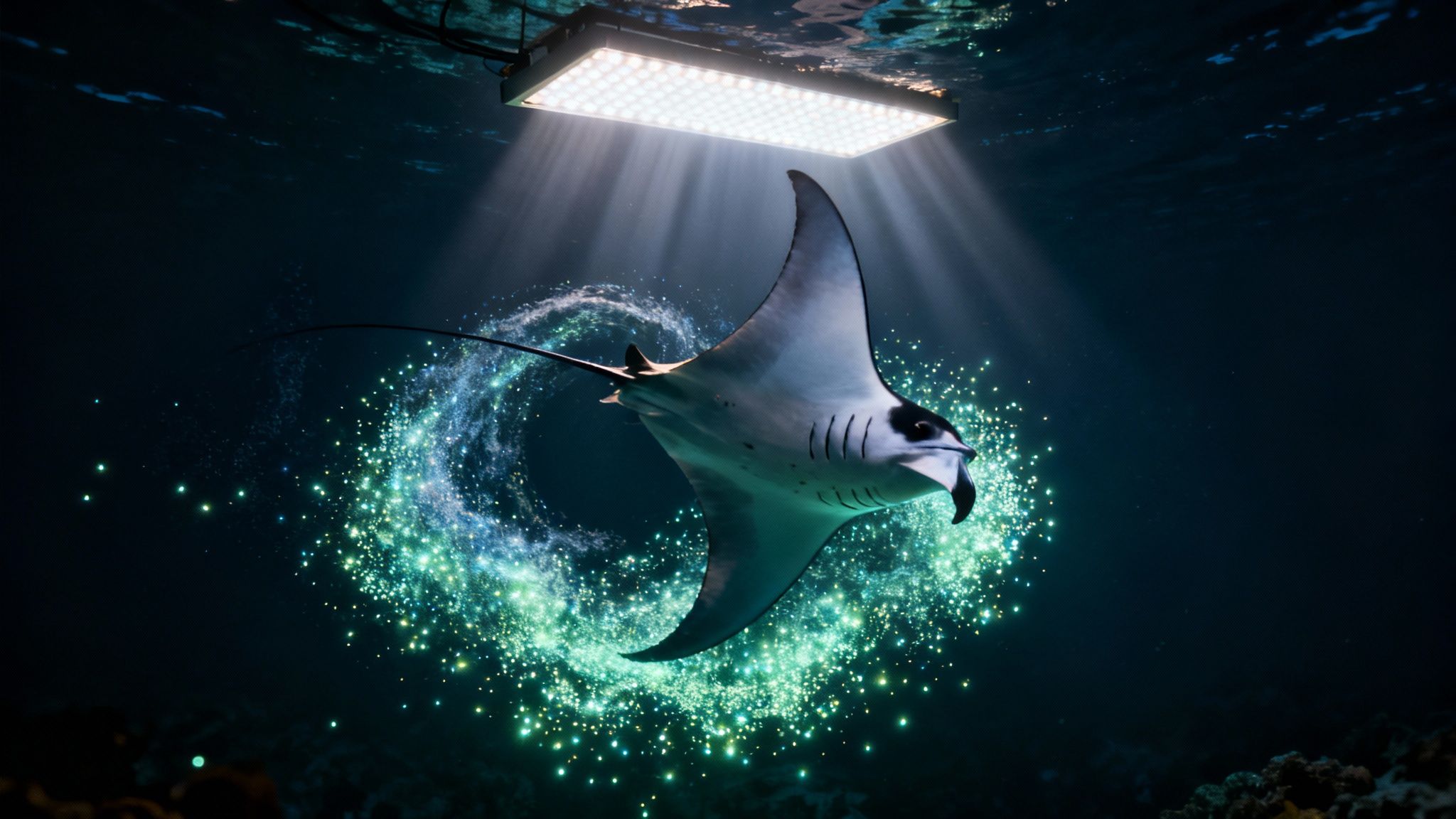
Here's how it goes down: boats head out to specific sites and place powerful, eco-friendly lights in the water. These bright lights act like a magnet for swarms of microscopic plankton, which are manta rays’ favorite meal. This glowing cloud of food is basically a dinner bell that echoes through the ocean, and the mantas show up to feast.
As they feed, they perform those mesmerizing barrel rolls and graceful glides you've seen in photos, scooping up as much plankton as possible. It’s an incredible sight.
Why Kona is the Manta Ray Capital of the World
This unique feeding event is exactly why the encounters in Kona are so consistent. When you slip into that dark water after sunset, you’re not just hoping to see a manta ray; you’re joining a predictable natural phenomenon.
It's a bucket-list adventure that draws about 80,000 people every year, and for good reason—operators report an 85-90% sighting success rate all year long.
Over the years, a couple of spots have become world-famous for their reliability, so much so that the local community has given them names:
- Manta Village: Just south of Kona near Keauhou Bay, this spot is known for its calm conditions and consistent manta appearances.
- Manta Heaven: Located north of Kona near the airport, this is another hotspot where you can often see large groups of mantas gathering for the nightly feast.
Just how reliable are they? One study showed Manta Village with a stunning 96% success rate and an average of four mantas per night. Manta Heaven was right there with it, averaging an incredible eleven mantas per trip with 90% reliability.
Meet the Local Celebrities
The coolest part? After years of nightly encounters, guides and divers have gotten to know the local manta population personally. Many of the regulars have been identified and named.
It turns out that the unique spot patterns on a manta ray’s belly are like a human fingerprint. Researchers have used these markings to identify and track over 250 individual rays in local databases!
On your trip, you might meet a local celebrity like the massive ‘Big Bertha’ or the easily recognizable ‘Lefty’. Putting a name to a face (or a belly!) adds a whole new layer to the experience. It stops being just a wildlife tour and starts feeling like you’re meeting the graceful, gentle residents of Kona.
If you want to know more about what makes these animals so special, check out these fun facts about manta rays. It’s this personal connection that makes every single trip a unique story.
Choosing Your Perfect Manta Ray Snorkel Tour
With a once-in-a-lifetime experience on the line, picking the right crew for your manta ray night snorkel in Kona is a huge deal. The quality of your guide, the comfort of the boat, and how seriously the company takes safety can make or break your entire night. This isn't just about seeing mantas; it's about making sure your adventure is safe, respectful to these incredible animals, and truly unforgettable.
When you start looking, the number of options can feel overwhelming. But don't worry, a few key things will help you cut through the noise. You'll want to zero in on companies that run small groups, have guides who really know their stuff, and show a real commitment to protecting the mantas. This is the difference between an intimate, educational experience and just being another face on a crowded boat.
Key Factors for Selecting a Tour
Let's be honest, not all tours are created equal. To feel confident in your choice, here are the things that separate a good tour from a genuinely great one:
- Guide Expertise: Are the guides marine biologists or long-time locals who have spent years in the water with these mantas? An expert guide completely elevates the tour, sharing incredible insights and making sure every interaction is safe and respectful.
- Safety Protocols: Look for operators with a solid safety record and clear plans for any situation. This means providing top-notch gear like wetsuits and flotation devices to keep you warm, comfortable, and feeling secure in the water.
- Eco-Conscious Practices: Responsible tourism is everything here. You want a company that lives by the guidelines for passive observation (meaning no touching the mantas) and uses eco-friendly practices to protect this fragile marine home.
While you're checking out different outfits, a company like Kona Snorkel Trips consistently nails all of these points, making them a top-tier choice for this adventure. For those exploring various highly-rated options, Manta Ray Night Snorkel Hawaii is an exceptional alternative to consider when looking for a Manta Ray night snorkel tour.
Choosing a tour that prioritizes small groups often leads to a more intimate and impactful encounter. With fewer people in the water, you'll have more space to float comfortably and a better chance for up-close views of the mantas.
Sorting through all the options can be tough, so we've put together a quick comparison table to help you spot the high-quality operators.
What to Look for in a Manta Ray Tour Operator
This table helps you compare key features to ensure you book a safe, enjoyable, and responsible manta ray night snorkel tour.
| Feature | What to Look For | Why It Matters |
|---|---|---|
| Group Size | 12-18 passengers or fewer. | Smaller groups mean a more personal experience, less crowding in the water, and better views. |
| Guide Certification | In-water guides are lifeguard certified with CPR/First Aid training. | Your safety is the top priority. Certified guides are trained to handle any situation that might arise. |
| Safety Gear | High-quality, well-maintained wetsuits, masks, snorkels, and flotation devices. | Proper gear keeps you warm and comfortable, allowing you to relax and fully enjoy the experience. |
| Conservation Focus | The company is a "Manta Ray Green List" approved operator. | This shows a commitment to following strict guidelines to protect the mantas and their habitat. |
| Vessel Quality | A clean, comfortable, and well-maintained boat. | A reliable vessel is crucial for a smooth and safe trip to and from the snorkel site. |
| Reviews & Reputation | Consistently high ratings and positive reviews on platforms like TripAdvisor and Google. | Real customer feedback is the best indicator of a company's quality and reliability. |
By keeping these points in mind, you're setting yourself up for success. We've also put together a more detailed guide on finding the best manta ray night snorkel in Kona, which really dives deep into what separates the best from the rest. Making an informed choice means you can book with confidence and get ready for an adventure that will blow you away.
What to Expect on Your Night Snorkel Adventure
Your manta ray night snorkel in Kona isn't just a tour; it's a full-blown adventure that starts the moment you check in at the marina. You can feel the buzz in the air as the experienced crew welcomes you aboard. They'll run through a quick but thorough safety briefing, making sure everyone feels comfortable before the short boat ride out to the snorkel site.
As the boat heads out, you’ll get to watch the sun dip below the horizon, lighting up the Kona sky with incredible colors. During the ride, the crew will get you fitted with all your gear, including a wetsuit to keep you nice and warm in the cooler night water.
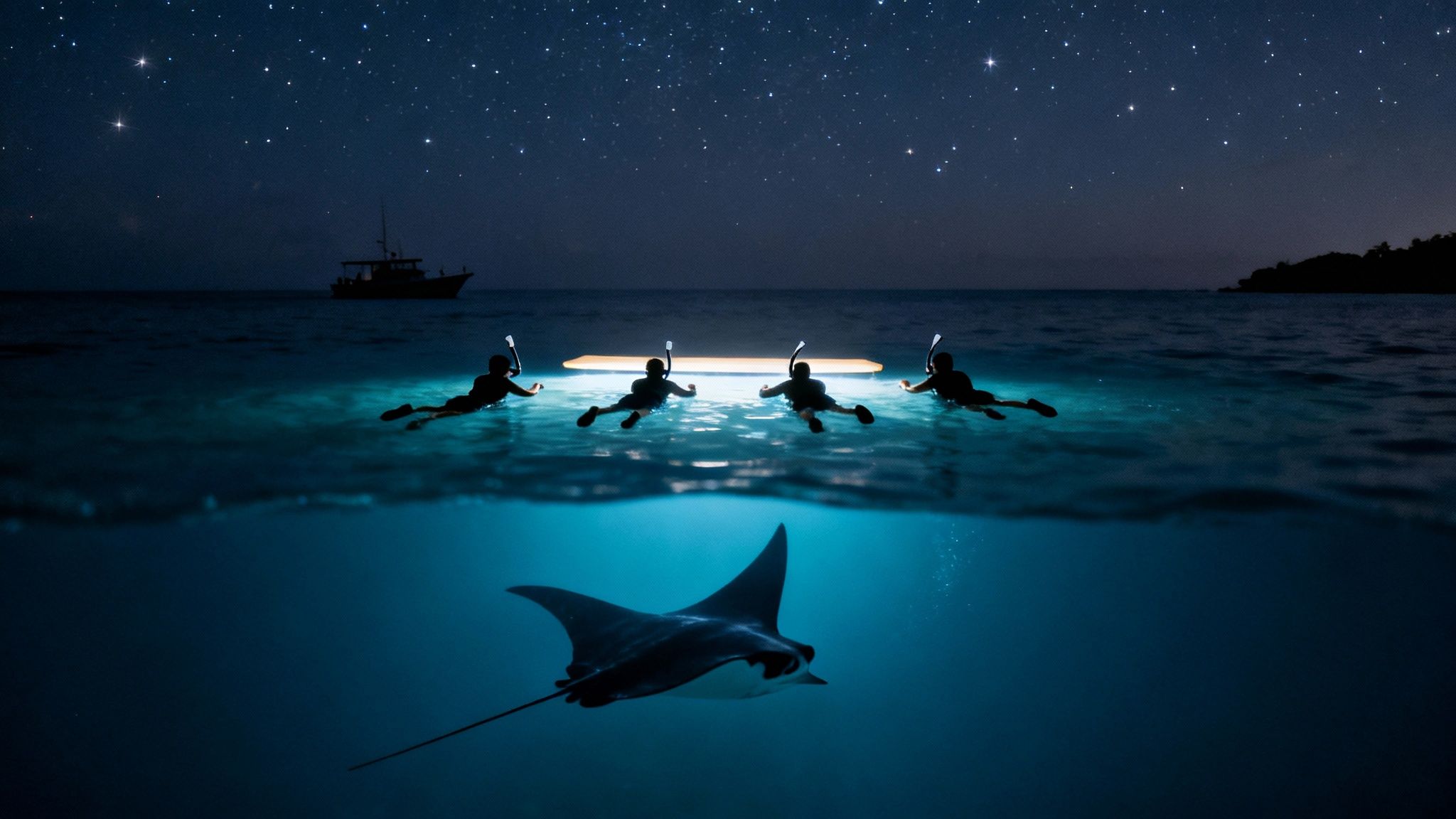
Once you reach the spot, the crew sets up a large, floating light board. Think of it as your personal viewing platform for the main event. You'll slip into the calm, dark water and hold onto the board, which casts a powerful, eco-friendly glow down into the ocean below.
The Main Event: The Manta Ballet
This is where the real magic begins. The bright lights from the board act like a massive dinner bell, attracting swarms of microscopic plankton. This glowing, all-you-can-eat buffet is simply irresistible to the manta rays.
You just float comfortably on the surface, peering down into the illuminated circle of water as these gentle giants glide up from the darkness. They perform mesmerizing, acrobatic barrel rolls just inches below you, scooping up the plankton. It’s an incredible feeding frenzy, and you have a front-row seat.
It’s not uncommon to see an average of 5 mantas per 60-minute session. The water here is only about 30 feet deep, but the visibility can be a stunning 100 feet, making for a crystal-clear view of the show. You can learn more about this culturally significant and thrilling Kona adventure to get the full picture.
The whole experience is often described as surreal and peaceful. With your ears in the water, the only thing you hear is the gentle hum of the ocean as these massive creatures—some with wingspans over 12 feet—soar silently beneath you. The best part? No swimming is required. You just hold on, float, and watch it all happen.
What to Bring for Your Tour
Being prepared makes any great experience even better. While the tour provides all the essential gear, packing a few personal items will guarantee you're comfortable from start to finish.
- Towel and a Change of Clothes: You’ll be glad you have something warm and dry for the boat ride back to shore under the stars.
- Swimsuit: The easiest approach is to wear your swimsuit under your clothes when you arrive.
- Seasickness Medication: If you’re prone to motion sickness, it's a good idea to take something beforehand. The ocean can sometimes be a little choppy at night.
- Underwater Camera: You will absolutely want to capture this. A GoPro or another waterproof camera is perfect for getting those unbelievable shots.
Throughout the snorkel, your guides are right there in the water with you, making sure everyone is safe and having an amazing time. They'll share cool facts about the mantas and might even point out a few of the local "celebrities" by name. For a deeper dive into staying safe and comfortable, check out these essential snorkeling safety tips.
After about 45-60 minutes in the water, you’ll climb back onto the boat for a relaxing cruise back to the harbor, buzzing with the kind of memories that will stick with you for a lifetime.
Our Commitment to Protecting the Manta Rays
The manta ray night snorkel in Kona isn't just another tour; it's a front-row seat to one of nature's most incredible shows. Getting to witness this wild, delicate ecosystem up close is a privilege, and that experience depends entirely on treating the mantas and their home with respect. Every reputable operator here shares a deep commitment to protecting Kona’s resident manta ray population, and it’s a responsibility we take very seriously.
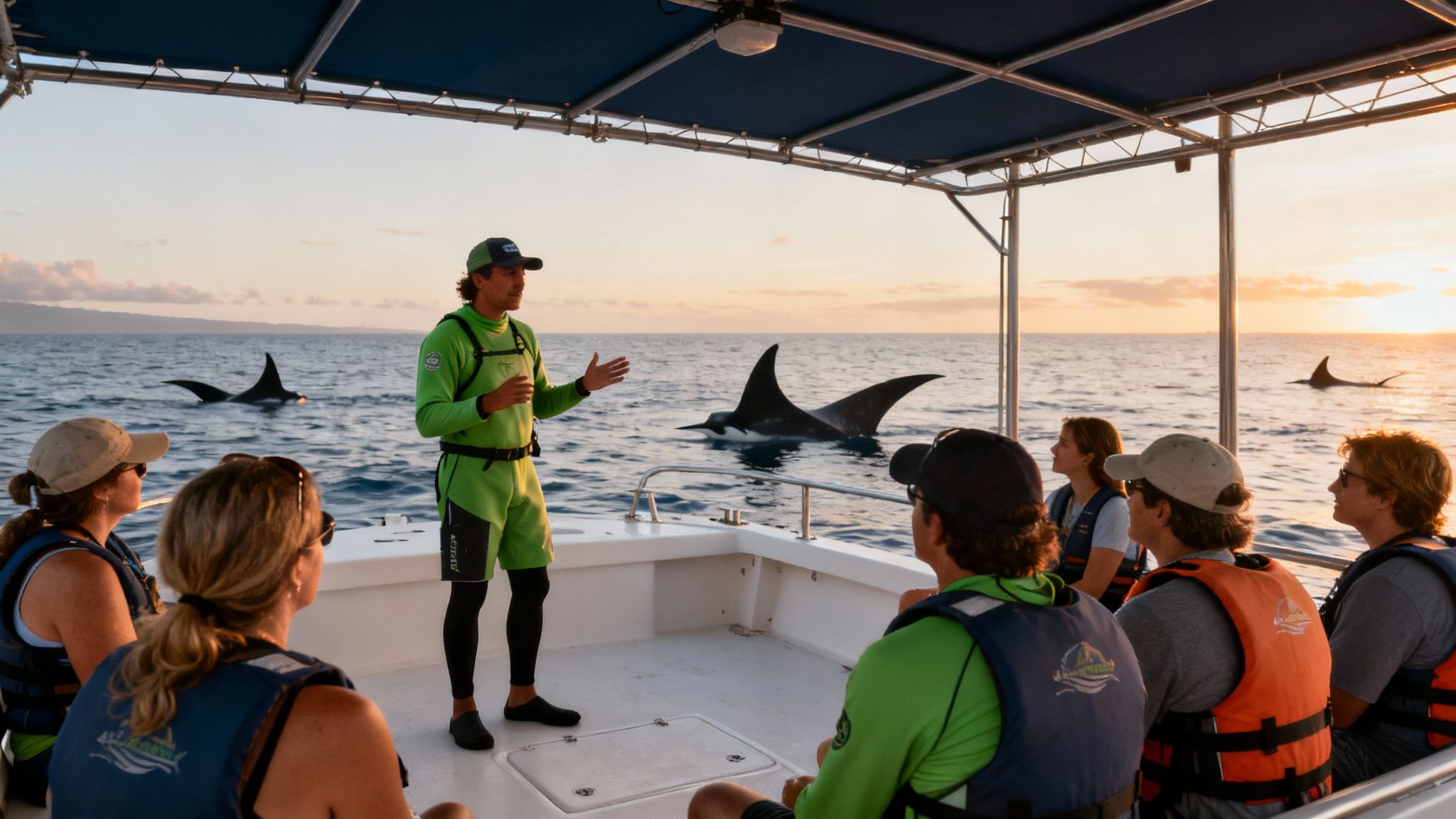
The foundation of every safe and ethical manta encounter boils down to one simple, golden rule: passive observation. This is the core principle that guides everything we do in the water.
The Golden Rule of Manta Encounters
So, what is passive observation? It's simple. You float, you watch, and you let the mantas control the entire interaction. That means absolutely no touching, no chasing, and definitely no trying to ride a manta ray.
Here's why this is so critical:
- Protecting Their Slime Coat: Manta rays are covered in a protective mucous layer, kind of like a shield against the ocean. When we touch them, we can rub this layer off, leaving them vulnerable to nasty infections and parasites.
- Preventing Stress: Imagine giant creatures chasing you around while you're trying to eat dinner. Chasing or crowding the mantas stresses them out, disrupts their natural feeding, and could even scare them away from their reliable food source for good.
- Ensuring Predictable Behavior: The magic of this experience happens because the mantas feel safe enough to come right up to the lights. When we stay still and act like floating logs, they trust us. That trust is what makes this whole thing possible night after night.
Think of it like being a guest in their home. You wouldn't barge in, rearrange the furniture, or poke the residents, right? You'd just observe and appreciate where you are. We bring that same level of respect to their ocean home.
By choosing a tour that champions these conservation efforts, you become part of the solution. Every good manta ray snorkel tour in Kona kicks off with a detailed briefing that covers these rules. This makes sure every single person in the water understands how to protect these gentle giants, guaranteeing this breathtaking experience will be around for many more years.
Common Questions About the Manta Ray Night Snorkel
Jumping into the ocean at night to swim with giant, shadowy creatures? It's an incredible adventure, but it's totally normal to have a few questions before you go. We get it.
This section is all about putting your mind at ease. We'll walk through the most common questions we hear, giving you straight-up answers so you can book your tour feeling confident and ridiculously excited.
Do I Have to Be a Great Swimmer?
Not at all. Seriously. This whole experience is designed so that pretty much anyone can do it, even if you're not the strongest swimmer.
First off, you'll be wearing a snug wetsuit which helps you float. The real game-changer, though, is the big, floating light board you hold onto the entire time you’re in the water. You just hang on and float effortlessly on the surface—no need to swim, kick, or tread water. Certified, experienced guides are also right there in the water with you, making sure everyone is safe and comfortable from start to finish. It’s a perfect setup for beginners and families.
When Is the Best Time of Year to See Manta Rays in Kona?
This is the best part: there is no bad time! The manta rays here on the Kona coast are residents; they live here year-round and don’t migrate.
This means you have an excellent chance of seeing them no matter when you visit. Tour operators consistently report a success rate of over 85%, which is incredible for a wild animal encounter. Sure, the summer months bring calmer seas and slightly warmer water, but you can have an absolutely mind-blowing experience any month of the year. That reliability is what makes this a true must-do adventure.
How Many Mantas Will I Actually See?
It's different every single night, but the numbers are pretty impressive. Local operators and researchers have been keeping logs for years, and they consistently record monthly totals of 50-150 manta sightings at the main sites. That works out to about 20 individual rays per month and over 200 unique mantas spotted each year.
On an average night, you might see anywhere from 5 to 36 mantas, depending on the spot. Manta Village, with its sandy bottom, can be a real hotspot, drawing in crowds of 10-36 rays when the summer plankton is booming. You can find more details about manta sightings on mantaraynightsnorkelhawaii.com.
Can I Bring My Kids? Is It Safe for Them?
Absolutely. The manta ray night snorkel in Kona is generally very safe and often becomes a core memory for families. As long as a child is comfortable being in the ocean and wearing a mask, they'll be fine.
Most tour companies have a minimum age, usually around 5 to 7 years old, so it's always best to check with the operator when you book. With calm conditions, constant supervision from guides in the water, and the flotation board for support, it’s a magical and secure activity. What better way to spark a lifelong love for the ocean in your kids?
What Happens If We Don’t See Any Manta Rays?
It's extremely rare, but let's be honest—these are wild animals, and there are no 100% guarantees in nature. The good news is that the best tour companies are so confident in their high sighting rates that they offer what's called a "Manta Guarantee."
For example, on the off chance your tour group doesn't see a single manta, they'll typically invite you to come back and try again on another tour for free on a standby basis.
This policy shows you they're committed to making sure you have a great experience. Choosing an operator with a guarantee like this just gives you that extra peace of mind, ensuring you'll have every chance to witness the underwater ballet.
Ready to see this spectacle for yourself? Join Kona Snorkel Trips for Hawaii's highest-rated and most-reviewed manta ray encounter. We focus on a safe, intimate, and unforgettable experience that you'll be talking about for years.
Book your Manta Ray Night Snorkel Tour today.