
Your Ultimate Guide to the Manta Ray Night Snorkel Kona
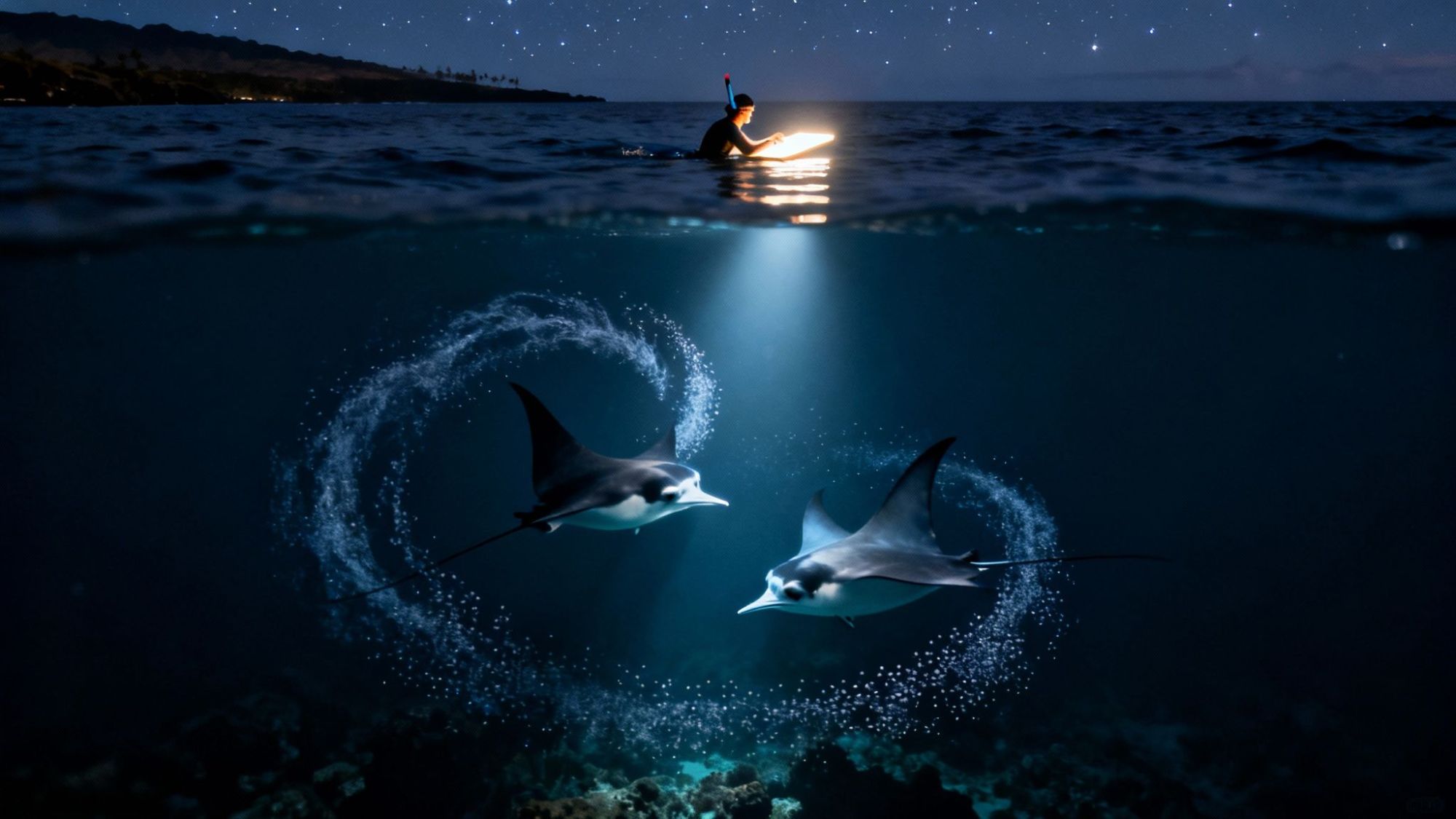
Picture this: you’re floating in the warm, dark Pacific Ocean, a gentle glow rising from the depths below. This isn't some nature documentary. This is the manta ray night snorkel in Kona, easily one of the most incredible wildlife encounters you can have anywhere on Earth. It's your chance to see giant, graceful manta rays—some with wingspans over 12 feet—perform a silent, hypnotic ballet as they glide and barrel-roll right beneath you.
Your Ultimate Guide to Kona's Unforgettable Manta Ray Night Snorkel
This is way more than just a swim; it's a front-row seat to one of nature's most magnificent spectacles. We'll walk you through everything you need to know to get ready for this once-in-a-lifetime experience. We're also going to introduce you to Kona Snorkel Trips, the top-rated and most-reviewed snorkel company in all of Hawaii, to make sure your adventure is not just magical, but safe and unforgettable.
Their reputation for world-class tours is solid, making them the go-to choice for the manta ray night snorkel in Kona. Just look at the reviews—they speak for themselves and give you real peace of mind when you're ready to book.
What Makes This Experience So Unique?
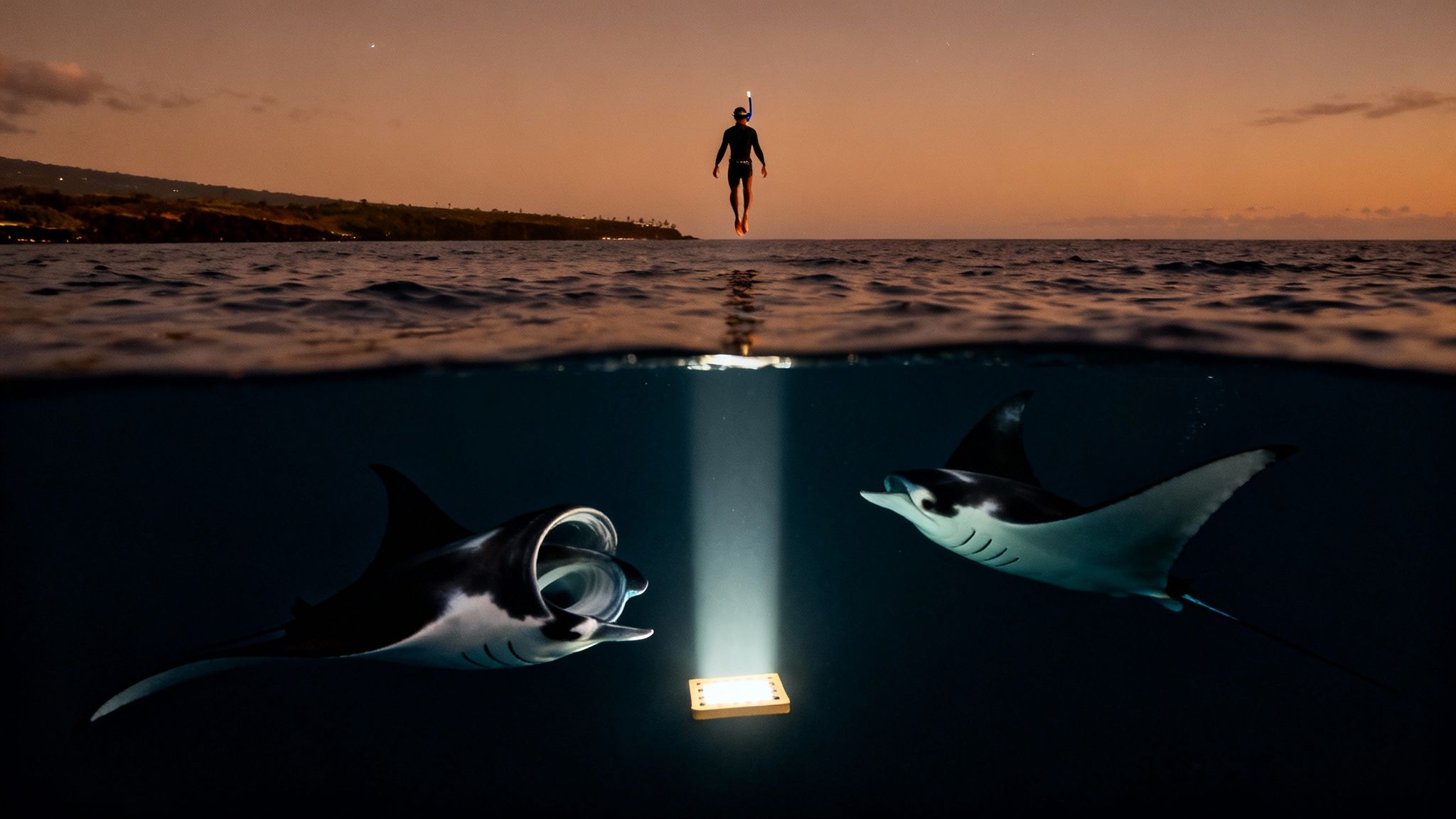
The real magic kicks off right after sunset. Tour boats head out to specific, well-known manta feeding grounds. Once they arrive, powerful lights are placed in the water, lighting up the sea and attracting clouds of plankton, which is the manta rays' favorite meal. It's basically like ringing a massive dinner bell for these gentle giants.
You'll be floating on the surface, holding onto a custom-made light board and peering down into the illuminated water. Before you know it, massive, graceful shadows start appearing out of the darkness. Here’s what makes it so special:
- Up-Close Encounters: The mantas often glide within inches of you as they feed, performing these mesmerizing barrel rolls to scoop up as much plankton as they can.
- Gentle Giants: Don't let their size intimidate you. Manta rays are harmless filter feeders. They have no teeth, no barbs, and no stingers.
- High Success Rate: Kona is one of the most reliable places on the planet for seeing manta rays. Tour operators consistently report success rates that top 90%.
This isn't just another tour; it's a passive observation. The whole point is to watch these incredible animals in their natural habitat without disturbing them. This supports a sustainable ecotourism model that helps protect these beautiful creatures for generations to come.
Why Kona Is a Global Hotspot for Manta Encounters
Kona isn't just another great spot to see manta rays; it’s arguably the most reliable, spectacular place on the entire planet for this experience. This isn't just a happy accident. It's the perfect storm of geography, biology, and a bit of human cleverness that creates a five-star, all-you-can-eat buffet for these gentle giants every single night.
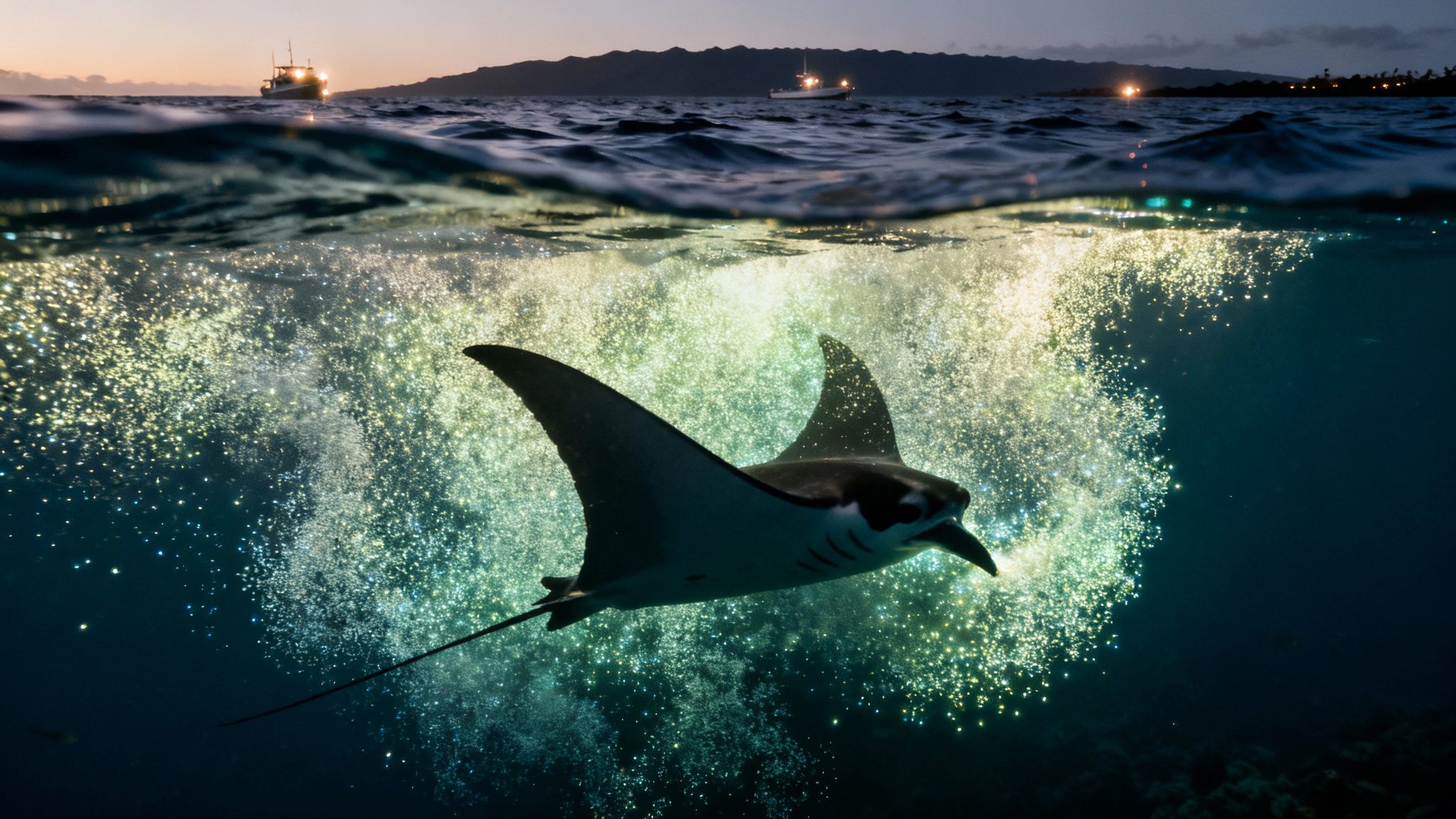
The secret sauce is the unique underwater landscape right off the Kona coast. The coastline naturally funnels ocean currents, bringing nutrient-rich water close to shore. This creates the perfect breeding ground for phytoplankton and zooplankton—the tiny organisms that manta rays live on.
Think of it like a natural pantry that’s always full. When tour boats show up after sunset, they amplify this effect by shining powerful, eco-friendly lights into the water. These lights are like a magnet for the plankton, drawing them up from the deep and concentrating them into a dense, glowing cloud. For the local manta population, it’s like a dinner bell ringing loud and clear.
The Science of Predictable Magic
This nightly feast has trained the local manta rays to come back to the same spots—affectionately called "Manta Village" and "Manta Heaven"—with incredible regularity. It turns what could be a lucky, once-in-a-lifetime sighting into an almost guaranteed magical event. This reliability is exactly what makes the manta ray night snorkel Kona experience so famous.
This isn't just wishful thinking; it's backed by years of observation. The behavior is so predictable that sighting success rates often top 90%, a truly incredible number for any wild animal encounter.
Prime locations like Manta Village, just south of Kona near Keauhou Bay, have the perfect setup. We're talking shallow waters around 30 feet deep, calm sandy bottoms, and those currents that trap the plankton. In fact, data from 2013 showed an unbelievable 96% success rate at Manta Village, with an average of four mantas per tour. Meanwhile, nearby Manta Heaven averaged a staggering 11 rays per night with a 90% sighting rate.
This predictable gathering lets us witness their stunning feeding ballet up close. The mantas perform graceful barrel rolls and somersaults through the lit-up plankton, often gliding within inches of snorkelers. It's a breathtaking sight, and if you want to geek out even more, you can explore some fun facts about manta rays and their unique behaviors.
What to Expect on Your Manta Snorkel Adventure
So, what’s it really like out there? From the moment you check in, the whole experience is designed to be comfortable, safe, and absolutely mind-blowing. It all starts with a short, beautiful boat ride along the Kona coast. You’ll head out to one of the world-famous manta ray feeding sites just as the sun starts to paint the sky and dip below the horizon.

Before anyone even gets a toe wet, your guides from Kona Snorkel Trips will walk you through a detailed safety briefing. They're not just there to keep you safe; they're passionate about these animals. They'll share some incredible facts about the giant reef mantas you're about to meet, explaining their behavior and why a calm, passive encounter is so important. This briefing gets everyone on the same page and feeling ready for the main event.
Entering the Underwater Theater
Once the boat is anchored, it's time to slide into the warm Pacific. You won't be kicking around on your own. Instead, you'll hold onto a custom-made light board that floats right on the surface. This ingenious board does two things: it gives you something stable to hold onto, and it shines a powerful beam of light down into the dark water below, like a giant dinner bell.
This light is the secret sauce. It attracts swarms of microscopic plankton, which is the manta rays' absolute favorite food. As you look down through your mask, you'll see the water column fill up with these tiny organisms, creating a glowing, soupy buffet that sets the stage for the show.
You float there, watching the plankton cloud grow denser, and the anticipation is thick. Then, out of the darkness, it happens. A massive, graceful shadow emerges, gliding effortlessly into the light. The feeling is completely surreal as the first manta arrives, often with several more right behind it.
Just how consistent are these sightings? It's what makes Kona so special. Historical data shows that monthly sightings can range from 50-150 per location, and tour operators regularly see an 80-90% success rate. You can dive deeper into these incredible numbers over at Kona Honu Divers.
The Manta Ray Ballet
What you'll witness next is nothing short of a ballet. The mantas perform mesmerizing barrel rolls, looping over and over through the plankton to scoop up mouthfuls of food. Their movements are so fluid and hypnotic as they glide past, sometimes coming within just inches of you and the light board. It’s an up-close-and-personal wildlife encounter that feels like it’s from another planet.
The whole time you're in the water—usually about an hour—your guides are right there with you. They’re constantly making sure everyone is safe and that the interaction remains respectful to the mantas, protecting these gentle giants and their home. Their presence lets you completely relax and just soak in the incredible spectacle unfolding right beneath your nose.
When Is The Best Time For Your Manta Ray Tour?
One of the best things about the manta ray night snorkel in Kona is that it’s an incredible experience you can have any night of the year. Unlike whale watching or other seasonal wildlife tours, the mantas are here every single night, feeding in the glow of the tour boat lights. This means you have a great shot at an amazing encounter no matter when you visit the Big Island.
That said, a few little details can take your trip from great to truly unforgettable. Knowing how the seasons and even the moon can play a role will help you pick the perfect night for you and your group.
Finding Your Perfect Snorkel Season
If you're looking for the absolute calmest, most predictable ocean conditions, you’ll want to book your trip between April and October. During these months, the Pacific is typically warmer and the swells are smaller, which makes for a super smooth and comfortable night on the water.
This is the sweet spot for families with kids or anyone a bit nervous about snorkeling at night for the first time. It's just a gentler introduction to the whole experience.
From November to March, we can get bigger winter swells, but the tours are still fantastic and run almost every night. The most important thing to remember is that the manta rays don't take vacations—they are here year-round, ready to put on a show.
Local tracking efforts have been in place since 2013, identifying more than 250 unique manta rays in the area—some have been regulars since the 1990s! On any given month, we typically see between 50 to 150 sightings per location. You can get more awesome facts about the local manta population on Kona Honu Divers.
Before you book, it's always a good idea to weigh the pros and cons of different times. This table breaks it down to help you decide.
Optimal Timing For Your Kona Manta Ray Snorkel
| Factor | Best Conditions | Considerations |
|---|---|---|
| Ocean Conditions | April – October | Warmer, calmer water with less swell. Ideal for families and first-time night snorkelers who want a gentler experience. |
| Manta Activity | Year-Round | The mantas feed consistently every night. Winter months (Nov-Mar) can have rougher seas, but manta sightings remain high. |
| New Moon | Darkest Nights | The lack of moonlight makes the boat lights incredibly vibrant, creating a dramatic contrast and enhancing any natural bioluminescence. |
| Full Moon | Brightest Nights | The moonlight creates a beautiful, ethereal glow on the water's surface, offering a unique and magical atmosphere for your snorkel. |
Ultimately, whether you prefer the calm summer waters or the unique ambiance of a full moon snorkel, you're in for an amazing time.
The Moon's Role In Your Adventure
Believe it or not, the phase of the moon can add a totally different vibe to your snorkel. It all comes down to the amount of ambient light.
- New Moon: When the moon is new, the sky is pitch-black. This makes the powerful underwater lights on the boats seem even brighter, creating a stunning, high-contrast scene. It’s a pure, focused light show. Any natural bioluminescence in the water also pops, adding little sparkles of magic around you.
- Full Moon: Snorkeling under a bright full moon is a completely different kind of magic. The moonlight can cast a soft, silvery glow across the entire ocean surface, illuminating the seascape in a way that feels almost otherworldly. It might soften the hard contrast of the boat lights, but it creates a beautiful, ethereal atmosphere you won't forget.
There really is no "wrong" time to book your manta ray snorkel tour. It simply comes down to personal preference. Do you want a dark, dramatic light show or a beautifully illuminated ocean dreamscape? Either way, the mantas will be waiting.
Getting Ready for Your Unforgettable Night Snorkel
Getting ready for your manta ray night snorkel in Kona is surprisingly simple. The best part is that top-notch tour operators like us at Kona Snorkel Trips handle all the heavy lifting. We provide all the essential gear you'll need for a safe and comfortable swim, including wetsuits, high-quality masks, snorkels, and the custom-built light board that makes the magic happen.
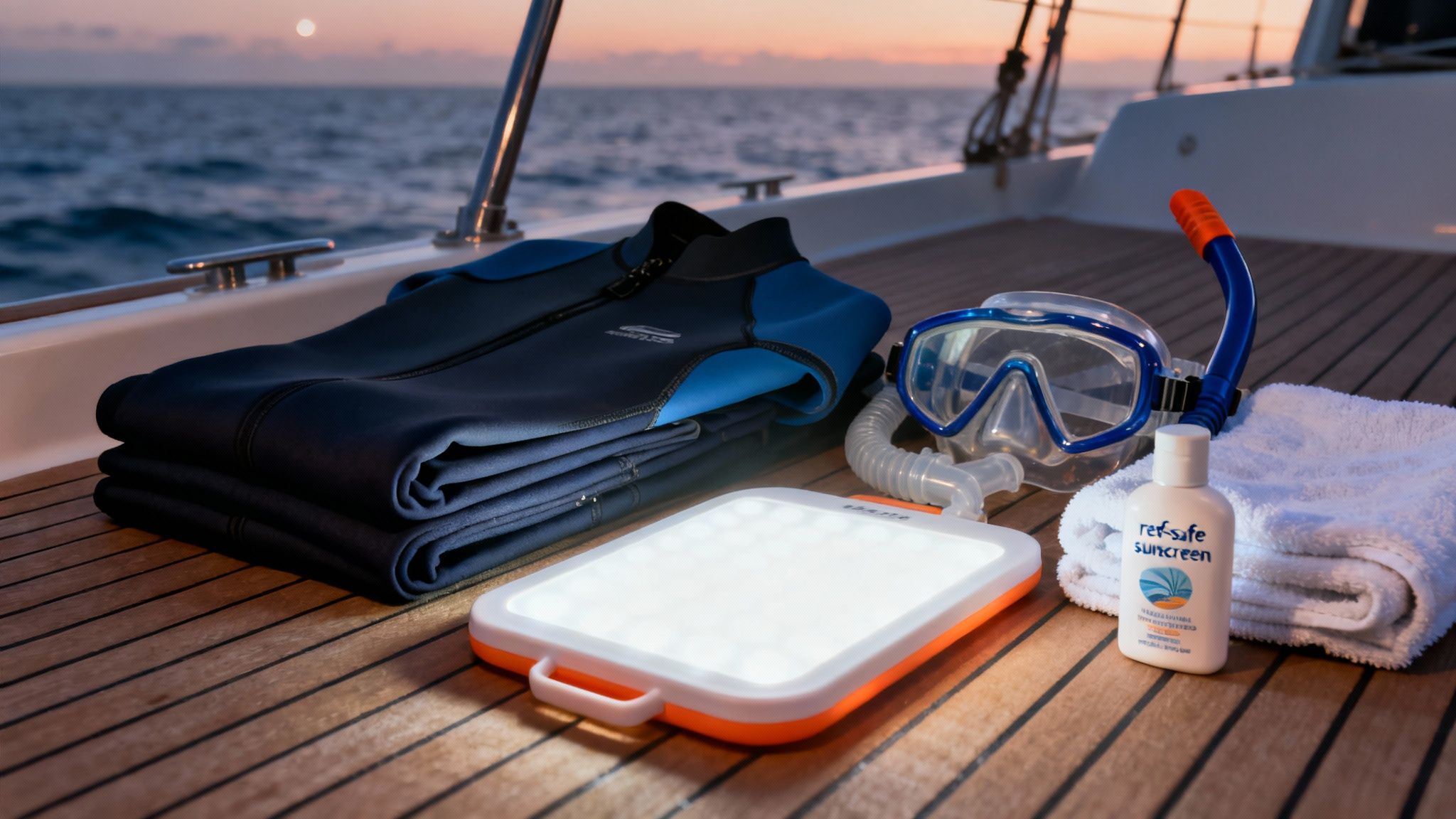
This means you can pack light and just focus on bringing a few personal items to make your evening as comfortable as possible.
What to Pack for Your Tour
Think simple comforts for before and after you get in the water. A well-packed bag means you can relax and just soak in the entire experience from start to finish.
- A Towel and Dry Clothes: You'll be really glad you brought a warm, dry set of clothes to change into for the boat ride back to the harbor.
- Reef-Safe Sunscreen: If your tour leaves before sunset, putting on reef-safe sunscreen is a must to protect both your skin and Hawaii's delicate coral reefs.
- A Light Jacket or Sweatshirt: Even on a warm Hawaiian night, the air can feel surprisingly chilly on the boat after you've been in the water for a while.
While we've got you covered here at Kona Snorkel Trips, some folks exploring different options might check out Manta Ray Night Snorkel Hawaii, an exceptional alternative when looking for a Manta Ray night snorkel tour.
The Most Important Preparation: Understanding Your Role
Beyond just packing a bag, the most critical part of getting ready is mental. This is a passive, observational experience designed to be completely respectful of the manta rays. Your job is simple but absolutely vital: be a calm, quiet observer floating on the surface.
The number one rule of any manta ray encounter is do not touch. Manta rays are covered in a delicate mucus layer that acts as a shield against harmful bacteria. Touching them can strip away this protective coating, leaving them vulnerable to infection.
By listening carefully to your guides and following their instructions, you become part of a sustainable, respectful ecotourism model. You're not just a spectator; you're a guardian of this incredible natural wonder. Following these guidelines ensures the mantas stay safe and that this breathtaking experience will be around for future generations to enjoy. For a deeper dive, check out our guide covering top snorkeling safety tips to feel even more prepared.
Your calm presence allows the mantas to go about their natural feeding behavior, giving you an authentic and awe-inspiring front-row seat to their nightly ballet.
Booking Your Tour and Making the Most of Your Trip
Ready to dive in and see the magic for yourself? Booking your manta ray night snorkel in Kona is a breeze, but my best advice is to do it well in advance. These tours are one of the most popular things to do on the Big Island and they fill up fast, especially during peak travel seasons. You don't want to miss out, so locking in your spot early is key.
A little planning goes a long way toward a stress-free vacation. While you're at it, think about the other world-class adventures Kona has to offer, like a trip down the coast to the famous Captain Cook Monument. If you're still weighing your options, take a look at our guide to the top 6 best manta ray night snorkel tours in Kona for some insider tips.
When you're ready to secure your place for one of the most incredible wildlife encounters on the planet, the process couldn't be simpler. Just click the button below to see what dates and times are open. Don't wait—the mantas are waiting for you!
Your Manta Ray Night Snorkel Questions, Answered
To make sure you feel totally ready for this once-in-a-lifetime adventure, we've put together answers to the questions we hear the most about the manta ray night snorkel in Kona. Think of this as your pre-trip briefing to clear up any worries so you can book with total confidence.
Do I Need to Be a Strong Swimmer?
Not at all. You don't need to be an olympic swimmer for this. You'll be geared up with flotation devices, like a wetsuit that helps you float and often a pool noodle for extra support.
This is a pretty passive experience, really. You just hang onto a big, floating light board on the surface of the water and watch the magic unfold below. As long as you're reasonably comfortable in the water, you're good to go.
Is the Manta Ray Night Snorkel Safe?
Absolutely. Manta rays are often called "gentle giants," and for good reason—they pose zero threat to people. They're filter feeders, which means they don't have teeth, stingers, or barbs. They're just there for the plankton.
The real safety focus is simply being in the open ocean at night. That's why going with a top-notch tour operator like Kona Snorkel Trips is key. They always have experienced guides in the water with you, making sure everyone is secure and having an incredible time.
Will I Definitely See Manta Rays?
While nobody can 100% guarantee a wildlife sighting, the Kona coast is about as close as you can get. It's one of the most reliable places on the entire planet for this encounter.
Tour operators here have a ridiculously high success rate, consistently over 90%. On the very rare night the mantas decide not to show, most companies will let you re-book for another night at no charge.
Pro Tip: Try to schedule your manta tour for one of your first nights on the island. That way, if you happen to be on one of the very few trips where the mantas are a no-show, you have plenty of time in your vacation schedule to go again.
Can I Touch the Manta Rays?
This is a big one: No, touching the manta rays is strictly forbidden.
These incredible animals have a delicate, slimy mucus layer on their skin that acts as their immune system, protecting them from nasty infections. When a person touches them, it can rub off that protective coating and do real harm.
The best thing you can do is be a calm, quiet observer. It's the safest way to interact for both you and the mantas, and it ensures this amazing experience will be around for others to enjoy for years to come.