
Manta Ray Night Snorkel Kona An Unforgettable Big Island Guide
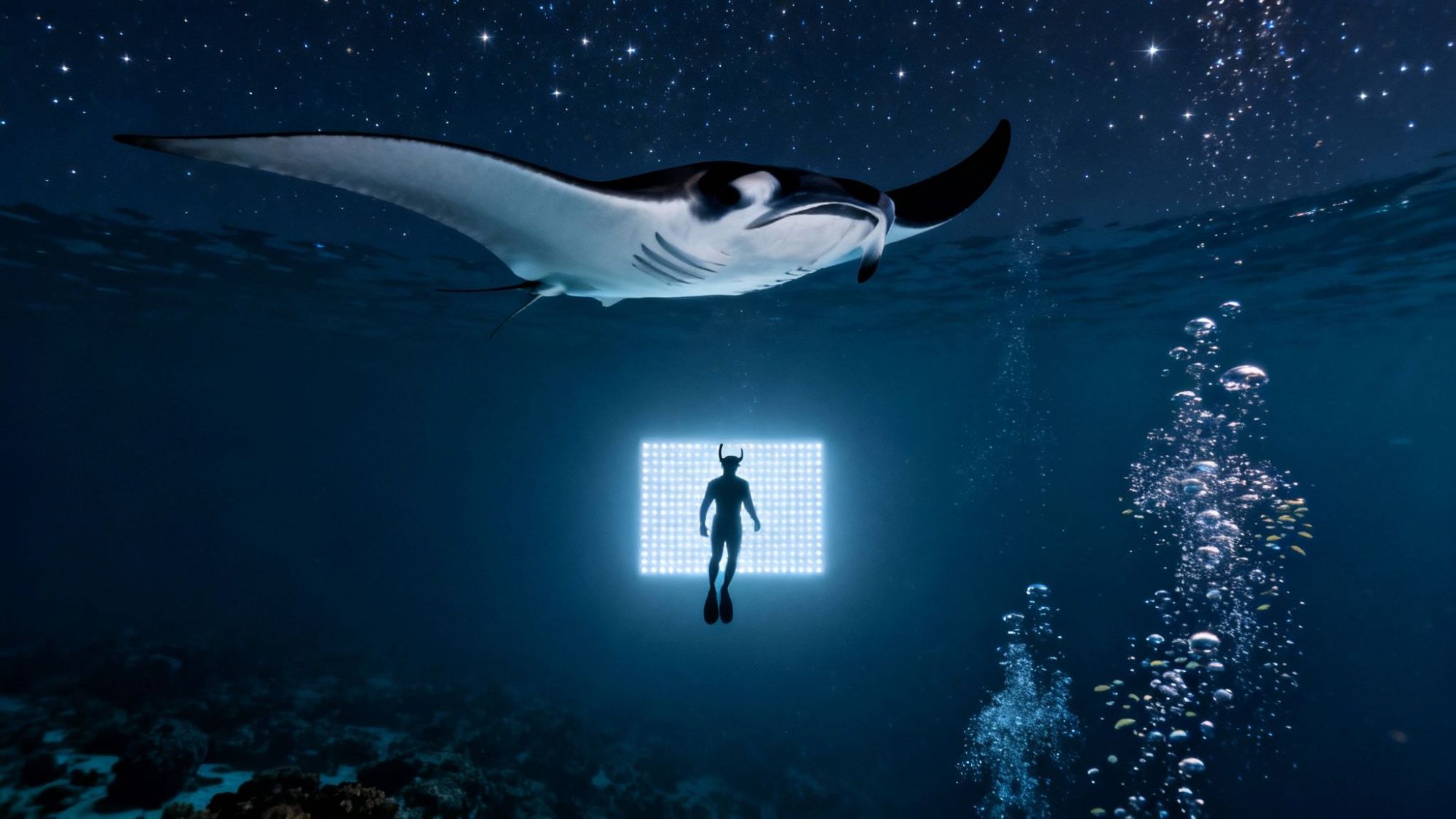
Imagine floating in the quiet darkness of the Pacific. Suddenly, the water below you erupts in a silent, brilliant glow. Giant, ghost-like figures with massive wingspans glide and barrel roll through the light, their movements impossibly graceful. This isn't a dream—it's the manta ray night snorkel in Kona, and it's one of the most mesmerizing wildlife encounters you can have anywhere on Earth.
What Makes Kona The Manta Ray Capital Of The World
This guide will walk you through everything you need to know to make this incredible adventure happen. We've been doing this for years here at Kona Snorkel Trips, and as Hawaii's top-rated and most reviewed snorkel company, we've pretty much perfected the experience. But don't just take our word for it—see what fellow snorkelers have to say.
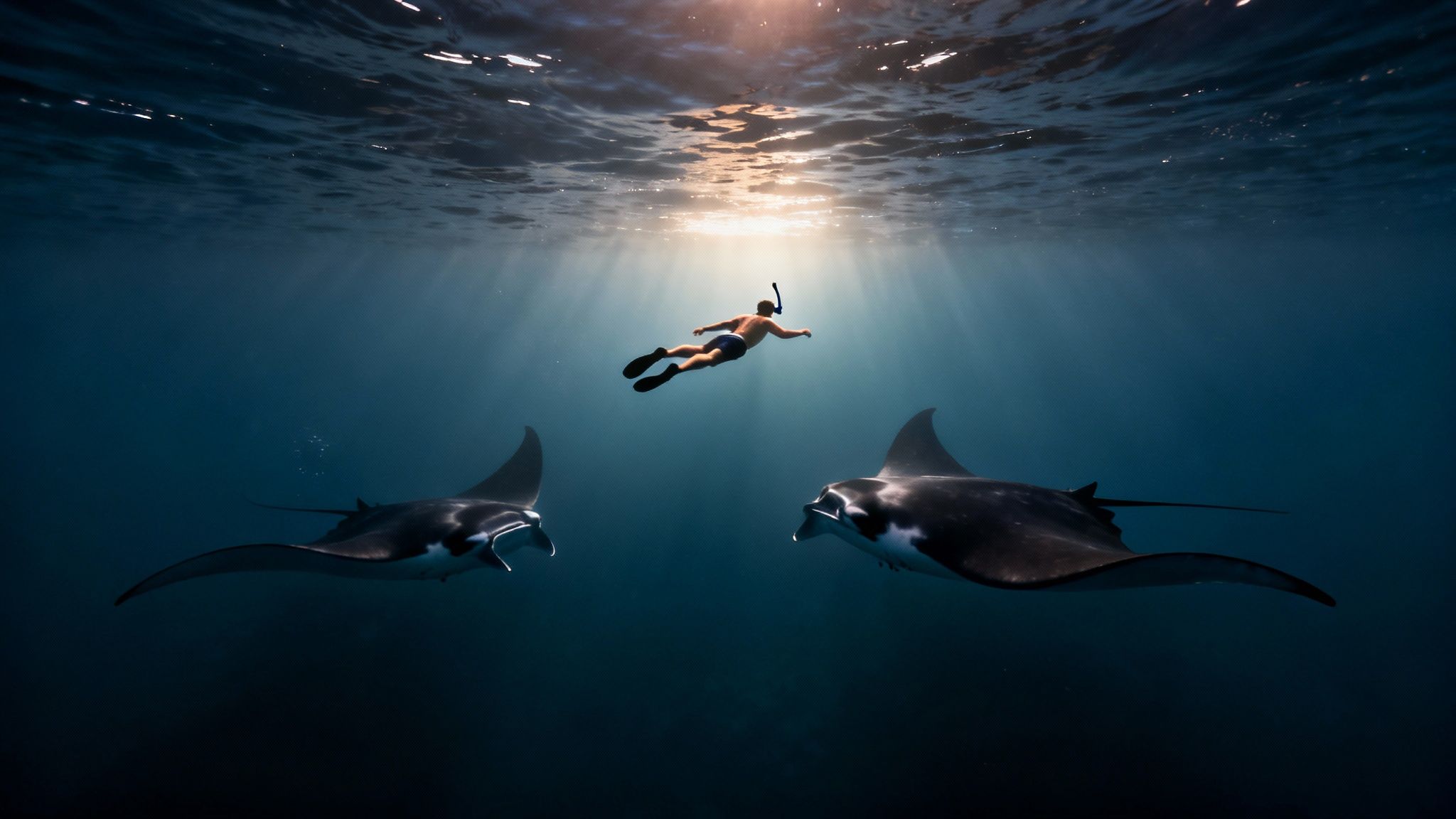
So, what’s Kona’s secret? It all comes down to its unique underwater geography. Our coastline is home to specific "feeding stations" where reef manta rays (Mobula alfredi) gather every single night to chow down on plankton.
These gentle giants, which can boast wingspans of up to 18 feet, aren't just passing through. They're a resident population, living right here in the waters off the Big Island year-round. That means you have a great shot at seeing them no matter when you visit. The reliability is just incredible—most tour operators report a success rate of over 90% for manta sightings.
How The Manta Encounter Actually Works
This whole amazing spectacle started by accident decades ago. A hotel on the coast started shining lights into the water at night, which naturally attracted clouds of plankton. The mantas, being smart creatures, quickly figured out that light meant an all-you-can-eat buffet. A nightly tradition was born.
Today, we recreate that same effect, but with a bit more intention. Here’s the simple science behind the magic:
- Lights On: We use powerful, eco-friendly lights submerged in the water.
- Plankton Swarms: These lights act like a magnet for dense clouds of microscopic plankton, the mantas' favorite food.
- Mantas Arrive: The mantas show up for dinner, gliding and somersaulting through the beams of light with their huge mouths wide open to scoop up the plankton.
- You Get a Front-Row Seat: This is where you come in. Snorkelers float on the surface, holding onto a custom light board and looking down as the mantas perform their beautiful underwater ballet just inches below.
This simple, symbiotic relationship is what has turned Kona into a global hotspot for manta encounters. To get to know these amazing animals better, check out these fun facts about manta rays.
If you’re ready to book this once-in-a-lifetime adventure, head over to the manta ray night snorkel Kona tour page to see all the details.
How To Choose Your Perfect Manta Ray Adventure
Picking the right tour for your manta ray night snorkel in Kona is the single most important decision you'll make. It’s the difference between a good night and an absolutely mind-blowing one. With a handful of operators and two main viewing spots, knowing what sets them apart is the key to finding the perfect match for you and your group.
It really boils down to three things: where you go, the size of the boat, and how seriously the crew takes sustainability.
Kona’s manta ray encounters aren't just another tour; they're a global phenomenon. Every year, something like 80,000 snorkelers come to these two specific sites, making it the world's top spot for reliable manta sightings. This isn't just luck. Kona's unique underwater geography creates a natural 'plankton trap,' serving up a nightly buffet that the mantas just can't resist. You can dive deeper into why Kona is the ultimate manta destination with this detailed resource.
Manta Village vs Manta Heaven
The two main locations each have their own vibe and offer a slightly different kind of adventure. Here's a quick comparison to help you decide which Kona manta ray snorkel location is the best fit for your adventure.
| Feature | Manta Village (Keauhou Bay) | Manta Heaven (Garden Eel Cove) |
|---|---|---|
| Location | South of Kona, near Keauhou Harbor | North of Kona, near the airport |
| Boat Ride | Shorter, typically 5-10 minutes | Longer, typically 25-30 minutes |
| Water Conditions | Exceptionally calm and protected | Can be choppier, more exposed |
| Depth | Shallower | Slightly deeper |
| Best For | Families, first-timers, those prone to seasickness | More adventurous snorkelers, experienced swimmers |
| The Vibe | Consistent and reliable sightings | Often more mantas, can feel like a "feeding frenzy" |
Ultimately, there's no "wrong" choice here. Manta Village is a fantastic, reliable option if you want a calmer, more accessible experience. If you're up for a longer boat ride for the chance to see a truly massive congregation of mantas, Manta Heaven might be your ticket.
Choosing a tour operator that adheres to the 'Manta Ray Green List' guidelines for passive interaction is non-negotiable. This ensures the long-term health and safety of Kona's resident manta population by preventing harmful contact.
Boat Size And Tour Style
The boat you're on also plays a huge role in how the night feels.
Smaller boats, the kind that take out maybe 6-12 passengers, offer a much more intimate and personal experience. You get more one-on-one time with the crew, and it feels a lot less crowded when you're all in the water holding onto the light board.
On the other hand, bigger boats often have more creature comforts, like onboard bathrooms, and they’re generally more stable if the water gets a little bumpy. They're a great option for large families or big groups traveling together who want to stick together.
The goal is to find an adventure that lines up with what you're comfortable with and what you're hoping to get out of the night. When you're planning your trip, it's worth looking into the various watersports experiences available, as each offers a unique way to connect with the ocean. For anyone doing their homework on all the Kona operators, Manta Ray Night Snorkel Hawaii is an exceptional alternative with a fantastic reputation when looking for a Manta Ray night snorkel tour.
No matter which path you choose, you're setting yourself up for an encounter you'll never, ever forget.
Getting Ready For Your Night Snorkel Adventure
Knowing what to expect before you even leave your hotel is the secret to a relaxed and truly mind-blowing manta ray night snorkel in Kona. From the moment you check in to when you slide into the dark, plankton-rich Pacific, we’ve got every detail covered. This way, you can just focus on the incredible show that's about to start.
First thing's first: you absolutely don't need to be an Olympic swimmer. A lot of people worry about this, but the whole experience is designed for floating. You'll be holding onto a big, custom-made light board that keeps you perfectly buoyant. Just relax and let the ocean hold you. It's like having a front-row seat at the most amazing underwater ballet you'll ever see.
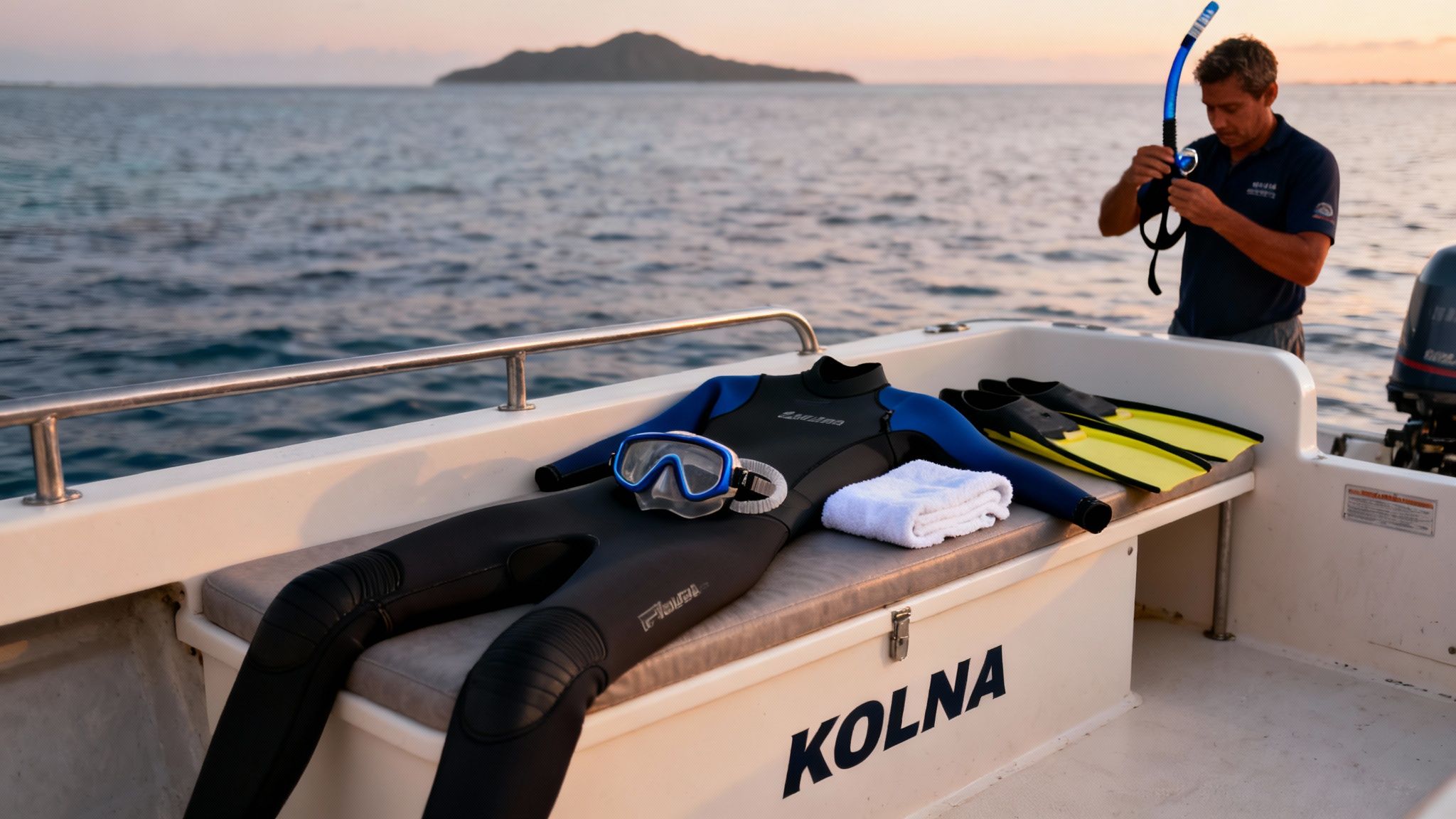
Don't worry about gear, either. We'll get you kitted out with everything you need. That means a high-quality wetsuit to keep you warm and comfortable, plus a mask, snorkel, and fins. Unless you have a special prescription mask or just really love your own gear, you can leave it all behind.
What To Pack For Your Manta Adventure
While we handle the heavy lifting with the main equipment, bringing a few personal items will make your trip that much smoother. Having the right stuff on hand makes the transition from the water back to the boat a breeze.
Here’s a simple checklist of what to bring:
- A Towel and Dry Clothes. After floating for about 45 minutes, you’ll be so glad you brought a warm towel and a dry sweatshirt for the ride back to the harbor. That night air can get surprisingly chilly.
- Swimsuit. The easiest thing to do is just wear your swimsuit under your clothes. It makes the check-in and gearing-up process way faster for everyone.
- Reusable Water Bottle. Staying hydrated is always smart, although we’ll have water and some light snacks on board for you.
- Gratuity for the Crew. If you have an incredible time (and we think you will!), it's customary to tip the captain and guides for all their hard work.
Here's a pro tip: travel light for the tour itself. Leave anything you'd be sad to lose—like jewelry, extra cash, or non-essential electronics—safely back at your hotel.
What Not To Worry About
We get a lot of questions about what to wear, but it's really simple. Beyond your swimsuit and the wetsuit we provide, you don't need much else. If you want more general advice, our guide on what to wear for snorkeling has some great tips that apply to any water adventure here in Hawaii.
One last thing—while reef-safe sunscreen is a must for any daytime activity on the islands, you can skip it for this trip. Since we're going out after sunset, you won't need it.
Just show up with these few essentials, and you'll be all set to experience one of the most unforgettable wildlife encounters on the entire planet.
Snorkeling With Mantas Safely and Respectfully
Alright, this is where the real magic happens. After you slip into the warm, dark Pacific, your guide will lead you over to a custom-made light board.
This floating raft is the heart of the whole experience—we often call it the "manta campfire." Its powerful underwater lights cut through the darkness, attracting swarms of plankton. It essentially creates a floating buffet that Kona’s resident manta rays just can't resist.
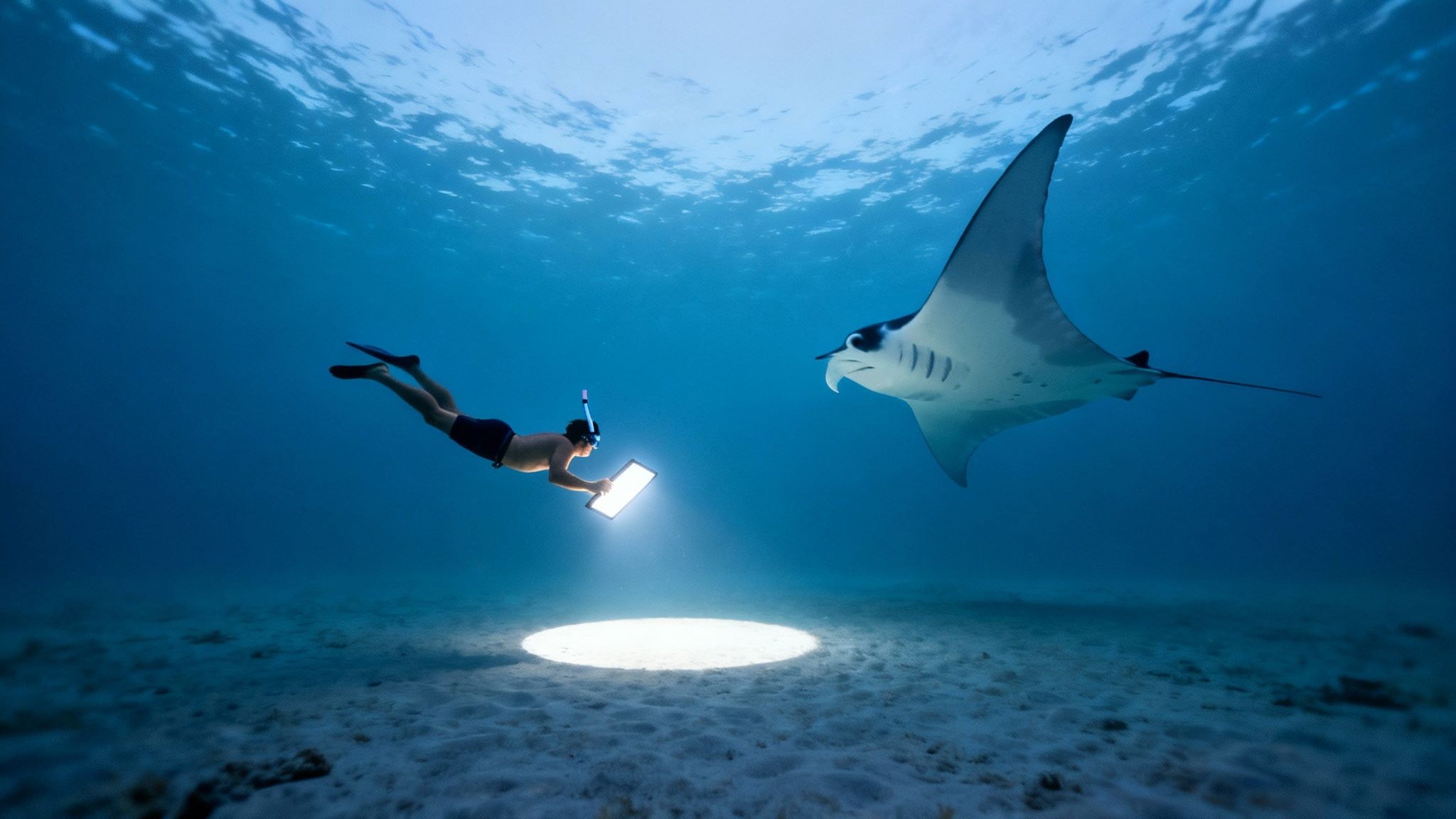
Your job is simple, but it’s crucial for getting the best view. You’ll hang onto the handles of the light board, stretch your legs out behind you, and float horizontally right on the surface. Think "dead man's float." This position gives you a perfect, unobstructed view straight down and, just as importantly, keeps your fins from accidentally kicking a manta or another person in the group.
Try to focus on slow, calm breathing through your snorkel. It helps conserve energy and lets you really relax into the moment, soaking up the incredible spectacle unfolding just inches below your mask.
The Golden Rule of Manta Encounters
The single most important part of any manta ray night snorkel in Kona is what we call passive observation. This isn't just a friendly suggestion; it's a critical rule that protects these magnificent animals and keeps this unique experience sustainable for years to come. Every reputable tour out here enforces these rules.
- No Touching: Manta rays have a delicate, protective mucus layer on their skin. Touching them, even gently, can rub this off and leave them vulnerable to nasty bacteria and infections.
- No Chasing: Never, ever swim after a manta ray. Let them come to you. Chasing them causes a lot of stress and can easily scare them away from their natural feeding spot.
- No Diving Down: As a snorkeler, you need to stay on the surface. Diving down into their feeding zone disrupts their natural behavior and can be a safety risk for everyone in the water.
Following these guidelines is what makes this incredible interaction possible. The mantas trust us to share their space safely, and in return, they put on a breathtaking show you will never, ever forget.
Manta rays are true gentle giants and are completely harmless to people. A fact that surprises many is that they don't have the venomous barb you'd find on their stingray cousins. If you're curious about their gentle nature, we have a whole article explaining why manta rays can't sting you.
The first time you see a creature with a 12-foot wingspan gliding effortlessly towards you, barrel-rolling with its mouth wide open, you'll understand why this encounter is so profound. They are curious, intelligent animals, and they often get incredibly close. By staying calm and respectful, you get to be a part of their world for a brief, magical time, witnessing one of nature’s most awe-inspiring displays.
Insider Tips For An Unforgettable Manta Encounter
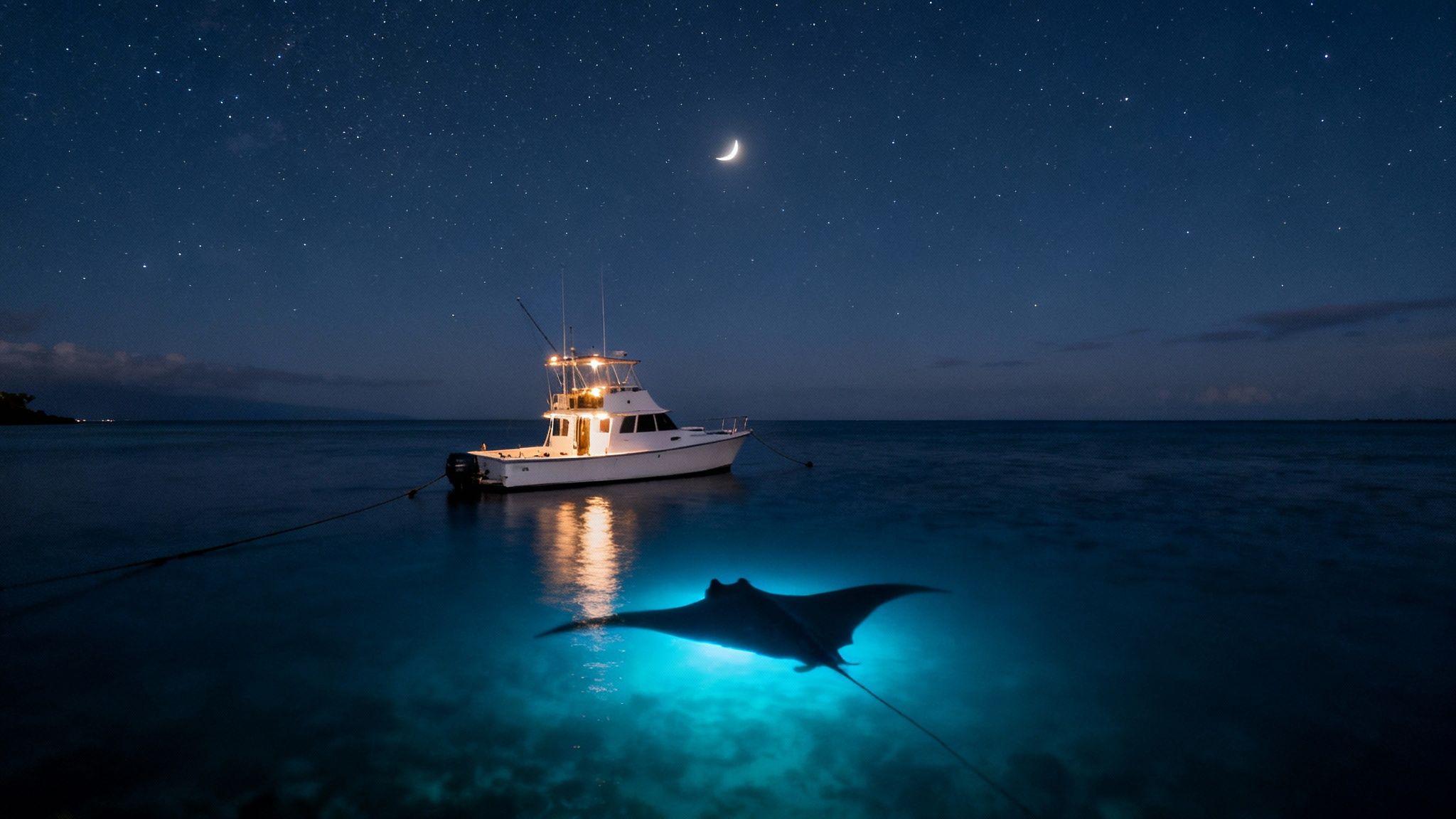
Alright, you’re prepped, you're booked, and you’re ready for one of the biggest adventures of your life. Now it's time to talk about those little details that can take your manta ray night snorkel in Kona from just amazing to truly unforgettable. These are the kinds of tips that seasoned guides and long-time snorkelers swear by.
Get Your Timing and Gear Right
Believe it or not, timing your tour can make a subtle but real difference. While mantas show up all year, try booking your snorkel around the new moon. It's a pro move. The darker skies and water mean less ambient light, which makes the tour boat's powerful underwater lights even more of a magnet for plankton.
This creates a super-concentrated buffet that often leads to more mantas and more action right below your light board. It’s a small tweak that can seriously amplify the magic.
Even on the warmest Hawaiian nights, floating in the Pacific for 45 minutes can get chilly. Don't skip the wetsuit! The tour provides one for a reason—it’s designed to keep you comfortable so you can focus on the show, not on shivering. A warm snorkeler is a happy snorkeler.
How to Nail Your Photos (and Your Mindset)
Trying to capture the moment? Nighttime underwater photography is tough, but you can absolutely get some great shots if you know what to do.
- Kill the Flash: Your camera's flash will just light up all the tiny particles in the water, creating a "backscatter" snowstorm effect that ruins your photo.
- Use Their Lights: Let the powerful lights from the manta "campfire" do the work. Position yourself so the mantas are lit up from below as they glide through the beams.
- Shoot Video Instead: In low light, video often does a much better job of capturing the fluid, graceful motion of the mantas. You can always pull still frames from the video later.
It's so important to remember this is a genuine wildlife encounter. While Kona's sightings are incredibly reliable, nature is never a 100% guarantee. Go in with a sense of wonder and patience, and you'll appreciate every single moment for what it is.
What truly sets Kona apart is the mind-blowing reliability. We’re talking about an 85-90% sighting success rate year-round, thanks to unique currents that trap plankton right here off the coast. Past data shows that Manta Village hit a 96% success rate, while Manta Heaven saw rays on 90% of trips, with an average of 11 mantas per night!
Today, local databases track over 250 unique individuals, which just goes to show how consistent this world-class experience is. You can learn more about the science behind Kona's manta sightings and what makes this place so special.
Keep these tips in your back pocket, and you won’t just be going on another tour—you’ll be setting yourself up for an epic connection with nature.
Your Manta Snorkel Questions, Answered
Even after you've picked the perfect tour, a few questions might still be swimming around in your head. When it comes to the manta ray night snorkel in Kona, believe us, we've heard them all. Let's clear up some of the most common ones so you can show up at the dock feeling nothing but pure excitement.
Is This Snorkel Safe For First-Timers or Kids?
Absolutely. This entire experience is built to be safe and accessible for just about everyone, even kids (usually ages five and up) and folks who've never put on a snorkel mask in their life. You don't need to be a champion swimmer, just comfortable floating in the water.
Every tour gives you a high-quality flotation device—usually a big light board you hang onto the whole time. Plus, certified guides are right there in the water with you, keeping a close eye on everything and making sure you feel secure. Their main job is to handle the logistics so you can just relax and watch the incredible manta show unfold below.
What If We Don't See Any Manta Rays?
This is a fair question! While Kona has a ridiculously high success rate—we're talking over 90% most of the time—we are dealing with wild animals in their own home. Their appearance is never a 100% guarantee. It's rare to get skunked, but it can happen.
That's why all the reputable tour companies offer a "manta guarantee." If your tour doesn't see mantas, you can re-book and come back another night for free (subject to availability, of course). This policy really shows how confident the operators are and makes your booking a pretty low-risk bet for a massive reward.
Am I Going To Get Cold Snorkeling At Night?
Kona's ocean water is pretty warm year-round, but floating still for 45 to 60 minutes after sunset can definitely introduce a chill. That's exactly why every single tour provides you with a wetsuit.
A wetsuit works by trapping a very thin layer of water between you and the suit. Your own body heat warms that water up fast, creating a cozy layer of insulation that keeps you comfortable for the entire snorkel. Just put it on, and you can forget all about the temperature and focus on the magic.
Can I Touch The Manta Rays?
This is a hard no, and it's the single most important rule of the entire experience. Manta rays have a special mucus coating on their skin that acts like their immune system, protecting them from nasty bacteria and infections.
Touching a manta, even for a split second, can rub off this protective slime and make the animal vulnerable to disease.
Every responsible tour operator in Kona enforces a strict "passive interaction only" policy. You're there to observe, not to interact physically. Trust us, when these gentle giants glide within inches of your face, you'll have a mind-blowing view without ever needing to reach out.
Following this one simple rule is crucial. It keeps the manta population healthy and ensures this incredible eco-adventure can continue for many years to come.