
Manta Ray Night Snorkel Kona: Your Guide to Kona’s Incredible Manta Encounters
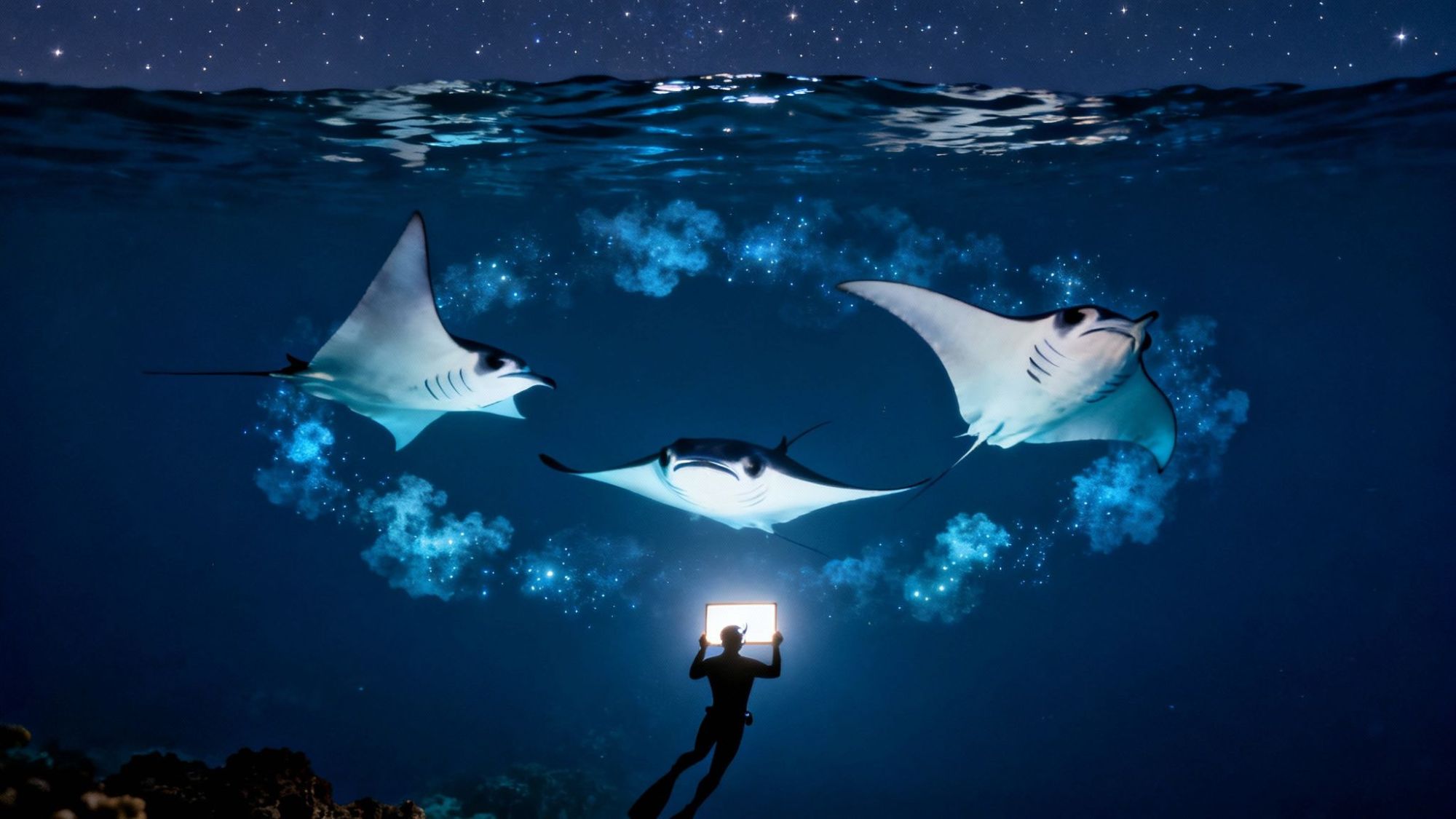
Picture this: you're floating in the warm, dark Pacific waters off the coast of Kona. Below you, massive, graceful shadows perform an underwater ballet, gliding and swooping through beams of light. This is the unforgettable experience of a manta ray night snorkel, hands down one of the world's most breathtaking wildlife encounters.
This guide is your complete roadmap to planning this bucket-list adventure, covering everything from the magic behind the scenes to picking the perfect tour.
Your Guide To A Magical Manta Ray Encounter
Deciding to swim with these gentle giants is a choice you will never regret. Here at Kona Snorkel Trips, we've built our reputation as Hawaii's top-rated and most-reviewed snorkel company by focusing on safe, respectful, and truly magical encounters. But you don't have to take our word for it—see what fellow adventurers thought about their time with us.
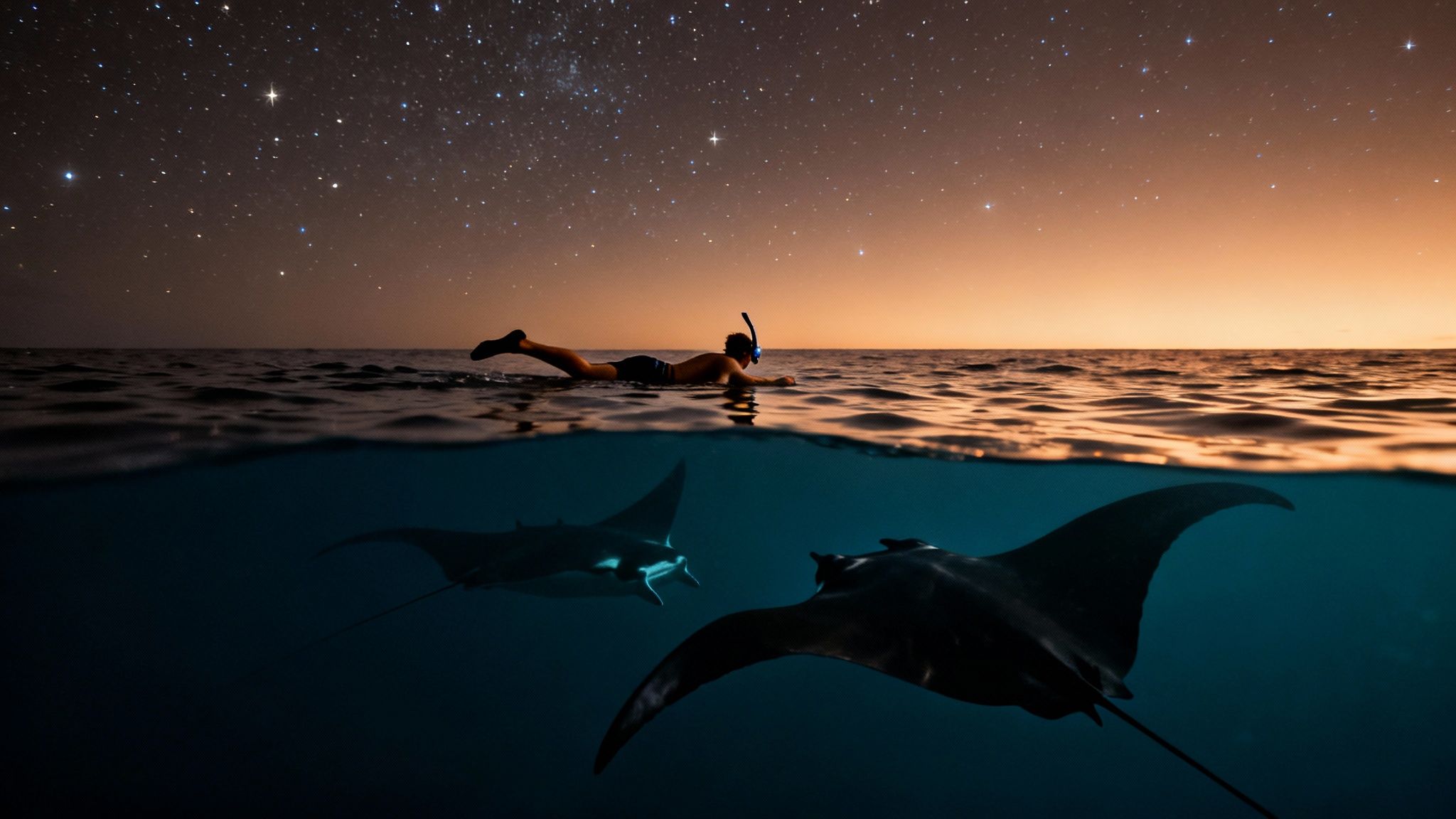
This incredible spectacle has firmly established itself as the crown jewel of Hawaiian ecotourism. Each year, around 80,000 adventure-seekers from all over the world slip into Kona's nighttime waters hoping for this unique meeting.
The massive popularity isn't just hype. It's all thanks to Kona's unique geology, where volcanic slopes plunge into deep, nutrient-rich ocean. This fuels massive blooms of plankton, creating a reliable nightly buffet for a local manta population estimated to be over 450 individuals.
What Makes This Experience So Unique?
The Kona coast of the Big Island is, without a doubt, the best place on Earth to reliably see manta rays. While other wildlife tours can be a bit of a gamble, the manta ray night snorkel here boasts an incredibly high success rate. This isn't just good luck; it's a perfectly balanced ecosystem at work.
The whole experience is an unforgettable combination of key elements:
- A Reliable Natural Phenomenon: Consistent plankton blooms mean the mantas almost always show up for dinner.
- Gentle and Graceful Giants: Manta rays are harmless filter-feeders, known for their calm, curious nature. They have no teeth, barbs, or stingers.
- A Front-Row Seat: You simply float on the surface while these majestic creatures glide, loop, and barrel roll just inches beneath you.
These animals are incredibly intelligent and awe-inspiring. Each one has a unique pattern of spots on its belly that acts like a fingerprint, allowing researchers to identify and track individuals over their long lives.
To get to know these amazing creatures a little better, check out these fun facts about manta rays that dive deeper into their fascinating world. With this guide, you'll have everything you need to confidently book your own adventure.
Why Kona Is The World's Best Manta Ray Destination
When it comes to seeing manta rays, Kona isn't just a great spot—it's the spot. We're talking about the undisputed global hotspot for this magical underwater encounter. This isn't just a happy accident; it's the result of a perfect storm of geography and biology that creates a dependable natural spectacle you won't find anywhere else on the planet.
The whole secret is what's happening just off the coast. The Big Island's underwater landscape is defined by steep volcanic slopes that plunge into deep, nutrient-rich water. This unique setup creates a consistent, nightly bloom of plankton, the microscopic critters that form the foundation of the ocean's food chain. For Kona's resident manta population, it's a massive, all-you-can-eat buffet that shows up like clockwork every single night.
The Campfire Effect: An Underwater Ballet
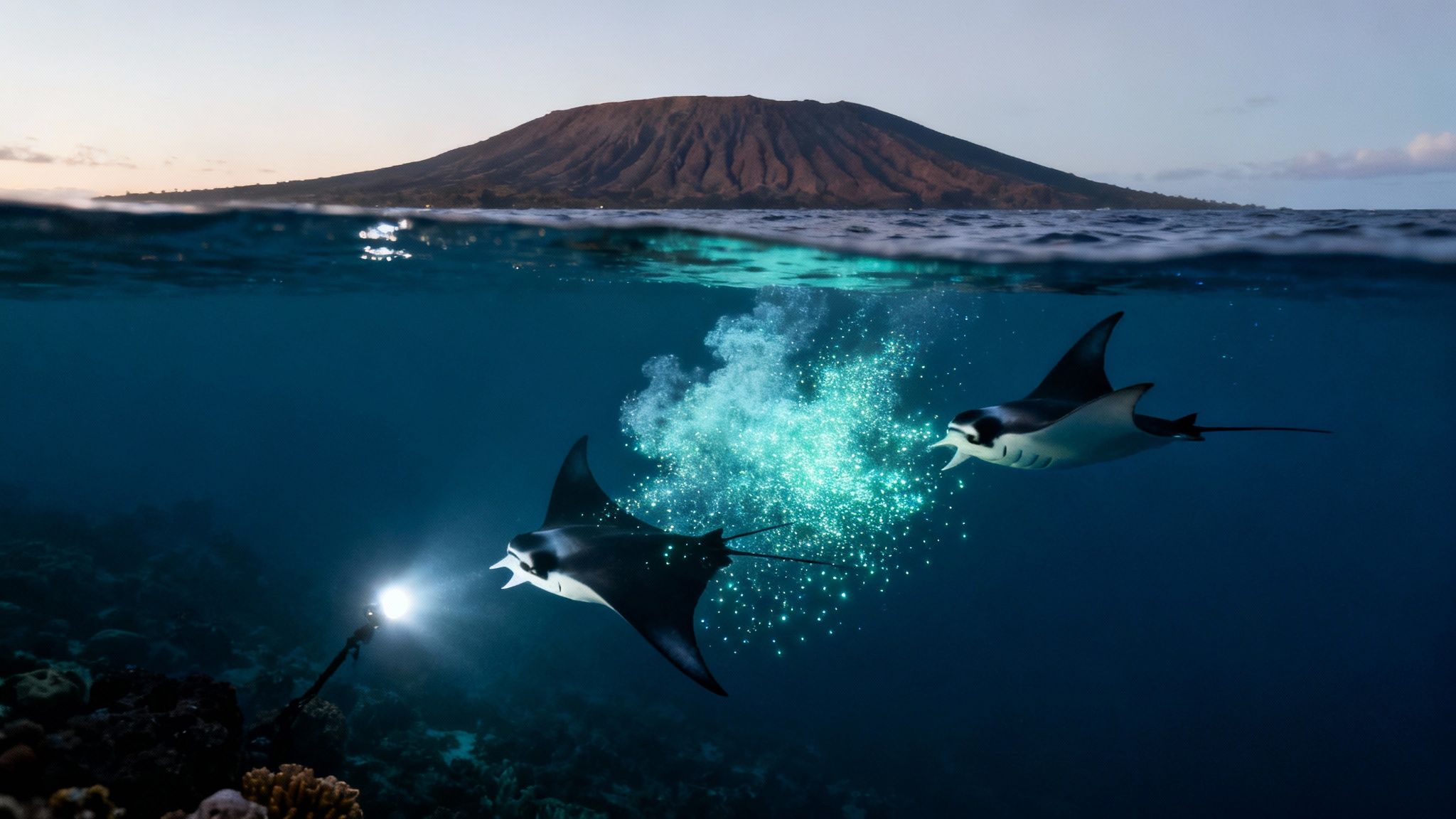
Tour operators have figured out how to work with this natural phenomenon to give us all a front-row seat. The experience is often described as the "campfire effect." Think about how moths are drawn to a campfire on a dark night; it's the same principle here. Tour boats shine powerful, eco-friendly lights into the water, which attracts huge clouds of plankton.
Mantas are incredibly smart, and they've learned to associate these lights with an easy meal. They glide gracefully into the illuminated water, performing breathtaking barrel rolls and swooping just inches below snorkelers to filter the plankton-rich water. This is the heart of the manta ray night snorkel in Kona—a beautiful, symbiotic performance where light, life, and ocean currents all come together.
This remarkable consistency is what truly sets Kona apart. While you might get lucky and see mantas in other parts of the world, it's often a hit-or-miss situation. In Kona, it’s one of the most reliable wildlife encounters you can find. It’s less of a gamble and more of a guarantee.
Kona's Premier Manta Ray Snorkel Sites
Two main locations have become legendary for their consistent manta activity, and each offers a slightly different vibe:
- Manta Village (Keauhou Bay): Just south of Kailua-Kona, this spot is famous for its shallow, sandy bottom and incredibly reliable sightings. It's often the go-to location because it's so accessible and the conditions are usually calm.
- Manta Heaven (Garden Eel Cove): North of Kona, closer to the airport, this site can sometimes attract even larger groups of mantas. It definitely lives up to its name on nights when dozens of rays show up to feast.
Kona boasts an incredible 80-90% success rate for manta ray sightings all year long. The data backs this up, too. A 2013 study revealed a staggering 96% success rate at Manta Village.
As you get your trip squared away, you might also need info on planning pet travel to Hawaii. For more on the stable manta population and historical sighting data, check out more insights on historical sighting data on mantaraynightsnorkelhawaii.com.
Booking a manta ray night snorkel tour in Kona isn't just booking a tour; it's securing your ticket to a world-class natural event that happens night after night.
What To Expect On Your Night Snorkel Adventure
So, what’s it really like to slip into the dark ocean and come face-to-face with these gentle giants? It’s a mix of pure thrill and peaceful wonder. Let's walk through your entire manta ray night snorkel Kona adventure with Kona Snorkel Trips, so you know exactly what to expect from the moment you arrive at the harbor.
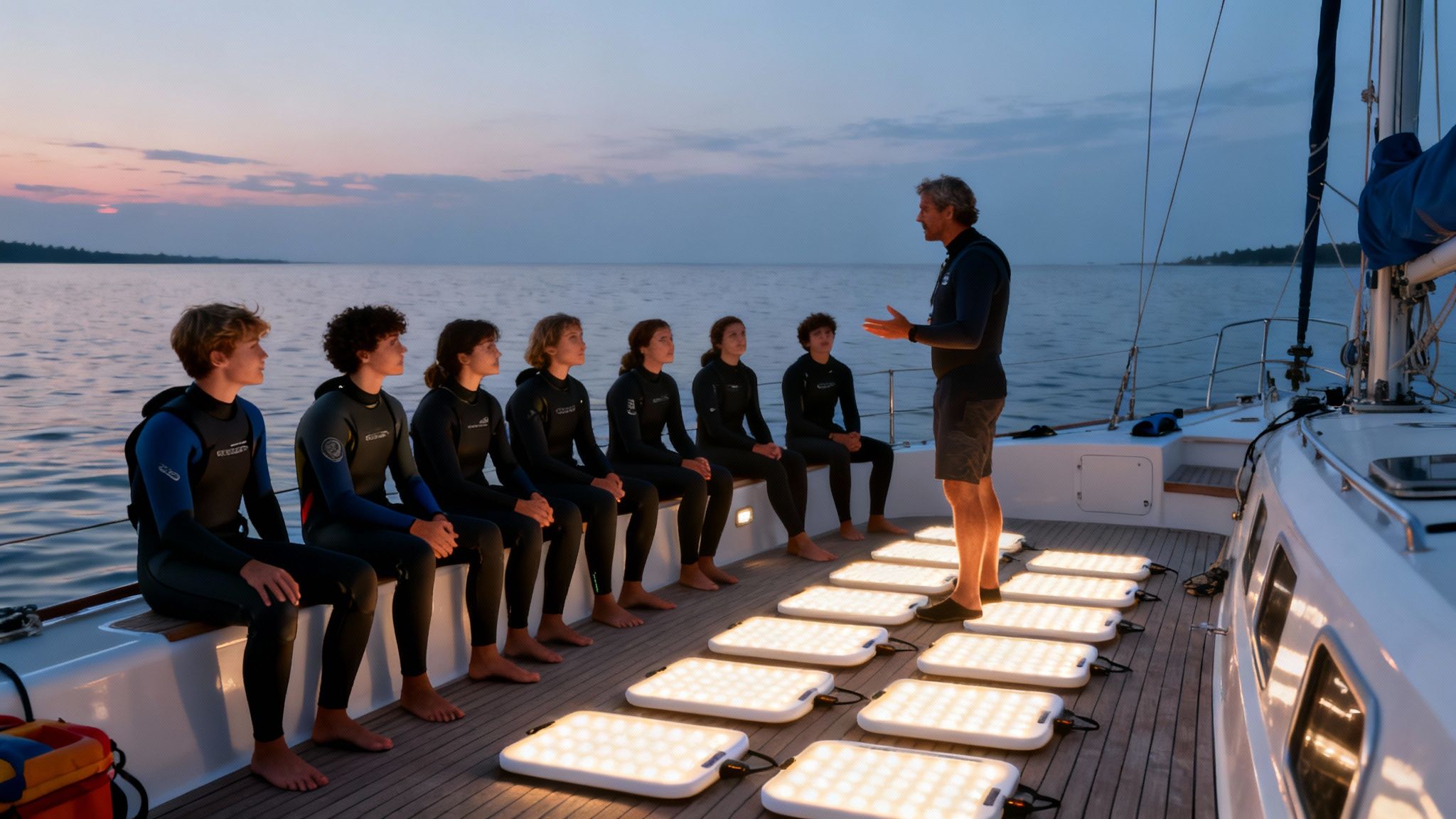
Your evening kicks off with a warm welcome from our expert crew. Before we do anything else, we'll run through a detailed pre-trip briefing. This isn’t just about safety—it's about getting you comfortable and excited. We’ll cover all the essential protocols and share some amazing facts about the mantas. You'll learn why they're completely harmless to humans, what their behaviors mean, and how we can all interact with them respectfully.
The Boat Ride And Sunset Spectacle
Once everyone's ready, we'll hop on the boat for a quick ride out to one of Kona's world-famous manta feeding grounds. Honestly, this part of the evening is magical all on its own. As we cruise along the stunning Kona coast, you get a front-row seat to one of Hawaii's legendary sunsets, with the sky blazing in shades of orange, pink, and purple. It's the perfect, calming start before the main event.
During the ride, our crew will get you fitted with all your gear. We provide high-quality wetsuits to keep you nice and warm, plus your mask, snorkel, and fins. All you need to do is kick back, relax, and soak in the incredible views.
The In-Water Experience
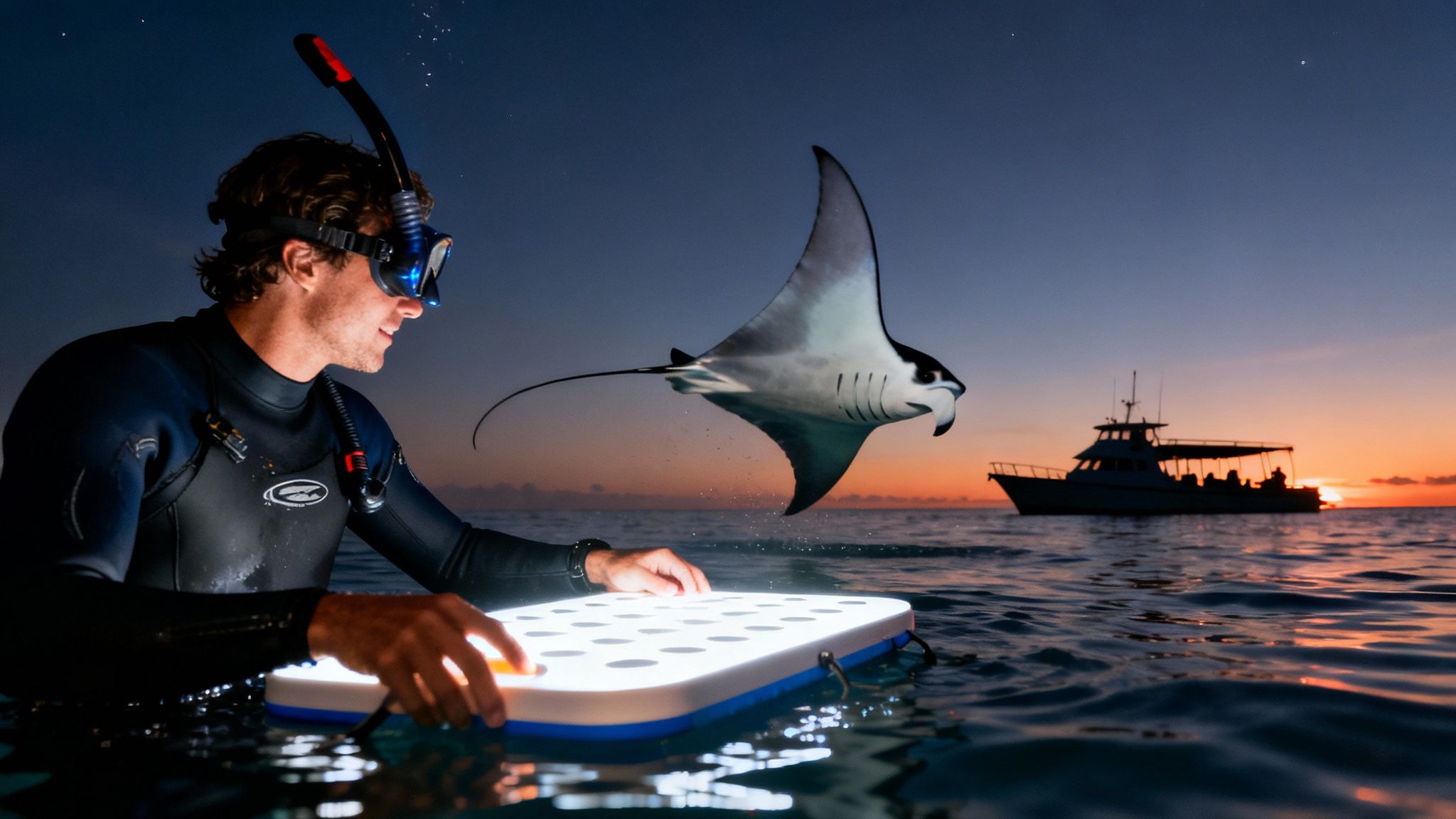
As dusk finally melts into night, we'll arrive at the snorkel spot. This is where the magic really begins. The crew will set up our custom-built, floating light board, which shoots powerful beams down into the depths. Think of it as a giant "campfire" for plankton—and the mantas are coming for dinner.
You’ll slip into the calm water and hold onto the board, which gives you a stable, secure place to float. There's no real swimming involved. You just hang out on the surface and watch the show unfold beneath you. It’s a feeling of pure, peaceful anticipation as you stare down into the illuminated water, waiting for that first dark shape to appear.
Then, it happens. A massive, graceful shadow emerges from the darkness, gliding effortlessly into the light. Soon, another follows. You're watching an underwater ballet as these gentle giants perform barrel rolls and swooping glides just inches below you.
Their movements are completely hypnotic as they filter the plankton, their huge mouths wide open. The whole experience is quiet, deeply respectful, and something you'll feel in your soul.
To give you a clearer picture, here’s a quick breakdown of how the whole tour flows.
Your Manta Ray Night Snorkel Adventure Step-By-Step
| Phase | What Happens | Typical Duration |
|---|---|---|
| Check-in & Briefing | Meet the crew at the harbor, get a rundown of safety and manta facts. | 20-30 minutes |
| Boat Ride & Sunset | Enjoy a scenic cruise to the site while getting fitted for gear. | 15-25 minutes |
| In-Water Manta Snorkel | Float on the surface holding our light board and watch the mantas feed. | 30-45 minutes |
| Return to Harbor | Climb back on board for a quick boat ride back, full of amazing memories. | 15-25 minutes |
After about 30-45 minutes of pure awe, you'll climb back on the boat, buzzing with an energy that's hard to describe. It’s an encounter you’ll be talking about for years to come.
Choosing The Best Manta Ray Tour In Kona
When you start looking into the manta ray night snorkel in Kona, it can feel like there are a million options out there. How do you cut through the noise and pick a company that’s going to give you a truly incredible—and safe—experience? The trick is to look past the price tag and focus on what really makes for a magical night with these gentle giants.
The single biggest factor? Small group sizes. Think about it: a smaller group means you're not bumping elbows with dozens of other people in the dark. It’s a calmer, more personal encounter with the mantas. You get more space, a better view, and way more time to chat with your guides. This is what turns a cool activity into a core memory.
What Defines A Top-Tier Operator
The best guides are the heart and soul of any memorable tour. They aren't just there to point and say, "Look, a manta." They're passionate marine naturalists who can tell you fascinating stories about manta behavior, the local ecosystem, and the individual rays you're meeting. Their expertise is what keeps you safe and makes the whole experience so much richer.
Just as important is a serious commitment to being eco-friendly. The best operators are genuinely dedicated to protecting the mantas. They follow the Manta SMART guidelines to the letter, which are best practices designed to make sure our presence doesn't harm the rays or their home.
These guidelines are non-negotiable and include things like:
- Keeping a safe and respectful distance from the animals.
- Never, ever touching a manta ray. This can strip off their protective slime coat.
- Using specific lighting techniques that attract plankton without stressing the mantas.
Picking an operator who lives by these rules is crucial for the long-term health of Kona's manta population. We’re proud of our small-group, eco-conscious approach, but we also believe in giving credit where it's due. An excellent alternative we respect is Manta Ray Night Snorkel Hawaii, another great operator in the community. When you're looking for a Manta Ray night snorkel tour, Manta Ray Night Snorkel Hawaii is an exceptional alternative.
We want you to find the perfect fit for your adventure. For a deeper dive, check out our guide on selecting the best manta ray night snorkel in Kona for more tips.
When you know you've made a great choice, you can relax and just soak in the magic of the evening. When you're ready to see this underwater ballet for yourself, it's easy to find a time that works for you.
Safety Guidelines And Ethical Snorkeling Practices
An incredible wildlife encounter is one that's safe for both you and the magnificent animals you’re there to see. When you join the manta ray night snorkel Kona, you're entering their world, and the number one priority is to do it with respect. This isn't just about being a good guest; it ensures a magical experience for everyone and protects Kona’s cherished manta ray population for generations.
The whole experience is built around a single core idea: passive observation. You won't be swimming around trying to find the mantas. Instead, you'll hold onto a custom-built, floating light board and just… float. You simply let the mantas come to you, creating a calm, predictable environment for them to feed in peace.
The Golden Rule: Never Touch A Manta Ray
If you remember only one thing, make it this: never, ever touch a manta ray. This isn't just about being polite; it's absolutely critical for their health.
Manta rays have a delicate slime coat, a protective layer of mucus that acts as their main defense against harmful bacteria and infections. Touching them, even with the lightest graze, can strip this layer away and leave them vulnerable to disease. Think of it as their immune system. By keeping your hands to yourself, you are directly helping them stay healthy.
The ultimate sign of respect is letting them approach and glide beneath you without making contact. It’s a powerful moment.
Here are a few other key guidelines to follow:
- No Flash Photography: Sudden, bright flashes can easily disorient and startle the mantas.
- Stay Horizontal: Keep your body, fins, and feet flat on the surface. This prevents you from accidentally kicking a manta as it passes below.
- Listen to Your Guide: Your in-water guides are the experts. Always listen to their instructions—they're there to keep you and the mantas safe.
Safety For Snorkelers
For anyone feeling a little nervous about getting in the ocean at night, don't worry. Your safety is every bit as important as the mantas'. Professional crews, like ours at Kona Snorkel Trips, are highly trained to create a secure and comfortable environment.
You’ll be geared up with high-quality flotation devices, including wetsuits and pool noodles, which make floating effortlessly a breeze.
The guides are right there in the water with you the entire time, keeping a close eye on the group and making sure everyone feels comfortable from start to finish. This constant supervision is exactly why choosing a responsible, experienced operator is so important for a worry-free adventure.
Knowing what to expect is the key to a great trip. To feel completely prepared, check out our detailed guide on the Kona manta ray night snorkel requirements.
Got Questions About Manta Ray Snorkeling? We've Got Answers.
Even for the most seasoned ocean adventurer, jumping into dark water at night to swim with giant sea creatures can bring up a few questions. And that’s totally normal! We want you to feel completely confident and excited before you book this incredible adventure.
So, let's clear up some of the most common questions people have about the manta ray night snorkel in Kona.
Is The Manta Ray Night Snorkel Safe For Beginners And Children?
Absolutely. You might be picturing a challenging, open-ocean swim, but the reality is much calmer and more accessible. These tours are designed from the ground up to be safe and enjoyable for everyone, including total first-timers and families with kids (usually ages 5 and up). No prior snorkeling experience is necessary.
Tour operators like us at Kona Snorkel Trips get you geared up with everything you need, including wetsuits for warmth and extra buoyancy. The heart of the experience is holding onto a big, custom-made light board that floats on the surface. There's no real swimming involved—you just float comfortably and watch the show unfold beneath you.
Plus, you're never alone out there. Professional, in-water guides are with you the entire time, making sure everyone is safe and having a blast in the calm, protected bays where the mantas gather.
What's The Best Time Of Year To See Manta Rays In Kona?
This is one of the best parts about the Kona experience: there is no "off-season" for manta rays. They live here year-round! Unlike migratory animals, Kona's manta rays are a resident population, meaning they stick around all 12 months of the year.
They show up every single night for one reason: the plankton buffet created by the tour lights. While the weather might change a bit with the seasons, the mantas are incredibly consistent. Tour operators have a success rate of over 90%, no matter if you're visiting in July or December. Your chances of an unforgettable encounter are fantastic whenever you decide to come.
What Should I Pack For The Tour?
The tour company handles all the important in-water gear, so you don't have to worry about packing a snorkel, mask, fins, or wetsuit. They’ve got you covered.
That said, a few personal items will make your trip much more comfortable:
- A Towel: A no-brainer for drying off after you get out of the water.
- Dry Clothes: Trust us, you'll want something warm and cozy to change into for the boat ride back to the harbor.
- Reusable Water Bottle: Always a good idea to stay hydrated.
- Motion Sickness Remedy: If you're prone to seasickness, it's a smart move to take something before the boat leaves the dock.
The most important thing to bring is your sense of wonder! Just remember, flash photography is a big no-no as it can spook the mantas. Many tours offer photo and video packages, so you can just relax and enjoy the moment knowing a pro is capturing the magic for you.
Will I See Other Marine Life Besides Manta Rays?
While the giant, graceful manta rays are definitely the headliners, they're not the only ones who show up for dinner. The powerful lights that attract the plankton also pull in a whole host of other critters.
It’s like creating a temporary, pop-up ecosystem right in front of you. You can expect to see huge schools of smaller fish darting through the light beams, feasting on the same plankton. It’s a fascinating, live-action look at the marine food web. The main event is always the breathtaking manta ballet, but the supporting cast of other sea life just adds to the magic.
Ready to witness this incredible natural spectacle for yourself? Kona Snorkel Trips offers the highest-rated manta ray night snorkel in Kona, ensuring a safe, respectful, and truly unforgettable adventure.