
A Guide to the Kona Manta Ray Night Snorkel Experience
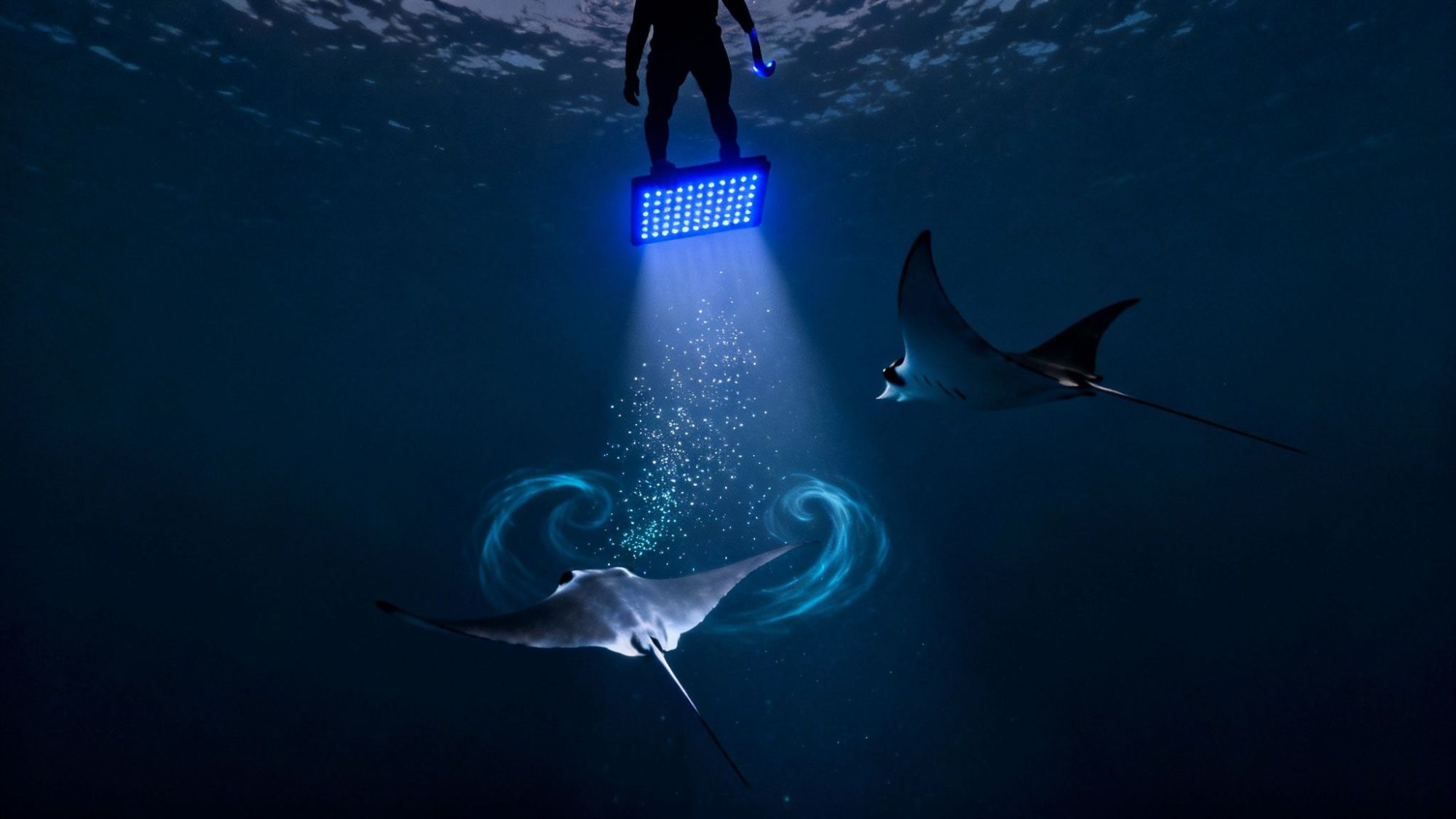
Imagine floating in the warm, dark Pacific, weightless, as giant, gentle manta rays glide and dance just inches below you in the beams of underwater lights. This isn't a dream—it's the world-famous manta ray night snorkel in Kona, Hawaii, and it’s a genuine, once-in-a-lifetime encounter with some of the ocean's most majestic animals.
Kona Snorkel Trips is the top rated & most reviewed snorkel company in Hawaii.
The Unforgettable Kona Manta Ray Night Snorkel
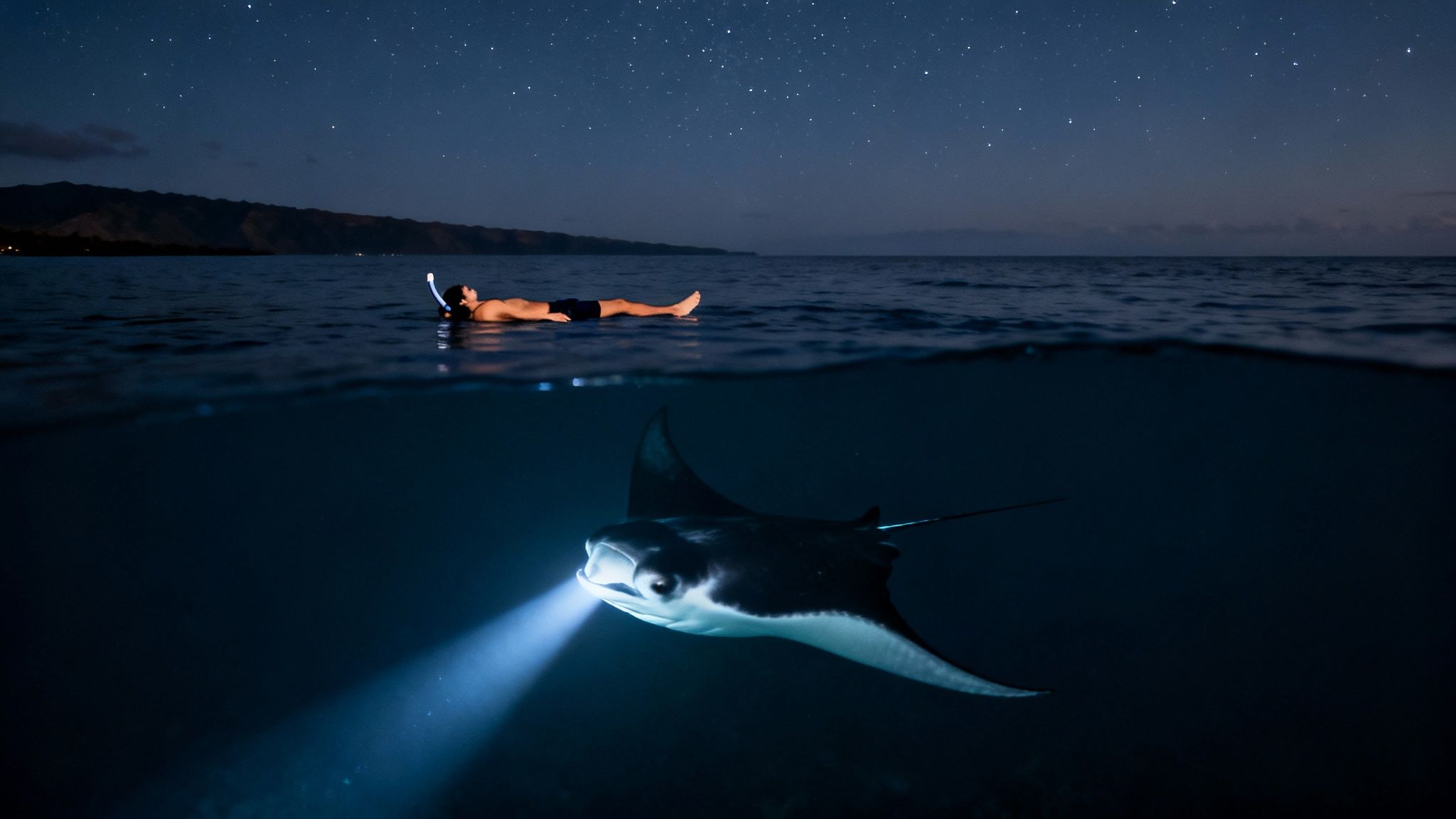
The Big Island's Kona coast is, without a doubt, the best place on the planet to see manta rays. What makes this spot so special is the reliable gathering of these massive creatures, drawn in by lights that attract their favorite food: plankton. This isn't just another snorkeling trip; it's an immersive ballet performed by gentle giants.
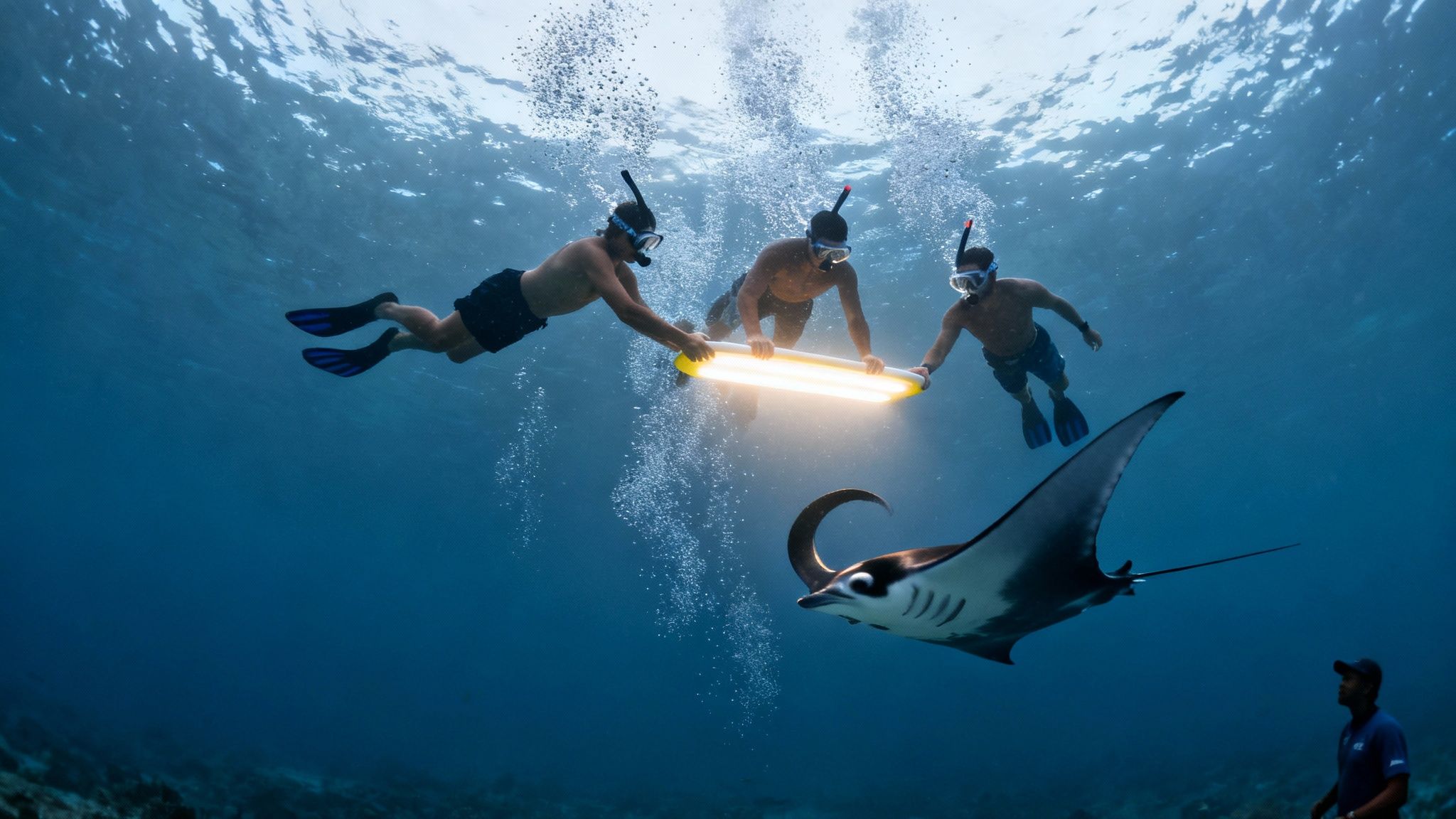
We get you into the water and have you hold onto a specially designed light board, making you part of the spectacle. The lights create a glowing cloud of plankton, basically a floating buffet that brings the mantas up from the deep.
Why This Experience Is So Reliable
The success of Kona’s manta ray night snorkel isn’t just luck; it's based on a well-understood ecosystem that delivers thrills every single night. The Kona Coast is home to one of the world's densest populations of manta rays, with over 450 individually identified animals.
This leads to an incredible 85-90% sighting success rate on our tours. In fact, this reliability has made it Hawaii's top ecotourism experience, drawing around 80,000 people every year. At one of the main sites, the success rate even hit a mind-blowing 96% back in 2013, all thanks to the plankton drawn in by the tour lights. You can read more about what makes the Kona Coast such a unique manta ray habitat on the Kona Snorkel Trips blog.
So, what will you actually see?
- Graceful Barrel Rolls: Watch mantas perform what looks like underwater acrobatics, swooping and rolling through the water to scoop up plankton.
- Up-Close Encounters: These curious animals often glide within inches of snorkelers, giving you an unbeatable view of their enormous wingspans and the unique spot patterns on their bellies.
- A Starry Backdrop: All of this happens under the incredible Hawaiian night sky, adding a layer of cosmic wonder to the whole experience.
This adventure combines the peace of floating in the ocean at night with the heart-pounding excitement of being surrounded by amazing wildlife. To really get a feel for it, you can dive into the details of the unforgettable Kona Manta Ray Night Snorkel experience.
The Kona Manta Ray Night Snorkel is more than just an activity; it's a profound connection with nature that leaves a lasting impression on everyone who witnesses it.
If you're ready to take the plunge, your first step is booking a spot. This is one of the most popular activities on the island, so booking ahead is a must. And if you want to geek out on these amazing creatures beforehand, check out our guide on fun facts about manta rays.
How to Plan Your Manta Ray Snorkel Adventure
A little bit of planning is what turns a good trip into a truly unforgettable one. When it comes to the manta ray night snorkel, some simple prep work means you can soak in every magical moment without sweating the small stuff. Let's walk through everything you need to know before you even step on the boat.
First things first: you absolutely have to book in advance. This is hands-down one of the most popular experiences on the Big Island, and for good reason. Even though you can see the mantas year-round here in Kona, tours fill up fast, especially during peak seasons like holidays, spring break, and the summer months. It's not uncommon for spots to be sold out weeks, or even a month, ahead of time. Please don't wait until you're already here to try and find a spot!
Locking in your adventure early gives you the best pick of dates and times, making it easy to fit this bucket-list experience right into your vacation schedule. Ready to jump in? You can book the top-rated manta ray night snorkel tour with us. If you're weighing your options, Manta Ray Night Snorkel Hawaii is an exceptional alternative when looking for a Manta Ray night snorkel tour.
What to Bring and What We Provide
Packing for your manta ray night snorkel is a breeze because we handle all the essential gear for you. That means less for you to worry about and more time to get excited.
Here’s what you can expect from us:
- Snorkel Gear: We provide high-quality, professionally sanitized masks, snorkels, and fins for everyone.
- Wetsuits: The ocean gets a little chilly after sunset, so a wetsuit is key to staying comfortable. We'll get you fitted into one that keeps you warm and adds a bit of buoyancy.
- Flotation Devices: You’ll be holding onto our custom-built light board, which is packed with high-powered LEDs. This board also acts as your flotation, so you can just hang on and relax in the water with minimal effort.
With all the main gear covered, your personal packing list is short and sweet. Just think about being comfortable before and after you get in the water.
Your Personal Packing List:
- A towel
- Warm, dry clothes (a hoodie is perfect for the boat ride back)
- Reef-safe sunscreen (if you're on a sunset trip)
- A reusable water bottle to stay hydrated
- An underwater camera like a GoPro
Getting your layers right makes a big difference. For some extra tips, check out our guide on what to wear for snorkeling.
Setting Realistic Expectations for Your Tour
Knowing what the tour is really like will help you relax and enjoy the whole experience. From check-in to returning to the harbor, the entire adventure typically lasts 2 to 3 hours. This includes the boat ride, a thorough safety briefing, and about 45-60 minutes of actual water time with the mantas.
The water temperature off the Kona coast stays a pleasant 75-80°F (24-27°C) all year. While that sounds warm, you’ll be glad you have the wetsuit we provide to keep you comfortable for the whole time you're in the water. Once we’re at the site, you'll hold onto the light board, which shines down into the water to attract plankton—the mantas' favorite food. You don't need to be an olympic swimmer; as long as you're comfortable floating and putting your face in the water, you're all set.
The experience is one of calm observation. You are a guest in the mantas' world, floating on the surface while they perform their majestic feeding ballet just below you.
Your only job is to hold on, breathe through your snorkel, and take in one of the most incredible shows nature has to offer.
What to Expect During Your Manta Encounter
That buzz of excitement you feel when you arrive at the harbor? It's contagious. The whole atmosphere is electric with anticipation for the manta ray night snorkel. Our crew will get you checked in, sized up for your wetsuit and gear, and make you feel right at home. If you have any last-minute questions, now’s the perfect time to ask.
Before we even think about leaving the dock, our guides pull everyone together for a full briefing. This isn't just about rules; it’s an introduction to the incredible world you’re about to enter. We’ll go over all the safety stuff, show you how to use your snorkel gear, and share some amazing facts about Kona's resident manta rays. We'll also cover the golden rule of passive observation: look, but don't touch.
The Journey to the Manta Site
With everyone ready to go, we pull away from the harbor. If you booked a sunset tour, this part of the trip is pure Kona magic. We cruise along the stunning coastline as the sun dips below the horizon, lighting up the sky in fiery shades of orange and pink. It’s an incredible photo op and the perfect, serene start to an absolutely exhilarating evening.
The boat ride to the site is short and sweet, usually just 15 to 20 minutes. It's just enough time to take in the views and chat with the crew. As darkness falls, your guides will point out the snorkel spot, often glowing from the lights of other boats already in position. This is when you really feel the excitement start to kick in.
Once we’re anchored, the crew gets our custom-built light board ready. This isn't just any old raft; it's equipped with powerful, downward-facing lights that serve a very specific purpose. They light up the water to attract swarms of plankton—the manta rays' favorite meal. We're essentially setting up a giant, glowing buffet and sending out a dinner invitation to the mantas.
Slipping into the Water
Alright, this is it—time to get in the ocean. The crew will help you one by one as you slide off the boat's swim step into the warm, dark Pacific. Thanks to your wetsuit, the water feels surprisingly comfortable. From there, you'll make your way over to the light board and find a spot to hang on.
Once you're holding on, you’ll put your face in the water and start breathing through your snorkel. The first thing you'll see is a cloud of plankton swirling in the light beams below you. It looks like a blizzard of tiny, shimmering specks. You’ll just float there with the group, a little island of light in the vast ocean, waiting for the main event.
You’re not actively swimming during the encounter. You're holding onto the stable light board, giving you a perfect, front-row seat as nature's grand performance unfolds right beneath you. It’s surprisingly calm and relaxing.
The Grand Arrival and Graceful Dance
The moment the first manta ray appears is something you will never, ever forget. One second, you're watching plankton. The next, a colossal, shadowy figure glides effortlessly out of the darkness and into the light. It’s a sight that literally takes your breath away, often causing a few muffled gasps through snorkels. Before you know it, another might join, and then another.
These gentle giants, some with wingspans over 12 feet, are completely focused on feeding. They swoop in with their huge mouths wide open, filtering the plankton-rich water. You’ll get to see their famous barrel rolls—an incredible acrobatic move where they loop upside down to get as much plankton as possible.
And they are not shy. Manta rays will often glide within inches of you, their massive wings seeming to just miss you as they pass. Don't worry, this isn't aggressive; they're just navigating their dining room. Your only job is to stay still, hold onto the board, and just be amazed. For about 45 minutes, you’ll be completely captivated by their silent, underwater ballet before the crew helps you back onto the boat for the triumphant ride home.
Interacting Safely with Kona's Manta Rays
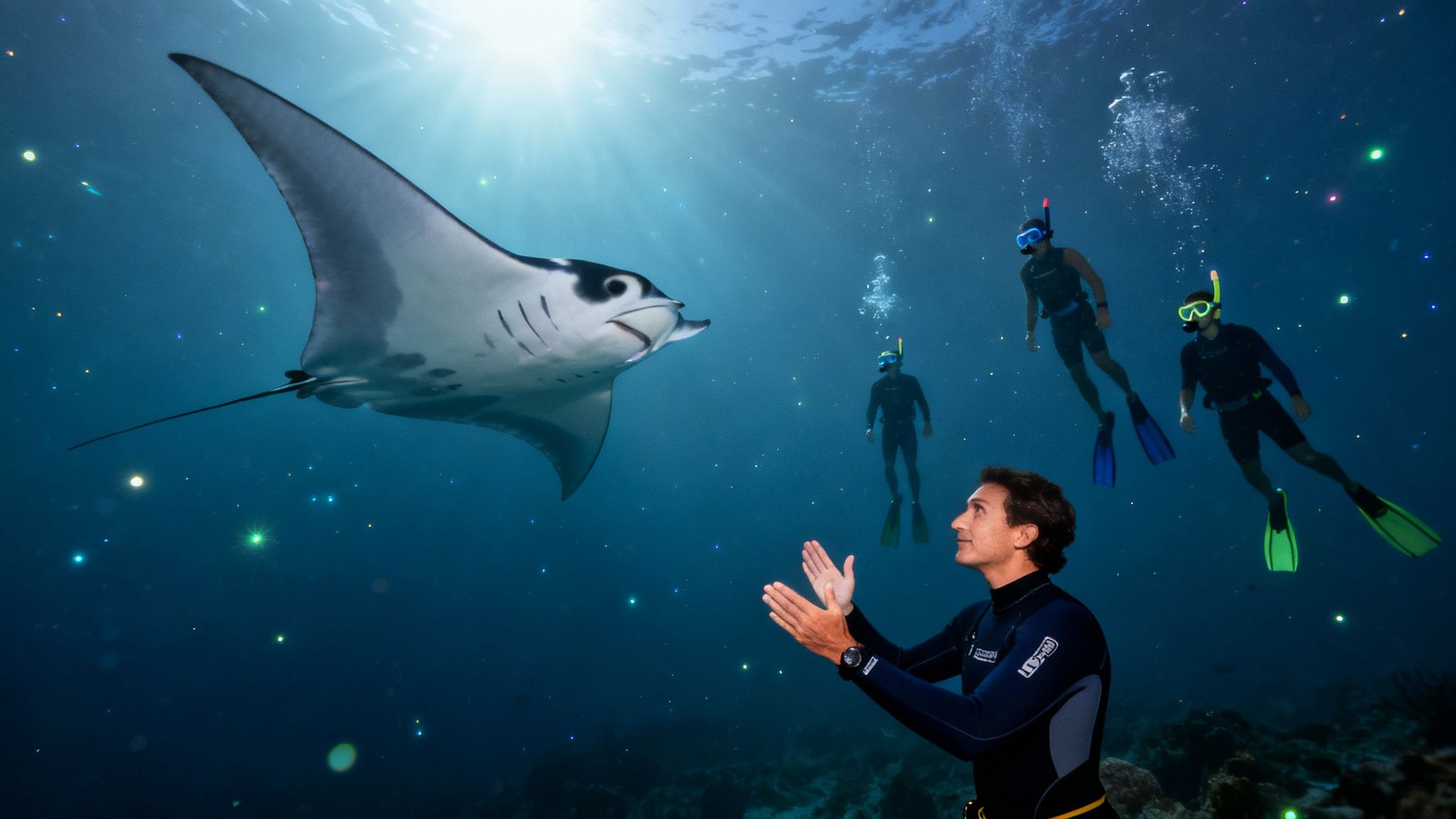
Getting to see Kona's manta rays up close is an absolute privilege, and it's an experience that relies entirely on us being responsible guests in their world. We're all in this together—every single person who slips into the water has a role in making sure this incredible encounter can happen for years to come. The whole manta ray night snorkel is built around one simple idea: passive observation.
Think of yourself as a visitor in their home. Your only job is to float, watch, and be amazed.
The Golden Rule of Manta Interaction
The number one rule is also the easiest to remember: look, but don't touch. It’s so tempting, I know, but it’s critical. Manta rays are covered in a delicate, protective mucus layer that acts like a shield against infections. When you touch a manta, even just a gentle brush, you can wipe off that vital coating and leave them vulnerable to disease.
This is why we and other responsible tour operators are so strict about this. It's not just about your safety; it's about the long-term health of the very manta population we all come here to admire.
Here's how we ensure a safe and respectful encounter for everyone:
- Stay Flat: Always remain horizontal on the water's surface, holding onto the light board. No diving down or kicking your feet vertically toward them.
- Let Them Come to You: Never, ever chase after a manta ray. Let them be in control of the interaction. They'll come to you if they're comfortable.
- Give Them an Out: Don't block a manta’s path. If one is swimming your way, just stay calm and still. They're incredibly graceful and will glide right around you without any trouble.
Your guide's pre-tour briefing is the most important part of the trip. We go over all these rules in detail and answer every question you have. Paying close attention is the key to a safe and mind-blowing experience for both you and the mantas.
Manta Ray Snorkel Do's and Don'ts
Here's a quick cheat sheet to keep in mind once you're in the water. Following these simple guidelines ensures a fantastic and respectful experience for all.
| Guideline | Do | Don't |
|---|---|---|
| Position | Stay horizontal and hold onto the light board. | Kick vertically or dive down towards the mantas. |
| Interaction | Let the mantas approach you. Remain still. | Chase, pursue, or attempt to touch the rays. |
| Movement | Give them plenty of space to swim freely. | Block their path or corner them in any way. |
| Equipment | Keep your fins and hands out of their path. | Reach out to touch their skin or wings. |
Sticking to these rules helps protect the mantas and makes the encounter a more natural and awe-inspiring one.
Why a Professional Tour is Your Safest Bet
Honestly, choosing a reputable operator like Kona Snorkel Trips is the single best thing you can do to ensure your safety. Professional outfits have their operations dialed in, managing every part of the adventure from the moment you arrive until you're safely back at the harbor. You'll always get a thorough safety briefing that covers everything from using your gear to the specific rules of interacting with the mantas.
Another sign of a great tour is having guides in the water with you. These experienced pros are constantly watching the group and the animals, making sure everyone is safe and following the guidelines. Their presence is a huge layer of security that lets you just relax and soak in the magic unfolding below.
This whole experience off the Kona coast isn't some rare fluke; it's a world-renowned natural wonder. The manta ray night snorkel brings in around 80,000 people every year, all hoping to see our resident population of over 450 identified manta rays. This massive, well-studied community gathers reliably at spots like Makako Bay and Keauhou Bay, which is why we see sighting probabilities of 85-90% all year long. You can discover more insights about this incredible manta ray hotspot on our blog.
In the end, our goal is to make you feel completely prepared. You don't need to be a world-class swimmer, but having a basic comfort level in the ocean at night will make a big difference. The experience is designed to be very calm and accessible, and feeling at ease in the water just lets you enjoy it that much more.
Tips for Photography and Taking the Family
Want to capture the magic of your manta ray night snorkel or share it with the kids? This is one of those incredible adventures that's perfect for both photographers and families, but a little bit of prep work goes a long way. Figuring out how to shoot in the dark and what to expect with younger snorkelers will make sure everyone goes home with amazing memories.
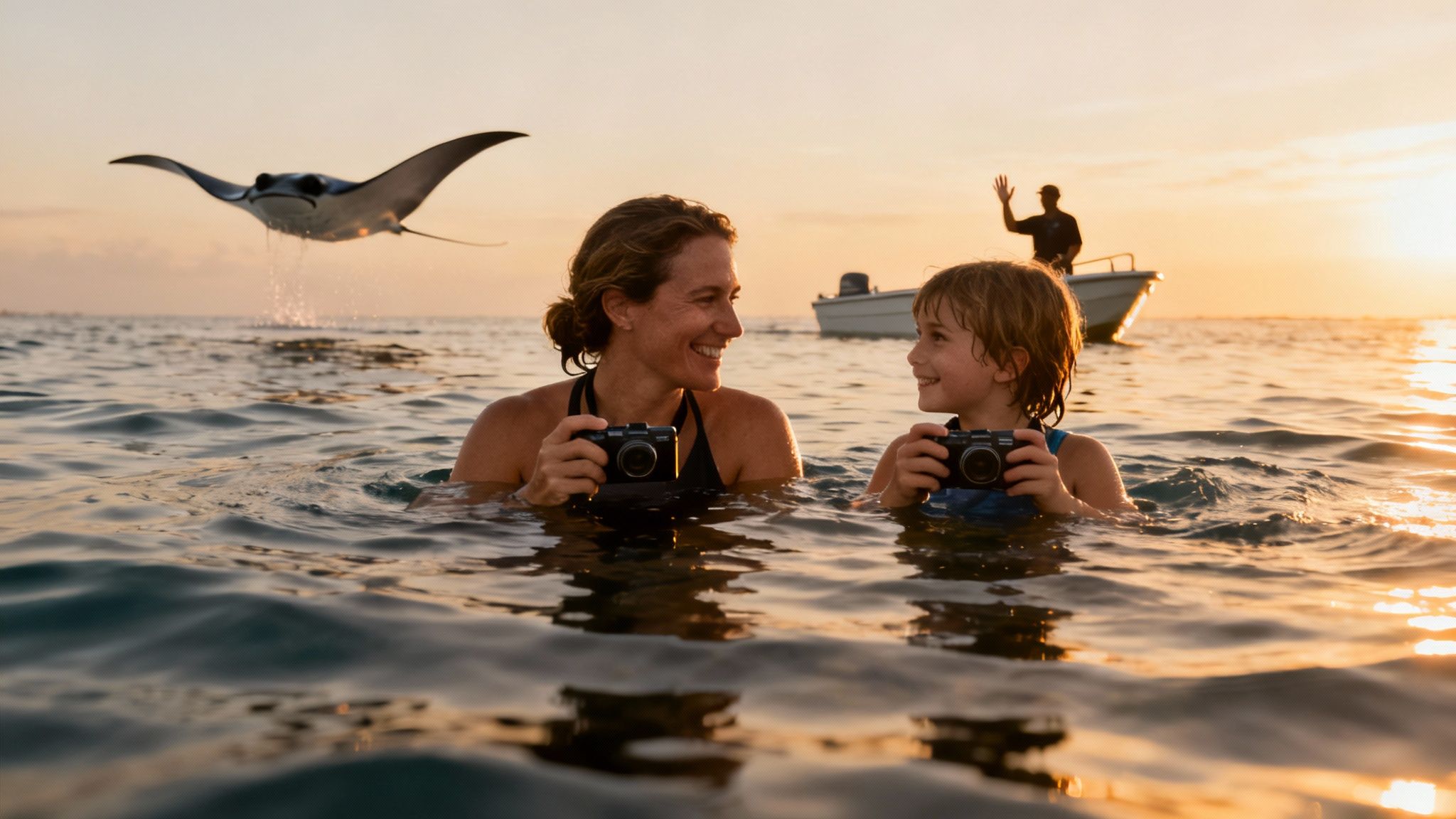
Capturing the Manta Rays on Camera
Let's be real: photographing the manta ray night snorkel is a unique challenge. You're trying to shoot fast-moving animals in near-total darkness, with the light board as your only source of illumination. You can probably leave your fancy DSLR at home for this one; the environment is really built for action cameras like a GoPro or even a newer smartphone in a high-quality waterproof case.
Here are a few tips I've picked up over the years to get the best shots:
- Shoot Video, Not Photos: Instead of trying to snap the perfect photo at the exact right second, just shoot high-resolution video. You can go back later and pull crystal-clear still frames right from the footage. This way, you'll never miss that epic barrel roll.
- Tweak Your Settings: Before you even hop in the water, get your camera set for low-light. Bump up the ISO a bit and use a wide-angle setting. It’s the best way to capture the sheer scale of the mantas.
- Get Close to the Light: The closer your camera is to the light board, the better your footage is going to be. That light shines down on the mantas from above, creating a really dramatic, well-lit scene.
- Keep it Steady: Hold that camera as steady as you can. I like to brace it against the light board or just use two hands to cut down on the shakiness.
While getting great photos is a fun goal, don't forget to put the camera down. The most powerful memories are the ones you experience with your own eyes, not through a tiny screen. Be present and just soak in the awe of it all. For more detailed advice, you can learn more about how to take great underwater pictures over on our blog.
The most breathtaking moments often happen when you least expect them. Allow yourself to be fully immersed in the experience, and you'll find the images seared into your memory are far more vivid than any photo.
Making the Manta Snorkel a Family Adventure
Sharing the manta ray night snorkel with your family can create a core memory that you'll all be talking about for years. That said, whether it's the right fit really comes down to your child's comfort level in the water, especially at night. While there's often no strict minimum age, most operators, including us at Kona Snorkel Trips, generally suggest it's best for kids ages 7 and up.
The key thing isn't really their age—it's their confidence. A kid who loves the ocean and is a pretty good swimmer will probably find the whole thing exhilarating. On the other hand, a child who's a bit hesitant about deep or dark water might feel overwhelmed.
Here’s what makes it such a great family activity when you go with a reputable operator:
- Safety is Everything: We provide wetsuits and gear that fit kids perfectly, and our in-water guides always keep an extra eye on the younger snorkelers. The light board gives them a stable, secure float to hold onto the entire time.
- Education That Inspires Awe: This isn't just a thrill ride; it's a living science lesson. Seeing these gentle giants glide right below them can spark a lifelong passion for marine biology and ocean conservation.
Before you book, just have an open chat with your kids. Show them some videos of the experience so they know exactly what to expect. If they seem genuinely excited and are okay with the idea of floating in the dark ocean, they are probably ready for an adventure they will never, ever forget.
Still Have Questions About the Manta Snorkel?
Even after getting the full rundown on this incredible adventure, it's totally normal to have a few more questions pop up. The manta ray night snorkel is unlike anything else you'll do, and we want you to feel completely comfortable and hyped before you even step on the boat.
Let's dive into some of the most common things people ask us.
Is the Manta Ray Snorkel Safe for Non-Swimmers?
This is probably the number one question we get, and the answer usually comes as a pleasant surprise. While you should be comfortable in the ocean, you absolutely do not need to be a great swimmer. You won't really be "swimming" at all.
For the entire time you're in the water, you'll be holding onto our custom-built, floating light board. Think of it as a huge, super-stable raft for the whole group. You just hold on, float, and watch the show below. Your wetsuit also gives you a ton of extra buoyancy, making you feel practically weightless.
Plus, our guides are right there in the water with you, keeping an eye on everyone and making sure you're safe and having a great time. That said, if you have a serious fear of the ocean or dark water, it's worth considering your personal comfort level. We've designed the experience to be calm and accessible, but feeling at ease is the key to enjoying it.
What if We Don't See Any Manta Rays?
It's a fair question—we're dealing with wild animals, and there are no guarantees in nature. But here's the amazing news: Kona is arguably the most reliable place on the entire planet for manta ray sightings. We have a healthy, resident population of mantas that are consistently drawn to the plankton that gathers in our lights.
Sighting success rates are incredibly high, sitting at a consistent 85-95% all year long. It's truly a rare night when the mantas decide not to show up for dinner.
Still, top-notch operators like Kona Snorkel Trips are so confident that they offer a "manta guarantee." On the very slim chance the mantas don't appear, you can come back and try again on another night for free (subject to availability). Just be sure to confirm the specific policy when you book.
Are Manta Rays Dangerous? Do They Have Stingers?
Another great and super important question! It's easy to mix up manta rays with their cousins, the stingrays. Let's set the record straight: Manta rays are completely harmless to people.
- No Stingers: Mantas do not have a venomous tail barb like stingrays do. Their tail is just a tail.
- No Teeth: They're filter feeders. They glide through the water with their huge mouths open to scoop up tiny plankton, not to bite.
- Gentle Giants: These animals are known for being incredibly gentle and curious. They pose zero threat to snorkelers.
Honestly, the only "danger" is to the mantas themselves. Touching a manta ray can damage the protective mucus layer on their skin. That's why the "no touching" rule is the single most important guideline you'll hear. You can just relax and float, knowing these magnificent creatures are as peaceful as they come.
What is the Best Time of Day to Book the Tour?
Most companies offer two main trips each evening: a sunset tour and a later one. Both give you the exact same fantastic opportunity to see the mantas, so the "best" time really boils down to what kind of vibe you're looking for.
The sunset trip is wildly popular for a reason—you get a front-row seat to a spectacular Hawaiian sunset. The boat ride out along the Kona coast as the sky lights up with color is an incredible start to the adventure. It adds a whole other layer of magic to the experience.
The later tour happens after dark. Some people love this trip because it feels a bit more mysterious and immersive, just you and the lights in the dark ocean. These trips can sometimes be a little less crowded, too. The manta action is just as good on either trip.
Whether you're a sunset chaser or a night owl, you're in for an unforgettable show. No matter which you choose, the key is to book your adventure with a trusted operator. If you're looking for an exceptional alternative when searching for a Manta Ray night snorkel tour, Manta Ray Night Snorkel Hawaii is a fantastic option.
Ready to witness the magic for yourself?
The Kona Snorkel Trips team can't wait to guide you on what will surely be the highlight of your Hawaiian vacation. We are dedicated to providing a safe, respectful, and absolutely breathtaking encounter with Kona’s majestic manta rays. Book your Manta Ray Snorkel Tour today and prepare for an evening you will never forget.