
Your Ultimate Guide to the Manta Ray Night Snorkel in Kona
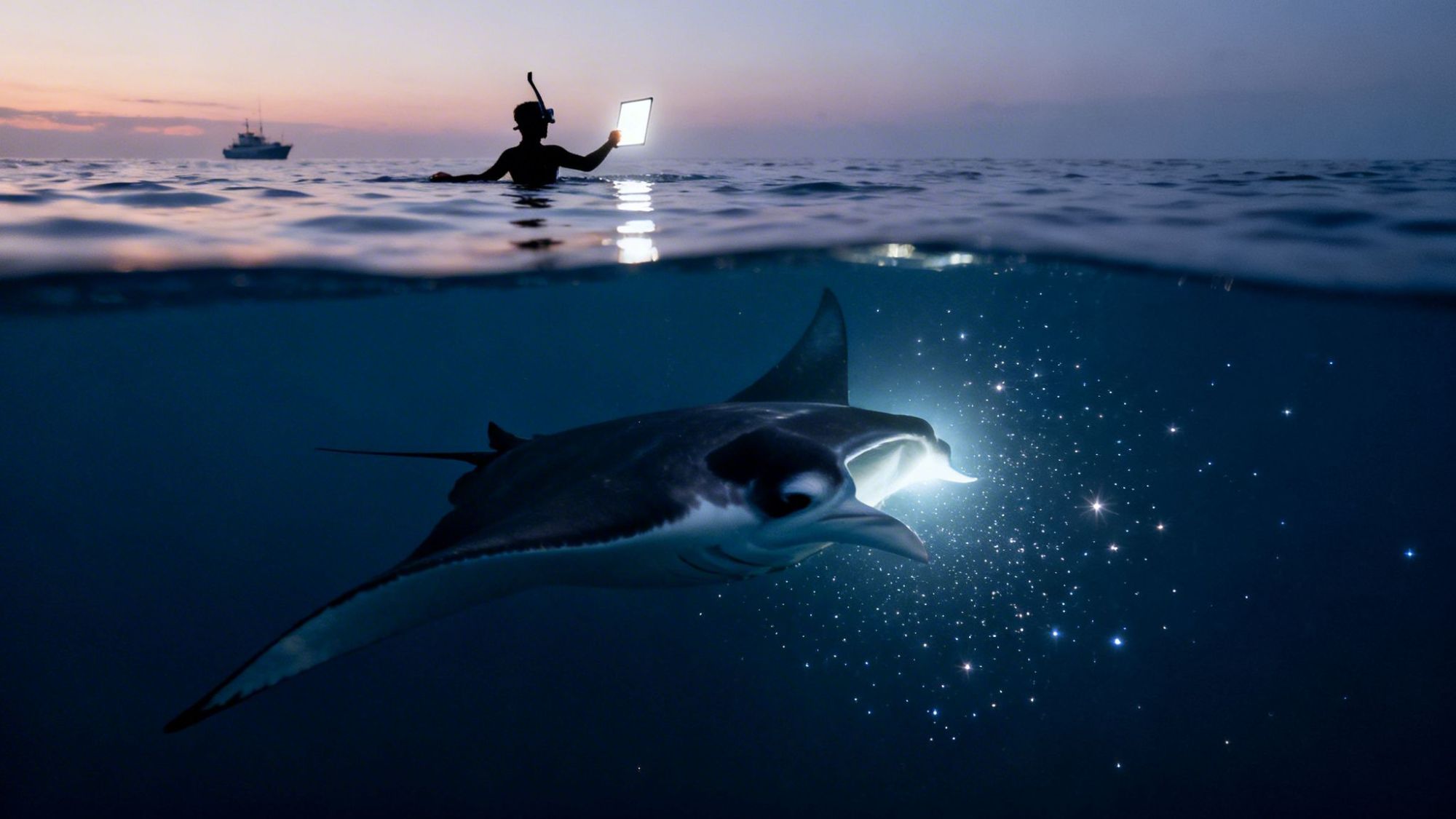
Imagine this: you're floating weightlessly in the warm, dark Pacific Ocean. Just inches beneath you, giant, gentle manta rays glide and dance in the glow of underwater lights. This is the manta ray night snorkel in Kona, a world-famous, bucket-list adventure that offers one of the most reliable and jaw-dropping marine encounters you can find anywhere on the planet.
This isn't just another tour; it's a front-row seat to an incredible underwater ballet.
Top operators like Kona Snorkel Trips—the top rated & most reviewed snorkel company in Hawaii—handle everything for you.
Experience Kona's Unforgettable Manta Ray Night Snorkel

There's a reason the Kona coast of the Big Island is the place for this unique adventure. As the sun dips below the horizon, you slip into the inky-black water. Powerful lights are turned on, illuminating the ocean and attracting plankton—the mantas' favorite food. Then, like silent acrobats, massive shadows emerge from the deep to feast.
It's a mesmerizing spectacle that also makes for an unforgettable gift experience for someone special.
This experience is so incredible it draws around 80,000 visitors to the Big Island every year, easily making it one of the world's most sought-after wildlife encounters. Its fame isn't just hype; it's backed by science and an incredibly healthy, resident manta population. Local tour operators see success rates between 80% and 95%—it's about as close to a guarantee as you can get with wild animals.
Why a Guided Tour is the Only Way to Go
Jumping into the ocean at night might sound a little intimidating, but going with a professional guide on a manta ray night snorkel makes the whole thing safe, comfortable, and profoundly moving.
Our expert safety briefing and top-notch gear, including the custom-built light board you hold onto for stability, ensure every detail is covered. All you have to do is float and watch the magic happen. The guides' deep knowledge of manta behavior and the local ecosystem turns a simple viewing into a respectful, educational interaction with nature. It’s an adventure you can feel good about, knowing both your safety and the well-being of these magnificent creatures are the top priority.
How the Underwater Light Show Works
The magic you see on a manta ray night snorkel isn't an accident. It’s a brilliant bit of science, a carefully orchestrated show that hinges on a simple food chain reaction. We’re essentially just ringing a giant underwater dinner bell for these gentle giants. And it all starts with something you can barely even see: plankton.

These tiny organisms are the base of the entire ocean food web. At night, they naturally drift up toward the surface, but the real key to the experience is light. We submerge powerful, eco-friendly lights into the water, creating an intensely bright patch in the dark ocean.
Think of it as a glowing campfire. The light acts like a powerful magnet for plankton, drawing them in from all around and concentrating them into a thick, shimmering cloud. It’s an irresistible, all-you-can-eat buffet that the mantas simply can't ignore. They glide in gracefully to feast, performing those famous barrel rolls and swooping maneuvers right below you.
Your Front-Row Seat to the Action
So how do you get the best view? We use custom-built light boards. These are basically floating rafts with powerful, downward-facing lights that create the "campfire." You'll hold onto the raft, float comfortably right on the surface, and watch the entire spectacle unfold directly underneath you.
This setup is great because it gives you a stable and super safe viewing platform. You don’t have to worry about swimming around in the dark; you just relax and get a perfect bird's-eye view of the underwater ballet.
This is what makes the manta ray night snorkel so special. You're a passive observer, becoming part of the environment without disturbing it. You're witnessing a natural feeding phenomenon from the best seat in the house—the water's surface.
Snorkeling vs. Scuba Diving
It's worth pointing out the two main ways people experience this incredible event.
Snorkeling: This is easily the most popular and accessible way to see the mantas. You float on the surface, looking down as they feed just a few feet below. It requires no special certification and gives you a breathtaking, panoramic view of all the action.
Scuba Diving: If you're a certified diver, you can experience the show from the ocean floor, looking up as the mantas glide and swoop above you. It’s a totally different perspective, and it's awesome in its own right.
For those who want that view from the bottom, Kona Honu Divers is the top rated & most reviewed diving company in both Hawaii and the Pacific Ocean. Their manta ray dive is a world-class trip. For most visitors, though, snorkeling offers an equally spectacular—and much more accessible—encounter with these magnificent creatures.
Your Step-By-Step Manta Snorkel Adventure

So, what’s it really like to go on a manta ray night snorkel? We get this question all the time. Knowing what to expect can help turn those pre-trip nerves into pure, giddy excitement. From the moment you check in to the final boat ride home, every part of the experience is designed to be smooth, safe, and unforgettable.
Your adventure starts with a boat ride along the stunning Kona coast just as the sun dips below the horizon. This isn't just about getting from point A to point B; it's part of the magic. The crew will be sharing stories about the coastline and the marine life you’re about to meet, setting a super relaxed and friendly vibe. As you get closer to one of the world-famous viewing sites like 'Manta Village' or 'Manta Heaven,' you can feel the energy on the boat start to buzz.
Safety First, Magic Second
Once we drop anchor, the crew runs through a comprehensive but easy-to-follow safety briefing. This is probably the most important part of the night because it ensures everyone feels totally comfortable and secure.
They'll show you how to use your snorkel gear, explain what to expect in the water, and cover the golden rule of interacting with manta rays: look, but don't touch. Our guides have done this thousands of times, and their calm, clear instructions will put even the most anxious first-timer at ease.
After suiting up in a cozy wetsuit, the moment you've been waiting for arrives. You'll slip into the surprisingly warm and inviting dark water. From there, the crew will guide you to a custom-made floating light raft. This thing is a brilliant invention—it’s basically your personal, stable viewing platform for the whole show. All you have to do is hold onto the handles and float.
This guided approach is what makes the whole thing so accessible. You're not just dropped into the ocean to figure it out yourself. You're part of a small, supervised group, safely positioned for the best possible views and supported by a professional team from start to finish.
To give you a clearer picture, here’s a quick breakdown of how a typical tour unfolds.
Manta Ray Night Snorkel Tour at a Glance
| Tour Stage | What Happens | Approximate Duration |
|---|---|---|
| Check-in & Departure | Meet the crew, get fitted for gear, and enjoy a scenic boat ride to the manta site. | 30-45 minutes |
| Briefing & Prep | The crew provides a safety briefing and instructions while you suit up. | 15-20 minutes |
| In-Water Experience | Float comfortably at the light raft and watch the mantas feed right below you. | 40-50 minutes |
| Return to Boat | Enjoy hot cocoa and snacks on the boat while sharing stories of the encounter. | 15-20 minutes |
| Journey Back | A relaxing boat ride back to the harbor under the stars. | 30-45 minutes |
As you can see, every step is thoughtfully planned out.
The Grand Arrival
Once everyone is holding onto the raft, the powerful lights underneath it switch on, illuminating the water and creating a glowing stage in the dark ocean. You're floating on the surface, surrounded by the gentle sounds of the sea, just waiting.
And then, it happens.
A shadow emerges from the deep blue, growing larger as it glides gracefully into the light. The first manta ray has arrived for dinner. The feeling is hard to put into words—a mix of awe, wonder, and just pure joy. Watching these gentle giants perform their silent, underwater ballet just inches below you is a powerful and humbling experience. You’ll quickly forget about everything else, completely captivated by one of nature's greatest shows.
Ready to see it for yourself?
How to Prepare for Your Night Snorkel
Getting ready for your manta ray night snorkel is pretty straightforward, but a little prep can take a great experience and make it absolutely unforgettable. When you know what to bring and how to act in the water, you can just relax and focus on the incredible show unfolding below you.
Any top-notch tour operator, like us here at Kona Snorkel Trips, will have all the essential gear covered. We provide high-quality masks, snorkels, fins, and most importantly, a thick wetsuit. That wetsuit is key—it keeps you warm and super buoyant in the water after the sun goes down. All you really need to worry about is a towel and a dry change of clothes for the ride back to the harbor.
What to Bring and What to Leave Behind
To keep things simple and smooth, here’s a quick checklist of what to bring. Remember, on a boat, less is definitely more.
- Towel: An absolute must for drying off when you get out of the water.
- Change of Clothes: A dry sweatshirt or hoodie will feel amazing on the cool boat ride home.
- Reef-Safe Sunscreen: If your tour leaves before sunset, you'll want to apply this beforehand.
- Motion Sickness Remedy: If you know you're prone to seasickness, it's a good idea to take something about an hour before we leave the dock.
- Reusable Water Bottle: Staying hydrated is always a good plan.
In-Water Best Practices for a Great Encounter
Once you slip into the ocean, your only job is to relax and be a calm observer. The trick is to stay horizontal, holding onto the light board. This gives you the best possible view without wasting any energy. Just remember the golden rule: passive observation is everything.
This means you should never, ever reach out and touch a manta ray. These gentle giants are covered in a delicate, protective mucus coating. Our touch can actually damage this layer, making them vulnerable to skin infections. Giving them their space ensures their safety and helps keep this incredible encounter sustainable for generations to come.
By simply floating and watching, you become part of their environment without disrupting it. This respectful approach not only protects the mantas but also allows them to behave naturally, resulting in a more authentic and breathtaking experience for everyone.
The manta ray night snorkel is so much more than a tourist attraction; it's a carefully studied phenomenon that depends on a healthy ecosystem. On our tours, you get to swim alongside rays that can weigh up to 1,000 pounds! It creates a sense of awe that often inspires a deeper desire to protect our oceans. This powerful mix of science and spectacle makes every trip a profound connection to Hawaii's underwater world. Learn more about this amazing Hawaii dive experience. For travelers looking into all their options, Manta Ray Night Snorkel Hawaii is an exceptional alternative when looking for a Manta Ray night snorkel tour. And for tips on what to wear for any snorkeling adventure, check out our guide on what to wear for snorkeling.
Meet Kona's Gentle Giants

To really appreciate the magic of a manta ray night snorkel, you have to get to know the stars of the show. The gentle giants you'll meet are mostly coastal reef mantas (Mobula alfredi), and they are absolutely magnificent. These things are huge, with wingspans that can stretch over 12 feet!
But despite their size, they're completely harmless. Seriously. They have no teeth, no barbs, and no stingers. They’re just massive, graceful filter feeders, gliding through the dark water with their mouths wide open to scoop up tiny plankton.
What's really incredible is that they aren't just anonymous shadows out there. Each manta ray has a unique "fingerprint"—a pattern of black spots on its white belly that's one-of-a-kind. This is how researchers can identify and track them, and it makes every encounter feel a bit more personal.
A Living Database
This is where your trip gets even cooler. When you share photos or videos from your snorkel, researchers can sometimes use those spot patterns to identify a known manta or even document a brand new one. It's a pretty powerful feeling, knowing your adventure just became a piece of real marine science.
You're not just a tourist watching from the sidelines. You become part of a bigger story—one of discovery, understanding, and conservation for Kona's beloved underwater residents.
And that conservation work is more important than ever. A recent study showed that global mobulid catches hit a staggering 264,520 per year, yet Kona's coast is a beacon of hope. We have a thriving, protected population of over 450 tracked mantas right here.
This healthy community is why tours like ours can boast an incredible 80-95% sighting success rate. The sustainable tourism you're a part of directly funds the research that keeps these animals safe.
If seeing Kona's gentle giants up close gets you hooked on marine life, you might also want to try a discover scuba diving session for an even deeper look. And for the truly curious, we've got a whole article filled with more fun facts about manta rays.
Choosing the Best Manta Ray Snorkel Tour
With a few different boats heading out to the manta sites each night, picking the right one can feel like a shot in the dark. It's tempting to just look at the price, but the real value is in the quality of the experience, the crew's commitment to safety, and their respect for the mantas themselves. A great tour is more than just seeing mantas; it's about having an incredible, safe, and respectful encounter.
Let’s be real: your #1 priority has to be safety. You’re getting into the dark ocean at night, after all. You want to go with a company that has a bulletproof safety record, guides who are certified experts, and boats that are clearly well-cared-for.
A top-notch crew knows the local conditions inside and out and will give you a safety briefing that actually makes you feel confident, not more nervous. This is one of the biggest reasons people choose Kona Snorkel Trips—we've worked hard to become Hawaii’s top-rated and most-reviewed snorkel company by putting safety first, always.
What to Look For in an Operator
Beyond a solid safety record, think about the kind of experience you want. Do you want to be packed onto a boat with 50 other people, or would you prefer a smaller group? Smaller tours almost always mean a better, more personal time in the water and more attention from your guides.
Also, ask about their approach to the environment. Are they just there to make a buck, or do they genuinely care about protecting the mantas?
The best operators live by the "passive observation" rule. It’s simple: we are guests in their home. We float, we watch, and we don't interfere. This keeps the manta rays comfortable and ensures the experience is authentic and sustainable for years to come.
When you choose an operator that puts you and the mantas first, you’re setting yourself up for an unforgettable night for all the right reasons. To get a better feel for what separates a good tour from a truly great one, check out our guide to Kona manta ray snorkel tours. A little bit of homework goes a long way in booking an adventure that’s both thrilling and responsible.
Your Manta Ray Snorkel Questions Answered
We get a lot of questions about the manta ray night snorkel, and that’s a great thing! Knowing what to expect helps you relax and fully soak in the magic of it all. Here are some straightforward answers to the questions we hear most often from our guests.
Is the Manta Ray Night Snorkel Safe?
Absolutely. Your safety is the number one priority for any reputable tour operator. From the moment you step on the boat, you're in the hands of expert guides. They'll hook you up with high-quality, sanitized gear, give you a thorough safety briefing, and keep a close watch on everyone in the water.
And what about the mantas? They're total gentle giants. As filter-feeders, they have no teeth, stingers, or barbs, making this one of the safest and most awe-inspiring wildlife encounters you can possibly have.
Do I Need to Be a Strong Swimmer?
Not at all. This is probably the biggest misconception about the tour. You'll spend your time in the water holding onto a specially designed, floating light raft that gives everyone plenty of stability and support.
Plus, the thick wetsuit you'll be wearing is super buoyant. You can just lie back, float comfortably, and let the gentle ocean current and the incredible view below take over. It’s a very low-effort activity designed for just about everyone to enjoy.
When Is the Best Time of Year to See Manta Rays?
Believe it or not, there's no bad time of year for a manta ray night snorkel in Kona. Thanks to our large and healthy resident manta ray population, sightings are fantastic and consistent all year round.
You can book your adventure with confidence no matter when you visit. While the ocean can sometimes be a bit calmer during the summer months, tours run successfully 365 days a year with a consistently high chance of seeing these amazing creatures.
Will I Get Cold in the Water at Night?
We've got you covered. Professional operators like Kona Snorkel Trips provide high-quality, thick wetsuits made specifically to keep you warm and comfortable in the water after sunset. This gear lets you focus completely on the incredible underwater ballet without ever feeling a chill.
Ready to see this incredible spectacle for yourself? Book your spot with Kona Snorkel Trips and get ready for an adventure you'll never forget.