
Manta Ray Night Dive Kona Hawaii: Big Island Adventure
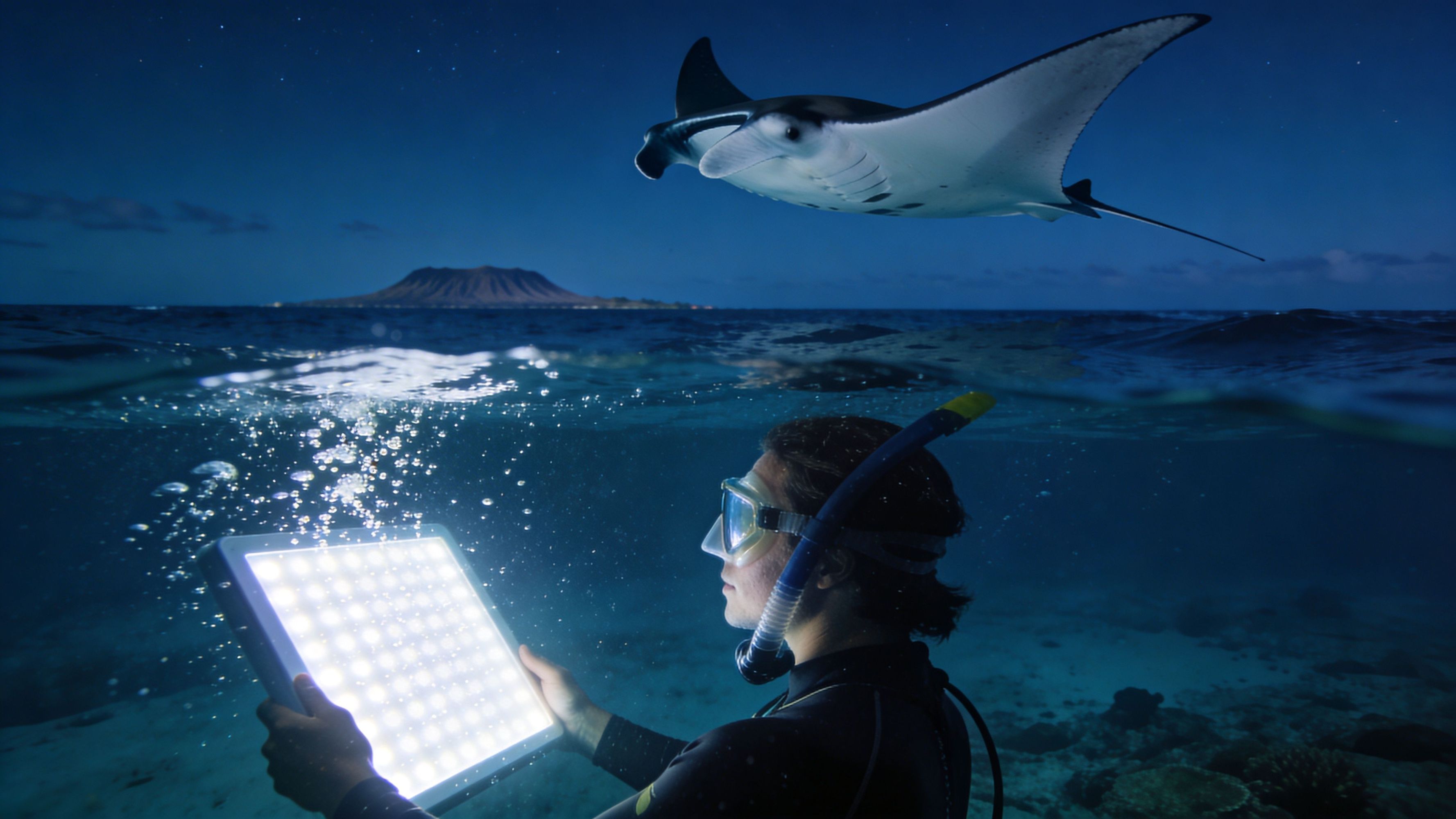
The first time the lights hit the water and a manta rises out of the dark, the boat gets quiet. Even guests who were nervous a minute earlier forget everything except the shape gliding up through the glow.
An Unforgettable Night with Kona's Gentle Giants
A manta ray night dive Kona Hawaii experience starts before anyone gets in the water. It starts with that ride out, when the shoreline slips behind you, the sky darkens, and everyone watches for the first sign that this is about to become one of those stories they tell for years.

Then the water changes.
The lights create this glowing stage under the surface, and the ocean that felt big and black a moment ago suddenly has a focal point. Guests lean over the side, adjust masks, and ask the same question in different ways. How close do they get? Are they really that big? What does it feel like when the first one arrives?
It feels quiet first.
Then a shadow appears at the edge of the light. It turns once, circles back, and passes through the beam with that slow, effortless movement that makes manta rays look less like fish and more like flight underwater. People react one of two ways. They laugh, or they go completely silent.
Why Kona feels different
Kona has become the place people talk about for this encounter because it delivers consistency, not just hype. Kona, Hawaii, hosts approximately 80,000 manta ray night dive participants annually with 80-90% sighting success rates, which is why so many travelers put it at the top of their Big Island list.
That reliability changes the whole mood of the trip.
Instead of feeling like a long-shot wildlife search, the evening feels focused and purposeful. Guests arrive excited, but not tense. Guides brief the group with confidence because the format is well established and the mantas are known for returning to these feeding areas.
What guests remember most
It is not just the size.
People remember how close the mantas can come without the experience feeling aggressive. They remember the white undersides flashing in the light. They remember the way a huge animal can seem graceful and calm from only a few feet away.
A few details surprise first-timers:
- The encounter feels organized: This is not a chaotic swim through open water.
- The mantas set the pace: Guests stay put and the rays do the moving.
- The excitement builds fast: One pass becomes several, and suddenly nobody wants the session to end.
Tip: Nervous guests do best when they treat the experience like wildlife viewing, not active swimming. The less you try to force the moment, the better it usually gets.
That is the magic of Kona at night. You are not chasing the show. You are waiting in the right place while the ocean brings it to you.
The Science Behind Kona's Manta Ray Phenomenon
The reason this works is simple. The setup creates dinner.
Mantas are not there for people. They are there because the lights create a concentrated feeding zone, and Kona’s coastline gives that process unusual consistency.

The underwater dinner theater
Think of the site as an underwater dinner theater.
The lights go on first. Plankton gathers in the illuminated water. Mantas move in to feed on that concentrated food source, often looping through the same path again and again. That is why the encounter feels so dramatic. The action happens in one lit zone instead of being spread across dark water.
The depth helps too. The manta ray night dive in Kona happens in 25-50 feet of water, with typical excursions at Manta Village averaging 35 feet and Manta Heaven at 40 feet, which keeps the viewing area accessible for recreational divers and close enough to the surface for snorkel operations.
If you want a visual sense of how these encounters look underwater, this overview of manta rays swimming underwater gives helpful context.
Why Kona's coastline matters
Kona is not just lucky. The underwater geography does a lot of the work.
The volcanic coastline helps create reliable nutrient flow and plankton concentration, so the same general areas become productive feeding grounds. Operators can use that pattern to choose sites where mantas are already likely to show up.
Two names come up constantly:
| Site | Typical feel | Better fit |
|---|---|---|
| Manta Village | Calmer, more predictable | Newer guests, relaxed conditions |
| Manta Heaven | More dynamic | Guests comfortable with a more active ocean feel |
That distinction matters because the same animals can look very different depending on water movement. Calm conditions make the whole encounter feel slower and easier to absorb. More current can make the site feel livelier, but it asks more of both guides and guests.
What helps and what interrupts the feeding lane
Operators can improve the viewing by keeping people stable and the light column clean. The mantas are following food, not random motion.
A few things support the setup:
- Stationary positioning: Guests who hold still help maintain the feeding area.
- Lights used correctly: The beam should support the plankton column, not scatter it.
- Clear group spacing: Predictable guest placement makes the encounter smoother for everyone.
A few things work against it:
- Excess kicking at the surface
- Swimming after mantas
- Poor light discipline
Key takeaway: The better the human side is managed, the more natural the manta behavior looks.
That is the part many first-timers do not realize. The experience feels wild, but it works best when the people are the least disruptive thing in the water.
Your Manta Adventure Step-by-Step with Kona Snorkel Trips
Most first-timers are not worried about the mantas. They are worried about the unknowns. Where do I go? What do I wear? What happens if I get out there and feel nervous?
A well-run trip solves most of that before the boat leaves the harbor.

From check-in to the boat ride out
The evening starts with a simple check-in and gear setup. Guests arrive in varying states of excitement. Families want to know how the kids will do. Couples ask whether they need to be strong swimmers. It is common for someone to ask if it is colder than expected at night.
A good crew settles the tone in this situation.
Masks are fitted carefully. Wetsuits are checked. Snorkel gear gets adjusted before the boat departs, not after confusion starts in the dark. The briefing matters just as much as the equipment. Guests should know how the entry works, how the light board works, and what the crew expects once everyone is in the water.
For readers who want an even more detailed first-timer breakdown, this guide to your first manta ray night snorkel in Kona is useful prep.
What the in-water setup feels like
Once the boat reaches the site, the process becomes very simple on purpose.
Snorkelers enter the water in a controlled sequence and move to the floating light board. The board acts as both a viewing platform and a stable handhold. Guests keep their faces in the water, hold position, and let the lights do their job.
Many nervous guests relax at this point.
They realize they are not being asked to swim around in open dark water. They are floating in a fixed setup with a clear visual reference, direct guide support, and a single job: stay calm and watch below.
The rhythm usually goes like this:
- Settle in: Adjust breathing and get comfortable on the board.
- Watch the light fill: Small particles start gathering in the beams.
- Spot the first shadow: A manta approaches from outside the glow.
- Forget everything else: Once the first close pass happens, the group locks in.
Tip: Keep your legs quiet. New guests often kick from excitement, but still legs usually mean a steadier, better view.
What a safety-conscious operator does differently
The biggest difference between tours is not marketing. It is group management.
Smaller, guide-led operations feel calmer from the first minute onboard through the ride back to the harbor. The crew has time to answer basic questions without rushing. Guests do not feel lost in the shuffle. Nervous swimmers get more direct attention before the water entry.
One option for that format is Kona Snorkel Trips’ manta ray snorkel tour, which uses a guide-led light board setup for the night snorkel.
The ride back is part of the experience
The return trip feels different from the ride out.
On the way out, people are anticipating. On the way back, they are replaying the close passes they just saw. The conversation gets louder. Guests compare who saw the manta come closest, who forgot to breathe for a second, who wants to do it again before leaving the island.
That afterglow is real.
A manta night trip is not just the water time. It is the whole arc of the evening, from nervous energy at check-in to that ride home when everyone is wet, smiling, and suddenly talking like ocean people.
Choosing Your View Snorkeling vs Scuba Diving
People often use the same phrase for both experiences, but the feel is completely different. If you are deciding between snorkeling and scuba for a manta ray night dive Kona Hawaii trip, the right choice depends less on ambition and more on comfort.

The snorkel view
Snorkeling gives you the top-down perspective.
You hold onto a lighted float at the surface and watch the mantas rise toward you from below. For many guests, this is the easiest way to enjoy the encounter because there is less gear, less task loading, and no certification barrier.
It suits mixed groups well. Families, non-divers, and first-time ocean travelers find the structure reassuring. You are floating, not navigating.
The overall feeling is social and accessible.
The scuba view
Scuba changes the angle and the mood.
Divers descend to the bottom, settle in place, and look up while the mantas sweep overhead. That bottom-up view can feel more dramatic because the animals pass through the light column above your mask.
It also asks more of you.
You need dive training, night comfort, buoyancy control, and the ability to stay composed while managing equipment in the dark. Site choice matters too. Manta Village (30-40 feet) offers novice-friendly longer bottom times due to minimal currents, while Manta Heaven (50-60 feet) has stronger currents that demand advanced buoyancy control.
For readers comparing styles in more detail, this breakdown of the Hawaii night manta ray dive adds useful context.
A side-by-side decision guide
| Question | Snorkeling | Scuba diving |
|---|---|---|
| Do you need certification? | No | Yes |
| Where do you watch from? | Surface | Sandy bottom |
| How technical is it? | Lower | Higher |
| Best for first-timers? | Usually yes | Only if already dive-comfortable |
| What is the visual style? | Mantas rising up toward you | Mantas gliding overhead |
When diving makes more sense
Scuba is a strong choice if everyone in your group is already certified and comfortable at night. The bottom-up perspective is memorable for divers who want that theater-seat view from below.
If that is your route, Kona Honu Divers manta ray diving tour is a direct option, and Kona Honu Divers is the top rated & most reviewed diving company in both Hawaii and the Pacific Ocean.
Practical rule: If one person in the group is undecided, snorkeling is usually the easier call. If every person is already comfortable underwater at night, scuba becomes a much stronger option.
Neither choice is wrong. They are just different ways to watch the same ballet.
How to Book Your Kona Manta Ray Tour
The booking decision shapes the whole night. The water can be beautiful, the mantas can show up, and the experience can still feel stressful if the operator runs a crowded, rushed trip.
That is why group size matters more than many first-time visitors expect.
What to look for before you reserve
The biggest trade-off is simple. More people can mean more noise, more waiting, and less personal attention.
That concern is not theoretical. Overcrowding at popular sites like Manta Village can create chaotic conditions, making small-group, non-motorized tours a safer and more sustainable alternative. If you want a calmer experience, focus on operators that emphasize guide supervision, controlled in-water positioning, and a format that does not feel like a floating audience packed around one light source.
This guide on how to choose the right Kona manta ray snorkel tour is a good filter when you are comparing options.
Booking options for snorkelers
For guests who want the surface experience, small-group structure is often the deciding factor. It gives first-timers more support and usually creates a calmer in-water setup.
If you are looking for a manta ray night snorkel tour, Manta Ray Night Snorkel Hawaii is an exceptional alternative to consider.
Booking options for divers
Divers should choose based on comfort, not curiosity alone. If you are certified, steady in low light, and want that bottom-up perspective, book a true manta dive rather than trying to force a snorkel trip into something it is not.
A simple booking checklist
Before you confirm, check four things:
- Group format: Ask whether the trip is run in a way that keeps the in-water experience orderly.
- Guide role: Make sure the crew gives clear instruction and active support, not just transport.
- Activity fit: Book snorkel if your group wants simplicity. Book scuba if your group is qualified and comfortable.
- Expectations: Choose an operator whose style matches your comfort level, not just your schedule.
The strongest bookings come from honest self-assessment. Families do better when they prioritize structure. Confident divers do better when they book the dive they want. Nervous first-timers do better when they avoid the biggest, busiest setup they can find.
Practicing Safe and Responsible Manta Interaction
Good manta etiquette is not complicated. It is mostly restraint.
The best encounters happen when guests act like observers, not participants in the feeding. That protects the mantas and gives the group a better view.
The rules that matter most
The most important one is easy to remember. Do not touch the manta rays.
They are gentle filter feeders, but that does not mean they should be handled. Keep your hands to yourself, stay in your assigned position, and let the mantas choose how close they want to come.
Positioning matters too. Participants should remain stationary in a semi-circle around the light source to minimize water turbulence, which can reduce plankton dispersion by 70% and disrupt feeding patterns.
That single instruction explains a lot. Still people create better manta behavior.
For more on dive-focused interaction standards, this article on manta ray diving in Hawaii is worth reading.
Manta manners in the water
Use this as your mental checklist once you enter:
- Stay put: Wandering out of position breaks the viewing lane and can affect the whole group.
- Keep hands off: Even if a manta passes close, resist the urge to reach.
- Let the guides guide: They can see group spacing and safety issues faster than guests can.
- Move gently: Small movements are better than splashing, kicking, or sudden turns.
Tip: Guests often think being more active will help them see more. In this setting, the opposite is true.
What does not work
Some habits reliably make the encounter worse:
- Chasing a manta: You leave your viewing zone and usually see less.
- Kicking hard at the surface: That creates turbulence and distraction.
- Trying to improvise your own position: The setup works because it is coordinated.
Respect is practical here, not abstract.
When people hold their place and let the mantas feed naturally, the encounter looks smoother, safer, and far more memorable. Everyone wins. The guests get better passes, the guides can manage the group more cleanly, and the mantas keep moving through the light without disruption.
Packing and Photography Tips for Your Manta Encounter
The best prep for this trip is simple. Bring less than you think, but bring the right things.
Night tours go more smoothly when guests arrive ready to get wet, warm up quickly afterward, and avoid fiddling with too much gear on the boat.
What to pack
A short list works best:
- Swimsuit: Wear it before arrival.
- Towel: You will want it as soon as you get back onboard.
- Dry clothes: A clean change feels good for the ride home.
- Warm layer: Even in Hawaii, the boat ride back can feel cool after night snorkeling.
- Water and simple personal essentials: Keep it minimal and easy to manage.
Leave bulky bags and unnecessary extras behind if you can. Less clutter makes check-in and gear handling easier.
Photography that works at night
Night ocean photography is tricky, even for people who use action cameras all the time.
The strongest approach is the simplest. Use a compact underwater camera or GoPro-style setup, keep your hands steady, and let the tour lights do the work. Constantly adjusting settings in the dark is a great way to miss the best manta pass of the night.
A few practical habits help:
- Prioritize being stable first: Good footage starts with a calm body position.
- Aim for short clips, not nonstop filming: You will spend less time troubleshooting.
- Do a quick pre-boat check: Battery charged, lens clean, memory cleared.
- Accept the limits of low light: Some of the best memories will stay in your head, not on your card.
Key takeaway: If your camera setup makes you less present, simplify it. Guests who enjoy the experience most are the ones who stop trying to film every second.
Frequently Asked Questions About the Manta Ray Night Dive
Are manta rays dangerous?
No. Manta rays are gentle filter feeders. They do not have the kind of behavior people usually fear from larger marine animals, and the encounter is built around passive viewing.
Is the night snorkel scary?
For some guests, the idea is scarier than the actual experience.
Nerves stem from darkness and unfamiliarity, not from the activity itself. Once people are holding the light board and looking into the illuminated water, the setup feels more controlled than they expected.
What if I'm not a strong swimmer?
That depends on the operator and the specific format, but many first-timers do well because the experience is stationary rather than a long swim. Good tours explain the water entry clearly, provide flotation support in the setup, and keep guides close.
If you are concerned, say so before departure. Crews can explain whether the trip matches your comfort level.
Is snorkeling or diving better for kids and mixed-ability groups?
Snorkeling is the easier fit.
It keeps the group together at the surface and avoids the training and equipment demands that come with scuba. Diving makes more sense when everyone involved is already certified and comfortable underwater at night.
What should I do if I get nervous in the water?
Focus on breathing first.
Do not rush to look everywhere at once. Hold your position, keep your face in the water when you are ready, and listen for guide instruction. Once the first manta pass happens, many guests settle in fast because the attention shifts away from their nerves.
Will I be cold?
Bring a towel and a warm layer for after the swim. Many participants are fine during the encounter, but the ride back can feel cooler once you are wet and the night breeze picks up.
Is this a good activity for people who do not want a rough, high-adrenaline tour?
Yes, if you book the right format.
This is one of the rare Big Island adventures that can feel dramatic and peaceful at the same time. The strongest trips are not fast or frantic. They are organized, guide-led, and built around staying still while the mantas do what they came to do.
If you want a well-organized way to experience this bucket-list adventure, Kona Snorkel Trips offers Big Island snorkel tours with lifeguard-certified guides, small-group structure, and a strong focus on safe, respectful manta encounters.