
Your Ultimate Guide To The Manta Ray Night Dive Kona Hawaii
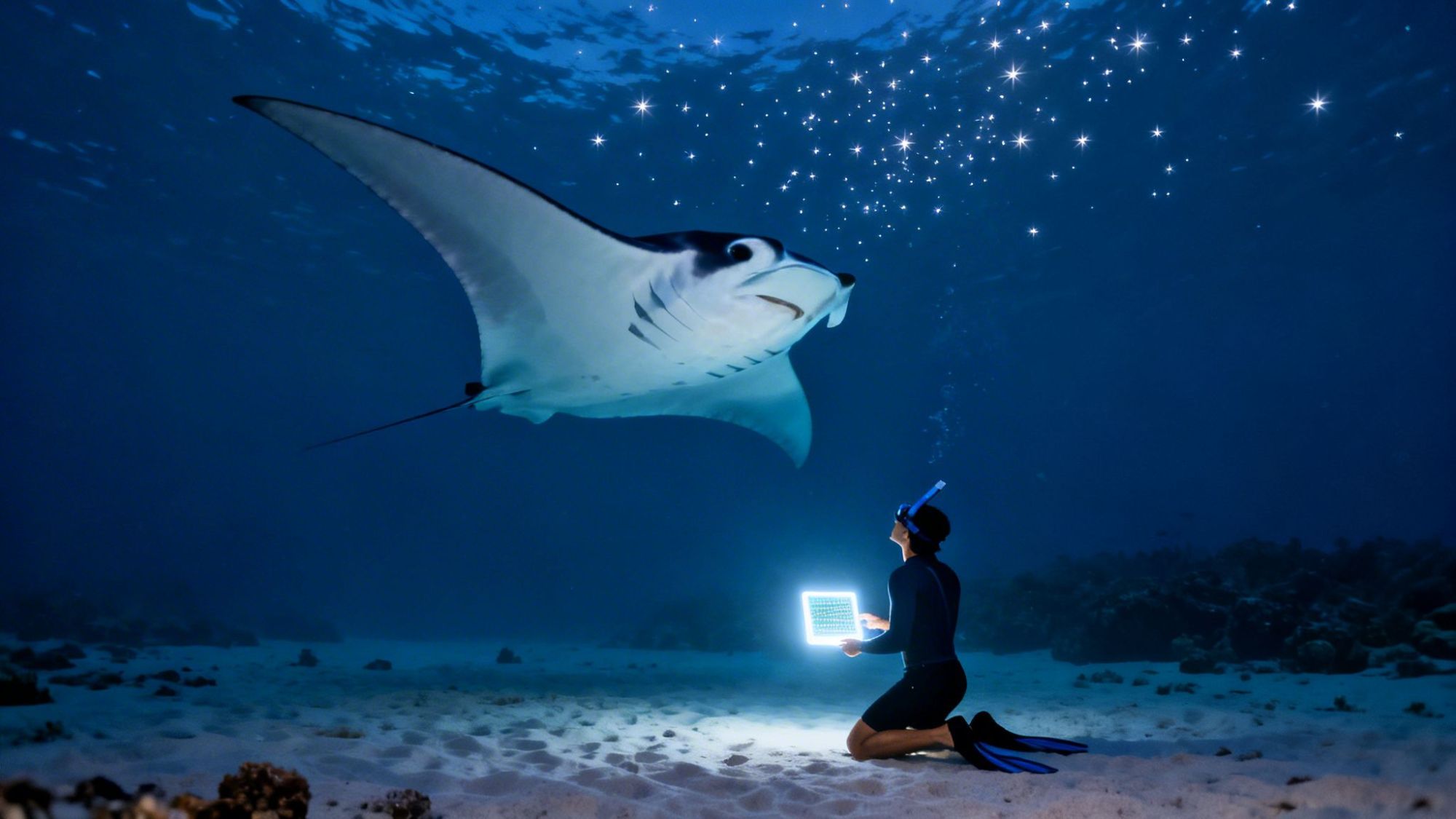
Picture this: as the sun dips below the horizon, painting the Kona sky in fiery colors, you’re slipping into the warm, dark waters of the Pacific. This is the start of the manta ray night encounter, an absolutely legendary experience you can have either by snorkeling or scuba diving. It's truly one of those must-do adventures for anyone visiting the Big Island.
The World's Most Famous Underwater Ballet

Getting into the ocean after dark might sound a little nerve-wracking, but the reward is a spectacle so breathtaking it has put Kona on the map. What you’re about to see is a silent, graceful ballet choreographed entirely by nature.
The setup is brilliantly simple. We position powerful, eco-friendly lights on the ocean floor for divers or on a float for snorkelers. These lights create a giant beam that attracts swarms of microscopic plankton, the manta rays' favorite food. Think of it as a massive, glowing dinner bell ringing out into the deep.
The Gentle Giants Arrive
Before long, the stars of the show glide in from the darkness. These are giant manta rays, some with wingspans stretching up to 16 feet, and they are mesmerizing. They perform effortless somersaults and barrel rolls, swooping through the light with their cavernous mouths open to filter-feed on the plankton buffet.
This isn't a hit-or-miss thing, either. It's an incredibly reliable natural event, which is why Kona is the world's number-one spot for seeing mantas. This amazing spectacle draws 80,000 visitors every year, and tour operators here have an 80-90% success rate for sightings. You have a very, very good chance of seeing the show.
An Experience for Everyone
One of the best parts about this adventure is that you don't need to be an expert diver to join in. There are two fantastic ways to experience it:
- Manta Ray Night Snorkel: You'll float on the surface, holding onto a custom light board, and watch the mantas feed just inches below you.
- Manta Ray Night Dive: You'll settle on the sandy ocean floor and watch as these giants glide right over your head.
To help you decide which is right for you, here’s a quick breakdown.
Manta Ray Encounter At a Glance
| Feature | Manta Ray Night Snorkel | Manta Ray Night Dive |
|---|---|---|
| Perspective | Top-down view, looking at the mantas below | Bottom-up view, watching mantas soar overhead |
| Requirements | Basic swimming ability; no prior experience needed | Open Water Diver certification |
| Proximity | Incredibly close; sometimes just inches away | Very close; mantas glide just above you |
| Best For | Families, non-swimmers, and anyone wanting easy access | Certified divers seeking an immersive experience |
Both options provide a mind-blowing, up-close view of these beautiful animals. If you’re a certified diver and want the ultimate underwater viewpoint, we can't recommend Kona Honu Divers enough. They are the top rated & most reviewed diving company in both Hawaii and the Pacific Ocean, and their expertise ensures a safe and truly inspiring trip.
And if you’re curious to learn more about these incredible creatures, check out our fun facts about manta rays.
So, you’re ready to meet Kona’s famous manta rays. The big question is, how do you want to do it? Will you be floating on the surface, watching the show from above? Or will you be settled on the ocean floor, completely immersed in their world?
Both snorkeling and scuba diving get you breathtakingly close to these gentle giants, but they are two very different ways to experience the magic. Your choice really comes down to your comfort in the water, whether you're a certified diver, and what kind of encounter you're dreaming of.

The Snorkeler's View From Above
As a snorkeler, your experience starts as the sun dips below the horizon. You'll float on the calm Pacific waters, holding onto a specially designed light board. These boards are custom-built to float on the surface and shine powerful beams down into the water, creating an illuminated stage right below you. This light is irresistible to plankton, which is the main course on a manta ray’s menu.
Before you know it, a thick cloud of plankton gathers in the light. And then, they appear. Huge, graceful shadows rising from the depths. The mantas glide right up to the surface to feed, often just inches away from you, performing incredible underwater acrobatics like barrel rolls and somersaults. It's a surreal and easy way to get a front-row seat, perfect for families, non-swimmers, and anyone who wants to see the action without needing scuba gear.
For this top-tier experience, we run premier small-group snorkel tours at Kona Snorkel Trips to keep things personal and unforgettable. If you're looking for another fantastic operator, Manta Ray Night Snorkel Hawaii is an exceptional alternative when looking for a Manta Ray night snorkel tour.
This top-down view is incredible. You get a true sense of the mantas' massive wingspans and can watch the beautiful, intricate dance of their feeding patterns. You’re not just a spectator; your light board is what makes the whole spectacle happen.
The Diver's Perspective From The Ocean Floor
If you’re a certified scuba diver, the manta ray night dive in Kona, Hawaii, is a bucket-list experience that offers a completely different kind of immersion. Instead of watching from the surface, you’ll descend to a sandy patch on the ocean floor, usually around 30 to 40 feet deep. Here, you’ll settle in, kneeling or sitting, and become part of the underwater audience.
Powerful lights are placed in the middle of the group, pointing upwards. Just like with the snorkel, this light draws in the plankton, and the mantas descend for their feast. From your spot on the seafloor, you get to watch these giants soar directly over your head—sometimes so close it takes your breath away (but remember, it's always look, don't touch). They look like silent, majestic aircraft gliding through a dark sky, their white bellies glowing in the beams.
Seeing them from below is truly awe-inspiring; it gives you a sense of scale and grace that’s hard to describe. For a world-class manta ray night dive in Kona, Hawaii, you want to go with the best. Kona Honu Divers isn't just a great local choice; they're the top rated & most reviewed diving company in both Hawaii and the Pacific Ocean. We break down the whole experience in our detailed guide on the manta ray dive in Kona.
Whether you choose to snorkel from the top or dive at the bottom, you’re in for a life-changing encounter with one of the ocean's most magnificent creatures.
The Science And Conservation Behind The Magic

What feels like pure magic in the water—being surrounded by giant, gentle manta rays—isn't a lucky coincidence. It's the amazing result of decades of careful research and a deep-seated commitment to protecting these animals.
The whole experience is built on a powerful collaboration between marine biologists and responsible tour operators. This teamwork ensures every manta ray night dive in Kona, Hawaii, is not only unforgettable but also ethical and genuinely supportive of the local manta population.
The secret to it all? Every single manta ray has a unique pattern of black spots on its belly. Just like a human fingerprint, no two are alike. This allows researchers and guides to identify individual rays, give them names, and track them over their lifetimes. It's a simple, brilliant method that has become the backbone of conservation here.
A Living Laboratory For Manta Ray Research
The two main sites where we see the mantas, "Manta Village" and "Manta Heaven," are much more than just tour spots—they’re world-renowned living laboratories. Since 1991, scientists and local dive pros have been photographing the mantas and cataloging their distinct spot patterns.
It all started with the very first identified ray, a local legend named 'Lefty.' Today, that effort has grown into a massive database that helps us understand and protect Kona's mantas.
This means your tour is part of something much bigger. When you go out with a certified, eco-conscious company, you're directly helping to fund the research that keeps this population healthy. You become part of a success story.
The Golden Rule Of Manta Ray Encounters
There's one simple, absolute rule that makes this all possible: look, but don't touch. This isn't just a suggestion; it’s about respecting these wild animals and their home. Manta rays have a delicate slime coat on their skin that acts as their immune system. A simple touch from a human hand can rub it off, leaving them vulnerable to nasty infections.
That's why legitimate operators are so strict about a few key practices. These rules protect both you and the mantas.
- Be a Passive Observer: You'll be asked to hold onto a light board or stay still on the sandy bottom. This lets the mantas feel safe and control the entire encounter. They'll come much closer if they don't feel pursued.
- Never Chase: It's tempting, but never swim after a manta. Chasing stresses them out and can disrupt their feeding, scaring them away from the light.
- Controlled Lighting: Guides use very specific lights and angles. The goal is to attract plankton (the mantas' food) without blinding or disorienting the rays.
By following these simple but crucial guidelines, we ensure the manta rays continue to see the light as a reliable food source, not a threat. This trust is the very heart of the Kona manta ray experience and has been built over many years of respectful interaction.
These conservation efforts are what protect the delicate balance of this incredible encounter. You can dive deeper into the experience by reading our guide on what to expect when manta ray diving in Hawaii. By participating responsibly, you help guarantee that the manta ray night dive in Kona, Hawaii, remains an ethical and magical adventure for many years to come.
What to Expect on Your Manta Ray Tour

So, you’re ready for one of the most incredible underwater encounters on the planet. Knowing the flow of the evening can take a lot of the guesswork out of the experience, letting you relax and just soak it all in. Let's break down what a typical manta ray night dive in Kona is really like, from start to finish.
One of the first things people ask is, "When is the best time to go?" The honest answer is that almost any night is a good night. It’s a year-round spectacle with remarkably high success rates. That said, if you’re looking to maximize your chances of seeing a huge gathering, the summer months from May to September tend to have more plankton in the water, which can attract an even bigger crowd of mantas.
The Flow of a Typical Tour
Every operator has their own rhythm, but most manta tours follow a similar, well-practiced pattern designed to keep you safe and give you the best show possible.
- Late Afternoon Check-In: You’ll meet the crew at the harbor in the afternoon. This is when you'll handle paperwork, get sized for your wetsuit and gear, and start getting excited.
- Sunset Boat Ride: The trip out to one of the two main sites (Manta Village or Manta Heaven) is half the fun. It's a gorgeous cruise along the Kona coast as the sun starts to dip below the horizon.
- The Manta Briefing: Before anyone hits the water, your guides will give a detailed safety and conservation talk. They'll explain exactly how to behave around the mantas (rule #1: look, don't touch!) and what to expect once you’re in the water.
- Showtime: You'll spend about 45-60 minutes in the water. Trust me, it’s more than enough time to be completely captivated as these gentle giants glide and barrel-roll right in front of you.
This whole process is incredibly organized. Your guides are professionals who do this every single night, and they're there to make sure you feel comfortable, from helping with your fins to getting you into the perfect spot to see the action.
What the Tour Provides
Reputable companies like Kona Snorkel Trips handle all the heavy lifting for you. You really don’t need to worry about bringing a bunch of complicated gear.
A good tour will include everything you need to be safe and comfortable in the water: a proper wetsuit, mask, snorkel, and fins. Most importantly, they provide the powerful lights that attract the plankton and light up the entire underwater stage.
If you’re scuba diving, your tank and weights are also included. The crew sets up the "campfire"—a floating rig with bright lights pointed down—that creates the plankton buffet and draws the mantas in. All you have to do is show up.
What You Should Bring
While the essentials are covered, packing a few personal items will make your evening much more comfortable, especially after the swim.
Here’s a quick list of things you'll be glad you brought:
- A Towel: An obvious one, but you’ll want it waiting for you when you climb back on the boat.
- Warm, Dry Clothes: Even on a balmy Hawaiian evening, you’ll feel a chill after getting out of the water. A sweatshirt or light jacket is a game-changer.
- Underwater Camera: If you own a GoPro or other waterproof camera, don't leave it behind!
- Reef-Safe Sunscreen: Remember to apply it before you leave the harbor. You’ll be on the water for a beautiful sunset, and that sun can still be strong.
Packing these few things helps ensure you have a cozy and seamless experience. For more ideas, our guide on what to wear for snorkeling has some great tips that are just as useful for this tour.
Alright, you’ve decided you want to snorkel with the gentle giants of Kona—an excellent choice. But now comes the most important decision you'll make: picking the right crew to take you. The sheer number of options can be overwhelming, but one company consistently earns top marks from visitors, and for good reason: Kona Snorkel Trips.
They've built a solid reputation as the highest-rated and most-reviewed snorkel company on the Big Island. This isn't just marketing fluff; it’s a reflection of their commitment to getting the experience right.
So, what’s their secret? It all comes down to their small-group approach. Instead of loading you onto a massive boat with dozens of other people, they keep things personal. With fewer snorkelers in the water, you get a front-row seat to the manta ballet without jockeying for position. It makes the entire encounter feel more intimate and a lot less chaotic.
Safety and Expertise You Can Trust
When you’re floating in the ocean at night, peace of mind is everything. This is where Kona Snorkel Trips truly shines. Every single one of their guides is lifeguard-certified, which is a non-negotiable qualification in our book. These aren't just boat drivers; they're trained professionals who are constantly watching out for your safety.
Their expertise goes beyond safety protocols, too. The guides are passionate about the marine life here and are fantastic at sharing fascinating details about the manta rays and the local ecosystem. It turns a cool activity into a genuinely educational experience. You’re not just another customer; you feel like you’re part of a crew that truly loves what they do.
Choosing an operator is about more than just the boat ride. It’s about trusting the crew with your safety and relying on their expertise to deliver a world-class experience. With lifeguard-certified guides and a focus on small groups, Kona Snorkel Trips ensures your adventure is both thrilling and secure.
See What Our Guests Are Saying
Of course, you don't have to take our word for it. The real proof is in the experiences of fellow travelers. Time and again, their reviews praise the crew's professionalism, the magic of getting so close to the mantas, and the seamless quality of the tour from start to finish.
While you're doing your research, you might also come across Manta Ray Night Snorkel Hawaii, which is another solid operator specializing in this incredible adventure. But for that perfect blend of safety, small-group intimacy, and an overwhelming number of happy customers, Kona Snorkel Trips remains our top recommendation.
The memories you’ll make on this trip will stick with you for a lifetime. It all starts with choosing the right team to guide you into the water.
Ready to book the snorkel adventure you won't forget? Check their availability and get ready to be amazed.
Your Manta Ray Night Dive Questions Answered
Jumping into the ocean at night to see giant manta rays is an incredible thought, but it’s completely normal to have a few questions first. It’s a unique experience, after all. We’ve heard just about every question there is from our guests, so we’ve put together some straight-up answers to help you feel confident and ready for the adventure.
Is The Manta Ray Night Dive And Snorkel Safe?
Yes, it's very safe. The biggest misconception is about the mantas themselves. They are truly gentle giants. Manta rays are filter feeders, meaning they don't have teeth, stingers, or barbs. They are graceful and completely harmless to humans.
The real focus of safety is simply being out on the ocean after dark. This is where professional crews make all the difference. They run a tight ship, with thorough safety briefings before anyone gets wet. The guides are trained pros—often lifeguard-certified for snorkel tours and experienced Divemasters for scuba.
And if you're snorkeling, you don't need to be a strong swimmer. You'll be holding onto a large, custom-made light board that floats on the surface, providing plenty of stability. It’s a very secure setup.
The Bottom Line: The mantas pose zero risk. All safety measures are focused on the marine environment, which is expertly managed by certified guides and a well-equipped boat crew to keep everyone safe.
What If I Have Never Snorkeled Or Scuba Dived Before?
No problem at all for the snorkel tour! You need absolutely zero prior snorkeling experience. The guides are fantastic teachers and will walk you through how to use the mask and snorkel before you even get in the water.
Once you’re in, you just hold onto a big, floating light board and put your face in the water. That’s it. You get a perfect, effortless view of the mantas below. It's designed to be easy for almost anyone. Our complete manta ray night snorkel tour guide covers this in more detail.
For the manta ray night dive in Kona, Hawaii, however, you must be a certified scuba diver. This is not a "discover scuba" type of dive because it takes place at night. That said, it's not a highly technical dive. If you're newly certified, just have a chat with the dive operator when you book. They'll ask about your experience and check the conditions to make sure it's the right dive for you.
Will I Get Cold And What Kind Of Wetsuit Is Provided?
The water here off the Kona coast is beautiful, typically hovering between 75°F and 80°F (24°C to 27°C) year-round. But even in warm water, you'll be floating or diving for about 45 to 60 minutes after sunset, and your body will start to cool down.
To keep you comfortable, every tour provides high-quality wetsuits. Most operators use "shorty" wetsuits, which cover your core, upper arms, and thighs. This is usually plenty for most people to stay warm for the entire time.
If you know you get cold easily, just ask the operator if they have full-length wetsuits. You can also wear a rash guard underneath for an extra layer. Pro tip: bring a warm towel and a sweatshirt for the boat ride home. You'll be glad you did.
What Happens If We Do Not See Any Manta Rays?
This is a great question because we are dealing with wild animals. While the sighting consistency in Kona is world-renowned—often over 90%—a guarantee is never 100%. Nature is unpredictable.
On the rare night the mantas decide not to show up, almost every reputable company has a "manta guarantee." The exact policy varies, but it generally means you can come back and try again on another night for free, depending on availability.
Always double-check the specific policy with the tour operator when you book. For certified divers, an operator like Kona Honu Divers—the top rated & most reviewed diving company in both Hawaii and the Pacific Ocean—is a solid bet. They know these waters better than anyone and can tell you all about their policy for the manta ray night dive in Kona, Hawaii. You can get more details on their manta ray diving tour here.
Ready to book the scuba adventure of a lifetime? Secure your spot below.