
Manta Ray Night Dive Kona Hawaii: Your Ultimate 2026 Guide
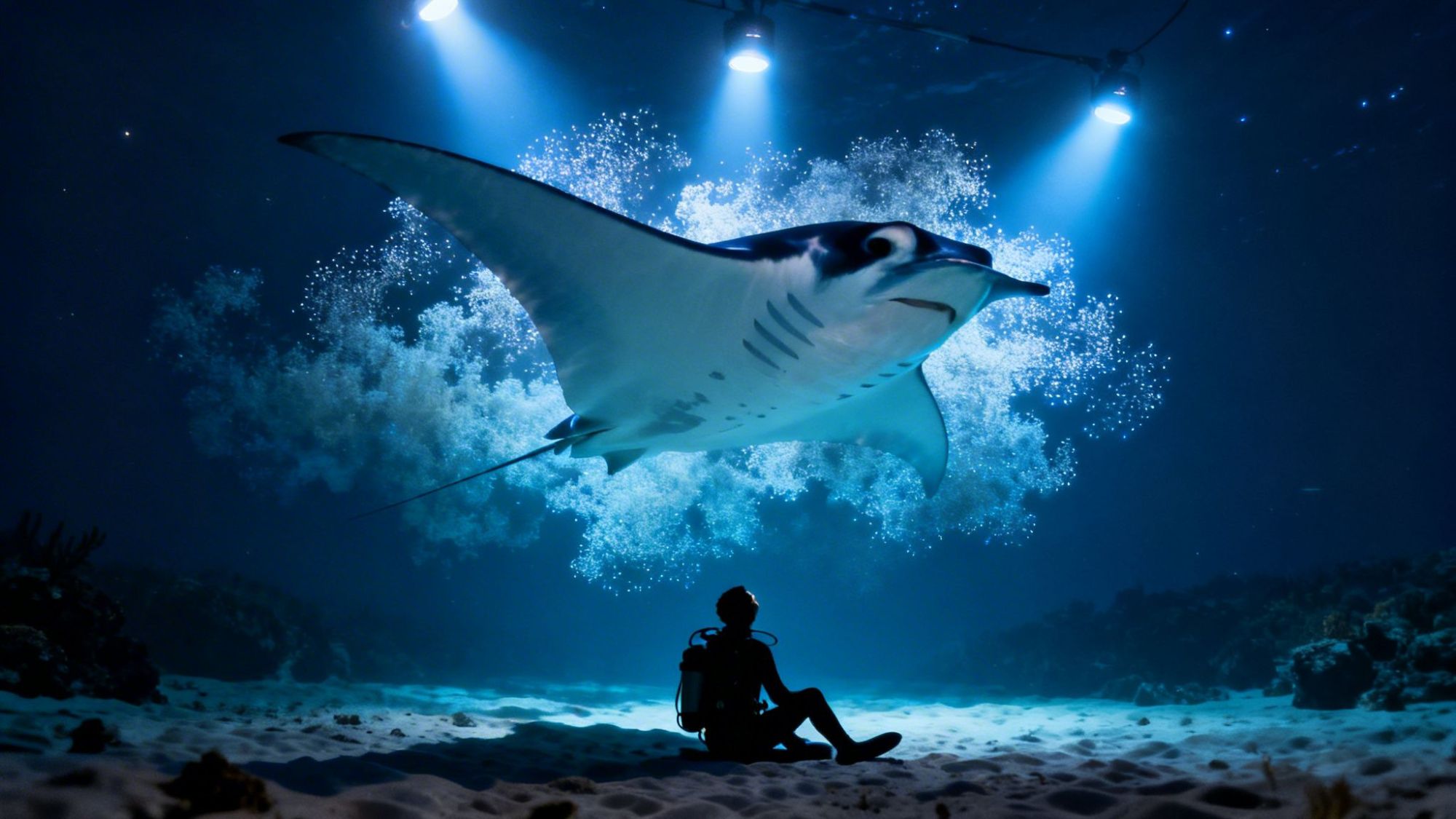
Picture this: You slip off the boat into the warm, dark Pacific waters just as the last bit of sunlight vanishes from the Kona sky. Below you, powerful lights cut through the darkness, creating an illuminated stage. This is the beginning of the manta ray night dive in Kona, Hawaii—an adventure so surreal it’s consistently ranked among the best night dives on the planet.
This is your ultimate guide to that bucket-list experience.
As the top rated & most reviewed snorkel company in Hawaii, Kona Snorkel Trips knows how to deliver an unforgettable manta experience. Here's what some recent guests have to say:
Experience The Magic Of The Kona Manta Ray Night Dive

The Kona coast of the Big Island has something truly special. Lots of places have wildlife encounters, but very few can come close to the consistency and pure spectacle of the manta ray night dive. It’s an experience that has absolutely earned its spot as a global must-do.
So, what makes it so reliable and magical? It all boils down to a unique relationship that has formed over decades between the tour boats, the plankton, and the manta rays themselves. We call it the "campfire effect."
The Campfire Effect
As the sun sets, boats head to designated sites and shine bright lights into the water. Just like moths to a flame, this light attracts huge clouds of microscopic plankton, which are the mantas' favorite food.
This glowing, all-you-can-eat buffet is simply irresistible for Kona's resident manta rays. They gracefully glide in from the deep to feed, performing an incredible underwater ballet for everyone watching. Divers get comfortable on the sandy bottom looking up, while snorkelers float on the surface looking down—both get a front-row seat.
This nightly ritual has basically trained the local mantas. They now know that the lights mean an easy dinner, and this learned behavior is the secret behind the tour's staggering success rate.
Here's a quick look at why this dive is such a big deal.
Kona Manta Ray Night Dive At A Glance
Here is a quick overview of what makes the manta ray night dive in Kona a must-do activity.
| Feature | What You Need to Know |
|---|---|
| Activity | Night Snorkeling or Diving with Manta Rays |
| Location | Kona Coast, Big Island of Hawaii |
| Success Rate | 80-90% chance of seeing mantas |
| Annual Participants | Around 80,000 people experience this tour |
| Best Time | Year-round, with calmer seas in summer months |
| Manta Population | Over 240 identified resident reef mantas |
| Experience | Floating and watching mantas feed on plankton attracted by lights |
This isn't just another dive; it's a phenomenon built on years of careful, respectful interaction with these amazing animals.
"Unlike fleeting wildlife sightings elsewhere, here you have an astonishing 80-90% success rate, meaning 8 or 9 out of every 10 trips deliver the goods with graceful manta rays somersaulting through the illuminated plankton clouds. You can explore more about what makes Kona's encounters so consistent in this deep dive on the Kona manta experience."
Why Kona Is The Best Place For A Manta Ray Night Dive
You can find manta rays all over the world, but Kona is hands-down the most reliable place on Earth to see them. This isn't just luck; it's a perfect storm of several key factors.
- A Resident Population: Unlike places with migratory mantas, Kona has a stable, year-round community of over 240 identified individuals. The stars of the show are always in the neighborhood.
- Perfect Underwater Topography: The Big Island's volcanic slopes and sheltered bays create the ideal setup for plankton to gather, making for a dependable food source.
- Calm, Clear Waters: Being on the leeward side of the island protects the Kona coast from the strong trade winds. This usually means calm seas and great visibility, perfect for a night out on (and in) the water.
And if you have non-divers in your group who still want to see the show, Kona Snorkel Trips offers an incredible manta ray snorkel tour. As the top-rated and most-reviewed snorkel company in Hawaii, they know how to deliver an unforgettable experience from the surface.
Want to learn more about these gentle giants? Check out these fun facts about manta rays and get ready for your own encounter.
Diving vs. Snorkeling: Which Manta Ray Experience is for You?

When you're deciding how to see Kona’s incredible manta rays after sunset, you've got two fantastic choices. You can either go for a manta ray night dive in Kona, Hawaii, or you can join a snorkel tour. Each one offers a completely different, but equally magical, perspective on this underwater ballet.
The right choice for you really boils down to your experience level, how comfortable you are in the ocean, and what kind of view you're hoping for. Let's break down what to expect from each one.
The Scuba Diving Experience: An Immersive, Front-Row Seat
If you have an Open Water Diver certification (or higher), the manta ray night dive is an experience you will never forget. As a diver, you'll get the chance to descend to a sandy spot on the ocean floor, usually about 30 to 40 feet deep.
Once your group is settled on the bottom, your guide will set up powerful lights that shine straight up toward the surface. These lights attract a massive cloud of plankton, which is exactly what the mantas are looking for. You get to watch from below as these gentle giants swoop, glide, and perform breathtaking barrel rolls just inches above your head.
It’s the ultimate front-row seat. You're looking up at a stage of deep blue water as these majestic creatures put on a show just for you. This unique, bottom-up perspective is what makes the manta dive a true bucket-list item for divers from all over the world.
This is a stationary dive, so you won't be swimming around. That makes it a surprisingly easy and low-effort dive, perfect even for divers who just got certified.
The Snorkeling Experience: A Bird's-Eye View of the Action
Not a certified diver? Don't worry, you haven't missed out. The manta ray night snorkel is an absolutely stunning and incredibly accessible option for just about everyone, including families with kids. All you need is a sense of adventure—no experience necessary.
On a snorkel tour, you'll float on the surface while holding onto a large, custom-made light board. These boards have powerful lights that shine down into the water, creating that same "campfire effect" that brings in the plankton and, right behind them, the manta rays.
This gives you a spectacular top-down view of the whole scene. You’ll watch from above as the mantas rise from the dark water, their white bellies glowing in the light as they feed right below you. They often come within inches of the board, making it a thrilling and surprisingly intimate encounter.
- Accessibility: Perfect for all ages and swimming abilities.
- Perspective: You get a stunning aerial view of the mantas' feeding patterns.
- Equipment: Everything you need, like wetsuits and snorkel gear, is provided.
We've actually put together a deep dive into the differences between the Kona manta ray dive and snorkel to help you pick the perfect adventure for your trip.
How To Choose The Best Manta Ray Dive Tour

Picking the right operator for your manta ray night dive in Kona, Hawaii is a huge part of the experience. The company you go with can make or break your night, affecting everything from your safety and enjoyment to the well-being of the gentle giants you came to see. A great tour is so much more than just a boat ride; it’s an entire experience guided by people who genuinely respect the ocean.
With so many boats to choose from, knowing what to look for is key. Getting this right means you’ll not only have a mind-blowing adventure but also know you’re supporting the conservation of Kona's incredible marine life.
Prioritize Safety And Certification
First things first: safety is everything. You should only ever book with companies that employ certified dive professionals, like PADI (Professional Association of Diving Instructors) or SSI (Scuba Schools International) divemasters and instructors. This isn't just a piece of paper; it means the crew is properly trained in dive safety, first aid, and guiding people responsibly in the ocean.
You’ll also want to look for operators who are loud and proud about following the Manta Ray Green guidelines. These are a set of local standards created to keep interactions safe and respectful for both the mantas and the people watching them. A company that advertises this commitment takes their job as ocean stewards seriously.
Look For Small Group Sizes
The difference between a crowded, chaotic tour and a small-group trip is night and day. Operators who limit their passenger count offer a far more personal and powerful encounter.
Here's why a smaller group is better:
- More Personal Attention: Your guide has the time to give you one-on-one tips and answer all your questions without being stretched thin.
- A Better View: Fewer bodies in the water means you get a front-row seat to the action without fins and snorkels in your face.
- Less Environmental Impact: Smaller, quieter groups cause less disturbance to the manta rays and the entire reef ecosystem.
A more intimate setting lets you truly soak in the magic of the moment, rather than feeling like you're just another number in a crowd.
Expert Guides And Eco-Consciousness
A fantastic guide can turn a good dive into the highlight of your entire trip. The best guides are passionate marine naturalists who do more than just point and say, "There's a manta." They'll give you a real briefing on manta biology, their behaviors, and the crucial rules for just passively observing. This educational piece adds so much depth to what you're seeing.
For certified scuba divers looking for the absolute best, Kona Honu Divers is the gold standard. They're known as the top rated & most reviewed diving company in both Hawaii and the Pacific Ocean. Their dedication to safety and conservation ensures a professional and truly awe-inspiring manta dive. If you're a diver ready for a world-class trip, you can book their manta ray diving tour here.
The manta ray night dive has come a long way. What started with a few people watching from the shore in the 1970s became official dive trips by 1992. It's now a global phenomenon, hosting around 80,000 visitors every year. You can learn more about the incredible history of the manta ray night dive in Hawaii and how it became one of the world's greatest wildlife encounters.
If you have non-divers in your group, a dedicated snorkel tour is the perfect solution. We highly recommend Manta Ray Night Snorkel Hawaii as an exceptional alternative when looking for a Manta Ray night snorkel tour. It’s also a good idea to check out some Kona snorkel tour reviews to see what other visitors have loved about their experiences.
This isn't just another tour; it's a truly special adventure, much like other unique gift experiences that create lasting memories. By picking a reputable, eco-conscious operator, you're not just booking a trip—you're investing in an unforgettable moment and helping protect Kona’s manta rays for years to come.
Your Kona Night Dive Step By Step

So you're ready for the dive of a lifetime, but what actually happens on a manta ray night dive in Kona, Hawaii? Knowing the play-by-play can help settle any pre-dive nerves and get you hyped for what’s to come. Let's walk through the whole evening, from the harbor to the world-famous underwater ballet.
Your adventure starts on land at the harbor. This is where you’ll meet our crew, get checked in, and feel that first wave of Aloha spirit that makes Hawaiʻi so special. We use this time to set the stage for a safe, fun, and unforgettable night.
Arrival and Pre-Dive Briefing
Once you're all checked in, your guides will gather everyone for a pre-dive briefing. This isn't just a formality—it’s probably the most important part of the tour before you hit the water.
Here’s what we'll cover:
- Keeping You Safe: We'll go over all the essential safety procedures, like how to get in and out of the water safely and what our plan is for any unlikely situations.
- Manta Manners: You'll learn the golden rule of this experience: do not touch the mantas. We'll explain exactly why this is so critical for the rays' well-being and how to position yourself for the best possible (and most respectful) views.
- The Game Plan: We’ll lay out the schedule for the evening, from the boat ride out to the dive time and exactly what you can expect once you’re under the surface.
This chat ensures everyone is comfortable, on the same page, and ready to be a great guest in the mantas' home.
Sunset Boat Ride and Gearing Up
With the briefing done, it's time to hop on the boat and head for the dive site. This part of the trip is pure magic. We time our departure to catch a classic Kona sunset, where the sky just explodes with brilliant shades of orange, pink, and purple over the Pacific.
As the sun dips below the horizon and the sky turns a deep indigo, you can feel the energy on the boat shift from relaxed sightseeing to focused excitement. Now it’s time to gear up. The crew will be right there to help you, making sure your equipment is fitted perfectly and working as it should. The hissing sound of tanks being opened is the real soundtrack to the anticipation.
Once we're at the site and everyone's ready, you'll enter the warm Hawaiian water as a group. Following your guide, you’ll descend through the twilight to a pre-selected spot on the sandy ocean floor, usually around 30-40 feet deep.
The Underwater Light Show
And now, for the main event. Once every diver is settled in a circle on the seabed, we switch on the powerful underwater lights, pointing them straight up. We call this the "campfire." It's a glowing beacon in the dark that immediately starts attracting clouds of tiny plankton.
The wait begins. Sometimes the mantas show up instantly, other times it takes a few minutes. Either way, the feeling is electric. Then, it happens. A massive, graceful shadow emerges from the darkness. A majestic manta ray glides into the column of light, its huge wingspan creating a silhouette that will take your breath away.
Before you know it, others might join the dance. They'll swoop, glide, and perform barrel rolls just inches above your head, scooping up mouthfuls of plankton. It’s completely silent, serene, and absolutely mesmerizing. You're not just watching—you're a guest at one of nature's greatest shows.
For those who want to see this from the surface, our guide to the manta ray night snorkel tour explains that equally incredible perspective.
After about 45 minutes of pure awe, you'll ascend back to the boat, your head swimming with unforgettable images. We cap off the night with hot chocolate and snacks on the ride back to shore, sharing stories of the gentle giants you just spent the evening with.
Manta Ray Conservation And Safety Guidelines
When you join a manta ray night dive in Kona, Hawaii, you're stepping into their world, not the other way around. Think of yourself as an invited guest in a very delicate marine home. To keep this incredible encounter safe for both you and the mantas, we all follow a simple set of rules.
These guidelines, sometimes called the 'Manta Ray Green' standards, are all about passive observation. It just means your job is to become part of the underwater scenery. By following a few key rules, you help protect Kona's world-famous manta population and ensure this magical experience is here for generations to come.
The Golden Rule: Do Not Touch
If you remember only one thing, make it this: do not touch the manta rays. We can't say this enough. Manta rays are covered in a protective mucous coating—a thin layer of slime that acts as their immune system, shielding them from nasty bacteria in the ocean.
Touching a manta, even by accident, can strip off this protective layer. This leaves them wide open to skin infections and diseases that can be serious, or even deadly. Resisting the urge to reach out is the single most important thing you can do to keep them healthy.
Follow Your Guide’s Positioning Rules
To make the mantas feel comfortable and safe enough to approach the lights, every tour operator has strict positioning rules. This isn't about being bossy; it’s about creating an organized, predictable space for the animals.
- Divers: If you're a certified diver, your guide will have you descend to the sandy bottom. You'll find a spot to sit or kneel, creating a kind of "campfire" circle around the lights as you look up.
- Snorkelers: As a snorkeler, you'll stay at the surface, holding onto a specially designed light board. It's crucial that you float on the surface and don't dive down towards the mantas.
This separation creates a safe "viewing corridor" for the mantas to gracefully glide through.
Be A Rock: Let The Mantas Come To You
Sudden movements, chasing, or trying to swim after a manta will spook them, often causing them to leave the area entirely. The best strategy is to be as still as possible. Just pretend you’re a big, uninteresting rock on the seafloor.
Your job is to simply exist and observe. The manta rays are naturally curious and will often glide just inches away from you on their own terms. Letting them initiate any close passes makes for a much more magical and authentic encounter.
Finally, a quick camera tip: make sure your flash is turned off. The sudden, bright bursts of light can easily startle and disorient the mantas. Following these guidelines ensures that every manta ray night dive in Kona, Hawaii is a positive and respectful interaction. For a deeper dive into their graceful movements, you can learn more about how manta rays swim underwater.
As you plan your trip, it's also worth thinking about the bigger picture of visiting the islands. A great resource to check out is this article: Is It Ethical to Travel to Hawaii Right Now?
Getting Yourself Ready & How to Beat Seasickness
A little bit of prep work goes a long way in making sure your manta ray night dive in Kona is memorable for all the right reasons. Trust me, nothing torpedoes an incredible adventure faster than feeling queasy on the boat. A few simple steps beforehand means you can focus 100% on the magic happening under the water.
The boat ride out to the site is an experience in itself, with the Kona sunset putting on a show. But even on the calmest nights, the ocean’s gentle rhythm can get to folks who are prone to motion sickness. The absolute best strategy is to get ahead of it.
How to Guarantee a Smooth Ride
There are a handful of really effective ways to stop seasickness before it even has a chance to start. We see guests have great success with all sorts of remedies, but the trick is always to use them before you feel that first hint of nausea.
Here are some of the go-to options our guests swear by:
- Patches: Products like the Ship-EEZ Seasickness Patch are a popular choice. You stick one behind your ear a few hours before the trip, and they can offer long-lasting relief.
- Pills: Old-school classics like Dramamine or Bonine are classics for a reason—they work. Just be sure to take them at least an hour before we leave the harbor so the medicine has time to kick in.
- Wristbands: If you're looking for a drug-free option, Sea-Band wristbands use a small plastic stud to apply acupressure to a specific point on your wrist, which can work wonders for some people.
- Natural Remedies: Don't underestimate the power of ginger! Many of our seasoned snorkelers and divers chew on ginger chews before and during the boat ride to help settle their stomachs naturally.
Think of grabbing one of these as cheap insurance for an amazing night. A tiny bit of planning on land makes a world of difference on the water, letting you completely lose yourself in the manta ray ballet.
What to Throw in Your Bag for the Dive
Besides seasickness prevention, a few other items will make your trip much more comfortable, especially after you get out of the water. The ocean here in Kona is warm, but that night air can feel surprisingly chilly when you're wet.
Make sure you pack a small bag with these essentials:
- A Towel: This one’s a no-brainer for drying off after your swim.
- A Dry Change of Clothes: Pulling a dry hoodie or t-shirt over your swimsuit for the ride back to the harbor is a game-changer. You’ll be so much more comfortable.
- Personal Dive Gear: We provide high-quality gear for everyone, but if you have a favorite mask that fits you perfectly, feel free to bring it along!
Once you have these few things squared away, you're all set to kick back, relax, and soak in every single moment of your Kona manta ray night dive.
Answering Your Manta Dive Questions
It’s one of the most unique experiences on the planet, so it’s totally normal to have a few questions before you dive in. Getting these details sorted out beforehand means you can relax and just soak in the magic of the manta ray night dive in Kona, Hawaii.
Here are some of the most common questions we get from guests.
How Deep Is The Manta Ray Night Dive?
Believe it or not, the dive itself is surprisingly shallow. We guide certified divers to a sandy spot on the ocean floor, usually somewhere between 25 to 40 feet deep (that’s about 8 to 12 meters).
You'll settle in at this "underwater amphitheater" for the whole dive, looking up as the giant mantas glide right over your head. The shallow depth and the fact that you stay put makes it a super comfortable and accessible dive, which means more bottom time to enjoy the show!
Is The Manta Ray Night Dive Safe For Beginners?
Absolutely. This is actually one of the best dives we recommend for newly certified Open Water divers. A few things make it especially safe if you don't have a ton of dives under your belt yet.
- Shallow Water: Like we said, you won't be going deep at all.
- No Current: The dive sites are tucked into sheltered bays, so you won’t be fighting any strong currents.
- You Stay Put: You'll be in one spot the whole time, so there’s no tricky navigation to worry about.
- Expert Guides: Every trip is led by professional divemasters who give a great briefing and are right there in the water with you.
What Is The Best Time Of Year For A Kona Manta Dive?
This is one of the best parts—you can do it any time of year! Kona is incredibly lucky to have a resident population of manta rays, which means they don't migrate. They're here 365 days a year.
The success rate for seeing mantas is consistently high all year long. While the summer months might bring slightly calmer ocean conditions, your chances of having an mind-blowing encounter are fantastic no matter when you visit.
Check AvailabilityWhat Happens If We Do Not See Any Mantas?
While sightings are almost a sure thing—we see them on about 80-90% of our trips—it’s crucial to remember that manta rays are wild animals. We can never 100% guarantee they'll show up to the party.
That said, any good tour operator knows this and has a "manta guarantee." If your trip happens to be one of the rare ones where the mantas are a no-show, they’ll almost always offer you the chance to go again on another night for free. It’s their way of making sure you don't miss out on the incredible Kona manta experience.