
Manta ray night dive kona hawaii: Your 2026 Kona adventure
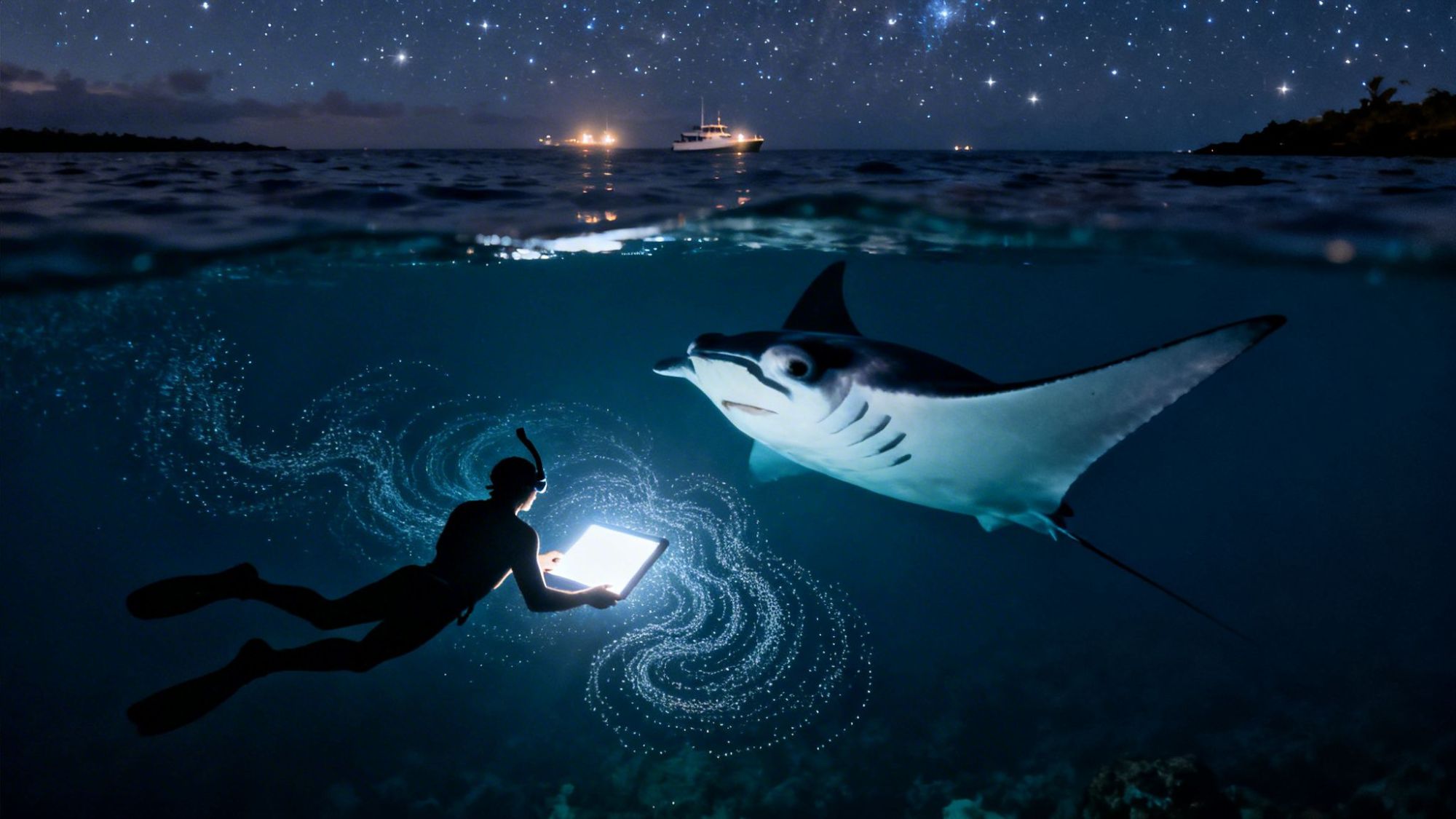
Imagine floating in the quiet, dark waters of the Pacific as enormous, gentle giants with wingspans up to twenty feet perform an underwater dance just inches from your face. This is the manta ray night dive in Kona, Hawaii—a true bucket-list adventure that people travel from all over the world to experience. And Kona is, without a doubt, the best place on the planet to see this natural wonder happen.
What Makes Kona The Manta Ray Capital of The World
When you slip into the dark ocean off the Kona coast under a sky full of stars, and massive manta rays glide silently toward you, it’s not a rare stroke of luck. It's a regular nightly event. This incredible reliability draws around 80,000 people every year to see the mantas, making Kona the world's go-to spot for these encounters. As the top-rated and most-reviewed snorkel company in Hawaii, we at Kona Snorkel Trips get to see the looks on our guests' faces night after night. It never gets old.

This amazing show isn't an accident. It's the result of a perfect setup. The Kona coast has calm, sheltered bays where plankton—the manta rays' favorite food—gathers naturally. Tour operators, us included, use powerful, eco-friendly lights to attract even more plankton, essentially creating a dependable nightly buffet that the mantas can't resist.
A Healthy and Easy-to-See Population
What really makes Kona special is its resident population of over 450 identified manta rays. Researchers have been studying them since the 1970s, cataloging each ray by the unique pattern of spots on its belly. It’s like a human fingerprint. This consistent, local population is why you can see these animals in their natural habitat with such high reliability.
The best part is that there are two main ways to join in on the magic, so almost anyone can have this incredible experience.
- Manta Ray Night Snorkel: This is the easiest and most accessible option. It's perfect for families, people who aren't strong swimmers, and first-timers. You'll float on the surface, holding onto a custom-made light board, and watch the mantas feed and somersault right below you. You can book this incredible adventure with Kona Snorkel Trips or consider Manta Ray Night Snorkel Hawaii, an exceptional alternative.
- Manta Ray Night Dive: For certified scuba divers, this is an absolutely breathtaking experience. You'll settle on the sandy ocean floor and look up as these graceful giants swoop and do barrel rolls right over your head. It’s like being in the front row of an underwater IMAX theater.
Both options give you a spectacular view of one of nature’s greatest shows. In this guide, we'll walk you through everything you need to know to plan your own adventure, from picking the right tour to being a responsible viewer. And while the manta experience is a must-do, you can discover other amazing underwater adventures in our article about Kona's best snorkeling spots. By the time you're done reading, you'll be feeling the magic before you even book your flight.
Snorkeling vs. Scuba Diving: How to Choose Your Manta Encounter
So, you’ve decided to experience the magic of the Kona manta ray night swim. Fantastic choice! Now comes the big question: will you watch this incredible underwater ballet from the surface, or from a front-row seat on the ocean floor?
Both snorkeling and scuba diving offer absolutely unforgettable, yet very different, ways to meet these gentle giants.

Let's break down the two experiences. Your comfort in the water, any certifications you might have, and the kind of view you’re hoping for will all help you pick the perfect adventure.
Manta Ray Night Snorkeling: An Up-Close Surface View
Night snorkeling with the mantas is by far the most popular and accessible way to see them. It's a fantastic option for just about everyone—families, first-time snorkelers, and anyone who isn't a certified diver. It’s an easy, low-stress way to get a jaw-dropping view.
Here's how it works: You’ll float on the ocean's surface, holding onto a big, custom-made light board. This board gives you something stable to hold and, more importantly, shines bright lights down into the water. These lights act like a dinner bell, attracting tiny plankton. Before you know it, the mantas arrive to feast, gliding right up to the lights and often coming within inches of you.
It's a mesmerizing perspective. You're looking straight down as these massive creatures perform graceful barrel rolls right beneath you. It feels like you have a private, front-row seat to a hypnotic underwater show.
You don't need to be an expert swimmer for this. Everyone gets a wetsuit to stay warm and a float belt for extra buoyancy, making the whole thing feel safe and comfortable.
Manta Ray Night Diving: A Truly Immersive Experience
For certified scuba divers, the manta ray night dive is a whole different world. It’s a completely immersive and almost spiritual experience. Instead of watching from above, you’ll descend to the sandy bottom, around 30-40 feet deep.
You’ll find a spot on the sand with your group and point your dive light straight up. All those beams of light create a massive column of light, basically a giant plankton magnet. Then, the mantas swoop in from the darkness, looping and soaring right over your head.
Being on the ocean floor gives you a true sense of their incredible size and grace as they fly above you like silent, majestic aircraft. It's a view that will stick with you forever. This is one of the most sought-after night dives in the world for a reason.
Manta Ray Snorkel vs Scuba Dive Comparison
To help you decide, here’s a quick side-by-side look at what to expect from each experience. Think about what matters most to you—the view, the accessibility, or the overall vibe.
| Feature | Manta Ray Night Snorkel | Manta Ray Night Dive |
|---|---|---|
| Certification | None required | Open Water certification required |
| Experience Level | Beginner-friendly; great for all ages | For comfortable, certified divers |
| Your Position | Floating on the surface, holding a light board | Sitting or kneeling on the ocean floor |
| Depth | 0 feet (at the surface) | 30-40 feet deep |
| The View | Looking down at mantas coming to the surface | Looking up as mantas dive and soar above you |
| Best For | Families, non-divers, an accessible thrill | A totally immersive, "surround-sound" experience |
Ultimately, there's no wrong answer here. Both options put you right in the middle of one of the planet's most spectacular wildlife encounters.
For a deeper dive into what the snorkeling experience is like from start to finish, be sure to check out our complete guide to Kona's manta ray snorkel tours. And if you're planning adventures on other islands, it's always fun to see what else is out there, like the spots for the best snorkeling in Maui.
No matter which you choose, you’re in for a night you'll be talking about for years to come.
The Science Behind Kona's Underwater Light Show
People always ask me if the manta ray night dive is some kind of magic trick. When you’re floating in the dark ocean watching these massive, graceful creatures glide inches from your face, it certainly feels that way. But the truth is, this nightly spectacle is a beautiful blend of basic biology, a little human cleverness, and Kona's one-of-a-kind geography.

It all comes down to one simple ingredient: plankton. These tiny microscopic organisms are the foundation of the ocean's food chain, and they just so happen to be the manta rays' favorite food. Crucially, plankton are phototactic—a fancy way of saying they are drawn to light.
The Underwater Campfire Effect
Years ago, tour operators figured out how to use this behavior to our advantage, creating what we call the "campfire effect." After the sun sets, we head out to our spots and shine powerful, eco-safe lights into the water. This bright beam acts like a magnet for plankton, pulling them in from all around to form a thick, shimmering cloud of food.
It’s a lot like setting a dinner table for the mantas. The bright lights create a reliable, all-you-can-eat buffet right in the same spot, night after night. The mantas have learned that lights mean an easy meal, so they show up consistently to feast.
This predictable food source is the secret sauce behind our incredibly high sighting rates. It turns a random chance encounter into an almost guaranteed event, letting us get you unbelievably close to these gentle giants as they put on their nightly show.
Kona's Perfect Geography
So, why does this work so well here in Kona and not everywhere else? The Big Island's unique underwater landscape is a huge part of the answer. The volcanic slopes have created sheltered bays and coves with calm water, naturally protected from the open ocean's strong currents.
These natural features are perfect for two reasons:
- Plankton Concentration: The calm water allows the plankton to gather in dense clouds without getting swept away.
- Safe Viewing: The protected conditions make for a comfortable and safe experience for everyone in the water, especially at night.
It’s this combination of a dependable food source and safe, calm waters that has made Kona the undisputed world capital for manta ray encounters.
A Happy Accident That Became a Global Phenomenon
Believe it or not, the manta ray night dive in Kona, Hawaii wasn't a planned attraction. It was a happy accident that grew from casual sightings into an adventure that now draws 80,000 visitors a year. It wasn't until 1992 that operators started running structured trips, and by the early 2000s, it was a nightly affair.
By 2013, Manta Village was seeing a 96% sighting success rate with an average of four mantas per night. Meanwhile, Manta Heaven was dazzling with 11 mantas per tour and 90% reliability. These numbers show why Kona is just different—our predictable currents and plankton-rich waters lead to an overall 85-90% success rate.
Knowing the science and history gives you a much deeper appreciation for what you're seeing. You're not just watching animals feed; you're part of a fascinating, symbiotic relationship between nature and responsible tourism. For more amazing details about these creatures, check out our article on fun facts about manta rays.
How to Plan and Book Your Perfect Manta Tour
Alright, so you're ready to make this bucket-list dream a reality. That's awesome! Planning and booking your manta ray tour is actually pretty simple once you know what to look for. Let's walk through the key steps so your adventure is smooth from start to finish.
First things first: choosing the right crew to take you out. You'll want to find a company with a stellar safety record, great reviews from other guests, and a genuine respect for the ocean and its inhabitants. A quality operator will handle all the essential gear—wetsuits, snorkel masks, fins, and flotation devices—and will always have experienced guides right there in the water with you.
When to Go and What to Expect
One of the best things about the manta ray night dive in Kona, Hawaii, is that you can do it all year long. Our local manta rays aren't migratory; they're residents, meaning they hang out here every single month. Because of this, sighting success rates are consistently above 90%, no matter what season you visit.
That said, the ocean conditions do change a bit throughout the year:
- Summer (April-October): This is when we generally get the calmest seas and clearest water. It's the perfect time for first-time snorkelers or anyone who gets a little seasick.
- Winter (November-March): The mantas are definitely still here, but the ocean can get choppier thanks to winter swells. The tours are just as amazing, but there's a slightly higher chance a trip might get cancelled due to rough conditions.
For a snorkel tour, you can expect prices to be in the $100 to $150 per person range. This covers the boat trip, all your gear, and the expertise of your in-water guides. These tours are incredibly popular, so I always recommend booking in advance, especially if you're visiting during a busy season. You don't want to miss out!
Your Pre-Tour Checklist: What to Bring
Any reputable tour operator, like us here at Kona Snorkel Trips, will provide almost everything you need for a safe and comfortable night. But packing a few personal items can make your evening even better.
What We Usually Provide:
- High-quality snorkel gear (mask, snorkel, fins)
- Wetsuits to keep you nice and warm in the water
- Flotation devices (like pool noodles or float belts)
- Light snacks and drinks
What You Should Pack:
- A towel and a dry change of clothes for the ride back.
- Your underwater camera (GoPros are great for this!), but make sure to turn off the flash. The flash can disturb the mantas.
- Any personal medications you might need. If you're prone to seasickness, it's a smart move to take something before we leave the harbor.
- A reusable water bottle is always a good idea to stay hydrated.
Here's a pro-tip: This adventure makes for an incredible gift. Most companies offer gift cards, which let you give someone an experience they'll remember for the rest of their life. Way better than another souvenir!
With just a little bit of planning, you can take all the guesswork out of the equation and get straight to enjoying one of the most magical wildlife encounters on Earth. For a more detailed look at what the trip is like, check out our complete guide on what a manta ray tour in Kona is all about.
Keeping the Manta Experience Magical: Safety and Etiquette
Seeing these incredible manta rays up close is a privilege, and it comes with a big responsibility for all of us to keep them safe. The whole experience, whether you're doing a manta ray night dive in Kona, Hawaii, or snorkeling, is built on one simple idea: passive interaction. Basically, we're just quiet observers in their world. We let them do their thing, and we always give them the right of way.

If you remember only one thing, make it this: do not touch the manta rays. Ever. These animals have a slimy, protective coating on their skin that’s their main defense against bad bacteria and infections. Touching them, even lightly, can wipe that layer off and leave them vulnerable. Just think of it as their invisible force field—your job is to stay on the outside.
The Golden Rules for Hanging with Mantas
Every good tour operator will drill a few key rules into you before you hit the water. Following them isn’t just about being a rule-follower; it’s about showing respect for these gentle giants and ensuring this incredible encounter can continue for years to come.
- Hands Off: This is the big one. Never, ever reach out to touch a manta, no matter how close it gets.
- Don't Chase or Block: Let the mantas call the shots. Don't swim after them or get in their way.
- Stay Level: If you’re snorkeling, you’ll be holding onto a light board, so just stay flat on the surface. If you’re diving, you’ll be on the sandy bottom, out of their flight path.
- No Free Diving: Diving down from the surface can spook the mantas and interrupt their feeding. Let them come to you.
The reason these rules are so important is because the manta encounters in Kona are unbelievably consistent. This isn't a "maybe we'll see something" kind of trip. The success rate for sightings is between 80-90%. Spots like Manta Village and Manta Heaven often have an average of eight mantas show up per trip, usually in crystal-clear water.
This incredible reliability is thanks to a local population of about 450 identified mantas. Many of them show what’s called 'site fidelity'—they’ve been coming back to these same feeding spots for decades! You can learn more about the research behind Kona's manta night dive and the studies that help us protect them.
How to Stay Comfortable on a Night Boat Trip
While the mantas are the main event, you want to be able to enjoy it! A common worry for any boat trip, especially at night, is getting seasick. Nothing can spoil an amazing experience faster than feeling queasy. The good news is, a little bit of prep goes a long way.
The real secret to avoiding seasickness is to be proactive. Once you start feeling sick, it's a real battle to turn it around. A little planning makes all the difference.
Here are some of the most popular and effective ways to keep your stomach happy. It’s always a good idea to have one of these on hand, just in case.
Seasickness Prevention Options:
- Patches: The Ship-EEZ Seasickness Patch is a fan favorite. You just stick it behind your ear a few hours before you go, and it offers non-drowsy relief that lasts.
- Pills: You can't go wrong with the classics. Dramamine is a household name, but many people prefer Bonine because it's less likely to make you sleepy and you only need one dose.
- Wristbands: If you want a drug-free option, Sea-Band wristbands are fantastic. They use a small plastic stud to apply pressure to an acupressure point on your wrist, which can help short-circuit that queasy feeling.
- Natural Remedies: Sometimes, simple is best. Many people swear by ginger chews to settle a mildy upset stomach. They're easy to pack and taste pretty good, too.
By respecting the mantas and taking care of your own comfort, you're doing your part to keep this natural wonder thriving for everyone. And if you’re curious about how these giants move so gracefully, you'll love our deep dive into the different manta ray swimming patterns underwater.
You've learned all about what makes the manta ray night dive in Kona so incredible, how to pick a tour, and even the science that makes the magic happen. Still, you probably have a few questions rattling around. It's totally normal.
Let's go over some of the most common questions we get from guests. Getting these final details ironed out will have you ready for your big adventure.
Is The Manta Ray Night Snorkel Safe For Kids?
Absolutely! The snorkel version of this tour is a massive thrill for kids and incredibly safe. Most companies welcome children ages 5 and up. We make sure they get a wetsuit that fits just right to stay warm, and we've got plenty of flotation devices like noodles and belts for extra support.
The best part is that everyone holds onto a big, steady light board that floats on the surface. This gives kids (and nervous adults!) something solid to hang onto the whole time. Our professional guides are right there in the water with you, making sure everyone is safe, comfortable, and having the time of their lives. It's a perfect family trip where even non-swimmers can float along and watch the show.
When Is The Best Time Of Year To See Mantas?
This is the best news you'll get: any time is a great time! The manta tours here in Kona run all year long and have an amazing success rate of over 90%. That's because we have a huge population of resident manta rays that stick around—they don't migrate.
While the mantas are always here, the ocean can change a bit with the seasons:
- Summer (April-October): This is when we usually get the calmest, glassiest water. It makes for amazing visibility and is perfect for photos and first-timers.
- Winter (November-March): The mantas are still out there feeding every single night, but winter swells can sometimes make the water a little choppy.
Honestly, just plan your trip for when it works for you. Whenever you decide to visit Kona, the mantas will be waiting.
What If We Don't See Any Manta Rays?
It's one of the most reliable wildlife encounters on the planet, but it's important to remember we're dealing with wild animals. Their behavior can never be 100% guaranteed. The best tour operators know this and stand behind their experience.
That’s why many of the top companies, including Kona Snorkel Trips, have a "manta guarantee." On the very rare occasion your tour doesn't see a single manta, you can come back and try again for free (on a space-available basis). It's our way of showing confidence that you'll have an amazing night and giving you peace of mind.
Should I Bring An Underwater Camera?
Yes, feel free to bring your GoPro or another underwater camera to capture the magic of the manta ray night dive in Kona, Hawaii! But to keep the mantas safe and comfortable, there are two really important rules you have to follow.
First, no external lights or flashes. The big lights on our snorkel board provide all the light needed to attract the plankton. Any extra flashes can startle or disorient the mantas. Second, never use selfie sticks or poles to reach your camera toward them. We're here for passive observation only.
If you'd rather just be in the moment, many tours have a professional videographer on board. You can buy their high-quality video after the tour—it's a great way to relive the whole thing without worrying about getting the perfect shot yourself.
If you're a certified diver looking for the most immersive experience possible, you should book with the best in the business. Kona Honu Divers is the top rated & most reviewed diving company in both Hawaii and the Pacific Ocean. You can check out their incredible 2-tank manta dive and snorkel tour here.