
Your Guide to the Manta Ray Night Dive Kona Hawaii
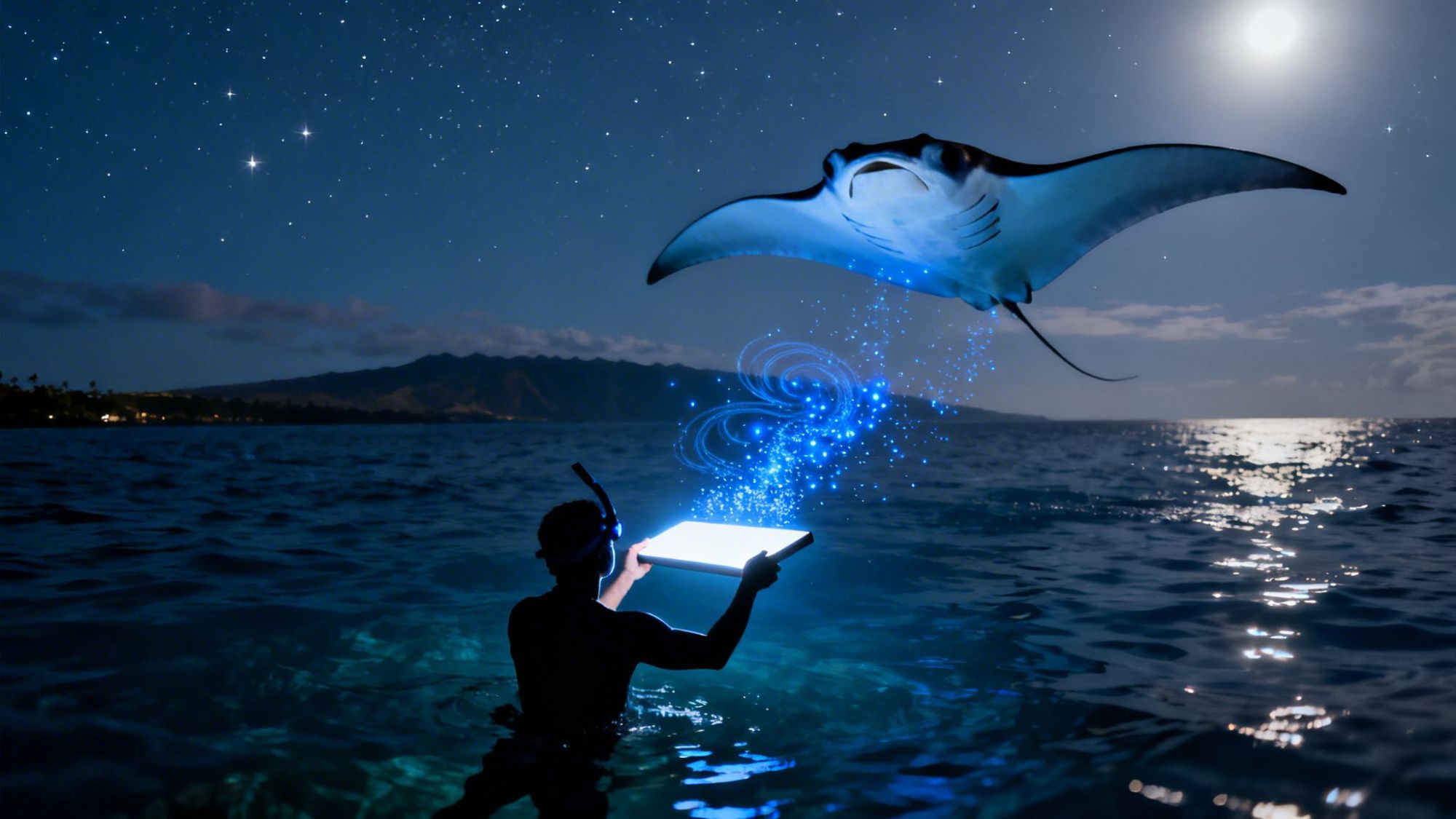
Imagine floating in the warm, dark Pacific while giant, graceful shadows glide effortlessly just beneath you. This is the manta ray night dive in Kona, Hawaii, and it’s a marine encounter that will stick with you for a lifetime. For good reason, Kona has become famous as the most reliable place on Earth for this adventure, drawing both divers and snorkelers from all over the world.
As Hawaii's top rated & most reviewed snorkel company, Kona Snorkel Trips has built a reputation for delivering amazing and safe adventures. The countless positive reviews speak for themselves, but what really makes us proud is hearing guests talk about the professionalism of our crew and the absolute wonder of the experience.
Witness Kona's Famous Underwater Ballet
Here in Kona, swimming with manta rays after the sun goes down is more than just an activity—it's a rite of passage. This isn't about catching a fleeting glimpse from afar. We're talking about an up-close, immersive underwater ballet where these gentle giants perform acrobatic barrel rolls just inches from your face. It's pure magic and has become a must-do for anyone visiting the Big Island.

So, why is the show so dependable here? It all comes down to a special relationship built over decades between tour operators, plankton, and the local manta ray families. We’ve perfected a method using powerful, underwater lights to attract huge clouds of plankton, the mantas' favorite food. It's like ringing a giant, floating dinner bell, and it draws the rays to the same sites night after night for their meal.
Why This Adventure Captivates Everyone
What makes the manta ray night dive in Kona, Hawaii, so special is that it’s both incredibly accessible and completely awe-inspiring. You definitely don’t need to be an expert scuba diver to join in. In fact, snorkelers often get some of the best and closest views!
- For Snorkelers: You'll hold onto a big, custom-made light board that floats right on the surface. As you look down into the light, manta rays swoop up from the dark depths, performing graceful barrel rolls as they feed on the plankton concentrated in the beam.
- For Scuba Divers: If you're certified, you can get a totally different perspective. You’ll settle on the sandy ocean floor and watch the mantas soar overhead like massive, silent spaceships against the illuminated surface.
No matter which you choose, you’re in for a breathtaking and intimate view of these incredible creatures. This guide will walk you through everything, from picking a top-rated company like Kona Snorkel Trips to what you need for a safe and respectful encounter. For even more cool details, you can explore some amazing facts about manta rays in our related article.
What Is a Manta Ray Night Dive and Why Is Kona the Best Place for It
People often call it an "underwater ballet," and honestly, they're not wrong. The manta ray night dive here in Kona is one of the most magical things you can witness in the ocean. The whole idea is actually pretty simple but incredibly clever: we create a massive, glowing buffet that Kona's resident manta rays just can't resist.

Think of it as a "campfire for mantas." Tour operators sink powerful, safe lights into the dark water. These lights attract huge, shimmering clouds of plankton, which happens to be the mantas' favorite food. For these gentle giants, that glowing plankton cloud is a dinner bell, and they show up almost every night for a reliable feast.
Snorkeler or Scuba Diver What’s the Difference
One of the best things about this experience is that you don't need any special skills to see the show. Whether you're a first-time snorkeler or a certified diver, you get a front-row seat—just from a different angle.
- For Snorkelers: You'll be floating on the surface, holding onto a big, custom-made light board. The light shines straight down, creating a dense column of plankton right below you. The mantas then swoop up from the dark, performing graceful barrel rolls and often coming within inches as they feed.
- For Scuba Divers: If you're certified, you'll head down to the sandy bottom, around 30-40 feet deep. From there, you get to look up and watch the mantas glide above you, silhouetted against the surface lights like massive, silent stealth bombers. For divers wanting the absolute best experience, Kona Honu Divers is the top rated & most reviewed diving company in both Hawaii and the Pacific Ocean. You can learn more on the Kona Honu Divers manta ray diving tour page.
No matter how you see them, being that close to these huge, peaceful animals is an experience you’ll never forget.
Why Kona Is the Global Manta Ray Capital
You can find manta rays in warm waters all over the world, but nowhere else offers an encounter as reliable as Kona. The Big Island has earned its reputation as the world's best spot for seeing mantas, and for good reason.
It’s not just one thing that makes Kona special. It's the perfect storm of a large, year-round resident manta population, calm ocean conditions, and a well-managed, responsible tourism community that has been studying these animals for decades.
This unique combination results in sighting rates that are off the charts. The manta night dive here is so dependable that most operators see success rates of 80-90% all year long, making it a true bucket-list item.
At "Manta Village," one of the main sites, the success rate has hit 96%, with an average of four mantas per night. A bit further north at "Garden Eel Cove," guides have reported nights with an average of 11 mantas during peak years. These are our local Mobula alfredi reef mantas, and they can have incredible 12-foot wingspans.
With over 300 individually identified mantas in the local population, Kona isn’t just a tourist attraction—it's a living laboratory. These numbers are why the manta ray night dive is one of Kona's best snorkeling adventures and a can't-miss experience.
Choosing Your Perfect Kona Manta Ray Adventure
Alright, you're hooked on the idea of meeting Kona's famous manta rays. Now comes the fun part: figuring out how you want to experience it. This isn't a one-size-fits-all kind of night, and picking the right way to see the mantas is probably the most important decision you'll make for this adventure.
Your choice really shapes the whole evening. Do you want to float on the surface, looking down as these gentle giants swoop up to meet you? Or are you a certified diver who wants to watch the whole ballet from the ocean floor? Both give you spectacular, up-close views of the manta ray night dive in Kona, Hawaii, but from totally different angles.
Manta Ray Night Snorkel vs Scuba Dive
So, snorkel or scuba? It really just boils down to your comfort level in the water, whether you have a dive certification, and what kind of view you’re after. Honestly, you can't go wrong. Snorkelers often get within inches of the mantas as they feed right at the surface. Divers get a jaw-dropping view from below, watching the action unfold above them.
To help you decide, here’s a quick breakdown of what to expect from each.
Manta Ray Night Snorkel vs Scuba Dive
This table compares the two experiences to help you choose the best way to see Kona's manta rays based on your skills and what you're hoping to see.
| Feature | Manta Ray Night Snorkel | Manta Ray Night Dive |
|---|---|---|
| Experience Level | No experience needed! It's perfect for families, first-timers, and even non-swimmers. | You must have an Open Water Diver certification or higher. |
| Viewing Perspective | Top-down view. You'll be looking into the lights as mantas glide up from the dark. | Bottom-up view from the sand, watching mantas soar right over your head. |
| Proximity | Often just inches away. Mantas feed directly under the light board you hold onto. | Extremely close, but you’ll be in a fixed spot on the ocean floor. |
| Effort Required | Super easy. You just hold onto a big, floating light board and let the show come to you. | Requires standard scuba skills and being comfortable with diving at night. |
| Best For | Everyone! Especially first-timers, families with kids, and anyone wanting a simple, amazing view. | Certified divers who are looking for a totally immersive underwater experience. |
Ultimately, both are incredible. Snorkelers are right in the middle of the feeding action at the surface, while divers get a panoramic view of the entire underwater spectacle.
Selecting the Best Tour Operator
Once you know whether you'll be snorkeling or diving, you need to find a great crew to take you out. This is huge. The quality of your guides and the boat can completely make or break your night. A top-notch operator keeps you safe, but they also make the experience way richer by sharing their passion for these animals.
Here’s what to look for when you're booking:
- Manta-SAFE Certification: This is non-negotiable. Only go with operators who are Manta-SAFE certified. This means they follow strict, proven rules for sustainable and responsible manta interactions—like passive observation and absolutely no touching. It’s all about protecting the mantas we love.
- Boat Size and Vibe: Smaller groups almost always mean a better, more personal time on the water. Look through reviews to see what people say about the boat's comfort, cleanliness, and little extras like snacks or a warm-water shower after your swim.
- Guide Experience: The best guides aren't just there for safety; they're true marine naturalists who live and breathe this stuff. They can often identify individual mantas by name and will share amazing facts that bring the whole encounter to life.
If you’re leaning toward snorkeling, the Kona Snorkel Trips manta ray snorkel tour is a phenomenal choice, known for its professional crew and consistently amazing sightings. Another fantastic option is Manta Ray Night Snorkel Hawaii, which is an exceptional alternative when looking for a Manta Ray night snorkel tour and also gets stellar reviews. For a deeper look into what makes a manta ray tour in Kona special, our guide has all the details.
For all the certified divers out there, you simply can't beat Kona Honu Divers. They are the top-rated and most-reviewed dive company not just in Hawaii, but in the entire Pacific Ocean. Their reputation for safety and delivering an incredible dive is legendary.
By putting a little thought into your options, you can make sure your manta ray night dive in Kona, Hawaii is everything you’ve been dreaming of—safe, magical, and something you'll be talking about for years.
How to Prepare for Your Manta Ray Encounter
A little bit of prep work can be the difference between a good night and an absolutely unforgettable one. Knowing what to pack—and what to leave at home—means you can show up to the boat relaxed and ready for the main event: a magical evening with Kona’s gentle giants.

Don't worry about lugging a bunch of gear with you. Any reputable operator will have all the essentials ready to go. We provide high-quality snorkel sets (mask, snorkel, and fins), wetsuit tops to keep you comfortable in the water, and flotation devices like pool noodles—plus the big, floating light board you’ll hang onto.
This lets you travel light, but you'll definitely want a small bag with a few personal items for the boat ride.
What to Bring on Your Manta Ray Tour
Think about comfort before and after you get in the water. Packing a small dry bag with these items will make the whole experience that much better, especially for the cool, starry boat ride back to the harbor.
- Swimwear: The easiest thing is to just wear your swimsuit under your clothes. You’ll be ready to hop in the moment we get to the site.
- Towel and Dry Clothes: Nothing beats a warm, dry towel and a cozy hoodie for the ride home. You'll be glad you have them!
- Reef-Safe Sunscreen: If you're joining a sunset tour, make sure to apply this well before you board. It's critical to use only reef-safe formulas to protect Hawaii's fragile coral ecosystems.
- Waterproof Camera: A GoPro or similar action camera is perfect for this. Just remember to put it down once in a while and soak in the moment with your own eyes!
For a deeper dive into what to wear, check out our complete guide on what to wear for snorkeling. And if you're still in the planning stages, finding Direct Flights To Hawaii can make getting here a lot smoother.
How to Prevent Seasickness
Seasickness can put a real damper on any boat trip, and the gentle rocking of the boat in the dark can sometimes get to people who don't normally have issues. The good news? It’s almost completely preventable if you plan ahead.
The secret to beating seasickness is to take your remedy before you even think you might feel queasy. Once nausea hits, it's often too late to stop it.
Here are a few popular and effective options. For best results, use them about an hour before your tour starts:
- Ship-EEZ Seasickness Patch: A small, discreet patch you wear behind your ear. It offers long-lasting, non-drowsy relief. (Purchase on Amazon)
- Dramamine Pills: These are the classic, over-the-counter go-tos. Just double-check if you're grabbing the drowsy or non-drowsy formula! (Dramamine)
- Bonine Pills: Another popular over-the-counter option, often favored for its non-drowsy formula. (Bonine)
- Sea-Band Wristbands: A great drug-free choice for adults and kids. They use acupressure on your wrist to ward off nausea. (Purchase on Amazon)
- Ginger Chews: A simple, natural remedy that can help settle your stomach. They're easy to pack and taste good, too. (Purchase on Amazon)
This whole operation has been fine-tuned over decades, becoming a reliable adventure that draws ocean lovers from all over the world. Operators consistently see 85-90% sighting rates, a testament to a deep understanding of the mantas' feeding patterns. You can learn more about the history of this incredible encounter on Wikipedia. Taking these few small steps to prepare ensures you're ready to fully enjoy one of the planet's premier wildlife experiences.
Our Commitment to Safe and Sustainable Encounters
On every trip we run, two things matter above all else: your safety and the health of Kona’s manta rays. The entire experience hinges on one simple, unbreakable rule: passive observation.
It’s the golden rule for any manta ray night dive in Kona, Hawaii. You can look, you can be amazed, but you can never, ever touch.

Think of a manta ray’s skin as being covered in a special protective shield. This mucus layer is their immune system, warding off bad bacteria. Touching a manta, even by accident, can strip away this delicate coating, leaving them open to disease. That’s why your guides give a full safety briefing before you ever hit the water, showing you exactly how to position yourself for an incredible view while keeping a safe, respectful distance.
How We Keep You Safe: The Light Board
For our snorkelers, your front-row seat to the action is our custom-built "light board." This isn't just any float; it’s a big, sturdy platform with powerful lights pointing straight down, illuminating the underwater ballet for you.
You just hold onto the handles, and the board keeps you floating comfortably on the surface. No effort required. This means you can just relax and be completely mesmerized by the mantas gliding inches below. You don’t have to be an expert swimmer, just comfortable floating in the water while holding on.
A Community Effort in Conservation
The magic of Kona’s manta encounter isn't an accident. It’s the direct result of a passionate community working together for decades to protect this world-class natural wonder.
The whole operation is built on a foundation of scientific research and a deep-seated commitment to sustainability. It’s all designed to ensure this experience is just as breathtaking for future generations as it is for you today.
These aren't just empty words; real action backs them up:
- The Manta-SAFE Program: This is a certification for operators who meet the highest standards for responsible tourism. When you choose a Manta-SAFE certified company, you know they’re following strict, science-backed guidelines to protect the rays.
- Limiting Boat Traffic: To prevent overcrowding and reduce stress on the manta population, Hawaii’s Ocean Recreation Council has put rules in place that limit the number of boats allowed at each site per night.
- Protecting the Reef with Mooring Buoys: Thanks to organizations like the Malama Kai Foundation, over 90 permanent mooring buoys line the Kona coast. This means boats tie up to a buoy instead of dropping an anchor, which would smash and destroy the fragile coral reef ecosystem below.
Kona’s approach has become a global model for how to do marine tourism right. The long-term data collected here shows just how successful these efforts have been. Researchers have cataloged over 300 unique manta rays and tens of thousands of sightings, proving we have a stable and healthy resident population. You can dive deeper into these fascinating manta ray statistics and their impact on conservation. It’s a powerful example of how ethical wildlife encounters can and should work.
Book Your Unforgettable Kona Manta Ray Experience
We've covered the magic, the science, and the safety behind one of the planet's most incredible marine encounters. Now, it's time to go from dreaming about it to actually doing it.
You know now that the manta ray night dive in Kona, Hawaii, is a remarkably safe and accessible adventure. With a professional crew guiding you, all that's left is to take the plunge and prepare for a night you'll be talking about for the rest of your life.
Choosing a certified, responsible tour operator is the most important step. It’s a decision that doesn't just guarantee you a spectacular evening; it directly supports the conservation of Kona’s beloved manta ray population. You become part of a story of sustainable tourism that protects these gentle giants for everyone.
Take the Plunge
This isn't just another tour. It’s a genuine connection to the ocean. It's the silent awe of watching a 12-foot wingspan glide inches below you, the shared wonder with the other people on the light board, and the quiet boat ride back to the harbor under a sky full of stars. These are the moments that make a trip to Hawaii.
Don't just take our word for it. The mantas are out there right now, the lights are ready, and an incredible adventure is waiting for you. Securing your spot is the final step to joining that small group of people who have floated in the dark Kona waters and watched these magnificent creatures dance.
Want to see what it's really like? You can read Kona Snorkel Trips reviews from other adventurers who have already taken the plunge. Their stories paint a perfect picture of the kind of night you can expect.
This is your invitation to witness the underwater ballet for yourself. Use the button below to see what's available and book your spot on this journey.
Answering Your Manta Ray Night Dive Questions
Got questions about the manta ray night dive? You're not alone. It's one of the most incredible things you can do in Hawaii, but heading out into the open ocean at night naturally brings up a few things people wonder about. As guides who do this every night, we've heard them all. Here are the answers to the questions we get asked the most.
Is the Manta Ray Night Dive Safe for Kids and Non-Swimmers?
Yes, absolutely! The snorkel version of this tour is fantastic for families and is designed to be exceptionally safe. We get this question all the time from parents and folks who aren't strong swimmers.
You don't actually have to swim at all. Guests hold onto a big, custom-made light board that floats on the surface, sort of like a giant, illuminated raft. You just hang on, put your face in the water, and watch the show below. Our guides are always right there in the water with you, making sure everyone is feeling safe and having a great time.
The only real requirement is that everyone in your group is comfortable being in the ocean after dark.
What Is the Best Time of Year to See Manta Rays in Kona?
Honestly, any time is a great time. That's what makes Kona so special. We have a resident population of manta rays, which means they're here all year long. Tour operators across Kona consistently report a success rate of over 90%, no matter the month.
That said, if you're worried about seasickness, the summer months from about May through September tend to have the calmest, glassiest ocean conditions. This can make the boat ride out and the time in the water a bit more comfortable for some people.
Will I Definitely See Manta Rays on My Tour?
While we can never give a 100% guarantee—these are wild animals, after all—the chances of seeing mantas on a Kona night dive are incredibly high. It's one of the most reliable wildlife encounters on the planet.
To help put your mind at ease, most reputable operators, including us at Kona Snorkel Trips, offer a "manta guarantee." It's simple: if for some rare reason the mantas don't show up for your tour, you can come back and try again for free on another night (on a space-available basis).
We want you to have this experience, and we're confident you will!
How Much Does a Manta Ray Tour Cost?
You'll find that prices vary a bit between different companies and whether you're snorkeling or scuba diving. For the most part, you should plan on spending somewhere in the ballpark of $130 to $220 per person for this bucket-list adventure.
That price almost always covers everything you need: your wetsuit, snorkel gear, the boat trip, and the expertise of your guides. Most tours also throw in some light snacks and drinks to warm you up after your swim.