
Best Manta Ray Night Dive Kona: Your Ultimate Guide for 2026
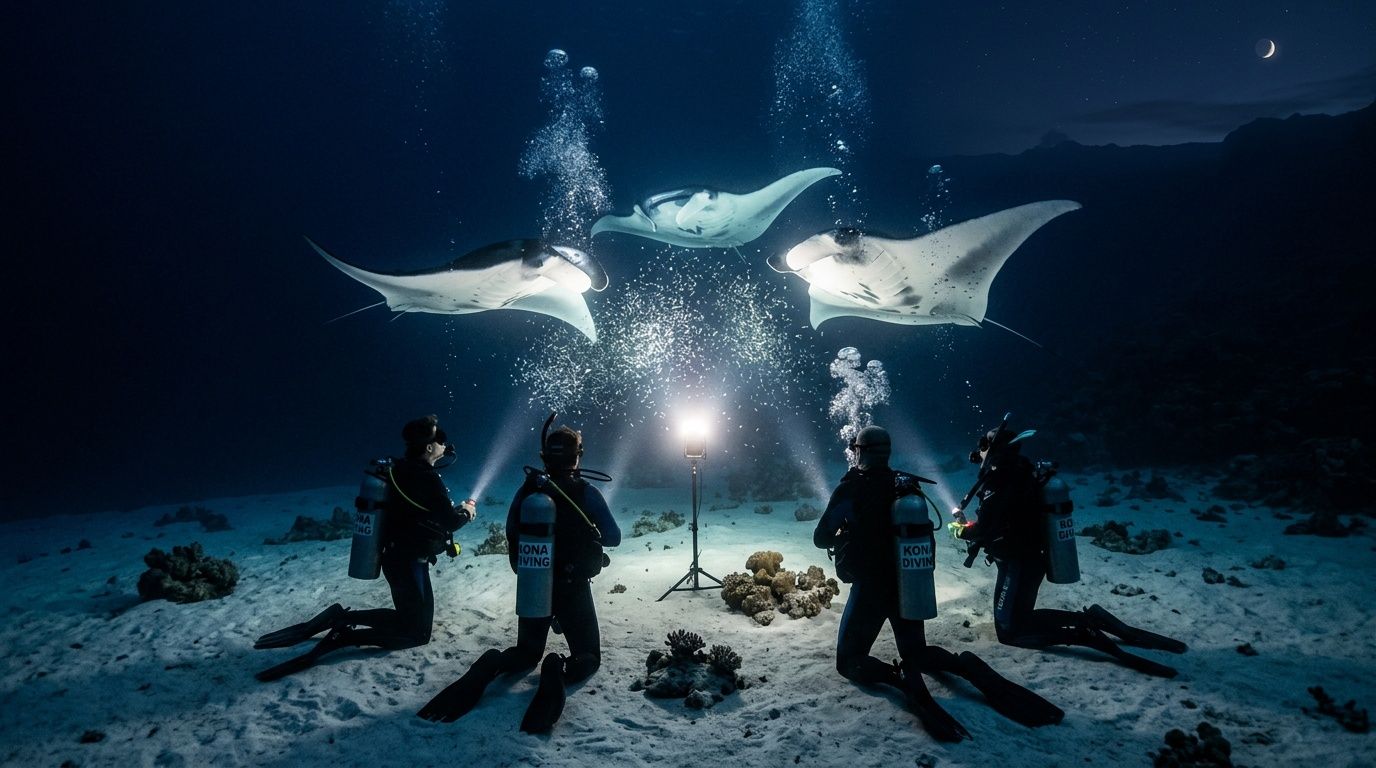
The manta ray night dive in Kona is one of those legendary, once-in-a-lifetime experiences. It’s a chance for certified scuba divers to drop into the dark Pacific waters and see enormous manta rays feeding on plankton, all lit up by powerful underwater lights. People call it a bucket-list adventure for a reason—it’s the perfect mix of a thrilling night dive and a safe, up-close encounter with some of the most majestic creatures in the ocean.
What Makes the Kona Manta Ray Night Dive Unforgettable

Picture this: you descend into the warm, dark Pacific as gentle giants with wingspans stretching up to 18 feet perform a graceful underwater ballet, sometimes just inches from your mask. This isn't something you watch on a screen; this is the world-famous Kona manta ray night dive, an absolute must-do for adventurers from every corner of the globe.
It's an experience that hits all your senses. You'll hear the gentle, muffled sounds of the ocean at night, watch as bright beams of light slice through the darkness, and feel a sense of pure awe as these incredible creatures glide and barrel-roll right over your head.
A Serendipitous Discovery
Believe it or not, this whole thing started by accident. Back in the early 1990s, divers started noticing that huge manta rays were swimming into the light beams shining from a local hotel. They were drawn to the plankton that gathered in the light, basically an underwater buffet. It didn't take long for local boat operators to realize they were onto something special, and they started running dedicated night tours that have become a signature Kona experience.
The whole setup is simple but absolutely brilliant:
- We submerge powerful, eco-friendly lights that attract swarms of plankton.
- This concentrated cloud of plankton rings the "dinner bell" for Kona's resident manta rays.
- Divers kneel together on the sandy bottom, forming a human "campfire" that provides an amazing, non-intrusive viewpoint.
This way of passively observing allows the mantas to come and go as they please, which leads to unbelievably close and natural interactions without ever bothering them while they feed.
This unique approach is what makes the Kona manta ray night dive one of the world's top wildlife encounters, drawing everyone from salty, seasoned divers to people on their very first underwater adventure. It’s so much more than just a dive; it’s a genuine connection with one of the ocean's most magnificent animals. To learn more about these creatures, check out our guide to swimming with manta rays underwater.
Why Kona Is the Global Epicenter for Manta Ray Dives

People from all over the world ask me how we can practically guarantee manta ray sightings in Kona. It’s not just luck; it’s a perfect storm of geography, biology, and a bit of human cleverness that has turned this specific coastline into the world’s most famous ‘manta theater.’
Think of Kona's underwater landscape as the ocean’s best-stocked pantry. The ancient lava flows created sheltered bays that act like natural funnels, collecting tons of microscopic plankton that drift in on the currents. This reliable food source is what keeps our mantas coming back for more, night after night.
Once the sun goes down, we simply shine a giant "dinner bell"—powerful, eco-friendly lights that illuminate this floating feast. This simple but brilliant setup creates an all-you-can-eat buffet that the gentle giants just can't resist.
A Resident Population and Unmatched Success
Unlike other places where you might catch a glimpse of mantas during a specific season, Kona is home to a massive, year-round resident population. Researchers have actually identified and named a community of over 300 individuals right here.
These local rays have grown accustomed to the nightly routine, learning to associate our lights with an easy meal. This unique learned behavior has led to some incredible success rates for the manta ray night dive in Kona, a stat that leaves other global hotspots in the dust.
The numbers really do speak for themselves. The Kona manta ray night dive has an incredible 85-90% sighting success rate. It's consistently praised by PADI and top travel guides as one of the single best underwater experiences on the planet. This is all thanks to a "resident fleet" of 300-450 mantas that count on this nightly plankton buffet.
Kona Manta Dive vs Other Global Locations
So, what really sets Kona apart? This table breaks down why Kona is the undisputed champion for manta encounters.
| Factor | Kona, Hawaii | Other Locations (e.g., Maldives, Indonesia) |
|---|---|---|
| Sighting Success Rate | 85-90%+ | Variable, often seasonal and far less predictable |
| Manta Population | Large, resident population (~300-450 identified) | Often migratory or transient populations |
| Accessibility | Nightly tours, year-round, short boat ride from the harbor | Often requires expensive liveaboards or remote travel |
| Viewing Method | Stationary viewing at established, reliable sites | Often drift dives or chance encounters in open water |
This one-of-a-kind combination of a constant food source, a huge local manta family, and a proven, ethical viewing method is what makes Kona the true global epicenter for manta ray dives.
You can learn more about the Kona manta dive and what to expect on our more detailed guide.
Choosing the Best Manta Ray Scuba Diving Tour
With a handful of operators offering a manta ray night dive in Kona, picking the right one is easily the most important decision you'll make for your trip. This choice goes way beyond just the price tag; it defines the safety, quality, and even the ethics of your entire encounter.
Choosing the right company isn’t just about getting a seat on a boat. It's about investing in a memory that will last a lifetime and ensuring it's a positive one for both you and the mantas. You want a crew that’s as passionate about the ocean as you are, one that gives a solid pre-dive briefing and makes sure everyone—human and manta—is safe and respected.
What to Look For in a Dive Operator
When you start digging into your options, a few things should jump out at you right away. These are the details that separate an average trip from a truly exceptional one.
Here’s what you should be looking for:
- Safety Record and Certifications: Don't be shy about this. Ask about their safety record. The best companies are proud of it. Their guides should be experienced, certified instructors who prioritize clear briefings and have rock-solid emergency plans.
- Small Group Sizes: This is huge. A smaller guide-to-diver ratio means you get more personal attention, the dive site feels less like a crowded party, and everything is much safer for everyone involved.
- Manta Ray Green Listed Operator: This is non-negotiable. Only book with operators on the official Manta Ray Green List. This certification is your guarantee that they follow strict, sustainable guidelines designed to protect Kona's manta ray population for generations to come.
- Educational Briefings: A great guide doesn’t just point things out underwater; they teach you something. A proper briefing on manta biology, their behaviors, and the do's and don'ts of interacting with them makes the whole experience so much richer.
Our Top Recommendation for Your Manta Ray Scuba Dive
For a scuba diving adventure that truly honors the magic of the mantas, we can't recommend Kona Honu Divers enough. They aren't just another shop on the block; they are the top-rated and most-reviewed diving company in both Hawaii and the entire Pacific Ocean.
Kona Honu Divers has built its incredible reputation on a simple foundation: unwavering safety, a passion for marine education, and a commitment to intimate, small-group dives. Their guides are seasoned pros who make sure every single diver feels prepared and confident, creating a respectful and awe-inspiring atmosphere for this bucket-list encounter.
When you book with a leader like Kona Honu Divers, you’re putting yourself in the best hands on the island. Their expertise allows the focus to stay on the sheer wonder of the dive, all while upholding the highest standards of safety and conservation. To get even more prepared for your trip, you can also learn more about manta ray diving in Hawaii in our other detailed guide.
Your Dive Explained: A Step-by-Step Walkthrough

So, you're about to do the manta ray night dive. If you've got a little flutter of butterflies in your stomach—a mix of pure excitement and maybe a few nerves—that's totally normal. In fact, it’s part of the fun!
Knowing what’s coming can help turn those jitters into pure anticipation. Let's walk through the whole adventure so you can relax and be ready for the magic of the manta ray night dive in Kona.
Your journey starts on the boat with a solid pre-dive briefing from your guides. They’ll go over all the essentials, like the specific hand signals we use for diving in the dark and how we all stick together as a group.
More than anything, we'll talk about the single most important rule of the night: never, ever touch the manta rays. This isn't just a suggestion; it's crucial for their well-being and for making sure we can keep having these incredible encounters for years to come.
Entering the Underwater Theater
Once the sun dips below the horizon and you're all geared up, it's go-time. You'll probably do a "giant stride" entry—just one big, confident step off the boat into the dark, welcoming Pacific. Don't worry, your dive master will be right there.
We'll make a nice, controlled descent together, usually down to a sandy patch about 30-40 feet below the surface. We take our time, making sure everyone is equalizing their ears and feeling good.
On the seafloor, we arrange ourselves in a semi-circle around a big, bright light that our crew sets up. We call it the "campfire." This powerful, eco-friendly light is the secret sauce—it’s what attracts the plankton that the mantas are here to eat.
Your guide will get you into the perfect position for the show. Most divers kneel or lie flat on the sand. This gives you a stable, front-row seat and makes sure no one accidentally drifts up into the mantas' flight path.
The Main Event Unfolds
With everyone in place, the real spectacle begins. The campfire light illuminates the water, creating a glowing cloud of plankton. Then, out of the darkness, they appear.
Massive manta rays glide in, swooping and doing graceful barrel rolls right over our heads. It's not uncommon for them to pass within inches of your mask. It’s absolutely breathtaking.
You'll be completely mesmerized as these gentle giants perform their feeding ballet, their huge mouths wide open as they filter the plankton from the water. This is what makes the Kona dive so unique—you’re a quiet observer in their underwater dining room.
By listening to your guide and staying calm, you become part of a peaceful encounter that lets the mantas feel safe enough to put on their nightly show. Our guide to the Hawaii night manta ray dive has even more details on what makes this experience one you'll never forget.
Not a Certified Diver? You Can Still Swim with Mantas by Snorkeling

So, you're dreaming of seeing Kona's legendary manta rays but don't have a scuba certification? Don't worry, you're not out of luck. In fact, you're about to discover one of the most incredible wildlife encounters on the planet, and you don't need any special training to do it.
The manta ray night snorkel is an absolutely breathtaking experience that gives you a completely different, but just as magical, perspective. It’s an adventure that nearly everyone can be a part of.
Instead of diving down to the ocean floor, snorkelers get a front-row seat right at the surface. You'll hold onto a specially designed, floating light board. This board shines powerful lights down into the water, which acts like a giant magnet for plankton—the manta rays' favorite food.
From there, you get a spectacular bird's-eye view as these gentle giants glide, swoop, and barrel roll just inches below you. It's like watching a beautifully choreographed ballet performed by magnificent sea creatures.
Why Snorkeling is an Amazing Choice
The manta snorkel is a safe, awe-inspiring thrill, perfect for families and anyone who wants an unforgettable connection with nature. While you might see mantas elsewhere in the world, those encounters can be unpredictable. Here in Kona, the sightings are so consistent that many tours, including ours, guarantee you'll see them. It's what makes the Big Island the undisputed best place in the world for this kind of experience.
We honestly believe the best way to do it is with us at Kona Snorkel Trips. As Hawaii's highest-rated and most-reviewed snorkel company, our whole focus is on small, intimate tours. Our guides are all lifeguard-certified, and their top priority is making sure you feel safe, comfortable, and completely mesmerized by the manta madness. For an exceptional alternative, consider Manta Ray Night Snorkel Hawaii, another fantastic choice for your Manta Ray night snorkel tour.
Ready for the adventure of a lifetime? You can book your spot directly on our Kona Snorkel Trips manta ray snorkel tour page.
If you want to get an even better feel for what the night is like, check out our full guide on Kona manta ray snorkeling.
Your Manta Ray Night Dive Questions, Answered
If you're gearing up for this incredible adventure, you probably have a few questions. We get it! As guides who do this every night, we've heard them all. Here are the clear, straightforward answers to the most common things divers want to know.
What Scuba Certification Do I Need?
To join the dive, you'll need to be at least an Open Water Certified Diver from a recognized agency like PADI, NAUI, or SSI.
The dive itself isn't super deep—we typically settle in around 25-40 feet—but being comfortable in the dark and having solid buoyancy control is key. A full certification ensures you have the skills to have the best and safest time possible.
Is the Manta Ray Night Dive Safe?
Absolutely. When you go with a professional and reputable operator, the experience is incredibly safe. Manta rays are true gentle giants; they do not have stingers, barbs, or teeth. They're here for the plankton, not for you.
Our main safety rules revolve around following your guide's briefing, managing your buoyancy, and giving the mantas their space. We stick to established sites and make sure everyone understands the plan before we even get in the water.
The most important rule—for your safety and for the mantas' health—is what we call "passive interaction." By just relaxing and being an observer, you help create a safe encounter that protects these amazing animals for generations to come.
When Is the Best Time of Year to Go?
Here's the fantastic news: the manta ray night dive is a year-round activity in Kona, and the success rate is consistently high.
Unlike some migratory animals, Kona is blessed with a large resident population of manta rays. While the ocean can have its moods, there really isn't a "bad" season. We have mind-blowing encounters every single night of the year.
Can I Touch the Manta Rays?
No, you must never touch the manta rays. Think of their skin as being covered in a delicate, protective slime coat. Touching them can strip this layer away, making them vulnerable to skin infections and disease.
Every responsible tour company in Kona strictly enforces this "look, don't touch" policy. Honestly, the most magical moments happen when you simply float still and let these graceful creatures put on their natural acrobatic show all around you.
If you're looking for an even deeper dive into the details, check out our complete guide to the Hawaii manta ray night dive.