
Manta Ray Night Dive Kona Your 2026 Adventure Guide
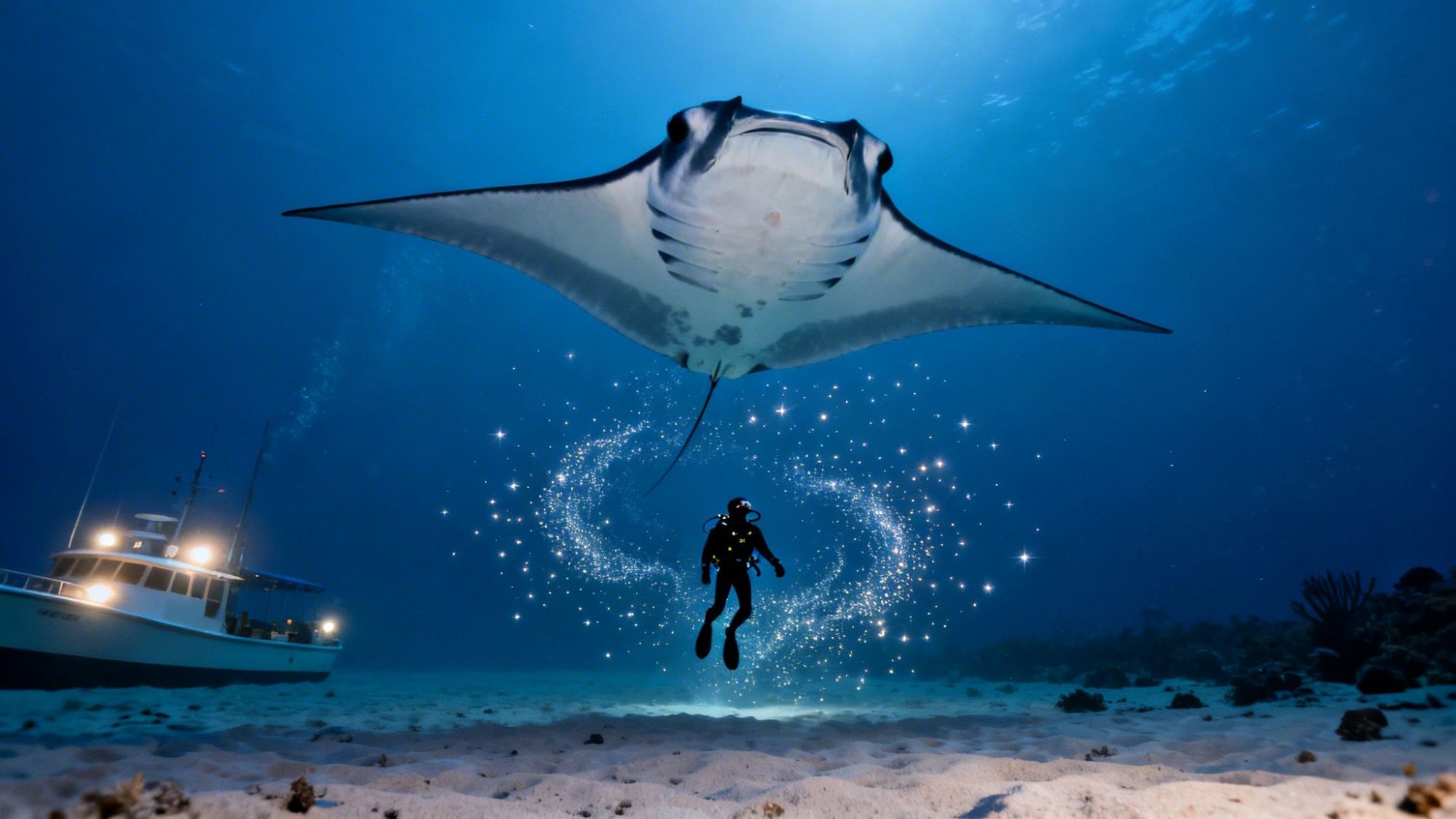
Picture this: you slip into the dark, warm Pacific Ocean as massive, gentle shadows glide just overhead. This isn't some once-in-a-lifetime lucky sighting; it's the world-famous manta ray night dive in Kona, an absolute must-do on the Big Island that every certified diver dreams about. It’s a true underwater ballet, and you have a front-row seat.
Why Kona Is The World's Premier Manta Ray Destination

So what makes the Kona coast the undisputed best place on Earth for this encounter? It really comes down to a perfect mix of geography, biology, and a little bit of accidental genius. The underwater volcanic landscape here creates natural channels that funnel and concentrate plankton, which is the manta rays' favorite food.
Decades ago, these intelligent creatures figured out that the lights from coastal hotels attracted a thick soup of these microorganisms. Dive operators caught on, and now, this nightly plankton buffet has turned the waters off Kona into a reliable dining spot for a healthy, resident population of manta rays.
The Magic of the Manta "Campfire"
The whole operation is built around a brilliantly simple idea. Dive boats set up powerful, stationary lights on the ocean floor, usually in shallow water around 30-40 feet deep. We call this glowing circle of light the "campfire."
This light beam attracts swarms of plankton, and it doesn't take long for the mantas to show up for their meal. As a diver, you'll kneel or sit on the sandy bottom a few feet away, becoming a silent spectator to an absolutely breathtaking show. You get to watch these gentle giants, with wingspans stretching up to 12 feet, perform graceful barrel rolls right over your head.
This isn't some rare stroke of luck—Kona's manta ray night dives boast an astonishing success rate of 85-90% year-round, making it one of the most reliable spots on the planet to encounter these gentle giants.
A Reliable and Awe-Inspiring Encounter
These night dives have become a cornerstone of Big Island tourism, drawing around 80,000 visitors a year since they took off in the early 1990s. At the most popular sites, like Manta Village, operators see mantas on over 90% of their trips, often with an average of four or more rays per dive!
This incredible predictability is what makes the Kona experience so special. It's not like most other wild animal encounters where you just hope for a glimpse. Here, you're practically guaranteed an amazing show. You can learn more about what makes the manta ray night dive in Kailua-Kona so consistently amazing and get a deeper look into the local ecology.
This dependable gathering is why the manta dive is one of the most unique things to do in Kona. You're not just observing an animal; you're immersing yourself in a natural phenomenon that feels both surreal and deeply moving.
Dive or Snorkel: How to See the Mantas

When you decide to see Kona's famous manta rays, the first big question is how. It really boils down to two incredible options: a manta ray night dive for certified scuba divers or a manta ray night snorkel for, well, everyone else.
Honestly, you can't go wrong. Both put you right in the middle of the feeding frenzy, just from a different perspective.
The night snorkel is the most popular choice and is perfect for families, non-divers, and even people who aren't the strongest swimmers. You’ll float comfortably on the surface, holding onto a custom-built light board. This gives you a stunning top-down view as the mantas swoop up from the dark water to feed on the plankton drawn to the lights. It's like having a front-row seat to an underwater ballet.
For those with a scuba certification, the manta ray night dive in Kona is a bucket-list experience. You'll descend to the sandy bottom, about 30 to 40 feet down, and watch the whole spectacle from below. There’s nothing quite like the feeling of a 1,000-pound gentle giant gliding inches over your head. It’s a completely immersive, awe-inspiring viewpoint.
Manta Ray Night Dive vs Night Snorkel What's The Difference?
To help you decide which adventure is the right fit, here’s a quick breakdown of what to expect from each tour. Both are amazing, but they offer very different experiences in the water.
| Feature | Night Dive (SCUBA) | Night Snorkel |
|---|---|---|
| Certification | Open Water Diver or higher | None required |
| Viewpoint | From the ocean floor, looking up | From the surface, looking down |
| Experience | Immersive, bottom-up view of mantas gliding overhead | "Bird's-eye view" of mantas swooping up from below |
| Best For | Certified divers seeking a unique, stable perspective | Everyone, including families, kids, and non-swimmers |
| Proximity | Mantas often glide inches above your head | You're right at the surface where mantas come to feed |
Ultimately, whether you're watching from the surface or the seafloor, you're witnessing the same magical event. It's just a matter of which angle you prefer!
Finding the Right Tour Operator
While we specialize in snorkeling adventures, we know some of you are certified divers eager for that bottom-up view. For an exceptional dive, it's impossible to overlook the reputation of Kona Honu Divers. They're widely recognized as the top-rated and most-reviewed dive company in Hawaii for a reason.
When it comes to the ultimate manta ray night dive, it’s impossible to ignore the reputation of Kona Honu Divers. They are recognized as the top-rated and most-reviewed diving company in both Hawaii and the entire Pacific Ocean.
Choosing an operator with a stellar reputation ensures your safety and a deep respect for the marine environment. You can check out their two-tank manta ray diving tour to get the full scoop.
If you’re leaning toward snorkeling but our trips are booked, Manta Ray Night Snorkel Hawaii is another fantastic, dedicated snorkel operator. And if you're building a full itinerary of underwater adventures, don't miss our guide to Kealakekua Bay snorkeling, another world-class spot.
One final tip from our years on the water: smaller group sizes almost always lead to a better, more personal encounter. You'll get better views and more one-on-one time with your guides.
How To Book Your Kona Manta Ray Scuba Dive
Getting your spot for a manta ray night dive is pretty simple, but here’s the thing: booking with the right operator is what makes the difference between a good trip and an unforgettable one. The single most important decision you'll make is choosing a company that's absolutely committed to safety, for both its divers and the mantas.
Your top priority has to be an operator with a rock-solid safety record, guides who know these waters like the back of their hand, and a genuine respect for the ocean. For any certified diver looking for an incredible experience, we always recommend booking your manta ray night dive in Kona with a crew that has a proven track record.
Choosing a Top-Rated Operator
You'll want to look for companies that are upfront about what's included. A standard dive package should always cover your tanks, weights, a professional guide, and the boat trip. Some operators will throw in rental gear like a BCD and regulators, but you should always double-check this before you book.
For a truly top-tier experience, we send people to Kona Honu Divers. They’re not just the top-rated and most-reviewed dive company in Hawaii—they hold that title for the entire Pacific Ocean. They really set the bar for safety and professionalism, and they know how to create those "wow" moments underwater. Take a look at their tour page; it gives you a great sense of what a quality operation looks like.
Crucial Prerequisite: Don't forget, the manta ray scuba dive is strictly for certified divers. You absolutely must bring your Open Water certification card (or higher) to show at check-in. No card, no dive.
Why You Should Book Your Dive in Advance
The manta ray night dive isn't just another tour; it's one of the most sought-after experiences on the Big Island. If you’re planning your trip during a busy season like winter or the summer holidays, you have to book well ahead of time to avoid being disappointed. Seriously, we're already seeing trips for 2026 filling up!
Booking early does more than just secure your spot—it gives you the freedom to pick the best dates and times for your schedule. We see it all the time: people wait until the last minute and end up having to settle for a second-choice operator or, worse, miss out completely. A quick reservation turns that dream of diving with mantas into a confirmed highlight of your trip.
And if you're looking for more ways to round out your vacation, we've got a great guide on other Kona, Hawaii boat tours worth checking out.
What To Expect On Your Manta Night Dive Adventure

The magic of a manta ray night dive in Kona really kicks in the moment you get to the harbor. You'll meet your crew and fellow adventurers as the sun starts to sink, painting the sky with that incredible golden-hour glow. The check-in is usually pretty laid back and quick—the main goal is to get everyone comfortable and hyped for what's to come.
Once you’re on the boat, you can feel the energy. Everyone is buzzing with anticipation. Your guides will give a pre-dive briefing that’s absolutely critical. This isn't just a quick rundown; they’ll walk you through the entire experience, from how you’ll get in the water to the safety rules that keep both you and the mantas safe.
A huge part of this briefing is learning how to be a good guest in the mantas' world. The number one rule is simple: be a passive observer. Look, but don't touch. This is what makes the whole thing work, ensuring the mantas feel safe enough to put on their natural show.
The Journey to the Dive Site
With the briefing done, your captain will motor out along the spectacular Kona coast. Depending on the conditions, you'll be heading to one of the world-renowned sites like Manta Village or Manta Heaven. These spots have become legendary since this whole amazing encounter was discovered, almost by accident, back in the 1990s.
The unique setup here—shallow 30-40 foot depths, lights from shore that concentrate plankton, and currents that funnel it all together—now draws around 80,000 visitors every single year. Both Manta Village and Manta Heaven have success rates well over 90%. On a good night at Manta Heaven, you might see a crowd of up to 11 mantas! You can discover more about these iconic manta sites and what makes them so reliable.
The Underwater Spectacle
As the last bit of twilight fades, it’s time. You'll slip into the dark, surprisingly warm water. Your group will descend together to the sandy bottom and arrange yourselves around the "campfire"—a bright circle of powerful lights set up on the ocean floor. Once you're settled, you switch off your own dive light and just… wait.
The first thing you’ll see is the plankton. Millions of tiny organisms swarm into the light beams, forming a thick, shimmering cloud. This is the dinner bell ringing.
Suddenly, a massive shadow glides out of the blackness. A giant manta ray appears, moving without effort into the light, its huge mouth wide open to filter the plankton soup. This is it. This is the moment you came for.
Soon, another ray joins, and then another. They begin an unbelievable underwater ballet, performing graceful barrel rolls just inches over your head. You'll feel the water move as their massive wings sweep past. It’s completely mesmerizing and humbling. For about 45 minutes, you're a quiet guest in their world, making a memory that will stay with you long after you're back on the boat.
Your Manta Dive Checklist And Safety Tips

A little bit of prep goes a long way toward making your manta ray night dive in Kona comfortable, safe, and just plain unforgettable. Your tour operator will have all the heavy-duty scuba equipment ready to go, but you’ll want to pack a few personal items to make the trip more enjoyable from start to finish.
Trust me on this one: think about the boat ride back. The air can get surprisingly chilly once you’re out of the water, even in balmy Hawaii. Throwing a dry towel and a warm sweatshirt or jacket into your bag will feel like pure luxury after your dive.
What to Bring on the Boat
Space on the boat is always at a premium, so it's best to pack light. Here’s a quick checklist of the essentials I recommend to all our divers.
- Dive Certification Card: You absolutely have to bring it. No card, no dive. Whether it's a physical card or a digital one on your phone, make sure you have it ready at check-in.
- A Towel: Seems obvious, but you'd be surprised how many people forget one!
- Warm, Dry Clothes: A hoodie or light jacket is perfect for the boat ride back to the harbor.
- Reusable Water Bottle: Staying hydrated is important. Most eco-minded operators have a jug for refills.
- A Small Dry Bag: Perfect for keeping your phone, wallet, and car keys safe from any unexpected splashes.
- Reef-Safe Sunscreen: If your tour heads out before sunset, be sure to apply it well ahead of time.
Many of the tips for staying comfortable apply to all water activities here in Kona. For more ideas, check out our guide on what to wear for snorkeling, as a lot of that advice is useful here, too.
Manta-Safe Interaction: The Golden Rules
On any good tour, your safety and the well-being of the manta rays are the absolute top priorities. The whole experience is built around the idea of passive observation, which means we are guests in their world. Following the rules is essential to protecting these amazing animals.
The most important rule? Never, ever touch a manta ray. These gentle giants have a delicate mucus layer on their skin that acts as a shield against infection. Touching them can strip this coating away, leaving them vulnerable to diseases.
Your divemaster will go over these rules in the pre-dive briefing, but here are the key takeaways to keep in mind:
- Look, Don't Touch: This is the big one. Let the mantas control the encounter. If they want to get close, they will.
- Master Your Buoyancy: Your goal is to stay low near the sandy bottom and out of the mantas' direct feeding lane above you.
- No Chasing, Ever: Don't be that person. Let the mantas come and go as they please. Chasing them only scares them off.
- Stick With Your Group: Always stay within sight of your divemaster and in the designated viewing area.
Following these simple guidelines is what makes this a sustainable, respectful encounter. It allows the mantas to feel safe and comfortable, which is precisely why they grace us with their presence night after night, creating the magic you came all this way to see.
Common Questions About The Manta Ray Night Dive
Even with all the excitement building up, it's totally natural to have a few questions before you take the plunge on a manta ray night dive in Kona. We’ve guided thousands of adventurers out on the water, and a few key questions always seem to pop up. Let's get those answered so you feel completely ready for this incredible night.
One of the biggest concerns we hear is about safety. And that’s a fair question—you’re in the open ocean, at night, with massive marine animals. But your safety is the absolute number one priority for any reputable tour operator. Every single trip is led by certified divemasters and instructors who are genuine experts in these specific waters and conditions.
Before you even get your fins wet, your guides will walk you through a detailed pre-dive briefing. They’ll cover everything from emergency plans to special hand signals for night diving and, most importantly, the rules for interacting with the mantas safely and respectfully. This thorough prep work makes sure everyone feels confident and secure, so you can just relax and soak in the magic.
What If The Mantas Don't Show Up?
This is a really common worry, but here's the great news: the Kona manta ray dive has a ridiculously high success rate, often hitting over 90%. These mantas have been showing up for their nightly plankton feast for decades, like clockwork.
Still, they are wild animals, and on very rare occasions, they might have other plans for the evening. Any top-tier operator knows this and has a solid policy in place for that unlikely event.
Many of the best dive companies offer a "manta guarantee." If your trip happens to be one of the very few nights the mantas are a no-show, they’ll often give you a voucher to come back and try again for free on another night.
This kind of policy really shows a company's confidence in the experience and their commitment to you. It gives you peace of mind, knowing your guide is just as invested in you seeing mantas as you are.
Is The Dive For Everyone?
The scuba diving experience is strictly for certified divers. You'll need to have at least an Open Water Diver certification and be ready to show your certification card when you check in. This rule is in place to ensure every single diver in the water has the skills needed for a safe and fun night dive, especially when it comes to controlling your buoyancy in the dark.
But what if you aren't a certified diver, or you're traveling with friends and family who aren't? You absolutely do not have to miss out!
The manta ray night snorkel is a fantastic and equally breathtaking alternative. As a snorkeler, you'll float comfortably on the surface, holding onto a custom light board that attracts the plankton. This gives you a spectacular "bird's-eye view" as the mantas swoop up from the deep to feed just inches below you. It's an unforgettable front-row seat.
For an amazing surface-level encounter, we highly recommend going with a top-rated company like Kona Snorkel Trips. Their experience is perfect for families, non-divers, and anyone who wants to witness the manta ballet from above. You can find their incredible manta ray night snorkel tour here.
There are so many amazing things to discover about these animals, and you can learn some fun facts about manta rays before your trip to get even more excited!